Manufacturing operations face intense pressure to increase output while maintaining high quality. Collaborative robots, or cobots, offer the perfect solution by working safely alongside human operators. These versatile machines represent a massive shift in how factories operate and scale.
This guide explores everything you need to know about collaborative robots in industry. We will cover how they function, their primary applications, and why they outshine traditional industrial automation. You will also learn about the specific benefits for small businesses and future technology trends.
By reading this post, you will understand how to leverage cobots in manufacturing to optimize your production lines.
What Are Collaborative Robots (Cobots)?
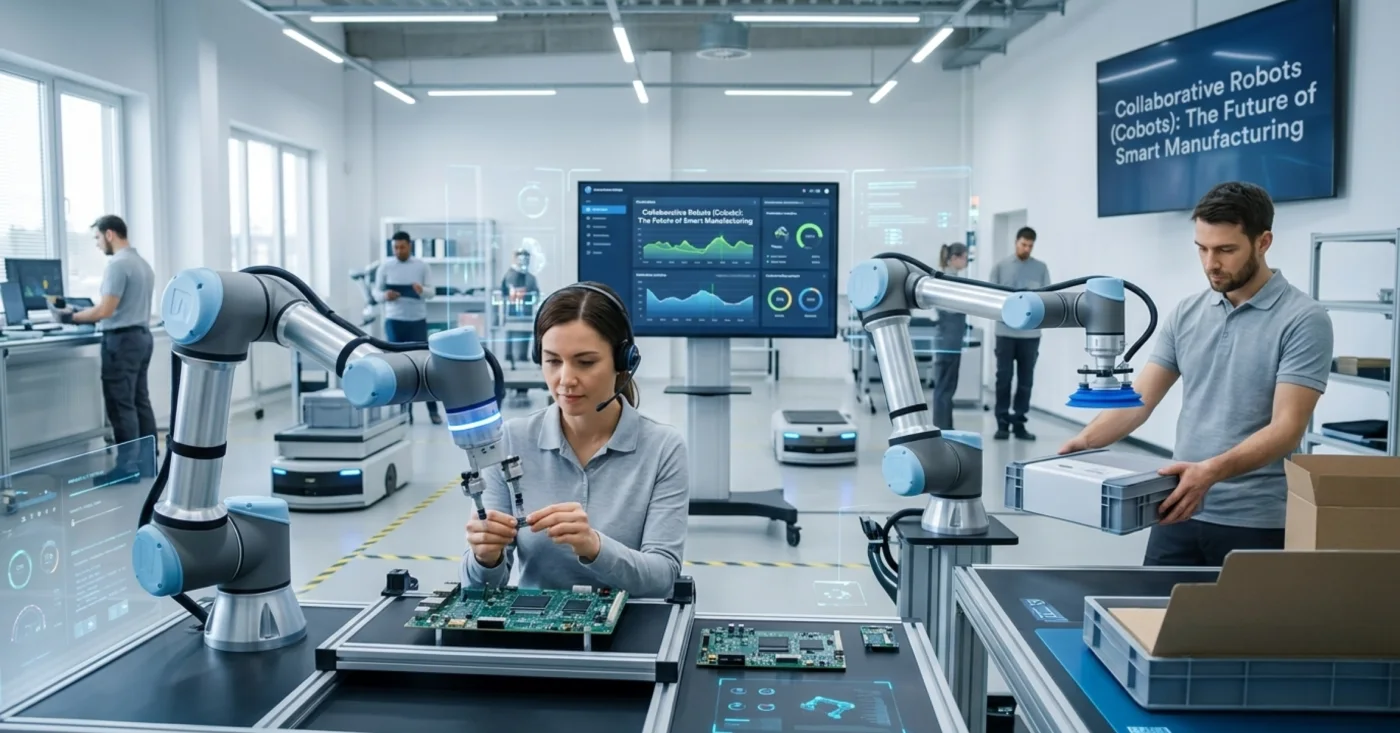
Collaborative robots are highly advanced machines designed to share a workspace with human workers safely. Unlike traditional robots, they do not require heavy safety cages or complex fencing. They are built specifically for direct interaction and cooperation with human operators.
These machines serve as powerful assistants on the factory floor. They take over repetitive, dangerous, or physically demanding tasks. This allows human workers to focus on tasks requiring critical thinking and dexterity.
The core of cobot technology lies in its sophisticated safety sensors and intuitive programming. If a cobot bumps into a person or object, it stops moving immediately. This guarantees a secure environment for human robot collaboration in factories.
How Cobots Work
Understanding how collaborative robots work in manufacturing starts with their sensory feedback systems. Cobots feature built-in force and torque sensors at their joints. These sensors constantly monitor resistance, allowing the robot to detect unexpected contact instantly.
Operators program these robots through a process called hand-guiding. A worker simply moves the robot arm through the desired motions to teach it a new task. The robot memorizes these coordinates and repeats the movement with perfect precision.
Advanced software serves as the brain behind these machines. The software allows operators to adjust speeds, set safety boundaries, and integrate vision systems. This combination of hardware and software makes cobots improving manufacturing efficiency a reality for modern plants.
Key Applications of Cobots in Manufacturing
Machine Tending
Cobots excel at loading and unloading parts from CNC machines, presses, and injection molding equipment. They handle this repetitive cycle continuously without requiring breaks. This keeps expensive manufacturing machinery running at maximum capacity.
Assembly Tasks
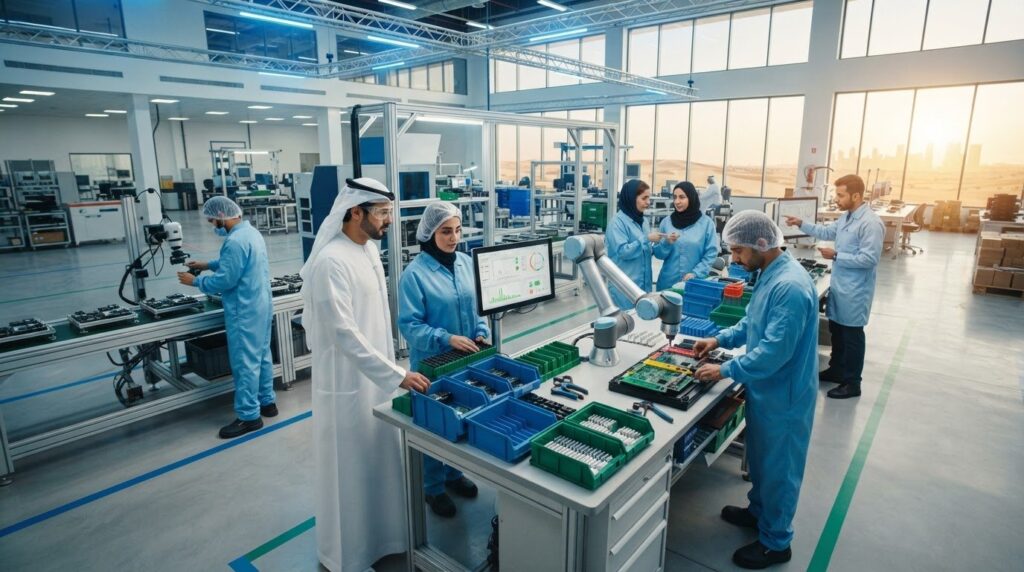
Collaborative robots for industrial automation are perfect for precise assembly work. They can drive screws, apply adhesives, and fit components together with exact repetition. Human workers can simultaneously inspect the assembled parts or handle the final finishing touches.
Packaging and Palletizing
End-of-line packaging is a physically demanding job that often leads to repetitive strain injuries. Cobots easily lift boxes, arrange them on pallets, and wrap them for shipping. They can adapt to different box sizes and stacking patterns through quick software adjustments.
Benefits of Using Cobots in Smart Manufacturing
The benefits of cobots in smart manufacturing directly impact your production costs and output. They bring incredible flexibility to factory floors of all sizes. Here is how they improve operations:
- Fast Return on Investment (ROI): Cobots cost less than traditional robots and usually pay for themselves within a year.
- Easy Programming: Workers with no coding experience can train a cobot in minutes.
- Enhanced Workplace Safety: Built-in sensors prevent injuries, creating a secure environment for staff.
- Increased Flexibility: You can easily move a lightweight cobot between different workstations as production needs change.
- Higher Quality Output: Cobots perform tasks with exact consistency, drastically reducing product defects.
Cobots vs Traditional Industrial Robots
Traditional industrial robots are massive, fast, and potentially dangerous to humans. They require strict physical barriers, safety light curtains, and dedicated floor space. Once installed, moving them to a new location is incredibly expensive and time-consuming.
Cobots prioritize safety and flexibility over raw speed and extreme payload capacity. They operate without cages, saving valuable floor space in crowded factories. You can mount them on mobile carts and roll them to different assembly lines seamlessly.
Programming also highlights a major difference between the two systems. Traditional robots require highly trained engineers writing complex code. Anyone on the factory floor can program a cobot using an intuitive touchscreen interface or hand-guiding.
Industries Using Collaborative Robots
The automotive industry relies heavily on collaborative robotics solutions for industry. Car manufacturers use cobots to apply sealants, test electronics, and tighten bolts on moving assembly lines. This ensures consistent quality across thousands of vehicles.
Electronics manufacturers use cobots for delicate tasks like handling fragile circuit boards. The robots insert microchips and solder components with a level of precision humans struggle to maintain. They operate safely in clean-room environments without contaminating sensitive materials.
The food and beverage sector also embraces this technology rapidly. Food processors use cobots to package baked goods, sort produce, and handle secondary packaging tasks. Wash-down capable cobots ensure factories maintain strict hygiene and sanitation standards.
Benefits of Cobots for Small Manufacturers
Cobots for small and medium manufacturers level the playing field against massive corporations. Small businesses often lack the capital or floor space for traditional automation. Cobots offer a budget-friendly entry point into robotic manufacturing.
These machines help small shops handle sudden spikes in seasonal demand. Instead of struggling to hire temporary workers, managers can deploy a cobot to double production hours. The robot can run a second or third shift unattended, dramatically increasing output.
Furthermore, cobots protect small teams from repetitive strain injuries and burnout. By automating the dullest tasks, small manufacturers can retain skilled workers longer. Employees appreciate being elevated to machine supervisors rather than manual laborers.
Challenges of Implementing Cobots
Despite their advantages, companies must navigate certain challenges when adopting this technology. Payload and speed limitations are the most common constraints. Because they prioritize safety, cobots move slower and lift less weight than traditional heavy-duty robots.
Integration with older equipment can also pose technical hurdles. Connecting a modern cobot to a legacy machine that lacks digital interfaces requires custom engineering. Companies must budget for the necessary sensors and communication gateways.
Finally, managing employee expectations is crucial for success. Workers might initially fear that the robot will replace their job entirely. Management must communicate clearly that the cobot is a tool designed to assist them, not replace them.
Role of Cobots in Industry 4.0
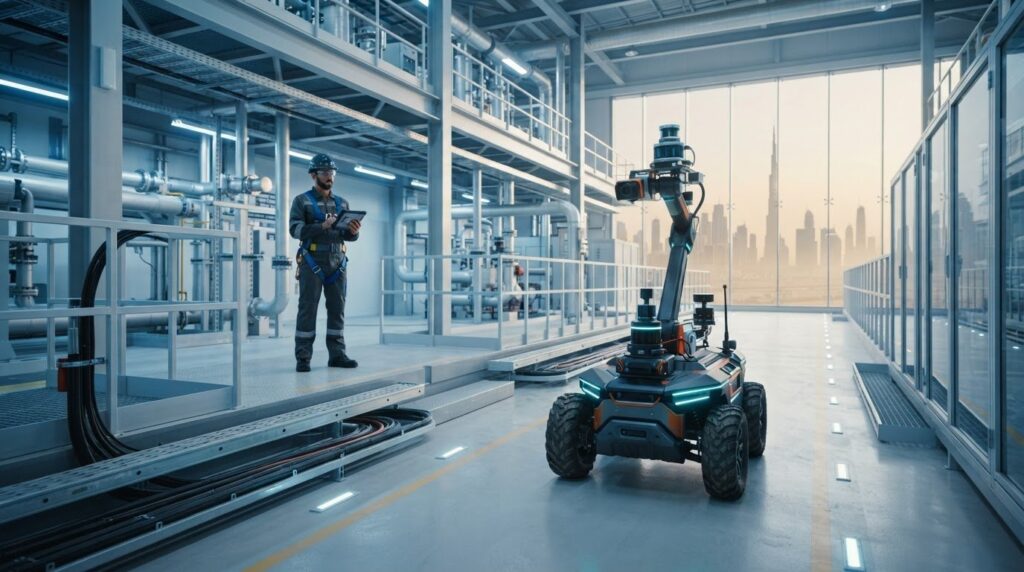
Industry 4.0 focuses on creating fully connected, data-driven manufacturing environments. Cobots act as vital data collection points within this smart ecosystem. They continuously stream performance metrics back to central factory management systems.
AI powered collaborative robots take this connectivity a step further. Machine learning algorithms allow these robots to optimize their own movements and predict maintenance needs. They can recognize parts using smart cameras and adjust their grip accordingly.
This seamless data exchange creates a highly responsive production line. If a bottleneck occurs, the smart factory system can reassign a cobot to help clear it. This level of agility is the cornerstone of modern industrial automation.
Future of Collaborative Robotics
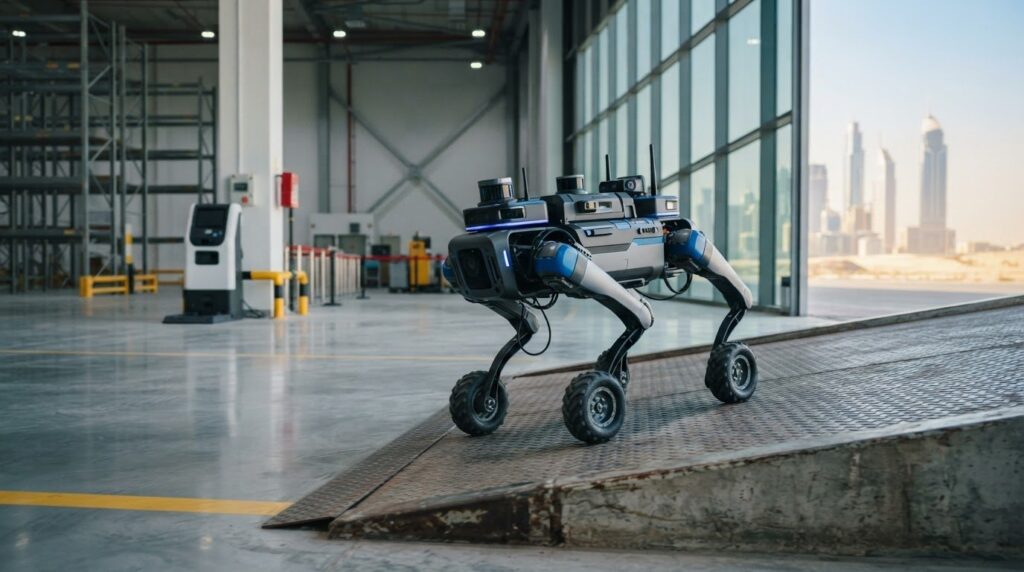
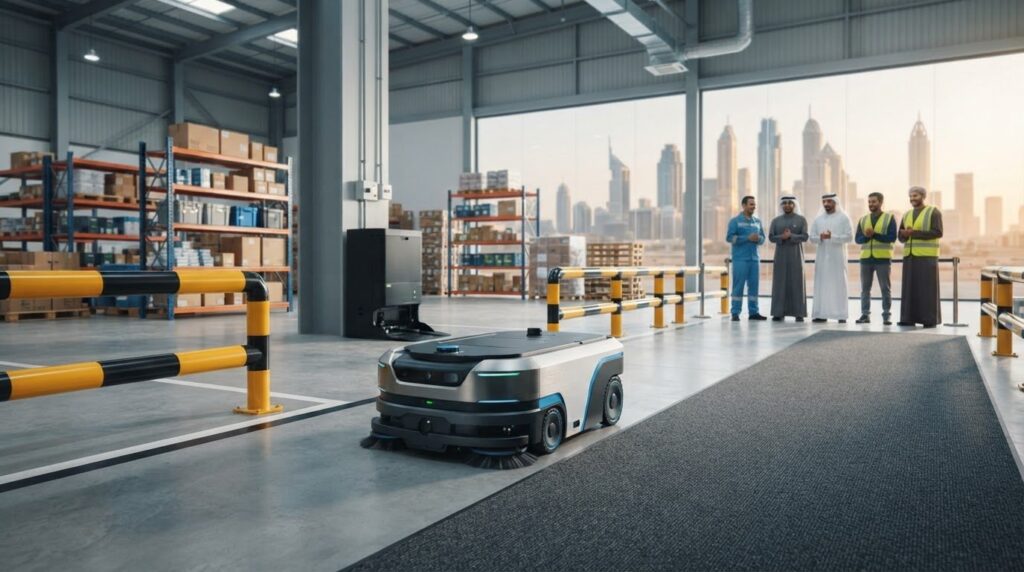
The future of collaborative robots involves even greater autonomy and intelligence. We will soon see cobots mounted on autonomous mobile platforms navigating factory floors freely. This allows a single robot arm to tend machines across the entire facility.
Advancements in artificial intelligence will make programming virtually obsolete. Future cobots will learn tasks simply by watching a human perform them on a video feed. They will adapt to new products instantly without manual reprogramming.
We will also see enhanced tactile feedback systems in robotic grippers. This will allow cobots to handle incredibly delicate or squishy objects, like ripe fruit or soft fabrics. The line between human dexterity and robotic capability will continue to blur.
Ready to upgrade your manufacturing floor?
Contact Ednex Automation today to schedule a personalized consultation and see how our collaborative robot solutions can boost your production efficiency!
Available in GCC Countries:
- United Arab Emirates (UAE)
- Saudi Arabia (KSA)
- Qatar
- Oman
- Kuwait
- Bahrain
Collaborative robots have fundamentally changed the landscape of modern production. They break down the barriers that once made automation too expensive or complex for many businesses. By prioritizing safety and flexibility, they empower workers rather than replacing them.
Implementing collaborative robotics solutions for industry prepares your business for future challenges. You gain the ability to scale production rapidly while maintaining strict quality control. The rapid ROI makes it a practical decision for operations of any size.
Evaluate your current production lines to identify repetitive, low-value tasks. By introducing cobots into these areas, you build a resilient, efficient, and highly competitive manufacturing floor.
FAQ
What does “collaborative” mean in robotics?
Collaborative means the robot is designed to work safely alongside humans. It uses force sensors and rounded edges to prevent injuries, eliminating the need for physical safety cages.
Are cobots easy to program?
Yes, cobots are incredibly user-friendly. Most models allow operators to program them by physically guiding the robotic arm through the desired motions, requiring no coding experience.
Can a cobot replace a traditional industrial robot?
Not always. Cobots are ideal for light-duty, flexible tasks requiring human interaction. Traditional robots are still necessary for high-speed, heavy-lifting applications.
How much weight can a collaborative robot lift?
Most cobots handle payloads between 3 and 25 kilograms. Some newer models can lift up to 30 kilograms, but they are generally built for lighter, precise tasks.
Do small businesses benefit from cobots?
Absolutely. Cobots have a low initial cost, require minimal floor space, and offer a fast return on investment, making them perfect for small and medium enterprises.
Author Bio
Ednex Automation is a premier provider of cutting-edge robotics and smart manufacturing solutions. We specialize in transforming traditional production lines into highly efficient, scalable, and automated ecosystems using the latest cobot technology.