How Robotics and Automation Will Help Fire and Safety Industries
Introduction
In today’s high-risk environments, fire and safety professionals face increasing challenges from navigating burning high-rises and industrial facilities to responding to chemical hazards, confined rescues, and extreme weather conditions. While traditional methods still play a critical role, the integration of robotics in fire and safety is emerging as a transformative solution that can reduce human risk, improve efficiency, and save lives.
This blog explores how robotics and firefighting automation solutions are reshaping the fire and safety industry through innovation, real-time responsiveness, and smart integration.
- The Rising Need for Automation in Emergency Services
Firefighters and rescue teams are often exposed to hazardous conditions that test physical limits, reduce visibility, and introduce unpredictable dangers like collapsing structures or toxic gas exposure. With climate change intensifying wildfires and urban expansion increasing complexity, there is a growing demand for autonomous, intelligent systems that can support or lead in disaster response.
Robots don’t get tired, don’t panic, and can enter areas humans simply cannot. These traits are redefining how the fire and safety sector approaches modern emergencies.
- Key Applications of Robotics in Fire and Safety
Firefighting Robots
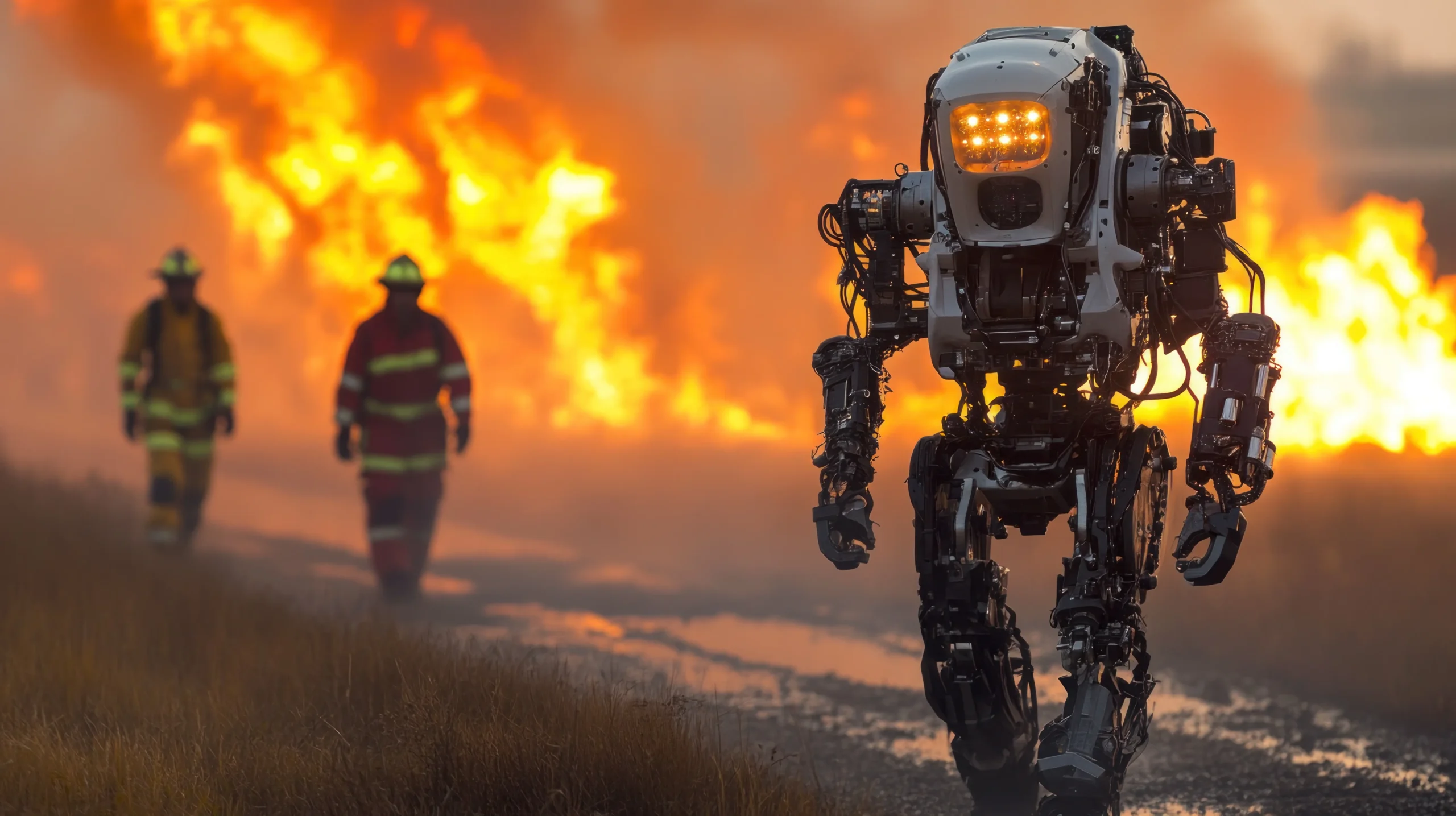
These are rugged, ground-based robots designed to navigate burning buildings or hazardous industrial environments. Controlled remotely or semi-autonomously, they can:
- Suppress fires using mounted hoses or extinguishers.
- Resist high temperatures.
- Use thermal cameras and gas sensors for situational awareness.
Example: Colossus by Shark Robotics assisted during the Notre-Dame Cathedral fire, carrying equipment and helping cool burning areas too dangerous for humans.
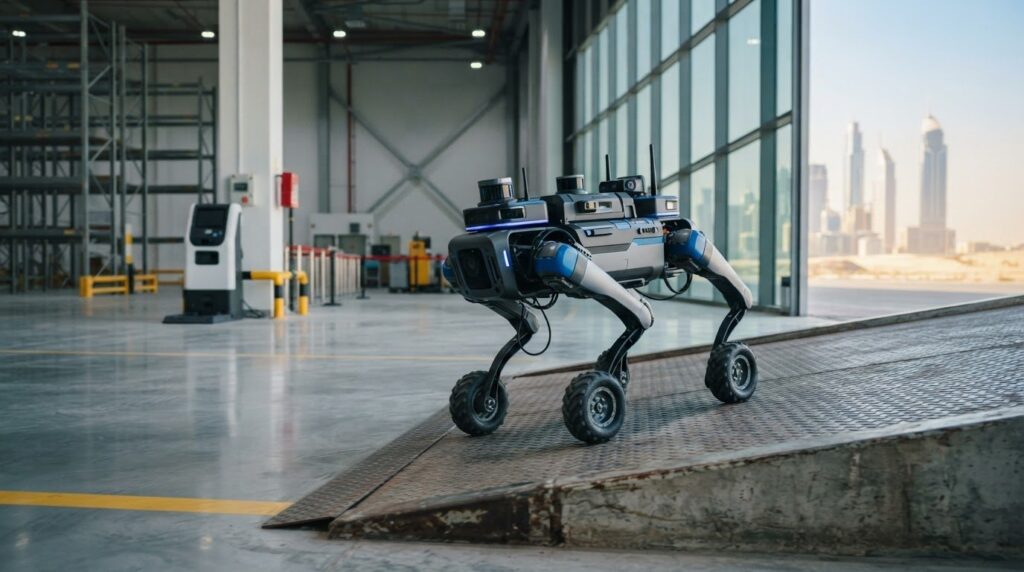
Use Case in MENA: Robots like the Unitree B2, known for stability and terrain adaptability, can be configured with flame-resistant materials and firefighting modules for deployment in industrial zones or ports.
Drones and UAVs for Surveillance & Rescue
Aerial robotics are increasingly deployed to:
- Map fire spread using thermal imaging.
- Locate trapped victims during natural disasters.
- Provide overhead views of hazardous zones for command centers.
Their ability to bypass obstacles and offer a bird’s-eye view is invaluable during wildfires, chemical plant incidents, and building collapses.
Autonomous Hazard Detection & Monitoring
Robots equipped with chemical, gas, and temperature sensors are now being used in:
- Oil & gas facilities.
- Nuclear power plants.
- Chemical processing zones.
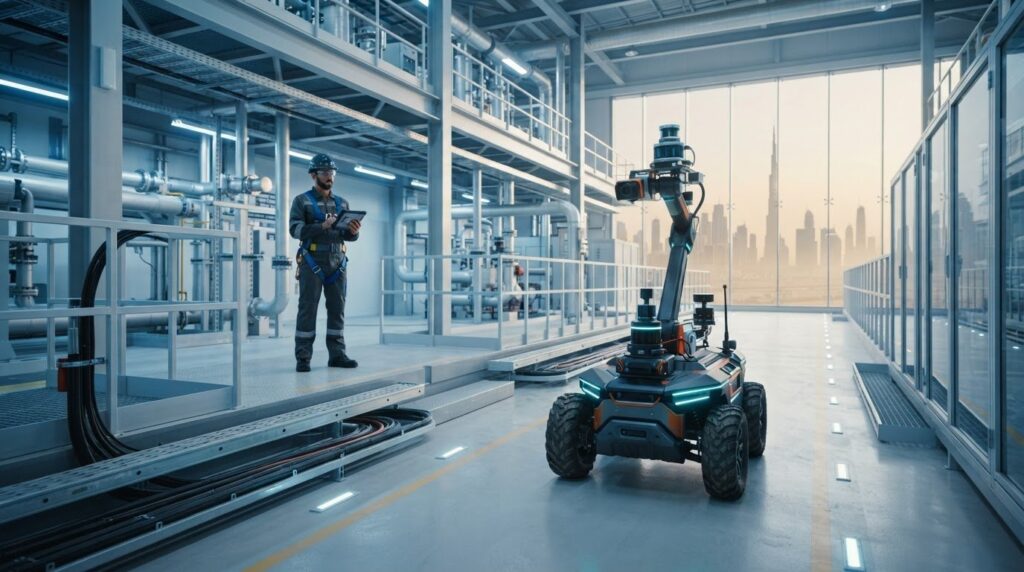
These robots perform 24/7 monitoring, immediately identifying leaks, smoke, or abnormal readings and sending alerts—often faster than human surveillance teams.
Rescue Robots in Confined Spaces
Compact robots are being used to:
- Crawl through rubble.
- Detect motion, sound, or CO2 emissions.
- Communicate with trapped individuals.
They can also deliver essentials like oxygen or first aid supplies until human rescue teams arrive.
- Benefits of Robotics in Fire and Rescue Operations
- Enhanced Human Safety: Robots can handle the most dangerous tasks, reducing fatalities and injuries among firefighters and first responders.
- Real-Time Data Insights: Advanced sensors and AI collect, analyze, and relay crucial information for fast, informed decision-making.
- Operational Efficiency: Robots can work continuously without fatigue, improving response time and coverage.
- Access to Unreachable Areas: From collapsed tunnels to nuclear disaster zones, robots can go where humans cannot.
- Integrated Command Systems: Robots feed into digital dashboards for centralized control and incident managemen
- Firefighting Automation Solutions: A New Ecosystem
Modern fire response strategies now go beyond boots on the ground. Automation ecosystems combine:
- Ground robots for suppression,
- Drones for aerial assessment,
- IoT-based sensors across facilities,
- AI-powered software for coordination and analytics.
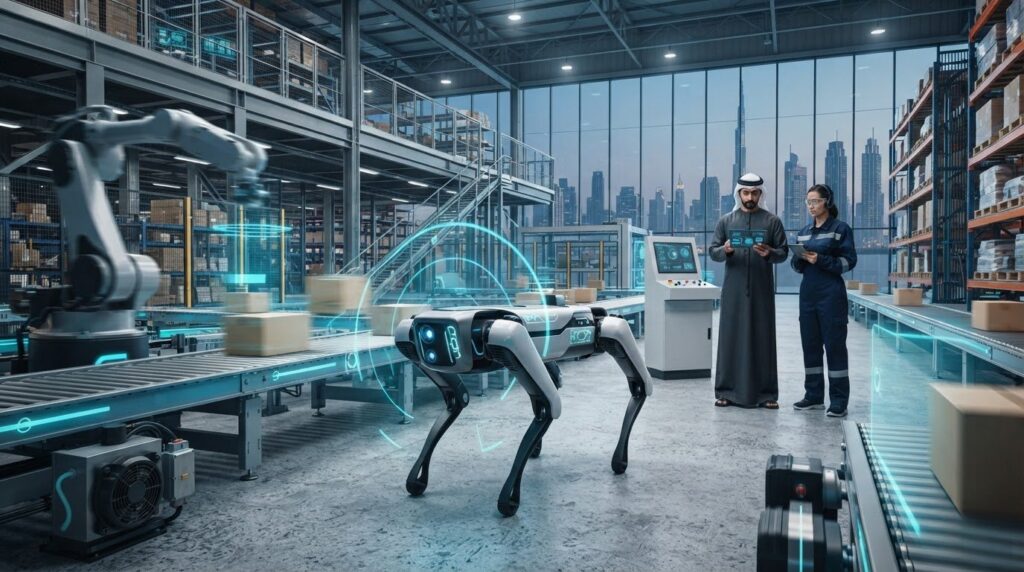
Together, they provide an end-to-end solution for faster, smarter, and safer emergency response.
Example: Smart buildings integrated with automated fire response can trigger alerts, deploy surveillance drones, and activate firefighting bots even before human intervention.
- How EdNex Automation is Powering Fire & Safety Innovation
At EdNex Automation, we work with global partners to offer robotic and automation solutions tailored to high-risk sectors. Our expertise includes:
- Mobile robotics platforms like Unitree and AgileX for rugged environments.
- AI vision systems for detection, tracking, and situational awareness.
- Customizable robotics kits for research labs and emergency services training.
We also help universities and technical institutions build advanced training environments where students simulate fire and safety scenarios using intelligent robotics bridging the gap between education and real-world application.
Conclusion
The future of firefighting and emergency response will be defined not just by bravery, but by technology-enhanced bravery. Robotics in fire and safety doesn’t replace human heroes it empowers them. From high-heat firefighting to silent surveillance and precision rescue, firefighting automation solutions are saving lives while reducing risk.
As fires, disasters, and industrial threats grow in frequency and complexity, robotics and automation are no longer optional they’re essential.