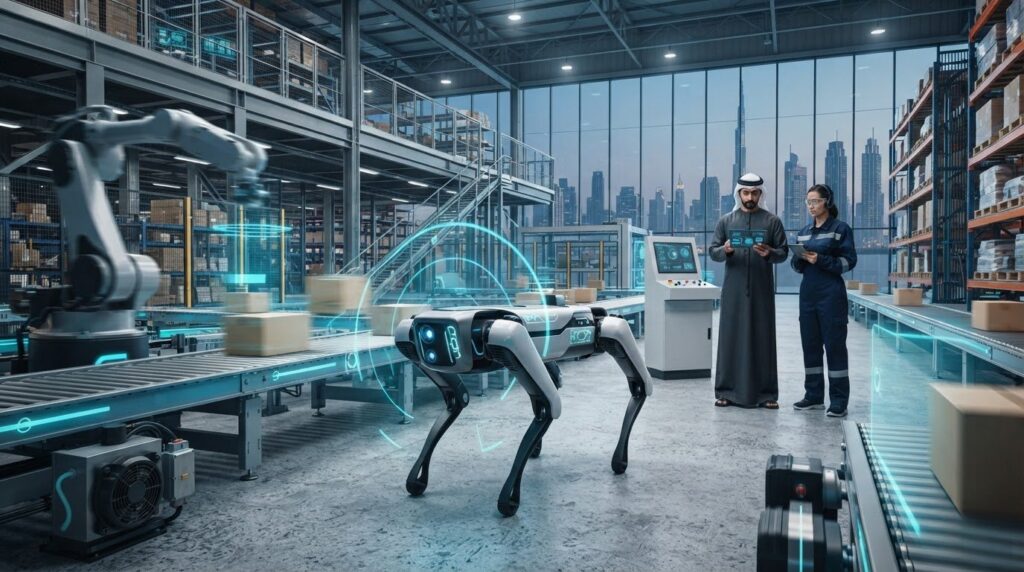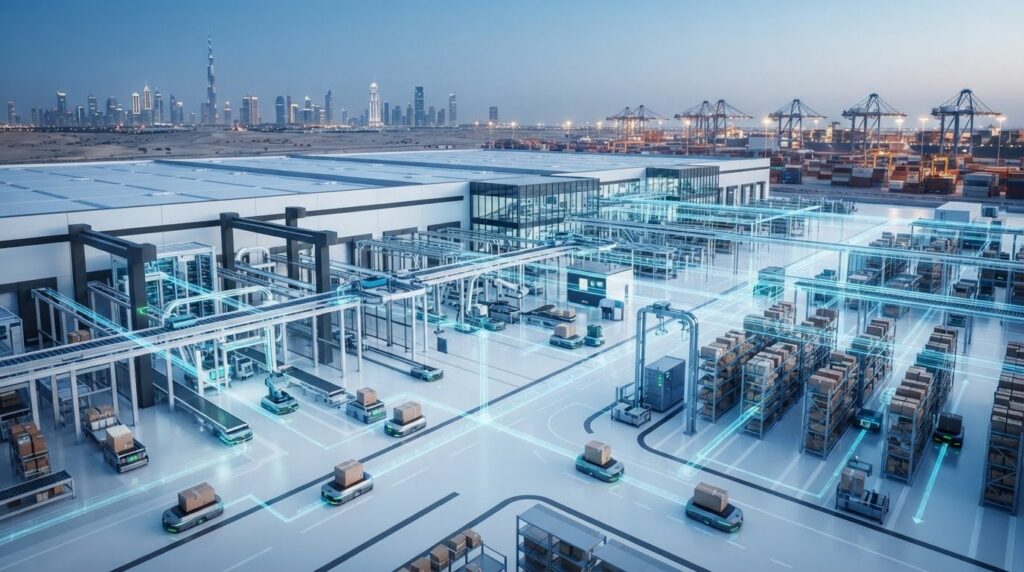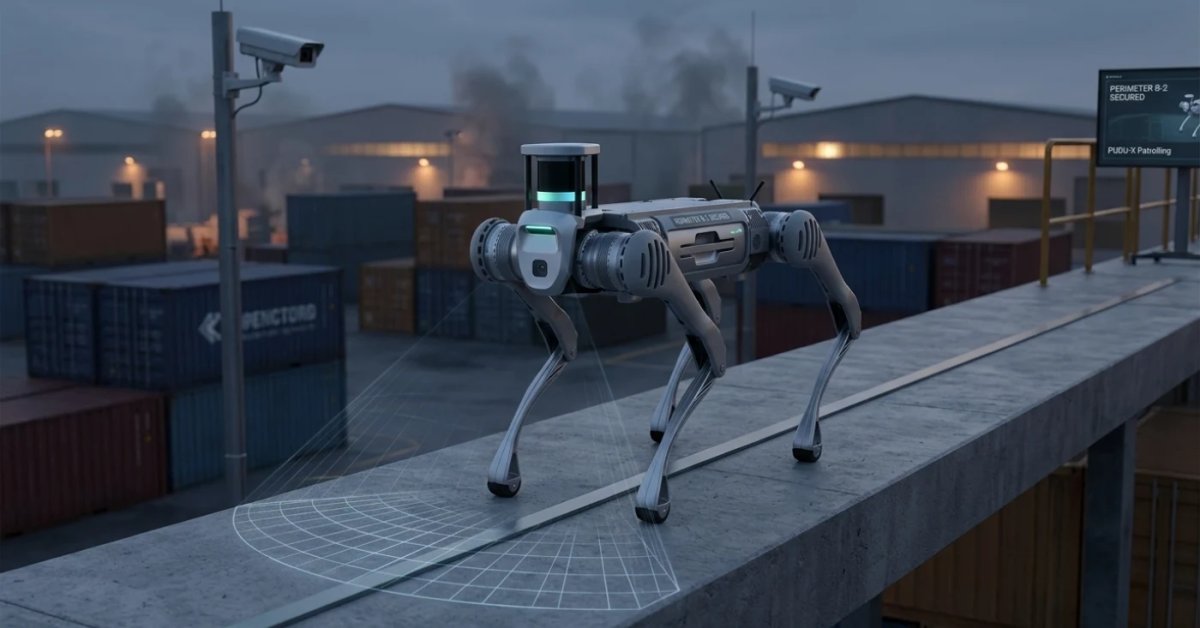
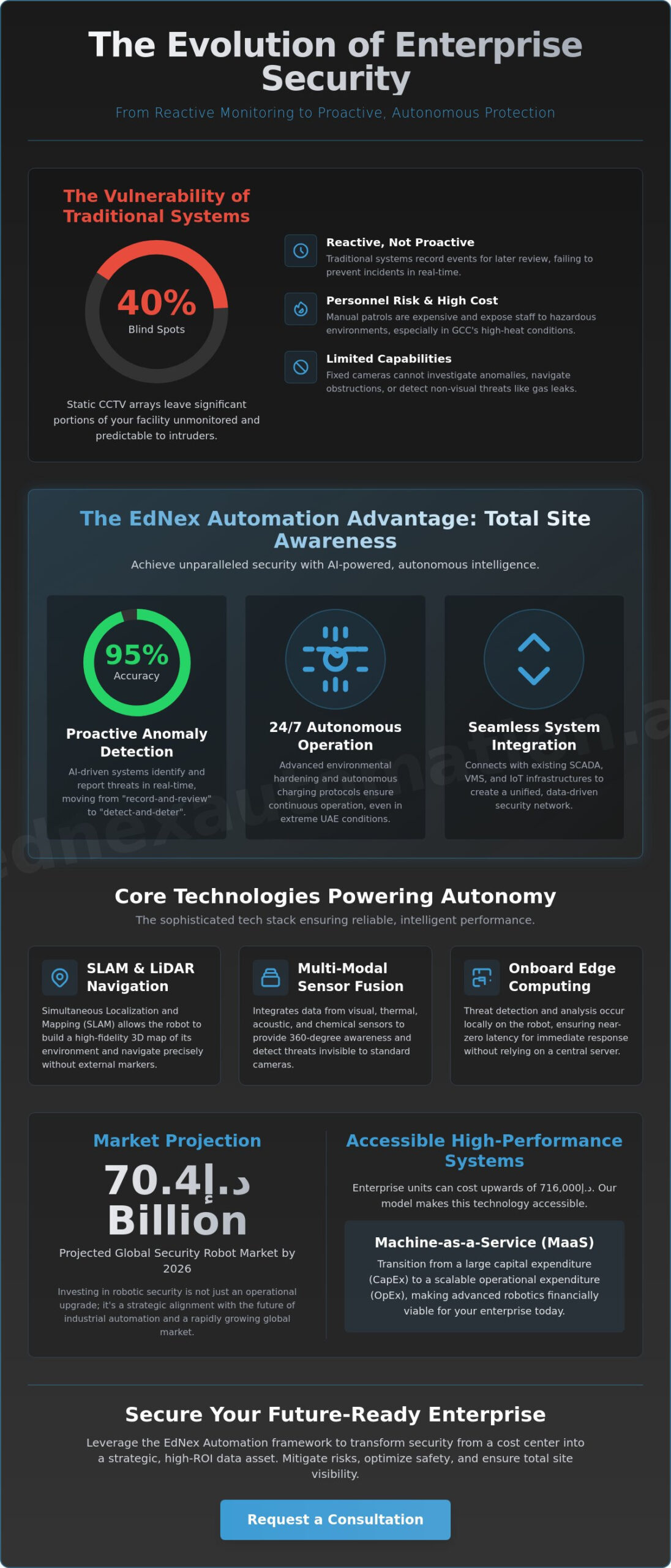
While the global market for security robots is projected to reach د.إ70.4 billion by 2026, many UAE enterprises still rely on static CCTV arrays that leave up to 40% of their facility in literal blind spots. You likely recognize the mounting pressure of rising personnel costs and the inherent risks of manual patrolling in high-heat or hazardous environments across the GCC. Integrating robotic surveillance systems isn’t just about replacing a guard with a machine; it’s about deploying autonomous, AI-powered intelligence that achieves 95% anomaly detection accuracy. EdNex Automation understands that for a future-ready enterprise, security must evolve into a seamless, data-driven operation that scales without proportional cost increases.
This guide provides a technical roadmap for implementing advanced robotics to lower long-term overhead and optimize facility safety. You’ll discover how the latest “Machine-as-a-Service” models make high-performance systems, such as fully configured enterprise units that can cost upwards of د.إ716,000, more accessible through scalable operational expenditure. We’ll examine the convergence of physical and cybersecurity, the impact of the May 2026 price adjustments in the hardware sector, and the specific protocols for integrating autonomous platforms with your existing SCADA or VMS infrastructure to ensure total site visibility.
Key Takeaways
- Transition from reactive recording to proactive, autonomous detection by leveraging SLAM navigation and multi-modal sensor fusion for total facility awareness.
- Identify the most effective robotic surveillance systems for your enterprise by matching mobility requirements and terrain complexity to specific IP-rated hardware.
- Mitigate the risks of extreme UAE environmental conditions through advanced environmental hardening and autonomous charging protocols designed for 24/7 operational uptime.
- Leverage the EdNex Automation framework to integrate autonomous robotics into existing SCADA infrastructures, transforming security into a strategic, high-ROI data asset.
The Evolution of Security: Defining Robotic Surveillance Systems
Modern industrial protection has transitioned from passive observation to active, intelligent engagement. Robotic surveillance systems represent the next-gen evolution of this shift, manifesting as autonomous or semi-autonomous mobile platforms that integrate multi-modal sensors to achieve total situational awareness. Unlike traditional methods, these systems don’t just record events; they analyze environments in real time to prevent incidents before they escalate. This movement from reactive “record-and-review” protocols to proactive “detect-and-deter” autonomous patrolling is fundamental for enterprises managing high-value assets. Essentially, a robotic surveillance system serves as an AI-powered extension of a facility’s sensory network, moving beyond the limitations of fixed hardware to provide a dynamic, intelligent presence that adapts to its surroundings.
Understanding the distinction between these platforms and other security tiers is vital for strategic planning. While aerial drones provide excellent wide-area overviews, they often struggle with limited battery life and payload constraints. Static CCTV remains a staple, yet it lacks the mobility to investigate anomalies or navigate around physical obstructions. Mobile robotics bridge this gap by offering ground-level persistence and the ability to carry sophisticated sensor arrays, including thermal imaging and acoustic glass-break detectors. For a deeper dive into the mechanics of these platforms, Autonomous Robots Explained provides a technical foundation for how these machines interpret and interact with complex industrial spaces.
Why Static Cameras Are No Longer Sufficient
Fixed security arrays are inherently predictable, creating permanent blind spots that sophisticated intruders can easily exploit. In large-scale UAE logistics hubs or manufacturing plants, relying solely on static cameras often leaves significant portions of the facility unmonitored. Human patrolling has historically filled these gaps, but it introduces high operational costs and physical limitations. In the GCC region, where summer temperatures frequently exceed 50°C, manual patrolling in outdoor or non-conditioned zones becomes a safety risk for personnel. Robotic systems eliminate these vulnerabilities by maintaining consistent, high-frequency patrol routes without fatigue or environmental distress.
The Role of Industry 4.0 in Modern Security
Integrating security robotics into the broader Industry 4.0 ecosystem transforms a simple patrol unit into a mobile data hub. These robots don’t operate in isolation; they connect seamlessly with IoT sensors, SCADA systems, and existing Video Management Software (VMS) to provide a unified operational picture. This connectivity allows facility managers to optimize resource allocation based on real-time data collected during patrols. For the 2026 enterprise, a “Future-Ready” security architecture isn’t a luxury. It’s a technical necessity that ensures safety protocols evolve alongside the rapid pace of industrial automation and digital transformation. Understanding the broader context of the UAE robotics industry in 2026 provides essential strategic context for enterprises planning to integrate autonomous security platforms at scale.
Core Technologies: How Autonomous Security Robots Operate
The operational efficacy of robotic surveillance systems relies on a sophisticated stack of hardware and software designed for high-stakes industrial environments. At the foundation of these machines is Simultaneous Localization and Mapping (SLAM) combined with LiDAR sensors, which allow the robot to build a high-fidelity map of its surroundings while simultaneously tracking its own position. This technology enables precise navigation through complex layouts without the need for external beacons or floor markings. By emitting laser pulses thousands of times per second, the system creates a 3D point cloud that identifies obstacles with millimeter precision, ensuring safe movement even in dynamic spaces where equipment or personnel frequently change positions.
Superior perception is achieved through sensor fusion, a process that integrates data from visual, thermal, acoustic, and chemical sensors to provide 360-degree awareness. While a standard camera might miss a gas leak or a failing electrical component, thermal and chemical sensors detect these anomalies before they manifest as visible threats. Processing this data requires edge computing, where threat detection occurs locally on the robot’s onboard processor. This localized analysis ensures near-zero latency, allowing the unit to trigger immediate deterrents or alerts without waiting for cloud-based verification. Connectivity via 5G and industrial Wi-Fi then facilitates seamless VMS integration, streaming high-definition telemetry to security teams in real time.
AI-Powered Analytics and Threat Detection
Advanced AI algorithms transform raw sensor data into actionable intelligence by performing complex object recognition. These systems distinguish between authorized employees, wildlife, and potential intruders with high accuracy, significantly reducing the 40% false alarm rate often associated with traditional motion sensors. Beyond simple identification, behavioral analysis identifies unsafe worker practices or unauthorized access to restricted zones. Anomaly detection also monitors for acoustic signatures, such as the sound of breaking glass or high-pressure leaks, providing a comprehensive safety net that traditional security simply cannot match.
Integration with Industrial Control Systems
A critical advantage of modern security robotics is their ability to bridge the gap between physical security and PLC and SCADA integration services. Surveillance robots act as mobile nodes in a SCADA network, providing real-time telemetry and visual verification from locations previously inaccessible to fixed sensors. When a robot detects a critical fault, such as an overheating transformer, it can trigger an automated alert within the central control room via standard industrial protocols. Adhering to OSHA Robotics Safety Standards ensures that these autonomous units operate safely alongside human workers while maintaining this deep level of system integration. If you’re looking to unify your facility’s safety protocols, exploring integrated automation frameworks is the next logical step for your security strategy.
Choosing the Right Model: Fixed vs. Mobile vs. Humanoid Systems
Selecting the optimal robotic surveillance systems architecture demands a rigorous assessment of facility scale, terrain complexity, and the required level of human-robot interaction. It’s a strategic decision where the hardware must match the specific vulnerability profile of the site. While fixed systems provide a baseline of 24/7 visibility for high-traffic entry points, they lack the investigative agility required for expansive or high-risk industrial sites. Engineering a balanced fleet involves calculating the trade-offs between mobility speed, battery longevity, and the weight of the sensor payload. For example, a unit equipped with an extensive array of high-definition LiDAR and chemical sensors will naturally consume more power, potentially reducing patrol cycles unless supported by autonomous charging infrastructures. The 2026 market increasingly favors multi-purpose platforms that handle both security patrolling and high-priority deliveries, effectively doubling the utility of the asset within the industrial ecosystem. This versatility is driven by the rapid evolution of AI applications in autonomous systems, which provide the computational intelligence needed to switch between security and logistics tasks without manual reconfiguration.
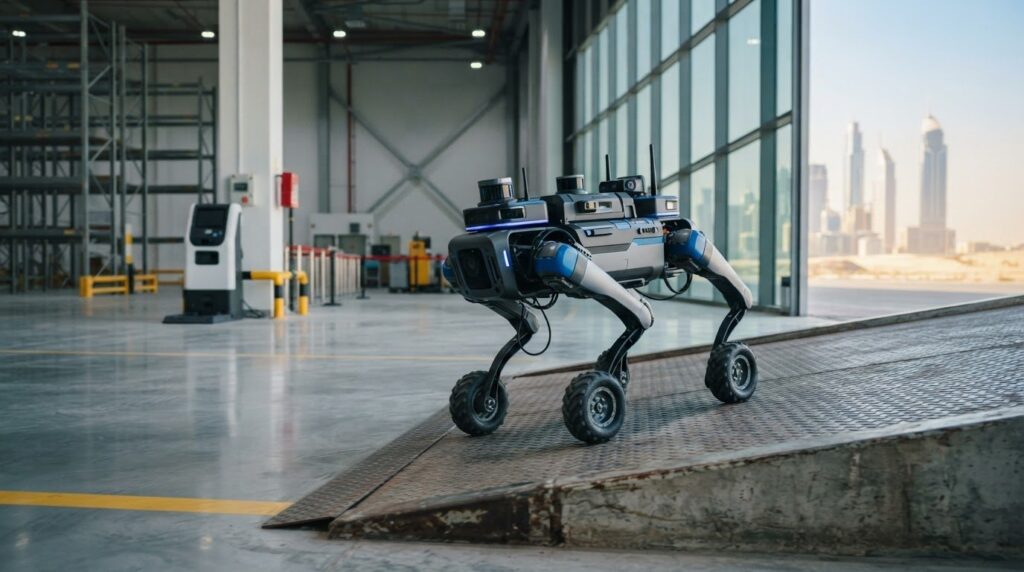
Strategic alignment involves matching robotic capabilities to specific risk profiles. A facility prone to unauthorized scaling of perimeter fences requires high-speed mobile units with long-range thermal optics. Conversely, an indoor pharmaceutical lab might prioritize small-footprint units with chemical sensing to detect spills or environmental shifts. Choosing the wrong form factor leads to operational friction; for example, a wheeled unit might struggle with the uneven gravel of an outdoor construction site, where a quadruped or specialized off-road platform would thrive. By analyzing these environmental variables, enterprises can deploy a fleet that provides 100% coverage without redundant expenditures.
Autonomous Mobile Robots (AMRs) for Perimeter Security
Autonomous Mobile Robots (AMRs) excel in perimeter security for massive UAE logistics hubs and outdoor industrial yards. They navigate unstructured environments without human intervention, maintaining consistent surveillance even in areas where static infrastructure is absent. Integrating autonomous mobile robots creates a powerful synergy between security and logistics, as these units can monitor fence lines while simultaneously tracking inventory movement across the site. This dual-role capability ensures that the technology contributes to both facility safety and operational efficiency.
Humanoid and Inspection Robots for Complex Facilities
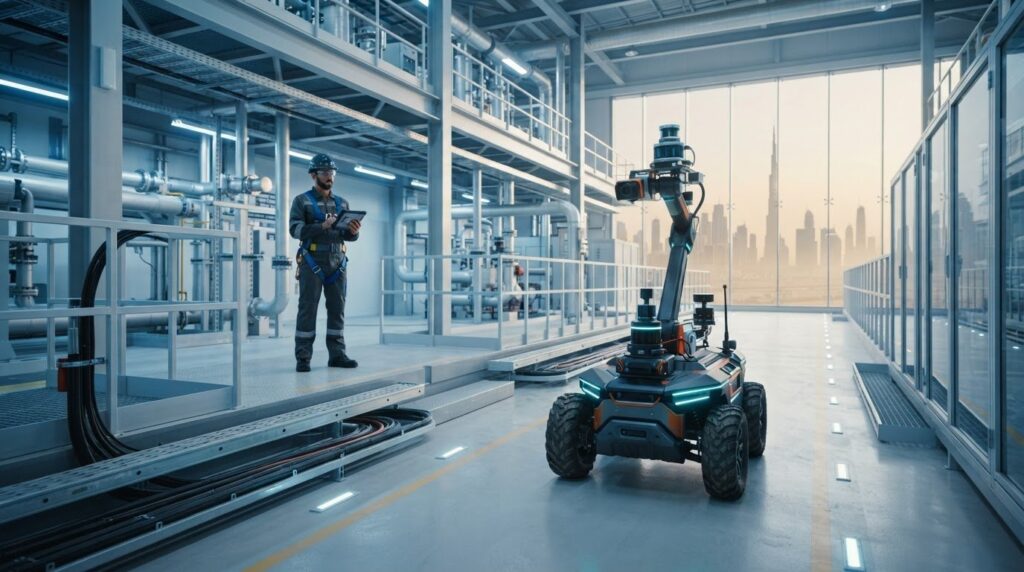
Humanoid and specialized inspection robots are the preferred choice for complex facilities where a “human-like” presence or high dexterity is required. These systems are invaluable for hazardous zones, such as chemical processing plants or high-voltage substations, where human entry is restricted for safety reasons. As detailed in our Humanoid Robots UAE guide, these platforms offer the strategic value of performing tactile inspections and operating controls that were originally designed for human hands. They ensure that security doesn’t stop at the doorway of a dangerous environment, providing a technical bridge for enterprises that demand uncompromising safety standards. For facilities where asset integrity is equally critical, robotic inspection services extend this capability by generating high-resolution 3D digital twins and enabling zero-downtime assessments of critical infrastructure.
Strategic Implementation: Environmental and Regulatory Factors
Deploying robotic surveillance systems within the UAE demands a rigorous engineering approach to environmental resilience. Standard hardware often fails under the localized stress of extreme heat, abrasive sand ingress, and high humidity characteristic of the GCC. For a successful rollout, enterprises must specify IP-rated protection, typically IP65 or higher, to safeguard sensitive optics and internal circuitry from fine desert dust that can compromise mechanical joints. Specialized thermal management systems are an absolute necessity for robots operating in high-ambient temperatures to prevent processor throttling or battery degradation during peak summer months. By prioritizing these hardening standards, a “Future-Ready Enterprise” ensures that its technological investment remains operational even in the most unforgiving industrial climates.
Mission planning must also account for sophisticated power management to ensure 24/7 operational continuity without human oversight. Autonomous charging stations should be strategically placed along patrol routes, allowing units to dock and recharge based on real-time battery telemetry and mission priority. Safety remains a non-negotiable pillar of implementation; all deployments must adhere to international human-robot collaboration standards, specifically ISO 10218. This involves integrating multi-layered emergency stop logic and active obstacle avoidance sensors that protect personnel in shared industrial spaces. Shaping a secure environment requires these technical safeguards to work in perfect synchronization with the facility’s existing safety protocols.
National Regulatory Compliance and Privacy
Navigating the legal landscape in the UAE is critical for maintaining a compliant and authoritative security posture. Enterprises must ensure their data processing protocols strictly adhere to national data protection laws, particularly regarding facial recognition and the storage of surveillance footage. Coordinating with local law enforcement and obtaining specific permits for autonomous outdoor patrolling ensures that your robotic fleet operates within the legal framework of the region. This proactive regulatory alignment prevents operational delays and reinforces the brand’s status as a responsible technological leader.
Infrastructure Readiness Checklist
Before the first unit begins its patrol, a comprehensive infrastructure audit is required to guarantee seamless integration. This checklist serves as the foundation for a reliable robotic network:
- Validating consistent Wi-Fi or 5G coverage across 100% of the patrol route to prevent telemetry dropouts or video lag.
- Installing heavy-duty charging bay locations equipped with the appropriate power infrastructure and environmental shielding.
- Upskilling existing security personnel to act as “robot supervisors,” shifting their role from manual patrolling to high-level system oversight.
Architecting a resilient security network requires more than just hardware; it demands a deep understanding of regional technical constraints and regulatory nuances. If you’re ready to modernize your facility’s defenses with best-in-class technology, consult with our automation experts to design a tailored implementation strategy that delivers measurable results.
Future-Ready Security: The EdNex Automation Advantage
EdNex Automation operates as a Technological Architect, moving beyond the role of a traditional hardware vendor to provide the intellectual and technical framework required for modern industrial safety. We don’t just sell machines; we engineer comprehensive, multi-layered robotic surveillance systems that serve as the backbone of a facility’s intelligence. By maintaining Authorized Partner status with global robotics leaders, we ensure our clients have access to best-in-class hardware that’s been rigorously tested for the specific demands of the GCC. This regional focus allows us to design tailored solutions that account for the environmental and regulatory nuances discussed previously, ensuring every deployment is optimized for maximum reliability and performance.
Our commitment to excellence extends from the initial site audit through to post-deployment maintenance. We understand that in the high-stakes environments of the UAE, system downtime isn’t just an inconvenience; it’s a critical security vulnerability. That’s why our approach is rooted in “Expert Reliability,” providing the localized support and technical depth necessary to manage complex automation infrastructures. By choosing a partner with deep regional roots, enterprises gain a bridge between global technological breakthroughs and their specific industrial needs.
End-to-End Robotics Expertise
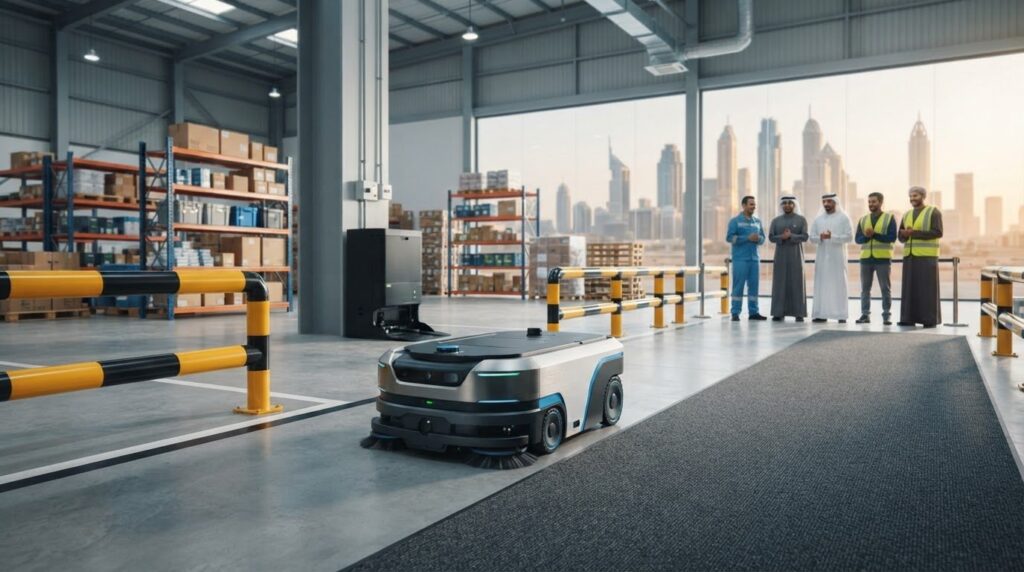
Our consultative approach begins long before hardware selection, focusing on identifying specific ROI opportunities through detailed site audits and feasibility studies. We bridge the critical technical gap by connecting surveillance intelligence directly to collaborative robots and Automated Storage and Retrieval Systems (ASRS), creating a unified operational environment. This deep level of technical integration allows for automated responses where a surveillance robot’s detection of a safety hazard can immediately signal a cleaning AMR or pause a nearby cobot to prevent accidents. To ensure consistent uptime, we provide local maintenance and immediate parts availability across the UAE, preventing the delays often associated with international support chains. Enterprises seeking to extend this intelligence beyond security will find that deploying dedicated robotic inspection services for industrial asset integrity delivers a 60% reduction in unplanned downtime by combining autonomous monitoring with high-fidelity digital twin generation.
Partnering for a Secure Future
EdNex Automation is deeply committed to supporting the UAE’s national vision for Industry 4.0 and digital transformation. We empower businesses to transition from legacy security models to a “Future-Ready Enterprise” where a scalable robotic fleet provides long-term value and adaptable protection. As technology evolves, our systems are designed for modular upgrades, ensuring your security infrastructure remains at the absolute cutting edge of innovation. Building this roadmap requires a partner who understands the gravity of industrial transformation and the necessity of controlled, systematized innovation. To begin your transition to a more secure and efficient facility, consult with an EdNex automation expert to design your autonomous security roadmap today.
Architecting the Future of Industrial Security
The transition toward autonomous safety is no longer a speculative venture; it’s a technical imperative for the 2026 enterprise. Deploying robotic surveillance systems allows your facility to move beyond the limitations of static sensors and manual patrols, achieving the 95% anomaly detection accuracy required for high-stakes environments. By prioritizing IP-rated hardware and seamless SCADA integration, you ensure that your security infrastructure remains resilient against the unique environmental stresses of the UAE. EdNex Automation stands as your visionary partner in this transformation, providing the intellectual framework and global hardware access necessary to optimize your facility’s safety and operational efficiency.
As an authorized partner with global robotics leaders, we deliver the expert reliability required for challenging industrial environments. Our team of Industry 4.0 integration specialists is ready to help you navigate the complexities of autonomous deployment, from regulatory compliance to technical maintenance. Secure your facility with EdNex End-to-End Robotics Expertise and lead your organization into a safer, more efficient future.
Frequently Asked Questions
What are the main benefits of robotic surveillance systems over traditional CCTV?
Robotic surveillance systems offer dynamic mobility and autonomous threat detection that static CCTV cannot provide. While fixed cameras are restricted to specific angles, mobile units eliminate the blind spots common in large industrial warehouses. They utilize AI-powered analytics to distinguish between personnel and intruders in real time, shifting security from a reactive recording model to a proactive deterrence strategy that covers the entire facility.
Can surveillance robots operate effectively in high-temperature outdoor environments?
Yes, specialized industrial robots are engineered with thermal management systems to operate in temperatures exceeding 50°C. These units feature IP65-rated enclosures that prevent sand ingress and heat-related processor throttling. By utilizing active cooling and high-ambient-rated components, they maintain operational uptime during the extreme summer months in the UAE and wider GCC region without risk of hardware failure.
How do these robots handle stairs or uneven terrain in industrial facilities?
Legged quadruped robots or high-clearance wheeled platforms are designed specifically to navigate stairs and cluttered industrial floors. Unlike standard AMRs that require flat surfaces, these advanced models use LiDAR and SLAM to traverse obstacles up to 30 centimeters high. This ensures that multi-level facilities or outdoor construction sites with uneven gravel remain fully monitored without the need for human intervention.
What happens if a surveillance robot loses its connection to the network?
If a connection is lost, the robot relies on edge computing to continue its mission and navigate safely to a pre-defined failsafe point. The onboard AI processes sensor data locally, ensuring that threat detection and obstacle avoidance remain active even without a server link. Once the connection is restored, the unit automatically syncs its recorded telemetry and event logs with the central Video Management System.
Is it possible to integrate robotic surveillance with my existing VMS or SCADA system?
Integration with existing VMS and SCADA systems is a core feature of EdNex Automation solutions. These robots communicate via standard industrial protocols like Modbus or OPC UA, allowing them to act as mobile nodes within your central control room. This connectivity enables automated responses, such as a surveillance unit triggering a facility-wide alarm or pausing a nearby cobot upon detecting a safety breach.
How long does the battery of an autonomous security robot typically last?
Battery life typically ranges from 4 to 12 hours depending on the robot’s sensor payload and mission intensity. Units equipped with high-draw thermal cameras or chemical sensors will require more frequent charging cycles. To ensure 24/7 coverage, the system uses autonomous docking stations where robots recharge during low-priority windows or swap with another standby unit in the fleet.
What is the expected ROI for a robotic surveillance system compared to manual guarding?
The ROI for a robotic surveillance system is measured through a significant reduction in long-term personnel overhead and a substantial increase in detection accuracy. While initial capital expenditure is required, autonomous units eliminate the recurring costs of 24/7 manual guarding shifts and insurance premiums for hazardous zone patrolling. Enterprises often see a complete return on investment within 18 to 24 months of deployment.
Are robotic surveillance systems compliant with national privacy and data laws?
All robotic surveillance systems deployed by EdNex are configured to comply with UAE Federal Decree-Law No. 45 of 2021 regarding Personal Data Protection. We implement encrypted video streams and secure authentication protocols to ensure data integrity. Our technical architects work closely with your legal team to align facial recognition and recording features with national security requirements and regional privacy standards.