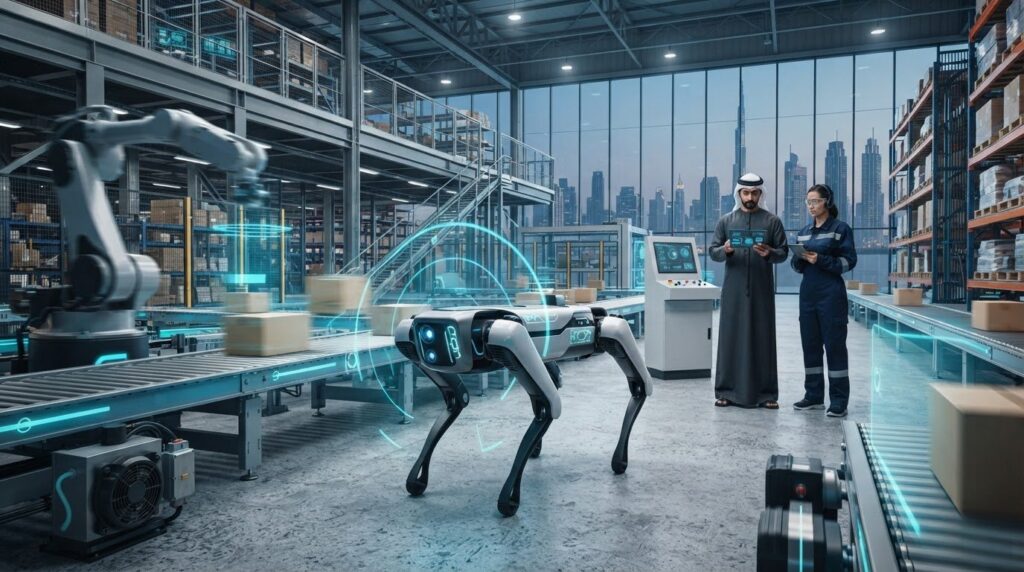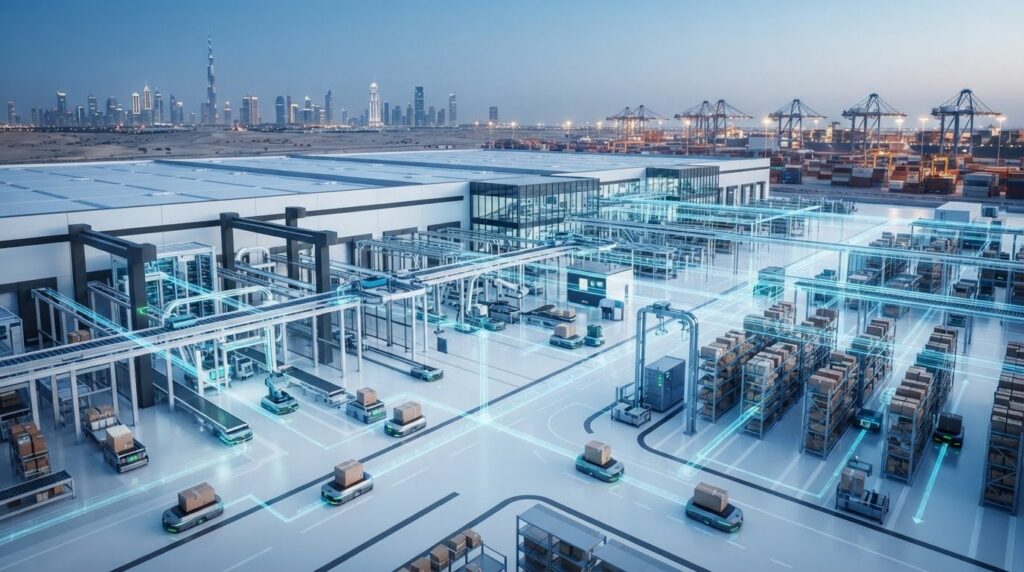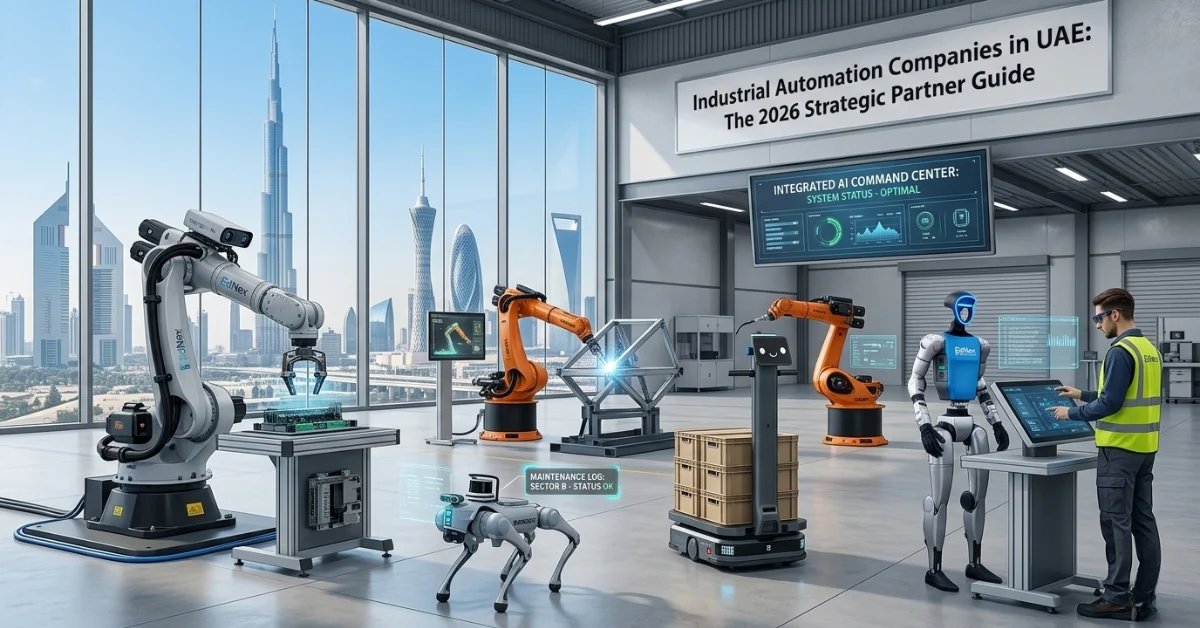
In 2026, the era of purchasing standalone hardware has officially ended. If your robotics don’t communicate through a centralized AI brain, you aren’t automating; you’re simply adding expensive, disconnected machinery to your warehouse floor. Selecting from the top industrial automation companies UAE now requires a shift in perspective from finding simple vendors to identifying strategic integrators who bridge the gap between legacy infrastructure and autonomous systems.
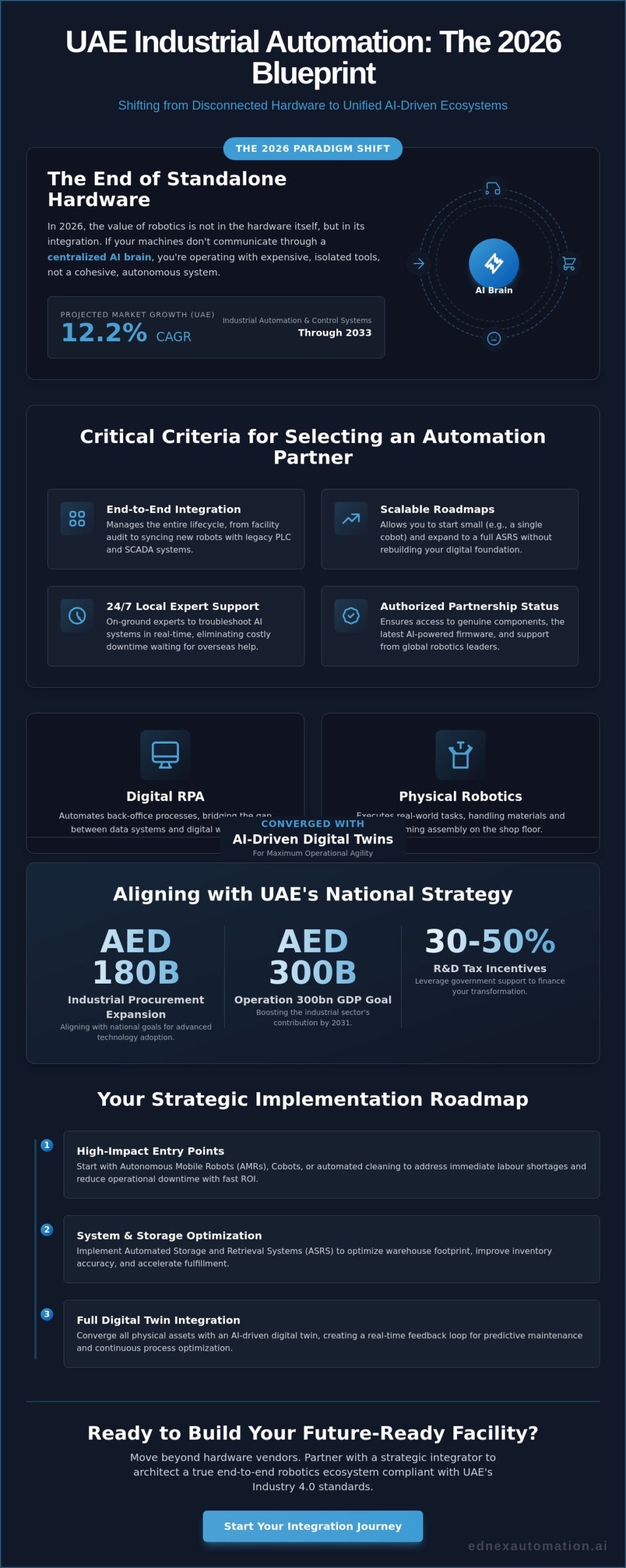
You likely recognize that fragmented supply chains and the persistent shortage of local expert support for complex AMR and cobot deployments make scaling feel like an uphill battle. It’s a common struggle to integrate next-gen robotics when your existing PLC and SCADA systems aren’t naturally designed for AI-powered fluidity. This guide promises to show you how to evaluate partners that align with the UAE’s AED 180 billion industrial procurement expansion, ensuring your facility meets the national Industry 4.0 standards for 2026. We’ll explore the criteria for selecting end-to-end robotics expertise and how to leverage the new 30% to 50% R&D tax incentives to transform your operation into a truly future-ready enterprise.
Key Takeaways
- Understand the 2026 shift toward flexible autonomous systems that converge physical robotics with AI-driven digital twins for maximum operational agility.
- Identify the critical metrics for evaluating industrial automation companies UAE, focusing on end-to-end integration capabilities and authorized global partnership status.
- Learn to distinguish between digital RPA and physical robotic process automation to bridge the gap between back-office data and real-world shop-floor execution.
- Gain a structured implementation roadmap that identifies high-impact entry points like ASRS and autonomous cleaning to reduce immediate operational downtime.
- Discover how to leverage an intellectual framework for automation that ensures long-term compliance with the UAE’s national Industry 4.0 and industrial resilience strategies.
The 2026 Landscape of Industrial Automation in the UAE
The 2026 industrial landscape in the Emirates is defined by a total convergence of physical hardware, artificial intelligence, and digital twin technology. Leading industrial automation companies UAE are no longer just selling gear; they’re architecting ecosystems where physical assets and digital models exist in a constant, real-time feedback loop. This shift from fixed, hard-coded automation to flexible, autonomous systems allows facilities to pivot production lines in hours rather than weeks. This evolution aligns perfectly with the UAE’s Operation 300bn and the broader Fourth Industrial Revolution (4IR) strategy, which aims to boost the industrial sector’s contribution to the national GDP to AED 300 billion by 2031.
Simple hardware supply is a relic of the past. As the market for industrial automation and control systems in the UAE projects a 12.2% CAGR through 2033, the focus has shifted to high-power facilities capable of supporting sophisticated robotics. An industrial robot without an integrated AI framework is just a tool; with it, it’s a strategic asset that learns and optimizes in real-time. Modern enterprises require more than a vendor. They need a partner capable of delivering the intellectual framework necessary to manage complex, multi-agent robotic environments.
From Manual Labour to Autonomous Systems
High-tech robotics are now the primary solution for regional labour shortages and the rising costs of manual operations. Transitioning from traditional, linear assembly lines to modular, AI-driven cells allows manufacturers to scale with precision. The UAE has effectively become a global testbed for these advanced deployments, supported by a $200 million investment aimed at producing up to 80,000 robots annually within the country. These systems don’t just replace repetitive tasks; they create a safer, more efficient environment where human workers manage high-level logic while autonomous units handle the physical heavy lifting.
The Rise of the Smart Factory in the GCC
A Future-Ready facility in 2026 is characterized by its ability to ingest and act upon real-time data. Integrating IoT sensors and SCADA systems with advanced robotics creates a transparent shop floor where every movement is tracked and analyzed. This level of sophistication requires deep local expertise to maintain, as global tech must be tailored to the specific climatic and economic conditions of the GCC. Industrial automation companies UAE that provide this intellectual framework ensure that enterprises don’t just buy a machine, but adopt a transformative system that guarantees long-term resilience and compliance with national localization goals.
Critical Evaluation Criteria for Industrial Automation Companies
Choosing the right partner from the directory of industrial automation companies UAE is a decision that dictates your operational trajectory for the next decade. In 2026, physical proximity is irrelevant; technical depth and integration expertise are everything. You need a partner who understands that a humanoid or a cobot is only as effective as the network it inhabits. A true strategic integrator manages the entire lifecycle, from the initial facility audit to the complex task of syncing new autonomous units with legacy PLC and SCADA systems.
Scalability is the hallmark of a future-ready partner. Your provider should offer a roadmap that allows you to start with a single collaborative robot and expand into a fully automated ASRS (Automated Storage and Retrieval System) without rebuilding your digital foundation. This growth must be backed by 24/7 local engineering support. In a region where downtime can cost thousands per minute, waiting for a technician to fly in from overseas isn’t an option. You require on-ground experts who can troubleshoot AI-powered systems in real-time. If you’re ready to move beyond hardware, exploring comprehensive systems integration is the first step toward a streamlined facility.
Authorized partnership status provides the necessary stamp of legitimacy. Working with a company that holds certified status with global leaders ensures you’re receiving genuine components and the latest AI-powered firmware. This alignment is crucial for businesses looking to benefit from the UAE’s Smart Manufacturing initiative, which prioritizes high-tech adoption to drive industrial resilience across the GCC.
Assessing Technical Integration Capabilities
Evaluate a partner’s ability to bridge the gap between old and new. It’s not enough to deploy an AMR; that unit must communicate with your existing warehouse management software. Look for providers who offer “Future-Ready” firmware update protocols that ensure your robots get smarter over time. Proven results in the GCC region, specifically in high-heat or high-dust environments, serve as the best case study indicators for technical competence.
Safety and Compliance Standards
Every robotic deployment must meet rigorous international and UAE-specific safety regulations. This includes ensuring all machines carry the CE marking and have necessary approvals from the Ministry of Industry and Advanced Technology (MoIAT). Specialized surveillance robots often play a dual role here, monitoring both facility security and the safety of human-robot interactions. Finally, ensure your partner provides certified training for your local staff; a sophisticated system is only as safe as the team operating it.
Robotic Process Automation (RPA) vs. Physical Industrial Robotics
The distinction between digital Robotic Process Automation (RPA) and physical industrial robotics is often blurred, yet it’s the most critical technical boundary for modern facility managers. While digital RPA handles data-heavy administrative tasks, physical industrial robotics manage the tangible movement of goods. Partnering with specialized industrial automation companies UAE allows businesses to synchronize these two distinct but complementary layers. This integration ensures that the “brain” of the operation, which handles procurement and scheduling, is perfectly aligned with the “muscles” on the factory floor. In 2026, the competitive advantage lies in bridging this gap to create a unified, autonomous workflow.
Strategic applications for industrial RPA now extend deep into supply chain management. By linking digital process logic with physical execution, enterprises can eliminate the latency typically found between a sales order and a warehouse pick. This synergy is essential for meeting the UAE’s goal of transitioning 50% of federal services to AI-driven systems by 2028, as industrial leaders adopt similar benchmarks to maintain pace with national efficiency standards. When software-driven logic dictates physical movement, the entire facility operates as a single, cohesive unit.
Digital RPA in Industrial Contexts
Digital RPA focuses on automating the high-volume, repetitive data tasks that often bottleneck industrial operations. Software bots now handle inventory tracking and procurement cycles with zero human intervention, pulling real-time data from floor sensors to trigger reorders. Integrating ERP data with real-time floor performance allows for predictive maintenance scheduling, ensuring that parts are ordered before a failure occurs. This approach significantly reduces human error in documentation, which is vital for maintaining compliance with the UAE’s evolving industrial regulations and tax incentive requirements.
Physical RPA: The Evolution of the Production Line
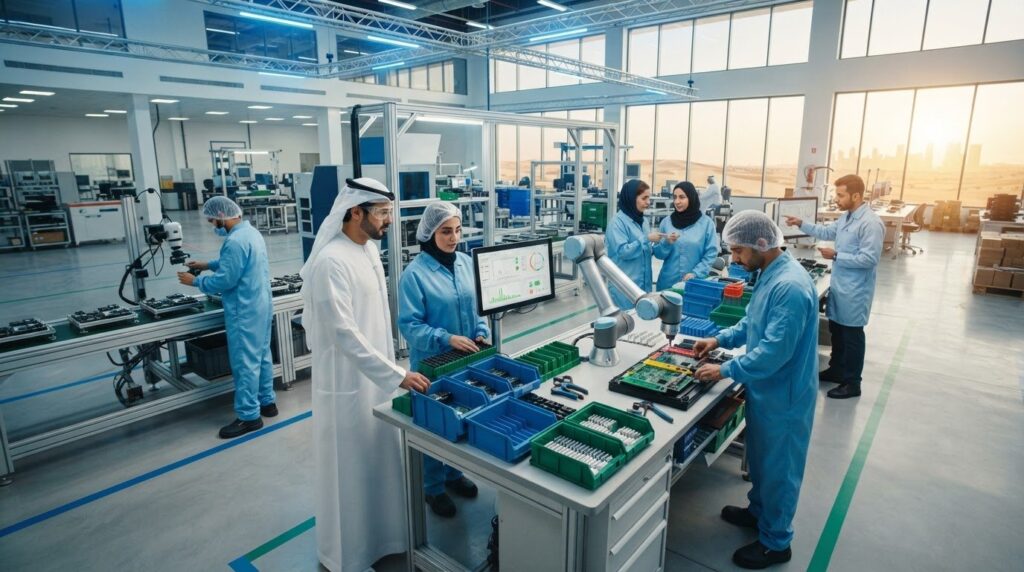
Physical RPA represents the next step in production line evolution, where mechanical units take over the repetitive physical labor once reserved for manual teams. Deploying collaborative robots UAE enables facilities to automate precise assembly tasks while maintaining a safe environment for human supervisors. Autonomous Mobile Robots (AMRs) further optimize material handling by navigating complex warehouse layouts without fixed tracks or human guidance. Physical RPA is the mechanical execution of software-driven logic. By selecting from the most advanced industrial automation companies UAE, you ensure that your physical assets are capable of executing the complex, AI-powered instructions generated by your digital infrastructure.
Implementing a Future-Ready Automation Strategy
Executing a successful transformation in 2026 isn’t about buying the most expensive hardware; it’s about following a disciplined architectural roadmap. The process begins with a comprehensive facility audit to identify specific operational bottlenecks where manual intervention slows down throughput. Most industrial automation companies UAE recommend starting with a data-driven assessment of your current PLC and SCADA environment to ensure any new robotic additions can communicate seamlessly with your existing core.
Once your bottlenecks are clear, the second step involves selecting high-impact entry points like ASRS or autonomous floor maintenance to secure early wins. You then need to partner with a Technological Architect who can provide the intellectual framework for a cohesive system design rather than a collection of isolated machines. This leads into a pilot deployment phase where you can test autonomous units in a controlled environment before iterative scaling across the entire facility. The final, permanent stage is continuous optimization, where you use real-time AI analytics to refine robotic paths and reduce energy consumption. If you’re ready to identify your facility’s specific growth levers, scheduling a comprehensive automation audit is the most effective way to begin.
Optimizing Logistics with ASRS and AMRs
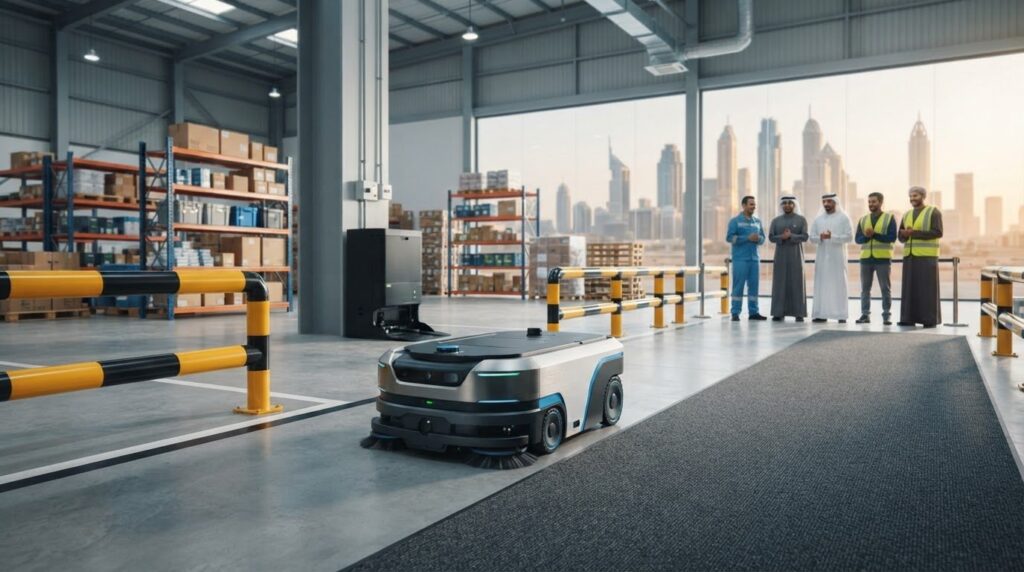
The persistent shortage of Grade A, “automation-ready” industrial space in the UAE makes vertical efficiency a survival requirement. Automated Storage and Retrieval Systems (ASRS) maximize existing warehouse volume by utilizing high-ceiling architectures that manual forklifts can’t safely reach. Autonomous Mobile Robots (AMRs) add a layer of flexible logistics, moving goods between stations without the need for fixed tracks or permanent floor modifications. Calculating the ROI of these solutions becomes straightforward when you factor in the 12.2% projected market growth and the massive reduction in picking errors that autonomous systems provide.
Advanced Cleaning and Maintenance Automation
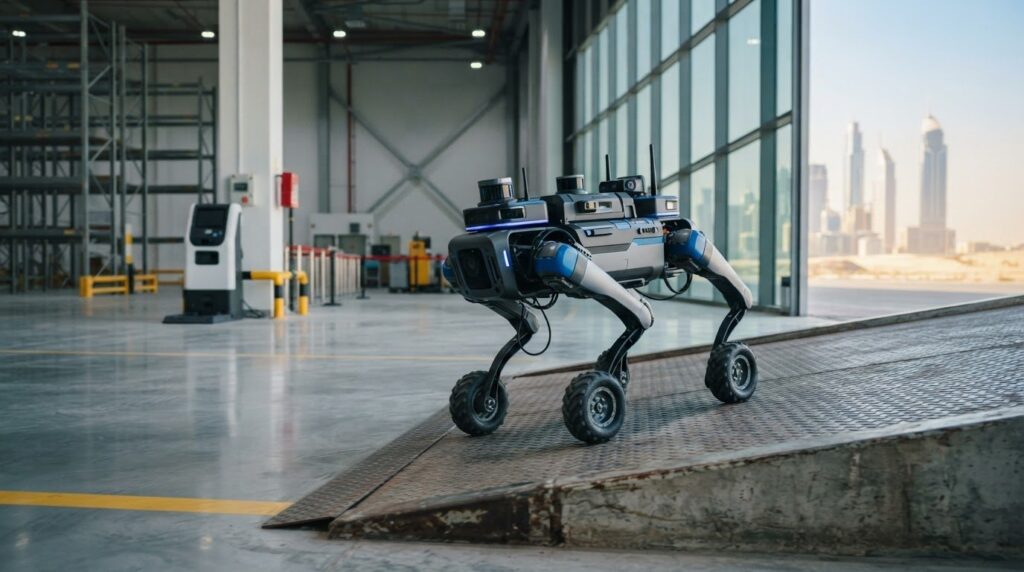
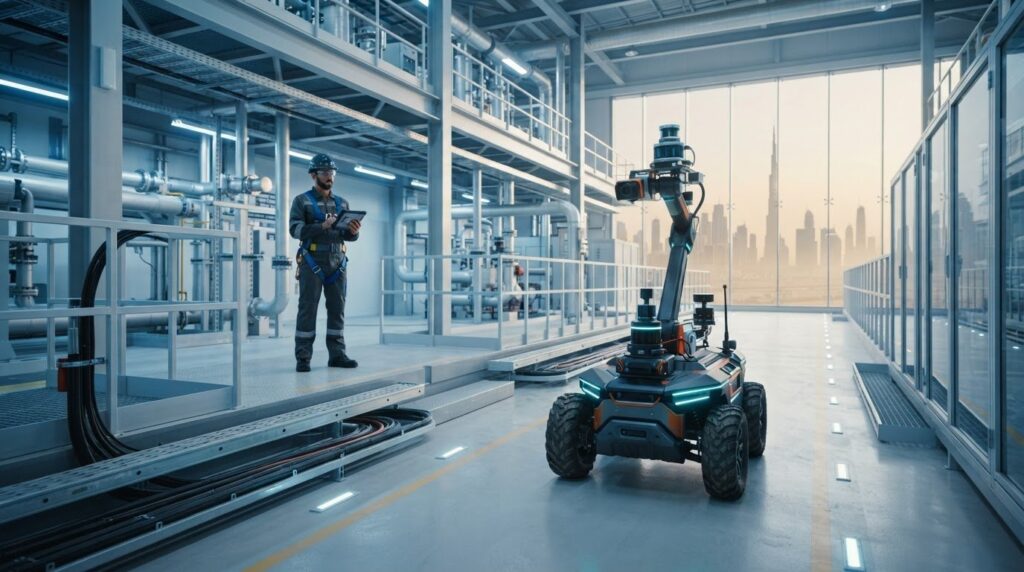
Large-scale industrial facilities in the GCC face unique maintenance challenges due to dust and high temperatures. Autonomous cleaning robots provide a strategic benefit by maintaining 24/7 cleanliness in high-traffic zones without human supervision. For industrial yards and urban perimeters, outdoor cleaning automation ensures your site remains compliant with national safety standards while freeing up staff for higher-value tasks. Integrating robotic surveillance and inspection units further reduces facility management costs, as these robots use next-gen sensors to detect structural anomalies or security breaches long before they escalate into expensive operational downtime.
EdNex Automation: Your Strategic Partner for End-to-End Robotics
EdNex Automation stands as the premier bridge connecting global technological breakthroughs with the specific industrial requirements of the Emirates. As one of the leading industrial automation companies UAE, we don’t just supply machines; we deliver the comprehensive intellectual frameworks required to manage them effectively. Our ‘Future-Ready’ promise ensures your enterprise isn’t just buying for today, but evolving for the coming decade. From providing advanced humanoid robots for sale UAE to executing complex SCADA integrations, our portfolio covers the full spectrum of Industry 4.0. Our status as an authorized partner for global leaders like Pudu Robotics, Unitree Robotics, and Franka Robotics guarantees that every deployment meets the highest reliability standards for your enterprise.
We understand that a robot is only as valuable as the system it inhabits. That’s why our approach focuses on end-to-end robotics expertise, ensuring that every AMR, cobot, and humanoid is fully integrated into your facility’s digital nervous system. By choosing a partner with deep regional roots, you’re securing a collaborator who understands the local regulatory landscape, including the new 2026 R&D tax incentives and the specific technical requirements of the UAE’s Ministry of Industry and Advanced Technology. We provide the technical architect’s vision needed to transform a standard warehouse into a high-power, autonomous hub.
Comprehensive Systems Integration
Our methodical approach to PLC and SCADA integration ensures that your legacy systems don’t become an obstacle to progress. We design tailored solutions for the oil and gas, manufacturing, and logistics sectors, creating custom integration infrastructures that allow different robotic agents to work in harmony. This isn’t just about installation; it’s about providing ongoing technical support and regional expertise that keeps your operations running 24/7. Whether it’s optimizing a massive ASRS or deploying a fleet of inspection robots, our engineering-minded approach eliminates the risks of fragmented technology stacks.
Shaping the Future of UAE Industry
Our commitment to the UAE’s technological transformation is absolute. We align every project with the national strategy to boost industrial productivity and localization through the “Make it in the Emirates” campaign. We invite you to consult with our experts to define your specific automation roadmap and identify the high-impact entry points that will yield the fastest ROI for your facility. Don’t leave your digital transformation to hardware vendors when you can work with a systematizer who brings order and efficiency to complex environments. Partner with EdNex Automation to streamline your operations today.
Architecting Your Future-Ready Enterprise
Navigating the 2026 industrial landscape requires a departure from traditional vendor-client relationships. Success now lies in the seamless convergence of physical robotics and AI-powered digital twins. Selecting from the top industrial automation companies UAE means prioritizing partners who offer more than just hardware; you need a strategic integrator capable of bridging the gap between legacy SCADA systems and autonomous mobile units. By leveraging the 30% to 50% R&D tax credits available since January 1, 2026, your facility can transition into a streamlined, high-power hub that meets the UAE’s national Industry 4.0 standards.
EdNex Automation provides the intellectual framework and specialized end-to-end integration expertise necessary to de-risk your transformation. As an authorized partner with global robotics leaders, we ensure your deployment is backed by best-in-class reliability and 24/7 regional technical support. Don’t let fragmented systems stall your progress toward a fully autonomous facility. The path to operational excellence is paved with controlled innovation and expert reliability.
Book a strategic automation consultation with EdNex experts and begin shaping your industrial legacy today. The future of UAE manufacturing is autonomous, and your journey starts with a single strategic decision.
Frequently Asked Questions
What are the top industrial automation companies in the UAE for robotics?
EdNex Automation leads the market by acting as a strategic bridge between global innovation and local industrial needs. As an authorized partner for global leaders like Pudu Robotics and Unitree, we provide the technical architecture required for high-stakes environments. The best industrial automation companies UAE focus on end-to-end integration rather than just hardware delivery, ensuring every humanoid or AMR is fully supported by local engineering expertise.
How do I choose between an automation parts supplier and a system integrator?
Choose a system integrator if you require a cohesive operational framework rather than just individual components. Parts suppliers provide hardware like sensors or connectors, but they don’t architect the communication between your SCADA system and your autonomous fleet. Integrators handle the design, deployment, and 24/7 maintenance necessary to reduce operational downtime and ensure long-term scalability for your facility.
Can industrial automation companies in the UAE help with legacy system upgrades?
Leading industrial automation companies UAE specialize in syncing legacy PLC systems with next-gen robotics through custom integration infrastructures. This process allows old hardware to ingest real-time data from AI-powered autonomous units. By modernizing your legacy core, you can qualify for the 30% to 50% R&D tax credits introduced on January 1, 2026, which support eligible expenditure on industrial technology adoption.
What is the difference between physical industrial robots and RPA in the UAE?
Physical industrial robots are mechanical units like cobots or AMRs that execute tangible tasks on the factory floor. Digital RPA involves software bots that automate back-office documentation, inventory tracking, and procurement. In 2026, the most efficient UAE enterprises use a unified strategy where digital RPA logic triggers the physical movement of autonomous warehouse robots to eliminate operational latency.
What industries in the UAE benefit most from autonomous cleaning robots?
Hospitality, logistics, and healthcare sectors see the fastest returns on autonomous cleaning robots due to their high-traffic environments. Large-scale manufacturing facilities also use outdoor cleaning robots to maintain industrial yards in high-dust GCC conditions. These units provide 24/7 maintenance without human supervision, significantly reducing facility management costs while ensuring compliance with national safety and hygiene standards.
How does SCADA integration improve industrial efficiency?
SCADA integration allows for real-time data analytics and centralized control over your entire robotic fleet. By ingesting data from every sensor, the system identifies bottlenecks and predicts maintenance needs before failures occur. This level of transparency is essential for meeting the UAE’s goal of transitioning 50% of federal services to AI-driven systems within the next two years.
What is the expected ROI for warehouse automation like ASRS in the GCC?
ROI for ASRS is driven by the 12.2% CAGR growth in the UAE’s industrial automation market through 2033. These systems maximize existing warehouse volume, which is critical given the persistent shortage of Grade A industrial space in the region. Most enterprises see significant gains through increased picking accuracy and a reduction in the physical footprint required for high-volume storage.
Are there local UAE regulations for deploying collaborative robots?
Yes, all deployments must adhere to Ministry of Industry and Advanced Technology (MoIAT) standards and carry valid CE marking. Since May 2026, the UAE has also implemented an AI-powered screening system for work permit applicants, emphasizing the need for safe human-robot collaboration. Certified training for local staff is a mandatory service deliverable to ensure all autonomous operations meet national safety benchmarks.