A robotic dog is more than a mechanical pet. Robotic Dogs are legged robots that can carry sensors and support mobile observation, making them useful for industrial inspection as well as security, companionship and entertainment. In industrial environments, they can help monitor assets and access areas that are difficult to observe on foot, while their usefulness depends on the task and operating conditions.
The appeal of Robotic Dogs is clear: a mobile robot can observe places people may find hazardous or hard to reach. But capability, cost and human oversight all matter, and a robot built for inspection serves a different purpose from one designed for play or companionship. This article explains how robotic dogs work, where they’re used and the practical trade-offs across industrial monitoring, security, companionship and entertainment, so you can assess where the technology fits.
Key Takeaways
- Identify where a legged robot could improve industrial observation, especially in areas that are difficult to access.
- Distinguish security patrol capabilities from companionship and entertainment features before assessing a robot’s fit for a task.
- Weigh the operational benefits against practical limits, including cost and the lack of a real pet’s emotional connection.
- Consider how cameras and facial recognition may affect privacy when these robots operate around people.
Military and security uses of robotic dogs
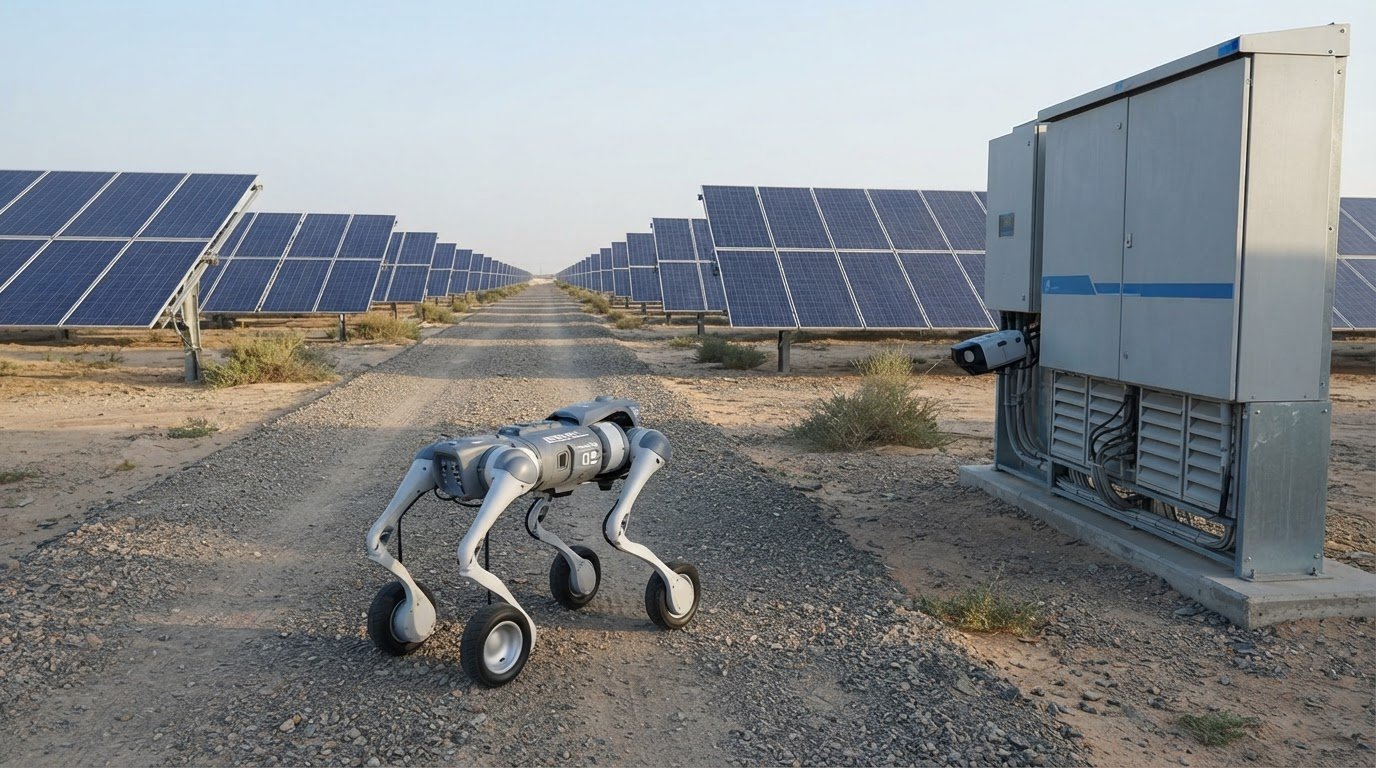
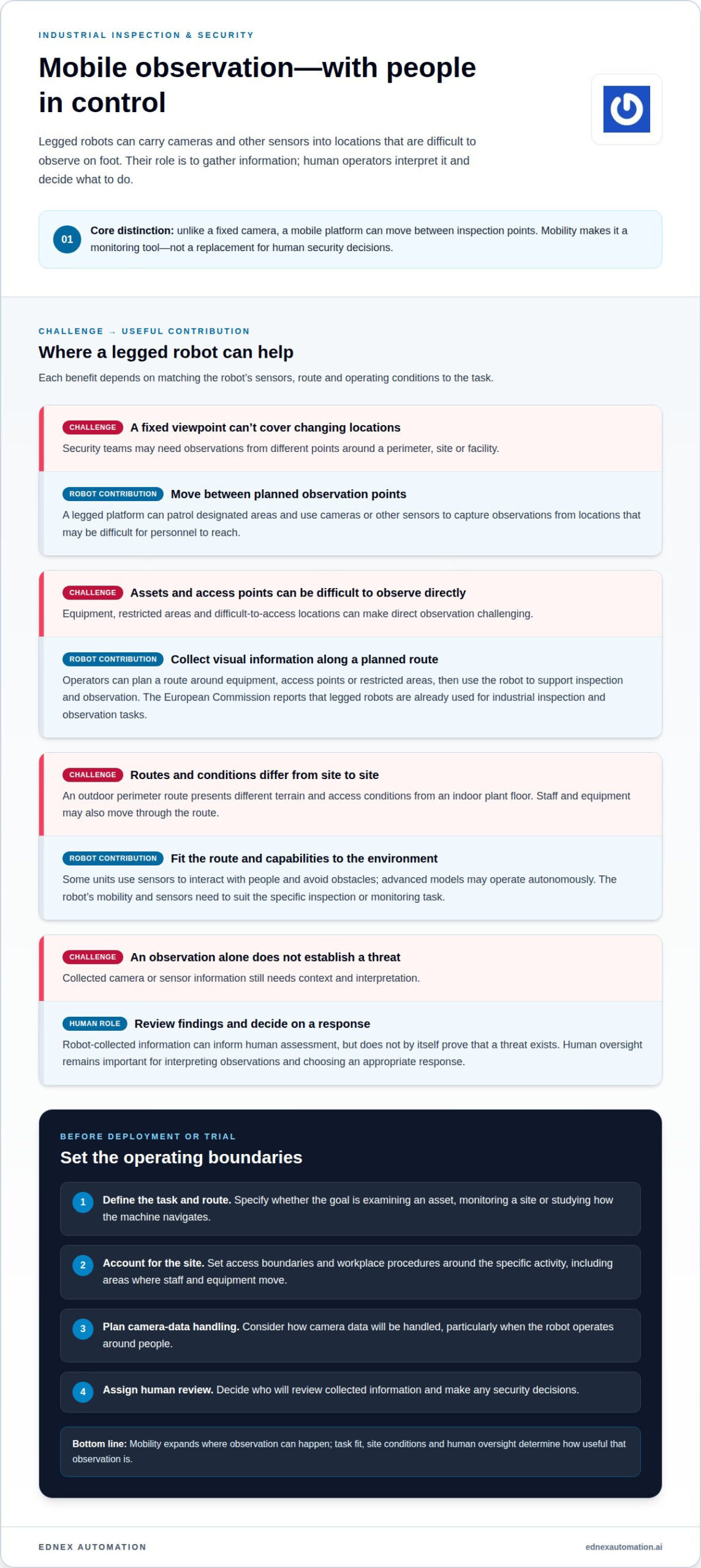
In security operations, a legged robot can patrol designated areas and monitor for potential threats. Cameras or other sensors can capture observations from locations that may be difficult for personnel to reach. Unlike a fixed camera, a mobile platform can move between inspection points. These capabilities can support perimeter surveillance, site observation and security assessments where teams need information from changing locations.
At an industrial facility, operators can plan a route around equipment, access points or restricted areas, then use the robot to collect visual information. This can support inspections where direct observation is difficult. In critical environments, combining mobile robotics with dedicated IoT monitoring solutions like CAPTEMP helps teams track environmental conditions and asset health alongside automated visual patrols. The European Commission reports that legged robots are already used for industrial inspections and observation tasks. Collected information can inform human assessment, but does not by itself establish that a threat exists.
Security use depends on the environment and task. An outdoor perimeter route presents different terrain and access conditions from an indoor plant floor. Some units use sensors to interact with people and avoid obstacles, while advanced models may operate autonomously. Human oversight remains important for interpreting observations and deciding on an appropriate response. Mobility makes the robot a monitoring tool, not a replacement for human security decisions.
In the UAE, plan public or workplace deployment around the specific site and activity. Define access boundaries, workplace procedures and how camera data will be handled. For example, a facility route should account for areas where staff and equipment move. These considerations help shape deployment without assuming public spaces and industrial sites have identical requirements.
Research teams can also use legged platforms to study movement and observation across varied terrain. Before a trial, define the route, the data to collect and who will review it. This clarifies the robot’s role, whether the task is examining an asset or testing how a machine navigates an environment.
Advantages and limitations
Capabilities depend on design. A home companion may respond to touch, while an industrial unit can support inspection and observation. Educational models introduce children to robotics, programming and artificial intelligence; research platforms help examine robot movement and behaviour.
For home use, some models walk, sit, roll over or perform tricks, creating interactive play without the care routine of a living pet. They may require less day-to-day care than a living pet. Advanced models may also learn and adapt to an owner’s preferences, though this varies by machine. A simple toy and an autonomous robot are not equivalent: their sensors, movement and interaction capabilities differ.
Education and research benefit from behaviour that is visible and testable. A student can observe how a robot responds to a voice command or gesture, then explore how sensors guide it around an obstacle. Some models use touch, sound and light sensors; others also have smell sensors. For research, legged machines provide a platform to study movement and observation in environments where a wheeled design may be less suitable.
Industrial tasks require a different assessment. A legged robot can support inspection and observation, helping teams gather information around assets and across varied terrain. Its value depends on whether its mobility and sensors match the inspection task. A robot designed for tricks or companionship may not provide the functions required for industrial monitoring. Define the observation goal first, then align the robot’s capabilities with the route and environment.
There are trade-offs. Advanced models may be expensive, and even a responsive machine lacks the emotional warmth and unpredictability of a real pet. Some real dogs react to robotic animals by barking, growling or lunging, so demonstrations around pets require care. The practical choice depends on the purpose: interaction at home, learning in a classroom, controlled research or asset observation. Match the function to the setting so novelty is not mistaken for operational value.
Companionship and emotional support
For an older adult who can’t manage a living pet’s daily care, a robotic dog can provide interactive company. Some models respond to touch, voice commands or gestures, creating simple moments of engagement at home. Their movements and reactions imitate aspects of dog behaviour, which can make interaction feel more familiar than using a stationary device. The appeal is practical as well as social: a person can interact with a responsive machine without taking on the responsibilities of pet ownership.
People with allergies may also consider a robotic companion when contact with a real dog is unsuitable. For example, a model that responds to a spoken cue can offer an activity without bringing animal dander into the home. This option doesn’t provide the same relationship as caring for a living animal. Its value lies in accessible interaction, not in reproducing every part of pet ownership or replacing human companionship.
Set realistic expectations for emotional support. A robotic dog can respond in programmed ways, but it lacks the emotional warmth and unpredictability of a real pet. It won’t form a mutual bond in the human sense, notice every change in someone’s mood or offer the spontaneous responses of a living animal. Treat its role as structured interaction. A family might use it to prompt conversation or provide a shared activity while maintaining human contact and support.
To assess whether a robotic dog suits someone, consider the interaction they want. A simple toy may provide movement and playful responses; a more advanced machine may adapt to an owner’s preferences. Then consider the user’s comfort with controls, sounds and touch responses. An older adult who enjoys spoken interaction may prefer voice commands, while someone unsettled by robotic movement may not welcome a simulated pet. Companionship depends on personal preference. The right measure is whether the device supports an enjoyable routine, not whether it behaves exactly like a real dog.
What are the safety, privacy, and security risks of robotic dogs?
On a plant floor, a moving robot can create hazards around workers, visitors and equipment. A patrol route near a doorway, moving machinery or a crowded work area needs particular attention. Map the route, identify where people and machines cross paths, and establish how staff should respond if the robot stops or behaves unexpectedly. Obstacle avoidance doesn’t remove the need for safe operating procedures. Even a well-planned route can change when equipment, barriers or people move.
Privacy becomes a concern when a robot uses cameras or facial recognition. Some models can recognise people and respond differently to them, raising questions about what information the system captures and how it is used. For example, a camera observing an asset may also record workers passing through its field of view. Define the monitoring purpose, limit observation to relevant areas, and control who can access recordings or recognition data. Clear communication helps people in monitored spaces understand the robot’s role.
Security risks depend on the robot’s data and control arrangements. If a system stores or transmits camera footage, access to that information needs deliberate management. Give access only to people who need it, and establish procedures for handling recorded material. Consider the consequences of unauthorised access, such as exposing facility images or information about staff movement. Address these operational questions before deployment, without assuming every robot has the same features or vulnerabilities.
Before a site trial, document the operating area, intended observations and responsible personnel. Decide how staff can pause the activity and whom to alert if they see a hazard, unexpected recording or unusual behaviour. Review the route when site conditions change, such as after machinery is relocated or access points are reconfigured. Keeping the robot’s purpose, movement and data handling within defined boundaries helps teams assess its suitability for a specific workplace. In the UAE, site procedures should reflect the facility and how people use it.
EdNex Automation
EdNex Automation helps businesses across the UAE assess where robotics can support operational priorities. If you’re evaluating robotic dogs for asset monitoring, first define the observation task, operating environment and data-handling needs. Then consider whether another automation category better fits the work. EdNex Automation supplies and deploys collaborative robots, autonomous mobile robots, cleaning robots and delivery robots for commercial and industrial applications.
These systems address different operational tasks, so the right direction depends on what your facility needs to automate. Asset monitoring may call for a different approach from material movement, cleaning or human-machine collaboration. EdNex Automation can help you explore how its robotic offerings fit your broader automation requirements.
Contact EdNex Automation to discuss your industrial automation needs.
Turn a monitoring need into a practical next step
Before adopting Robotic Dogs for industrial asset monitoring, start with a specific operational need. Identify the asset or area that requires observation, what information would support a decision and how staff would use that information. This shifts the discussion from the novelty of a legged machine to its potential role in a defined workflow.
In the UAE, industrial automation decisions also need to account for the facility’s working environment and the people who use it. A focused assessment can clarify whether a robotic approach aligns with site priorities or whether another automation pathway better supports the task. This disciplined starting point connects emerging technology with long-term operational planning.
For a discussion about how robotic monitoring could fit your requirements, contact EdNex Automation to discuss robotic dogs. A clear use case is a strong foundation for your next automation decision.
Frequently Asked Questions
What is a robot dog?
Robotic dogs are machines designed to reproduce selected dog-like movements or behaviours. Their capabilities range from simple programmed actions to sensor-driven responses. For instance, one model might perform a set trick, while another can respond to touch or avoid obstacles. The term covers machines built for different purposes, so the name alone doesn’t indicate how advanced a robot is or what it can do.
What are robotic dogs and how do they work?
Robotic dogs use a mechanical body, sensors and control software to move and respond to inputs. A sensor may detect sound, light or touch; the robot’s system then uses that input to produce an action. For example, a model might react to a gesture or change direction around an obstacle. The precise sensors and responses depend on the design and intended use.
What are the main types and uses of robotic dogs?
Robotic dogs include toy and companion models, educational machines, research platforms, and robots intended for industrial observation or security. A classroom example can introduce programming through commands and movement, while researchers can use a legged platform to study how machines navigate. Industrial and security models focus on observation tasks. Their purposes differ, so a companion design isn’t automatically suited to asset monitoring.
How do robotic dogs compare with real dogs and other robots?
A real dog is a living animal with independent behaviour, while a robot follows its programming and sensor inputs. Compared with a wheeled robot, a legged machine may be better suited to uneven terrain, while wheels may suit smooth routes. Choose according to the task: consider the surface, the movement needed and whether the goal is interaction, research or observation.
How do you set up, control, and maintain a robotic dog?
For a site trial, define the route, intended observations and responsible personnel, and decide how staff can pause the activity. Controls vary: some models respond to voice commands, touch or gestures, and human oversight remains important.