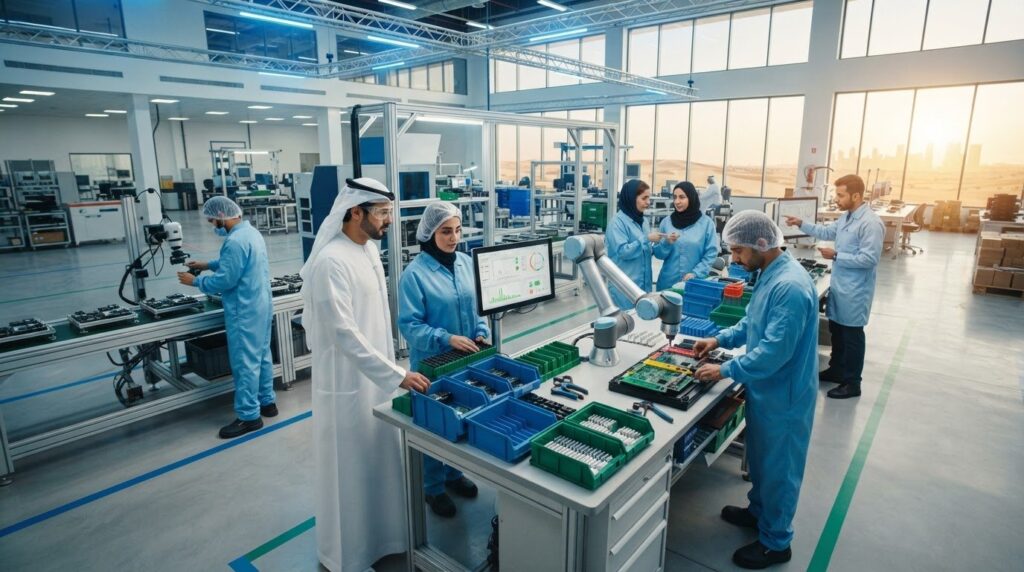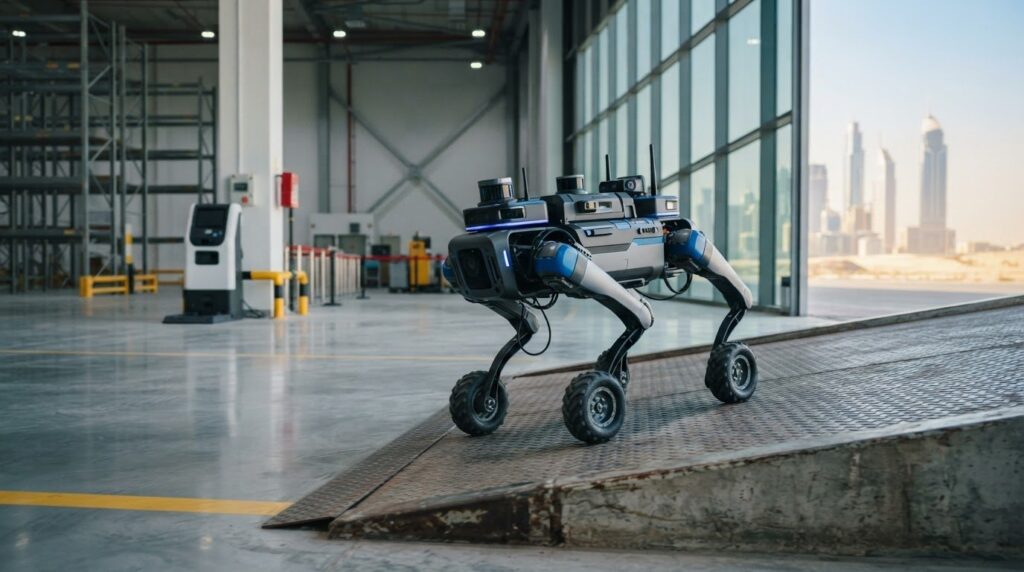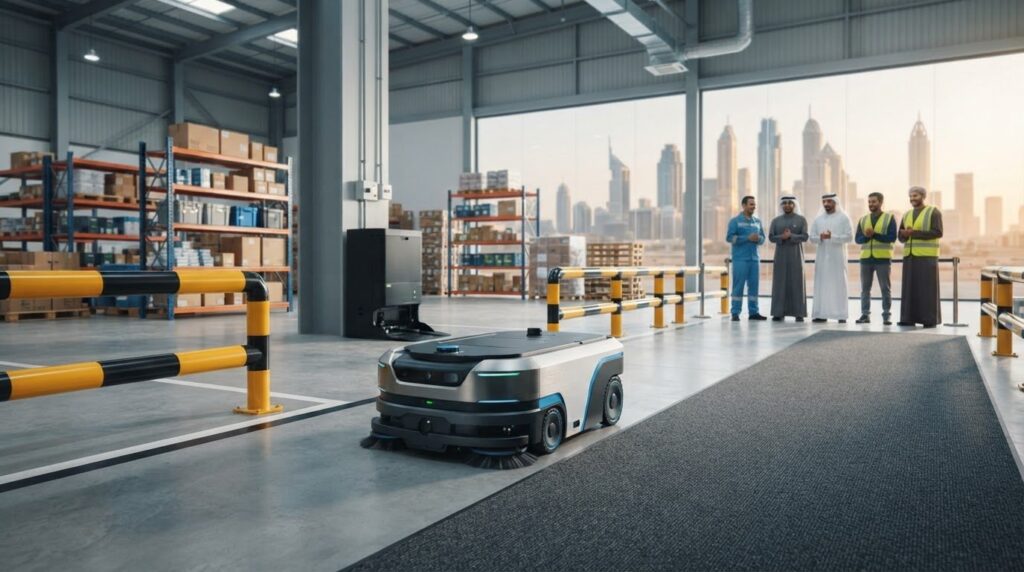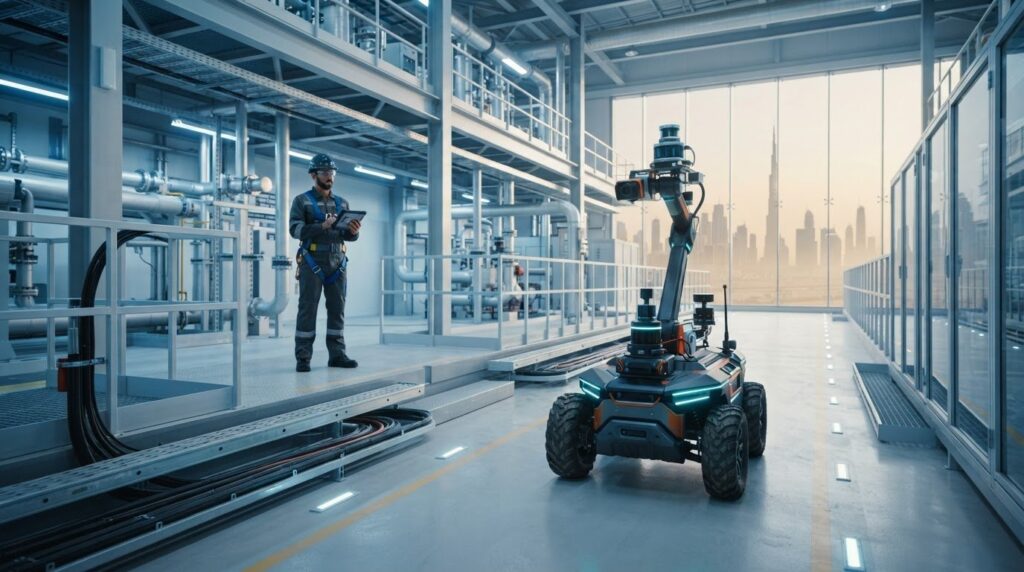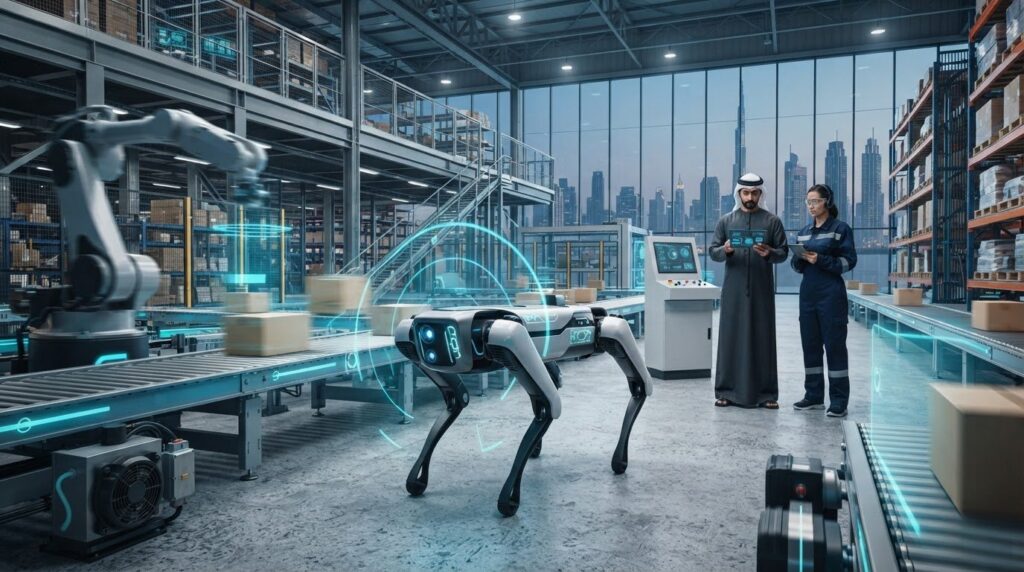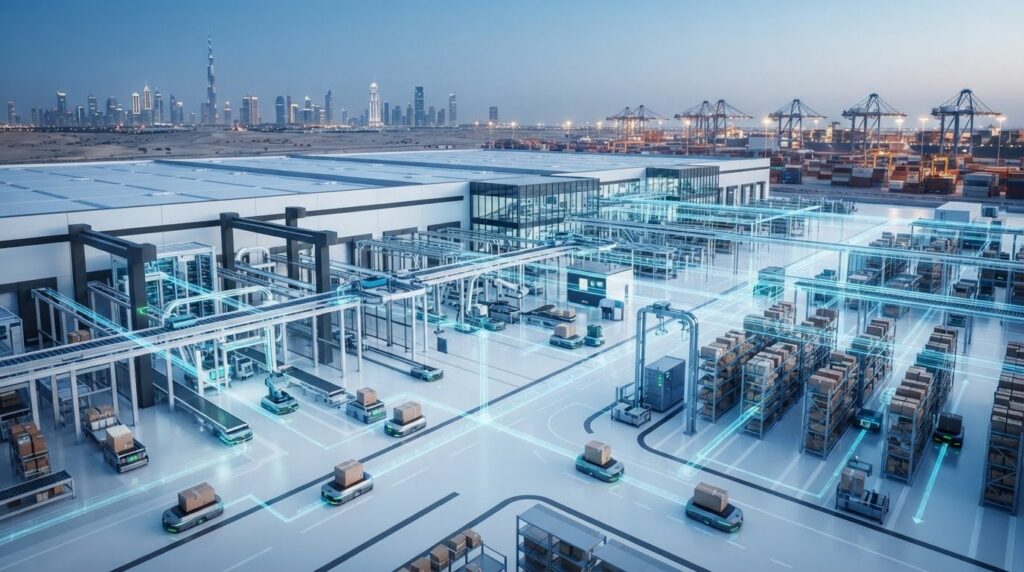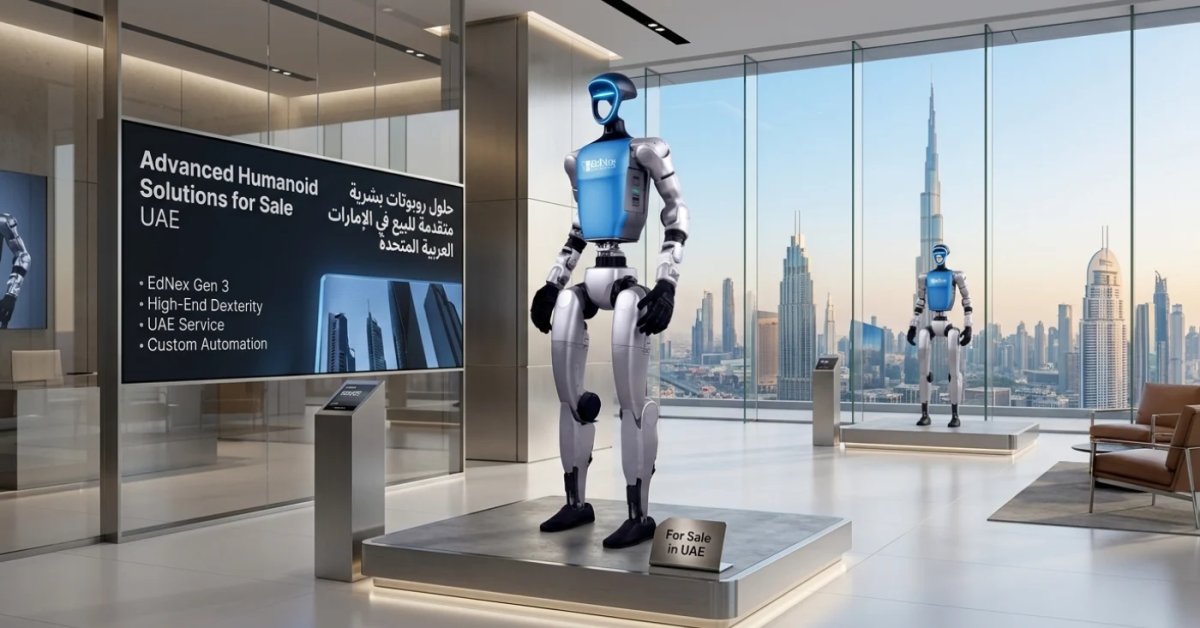
By 2032, the UAE’s ambitious national robotics goals project the deployment of 200,000 robots, contributing 9% to the nation’s GDP. This isn’t a distant vision; it’s a measurable industrial shift happening across the GCC right now. You’ve likely watched humanoid prototypes in research labs and wondered if they’re truly ready for the rigors of a logistics floor or a high-traffic service environment. It’s natural to hesitate when the line between a high-tech novelty and a functional industrial tool seems blurred, especially with models like the Unitree G1 now available starting from 69,999.00 AED.
This strategic guide clarifies that uncertainty by analyzing the most reliable humanoid robots for sale UAE enterprises can deploy today to achieve immediate operational ROI. We’ll examine specific models like the Unitree R1 EDU U2, outline a technical integration roadmap for your existing SCADA and PLC systems, and provide the data-backed justifications your stakeholders require to approve a 2026 robotics budget. As your authorized partner, EdNex Automation delivers the end-to-end expertise needed to transform these autonomous systems into your most valuable, future-ready workforce assets.
Key Takeaways
- Understand how the UAE National Strategy for Artificial Intelligence transforms humanoid robots from research prototypes into essential assets for Industry 4.0.
- Evaluate critical performance metrics like Degrees of Freedom and AI-driven navigation when selecting humanoid robots for sale UAE to ensure seamless operation in complex workspaces.
- Compare leading platforms such as the agile, bipedal Unitree H1 and the social SoftBank Pepper to match specific robotic capabilities with your unique enterprise objectives.
- Identify high-impact use cases in luxury hospitality and hazardous facility surveillance that provide measurable ROI and justify capital expenditure to your stakeholders.
- Discover how EdNex Automation acts as your technological architect, providing the end-to-end expertise required to integrate advanced humanoids into your existing PLC and SCADA infrastructures.
The Strategic Evolution of Humanoid Robots in the UAE Market
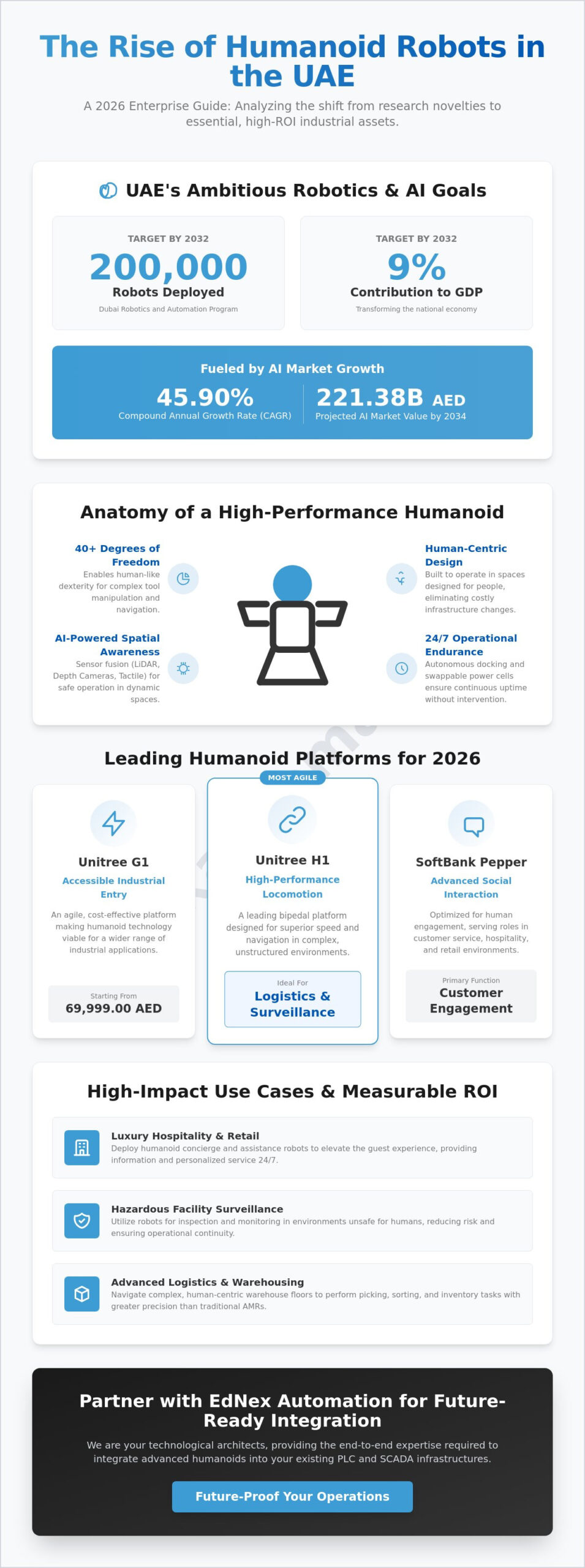
The transition from laboratory research to industrial deployment has reached a critical inflection point in 2026. While earlier iterations of bipedal machines focused on basic locomotion, the current landscape features operational service units capable of performing high-stakes tasks in dynamic environments. This shift is driven by the Dubai Robotics and Automation Program, which targets a 9% contribution to Dubai’s GDP by 2032 through the deployment of 200,000 robotic units. The GCC region isn’t just observing this trend; it’s actively funding the infrastructure necessary to lead global adoption.
Enterprises searching for humanoid robots for sale UAE now find themselves at the center of a technological revolution fueled by the UAE National Strategy for Artificial Intelligence. This strategy forecasts the local AI market to grow at a CAGR of 45.90%, reaching an estimated 221.38 billion AED by 2034. We’ve moved past the era of novelty appearance where robots were mere marketing gimmicks for trade shows. Today, a humanoid robot serves as a functional tool designed for precision, safety, and operational continuity in sectors ranging from luxury hospitality to hazardous site inspection.
The Role of Humanoids in UAE Vision 2031
The UAE Vision 2031 emphasizes a shift toward a knowledge-based economy where labor productivity is maximized through advanced automation. Humanoid platforms act as the physical interface for sophisticated AI systems, allowing digital intelligence to interact with the physical world in ways traditional machinery cannot. Within this framework, a humanoid service robot is defined as a multi-purpose AI platform capable of navigating human-centric environments to perform diverse, non-repetitive tasks.
Current Market Availability and Readiness
The 2026 market presents distinct tiers of technology, offering various humanoid robots for sale UAE businesses can use to modernize their workflows. These range from specialized research models to industrial-grade units ready for immediate deployment. For instance, the Unitree G1 is currently available in the UAE with prices starting from 69,999.00 AED, representing a significant drop in entry costs compared to 2024 figures. Distinguishing between educational platforms and high-performance industrial units is vital for maintaining operational standards. To understand the broader automation trends shaping procurement decisions, our analysis of the UAE robotics industry in 2026 provides essential context for enterprise leaders. Partnering with a local authorized partner like EdNex Automation ensures your investment is backed by long-term reliability and the technical support required for complex system integration. We provide the bridge between global manufacturing excellence and local industrial requirements, ensuring your enterprise remains future-ready.
Advanced AI and Biomechanics: What Defines a High-Performance Humanoid?
High-performance robotics relies on more than just bipedal locomotion; it demands a sophisticated synergy between mechanical agility and cognitive processing. When evaluating humanoid robots for sale UAE enterprises must prioritize Degrees of Freedom (DoF). DoF defines the number of independent joints, such as wrists or ankles, that allow a robot to mimic human dexterity. A unit with 40 or more DoF can manipulate tools and navigate cluttered storage areas with a precision that traditional wheeled AMRs cannot match. This mechanical flexibility is what transforms a machine from a simple mover into a versatile operational asset.
Spatial awareness in dynamic UAE work environments, such as high-traffic logistics hubs or luxury retail spaces, is powered by sensor fusion. By integrating LiDAR, depth cameras, and tactile feedback, these machines build real-time 3D maps to avoid obstacles and interact safely with staff. As detailed in the IFR Humanoid Robot Report, the convergence of AI and advanced mechanics is shifting these machines from experimental prototypes to essential industrial components. Operational readiness is further supported by advanced battery management systems. Modern platforms now feature autonomous docking or swappable power cells, ensuring they remain active throughout 24-hour shifts without manual intervention.
The “Human-Centric” Advantage in Automation
Our world is built for humans. Stairs, door handles, and narrow corridors present significant challenges for standard automation, yet humanoid forms navigate these obstacles with ease. Beyond physical utility, there’s a distinct psychological advantage in customer-facing roles. A humanoid robot provides a familiar interface that enhances guest engagement in hospitality settings. To maintain safety, these units employ collaborative protocols, including force-limiting sensors and “soft-stop” AI that instantly halts movement if a human enters its immediate workspace. This ensures a secure environment for both employees and the public.
Integration Infrastructures: SCADA and PLC Compatibility
A humanoid shouldn’t exist as an isolated silo. To maximize ROI, these units must connect to your broader industrial control ecosystem. High-performance models transmit real-time data telemetry to facility management systems, allowing supervisors to monitor performance and health metrics remotely. EdNex Automation specializes in bridging the gap between sophisticated hardware and your existing control systems through expert PLC and SCADA integration. This ensures that your new robotic workforce communicates fluently with your current infrastructure, providing a unified view of your operations. You can explore our integration services to see how we streamline this transition for future-ready enterprises.
Comparing Leading Humanoid Platforms for Sale in 2026
The selection of humanoid robots for sale UAE enterprises can access has expanded into a sophisticated, multi-tiered ecosystem. At the forefront of bipedal agility are the Unitree G1 and H1 platforms. The Unitree G1, currently listed at 92,000.00 AED, represents a benchmark for high-speed movement and research versatility; it typically arrives with a 30-day lead time for local delivery. While the G1 excels in navigating complex physical environments, the SoftBank Robotics Pepper remains the industry standard for social interaction. Pepper’s design prioritizes conversational AI and emotive gestures, making it the preferred choice for retail concierges and luxury hotel lobbies across Dubai and Abu Dhabi.
Specialized service humanoids now bridge the gap between these two extremes, offering tailored configurations for healthcare logistics and hospitality. These units often feature modular end-effectors designed for carrying medical supplies or operating sanitization equipment. To maintain operational integrity, evaluating the technical support framework of a brand is as critical as the hardware itself. Local authorized partners provide the necessary warranty coverage and hardware maintenance that global-only vendors can’t guarantee within the GCC region. This localized support ensures your robotic workforce remains active and efficient without the risk of long-term downtime.
Industrial vs. Social Humanoids
Choosing the correct form factor depends entirely on your specific industry vertical. Industrial humanoids like the Unitree H1 prioritize load-bearing capabilities and terrain adaptability, allowing them to traverse stairs or uneven outdoor facility paths. Social humanoids, conversely, focus on the depth of conversational AI and facial recognition to personalize guest experiences. While an industrial unit might handle a 10kg payload in a logistics setting, a social robot’s value lies in its ability to reduce perceived wait times and streamline check-in processes through high-level cognitive engagement.
Procurement Considerations for UAE Enterprises
Securing advanced robotics requires a strategic approach to procurement that accounts for regional logistics and long-term utility. Lead times for high-demand units like the Unitree R1 EDU U2, which retails for approximately 68,803.54 AED, must be factored into your project timelines to avoid deployment delays. It’s essential to work with an authorized partner to ensure consistent access to critical firmware updates and proprietary AI model training. Assessing the total cost of ownership means looking beyond the initial purchase price to include integration costs, energy consumption, and the specialized training your internal teams will need to manage these future-ready assets effectively.
Assessing Commercial Viability: Use Cases and ROI for UAE Enterprises
Commercial viability in the UAE market hinges on a robot’s ability to solve specific, high-value problems rather than simply performing for an audience. In the luxury hospitality sector of Dubai and Abu Dhabi, front-of-house humanoids are transforming guest experiences by automating check-ins and providing multilingual concierge services 24/7. This high-tech interaction doesn’t just streamline operations; it cements a brand’s position as an innovation leader. Beyond service roles, bipedal platforms are proving their worth in facility inspection and robotic surveillance systems within hazardous industrial zones. These units can access environments that are unsafe for human personnel, providing real-time data from areas previously considered blind spots.
Logistics and warehouse managers are increasingly viewing these machines as versatile alternatives to traditional Autonomous Mobile Robots (AMRs). While standard AMRs require flat floors and specific pathways, humanoid platforms navigate the existing human-centric infrastructure of a legacy warehouse without requiring costly facility modifications. For public sector entities, the deployment of humanoid robots for sale UAE government offices has become a strategic tool for automating routine citizen interactions. This allows skilled human agents to dedicate their time to more complex, high-empathy case management tasks. It’s a shift that prioritizes human intelligence for human problems. Enterprises building a comprehensive automation strategy also increasingly pair humanoid deployments with autonomous cleaning robots to achieve end-to-end facility management without manual intervention.
The ROI Framework for Humanoid Deployment
Measuring the return on investment for humanoid systems requires a dual-track approach that balances tangible labor cost offsets with increased operational uptime. A robot’s ability to operate without shifts or breaks provides a level of consistency that manual labor can’t match. Deploying bipedal surveillance units reduces a facility’s overall risk profile by 30% by providing continuous, multi-spectral monitoring in areas previously inaccessible to standard security hardware. Intangible value, such as enhanced brand equity and Innovation Leadership, also plays a crucial role in justifying the initial capital expenditure to stakeholders.
Overcoming Common Implementation Barriers
Successful integration requires addressing workforce anxiety by positioning these units as collaborative partners rather than replacements. We’ve found that when staff are involved in the technical training process, they view the robot as a tool that removes the dull, dirty, or dangerous aspects of their jobs. Ensuring cybersecurity compliance for AI-driven mobile units is another critical step, as these machines are essentially mobile data centers. EdNex Automation provides the end-to-end expertise needed to secure these systems and train your local operators for long-term success. You can consult with our robotics architects to build a customized ROI model for your specific facility.
Partnering with EdNex Automation for Future-Ready Robotic Integration
Deploying advanced robotics requires a partner who understands the systemic complexity of Industry 4.0. EdNex Automation operates as your primary technological architect, ensuring that your investment in humanoid robots for sale UAE translates into measurable operational excellence. We don’t simply ship hardware. Instead, we provide the intellectual framework and end-to-end robotics expertise needed to bridge global innovation with local industrial needs. Our status as an authorized partner with global leaders ensures that every unit we deploy meets rigorous standards for legitimacy and performance.
Building a scalable automation roadmap for the next decade demands more than just a purchase. It requires a partner capable of integrating these autonomous systems into your existing PLC and SCADA infrastructures. This deep technical integration allows your humanoid workforce to communicate seamlessly with your broader facility management systems, ensuring data transparency across your entire operation. When evaluating humanoid robots for sale UAE, the technical support infrastructure is as vital as the robot itself. Our strategic analysis of UAE robotics industry automation trends outlines the regulatory mandates and integration strategies that enterprise leaders must account for when building their long-term roadmap.
Our Methodology: The EdNex Integration Framework
Our engagement begins with comprehensive feasibility studies and site-specific automation audits to identify the most impactful deployment zones. We understand that every facility has unique constraints, so we apply custom software layering to align robotic behaviors with your specific business logic. This ensures your humanoid units don’t just move; they perform tasks that optimize your specific workflows. Beyond the initial setup, we provide ongoing regional support through preventative maintenance programs tailored for the GCC climate and industrial standards. This localized approach guarantees that your future-ready enterprise experiences minimal downtime and maximum longevity from its robotic assets.
Take the Next Step in Your Digital Transformation
Successful digital transformation often begins with strategic pilot programs that validate ROI before full-scale deployment. These controlled trials allow your team to adapt to collaborative robotics while we fine-tune the integration parameters. We invite you to experience the capabilities of these next-gen machines firsthand. Viewing a live demonstration provides the clarity needed to distinguish between marketing novelties and functional industrial tools. You can consult with EdNex Automation experts on your humanoid requirements to begin architecting your organization’s future. Whether you’re looking for service-oriented platforms or agile bipedal units, we provide the technical foundation to ensure you stay ahead in the competitive UAE landscape.
Architecting Your Future-Ready Workforce
The landscape for humanoid robots for sale UAE has fundamentally changed. We’ve moved beyond the experimental phase into a period of high-utility deployment where bipedal systems drive 24/7 operational efficiency across logistics and hospitality. Success in this new era requires more than just hardware; it demands a strategic alignment with the UAE’s National AI Strategy and a robust integration with your existing SCADA and PLC infrastructures to ensure data transparency. By prioritizing functional utility over novelty, your enterprise can achieve the 9% GDP contribution target set by national initiatives.
EdNex Automation stands ready as your technological architect, offering the end-to-end robotics expertise and dedicated technical support required for complex national-scale operations. As an authorized partner with global robotics leaders, we ensure your transition to a future-ready enterprise is seamless, secure, and results-oriented. Our methodology focuses on delivering long-term reliability through preventative maintenance and expert consultation tailored to the GCC market. Explore our range of Future-Ready Humanoid Solutions and begin your journey toward a more autonomous, efficient future today. The next decade of industrial evolution starts with the strategic decisions you make now.
Frequently Asked Questions
How much does a humanoid robot cost in the UAE?
Humanoid robots for sale UAE markets offer start at approximately 58,751.12 AED for entry-level models like the Unitree R1 EDU U1. High-performance bipedal units such as the Unitree G1 are currently available for up to 92,000.00 AED. These 2026 prices reflect a significant decrease in manufacturing costs, though enterprises should also budget for the technical integration and training required for industrial-grade deployment.
Can humanoid robots be integrated with existing SCADA or PLC systems?
Industrial-grade humanoids can be fully integrated with existing SCADA and PLC systems to ensure a unified operational ecosystem. EdNex Automation specializes in architecting the communication layers that allow robotic telemetry to interface directly with your facility management software. This connectivity is essential for maintaining real-time oversight and synchronizing your autonomous fleet with broader automated storage and retrieval systems.
What is the average battery life of a humanoid robot in an industrial setting?
Average battery life for bipedal robots typically ranges between 2 and 4 hours of continuous high-intensity activity. To solve for 24/7 operational requirements, many next-gen platforms now utilize autonomous docking stations or rapid-swap power modules. Service-oriented models designed for lower mechanical strain can often operate for 8 to 10 hours before requiring a recharge cycle.
Are humanoid robots safe to work alongside human employees?
Humanoid robots are engineered with advanced collaborative safety protocols, including force-limiting sensors and 360-degree LiDAR for real-time obstacle avoidance. These systems employ “soft-stop” AI that instantly halts all mechanical movement if a human enters the robot’s immediate workspace. This multi-layered safety approach makes them suitable for shared environments in luxury hospitality and busy logistics hubs.
Does EdNex Automation provide maintenance and repair services in the UAE?
EdNex Automation provides comprehensive maintenance and repair services across the UAE as an authorized partner for global robotics leaders. Our local technical teams handle routine firmware updates, mechanical calibrations, and hardware repairs to ensure your fleet maintains maximum uptime. Having a regional partner eliminates the logistical delays and high costs associated with shipping units back to international manufacturers for service.
What industries in the UAE are currently adopting humanoid robots?
The luxury hospitality, logistics, and government service sectors are the primary leaders in UAE humanoid adoption. High-end hotels deploy these units for automated concierge duties, while logistics facilities use them for inspection and flexible warehouse assistance. The Dubai Robotics and Automation Program is also driving adoption in public sectors to automate routine citizen interactions and improve service efficiency.
How do I choose between a bipedal robot and a wheeled service robot?
Choose a bipedal robot if your facility includes stairs, narrow corridors, or uneven terrain designed for human movement. Wheeled service robots are typically more cost-effective for flat-floor applications like large-scale cleaning or simple deliveries. Bipedal platforms offer the superior versatility needed for complex tasks that require human-like dexterity and the ability to navigate legacy industrial environments.
What are the legal and regulatory requirements for deploying robots in the UAE?
Robots are currently classified as movable properties, requiring businesses to obtain a trade license from the Department of Economic Development and an import license from the Ministry of Economy. While a comprehensive legal framework is still evolving, companies must adhere to existing UAE data privacy and industrial safety standards. EdNex Automation helps clients navigate these regulatory pathways to ensure every deployment is fully compliant with regional laws.