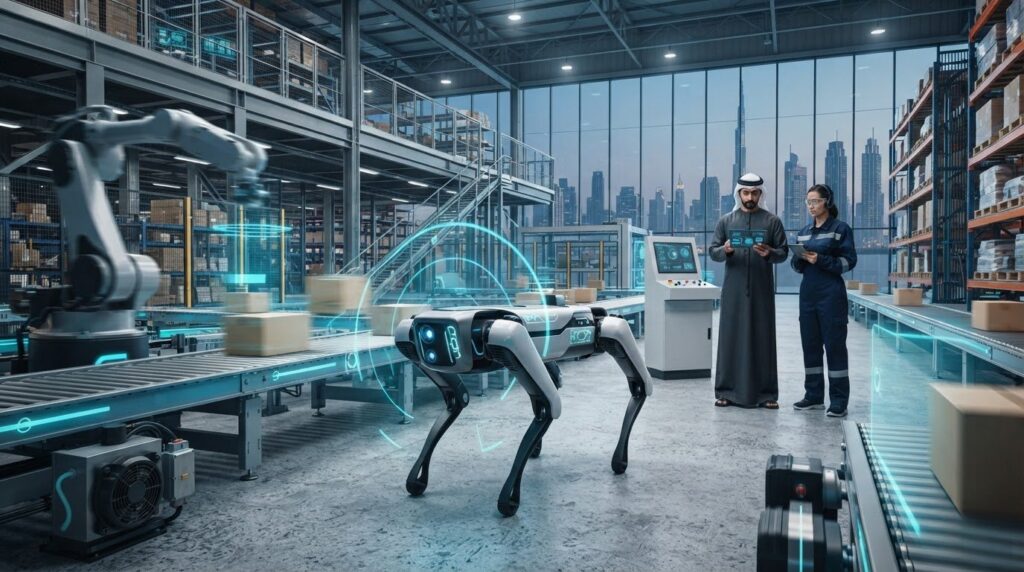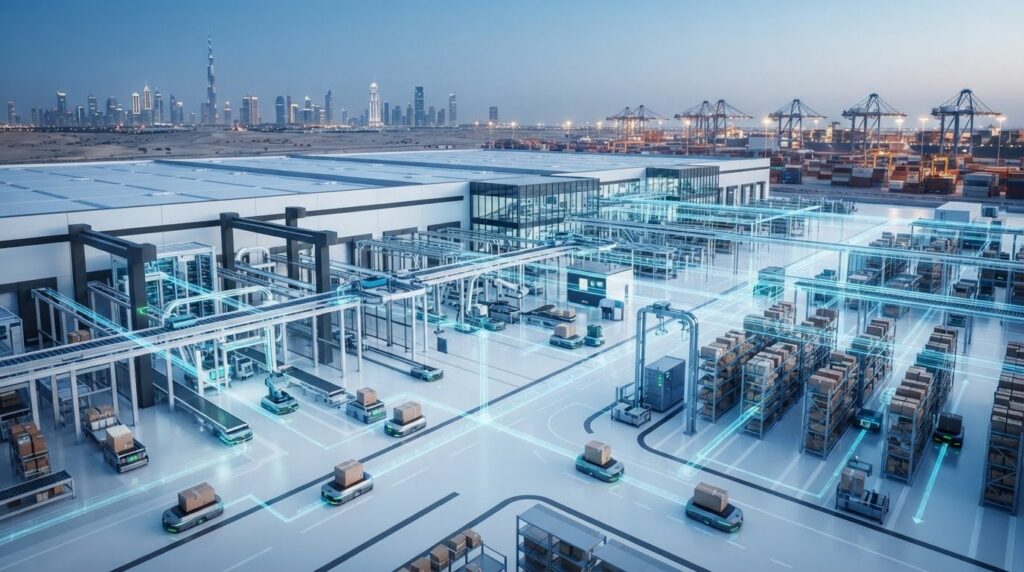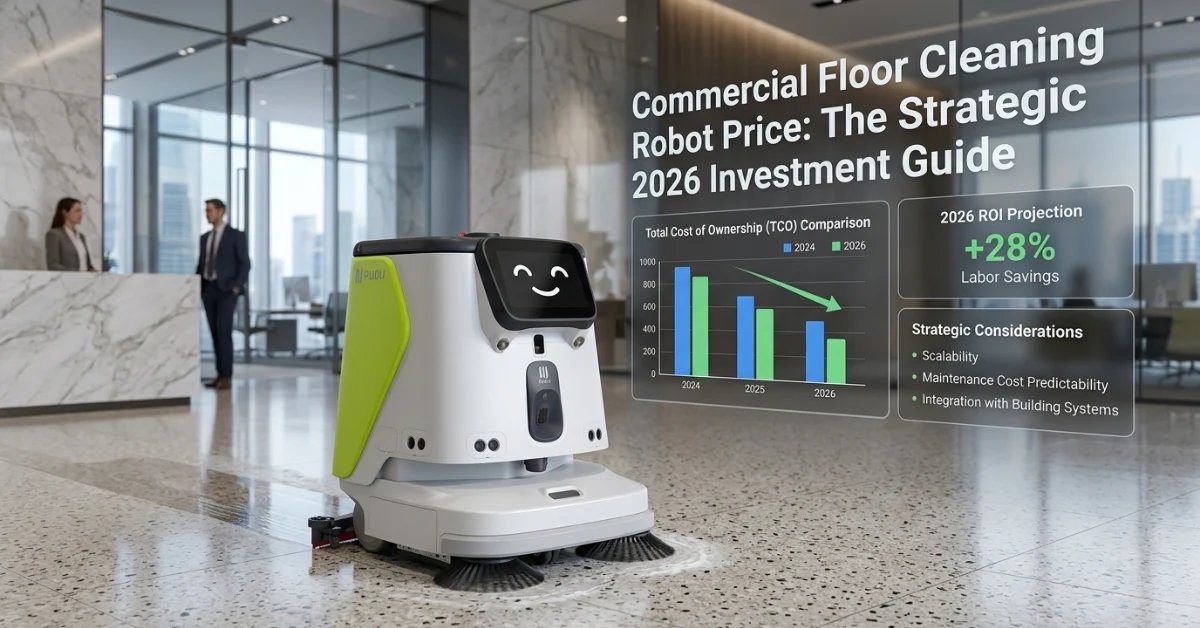
With the global cleaning robot market projected to reach $96.8 billion by 2035, the transition from manual labor to autonomous precision has become a strategic imperative for large-scale facilities. Leveraging advanced intelligence to mitigate chronic staffing shortages, these systems provide a level of consistency that traditional methods can’t replicate. You’ve likely noticed that rising manual labor costs and high turnover rates make it increasingly difficult to maintain rigorous hygiene standards across expansive floorplates. Understanding the commercial floor cleaning robot price is the first step toward reclaiming control over your operational budget and long-term facility health.
This guide provides a comprehensive breakdown of the 2026 investment landscape, moving beyond initial acquisition costs to examine the total cost of ownership and ROI frameworks. We’ll explore how specific pricing tiers correlate with technical capabilities and facility requirements, ensuring you select a solution that scales with your organization’s needs. By the end of this analysis, you’ll have the intellectual framework necessary to calculate long-term value, including maintenance cycles and the transition to Robots as a Service (RaaS). We’ll look at the specific components that drive costs, from lithium battery technology to integrated software ecosystems, providing the technical clarity required for high-level capital equipment decisions.
Key Takeaways
- Analyze the 2026 market shift toward intelligent AMRs and understand how tiered technical specifications directly dictate the commercial floor cleaning robot price.
- Evaluate the comprehensive Total Cost of Ownership by accounting for essential variables such as deployment mapping, consumable parts, and lithium battery lifecycle management.
- Utilize a strategic five-step framework to quantify return on investment; this includes measuring both immediate labor cost reductions and long-term gains in facility operational efficiency.
- Discover how integrating autonomous cleaning units into existing SCADA and PLC systems creates a cohesive and data-driven infrastructure for industrial facility management.
The 2026 Market for Autonomous Cleaning Solutions
Leveraging decades of mechanical engineering and rapid advancements in artificial intelligence, the sanitation sector has transitioned from basic manual equipment to sophisticated autonomous systems. Integrating LiDAR, ultrasonic sensors, and deep-learning algorithms, modern autonomous floor-scrubbing robots now navigate high-traffic environments with surgical precision. This shift signifies the arrival of Industry 4.0 in facility management, where the autonomous cleaner is no longer a peripheral tool but a central node in a digital infrastructure. By 2026, the technology has matured to the point where “dumb” automation is obsolete, replaced by intelligent agents capable of dynamic obstacle avoidance and adaptive path planning.
2026 represents a critical juncture for facility managers across the globe. As labor costs continue to rise and the availability of manual cleaning staff remains volatile, organizations are prioritizing long-term capital investments over recurring operational expenditures. The commercial floor cleaning robot price is increasingly viewed through the lens of strategic asset management rather than simple procurement. This year marks the moment when AI-driven navigation and sensor fusion have reached a level of performance that eliminates the technical debt often associated with earlier, less reliable robotic models. Selecting a solution in this climate requires an understanding of how high-tech sensor arrays and proprietary AI stacks influence the initial investment and long-term utility.
Drivers of Automation in Large-Scale Facilities
Addressing the national shift toward technology-led operations requires a fundamental reassessment of hygiene consistency. In 24/7 environments such as airports, hospitals, and massive distribution centers, human fatigue often leads to inconsistent results. Autonomous cleaning robots deliver a verifiable cleaning standard, ensuring every square meter is treated with the same level of intensity regardless of the hour. By mitigating the risks associated with labor market volatility, these robots provide a predictable operational baseline that protects a facility’s long-term viability. They don’t just replace manual effort; they augment the facility’s ability to maintain safety and compliance at scale.
Integration with Smart Building Ecosystems
Moving beyond standalone units, 2026 models function as networked cleaning fleets that communicate directly with broader building management systems. Achieving this level of operational synergy often requires specialized PLC and SCADA integration services, which allow facility managers to monitor performance and resource consumption through a centralized dashboard. This architectural approach transforms raw cleaning data into actionable business intelligence. Real-time reporting on water usage, battery health, and area coverage provides a level of transparency that was previously impossible to achieve. When evaluating the commercial floor cleaning robot price, visionary leaders consider these integration capabilities as essential components of a future-proof facility that remains competitive in an increasingly automated world.
Pricing Tiers for Commercial Floor Cleaning Robots
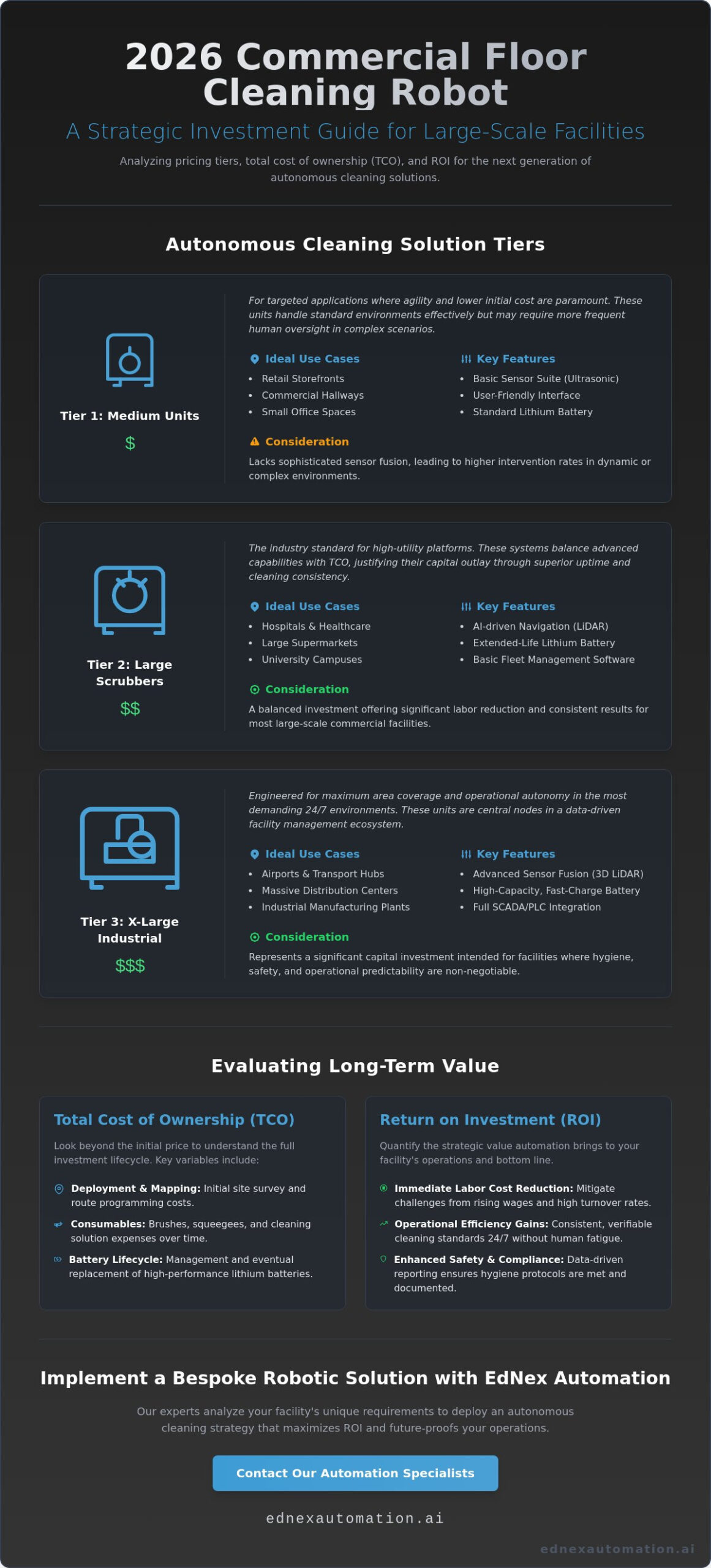
Determining the ideal commercial floor cleaning robot price involves balancing immediate hardware costs against the long-term reliability of the navigation stack. Recognizing the accelerating growth of the 2026 commercial cleaning robot market, facility managers are shifting their focus toward high-utility platforms that justify their initial capital outlay through superior uptime. The market is currently segmented into three distinct categories: medium-sized units for retail and hallways, large scrubbers for hospitals and supermarkets, and X-large industrial riders for massive transport hubs. While entry-level hardware may appear attractive for budget-conscious procurement, these models often lack the sophisticated sensor fusion required for complex environments, leading to higher intervention rates and increased operational friction.
Propelling this evolution is the emergence of Robots as a Service (RaaS), often referred to as Cleaning-as-a-Service (CaaS) in 2026. This subscription-based model allows organizations to bypass high upfront costs by paying a monthly fee that typically includes maintenance and software updates. For many, this converts a significant capital expenditure into a predictable operational expense, ensuring the facility always utilizes the latest AI-driven capabilities. Organizations looking to optimize their fleet should consider how bespoke robotic solutions align with their specific floorplate requirements to avoid the common pitfall of under-speccing their automation needs.
Entry-Level vs. Industrial-Grade AMRs
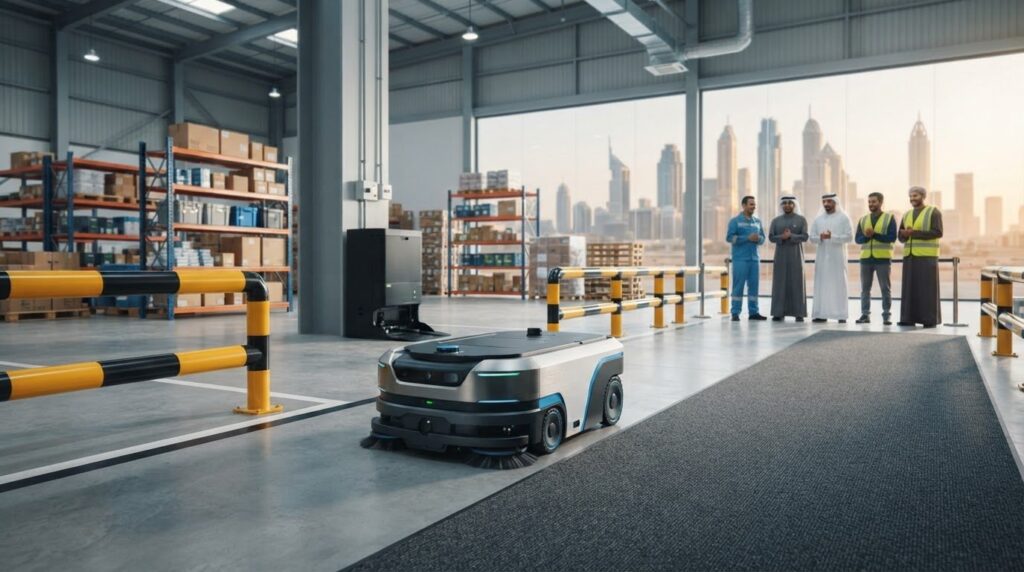
Differentiating between basic automation and true Industrial-Grade Autonomous Mobile Robots (AMRs) is essential for long-term viability. Entry-level units, designed for small retail spaces with predictable layouts, prioritize compact footprints and simplified navigation. In contrast, industrial-grade AMRs utilize advanced LiDAR and 3D camera arrays to manage dynamic obstacles in high-traffic warehouses. This navigation premium ensures the commercial floor cleaning robot price reflects the unit’s ability to operate safely alongside human workers and heavy machinery without constant supervision. Investing in high-durability components prevents the premature wear often seen in “prosumer” models adapted for industrial use.
Specialized Outdoor and Industrial Scrubber Pricing
Ruggedized outdoor cleaning automation requires specialized chassis and environmental sealing to withstand varying weather conditions and debris types. These units, along with heavy-duty industrial scrubbers used in manufacturing, feature reinforced brush decks and high-capacity tanks designed for multi-shift operations. For facilities operating in extreme climates, understanding the full scope of outdoor cleaning automation strategies for UAE industries is essential for selecting the right ruggedized platform. In the national market, enterprise-grade industrial rider units typically command a price range between $60,000 and $85,000 depending on the complexity of the integrated sensor suite. Selecting these specialized systems ensures that the facility maintains rigorous sanitation standards even in the most demanding industrial environments.
Total Cost of Ownership: Beyond the Initial Purchase
Calculating the commercial floor cleaning robot price requires a departure from traditional procurement mindsets, shifting instead toward a lifecycle-centric analysis of asset performance. While the hardware acquisition represents the initial hurdle, the real cost of robot cleaners is actually determined by the efficiency of the integration and the longevity of its wear-parts. Organizations must account for the initial deployment phase, which includes site mapping and personnel training to ensure the local team can manage the autonomous fleet effectively. Neglecting these foundational steps often leads to underutilized assets and diminished returns on the technical investment.
Operating an autonomous fleet involves recurring expenses that extend beyond the electricity required for charging. Budgeting between $500 and $1,000 annually per unit for consumables such as high-performance brushes, squeegee blades, and specialized detergents is a standard requirement for maintaining peak hygiene levels. Software licensing and fleet management platform fees also play a critical role, providing the essential data analytics and remote monitoring capabilities that define modern facility management. Furthermore, the eventual replacement of lithium batteries, which can cost between $2,000 and $5,000 per unit, represents a significant lifecycle milestone that must be factored into long-term financial planning.
Maintenance and Technical Support Infrastructure
Maintaining high uptime in high-stakes commercial environments depends on a robust technical support infrastructure. Annual service plans typically range from 10% to 15% of the machine’s purchase price, ensuring that preventative maintenance is conducted by certified technicians. For a $40,000 robot, this translates to an approximate $4,000 annual investment in operational reliability. Access to national spare parts availability and rapid-response technical teams prevents the costly downtime that can compromise facility standards and disrupt scheduled operations. Consistent care, including daily sensor cleaning and tank maintenance, remains the most effective strategy for protecting the longevity of the robotic asset.
Integration and Customisation Costs
Deploying robots in complex facility layouts often necessitates bespoke programming and specialized integration services. Interfacing autonomous units with existing infrastructure, such as elevators, automatic doors, and building security systems, ensures seamless movement across multiple levels and restricted zones. These integration efforts require the expertise of system integrators who can align robotic workflows with the facility’s broader operational goals. While these customisation steps influence the initial commercial floor cleaning robot price, they are vital for achieving a truly autonomous environment where human intervention is minimized. Successful implementation transforms a standalone tool into a fully synchronized component of the building’s digital ecosystem.
Calculating Strategic ROI: The Value of Automation
Achieving a definitive return on investment requires a meticulous evaluation of operational variables that extend far beyond the initial commercial floor cleaning robot price. Our five-step framework for calculating ROI begins with a baseline audit of current manual expenditures, followed by an assessment of autonomous capacity and an integration of total cost of ownership (TCO) variables. By calculating the direct labor offset and quantifying indirect gains such as improved safety, organizations can visualize the financial trajectory of their automation strategy. Operating these assets 24/7 significantly compresses the payback period; the fixed costs of the hardware are amortized across a much higher volume of cleaned floor space compared to a standard eight-hour human shift.
Beyond simple labor displacement, robotic systems offer substantial sustainability and ESG benefits that contribute to the bottom line. Modern autonomous cleaning robots for industrial hygiene automation utilize precision dosing systems that reduce water and chemical consumption by up to 50% in some industrial applications. This efficiency mitigates the environmental footprint of large-scale facilities while lowering the recurring costs of cleaning agents. Additionally, the reduction of human error and workplace accidents associated with heavy machinery handling provides a significant, though often overlooked, financial safeguard against liability and insurance premium increases.
Direct Labour Displacement vs. Augmentation
Determining the break-even point is a critical step in any capital equipment acquisition. Current industry data indicates that while a human cleaner can cost between $3,500 and $4,500 per month including benefits, a robot on a subscription model typically costs between $600 and $900 per month. This drastic delta allows facility managers to shift human staff to higher-value supervisory roles or specialized maintenance tasks that require human dexterity. Long-term scalability is achieved by adding robots to the fleet without a corresponding increase in headcount, allowing the organization to expand its operations while maintaining a lean and efficient workforce. If you’re ready to modernize your facility’s financial model, you can consult with our automation specialists to design a custom deployment plan.
Data as a Financial Asset
Transforming cleaning activities into verifiable data points provides a level of transparency that manual methods cannot match. Detailed cleaning reports allow facility managers to optimize floor usage and maintenance schedules based on actual traffic patterns and hygiene requirements. These records serve as critical assets during compliance audits, proving that the facility has met rigorous sanitation standards. Integrating these systems with broader autonomous fleets, including humanoid robots for sale UAE, creates a unified data landscape where every moving part of the facility is monitored and optimized for peak performance. This data-driven approach ensures that the commercial floor cleaning robot price is an investment in the building’s digital future, not just its physical maintenance.
Implementing Bespoke Robotic Solutions with EdNex Automation
Positioning itself as a visionary technical partner, EdNex Automation transcends the role of a traditional equipment vendor by providing the intellectual and engineering framework necessary for full-scale industrial transformation. We recognize that the commercial floor cleaning robot price is merely one component of a broader strategic initiative. Our comprehensive approach begins with a detailed site survey to analyze floor topography and traffic density, ensuring the selected autonomous mobile robots (AMRs) are perfectly calibrated for the environment. By managing every stage of the implementation, from initial mapping to complex SCADA integration, we ensure that your robotic fleet operates as a synchronized extension of your facility’s digital nervous system.
Maintaining a forward-looking perspective, EdNex leverages global alliances and official certifications to guarantee the long-term viability of every deployment. National enterprises trust our expertise because we prioritize operational reliability and technical precision in mission-critical environments. Our systems are designed to bridge the gap between global technological breakthroughs and regional industrial needs, providing a systematic organization that brings order and efficiency to complex sanitation workflows. This methodical approach reassures our partners that their investment is protected by a reliable technical partner who understands the gravity of large-scale industrial evolution.
The EdNex Integration Advantage
Utilizing our deep expertise in collaborative robots UAE, we specialize in creating hybrid workflows where AMRs and cobots work in tandem with human supervisors. This synergy optimizes productivity by lead-linking autonomous cleaning tasks with high-level facility management objectives. Our start-to-finish project management ensures that large-scale deployments are executed without disrupting existing operations. By developing custom software solutions tailored to regional industrial requirements, we provide a level of bespoke integration that standalone units cannot achieve. This ensures the commercial floor cleaning robot price translates into a high-performance asset that delivers measurable results from day one.
Securing Your Facility’s Future
Framing robotic acquisition as a necessary evolution for long-term competitiveness, we provide organizations with the tools to thrive in an increasingly automated economy. Accessing our national network of technical experts and engineers ensures that your facility remains at the cutting edge of innovation with ongoing support and optimization. We don’t just deliver machinery; we provide a roadmap for future-proofing your infrastructure against labor volatility and rising operational costs. To begin your journey toward a more efficient and data-driven facility, consult with EdNex experts for a bespoke automation quote and discover how our integrated solutions can transform your operational landscape.
Securing Long-Term Viability through Autonomous Integration
Navigating the variables of the 2026 market requires a fundamental shift from simple procurement to strategic asset management. Recognizing that the commercial floor cleaning robot price is an entry point into a broader digital ecosystem allows facility leaders to prioritize long-term ROI over short-term savings. Successful implementation depends on the synergy between advanced hardware and sophisticated PLC and SCADA integration, transforming standalone tools into networked assets. Organizations that embrace this data-driven approach will find themselves better equipped to handle labor volatility while maintaining rigorous hygiene standards.
EdNex Automation stands as a grounded, reliable technical partner specializing in these complex AMR systems. As an official integrator for global robotics brands, we provide the intellectual framework and the comprehensive national technical support network necessary for mission-critical operations. This systematic approach ensures that your facility doesn’t just adopt new tools but undergoes a controlled and deliberate evolution toward Industry 4.0. Our expertise in bespoke integration guarantees that every deployment aligns with your specific industrial needs.
It’s clear that the transition to autonomous facility management is a necessary evolution for remaining competitive. Request a Strategic Automation Assessment from EdNex to begin your transformation today. Embracing this technology now secures your operational efficiency for years to come.
Frequently Asked Questions
What is the average price range for an industrial floor cleaning robot in 2026?
Industry pricing for autonomous systems is generally segmented into tiers based on unit capacity and the sophistication of the integrated sensor suite. Medium-sized models designed for retail hallways represent the entry point, while large scrubbers and X-large industrial riders command a premium due to their extended runtimes and heavy-duty chassis. While the commercial floor cleaning robot price reflects these hardware differences, the true value lies in the reliability of the AI navigation stack and its ability to operate without human intervention.
How do I choose between buying a robot or a Cleaning-as-a-Service (CaaS) model?
The decision between a capital purchase and a subscription-based CaaS model depends on your facility’s balance sheet strategy and technological roadmap. A direct purchase offers long-term asset ownership and is often preferred by organizations with available capital budgets. Conversely, the CaaS model converts the investment into a predictable monthly operational expense, which typically includes maintenance and software updates. This subscription approach ensures your facility always utilizes the most current navigation intelligence without the risk of hardware obsolescence.
What are the typical maintenance costs for commercial cleaning robots?
Ongoing maintenance budgets must account for both preventative service plans and the replacement of high-wear consumables. Annual service contracts are usually calculated as a percentage of the initial acquisition cost to ensure the unit receives regular calibration from certified technicians. You should also budget for recurring items like brushes, squeegee blades, and specialized detergents. Periodic replacement of lithium batteries is another critical lifecycle factor that ensures the fleet maintains its operational uptime over several years of intensive use.
Can cleaning robots integrate with my existing building management system (BMS)?
Modern autonomous mobile robots are engineered to communicate with broader building ecosystems through advanced PLC and SCADA integration. This connectivity allows the robots to interact with automatic doors, call elevators, and report hygiene data directly to a centralized dashboard. This level of synchronization transforms a standalone cleaning tool into a networked asset. It provides facility managers with real-time transparency regarding resource consumption and area coverage, ensuring the robotic fleet remains a core component of the building’s digital infrastructure.
How long does it take to see a return on investment for a robotic scrubber?
The payback period is primarily influenced by the intensity of your cleaning schedule and the rising cost of manual labor in your specific region. Facilities that operate 24/7 see the fastest results because the fixed commercial floor cleaning robot price is amortized across a much higher volume of work. By shifting human staff to supervisory roles, organizations realize immediate labor savings while improving overall cleaning consistency. Most industrial deployments achieve a break-even point that justifies the transition to automation within a competitive timeframe.
Do these robots require specialized Wi-Fi or network infrastructure to operate?
While autonomous units can perform pre-mapped tasks offline, a robust network infrastructure is vital for advanced fleet management and real-time reporting. High-speed Wi-Fi or LTE connectivity allows the robots to receive essential AI updates and transmit performance telemetry to your building management system. This digital link is also necessary for remote diagnostics, which helps technical teams resolve issues without onsite visits. A reliable network ensures that your robotic fleet remains synchronized and fully optimized for the dynamic needs of a modern facility.
What happens if the robot encounters an obstacle or a person in a busy mall?
Safety is the foundational principle of modern AMR design, utilizing a multi-layered sensor fusion of LiDAR and 3D cameras to detect dynamic obstacles. If a person or a cart enters the robot’s path, the system’s AI immediately calculates a safe bypass route or brings the unit to a controlled stop. These robots are programmed with strict safety protocols that prioritize human welfare in high-traffic environments. This intelligent obstacle avoidance ensures that the machine can operate safely alongside shoppers and staff without the need for constant supervision.
Is technical support available nationally for these systems?
Reliable technical support is a mandatory requirement for maintaining the high uptime expected in mission-critical commercial environments. EdNex provides a comprehensive national support network that includes everything from initial site surveys to long-term preventative maintenance. Access to local engineers and a steady supply of spare parts ensures that any technical disruptions are resolved with minimal impact on your facility’s sanitation standards. Choosing a partner with a robust regional presence is essential for securing the long-term viability of your industrial automation strategy.