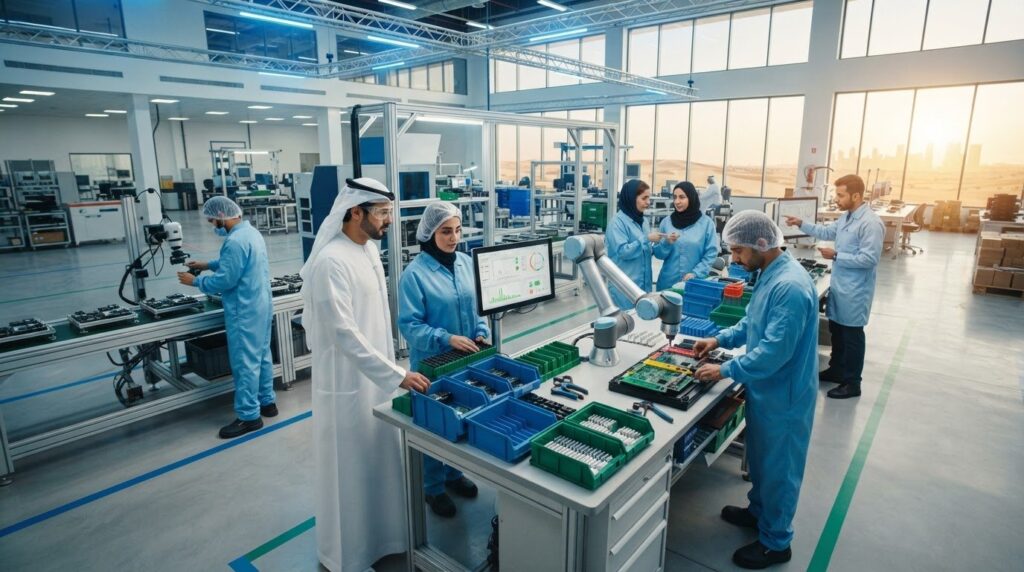
With smart facility construction costs in the UAE now exceeding AED 2,500 per square meter as of May 2026, can your operation afford to let valuable data sit idle in isolated silos? You’ve likely felt the frustration of data gaps between the factory floor and management, where high downtime during system upgrades and cybersecurity risks threaten your competitive edge. It’s clear that a fragmented approach to automation no longer suffices in a market driven by the Ministry of Industry and Advanced Technology’s latest ITTI Use Case Guide 2.0. By mastering SCADA system integration UAE, you can transform these challenges into a seamless flow of intelligence from sensors directly to your ERP. This article provides a strategic roadmap to achieving MES synergy, ensuring your facility meets the rigorous standards of the “Make it in the Emirates” initiative. We’ll examine how integrating PLC and SCADA systems creates the foundation for real-time production dashboards and automated regulatory reporting. You’ll discover the specific steps needed to eliminate silos and build a secure, interconnected industrial network that’s ready for the autonomous demands of 2026.
Key Takeaways
- Understand how aligning with the UAE’s Operation 300bn objectives requires a strategic shift from basic data acquisition to intelligent, visionary supervisory control.
- Master the ISA-95 hierarchy to ensure a seamless technical handshake between real-time field data and actionable business intelligence within your MES.
- Evaluate the critical differences between SCADA and DCS architectures to determine the most efficient configuration for your specific industrial footprint.
- Execute a phased implementation roadmap for SCADA system integration UAE that prioritizes legacy compatibility and high-availability network redundancy.
- Discover how integrating advanced robotics, such as AMRs and Cobots, into your SCADA fabric creates a unified and fully autonomous Industry 4.0 ecosystem.
The Evolution of SCADA System Integration in the UAE Industrial Landscape
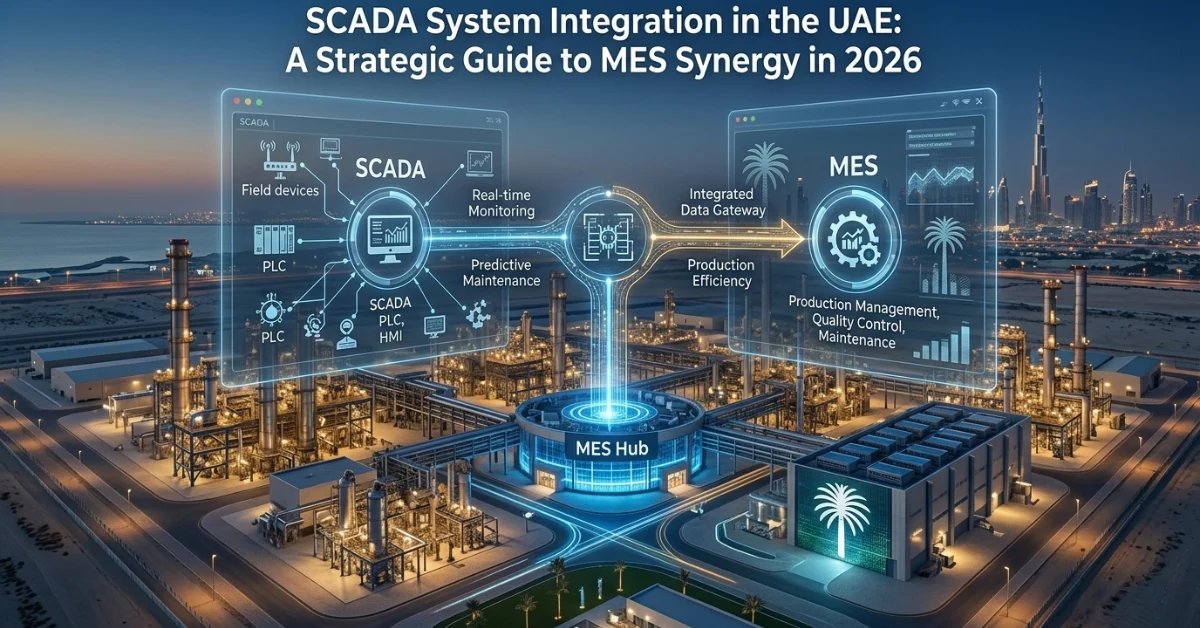
As the UAE industrial sector undergoes a radical shift toward high-value manufacturing, the role of Supervisory Control and Data Acquisition (SCADA) has transitioned from simple telemetry to the central nervous system of the smart factory. Modern systems no longer merely poll sensors for status updates; they act as intelligent supervisory layers that orchestrate complex workflows across the production floor. Achieving effective SCADA system integration UAE is now a strategic necessity for firms aiming to align with the national ‘Operation 300bn’ objectives, which target a massive expansion of the industrial sector’s GDP contribution by 2031. This evolution demands a departure from legacy localized control, moving instead toward cloud-integrated enterprise architectures that provide a unified view of geographically dispersed assets.
By centralizing data through sophisticated integration, organizations can finally bridge the gap between operational technology and corporate strategy. This connectivity serves as the essential prerequisite for AI-driven predictive maintenance, where real-time streams from the SCADA layer feed machine learning models to identify failures before they occur. With smart facility construction costs now exceeding AED 2,500 per square meter, maximizing the uptime of every asset is critical for maintaining long-term business viability.
From Supervisory Control to Industrial Intelligence
The industrial landscape in 2026 is defined by a shift from reactive monitoring to proactive system optimization. Leveraging edge computing, modern SCADA architectures are decentralizing traditional control, allowing for faster processing at the machine level while maintaining enterprise-wide visibility. This transition is heavily supported by the UAE’s robust 5G connectivity, which ensures the low-latency communication required for high-availability industrial networks. By moving intelligence closer to the source, manufacturers can reduce the burden on central servers and improve the responsiveness of automated systems, ensuring that production remains steady even during peak loads.
Driving National Competitiveness through Automation
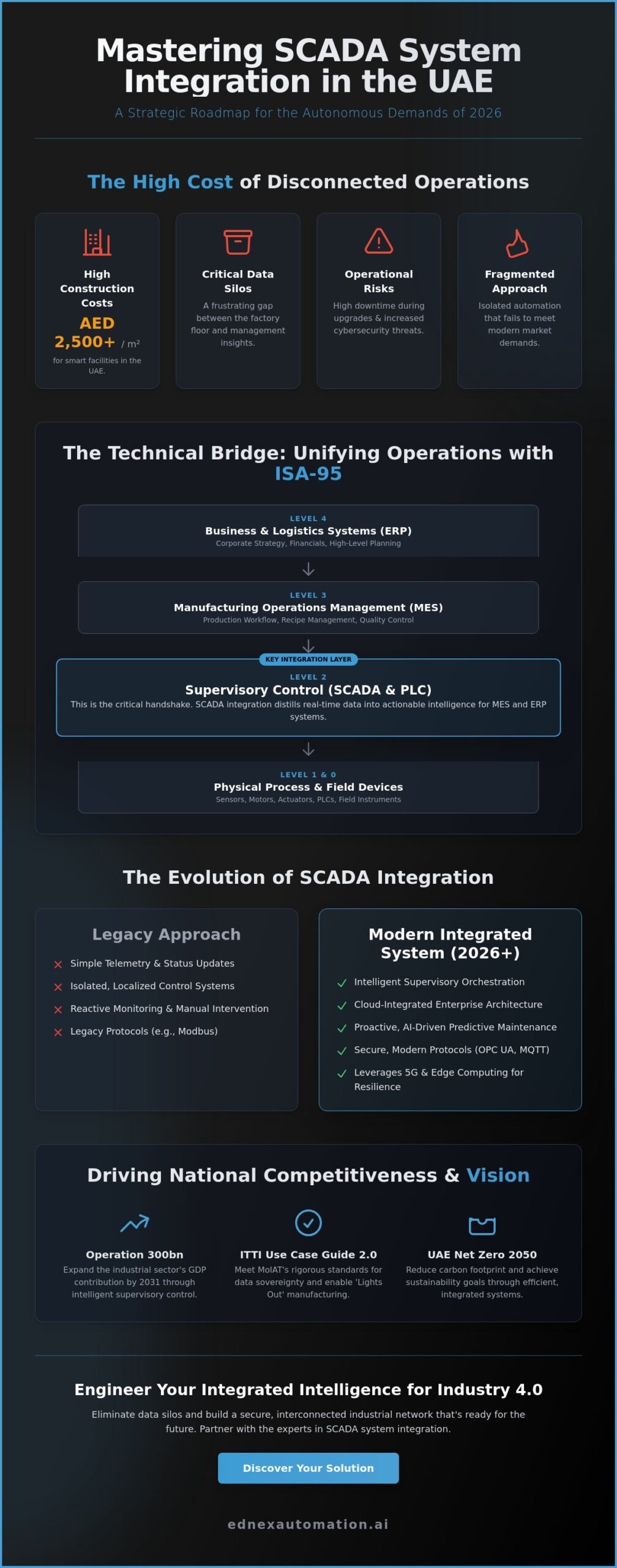
Aligning with the Ministry of Industry and Advanced Technology’s (MoIAT) ITTI Use Case Guide 2.0, launched on May 7, 2026, requires a methodical approach to industrial data. Implementing SCADA system integration UAE allows companies to meet strict regulatory requirements for data sovereignty while establishing a foundation for ‘Lights Out’ manufacturing capabilities. This level of automation is vital for reducing carbon footprints and achieving the sustainability goals inherent in the UAE’s Net Zero 2050 charter. Through controlled and deliberate innovation, these integrated systems provide the intellectual framework necessary for building a globally competitive, technology-driven industrial ecosystem that thrives on efficiency and precision.
- Integrating legacy machinery with modern cloud-based monitoring tools.
- Utilizing 5G for real-time synchronization between remote sites and central hubs.
- Adopting edge-heavy architectures to enhance system resilience and speed.
- Ensuring compliance with the latest 2026 industrial data regulations.
Bridging the Gap: The Technical Architecture of MES and SCADA Integration
Leveraging the ISA-95 standard, industrial leaders categorize automation into distinct functional levels to ensure interoperability between shop-floor execution and enterprise-level planning. Within this hierarchy, SCADA system integration UAE serves as the critical bridge between Level 2 sensing and Level 3 manufacturing operations management. This technical handshake allows high-frequency telemetry from the production line to be distilled into actionable business intelligence, ensuring that every pulse from the factory floor informs higher-level strategy. By aligning these layers, organizations can move beyond fragmented control toward a unified ecosystem where production data flows upward to drive executive decision-making.
Transitioning away from legacy protocols like Modbus, the 2026 industrial environment prioritizes secure, platform-independent transport layers such as OPC UA and MQTT. These protocols facilitate a “Single Source of Truth,” effectively dismantling the data silos that traditionally isolated factory floor insights from management. By adopting these modern standards, facilities ensure that data remains consistent, secure, and accessible across the entire enterprise. This shift doesn’t just improve visibility; it creates a resilient framework capable of supporting the high-speed data demands of modern Industry 4.0 applications.
The Data Flow: From Sensors to Strategy
Programmable Logic Controllers (PLCs) and Remote Terminal Units (RTUs) capture raw electrical signals, converting them into high-frequency telemetry for the SCADA layer. Once ingested, this raw data undergoes contextualization, where timestamps and asset IDs are appended to transform simple variables into meaningful manufacturing events. This structured data flow allows the MES to execute complex scheduling and resource allocation based on actual machine availability rather than theoretical estimates. A Digital Twin represents the ultimate integration goal by creating a dynamic, virtual replica of physical assets that mirrors real-time operational states through continuous data synchronization.
Key Benefits of Unified Control Architectures
Implementing a unified architecture delivers 100% traceability, which is indispensable for UAE industries like pharmaceuticals that must adhere to stringent quality mandates. Real-time OEE (Overall Equipment Effectiveness) tracking through integrated dashboards provides immediate visibility into performance gaps, allowing plant managers to intervene before minor inefficiencies escalate into major losses. By automating data logging and reporting, organizations significantly reduce the risk of human error associated with manual entries. For organizations seeking to implement these advanced architectures, leveraging expert PLC and SCADA integration services ensures a robust foundation for long-term scalability and operational excellence.
Evaluating Control Architectures: SCADA, DCS, and the Role of MES
Selecting the optimal control architecture requires a deep understanding of your production environment’s specific topology and regulatory demands. While Distributed Control Systems (DCS) excel in localized, high-speed process environments like petrochemical refineries, SCADA system integration UAE proves superior for managing geographically dispersed assets across the Emirates’ infrastructure. This architectural decision impacts your facility’s long-term agility; SCADA systems offer the flexibility to integrate diverse hardware through open protocols, whereas DCS often locks operators into proprietary ecosystems. For UAE enterprises scaling their operations, the ability to pull data from remote pump stations or solar arrays into a central hub is a decisive competitive advantage.
Analyzing the Total Cost of Ownership (TCO) reveals that integrated architectures significantly outperform standalone systems by reducing the “integration tax” associated with custom middleware and manual data reconciliation. Standalone systems might appear cost-effective during initial procurement, but they often incur hidden expenses through increased maintenance complexity and data latency. By investing in a unified framework, organizations eliminate redundant hardware and streamline their cybersecurity protocols, ensuring a more resilient and cost-effective operation that’s ready for the industrial demands of 2026.
DCS vs SCADA: A Strategic Selection Framework
Determining the right system depends largely on whether your facility focuses on process industries or discrete manufacturing. Process industries like oil and gas typically require the tight, closed-loop control provided by a DCS to manage continuous variables. In contrast, discrete manufacturing sectors, such as electronics or automotive assembly, benefit from the high-level supervisory capabilities of SCADA. As industrial enterprises in the region grow, scalability becomes a primary concern; a well-executed SCADA strategy allows for the modular addition of assets without overhauling the entire control logic. For a deeper dive into these hardware choices, explore our guide on PLC vs SCADA systems UAE to align your hardware with your strategic goals.
The MES Advantage: Why SCADA Alone Isn’t Enough
If SCADA serves as the nervous system of a factory, the Manufacturing Execution System (MES) acts as its brain. While SCADA captures the “what” of production through real-time telemetry, the MES provides the “why” by contextualizing that data within work orders, inventory levels, and personnel schedules. This layer bridges the gap between the factory floor and corporate ERP systems, ensuring that production targets remain synchronized with market demand. By managing work-order execution and inventory movement, the MES transforms raw SCADA data into a comprehensive narrative of operational efficiency. This synergy ensures that every machine cycle is not just monitored, but strategically accounted for within the broader business context.
Strategic Implementation: A Roadmap for Industrial Automation in the UAE
Executing a successful industrial transformation requires a systematic, phase-based approach that balances technical ambition with operational stability. In the context of the UAE’s 2026 industrial strategy, achieving a seamless SCADA system integration UAE isn’t just a technical goal; it’s a strategic necessity. This process demands a disciplined roadmap that mitigates risk while maximizing efficiency, beginning with a deep dive into existing infrastructure to ensure new digital layers complement legacy assets. By following a structured implementation path, organizations can avoid the common pitfalls of data silos and fragmented control.
- Phase 1: Conducting a comprehensive site audit to identify legacy compatibility issues and identify potential operational bottlenecks.
- Phase 2: Designing a network topology that emphasizes high-availability, redundancy, and low-latency communication across the facility.
- Phase 3: Executing secure integration and protocol mapping between field-level sensors, PLCs, and the supervisory layer.
- Phase 4: Final commissioning, which includes rigorous operator training and the establishment of support protocols to ensure long-term reliability.
Security and Compliance in 2026
Adhering to IEC 62443 standards for industrial cybersecurity is now a non-negotiable prerequisite for UAE manufacturers navigating the interconnected landscape of 2026. Implementing ‘Defense in Depth’ strategies ensures that every layer of the integrated SCADA and MES network is fortified against unauthorized access or external threats. To maintain continuity during these upgrades, we employ phased cutover strategies that allow for zero-downtime migrations. This methodical transition ensures that production remains active while the underlying control systems evolve to meet modern security mandates. For a comprehensive framework on hardening your control environment, review the SCADA security best practices outlined in our 2026 strategic industrial checklist.
Maximizing ROI through Professional Integration
Reducing the Mean Time to Repair (MTTR) with advanced diagnostic tools is one of the most immediate benefits of a professionally integrated system. By maintaining a vendor-agnostic approach, organizations preserve their long-term flexibility; this allows them to integrate best-in-class components from various manufacturers without technical friction. This strategy, combined with local expertise, allows firms to navigate the specific infrastructure and regulatory requirements of the UAE with confidence. It ensures that every technological investment translates into a tangible operational advantage that supports the facility’s long-term business viability.
To ensure your facility meets the highest standards of Industry 4.0, contact our team to begin your journey toward SCADA system integration UAE today.
EdNex Automation: Engineering Integrated Intelligence for Industry 4.0
EdNex Automation stands at the forefront of the Middle East’s industrial revolution, acting as a visionary bridge between global technological breakthroughs and regional manufacturing needs. By delivering bespoke SCADA system integration UAE, we provide more than just tools; we provide the intellectual framework required for large-scale industrial transformation. Our start-to-finish expertise encompasses everything from precision PLC programming to complex enterprise-level MES deployment, ensuring that your facility operates as a single, intelligent entity. This comprehensive approach ensures that high-level business objectives are directly linked to shop-floor execution, securing long-term business viability in an increasingly competitive market. Through controlled and deliberate innovation, we help manufacturers transition from legacy systems to high-tech, autonomous environments that prioritize efficiency and precision.
Robotics and SCADA: The New Industrial Frontier
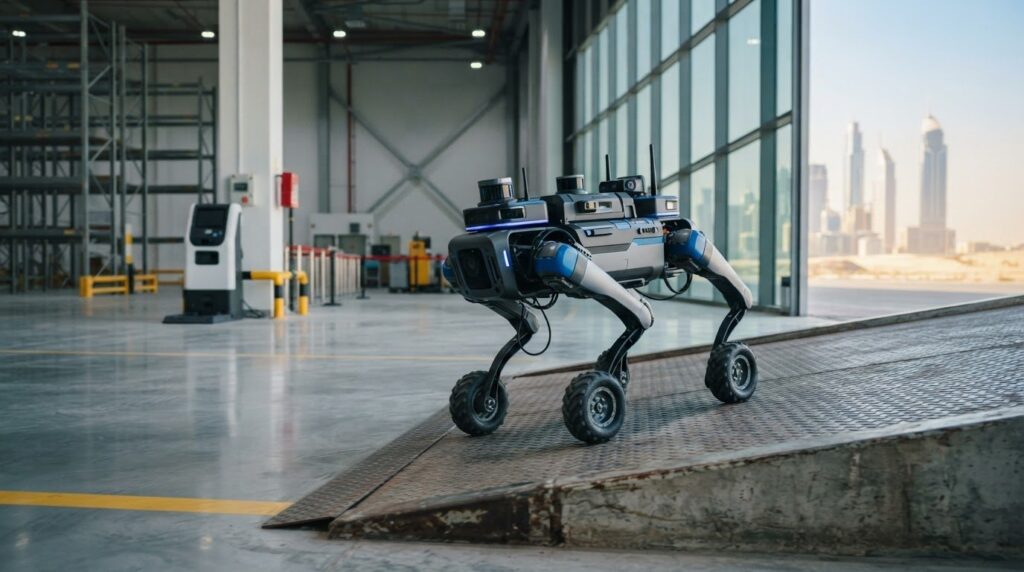
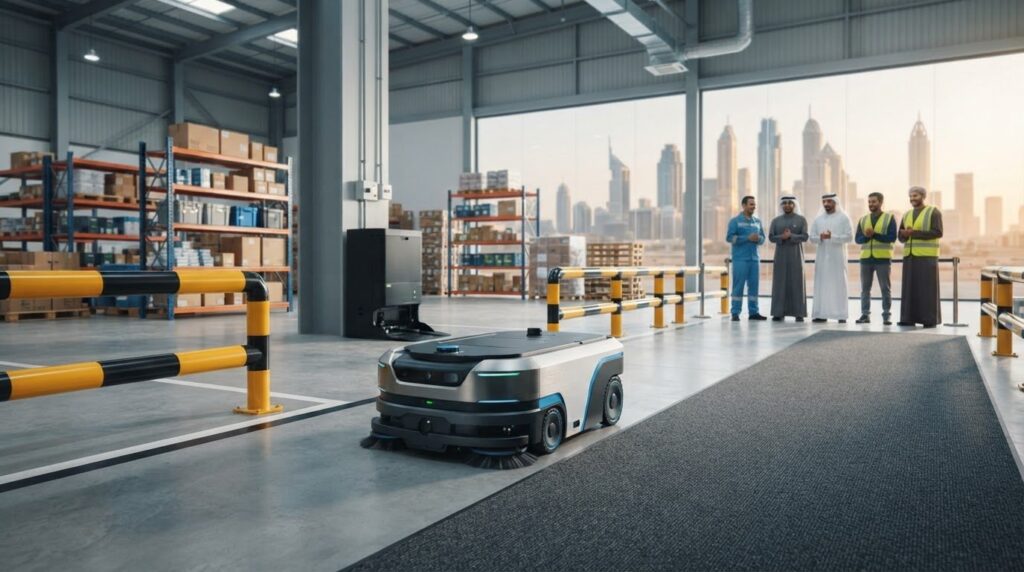
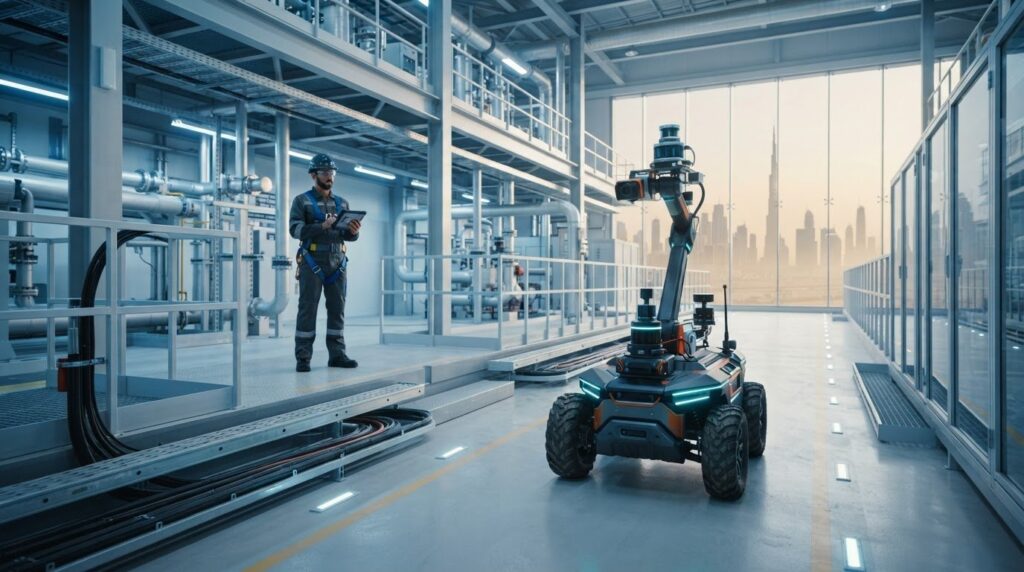
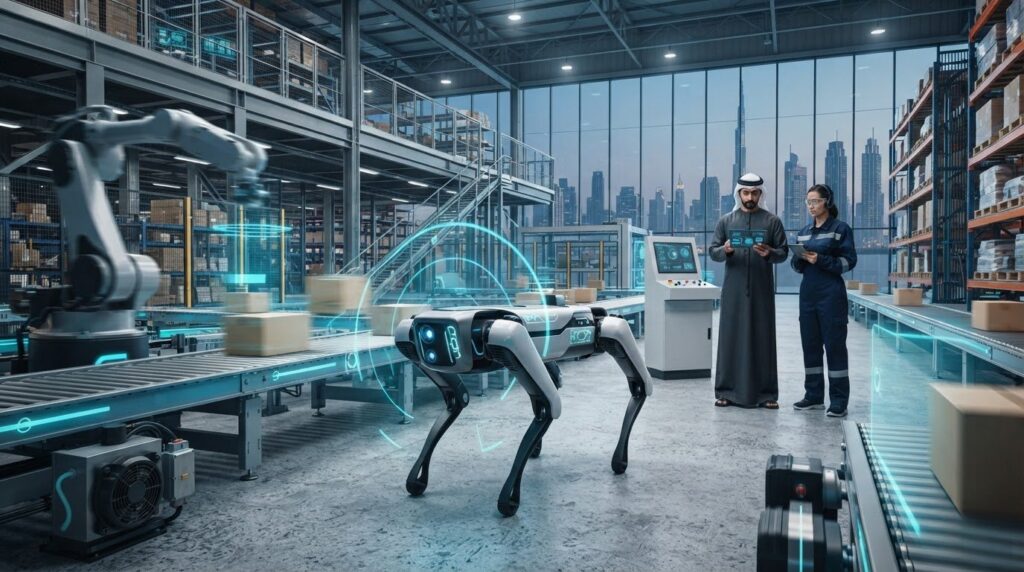
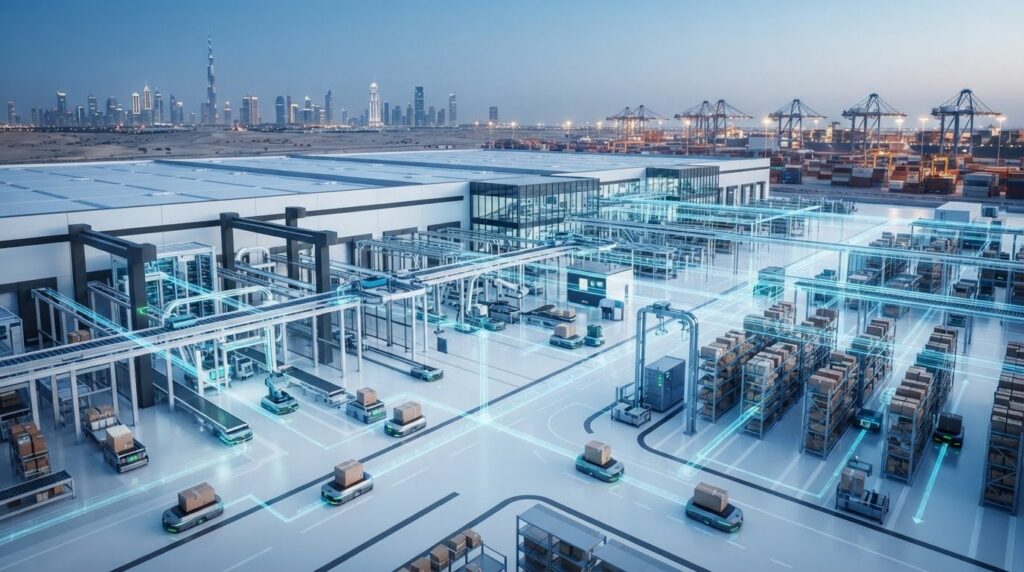
The convergence of robotics and supervisory control represents the next frontier of industrial efficiency. At EdNex, we specialize in integrating collaborative robots UAE directly into the central SCADA fabric, allowing for seamless coordination between human operators and automated assets. By monitoring AMR (Autonomous Mobile Robot) fleets through unified SCADA dashboards, plant managers gain unprecedented visibility into logistics and material handling. Our integration of Automated Storage and Retrieval Systems (ASRS) with SCADA has proven instrumental in optimizing warehouse throughput, effectively eliminating the bottlenecks that traditionally plague high-volume operations. These advanced robotics solutions, including inspection and surveillance robots, are no longer isolated units but are fully synchronized components of a data-driven ecosystem that enhances safety and operational intelligence.
Your Partner in Digital Transformation
Navigating the complexities of digital transformation requires a partner who understands both the technical nuances of automation and the specific economic context of the UAE. We deliver customized automation solutions tailored to sectors ranging from pharmaceuticals to electronics, ensuring each deployment meets local regulatory and operational requirements. Our commitment to visionary engineering means your facility isn’t just updated for today; it’s future-proofed for the next decade of industrial evolution. By aligning your operations with global standards through our strategic alliances with world-leading technology providers, you position your organization at the cutting edge of Industry 4.0. We act as a systematic organizer, bringing order and efficiency to complex environments through reliable technical partnership. Contact our specialists today to begin your journey toward a fully integrated and intelligent manufacturing future.
Orchestrating the Next Era of Manufacturing Intelligence
The transition toward a fully autonomous industrial ecosystem requires more than just incremental hardware updates; it demands a fundamental shift in how supervisory data informs enterprise strategy. By mastering the technical handshake between shop-floor telemetry and MES layers, organizations can effectively dismantle the data silos that traditionally impede operational agility. Aligning your facility with the UAE’s 2026 industrial mandates ensures that your operation remains a competitive force in a market that increasingly rewards precision and data-driven intelligence. This integration is the essential foundation for long-term business viability in an era of rapid technological transformation.
As Industry 4.0 specialists with official alliances with global tech leaders, EdNex Automation provides the comprehensive start-to-finish expertise necessary to execute complex SCADA system integration UAE projects. We deliver the intellectual framework required to bridge the gap between legacy assets and modern robotics, ensuring your infrastructure is prepared for a decade of deliberate innovation. It’s time to evolve your production environment into a high-performance, interconnected powerhouse that thrives on efficiency. We invite you to take the next step in your digital journey with a partner who understands the gravity of large-scale industrial evolution.
Partner with EdNex Automation for your SCADA and MES integration needs and lead your organization toward a more efficient, technology-driven future.
Frequently Asked Questions
What is the primary difference between SCADA and MES in an industrial setting?
SCADA focuses on real-time data acquisition and supervisory control at the machine level, while MES manages the execution of production orders and resource allocation. SCADA provides the technical telemetry of the factory floor, whereas MES provides the operational context by linking that data to business workflows. This distinction ensures that machine level control and enterprise level planning remain synchronized through a structured data hierarchy.
How does SCADA integration improve cybersecurity for UAE manufacturing plants?
Professional integration centralizes security protocols and enables the implementation of unified Defense in Depth strategies across the entire network. By consolidating disparate systems into a managed SCADA system integration UAE framework, organizations can effectively eliminate unsecured entry points. This structured approach allows for the application of standardized encryption and authentication methods that protect sensitive industrial telemetry from external threats while maintaining operational continuity. To understand the full scope of protective measures required, consult our detailed guide on SCADA security best practices for industrial environments.
Can a SCADA system be integrated with existing legacy PLC hardware?
Modern SCADA systems are designed with extensive driver libraries that allow them to communicate with a wide variety of legacy PLC hardware. Utilizing industrial gateways and protocol converters ensures that older assets can still contribute valuable telemetry to the centralized supervisory layer without requiring immediate hardware replacement. This capability allows manufacturers to modernize their control environment while preserving their previous capital investments in shop-floor machinery.
What are the common protocols used for MES and SCADA integration in 2026?
The industrial landscape in 2026 primarily utilizes OPC UA and MQTT for secure, platform-independent data transport between field devices and higher-level systems. These protocols have largely superseded legacy standards by offering superior encryption and the ability to handle high-frequency telemetry across diverse network topologies. Adopting these modern standards ensures that data remains consistent and accessible across the entire enterprise, supporting the high-speed demands of Industry 4.0.
How much downtime should be expected during a SCADA system upgrade?
Downtime is significantly minimized through phased cutover strategies and the use of parallel testing environments during the integration process. While specific durations depend on system complexity, a well-planned SCADA system integration UAE project aims for near-zero impact on active production lines. By migrating control logic in controlled, deliberate stages, we ensure that critical processes remain operational while the underlying supervisory systems undergo modernization.
Is SCADA integration necessary for small to medium-sized enterprises (SMEs) in the UAE?
SCADA integration is increasingly vital for SMEs aiming to remain competitive within the UAE National In-Country Value (ICV) program. Automated data acquisition allows smaller manufacturers to demonstrate the operational efficiency and quality standards required to secure contracts with government-linked entities and global multinational firms. Implementing these systems provides the intellectual framework necessary for scaling operations and meeting the rigorous demands of modern supply chains.
How does SCADA support the integration of autonomous mobile robots (AMRs)?
SCADA systems act as the central orchestrator for AMR fleets by providing a unified dashboard for monitoring location, battery status, and mission progress. This integration ensures that autonomous mobile robots are synchronized with fixed production machinery, preventing logistical bottlenecks and enhancing overall facility safety. By linking mobile assets to the central control fabric, organizations achieve a higher level of autonomy and responsiveness within their material handling processes.
What are the regulatory requirements for industrial data storage in the UAE?
Industrial data storage must comply with UAE national data sovereignty laws, which mandate that critical infrastructure data remains hosted within the country. Organizations must ensure their integrated systems adhere to the latest security directives from the Ministry of Industry and Advanced Technology (MoIAT) to maintain legal and operational compliance. This ensures that sensitive production data is handled with the necessary level of security and localized control required by national standards.