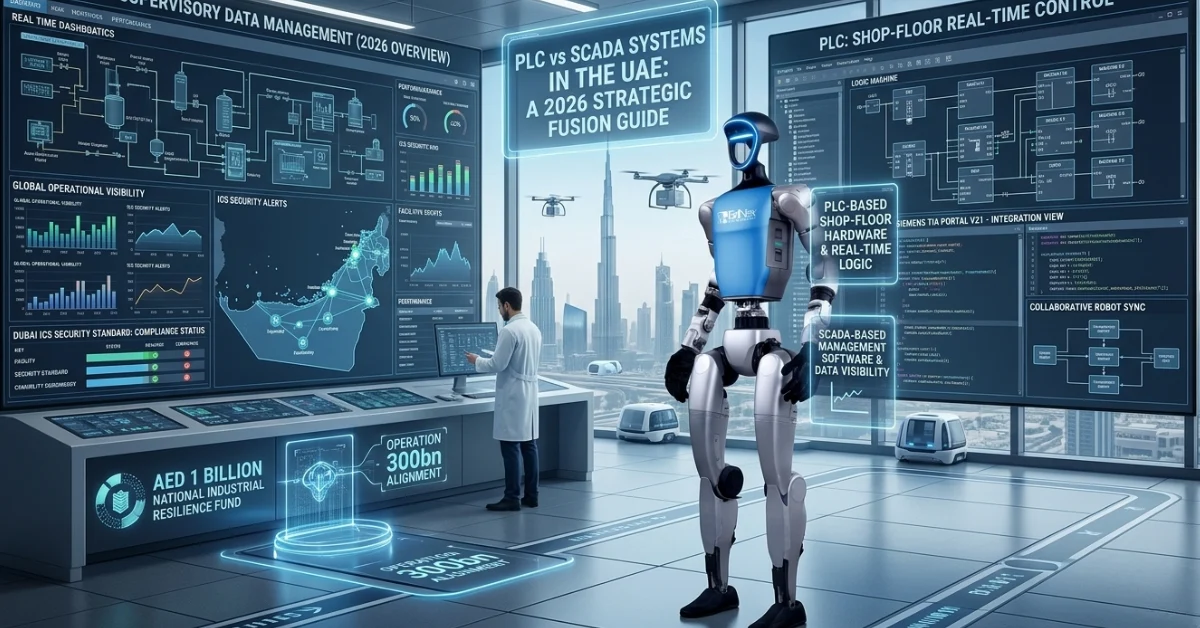
What if the choice between PLC vs SCADA systems UAE isn’t a competition, but a strategic fusion required to survive the next industrial evolution? You’ve likely felt the frustration of legacy systems causing unexpected downtime or the complexity of syncing new collaborative robots with your existing infrastructure. It’s a challenge that demands a shift from simple hardware installation to sophisticated, integrated intelligence. This article delivers a definitive roadmap for your control system architecture, ensuring you achieve seamless integration between shop-floor hardware and management software.
We’ll examine the latest 2026 updates, including Siemens TIA Portal V21 and the mandatory Dubai ICS Security Standard, while positioning your facility to benefit from the UAE’s AED 1 billion National Industrial Resilience Fund. You’ll learn how to bridge the gap between autonomous mobile robots and enterprise-level data visibility. This strategic guide ensures your operation doesn’t just function, but leads the region’s push toward the Operation 300bn mandate through deliberate and controlled innovation.
Key Takeaways
- Understand the functional roles of PLCs as the machine-level nervous system and SCADA as the facility’s central brain to optimize response times across your plant.
- Master the integration of PLC vs SCADA systems UAE to create a seamless data flow from localized hardware to high-level management software.
- Align your automation architecture with the latest Dubai ICS Security Standards and UAE environmental requirements to ensure long-term system resilience.
- Explore how to scale your infrastructure by integrating collaborative robots and autonomous mobile robots into a unified, robot-ready control layer.
- Build a future-proof roadmap that leverages the Automation Pyramid to reduce operational downtime and enhance real-time visibility across large-scale facilities.
Defining the Core: PLC vs SCADA in Modern UAE Industry
Leading the UAE’s industrial transformation requires a precise understanding of the fundamental building blocks that govern modern production lines. While legacy operations often treated control systems as isolated hardware units, the 2026 landscape demands a unified architecture. Understanding the distinction between PLC vs SCADA systems UAE is no longer just a technical requirement; it’s a strategic necessity for any organization aiming for high-performance automation. These systems represent two distinct yet inseparable layers of the industrial stack, functioning as the localized execution and the global intelligence of a facility.
What is a PLC? The Foundation of Machine Logic
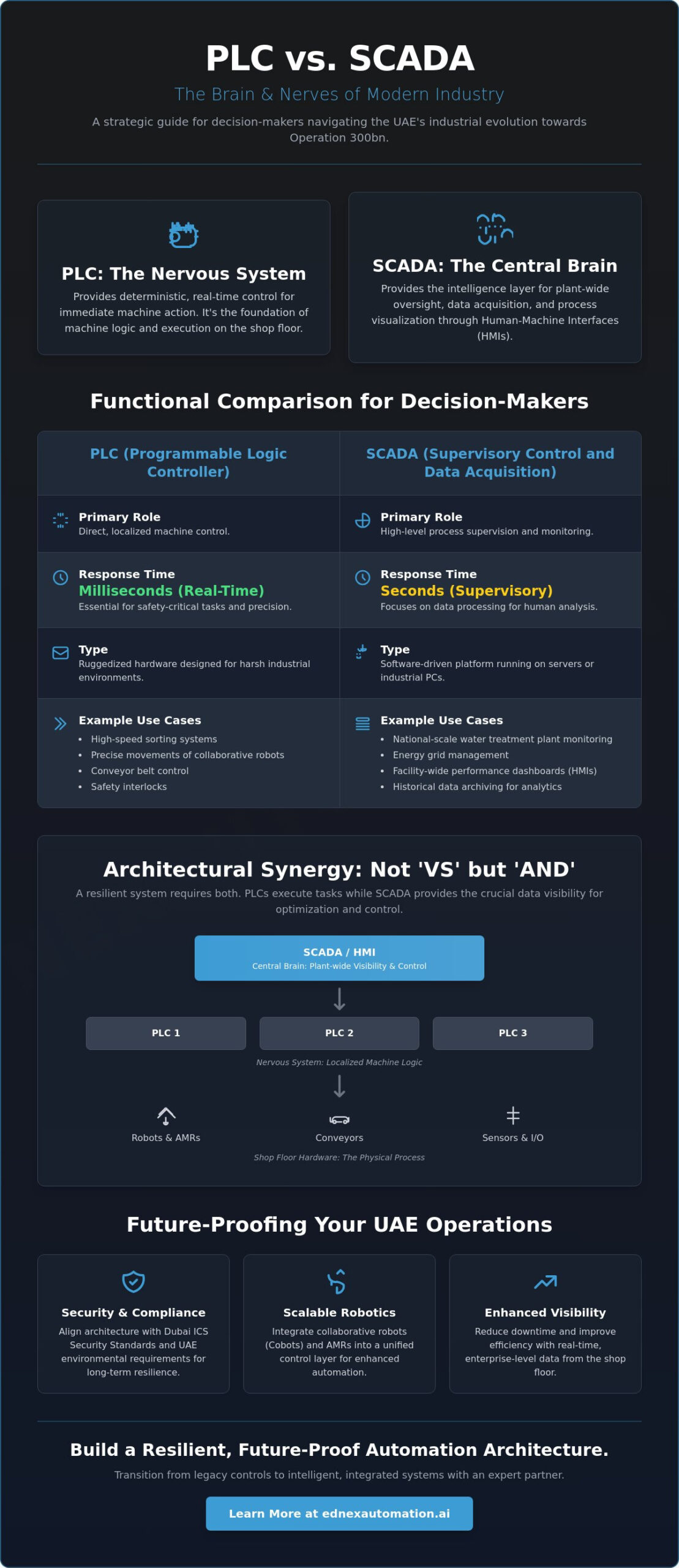
Acting as the nervous system of the industrial environment, the Programmable Logic Controller (PLC) provides the deterministic, real-time processing required for immediate machine action. These ruggedized units consist of high-speed CPUs, specialized I/O modules, and robust communication ports designed to withstand the harsh environmental conditions often found in UAE manufacturing facilities. Unlike general-purpose computers, PLCs execute logic in milliseconds, ensuring that a robotic arm or a conveyor belt responds with absolute precision to sensor inputs. In the logistics sector, they manage high-speed sorting systems, while in manufacturing, they govern the intricate movements of collaborative robots on the shop floor. Their primary role is reliability; they ensure that specific machine tasks are completed without fail, regardless of the broader network’s status.
What is SCADA? The Window into Your Operations
Serving as the overarching brain of the facility, Supervisory Control and Data Acquisition (SCADA) systems provide the intelligence layer necessary for plant-wide oversight. While the PLC handles the “how” of machine movement, SCADA focuses on the “why” and “when” by gathering data, visualizing processes through sophisticated Human-Machine Interfaces (HMIs), and archiving historical performance for future optimization. This software-driven layer allows operators in a central command centre to monitor national-scale infrastructure, such as water treatment plants or energy grids, from a single dashboard. By integrating disparate data streams, SCADA transforms raw machine signals into actionable insights, enabling informed decision-making across the entire enterprise. It’s the platform that allows managers to see the “big picture” while the hardware executes the minute details.
Transitioning from isolated control panels to integrated smart hubs marks the most significant shift in the UAE’s industrial history. As we move deeper into 2026, the reliance on basic logic is being replaced by a demand for data-centric automation that supports AI-driven analytics and predictive maintenance. Modern facilities don’t just need machines that work; they require an ecosystem where PLC vs SCADA systems UAE operate in a symbiotic relationship. This integration ensures that every millisecond of machine data is captured, analyzed, and utilized to drive operational efficiency. By bridging the gap between shop-floor hardware and management software, organizations can achieve a level of autonomy that was previously impossible, securing their position in a competitive global market.
PLC vs SCADA: A Functional Comparison for Decision Makers
Analyzing the functional distinctions between PLC vs SCADA systems UAE reveals a clear hierarchy of control that is essential for modern industrial resilience. Decision makers must look beyond the surface level of hardware and software to understand how these technologies interact within a high-performance architecture. While both systems are integral to automation, their specific roles in response time, data handling, and operational scope define the efficiency of the entire facility.
Response time serves as the primary differentiator between these two layers. A PLC operates in the realm of milliseconds, executing deterministic logic that ensures a machine reacts instantly to sensor triggers or safety violations. In contrast, SCADA systems operate on a scale of seconds, focusing on the processing of high-level commands and the visualization of plant-wide trends. This speed gap is why PLCs are non-negotiable for safety-critical tasks, while SCADA provides the necessary buffer for human operators to interpret complex data sets. Selecting the right architecture requires deep technical expertise, which is why many organizations partner with specialists for PLC and SCADA integration to ensure a seamless deployment.
Deterministic Control vs. Supervisory Oversight
Establishing a robust control layer requires a clear division of labor between execution and observation. PLCs provide the deterministic control necessary for high-speed operations, ensuring that every mechanical cycle is identical and predictable. Leveraging the role of PLC and SCADA in plant operations, engineers can design systems that use SCADA for high-level analytics and SQL database integration without compromising the real-time reliability of the shop floor. While the PLC executes the immediate logic required for mechanical movement, the SCADA system simultaneously captures that event as a data point for long-term operational intelligence. This synergy allows for advanced predictive maintenance, where SCADA identifies subtle performance drifts that suggest a machine component is nearing failure.
DCS vs SCADA: Understanding the Broader Architecture
Choosing between a SCADA-PLC setup and a Distributed Control System (DCS) depends heavily on the scale and complexity of the industrial process. A DCS is typically favored in large-scale, continuous process industries like oil and gas or chemical refining, where the control and supervisory layers are tightly integrated into a single proprietary system. For many UAE manufacturing and logistics facilities, however, the modularity of a SCADA-PLC architecture offers superior flexibility. This modular approach allows for the easy integration of new robotics or automated storage systems without overhauling the entire control network. The cost-benefit analysis often favors the SCADA-PLC model for its scalability, as it permits organizations to modernize specific production cells while maintaining a unified oversight layer through the SCADA interface.
Resilience in the UAE’s demanding industrial climate also hinges on hardware selection. PLCs are built as industrial-grade hardware, capable of functioning in high-temperature environments without the need for specialized cooling. SCADA, being server-based, offers the software flexibility required for remote monitoring and cloud connectivity, but it relies on the underlying PLC network to maintain operations if the central server loses connectivity. This dual-layered approach ensures that even if the “brain” experiences a delay, the “nervous system” continues to keep the facility safe and productive.
Architectural Synergy: Why UAE Plants Require Both Systems
Positioning a facility for long-term success requires moving beyond the “either/or” debate regarding PLC vs SCADA systems UAE. True industrial intelligence emerges when these technologies are deployed as a tiered, symbiotic architecture. Leveraging a structured automation pyramid, modern facilities place PLCs at the control level to govern physical movements, while SCADA occupies the supervisory level to provide the analytical oversight necessary for high-level decision-making. This multi-layered approach ensures that localized machine actions don’t happen in a vacuum, but instead contribute to a facility-wide data ecosystem.
Establishing a seamless real-time data flow is the primary objective of this synchronized architecture. The process begins at the sensor level, where raw physical data is captured and transmitted to the PLC for immediate logic execution. Simultaneously, this information is pushed upward to the SCADA system, where it is visualized for operators and archived for historical analysis. By the time this data reaches the cloud for enterprise-level review, it has been transformed from a simple electrical signal into a strategic asset that can predict maintenance needs or identify energy inefficiencies. This vertical integration is what allows UAE organizations to meet the ambitious productivity goals set by the Operation 300bn strategy.
Applying this synergy to critical infrastructure reveals its transformative potential. Consider the modernization of a large-scale water desalination plant in the UAE. By synchronizing high-speed PLCs with a centralized SCADA interface, operators can manage thousands of localized valve adjustments and pressure readings from a single command centre. This unified control doesn’t just improve operator efficiency; it significantly reduces the risk of human error in high-stakes environments. When machine-level logic and plant-wide visibility work in tandem, the result is a resilient infrastructure capable of maintaining peak performance under the region’s unique environmental pressures.
Bridging the Shop Floor and the Top Floor
Eliminating data silos is essential for achieving a truly connected enterprise. SCADA systems serve as the critical bridge, feeding real-time production data from the shop floor directly into Enterprise Resource Planning (ERP) systems. Utilizing standardized protocols like OPC UA and Modbus ensures that different hardware brands can communicate within a unified UAE industrial network. This transparency allows management to align production schedules with global supply chain demands, ensuring that every machine cycle contributes to the organization’s bottom-line viability. It’s a shift from reactive monitoring to proactive resource management on a national scale. For a deeper understanding of how this data flow connects to manufacturing execution systems, explore the strategic framework for SCADA system integration UAE and MES synergy in 2026.
Scalability and Future-Proofing
Building a modular architecture allows for rapid expansion without the need for costly system overhauls. Utilizing modular PLC systems enables UAE industrial facilities to expand production capacity rapidly without needing to reconfigure the entire supervisory software environment. As new machine lines or robotic cells are added, they simply plug into the existing SCADA framework, providing immediate visibility and control. This scalability is vital for preparing for AI-driven analytics, as a robust SCADA system ensures the high-quality data collection required to train future machine learning models. Organizations that adopt this integrated approach don’t just solve today’s problems; they build the intellectual framework necessary for the next decade of innovation.
Strategic Implementation: Factors Influencing UAE Automation
Successfully deploying PLC vs SCADA systems UAE requires a strategic approach that transcends simple hardware procurement. In the UAE’s demanding industrial climate, engineers must account for environmental stressors and regulatory mandates that are unique to the region. Achieving high-performance automation involves selecting components that aren’t just technically capable, but are also hardened for the local context and aligned with national security frameworks. This ensures that your investment remains viable as the UAE pushes toward its Operation 300bn industrial targets.
Environmental and Regulatory Considerations
Hardware longevity in the Middle East is fundamentally tied to environmental resilience. Selecting PLCs with high Ingress Protection (IP) ratings and specialized cooling requirements is non-negotiable for facilities where ambient temperatures can exceed standard operating limits. Beyond physical durability, compliance with the UAE Ministry of Industry and Advanced Technology (MoIAT) guidelines is a critical factor for any new installation. Furthermore, aligning your control architecture with the Dubai Industrial Control Systems (ICS) Security Standard, officially launched on March 8, 2020, ensures your facility meets the mandatory benchmarks for critical infrastructure protection. Implementing SCADA security best practices is equally essential, as modern cloud-integrated networks have rendered traditional air-gap defenses obsolete and demand a proactive, zero-trust approach to safeguarding every sensor and controller. Modern SCADA platforms also play a vital role in meeting national sustainability goals, as they provide the granular data necessary to monitor energy consumption and reduce the overall carbon footprint of your operations.
Total Cost of Ownership (TCO) Analysis
Evaluating the transition to advanced automation requires a sophisticated analysis of initial Capital Expenditure (CAPEX) versus long-term Operational Expenditure (OPEX). While the upfront cost of integrating sophisticated SCADA software and high-speed PLCs is a significant consideration, the Return on Investment (ROI) is typically realized through a drastic reduction in operational downtime and optimized resource allocation. Automated supervision effectively mitigates the challenges of the regional labor shortage, allowing a smaller, highly skilled workforce to manage vast, complex infrastructures. To maximize this ROI, consult with our technical experts for bespoke PLC and SCADA integration that prioritizes vendor neutrality and open-architecture systems, preventing proprietary lock-in and ensuring long-term flexibility.
Ensuring 24/7 uptime in critical sectors like logistics and energy depends heavily on local support and maintenance capabilities. Choosing a partner who understands the UAE’s specific economic and geographic landscape is essential for rapid troubleshooting and spare parts availability. By prioritizing systems that offer open communication protocols, you enable a more responsive maintenance cycle and easier integration of future technological breakthroughs. This proactive strategy ensures that your facility doesn’t just function today, but remains a leader in the UAE’s high-tech industrial future.
Future-Proofing with EdNex: Beyond Legacy Control to Intelligent Robotics
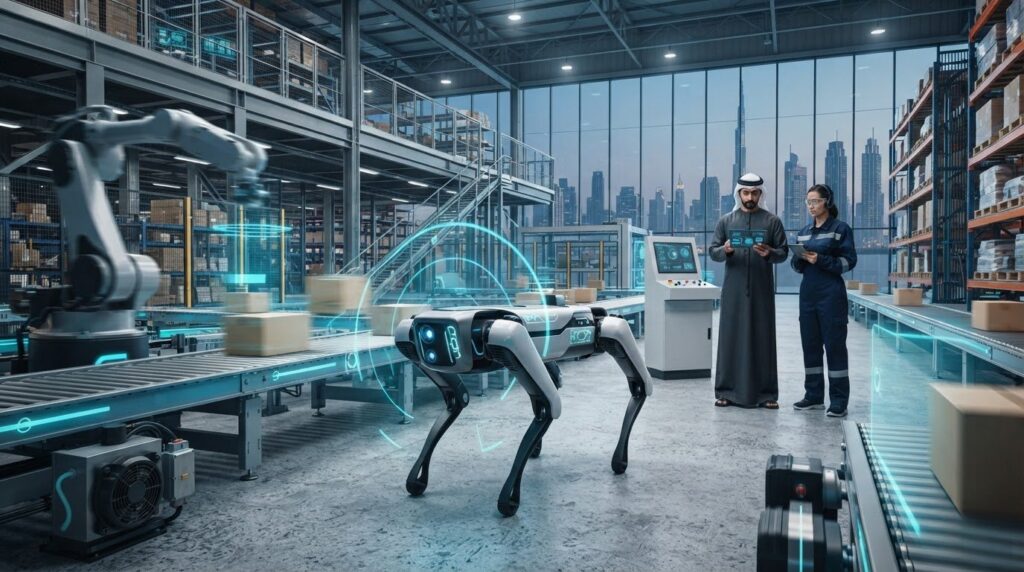
Leading the next wave of industrial evolution requires a shift from static automation to intelligent, robot-ready ecosystems. While traditional manufacturing relied on fixed machine lines, the 2026 landscape prioritizes flexibility and autonomy. Integrating collaborative robots into existing PLC architectures allows for a hybrid workforce where human precision and robotic endurance coexist seamlessly. Understanding the convergence of PLC vs SCADA systems UAE is the first step in managing these complex, multi-agent environments. By leveraging PLCs for real-time safety handshakes and SCADA for high-level fleet coordination, organizations can achieve a level of operational agility that legacy systems simply cannot match.
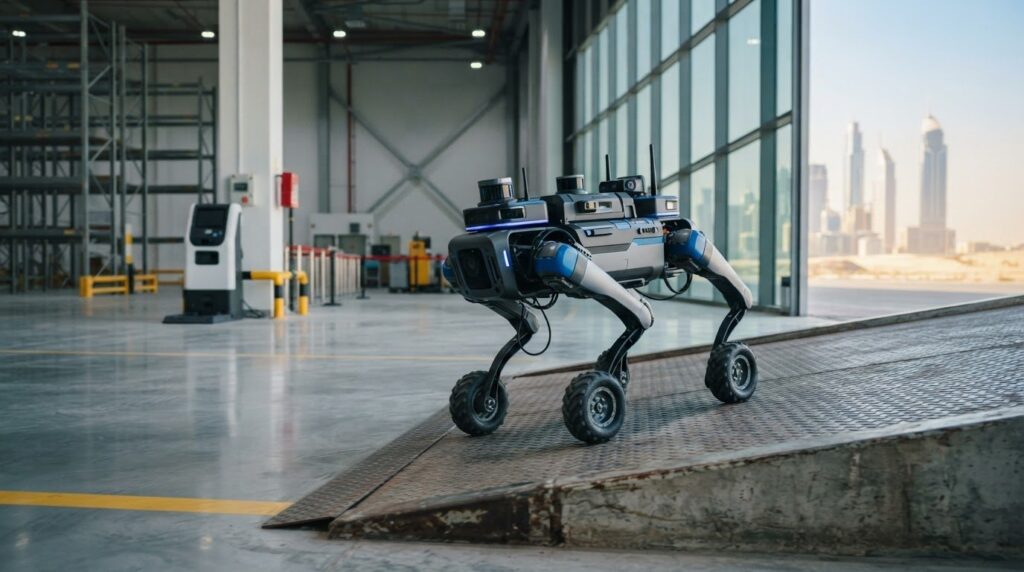
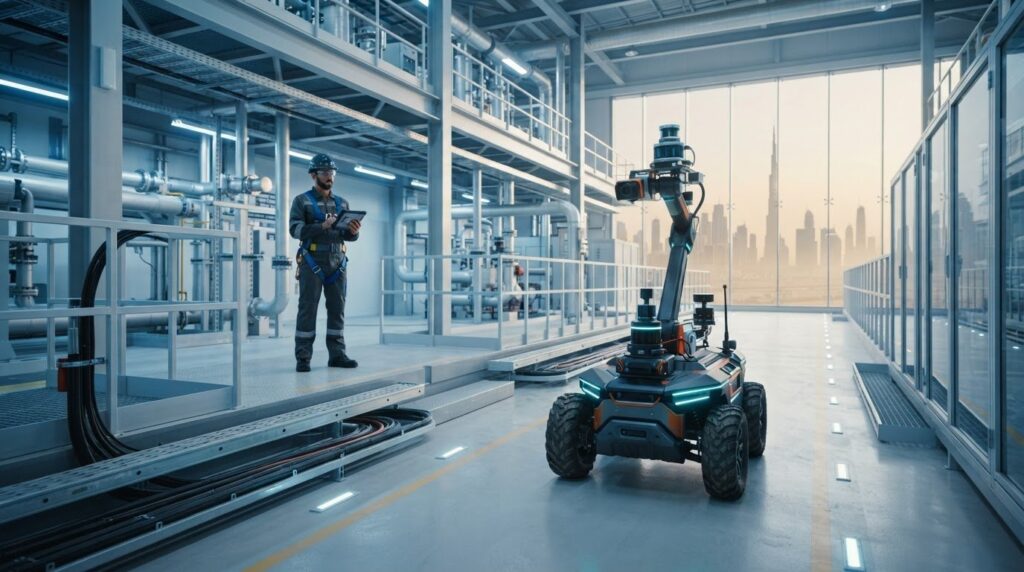
Managing fleets of Autonomous Mobile Robots (AMRs) through central SCADA platforms represents the new standard for UAE logistics and warehousing. These supervisory systems act as the traffic controllers for mobile assets, ensuring that AMRs navigate facility floors without disrupting stationary production cells. The emergence of humanoid robots further signals a new era for the UAE service and industrial sectors, where complex tasks are delegated to machines capable of human-like interaction and movement. EdNex Automation serves as the intellectual bridge in this transition, providing the start-to-finish expertise required to transform legacy plants into high-tech smart hubs.
The Rise of Autonomous Systems
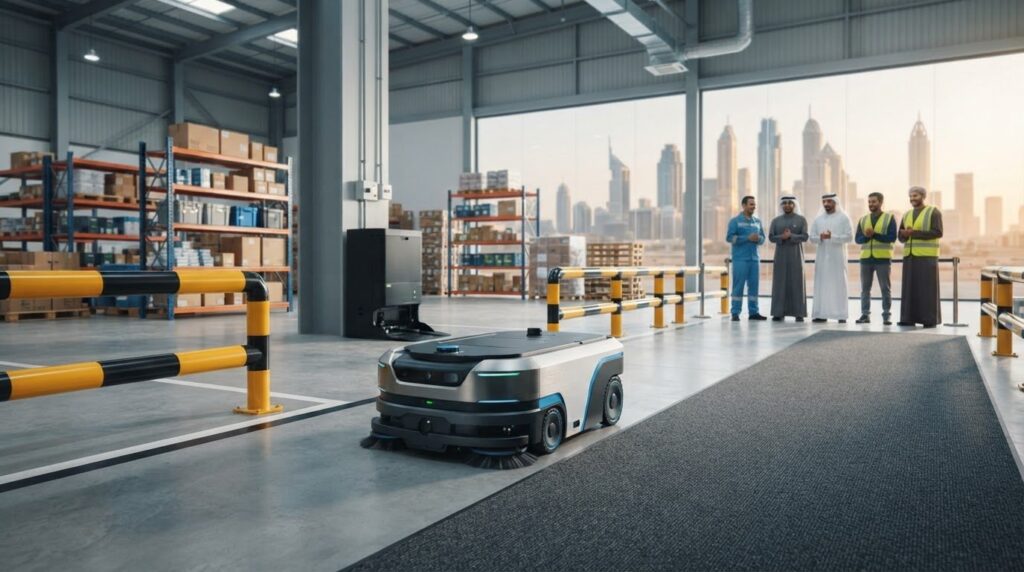
Moving from fixed logic to adaptive, AI-enhanced control is essential for staying competitive in a rapidly changing market. Modern industrial environments now utilize SCADA to manage diverse robotic surveillance and cleaning fleets, centralizing the oversight of mobile units that were previously siloed. This transition requires certified integration partners who understand the nuances of the UAE market and the technical requirements of high-bandwidth industrial networks. Logic must adapt. Fixed routines are being replaced by dynamic algorithms that allow robots to respond to environmental changes in real time. This shift ensures that your facility remains productive even as operational demands fluctuate.
Partnering for Progress
Adopting a consultative approach beats a simple equipment vendor relationship every time. We don’t just provide hardware; we deliver the comprehensive intellectual framework necessary for large-scale industrial transformation. Our integration services cover the entire spectrum of PLC vs SCADA systems UAE, ensuring that your shop-floor hardware communicates flawlessly with your management software. By focusing on long-term business viability, we help organizations evolve their infrastructure to meet the challenges of the next decade. The future is autonomous. Don’t let legacy constraints hold your facility back from its full potential. Consult with EdNex experts for your automation roadmap and secure your position at the forefront of the UAE’s industrial revolution.
Securing Your Position in the UAE’s Industrial Future
Mastering the architectural synergy between PLC vs SCADA systems UAE is the fundamental step toward achieving the Operation 300bn mandate. By aligning high-speed machine logic with supervisory oversight, organizations eliminate data silos and ensure compliance with the mandatory Dubai ICS Security Standard. This integration isn’t merely a technical upgrade; it’s a strategic evolution that prepares your infrastructure for the next generation of collaborative and autonomous robotics. Success in the 2026 landscape depends on your ability to connect shop-floor hardware with management software through a unified intelligence layer.
Building a resilient, future-ready facility requires the intellectual framework provided by a certified technical partner. EdNex delivers Industry 4.0 certified integration expertise backed by strategic alliances with global automation leaders. Our team provides comprehensive national support for UAE industrial sectors, ensuring that your transition from legacy control to intelligent automation is seamless and sustainable. We invite you to optimise your facility with EdNex’s PLC and SCADA integration services and take the first step toward a more autonomous and efficient future. Your facility has the potential to lead the region’s industrial transformation through controlled and deliberate innovation.
Frequently Asked Questions
What is the primary difference between PLC and SCADA?
The primary difference lies in the level of control, where PLCs handle real-time machine logic and SCADA provides supervisory visualization. While a PLC manages localized sensor inputs in milliseconds, SCADA aggregates this data across the entire facility to inform high-level decision-making. It’s the difference between the nervous system executing a reflex and the brain processing a strategy.
Can a SCADA system replace a PLC in an industrial setup?
A SCADA system cannot replace a PLC because it lacks the deterministic execution and ruggedized physical I/O necessary for machine control. SCADA operates on a software layer that is too slow for the millisecond-precision tasks that PLCs perform on the production floor. Both systems must work in tandem to ensure a facility is both safe and data-driven.
Which industries in the UAE benefit most from PLC and SCADA integration?
Logistics, manufacturing, and energy sectors in the UAE benefit most from this integration, especially those aligning with the Operation 300bn strategy. These industries use synchronized PLC vs SCADA systems UAE to manage complex infrastructures like automated storage and retrieval systems (ASRS) and water treatment plants. This synergy is essential for maintaining peak performance in the region’s demanding economic environment.
How does SCADA security differ from PLC security in the UAE?
SCADA security focuses on network-wide encryption and administrative access, while PLC security targets the protection of physical controller logic and local communication ports. All industrial systems in the region must now comply with the Dubai Industrial Control Systems (ICS) Security Standard to mitigate cyber risks. Protecting both layers is vital for the resilience of critical national infrastructure. For a comprehensive framework on hardening these systems, review the SCADA security best practices checklist aligned with UAE Information Assurance Standards.
Is it possible to integrate legacy PLCs with modern SCADA software?
It’s entirely possible to integrate legacy PLCs with modern SCADA software through the use of communication gateways and standardized protocols like OPC UA. This approach allows organizations to modernize their data visibility without the immediate capital expense of replacing every piece of shop-floor hardware. It’s a strategic way to extend the life of existing assets while adopting Industry 4.0 capabilities.
What are the typical costs associated with SCADA implementation in the UAE?
Typical costs for hardware vary widely, with entry-level controllers starting around $1,500 and enterprise-level systems exceeding $120,000. While hardware is a fixed cost, the total investment depends on the complexity of your industrial architecture and the scale of the data being managed. Investing in high-quality hardware ensures long-term reliability and lower operational costs over time.
How do PLC and SCADA support the UAE’s Industry 4.0 initiatives?
These systems support Industry 4.0 by creating a digital backbone that enables AI-driven analytics and predictive maintenance. They provide the necessary data flow for managing advanced technologies like collaborative robots and autonomous mobile robots within a unified intelligence layer. This connectivity is the foundation for the UAE’s push toward a more autonomous and efficient industrial sector.
Do I need specialized training to operate these systems?
Specialized training is highly recommended for operators and engineers to ensure the long-term reliability and safety of these sophisticated systems. In the UAE, professional certification courses range from AED 1,000 to AED 9,200, providing the technical expertise required for high-level system optimization. Having a certified team ensures that your automation architecture is managed with the precision it requires.