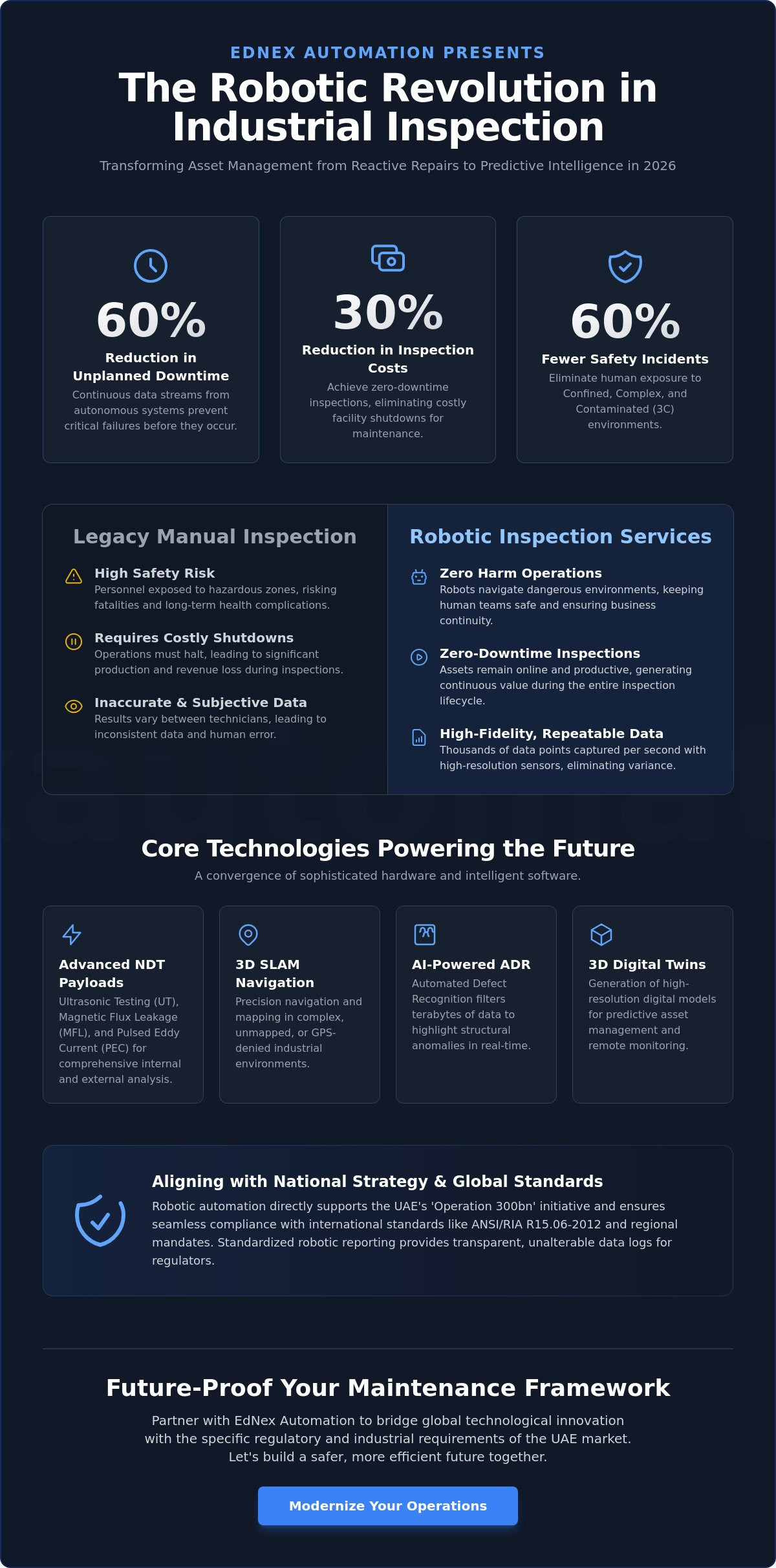
Facilities deploying autonomous maintenance systems have realized a 60% reduction in unplanned downtime, fundamentally altering the economics of industrial asset management in 2026. You likely recognize that traditional manual inspections in hazardous zones are no longer sustainable, as they frequently result in high operational costs and inaccurate data stemming from human error. Utilizing advanced robotic inspection services allows organizations to bridge the gap between physical asset integrity and digital intelligence, ensuring that critical infrastructure remains operational without the need for lengthy facility shutdowns.
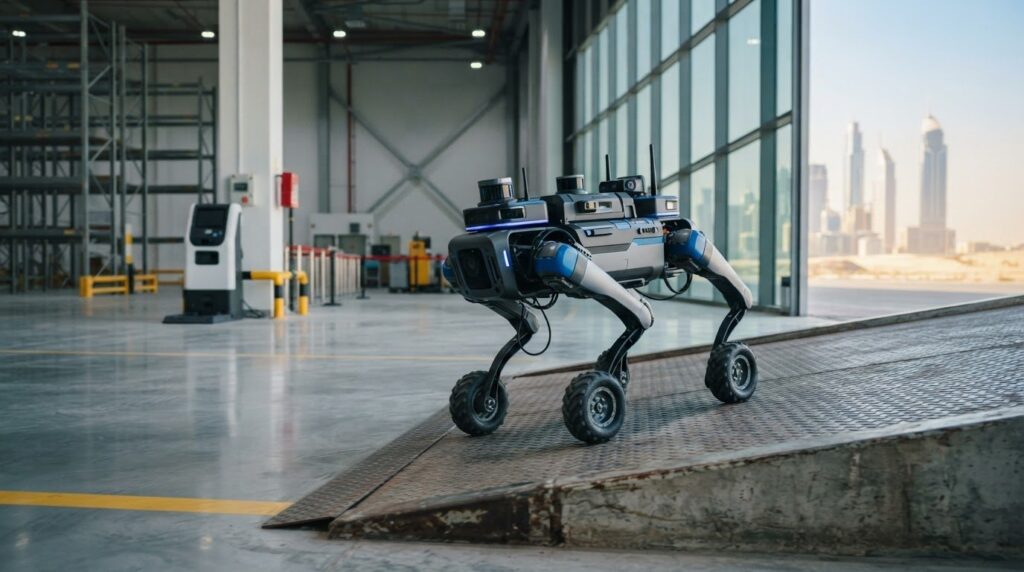
This guide demonstrates how these high-tech systems are transforming industrial safety and operational efficiency across the UAE’s most vital sectors. By integrating sophisticated platforms such as the Unitree B2 or specialized Agilex systems, companies can achieve zero-downtime inspections and generate high-resolution 3D digital twins of their assets. We’ll examine the strategic adoption of these technologies, focusing on their ability to ensure compliance with international safety standards like ANSI/RIA R15.06-2012 and regional mandates such as Ras Al Khaimah’s Law No. (1) of 2026. You’ll gain a comprehensive understanding of how to modernize your maintenance framework to achieve a 25-30% reduction in inspection costs while maintaining the highest safety protocols.
Key Takeaways
- Transitioning from reactive maintenance to predictive asset management through continuous data streams provided by autonomous systems.
- Leveraging advanced NDT payloads and 3D SLAM technology to navigate and assess unmapped or GPS-denied industrial environments with precision.
- Implementing specialized robotic inspection services across the Oil and Gas and Power sectors to address the complex challenges of unpiggable pipelines and high-voltage monitoring.
- Synchronizing high-resolution robotic data with existing PLC and SCADA frameworks to facilitate real-time operational adjustments and data-driven intelligence.
- Partnering with EdNex Automation to bridge global technological innovation with the specific regulatory and industrial requirements of the UAE market.
The Paradigm Shift: Why Robotic Inspection Services are Essential in 2026
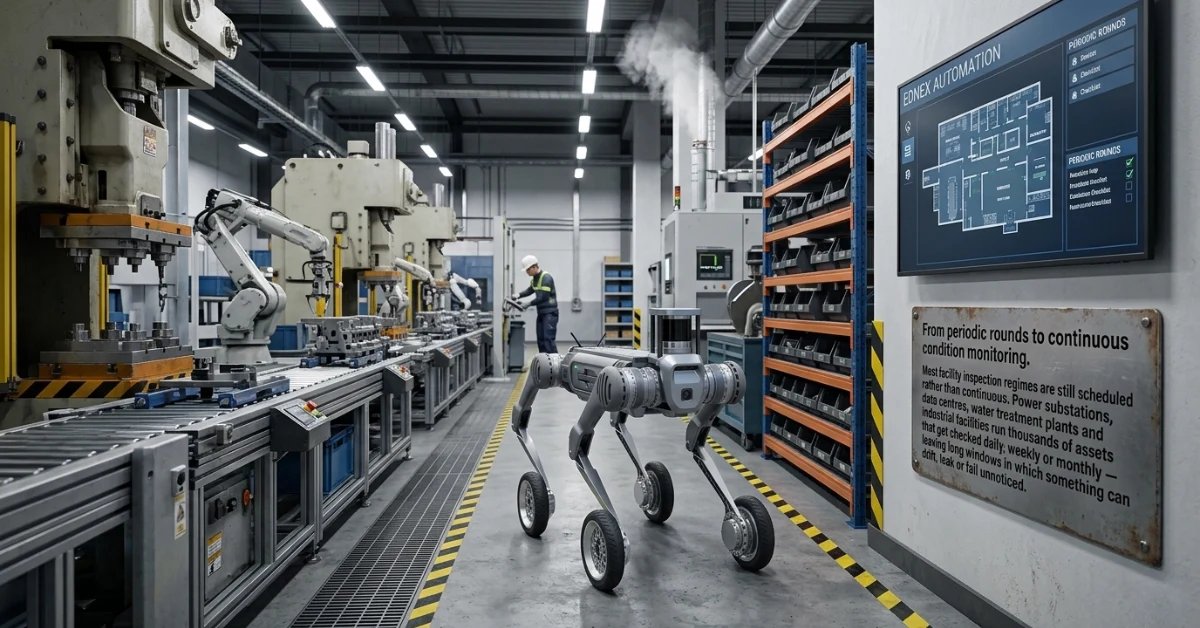
Defined as the autonomous or remote-operated assessment of high-value industrial assets, robotic inspection services represent a fundamental departure from legacy maintenance protocols. In 2026, the industry has moved beyond simple remote visual inspection toward a data-centric ecosystem that bridges the gap between physical integrity and digital intelligence. Utilizing Robotic non-destructive testing (NDT), these platforms deliver continuous, high-fidelity data streams that transition operations from reactive repairs to proactive asset management. These advanced systems utilize specialized sensors to identify microscopic structural anomalies long before they manifest as critical failures. By deploying intelligent platforms, organizations secure their infrastructure against unplanned interruptions while maintaining a steady pulse on asset health.
Prioritizing human safety remains the most urgent driver for this technological migration. Removing personnel from Confined, Complex, and Contaminated (3C) environments effectively eliminates the risk of workplace fatalities and long-term health complications. Implementing robotic inspection services in these hostile zones allows for navigating hazardous chemical tanks or high-radiation areas without hesitation. This shift isn’t merely about safety; it’s a strategic move to ensure business continuity in environments where human presence is restricted or prohibited by modern safety mandates. Facilities that digitize robotic safety inspections report 60% fewer safety incidents, proving that automation is the most reliable path to zero-harm operations.
Manual vs. Robotic Inspection: A Strategic Comparison
Analyzing speed and repeatability reveals that robotic platforms far exceed manual capabilities in data density. Manual inspections often suffer from human subjectivity, where different technicians might interpret the same surface defect with varying levels of concern. Robotic platforms eliminate this variance by utilizing high-resolution sensors that deliver identical data quality every single time. They capture thousands of data points per second, providing a level of detail that human observers simply cannot achieve. In 2026, the zero-downtime advantage of robotic systems ensures that assets remain online and productive during the entire inspection lifecycle.
Aligning with the UAE’s National Industrial Strategy
Integrating robotic automation directly aligns with the UAE’s ‘Operation 300bn’ initiative, which seeks to position the nation as a global industrial hub. These autonomous systems contribute to national sustainability goals by optimizing resource allocation and reducing the carbon footprint associated with large-scale maintenance shutdowns. Adhering to regional regulatory standards becomes seamless through standardized robotic reporting, providing authorities with transparent, unalterable data logs. This rigorous approach to compliance strengthens the UAE’s reputation for industrial excellence and safety. By adopting these systems, regional leaders ensure their operations meet the strict cybersecurity and data governance protocols enforced by modern mandates.
Core Technologies Powering Modern Inspection Robotics
Achieving high-fidelity asset integrity requires a sophisticated convergence of sensor hardware and autonomous navigation logic. In 2026, robotic inspection services have evolved into multi-sensor ecosystems that do more than just record video. These platforms integrate Non-Destructive Testing (NDT) payloads, including Ultrasonic Testing (UT) for internal crack detection and Magnetic Flux Leakage (MFL) for identifying metal loss in ferromagnetic structures. By deploying Pulsed Eddy Current (PEC) sensors, robots can even inspect through insulation, eliminating the need for costly stripping and re-lagging of pipes. This capability is vital for maintaining the long-term business viability of aging industrial infrastructure.
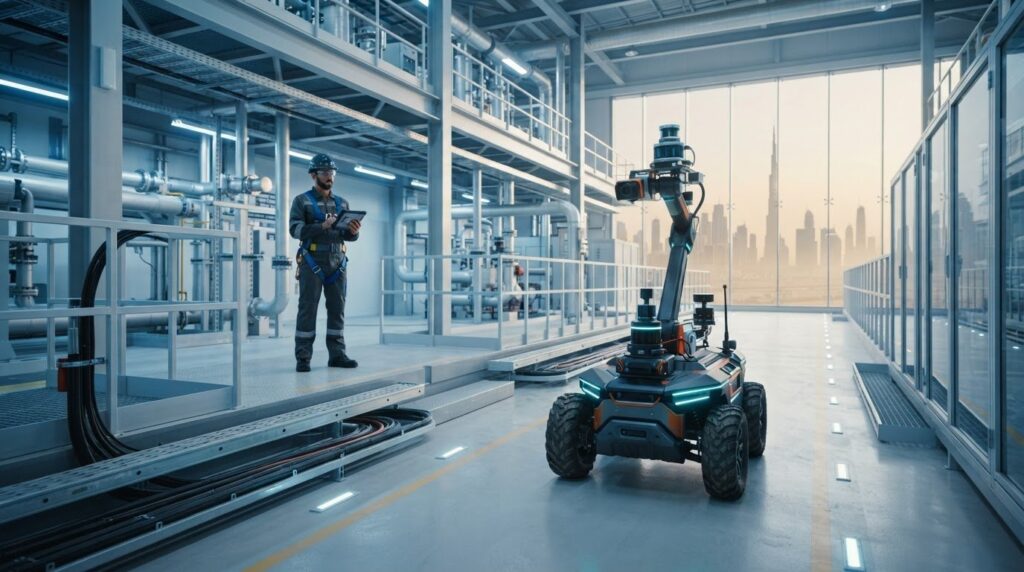
Processing the resulting terabytes of inspection footage in real-time is now handled by AI-driven Automated Defect Recognition (ADR). This intelligence layer filters out noise and highlights structural anomalies with surgical precision. For navigation in unmapped or GPS-denied zones, such as the interior of a steel refinery or underground utility tunnels, platforms utilize LiDAR and 3D SLAM (Simultaneous Localization and Mapping). This technology is particularly transformative for drones and robotics in building inspections, where internal structural complexity often blocks traditional signals. By creating high-resolution digital twins as they move, these robots provide a spatial context that manual reports can’t match.
Sensor Modalities and Their Industrial Applications
The efficacy of modern inspection depends on the specific modalities deployed for the task. Ultrasonic Testing (UT) is essential for measuring wall thickness and identifying internal delamination in pressure vessels. Infrared thermography remains critical for identifying thermal anomalies and “hot spots” in electrical switchgear or mechanical bearings before they fail. Finally, while high-definition 4K cameras provide the visual baseline, multi-spectral imaging detects gas leaks or chemical spills that remain invisible to the naked eye.
Navigation and Autonomy: From Tethered to Truly Autonomous
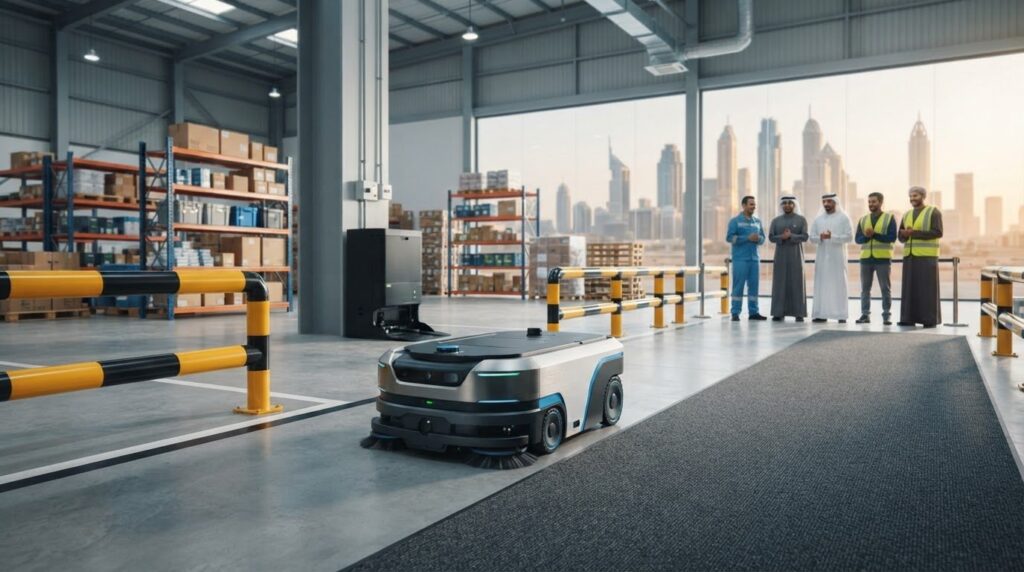
The choice between tethered and untethered systems is a strategic one. While tethered crawlers remain necessary for deep pipeline penetration where power and signal stability are paramount, untethered Autonomous Mobile Robots (AMRs) offer superior flexibility for facility floors. These AMRs utilize dynamic path planning and obstacle avoidance to navigate active industrial sites without human intervention. Integrating robotic surveillance systems provides a continuous monitoring layer that complements periodic deep-dive inspections. To evaluate which platform best suits your facility’s unique geometry, explore the specialized offerings at EdNex Automation.
Sector-Specific Applications: Tailoring Robotics to the Environment
Deploying robotic inspection services requires a nuanced understanding of environmental constraints and asset geometry. In the petrochemical sector, for instance, the challenge often involves inspecting unpiggable pipelines or storage tank floors where traditional tools fail. By utilizing self-propelled robotic units, operators have increased pipeline inspection efficiency by up to 40%. These systems navigate internal complexities without requiring flow-stopping interventions, ensuring that production remains continuous while integrity data is gathered. The choice of modality depends entirely on the specific operational environment.
Within manufacturing and heavy industry, the focus shifts to the structural integrity of pressure vessels and heat exchangers. Specialized robots capable of magnetic adhesion or precise articulation allow for exhaustive NDT coverage in areas previously inaccessible to human technicians. Similarly, autonomous bridge and tunnel inspections utilize a combination of climbing and aerial robots to identify structural fatigue in civil infrastructure. These applications are essential for maintaining national safety benchmarks and preventing catastrophic failure in public and private assets. This systematic approach brings order and efficiency to complex maintenance schedules. The same autonomous mobile robot technology driving industrial inspections is also being deployed in service environments, as seen with delivery robots for hotels that navigate complex multi-floor facilities to optimize logistics and reduce labor dependency.
Oil and Gas: The Frontier of Robotic NDT
Solving the ‘unpiggable’ pipeline challenge remains a primary objective for regional energy leaders. Robotic inspection services for the Oil and Gas sector improve safety on offshore platforms by removing personnel from splash zones and high-pressure environments. Real-time corrosion monitoring in subsea environments is now achievable through autonomous underwater vehicles (AUVs) that operate without constant surface-vessel support. These technologies collectively contribute to a 25-30% cost reduction in maintenance budgets by identifying defects before they necessitate emergency repairs. It’s a necessary evolution for organizations wishing to remain competitive.
Renewable Energy and Power Infrastructure
Automating solar farm inspections using drone swarms and ground-based AMRs has become a standard for large-scale utility projects in the UAE. These systems identify faulty cells and dust accumulation with thermal sensors, ensuring peak energy yield across vast arrays. Internal blade inspections for wind turbines utilize specialized climbing robotics that traverse the length of the blade to detect delamination or lightning damage. Monitoring transformer health in power grids now occurs without manual intervention, as robots equipped with acoustic and thermal sensors detect early-stage electrical faults. Facilities that deploy these robotic maintenance solutions can reduce labor costs by an average of 35%, significantly improving long-term business viability.
Integrating Robotic Data into Industrial Control Systems
Facilitating seamless communication between mobile platforms and central command centers, the integration of robotic data into existing industrial control systems (ICS) transforms raw telemetry into actionable intelligence. Modern robotic inspection services no longer culminate in static PDF reports; instead, they generate dynamic data streams that feed directly into the facility’s digital nervous system. By establishing this critical link, organizations move from isolated assessments to a unified data ecosystem where physical asset integrity is monitored in real-time. This transition allows for the creation of high-fidelity digital twins, providing a virtual mirror of physical assets that evolves with every robot patrol. These virtual models utilize the LiDAR and 3D SLAM data captured during missions to simulate stress tests and predict structural fatigue without touching the physical asset. Ensuring the security of these transmissions is paramount, especially under regional mandates like Ras Al Khaimah’s Law No. (1) of 2026, which requires robust cybersecurity protocols and encrypted telemetry for all autonomous data governance within the UAE.
The Role of PLC and SCADA Integration
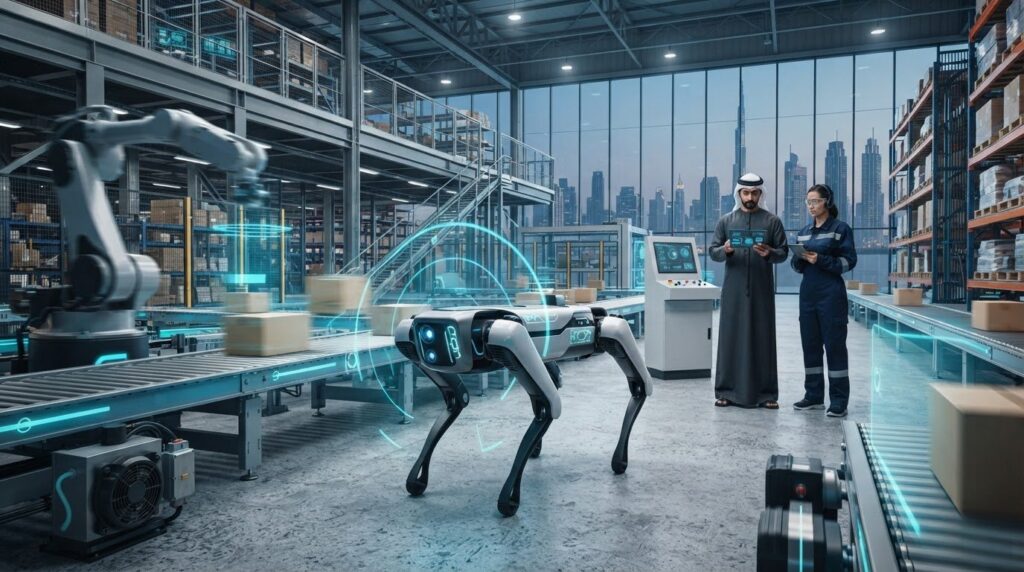
Synchronizing robotic inspection schedules with production cycles via PLC and SCADA integration services ensures that maintenance never conflicts with peak operational demands. When an inspection robot identifies a critical thermal anomaly or a localized pressure leak, the system can trigger automated emergency shutdowns through the SCADA interface, preventing catastrophic failures before they occur. This centralization provides plant-wide visibility, allowing stakeholders to review inspection results alongside real-time production metrics. By bridging the gap between autonomous hardware and the control room, companies achieve a level of situational awareness that manual methods cannot replicate. To optimize your facility’s response times and data transparency, consider implementing integrated control solutions from EdNex Automation.
From Data to Decision: The Predictive Maintenance Workflow
Utilizing machine learning algorithms to analyze robotic NDT data allows engineers to predict the Remaining Useful Life (RUL) of critical components with unprecedented accuracy. This predictive foresight streamlines maintenance workflows by identifying exactly when and where a part will fail, triggering the automated retrieval of necessary components through Automated Storage and Retrieval Systems (ASRS). Such integration ensures that spare parts are ready before the maintenance team even arrives on site. In 2026, advanced inspection systems utilize edge computing to process complex sensor data locally on the robot for immediate, millisecond-level analysis. This closed-loop system ensures that the time between defect detection and maintenance execution is minimized, reinforcing the long-term business viability of the entire operation while maintaining a steady pulse on asset health.
Future-Proofing with EdNex Automation: The UAE’s Robotics Leader
Positioned as a visionary industry pioneer, EdNex Automation serves as the strategic bridge connecting global technological breakthroughs with the specific industrial requirements of the Middle East. We provide more than just advanced hardware; we deliver the intellectual framework necessary for large-scale industrial transformation. Our comprehensive approach to robotic inspection services encompasses every stage of the technology lifecycle, leading from bespoke robot selection to full-scale system integration within existing facility infrastructures. By maintaining strategic alliances with global technology leaders, we ensure that every platform we deploy carries official certification and the highest level of technical reliability. These efforts are fundamentally redefining the UAE robotics industry landscape, shifting the focus toward intelligent, autonomous asset integrity that secures long-term business viability.
Establishing a partnership with a grounded technical expert ensures that your organization doesn’t just acquire tools, but adopts a systematic organizer for its most complex challenges. We act as a high-level consultant, identifying the precise technological applications that link to tangible business outcomes, such as risk mitigation and operational improvement. Our role is to bring order, safety, and efficiency to industrial environments through controlled and deliberate innovation, ensuring that high-tech aspirations are grounded in practical, regional expertise.
Why Partner with EdNex for Inspection Services?
Partnering with EdNex provides access to end-to-end expertise through our “Consult, Integrate, and Maintain” methodology. This full-service approach ensures that robotic systems remain operational and effective long after the initial deployment. Beyond standard mobile platforms, we offer access to the latest humanoid robots for sale UAE for advanced service applications that require human-like dexterity in complex environments. Proving the ROI of these investments is a core component of our delivery, as we help enterprises calculate long-term value by quantifying the 60% reduction in unplanned downtime and the 35% average reduction in labor costs associated with robotic maintenance.
Consulting for the Next Industrial Evolution
Developing customized robotic payloads remains essential for addressing unique UAE environmental challenges, including extreme heat, pervasive dust, and high humidity. Our engineering-minded approach ensures that every sensor array and robotic chassis is optimized for these specific conditions, preventing premature equipment failure. We provide comprehensive training and support for local teams, empowering them to manage autonomous inspection fleets with total confidence. This systematic transfer of knowledge prepares your workforce for the next industrial evolution, ensuring your organization remains competitive in a data-centric future. To begin your journey toward autonomous excellence, Consult with EdNex Automation for your bespoke robotic inspection strategy today.
Securing Industrial Longevity through Autonomous Intelligence
Achieving long-term industrial viability in 2026 requires more than just maintaining current assets; it demands a strategic evolution toward autonomous intelligence. By adopting advanced robotic inspection services, organizations successfully bridge the gap between physical infrastructure and digital oversight, ensuring that every asset is monitored with surgical precision. Integrating these systems into existing PLC and SCADA frameworks transforms raw sensor data into actionable insights, facilitating real-time operational adjustments that prevent failures. This transition from reactive repairs to predictive management isn’t a future possibility, but a current necessity for any enterprise wishing to remain competitive within the UAE’s industrial landscape.
EdNex Automation stands as your reliable technical partner in this transformation. As an official integrator for global robotics leaders with specialized PLC/SCADA expertise, we provide comprehensive UAE-national coverage and support to ensure your systems remain at the cutting edge. Our focus remains on delivering the intellectual framework necessary to bring order, safety, and efficiency to your most complex environments. It’s time to modernize your maintenance protocols and secure your facility’s future today.
Secure Your Assets with EdNex Strategic Robotic Inspection Solutions
Frequently Asked Questions
What are the primary benefits of robotic inspection services over manual methods?
Robotic inspection services deliver a 60% reduction in safety incidents by removing personnel from hazardous zones. Unlike manual methods, these systems provide a 25-30% cost reduction in maintenance budgets through continuous data collection without requiring facility shutdowns. They ensure high-fidelity asset integrity by eliminating human error and subjectivity in data recording, allowing for more consistent and repeatable assessments over time.
Can inspection robots operate in explosive or hazardous (ATEX) environments?
Specialized inspection robots are engineered specifically for explosive or hazardous environments, often carrying ATEX or IECEx certifications to ensure safe operation. These platforms utilize spark-resistant materials and pressurized enclosures to navigate chemical tanks or offshore risers safely. Utilizing such hardware ensures that critical assessments continue in 3C environments where human entry is strictly prohibited due to high toxicity or explosive risks.
How do robotic inspection services integrate with existing PLC and SCADA systems?
Modern systems integrate with PLC and SCADA frameworks by utilizing standardized industrial communication protocols to transmit telemetry in real-time. This connectivity allows for automated triggers, such as emergency shutdowns, based on robotic sensor data like localized thermal anomalies or gas leaks. This synchronization bridges the gap between autonomous hardware and the central control room, providing stakeholders with comprehensive, plant-wide visibility.
What types of sensors can be mounted on an inspection robot?
Inspection platforms support a diverse array of sensor payloads, including Ultrasonic Testing (UT) for wall thickness and Magnetic Flux Leakage (MFL) for corrosion detection. Advanced units often feature LiDAR for 3D SLAM navigation, infrared thermography for electrical monitoring, and 4K multi-spectral cameras. These modular configurations allow for tailored assessments based on the specific asset geometry and the environmental conditions of the facility.
How does robotic inspection improve the accuracy of NDT data?
Robotics improve NDT accuracy by providing repeatable, high-density data sets that manual inspections cannot replicate. High-resolution sensors capture thousands of data points per second, which are then processed via AI-driven Automated Defect Recognition to identify microscopic faults. This systematic approach ensures that every anomaly is recorded within a precise spatial 3D digital twin, providing a level of detail that surpasses human observation.
What is the typical ROI period for implementing an autonomous inspection system?
Enterprises typically realize a return on investment through significant operational savings, including a 35% average reduction in labor costs. Facilities using autonomous maintenance have seen a 60% reduction in unplanned downtime, which often offsets the initial hardware acquisition within a standard operational cycle. The long-term business viability is further secured by preventing catastrophic asset failures and extending the lifespan of critical infrastructure.
Are robotic inspection services suitable for small-scale manufacturing plants?
Robotic solutions are increasingly accessible for small-scale manufacturing through modular Autonomous Mobile Robots (AMRs) that require minimal infrastructure changes. These systems provide a scalable entry point for automated integrity checks on pressure vessels or heat exchangers without the need for massive capital investment. Implementing robotics at this scale allows smaller facilities to maintain high safety standards while optimizing their limited maintenance resources.
How does EdNex Automation support the deployment of inspection robots in the UAE?
EdNex Automation acts as a strategic bridge-builder in the UAE, providing authorized access to global technologies from brands like Unitree, Agilex, and Franka Robotics. We offer end-to-end support that includes bespoke payload integration, local team training, and compliance alignment with regional regulations like Ras Al Khaimah’s Law No. (1) of 2026. Our expertise ensures that high-tech aspirations are successfully grounded in the UAE’s unique industrial landscape.