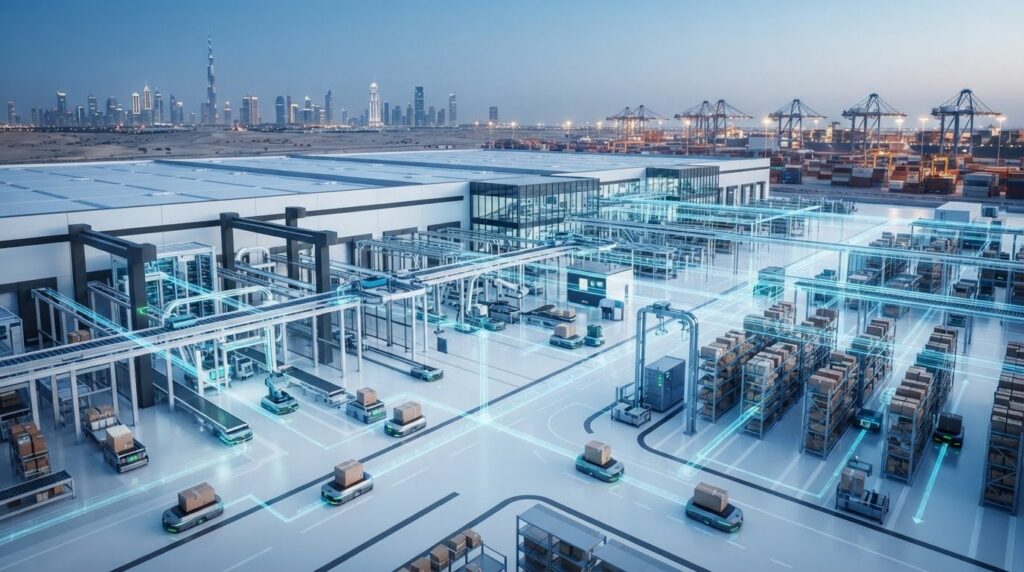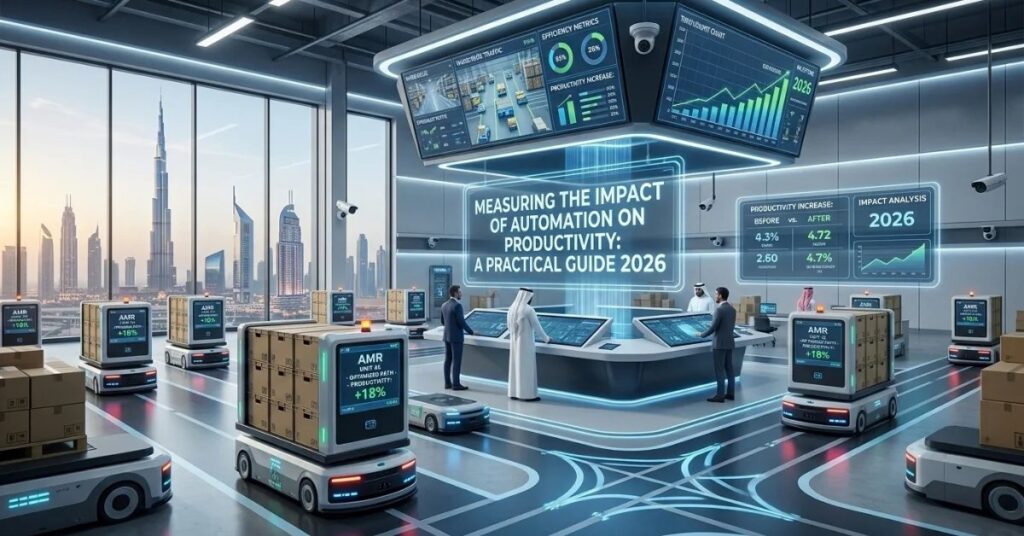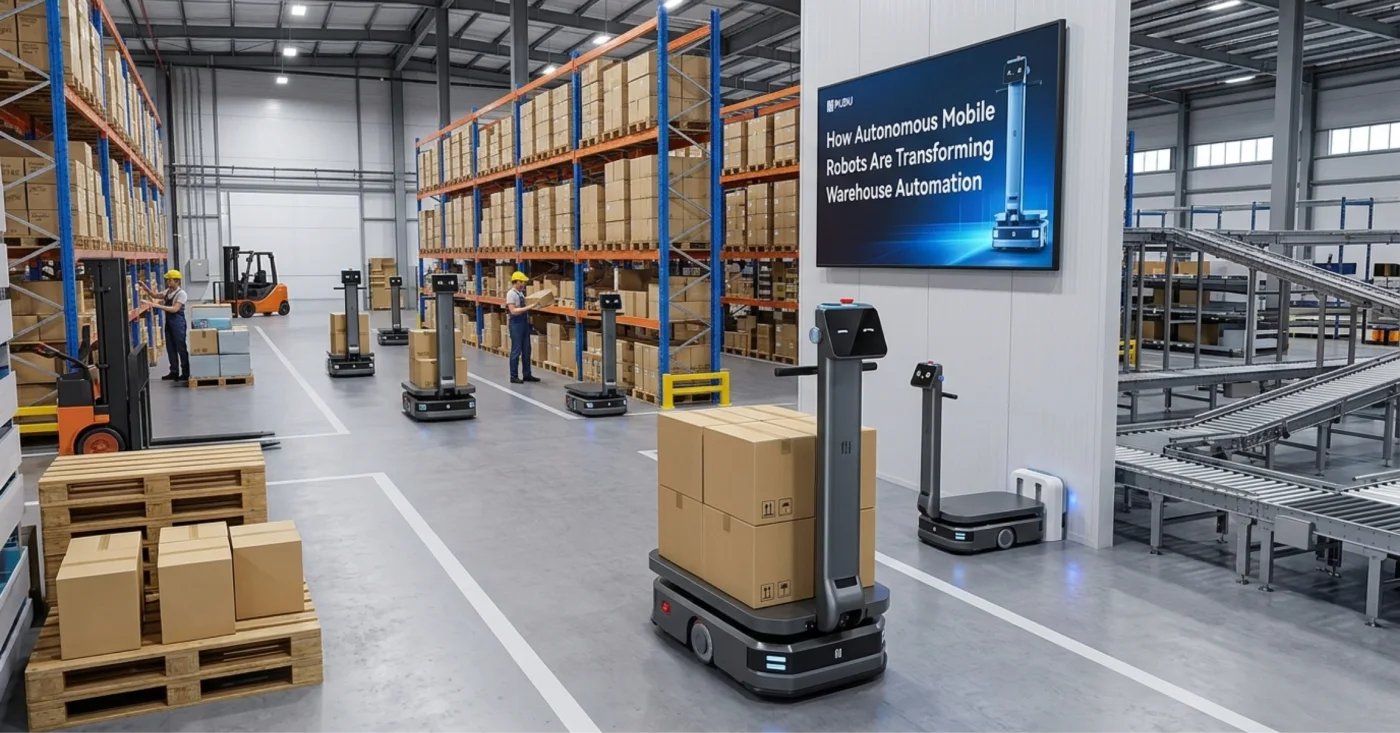
Warehouses face constant pressure to move goods faster, safer, and more accurately. Autonomous mobile robots provide the ultimate solution by navigating complex environments without human intervention. These smart machines act as the backbone of modern supply chains.
This guide explains everything you need to know about these robots. We cover how they work, the specific tasks they handle, and why they outperform older technologies. You will also learn about the real-world benefits and future trends of AMR warehouse automation.
By the end of this article, you will understand how to leverage these machines to optimize your operations.
What Are Autonomous Mobile Robots (AMRs)?
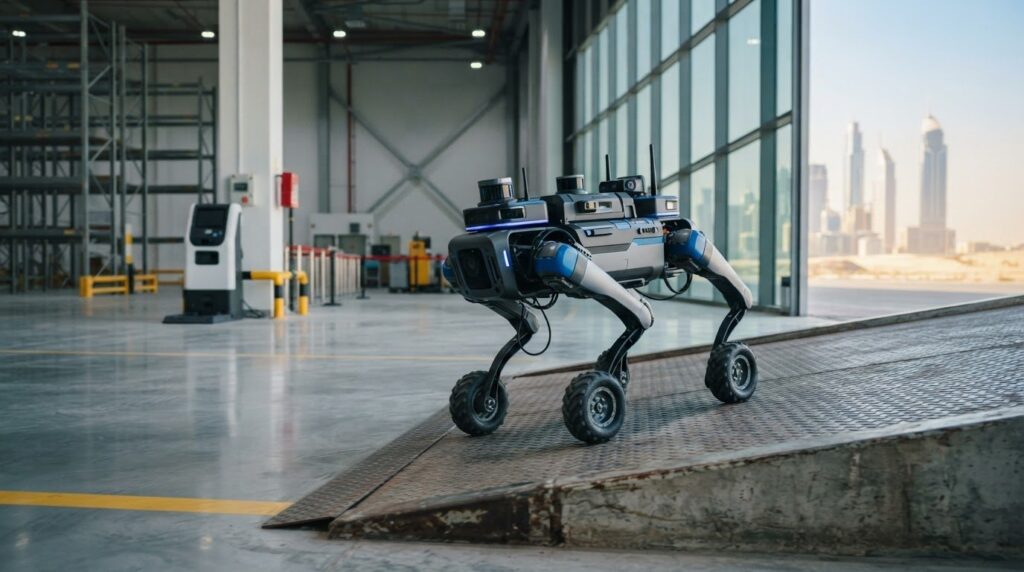
Autonomous mobile robots (AMRs) are intelligent vehicles that navigate warehouse floors independently. They use advanced sensors, AI, and mapping software to understand their surroundings. Unlike older robotic systems, they do not need physical tracks or magnetic tape to move around.
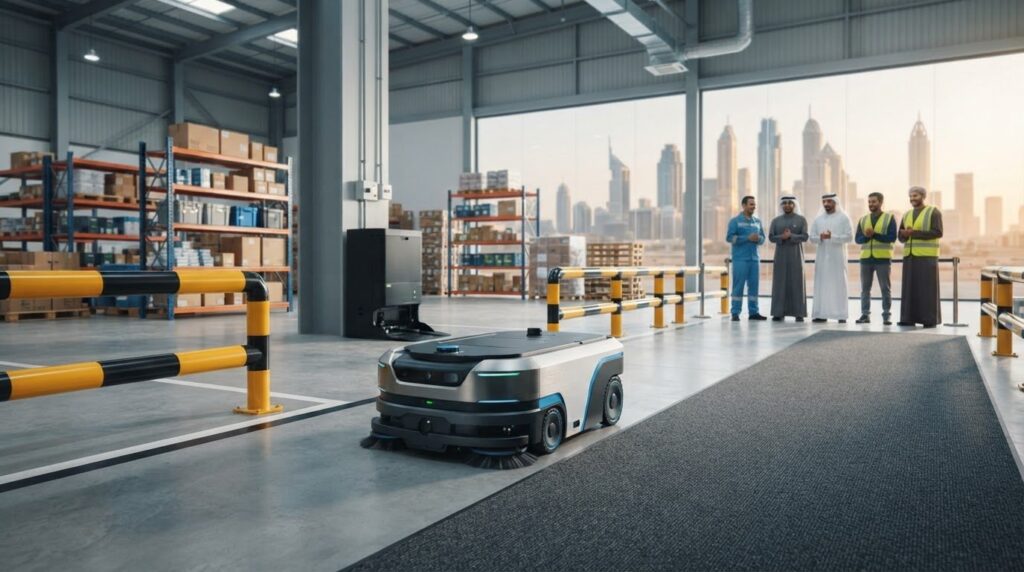
These robots act as smart assistants for your human workforce. They transport materials, assist with order picking, and transport heavy pallets safely. Warehouse automation robots continuously learn and adapt to changes in your facility’s layout.
An AMR can detect an obstacle, calculate a new route, and continue its mission seamlessly. This adaptability makes autonomous robots in warehouses incredibly valuable for fast-paced logistics.
How AMRs Work in Warehouse Automation
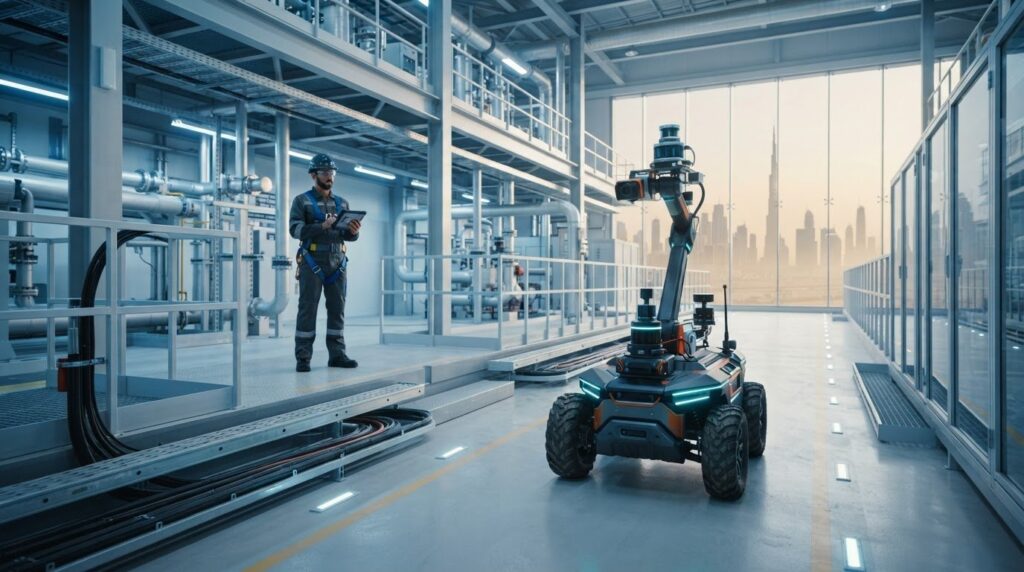
Understanding how autonomous mobile robots work in warehouses starts with their sensory technology. These robots map their environment using LiDAR, cameras, and infrared sensors. This creates a digital blueprint of the warehouse, allowing the robot to navigate freely.
AMR technology for warehouse automation relies on sophisticated software algorithms. The central fleet management system assigns tasks to the closest and most suitable robot. The robot then plots the most efficient path to its destination.
If a forklift or a worker blocks the path, the AMR instantly recalculates. AI powered warehouse robots process this visual data in real-time to prevent collisions. This ensures continuous, uninterrupted workflow across your entire facility.
Key Warehouse Tasks Handled by AMRs
Material Transport and Delivery
AMRs excel at moving raw materials and finished goods across large facilities. They eliminate the need for humans to push heavy carts over long distances. Automated material handling robots ensure parts arrive exactly when needed at assembly stations.
Order Picking Assistance
Picking takes up a massive portion of warehouse labor time. AMRs travel to specific storage locations and wait for human workers to load the picked items. This reduces human walking time and drastically speeds up the fulfillment process.
Inventory Sorting and Putaway
When new inventory arrives, AMRs help transport it to the correct storage zone. They integrate with your Warehouse Management System (WMS) to track exactly where items go. Warehouse automation using AMRs ensures accurate inventory counts and organized shelves.
Benefits of Using AMRs in Warehouses
The benefits of autonomous mobile robots in warehouses directly impact your bottom line. They offer massive improvements in efficiency, safety, and scalability. Here is how they elevate your operations:
- Increased Productivity: Robots work 24/7 without fatigue, moving goods continuously to meet high demand.
- Enhanced Safety: Built-in sensors prevent collisions with people and infrastructure, reducing workplace accidents.
- Lower Operating Costs: Automating repetitive tasks allows you to reallocate human workers to higher-value roles.
- Rapid Scalability: You can easily add more autonomous mobile robots for logistics during peak seasons without shutting down operations.
- Improved Accuracy: Integration with warehouse software reduces human error in picking and inventory placement.
Real-World Applications of AMRs
Many industries already rely on smart warehouse robotics solutions to stay competitive. E-commerce fulfillment centers use AMRs to handle thousands of unique orders daily. The robots transport picked items directly to packing stations, cutting order cycle times in half.
Manufacturing plants use AMRs to supply assembly lines just-in-time. The robots bring components from storage to the technicians, preventing production bottlenecks. Automotive manufacturers rely heavily on these systems to move heavy parts safely.
In the pharmaceutical industry, accuracy and hygiene are critical. AMRs handle sensitive medical supplies in clean-room environments. They track batch numbers and expiration dates via software integration, ensuring full traceability.
Environmental Benefits of Robotic Warehouse Automation
AMRs contribute significantly to greener, more sustainable supply chains. They operate on highly efficient electric batteries that produce zero direct emissions. This reduces the carbon footprint compared to gas-powered or older electric forklifts.
These robots also optimize travel paths to conserve energy. Because they take the shortest routes, they consume less power per task. Advanced charging stations ensure they only draw electricity when necessary.
Furthermore, AMRs can operate in the dark or in extreme temperatures. Warehouses can reduce their heating, cooling, and lighting expenses in robot-only zones. This creates massive energy savings over the lifespan of the facility.
AMRs vs Traditional Automated Guided Vehicles (AGVs)
AGVs represent older automation technology, while AMRs offer modern flexibility. AGVs require fixed infrastructure like magnetic strips, wires, or QR codes to navigate. If an obstacle blocks an AGV, it stops entirely and waits for human intervention.
AMRs navigate dynamically using internal maps and real-time sensors. They do not require facility modifications, making deployment much faster and cheaper. If something blocks an AMR, it simply steers around the obstacle and continues.
Because of this flexibility, AMRs are much easier to scale. If your warehouse layout changes, you simply update the AMR’s digital map. AMR warehouse automation adapts to your business, whereas AGVs force your business to adapt to the robot.
Challenges of Implementing AMRs
While powerful, deploying AMRs comes with specific hurdles. High initial investment costs can deter smaller operations from adopting the technology immediately. Companies must budget for the robots, charging stations, and software integration.
Network reliability is another critical factor. AMRs require strong, uninterrupted Wi-Fi coverage across the entire warehouse to communicate with the fleet manager. Dead zones can cause robots to stall or lose their connection to the central system.
Finally, workforce adaptation requires careful management. Employees may fear job displacement or feel unsure about working alongside moving machines. Proper training and clear communication are essential to ensure staff embrace the new technology.
The Role of AMRs in the Future of Smart Warehouses
The future of logistics belongs to fully connected, intelligent ecosystems. AMRs will soon integrate seamlessly with other emerging technologies like 5G and the Internet of Things (IoT). This will enable lightning-fast data processing and even tighter fleet coordination.
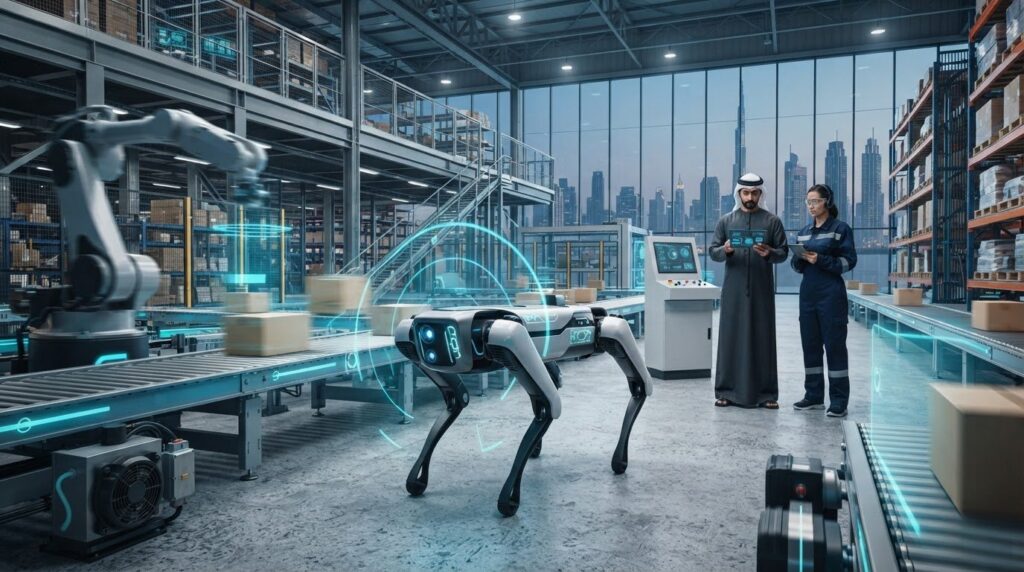
We will see greater collaboration between different types of robots. AMRs will pass items to robotic arms for packing or drones for inventory scanning. This creates a cohesive smart warehouse robotics solution that operates with minimal human oversight.
AI will continue to make these robots smarter over time. Machine learning algorithms will predict peak order times and pre-position AMRs in high-traffic zones. This predictive capability will redefine the limits of warehouse efficiency.
Conclusion
Autonomous mobile robots have forever changed how we store, pick, and transport goods. They offer flexibility and intelligence that traditional automation simply cannot match. From reducing walking time to lowering carbon footprints, the advantages are undeniable.
Implementing warehouse automation using AMRs prepares your supply chain for future challenges. While the initial investment requires planning, the long-term gains in safety and productivity are immense.
Now is the time to evaluate your facility and see where these smart machines fit. By embracing AMR technology, you build a resilient, scalable, and highly profitable warehouse operation.
Ready to upgrade your warehouse?
Contact Ednex Automation today to schedule a personalized consultation and see how our AMR solutions can revolutionize your logistics operations!
Available in GCC Countries:
- United Arab Emirates (UAE)
- Saudi Arabia (KSA)
- Qatar
- Oman
- Kuwait
- Bahrain
FAQ
What is the main difference between an AMR and an AGV?
AMRs navigate dynamically using sensors and digital maps, bypassing obstacles automatically. AGVs follow fixed physical paths (like magnetic tape) and stop completely if their path is blocked.
Are autonomous mobile robots safe around human workers?
Yes, AMRs are incredibly safe. They are equipped with 360-degree LiDAR, 3D cameras, and instant-braking algorithms to avoid collisions with people and equipment.
How long does it take to implement AMR warehouse automation?
Deployment typically takes 4 to 8 weeks. Because AMRs do not require physical infrastructure changes, they can map the facility and begin working much faster than traditional systems.
Can AMRs integrate with my existing warehouse software?
Yes, they integrate smoothly. Fleet management software connects directly with your Warehouse Management System (WMS) or Enterprise Resource Planning (ERP) platform through APIs.
Do AMRs eliminate warehouse jobs?
No, they shift the nature of the work. AMRs take over heavy lifting and long-distance walking, allowing human workers to focus on quality control, management, and complex problem-solving.
Author Bio
Ednex Automation is a premier provider of cutting-edge robotics and warehouse automation solutions. We specialize in transforming traditional supply chains into smart, efficient, and scalable ecosystems.