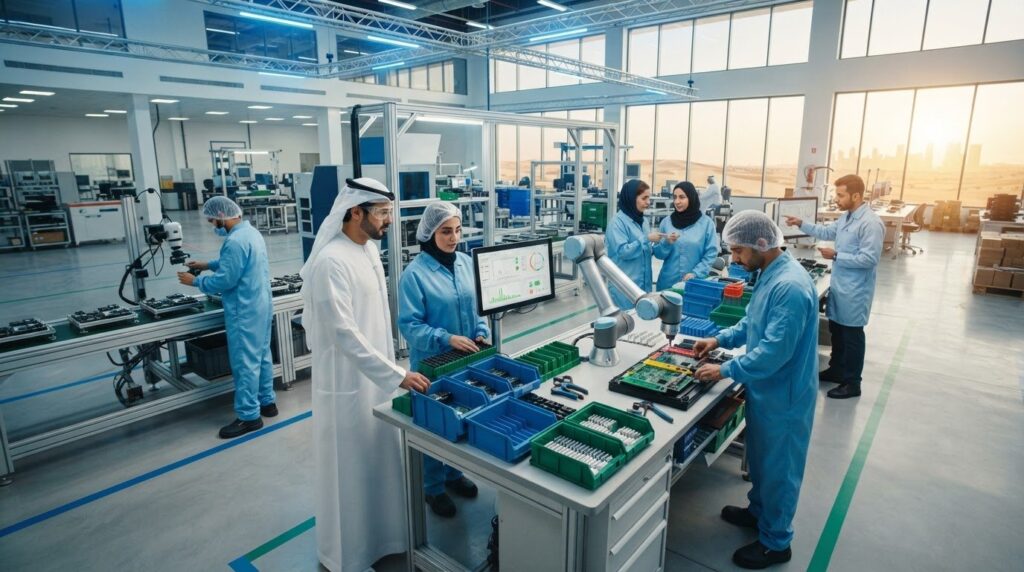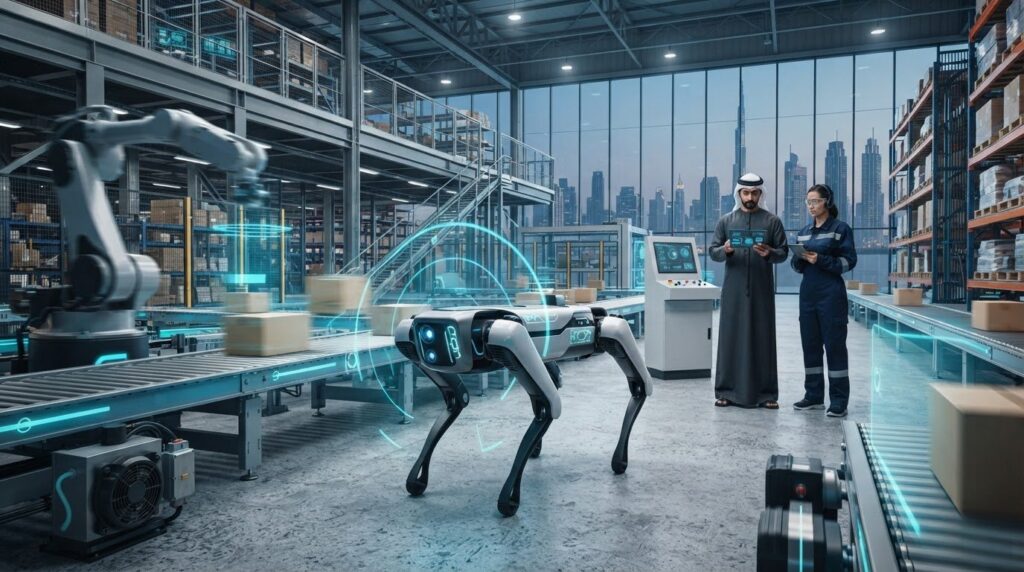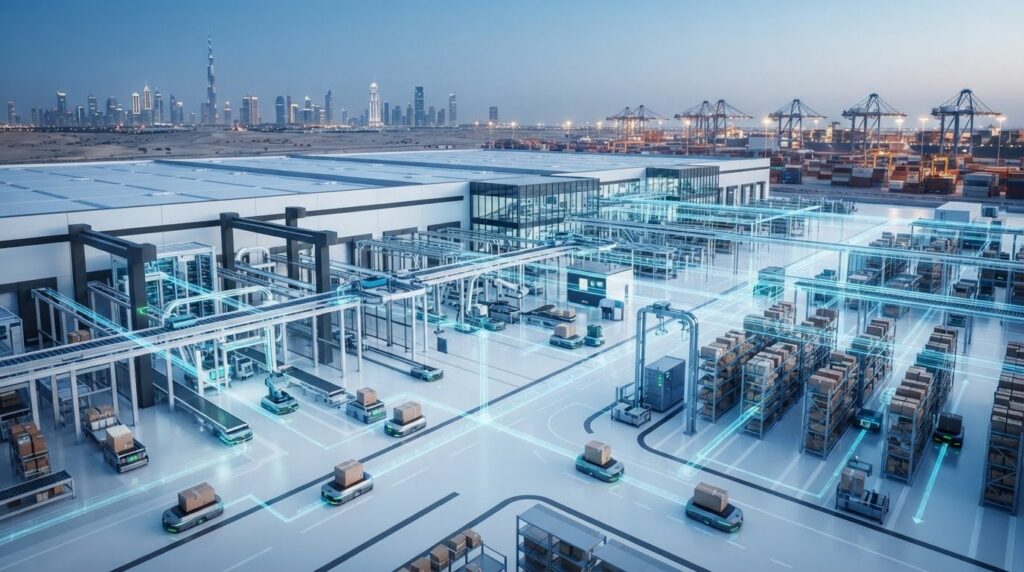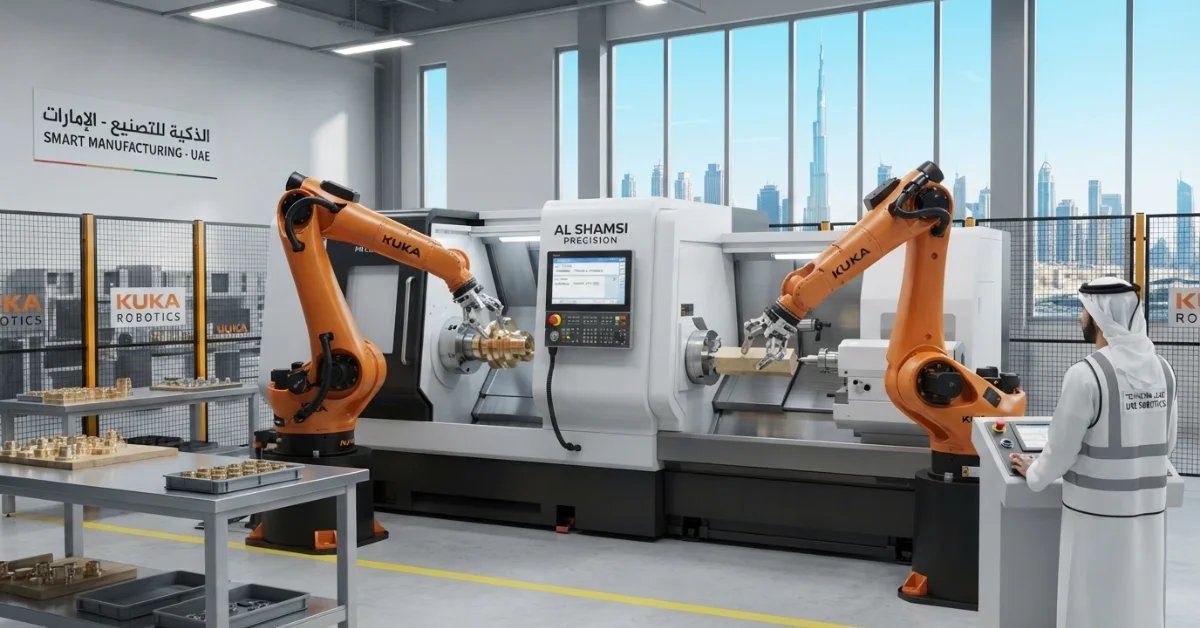
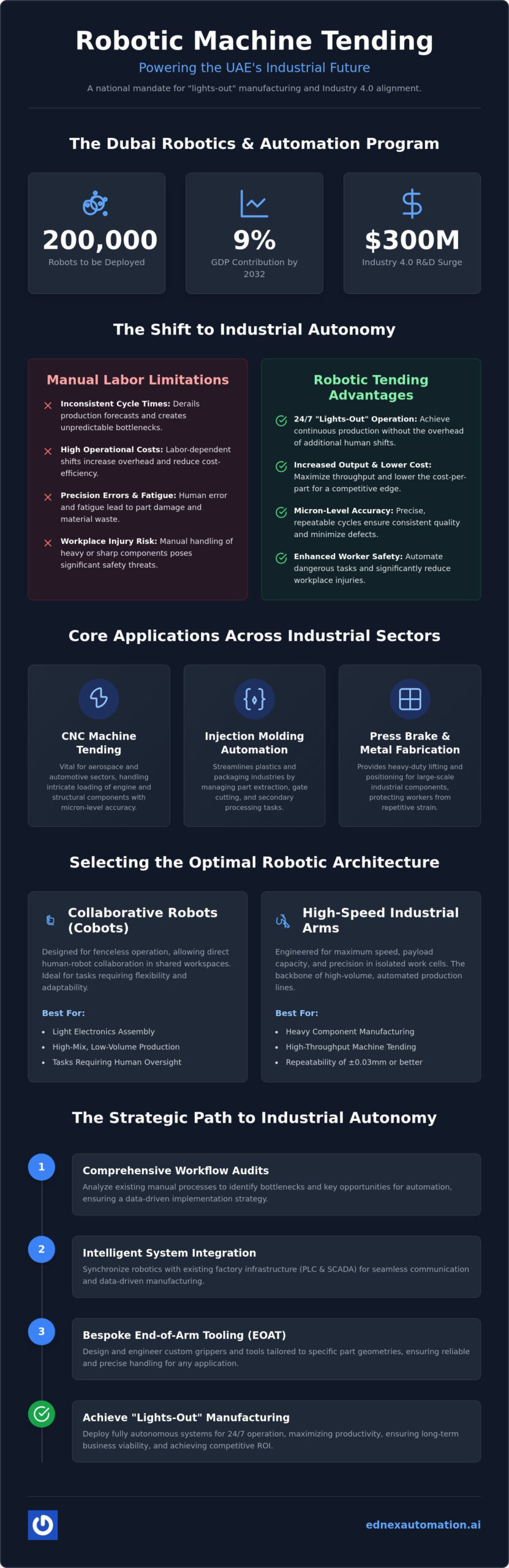
With the Dubai Robotics and Automation Program aiming to deploy 200,000 robots to drive a 9% GDP contribution by 2032, the shift toward industrial autonomy is no longer a distant goal; it’s a national mandate. Implementing robotic machine tending UAE solutions allows manufacturers to bypass the limitations of manual labor, directly addressing the high operational costs and precision errors that often plague traditional shop floors. You’ve likely experienced the frustration of inconsistent cycle times that derail production forecasts, yet the path to true “lights-out” manufacturing requires more than just hardware acquisition.
Leveraging advanced robotics and intelligent PLC integration, you can achieve a seamless transition from human-dependent workflows to a 24/7 autonomous ecosystem. This guide demonstrates how advanced robotic machine tending is transforming UAE manufacturing through high-precision automation and intelligent system integration. We’ll examine the technical architecture necessary for industrial autonomy, the role of collaborative robots in high-precision tasks, and the specific strategic frameworks required to align your facility with the UAE’s $300 million Industry 4.0 research and development surge.
Key Takeaways
- Evaluate the critical technical distinctions between fenceless collaborative robots and high-speed industrial arms to optimize payload capacity and operational safety.
- Establish intelligent synchronization between your robotics and existing factory infrastructure through advanced PLC and SCADA integration for data-driven manufacturing.
- Master the transition to industrial autonomy by conducting comprehensive workflow audits and designing bespoke end-of-arm tooling tailored to specific part geometries.
- Recognize the strategic advantage of implementing robotic machine tending UAE systems to achieve 24/7 “lights-out” capabilities while aligning with national Industry 4.0 mandates.
- Leverage a start-to-finish partnership that bridges global automation breakthroughs with regional industrial needs to ensure long-term business viability and competitive ROI.
The Evolution of Manufacturing: Robotic Machine Tending in the UAE
The UAE’s industrial landscape is undergoing a fundamental metamorphosis, driven by the national mandate to integrate advanced intelligence into every facet of production. Robotic machine tending serves as the cornerstone of this evolution, representing the automated loading and unloading of raw materials and finished parts into industrial machinery. By replacing manual intervention with precise, repeatable autonomous cycles, manufacturers effectively eliminate the bottlenecks that once constrained high-precision sectors. Adopting robotic machine tending UAE solutions isn’t merely an incremental upgrade; it’s a strategic necessity for facilities aiming to meet the rigorous 2026 production targets. This alignment with the UAE’s Industry 4.0 Strategy, implemented in 2023, ensures that throughput remains optimized and operational consistency is maintained regardless of labor availability.
The impact of this shift extends beyond simple volume. It fundamentally redefines safety and predictability on the factory floor. When robots handle heavy or sharp components, the risk of workplace injury drops significantly. Meanwhile, the data captured during each tending cycle provides manufacturers with an unprecedented level of visibility into their operations, allowing for more accurate forecasting and resource allocation. This systematic approach to automation transforms traditional workshops into intelligent hubs of efficiency, ensuring long-term business viability in a rapidly modernizing market.
Addressing the Shift to Lights-Out Manufacturing
Reaching true “lights-out” manufacturing allows facilities to operate 24/7 without the overhead of additional human shifts. By deploying autonomous systems, you reduce the risk of human error in high-volume milling and turning operations, where even a minor deviation can lead to significant part damage. This capability is vital for maintaining the UAE’s competitive edge in global exports, as it lowers the cost per part while increasing total output capacity. Reliability becomes a built-in feature of the production line rather than a variable dependent on operator fatigue.
Core Applications Across Industrial Sectors
The versatility of modern automation allows it to serve diverse manufacturing environments with high-level precision. These applications are particularly critical for sectors where tolerance for error is non-existent:
- CNC Machine Tending: Vital for the aerospace and automotive sectors, where robots handle the intricate loading of engine and structural components with micron-level accuracy.
- Injection Molding Automation: Streamlines the plastics and packaging industries by managing part extraction, gate cutting, and secondary processing tasks.
- Press Brake and Metal Fabrication: Provides the heavy-duty lifting and positioning required for large-scale industrial components in the metalworking sector, protecting human workers from repetitive strain.
These applications demonstrate how bespoke integration bridges the gap between global technological breakthroughs and regional industrial needs. By focusing on start-to-finish expertise, manufacturers can secure their position as industry leaders within the UAE’s growing industrial economy.
Selecting the Optimal Robotic Architecture: Cobots vs. Industrial Arms
Choosing the correct robotic architecture is the most critical technical decision in your automation journey. It dictates long-term throughput, system flexibility, and the eventual return on investment. According to the UAE Robotics and Automation Industry Report, the regional market for industrial control and factory automation is projected to grow at a CAGR of 9.3% through 2032. This growth is driven by diverse industrial needs ranging from light electronics assembly to heavy metal fabrication. Evaluating payload capacity remains the primary filter in this selection process. Heavy industrial components require the high-torque motors found in traditional arms, while high-tolerance machining demands repeatability benchmarks often exceeding ±0.03mm. Implementing robotic machine tending UAE solutions requires balancing these technical specifications against the Total Cost of Ownership (TCO), which includes floor space utilization and safety infrastructure costs.
Precision and repeatability are the non-negotiable benchmarks for high-tolerance machining. While both architectures offer high levels of accuracy, their performance profiles diverge when handling varying payloads. A systematic approach to architecture selection ensures that the robot’s reach and speed align perfectly with the machine’s cycle times, preventing the robot from becoming a bottleneck in the production flow. By identifying the specific technical requirements of your parts, you can select a platform that offers the best balance of speed, safety, and precision.
The Rise of Collaborative Robots (Cobots)
Cobots have revolutionized robotic machine tending UAE for small and medium enterprises. Their ease of deployment and intuitive programming interfaces allow for rapid setup on the shop floor without extensive specialized training. By utilizing integrated force-torque sensors, these units operate safely in close proximity to human workers without the need for bulky physical barriers. You can explore more about these systems in our Collaborative Robots UAE pillar. This fenceless approach preserves valuable floor space while maintaining high precision for repetitive tasks.
Traditional 6-Axis Robots for High-Volume Tending
When production goals demand maximum cycle speed and the handling of heavy payloads, traditional 6-axis industrial robots remain the gold standard. These systems excel in high-throughput environments where every second saved in the loading cycle translates to significant annual gains. To manage the risks associated with high-speed movement, these installations typically incorporate light curtains or physical safety guarding. While the footprint is larger, the sheer power and velocity of 6-axis arms make them indispensable for heavy-duty automotive or aerospace fabrication. Determining which architecture fits your specific cycle times requires a deep technical audit of your existing machinery, and you can consult with our integration experts to map your workflow requirements to the most viable robotic platform.
Beyond the Grip: Integrating PLC and SCADA for Intelligent Tending
Harnessing the full potential of robotic hardware requires a sophisticated digital nervous system that extends far beyond the physical gripper. Establishing a reliable communication link between the robotic controller and the machine tool is the defining factor of a successful deployment. While the robotic arm performs the physical transfer of parts, the underlying Programmable Logic Controller (PLC) architecture manages the critical “handshaking” signals that ensure the machine door is clear, the spindle has stopped, and the chuck is securely clamped before any motion begins. Integrating robotic machine tending UAE systems into a wider factory network allows for this precise synchronization, effectively eliminating the risk of collisions and reducing idle time between cycles. By treating the robot and the machine as a single, unified entity, manufacturers can achieve the level of operational consistency required for high-precision industrial autonomy.
Providing the intellectual framework for this transformation, SCADA (Supervisory Control and Data Acquisition) systems serve as the centralized intelligence hub. These platforms aggregate real-time data from various sensors to provide a comprehensive view of the entire tending cell. Utilizing this data allows for predictive maintenance strategies where potential failures are identified before they cause unplanned downtime. Instead of reacting to a broken component, your team can schedule interventions based on actual wear patterns and performance deviations, ensuring that the production line remains active during critical delivery windows. This data-driven approach transforms a simple mechanical task into an intelligent, self-optimizing process.
Unified Control Systems Architecture
Integrating the robot into the existing factory floor network demands custom PLC programming to handle complex part orientations and tool changes. This bespoke logic ensures the system can adapt to different product variants without requiring a total overhaul of the hardware. To achieve this level of sophistication, many regional leaders rely on specialized PLC and SCADA integration services to bridge the gap between legacy machinery and modern robotics. This systematic organization of control logic provides the stability necessary for long-term industrial scaling.
Data Visualization and Industry 4.0 Reporting
Standardizing communication protocols such as OPC UA and MQTT is essential for achieving plant-wide visibility and future-proof connectivity. These protocols allow SCADA systems to track Overall Equipment Effectiveness (OEE) through automated dashboards, providing management with immediate insights into throughput and error rates. Managing multi-robot tending cells from a central station becomes possible, allowing a single operator to oversee several autonomous zones simultaneously. This high-level oversight ensures that your robotic machine tending UAE investment contributes directly to the strategic goals of the national Industry 4.0 mandate.
Strategic Implementation: From Manual Loading to Autonomous Cycles
Executing a successful robotic machine tending UAE deployment requires a structured technical roadmap that transcends simple equipment installation. It’s a methodical transition from human-centric loading to a fully synchronized autonomous cycle. This process begins with a rigorous workflow audit to identify the precise points where manual intervention causes variability or delay. By analyzing existing cycle times and part geometries, engineers can design a system that maximizes spindle uptime and eliminates idle periods. Prototyping the cell layout through simulation tools ensures that the robot’s reach is optimized, preventing mechanical strain and ensuring the fastest possible transfer times. This systematic approach provides the intellectual framework necessary for large-scale industrial transformation.
Moving beyond the planning phase, designing bespoke end-of-arm tooling (EOAT) is the technical heart of the implementation. Whether your application involves high-precision CNC components or heavy metal fabrication, the gripper must be engineered to match the material properties and surface requirements of the part. Vacuum grippers provide the necessary suction for flat, non-porous surfaces, while pneumatic or electric jaw grippers offer the mechanical force required for heavy industrial components. This attention to detail prevents part damage and ensures the repeatability benchmarks discussed in previous sections are consistently met. It’s about building a systematic organizer for your production line that brings order and efficiency to complex environments.
Simulation and offline programming act as a vital risk mitigation strategy during the implementation phase. By creating a digital twin of the factory floor, we can test various scenarios and collision-avoidance logic without risking part damage or machine downtime. This ensures that the robot’s motion paths are perfected before the physical unit is even bolted to the floor. Safety validation follows the physical setup, incorporating light curtains and area scanners that sync directly with the PLC logic. This ensures your facility complies with international safety standards while maintaining the 24/7 “lights-out” capability promised at the start of this guide.
Phase 1: Workflow Audit and EOAT Design
Commencing with a comprehensive feasibility study allows our team to pinpoint bottlenecks in your current manual tending process. We evaluate part material, weight, and geometry to select the optimal gripper technology, whether vacuum, pneumatic, or electric. Prototyping the tending cell layout ensures that every motion is calculated for maximum efficiency, reducing the physical footprint of the automation zone while maintaining high-level performance. This design phase is critical for ensuring the robot can handle complex part orientations without human intervention.
Phase 2: Deployment and System Optimization
Executing the physical installation requires a strategic approach to minimize production interference. Utilizing offline programming and simulation software, we fine-tune the robot’s motion paths and test collision-avoidance logic before the hardware even reaches your floor. This digital-first approach ensures that commissioning and safety validation happen rapidly, followed by intensive staff training protocols to empower your team to oversee the new autonomous ecosystem. Establishing a long-term maintenance framework ensures your robotic machine tending UAE system continues to deliver high ROI for years to come. To begin your facility’s transformation, schedule a comprehensive technical audit with our integration specialists.
EdNex Automation: Your National Partner for Bespoke Robotic Integration
Achieving true industrial autonomy requires more than just high-performance hardware; it demands a partner who provides the intellectual framework necessary for seamless implementation. EdNex Automation stands as the visionary integrator for the region, acting as a bridge that connects global technological breakthroughs with specific regional industrial needs. By focusing on start-to-finish expertise, we ensure that your investment in robotic machine tending UAE systems is not merely a current acquisition but a necessary evolution for long-term business viability. Our status as a specialized division of the EdNex group allows us to leverage global alliances and official certifications, providing the legitimacy and technical depth required for large-scale digital transformation.
Reliability in complex environments is achieved through controlled and deliberate innovation. We don’t just deliver tools; we act as a systematic organizer that brings order, safety, and efficiency to your facility. This comprehensive approach covers everything from the initial design and simulation to the final deployment and ongoing regional technical support. By aligning our solutions with the UAE’s ambitious Industry 4.0 mandates, we help manufacturers secure a competitive position in a global market that increasingly rewards precision and data-driven agility. Our commitment to results ensures that the transformative power of advanced systems is fully realized on your shop floor.
The EdNex Advantage: Integration Excellence
Our engineering-minded approach distinguishes us in a market often crowded with simple equipment vendors. We specialize in solving complex industrial challenges through bespoke integration, ensuring that every robotic arm and PLC system communicates with flawless synchronization. Our track record across diverse UAE industrial sectors proves our ability to deliver results in high-stakes environments. Key pillars of our service include:
- Bespoke System Design: Tailoring every end-of-arm tool and motion path to your specific part geometries and cycle requirements.
- Advanced Control Integration: Expertly linking robotics with PLC and SCADA systems for optimized, data-rich production cycles.
- Operational Empowerment: Providing comprehensive training programs that ensure your internal teams can manage and maintain the autonomous ecosystem effectively.
Ready to Automate Your Production Floor?
Defining your automation roadmap is the first step toward achieving 24/7 “lights-out” manufacturing. Our specialists are ready to conduct a technical consultation to assess your facility’s readiness for high-precision robotic machine tending UAE solutions. Beyond the machine tool, we offer a full range of autonomous mobile robots to integrate your factory logistics, ensuring a truly end-to-end autonomous environment. Contact EdNex Automation today to explore how our systematic innovation can transform your operational efficiency and secure your organization’s future.
Securing the Future of UAE Industrial Autonomy
Transitioning to a fully autonomous factory floor requires more than just mechanical upgrades; it demands a systematic synchronization of robotics, control logic, and precision engineering. By prioritizing bespoke integration and intelligent PLC frameworks, you effectively eliminate the operational bottlenecks that once limited throughput and consistency. This strategic shift is no longer optional for those wishing to align with the nation’s ambitious Industry 4.0 targets. It’s the only way to ensure your facility remains competitive in an increasingly automated global market.
Successfully deploying robotic machine tending UAE systems ensures your facility remains at the cutting edge of manufacturing standards while maximizing long-term business viability. With our Industry 4.0 certified integration expertise and comprehensive PLC and SCADA support, we provide the intellectual framework necessary for your success. We offer national UAE-wide technical service and training to ensure your team is ready for this transformation. Partner with EdNex Automation for your industrial transformation and lead the charge into a new era of manufacturing excellence.
Frequently Asked Questions
What is the typical ROI for robotic machine tending in the UAE?
Most manufacturers in the region achieve a full return on investment within 12 to 24 months, depending on the number of shifts and the complexity of the parts. By enabling 24/7 “lights-out” manufacturing, the system spreads fixed operational costs over a much higher volume of finished goods. You’ll also see significant savings through the drastic reduction of scrap and part damage caused by manual handling errors.
Can robotic tending be integrated with older, legacy CNC machines?
Yes, legacy equipment can be successfully integrated into an autonomous ecosystem through custom PLC and SCADA interfaces. We utilize physical I/O connections to synchronize signals for spindle starts, chuck clamping, and door movements even if the machine lacks modern digital protocols. This systematic approach allows you to modernize your shop floor without the immediate need for a total machine tool overhaul.
How long does it take to deploy a robotic machine tending UAE cell?
A standard deployment typically spans 8 to 16 weeks from the initial feasibility study to final commissioning. This timeline includes the engineering of bespoke end-of-arm tooling and the development of offline programs that minimize on-site disruption. Utilizing simulation software allows us to perfect the robot’s motion paths in a digital environment before the hardware is installed on your factory floor.
What safety measures are required for high-speed industrial robots?
High-speed systems require a robust safety architecture that includes physical fencing, light curtains, or laser area scanners integrated with the robot’s safety controller. These layers ensure that the robot transitions to a safe state or stops completely if a human enters the restricted zone. For collaborative environments, fenceless robotic machine tending UAE solutions use power and force-limiting sensors to maintain a safe proximity to operators.
Do I need specialized staff to operate a robotic tending system?
You don’t need a dedicated team of roboticists to manage daily operations; your existing shop floor staff can oversee the system after completing our training protocols. Modern control interfaces are designed for intuitive interaction, allowing operators to handle part changeovers and basic error recovery. We provide the intellectual framework and technical support necessary to empower your team to manage the autonomous cycle confidently.
What is the difference between a cobot and an industrial robot for machine tending?
The primary distinction involves speed, payload capacity, and the required safety infrastructure. Cobots are designed for fenceless operation and ease of programming, making them ideal for smaller batches and tight spaces. Industrial robots offer the high-velocity and heavy-lifting capabilities needed for high-volume production but require physical or electronic barriers to protect personnel during their rapid motion cycles.
Can one robot tend multiple machines simultaneously?
A single robot can tend two or more machines by utilizing a central positioning strategy or a linear rail system. This configuration maximizes the robot’s duty cycle and significantly improves the project’s overall ROI by sharing the automation asset across multiple production lines. Intelligent PLC scheduling ensures the robot prioritizes machine loading based on real-time cycle completion data.
How does robotic tending handle different part sizes and shapes?
Robotic systems adapt to diverse geometries through the use of quick-change end-of-arm tooling or versatile multi-purpose grippers. By employing pneumatic jaws with custom-machined inserts or advanced vacuum systems, the robot can transition between different product variants with minimal downtime. Integrating vision systems further enhances this flexibility, allowing the robot to identify and orient parts without the need for complex mechanical fixtures.