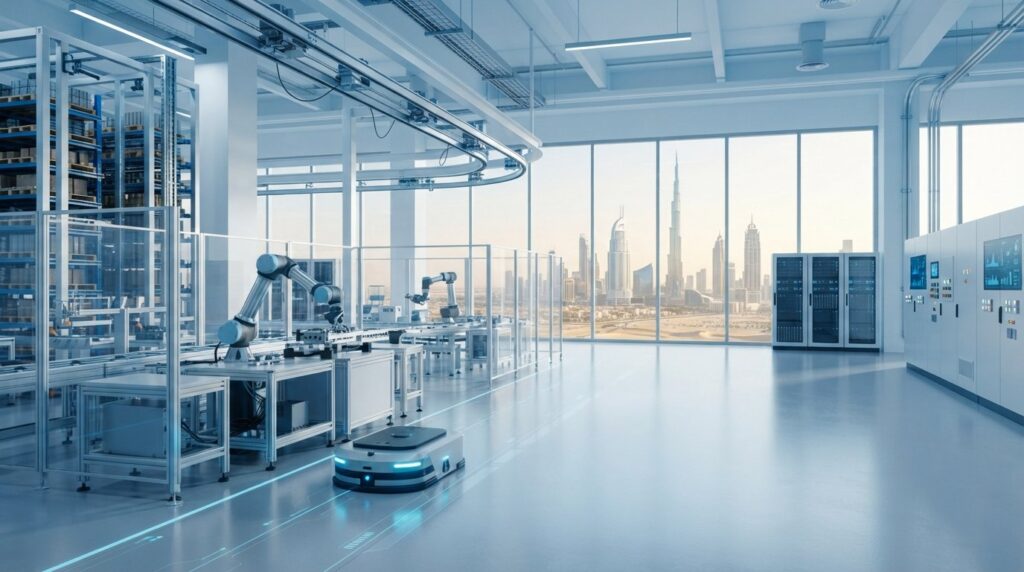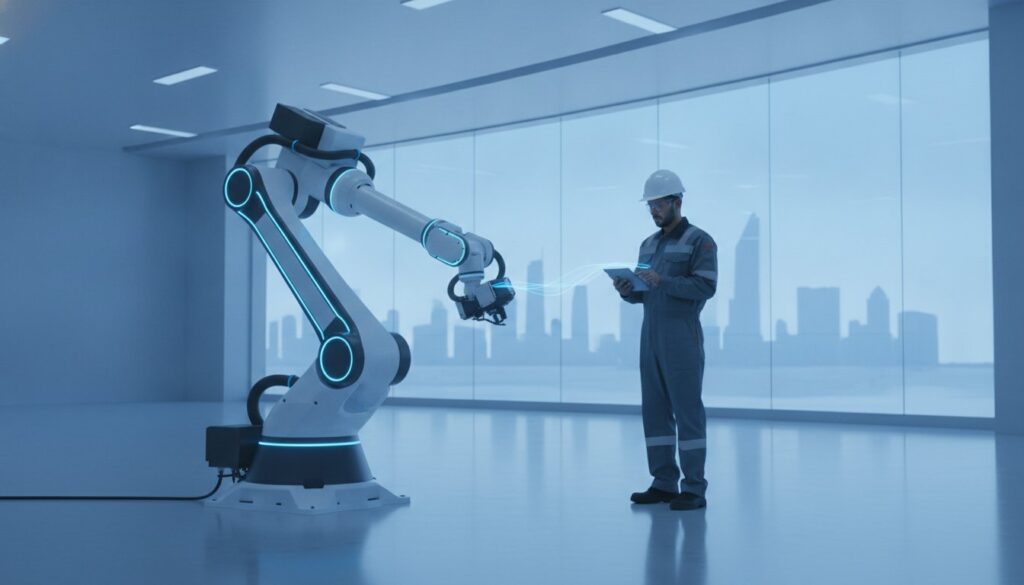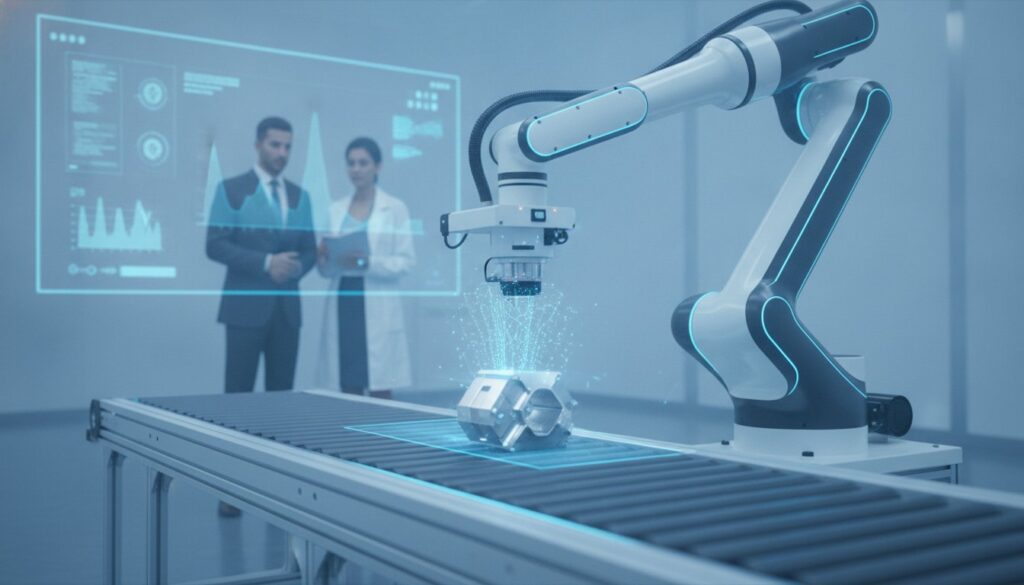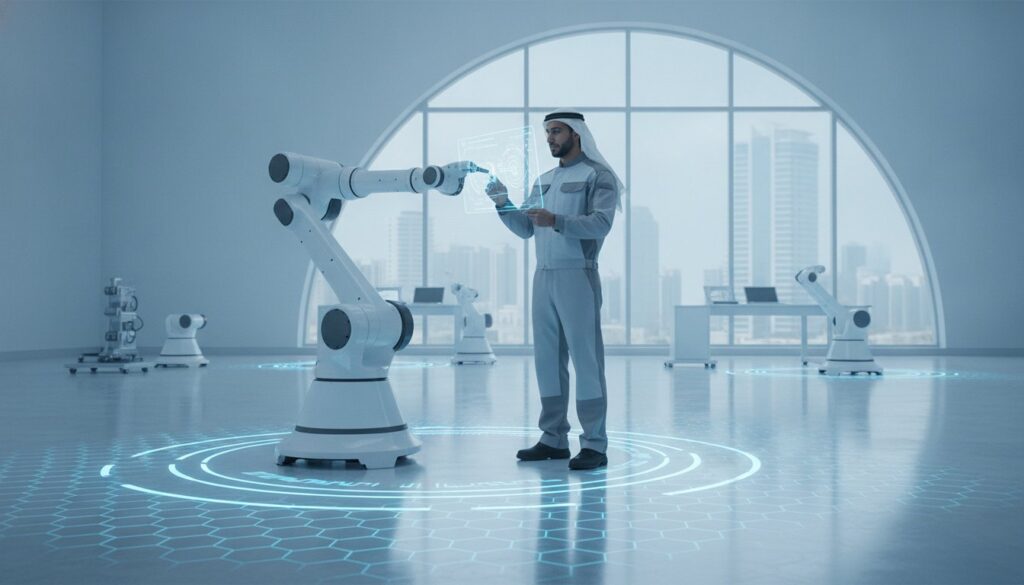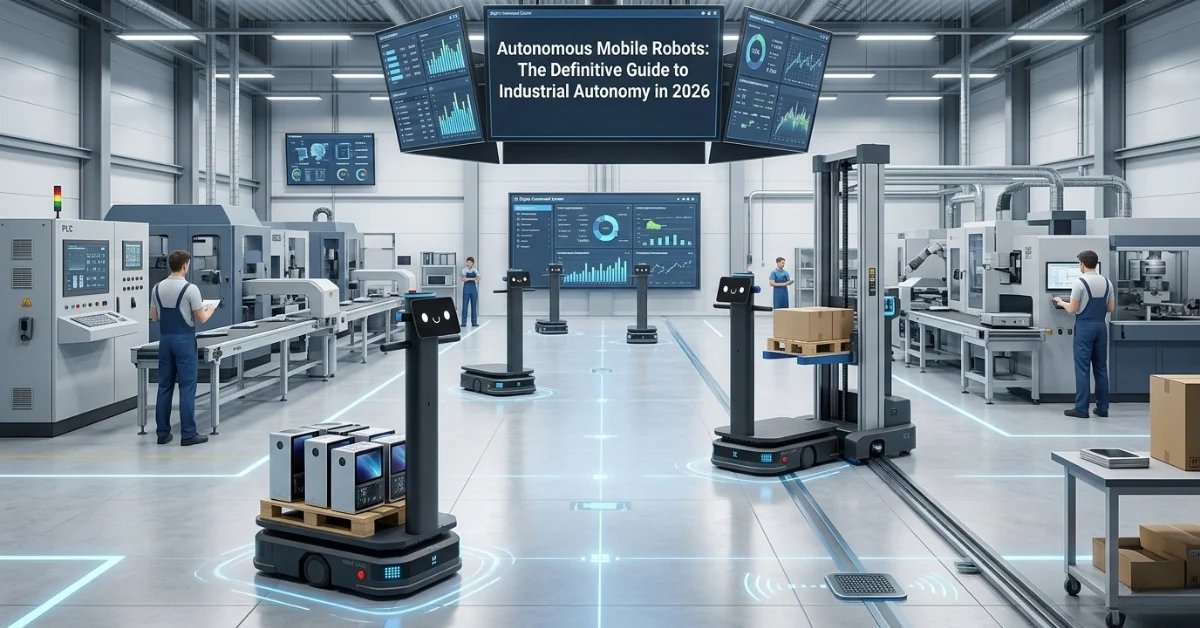
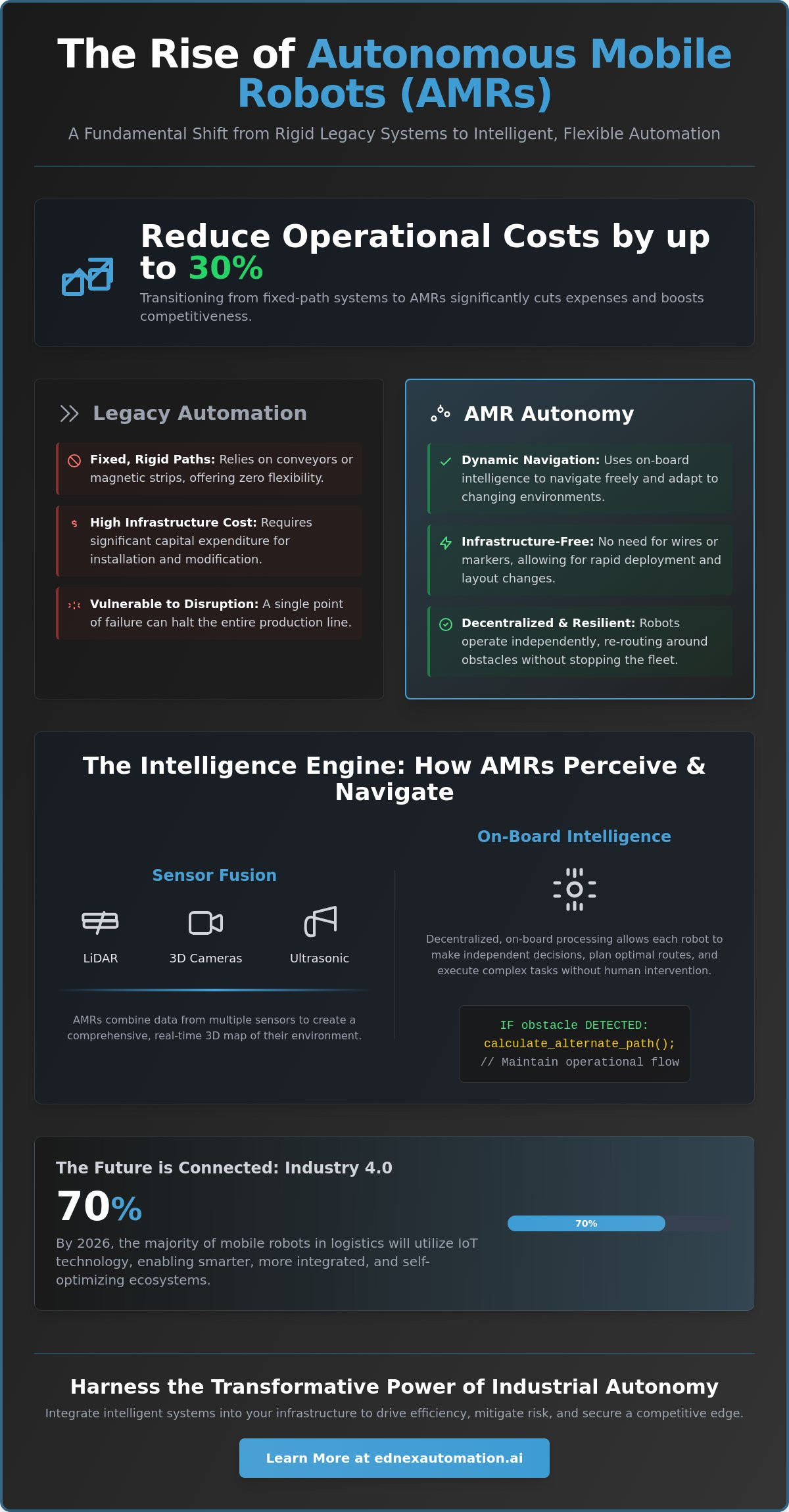
The era of the fixed-path conveyor is ending as industrial facilities transition into living, breathing ecosystems of intelligent movement. Utilizing advanced sensor arrays and AI, autonomous mobile robots represent a fundamental shift from the rigid legacy systems that once defined the factory floor. You’ve likely experienced the mounting pressure of rising operational costs and the persistent labor shortages currently impacting the warehouse and cleaning sectors. It’s clear that maintaining the status quo is no longer a viable strategy for long-term competitiveness when companies using mobile robots can reduce operational costs by up to 30%.
This guide provides the technical framework you need to harness the transformative power of industrial autonomy. You’ll discover how these intelligent systems integrate into existing infrastructure to drive efficiency and mitigate risk. We will explore how specific AMR architectures align with your unique sector, providing a methodical roadmap for transitioning from manual operations to an autonomous framework that delivers measurable ROI. By 2026, 70% of mobile robots in logistics will utilize IoT technology; this article ensures your organization is part of that modernized majority.
Key Takeaways
- Understand the fundamental shift from rigid automation to autonomous mobile robots that utilize onboard intelligence to navigate complex environments without infrastructure modifications.
- Discover how the synergy of advanced sensor arrays and machine learning algorithms ensures operational continuity through real-time obstacle detection and path optimization.
- Evaluate the total cost of ownership (TCO) between AMRs and traditional automated guided vehicles to identify the most flexible and scalable solution for your facility.
- Identify targeted robotic applications that address critical labor shortages in warehouse operations while enhancing overall industrial throughput.
- Learn the methodical requirements for aligning robotic integration with your organization’s broader digital transformation and Industry 4.0 objectives.
Defining Autonomous Mobile Robots in the Industry 4.0 Era
The Fourth Industrial Revolution demands a departure from static production lines toward dynamic, self-optimizing environments. At the center of this transformation are autonomous mobile robots, sophisticated systems that transcend the limitations of traditional material handling. Unlike their predecessors, these machines don’t rely on pre-defined paths or external guidance; they utilize on-board intelligence to navigate complex, changing landscapes. This shift is particularly vital for the UAE’s national industrial modernization, where the integration of advanced robotics is a strategic pillar for economic diversification and global competitiveness. By adopting these technologies, organizations move beyond simple task execution into a state of intelligent operational flow.
Understanding the distinction between basic mechanical automation and true robotic autonomy is essential for any strategic investment. Defining Autonomous Mobile Robots involves recognizing their capacity for independent decision-making within a physical space. While legacy systems operate within a closed loop of repetitive motions, an AMR functions as an intelligent agent. It doesn’t just move; it interprets. By distinguishing between simple instruction-following and environmental awareness, organizations can transition from rigid workflows to adaptive industrial ecosystems that respond to real-time production demands without constant human oversight.
The Shift from Fixed to Flexible Automation
Traditional fixed-path systems, such as conveyors or wired AGVs, are increasingly becoming obsolete in the face of volatile market fluctuations. These legacy infrastructures require significant capital expenditure for installation and offer zero flexibility once deployed. In contrast, autonomous mobile robots support on-demand manufacturing and logistics by allowing for rapid reconfiguration of facility layouts. By eliminating the need for magnetic strips, wires, or floor-mounted markers, companies drastically reduce infrastructure costs while gaining the agility to scale operations instantly. This flexibility is the primary driver behind the projected 30% reduction in operational costs seen in high-performing facilities that prioritize modularity.
Core Characteristics of True Autonomy
True autonomy is defined by the migration of processing power from a centralized server directly to the edge. AMRs possess the localized intelligence required to perceive their surroundings through LiDAR and vision systems, plan optimal routes, and execute complex tasks without human intervention. This decentralized approach ensures that if a single unit encounters an obstacle, the entire fleet doesn’t stall. The robot’s on-board computer evaluates the situation and reroutes itself immediately. AMR autonomy is the ability to adapt to environmental changes in real-time. This capacity for independent execution is what transforms a simple tool into a strategic asset for long-term operational excellence.
The Intelligence Engine: How AMRs Perceive and Navigate
Harnessing the power of advanced machine learning, autonomous mobile robots transform raw environmental data into actionable navigational intelligence. This process relies on a sophisticated synergy between hardware and software, ensuring that every movement is calculated to maintain operational continuity. High-fidelity data serves as the lifeblood of these systems; it allows individual units to perceive their surroundings with millimeter precision. By integrating these intelligent engines, facilities can achieve a level of Strategic Operational Excellence that was previously unattainable with manual labor or rigid automation. The shift toward this level of autonomy represents a necessary evolution for organizations aiming to remain competitive in a rapidly accelerating global market.
Sensor Fusion and Visual SLAM Technology
Implementing a unified perception layer, AMRs combine inputs from LiDAR, 3D cameras, and ultrasonic sensors to create a comprehensive view of the workspace. This multi-layered approach, known as sensor fusion, allows the robot to identify and categorize objects with high accuracy. A critical component of this intelligence is understanding how do AMRs work through Visual Simultaneous Localization and Mapping (vSLAM). This technology enables the robot to build a map of an unknown environment while simultaneously tracking its own position within it. Unlike traditional systems that struggle in low-light or high-traffic areas, vSLAM maintains precision by identifying fixed visual landmarks. By 2026, it’s projected that 70% of mobile robots in logistics and manufacturing will utilize IoT technology to further enhance this performance through real-time data sharing.
Real-Time Path Planning and Safety Protocols
Utilizing dynamic re-routing capabilities, autonomous mobile robots effectively manage unexpected obstacles without halting production cycles. When a sensor detects a person or a misplaced pallet, the path planning algorithm calculates an alternative route in milliseconds. Path planning algorithms minimize travel time while maximizing safety by prioritizing the most efficient trajectory that maintains a secure distance from human workers. These safety protocols are reinforced by safety-rated sensors and emergency stop mechanisms that comply with international standards. This ensures a seamless human-robot coexistence, where machines act as predictable partners rather than hazardous variables. Beyond individual unit safety, intelligent software enables fleet-wide coordination, allowing multiple robots to communicate their positions to avoid congestion and optimize task allocation. For organizations looking to modernize their infrastructure, identifying the right industrial automation partner is the next logical step in facility evolution.
Strategic Evaluation: AMRs vs. Automated Guided Vehicles (AGVs)
Choosing between legacy guidance and intelligent autonomy requires a thorough analysis of long-term operational impact rather than a simple comparison of upfront hardware costs. While Automated Guided Vehicles (AGVs) have historically provided reliable transport along fixed paths, autonomous mobile robots represent a fundamental shift toward decentralized intelligence. Identifying the specific needs of a facility, engineers must weigh the benefits of rigid reliability against the necessity of adaptive flow. For technical leaders seeking a deeper academic foundation for these decisions, the Introduction to Autonomous Mobile Robots serves as an essential resource for understanding the underlying mechanics of robotic locomotion and perception.
Analyzing the Total Cost of Ownership (TCO) reveals that the initial purchase price is often a misleading metric. Legacy AGV systems frequently incur significant hidden costs related to floor modifications, magnetic tape installation, and the resulting operational downtime during setup. Conversely, AMRs integrate into existing environments without structural changes, positioning them as the strategic automated guided vehicle alternative for modern, high-mix production facilities. While AGVs still hold niche value in heavy-duty manufacturing where paths never change and payloads are extreme, the vast majority of warehouse and logistics sectors find that the flexibility of autonomous mobile robots provides a much faster path to ROI.
Infrastructure Requirements and Scalability
Deploying an AGV fleet typically involves permanent alterations to the facility floor, creating a rigid system that’s difficult to modify as business needs evolve. Any change to the workflow requires re-taping or re-wiring the entire path, leading to costly disruptions. Map-based AMR systems eliminate these barriers, allowing for deployment speeds that are often 50% faster than traditional guided systems. Scalability becomes a seamless process; you can introduce new units to an existing fleet by simply sharing the digital map, ensuring that growth doesn’t compromise current productivity levels.
Operational Flexibility in Dynamic Environments
Modern warehouses are rarely static, and the ability to handle layout changes without technical intervention is a key driver of long-term business viability. AMRs utilize their on-board intelligence to navigate around new shelving units, temporary obstacles, or changed floor plans in real-time. This level of facility flexibility ensures that your automation investment remains relevant even as your product lines or storage strategies shift. Choosing the right technology based on environmental predictability allows you to maintain a steady operational rhythm while remaining prepared for the inevitable fluctuations of a global supply chain.
High-Impact Applications Across the National Industrial Landscape
Transitioning from general theory to applied industrial reality requires a deep understanding of specific sectoral requirements. Within the logistics sector, autonomous mobile robots are revolutionizing throughput by automating pallet movement and sorting processes. This technology provides the definitive solutions for labor shortage in warehouse operations by replacing manual transport with intelligent, self-navigating systems. By optimizing internal intralogistics, facilities can achieve faster order fulfillment while simultaneously reducing human error and injury in high-risk environments. This strategic alignment with national industrial goals ensures that local businesses remain resilient against global labor fluctuations.
Logistics and Warehouse Material Handling
Implementing AMR technology in material handling allows for a level of precision that manual labor cannot consistently replicate. These robots manage the end-to-end movement of goods, from receiving docks to automated storage and retrieval systems, ensuring that every pallet is tracked and delivered with zero deviation. By reducing the reliance on human-operated forklifts, organizations significantly lower the risk of workplace accidents while achieving a 30% reduction in operational costs. This systematic approach to automation turns the warehouse into a highly efficient engine of commerce that supports the nation’s growing e-commerce demands. These systems don’t just move items; they provide the data necessary for continuous process optimization.
Beyond Logistics: Cleaning, Inspection, and Surveillance
While logistics remains the largest market segment, the application of autonomy extends far beyond the warehouse floor. In commercial and healthcare sectors, service-oriented AMRs are being adopted at an annual rate of 25% to manage routine tasks and maintain rigorous hygiene standards. Autonomous cleaning robots ensure consistent industrial hygiene across large-scale facilities, utilizing specialized scrubbers and sensors to navigate around foot traffic. In the oil, gas, and infrastructure sectors, inspection robots provide critical data on asset integrity, allowing for predictive maintenance that prevents costly system failures. This capability is essential for protecting national infrastructure and ensuring long-term business viability.
Protecting high-value national assets requires a level of persistence that only 24/7 autonomous surveillance units can provide. These robots offer a reliable monitoring solution that eliminates the fatigue and oversight associated with human security guards. By integrating surveillance and inspection units into a unified security framework, facilities can detect anomalies or unauthorized access in real-time, triggering immediate alerts to centralized control rooms. To explore how these specialized systems can secure and maintain your industrial facility, view our comprehensive range of autonomous surveillance and cleaning robots.
Implementing AMR Solutions for Strategic Operational Excellence
Achieving a state of strategic operational excellence requires more than the simple acquisition of hardware; it demands a rigorous, methodical approach to robotic integration that aligns with broader Industry 4.0 objectives. By positioning autonomous mobile robots as the intelligent connective tissue between disparate industrial systems, organizations can transition from isolated automation to a fully synchronized digital enterprise. This transition isn’t a chaotic disruption but a controlled evolution that ensures long-term reliability through expert integration and continuous technical support. For industrial leaders, the goal is to create an intellectual framework where mobile autonomy and fixed infrastructure operate in a state of perfect synergy, driving the national industrial evolution toward a more resilient and efficient future.
Integration with PLC, SCADA, and ASRS Ecosystems
Establishing a unified control layer is the primary challenge in modernizing a facility, and it starts by connecting your robotic fleet to existing SCADA systems. This connection provides a single pane of glass for monitoring operational health, allowing engineers to oversee both fixed machinery and mobile units simultaneously. Synchronizing AMR movement with Automated Storage and Retrieval Systems (ASRS) is particularly critical for maintaining throughput; it ensures that robots are positioned at the exact moment a payload is ready for transport. This level of precision is achieved through bespoke PLC programming, which optimizes robotic workflows by translating complex environmental data into actionable commands for the facility’s central nervous system. By bridging the gap between mobile intelligence and fixed control, companies eliminate the data silos that traditionally hinder industrial performance, ensuring that every movement is accounted for within the broader digital transformation strategy.
Partnering for Strategic Automation Transformation
Building a future-proof facility requires a partnership that extends from the initial site assessment through full-scale deployment and long-term maintenance. This journey begins with identifying the specific technical requirements of your sector, ensuring that the selected autonomous mobile robots are perfectly matched to your facility’s payload and environment. Leveraging regional expertise is essential for navigating national industrial requirements, as it allows for the bespoke integration of global technological breakthroughs into a local economic context. Working with qualified AMR system integrators ensures that your deployment is orchestrated with the precision needed to synchronize fleet intelligence with existing PLC and SCADA control logic. This systematic organizer approach brings order and safety to complex environments, transforming them into high-performance hubs of innovation. As a grounded technical partner, EdNex Automation provides the intellectual framework necessary for this implementation, ensuring that your organization doesn’t just acquire tools but undergoes a necessary evolution to remain competitive. Explore our comprehensive AMR solutions at EdNex Automation to begin your transition toward a modernized, autonomous industrial future.
Securing Long-Term Viability through Industrial Autonomy
Positioning your organization for the future, adopting autonomous mobile robots is no longer a speculative venture but a strategic necessity. By transitioning from rigid legacy automation to flexible, intelligent ecosystems, facilities can effectively mitigate the risks associated with labor shortages and rising operational costs. Success in this transformation depends on the seamless synchronization of mobile units with existing PLC and SCADA frameworks. Every robotic movement must contribute to a unified, data-driven workflow. This methodical integration transforms your facility into a high-performance engine of modernization.
Leveraging our official alliances with global robotics entities and comprehensive national-scale deployment capabilities, we provide the technical framework required for large-scale industrial evolution. Our expertise in bespoke PLC and SCADA integration ensures that your autonomous fleet operates in perfect harmony with your broader infrastructure. It’s clear that positioning your organization at the cutting edge of technology requires a partner who understands the gravity of industrial transformation. Consult with our automation experts to modernize your facility and secure your place in the future of industrial excellence. It’s time to lead the charge into the autonomous era.
Frequently Asked Questions
What is the main difference between an AMR and an AGV?
The primary distinction lies in navigational intelligence and infrastructure requirements. Autonomous mobile robots utilize on-board sensors and digital mapping to navigate dynamically around obstacles without the need for magnetic strips or wires. While AGVs are limited to fixed paths and stop when they encounter an obstruction, AMRs interpret their environment in real-time to calculate alternative routes, ensuring continuous operational flow.
How do autonomous mobile robots ensure safety in a human-centric environment?
Safety is achieved through a multi-layered sensor fusion approach that includes LiDAR, 3D cameras, and ultrasonic sensors to maintain 360-degree environmental awareness. These systems are programmed to comply with ISO 10218-1/2:2025 and ANSI/A3 R15.06-2025 standards, triggering immediate speed reductions or emergency stops when human presence is detected. By prioritizing predictable interactions, these robots maintain a workplace free from recognized hazards as required by the General Duty Clause.
Can AMRs be integrated with our existing warehouse management systems (WMS)?
Yes, modern autonomous units are designed for seamless integration with existing Warehouse Management Systems and Enterprise Resource Planning (ERP) frameworks via standardized APIs. This connectivity allows for real-time task allocation and inventory synchronization, turning the robot into an active participant in your facility’s digital nervous system. It’s essential to ensure that your integration partner has the expertise to bridge these software layers without disrupting current workflows.
What is the typical ROI period for an autonomous mobile robot deployment?
Most industrial organizations realize a full return on investment within 12 to 24 months, depending on the complexity of the deployment and local labor costs. By reducing operational expenses by up to 30%, these systems pay for themselves through increased throughput and the elimination of human error in material handling. Long-term viability is further enhanced because the system can scale or reconfigure without the heavy capital expenditure required by fixed automation.
Do AMRs require significant changes to my existing facility layout?
No, one of the most significant advantages of this technology is that it doesn’t require structural modifications or floor-mounted guidance systems. You can deploy a fleet in your current environment by simply allowing the robots to scan and create a high-fidelity digital map of the workspace. This allows you to maintain your existing shelving and production lines while gaining the flexibility to reconfigure the layout as your business needs evolve.
How do AMRs handle multi-floor navigation in large commercial buildings?
Advanced robots manage vertical logistics by communicating directly with smart elevator controllers using standardized industrial protocols. Utilizing Wi-Fi or 5G connectivity, the robot autonomously calls the lift, selects the required floor, and exits once it reaches the destination. This capability is a critical requirement for delivery and cleaning robots operating in multi-story healthcare facilities or large-scale commercial offices.
What maintenance is required for a fleet of autonomous mobile robots?
Maintenance focuses primarily on routine sensor calibration, software optimization, and battery health monitoring to ensure peak performance. Because these units have fewer mechanical wear-points than traditional human-operated machinery, the physical upkeep requirements are relatively low. Utilizing predictive maintenance software allows your technical team to identify and resolve potential issues before they result in operational downtime.
Are AMRs suitable for outdoor industrial environments?
While standard warehouse units are designed for indoor use, specialized outdoor cleaning and inspection robots are engineered with ruggedized chassis and IP-rated enclosures to handle variable weather conditions. These units feature enhanced traction systems and specialized sensors to navigate uneven terrain and dusty industrial yards. It’s vital to select a robot specifically certified for outdoor use to protect sensitive electronics from environmental degradation.