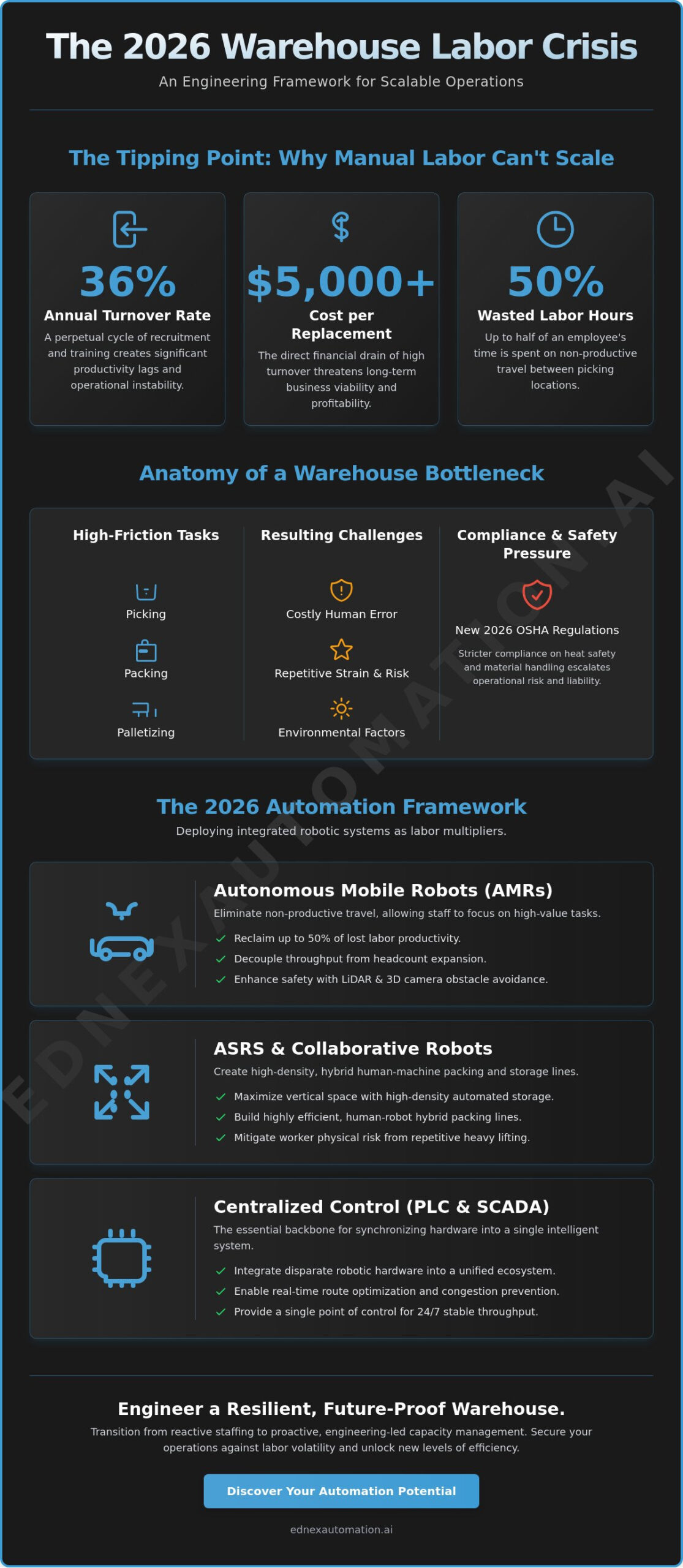
With the annual turnover rate for logistics roles averaging 36% in 2026, the financial burden of replacing a single worker now exceeds $5,000. You likely recognize that relying on a shrinking manual workforce creates a volatile environment where peak season productivity remains inconsistent and safety risks escalate. Identifying sustainable solutions for labor shortage in warehouse environments has shifted from a recruitment challenge to a critical engineering requirement for long term viability.
Leveraging the latest advancements in robotics and integrated control systems, you can transform warehouse labor constraints into scalable operational advantages. This article provides a comprehensive overview of the 2026 Automation Framework; it demonstrates how the integration of Autonomous Mobile Robots (AMRs) and PLC systems secures stable, 24/7 throughput. We’ll examine the strategic deployment of collaborative systems and ASRS to reduce dependency on temporary staff while ensuring compliance with rigorous new OSHA heat safety and material handling regulations.
Key Takeaways
- Understand why the 2026 logistics landscape requires a transition from manual staffing to an engineering-led model to overcome permanent structural constraints.
- Discover how autonomous mobile robots (AMRs) serve as primary solutions for labor shortage in warehouse settings by eliminating non-productive travel time and increasing picking accuracy.
- Evaluate the synergy between ASRS for high-density storage and collaborative robots to create highly efficient, hybrid human-machine packing lines.
- Learn why centralized PLC and SCADA integration is the essential backbone for synchronizing disparate robotic hardware into a single, intelligent control system.
- Explore the framework for future-proofing regional operations through a comprehensive portfolio of specialized systems, including humanoid, inspection, and autonomous cleaning robots.
Analyzing the Structural Warehouse Labor Shortage in 2026
Positioning the modern warehouse as a critical node within a complex digital ecosystem, we must recognize that the current scarcity of human capital isn’t a cyclical fluctuation. It’s a permanent structural realignment of global supply chains. As e-commerce demand continues to accelerate, the pressure on picking and packing throughput has reached a tipping point where manual labor simply can’t scale. Identifying viable solutions for labor shortage in warehouse environments now requires an engineering-led transition toward autonomous systems. This shift is driven by a 36% annual turnover rate in logistics roles, a figure that forces operators into a perpetual cycle of recruitment and training lag. When the cost to replace a single worker exceeds $5,000, the financial drain of high turnover becomes a direct threat to long-term business viability.
Relying on traditional staffing models often overlooks the secondary costs of labor volatility. Beyond the direct recruitment fees, warehouses suffer from significant productivity dips during the onboarding of new personnel. Integrating Logistics Automation provides a stable baseline that human workers alone can no longer guarantee. Safety also plays a pivotal role in this transition. By deploying robotic systems to handle repetitive strain and heavy lifting, organizations improve their retention profiles. Workers are more likely to remain in environments where physical risk is mitigated by intelligent machinery; this aligns with the 2026 OSHA National Emphasis Program focusing on powered industrial vehicle hazards and heat safety compliance.
The Economic Reality of Labor Volatility
Recognizing that the average hourly wage has climbed to $17.31 as of May 2026, many operators find that wage increases alone no longer solve recruitment gaps. The industry is moving from headcount management to capacity management. In the UAE, where industrial competitiveness is tied to national digital transformation goals, labor scarcity can stall economic progress. Transitioning to an automated framework allows facilities to maintain a consistent output regardless of local labor market fluctuations. This systematic approach ensures that operational capacity is dictated by system design rather than the availability of temporary staff.
Identifying High-Friction Manual Tasks
Evaluating the warehouse floor reveals that picking, packing, and palletizing remain the primary bottlenecks in high-velocity distribution centers. These high-friction tasks are where human error is most frequent and most costly. Environmental factors, such as the rigorous requirements of cold storage or the new 2026 OSHA heat safety rules, further complicate manual labor retention. Implementing solutions for labor shortage in warehouse operations involves targeting these specific friction points with bespoke automation. By quantifying the cost of errors and the impact of environmental downtime, it becomes clear that manual processes are the weakest link in the modern supply chain. Controlled, deliberate innovation is the only path to reclaiming operational efficiency.
Robotic Process Automation: Deploying AMRs as Labor Multipliers
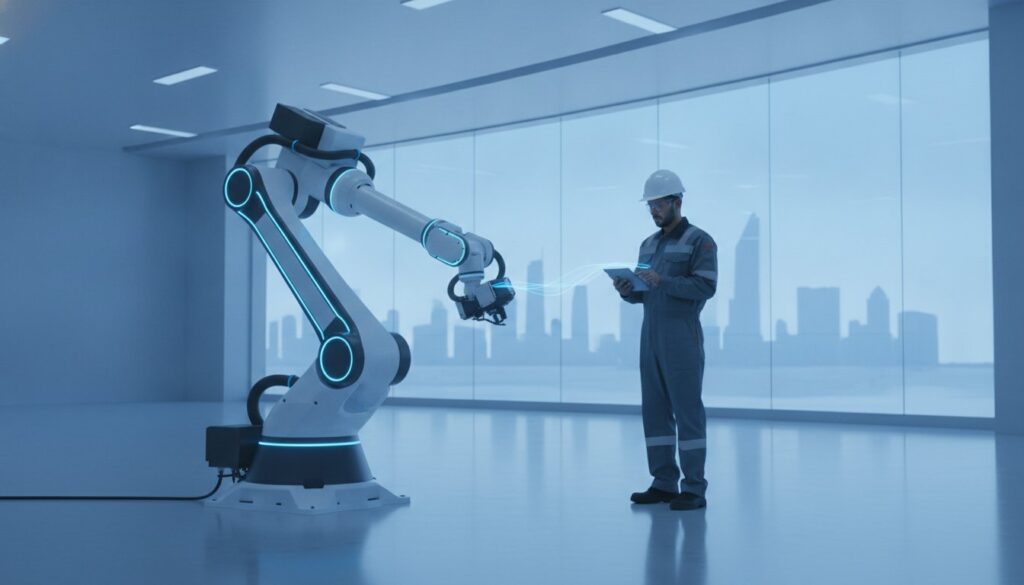
Deploying intelligent robotics represents a fundamental shift in how facility managers perceive floor throughput. In traditional environments, travel time—the period workers spend moving between picking locations—accounts for up to 50% of total labor hours. By transitioning from manual carts to autonomous mobile robots, organizations effectively reclaim this lost productivity. These systems act as force multipliers, allowing human staff to remain at high-value stations while robots handle the monotonous transport of goods. This transition is one of the most effective solutions for labor shortage in warehouse operations because it decouples volume growth from headcount expansion.
Implementing a managed fleet ensures that operations scale seamlessly during peak seasons without the need for aggressive seasonal hiring. Modern fleet management software optimizes routes in real-time, preventing congestion and ensuring that material flow remains constant. Beyond throughput, these machines enhance facility safety through sophisticated sensor suites. Using LiDAR and 3D cameras, AMRs execute intelligent obstacle avoidance, significantly reducing the risk of workplace collisions. This level of autonomy allows for a more predictable operational cadence, transforming the warehouse from a labor-dependent facility into a technology-driven asset.
The Evolution from AGV to AMR
Understanding the distinction between legacy technology and modern autonomy is crucial for strategic planning. While Automated Guided Vehicles (AGVs) rely on fixed infrastructure like magnetic tape or wires, they’re often too rigid for the dynamic nature of 2026 supply chains. Decoding the navigation systems behind AMRs reveals a reliance on Simultaneous Localization and Mapping (SLAM) technology. This intelligence allows robots to navigate without physical markers, offering unparalleled flexibility when floor layouts change. This adaptability ensures that your automation investment remains viable even as product mixes and storage configurations evolve.
Operational Benefits of Mobile Robotics
Reducing worker fatigue is a primary driver for robotic adoption, especially as the industry works toward Meeting Workforce Needs in an aging labor market. Automating long-distance transport minimizes the physical toll on employees, which directly correlates to improved retention and reduced injury claims. Integrating these robots with existing warehouse management systems (WMS) allows for a unified data stream, providing managers with real-time visibility into every movement on the floor. This continuous data collection facilitates precise throughput optimization, transforming the warehouse into a highly tuned industrial engine. To begin optimizing your facility’s material flow, you should explore the latest autonomous mobile robots for industrial-scale operations tailored for industrial scale. Ensuring a successful deployment also depends on working with qualified AMR system integrators who can orchestrate fleet intelligence with your existing PLC and SCADA control logic for seamless scalability.
Strategic Comparison of High-Impact Automation Technologies
Selecting the appropriate robotic architecture requires a rigorous analysis of SKU velocity and facility footprint. While horizontal transport is effectively managed by mobile fleets, true operational resilience stems from the synergy between disparate high-impact technologies. Many global distribution centers now turn to automation in response to labor shortages, recognizing that manual picking cannot keep pace with 2026 e-commerce velocities. By evaluating Automated Storage and Retrieval Systems (ASRS) alongside collaborative and humanoid robotics, facility managers can implement solutions for labor shortage in warehouse environments that are both scalable and precise.
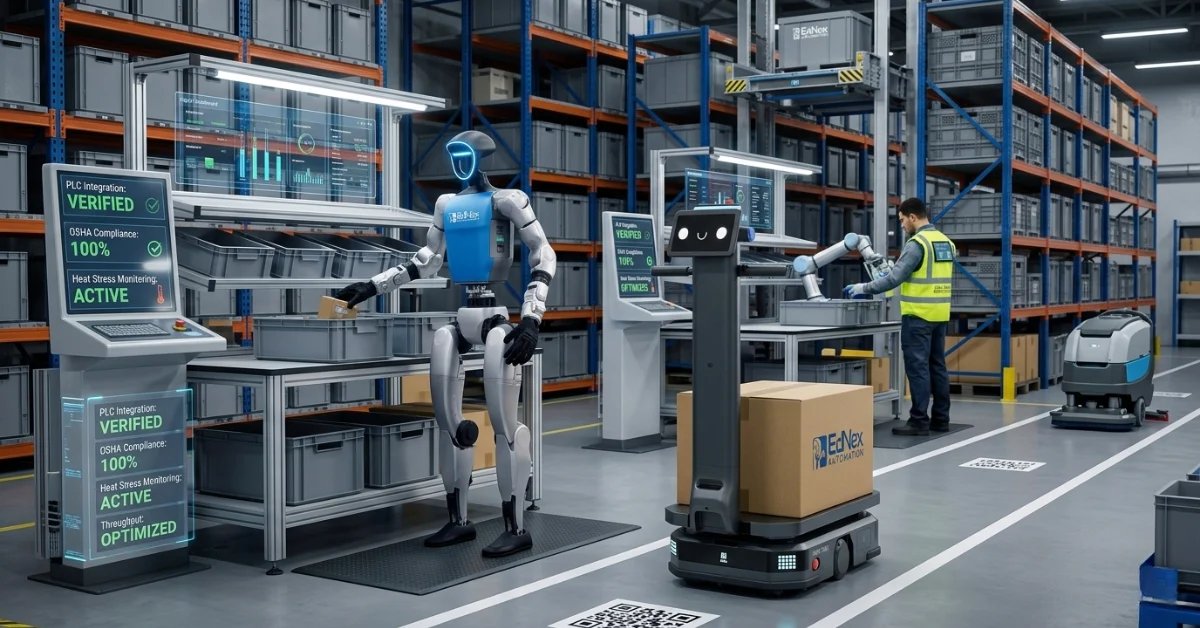
The strategic advantage lies in how these systems communicate. An ASRS provides high-density vertical storage, effectively feeding material to packing lines where collaborative robots or humanoid systems execute final fulfillment tasks. This integrated ecosystem ensures that the warehouse functions as a single, cohesive machine rather than a collection of isolated workstations. Transitioning to this model allows for a significant reduction in the total number of manual touches required per order, directly mitigating the impact of an increasingly scarce workforce.
ASRS vs. Manual Picking: A Density and Speed Analysis
Maximizing vertical space is no longer just an efficiency goal; it’s a necessity for reducing the demand for manual forklift operators. ASRS technology solves the labor gap in specialized environments, such as cold storage, where human retention is notoriously difficult due to harsh working conditions. Comparing cycle times reveals that automated retrieval systems maintain a consistent pace that manual operations cannot replicate over a full shift. By replacing manual forklift travel with high-speed shuttles and cranes, facilities achieve faster order fulfillment while minimizing the safety risks associated with heavy machinery in narrow aisles.
Cobots and Humanoids in the Modern Workforce
Integrating the strategic role of collaborative robots in the UAE has already demonstrated how hybrid human-machine lines can stabilize output. Collaborative robots (Cobots) are designed to work alongside personnel, handling repetitive packing and palletizing tasks that lead to worker burnout. As we look toward the future of versatile labor, humanoid robots are emerging as the solution for complex, non-repetitive tasks that previously required human dexterity. These advanced systems are engineered to handle the “3Ds”—tasks that are Dull, Dirty, or Dangerous. Creating this synergistic environment allows your human workforce to transition into higher-level supervisory roles, ensuring long-term business viability through controlled and deliberate technological evolution.
Engineering a Resilient Warehouse: The Control System Backbone
Deploying advanced hardware like AMRs and ASRS provides the physical muscle for modern logistics, yet these systems often underperform when treated as isolated installations. True operational resilience requires a unified “brain” to orchestrate disparate machinery into a singular, high-velocity ecosystem. Standalone robots frequently fail to deliver expected ROI because they lack the integrated PLC and SCADA services necessary for real-time synchronization. Transitioning to a centralized control architecture is one of the most effective solutions for labor shortage in warehouse operations; it replaces manual coordination with automated, data-driven precision.
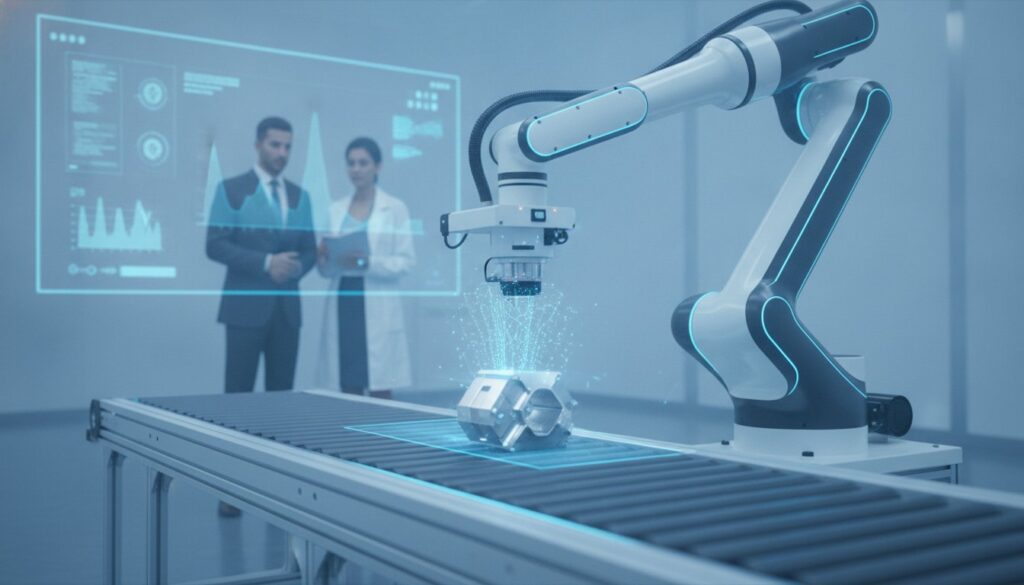
Centralizing warehouse intelligence through advanced industrial control systems allows for a seamless bridge between physical hardware and digital Enterprise Resource Planning (ERP) platforms. This connectivity ensures that every robotic movement is aligned with high-level business objectives, such as order priority or inventory accuracy. Utilizing real-time monitoring and predictive maintenance analytics further secures the facility against unplanned downtime. By identifying mechanical stressors before they lead to system failure, operators maintain a consistent throughput that is entirely independent of human intervention. You can secure your facility’s operational future by exploring our comprehensive PLC and SCADA integration solutions.
The Role of PLC and SCADA in Labor Reduction
Automating complex decision-making processes at the machine level significantly reduces the headcount required for supervisory oversight. Programmable Logic Controllers (PLCs) handle the micro-adjustments of sorting and conveying systems, while Supervisory Control and Data Acquisition (SCADA) provides facility-wide visibility. This hierarchy allows managers to identify bottlenecks instantly through digital dashboards rather than physical floor inspections. Automated reporting modules eliminate the need for manual data entry, ensuring that performance metrics are accurate and immediately actionable. This transition shifts the human role from active operator to strategic system administrator.
Implementation Roadmap for Integrated Automation
Executing a successful digital transformation begins with a rigorous technical audit of current electrical and digital infrastructure. This foundational step identifies whether existing power grids and network protocols can support the increased data load of an automated fleet. Adopting a phase-by-phase integration strategy allows the warehouse to maintain throughput during the transformation, mitigating the risk of service interruptions. Ensuring robust cyber-physical security is also paramount in an increasingly connected environment. Protecting the integrity of the control backbone prevents external disruptions, ensuring that your solutions for labor shortage in warehouse management remain secure, reliable, and scalable for the long term.
Future-Proofing UAE Logistics with EdNex Automation
EdNex Automation positions itself as the intellectual framework for large-scale industrial transformation within the UAE. By aligning facility operations with national Industry 4.0 standards, we provide the technical expertise required to navigate the complexities of modern logistics. Our approach isn’t merely about equipment vending; it’s about engineering a resilient ecosystem where hardware and software converge to solve structural challenges. Implementing these comprehensive solutions for labor shortage in warehouse management ensures that regional facilities remain competitive on a global scale. Our comprehensive portfolio extends from specialized cleaning and delivery robots to the latest humanoid systems, offering a versatile answer to diverse labor needs.
Our integration expertise spans the entire automation spectrum, from high-density ASRS to the underlying PLC and SCADA control systems. This end-to-end capability ensures that every component of the warehouse architecture communicates perfectly, reducing the risk of operational silos. By centralizing intelligence, we empower organizations to move beyond reactive staffing and toward a model of controlled, deliberate innovation. This systematic approach is essential for any organization wishing to maintain long-term business viability in an increasingly automated world. It’s a necessary evolution for staying relevant in a high-tech economy.
Beyond Logistics: Specialized Service Robots
Expanding automation beyond the picking line is critical for facility-wide efficiency. Utilizing autonomous cleaning robots allows operators to repurpose janitorial labor into higher-value roles while maintaining rigorous industrial hygiene standards. Delivery and surveillance robots further enhance security and material flow, providing a persistent presence that manual patrols simply can’t replicate. In high-risk industrial environments, inspection robots execute complex monitoring tasks. This significantly reduces human exposure to hazardous conditions and ensures compliance with evolving safety regulations without sacrificing operational uptime.
The EdNex Advantage: A Strategic Partnership
Choosing a technical partner requires a focus on reliability and official certification status. EdNex Automation maintains strategic alliances with global technology entities, ensuring that our clients receive the most advanced systems available today. We don’t believe in one-size-fits-all tools. Instead, we develop bespoke automation strategies tailored to the specific economic and geographic requirements of the UAE. This commitment to excellence ensures that our solutions for labor shortage in warehouse operations deliver tangible business outcomes, from reduced insurance premiums to stabilized throughput. Partnering with an industry leader provides the intellectual framework necessary for a successful, future-proof evolution.
Securing Operational Longevity Through Integrated Innovation
Transitioning from manual staffing to a robotic-centric ecosystem is no longer optional for organizations aiming to remain competitive. By addressing the permanent structural shifts in the workforce with integrated solutions for labor shortage in warehouse operations, you transform a significant business risk into a predictable, scalable advantage. This evolution requires more than just isolated hardware; it demands a sophisticated control backbone that synchronizes every movement on the floor. The integration of autonomous mobile robots, ASRS, and intelligent control systems ensures that your facility maintains a consistent, high-velocity output regardless of external labor market volatility.
EdNex Automation provides the intellectual framework and technical expertise necessary for this large-scale transformation. Leveraging our global alliances with industry-leading robotics manufacturers and our status as certified PLC and SCADA integration specialists, we deliver a comprehensive service portfolio covering cleaning, logistics, and surveillance. Our systematic approach ensures your facility meets the highest standards of Industry 4.0 while maintaining long-term business viability. Consult with our automation experts to solve your labor constraints and begin the journey toward a more resilient, autonomous future. Your organization is ready to lead the next era of industrial excellence.
Frequently Asked Questions
What are the most effective solutions for labor shortage in warehouse settings?
Integrating autonomous mobile robots (AMRs) and automated storage and retrieval systems (ASRS) provides the most effective solutions for labor shortage in warehouse environments. These technologies eliminate non-productive travel time and maximize vertical storage density, directly addressing the 36% annual turnover rate currently impacting the logistics sector. By deploying robotic process automation, facility managers stabilize their throughput and reduce dependency on an increasingly scarce manual workforce.
How much does warehouse automation cost compared to manual labor over five years?
Analyzing the five-year trajectory reveals that automation delivers a 25% to 30% reduction in labor costs compared to traditional manual staffing models. While manual labor expenses continue to rise alongside the $17.31 average hourly wage and recurring $5,000 recruitment costs per head, automated systems provide a stable operational expense. This shift ensures that long term business viability is dictated by system design rather than the volatility of the local labor market.
Can autonomous mobile robots (AMRs) work alongside my existing warehouse staff?
Utilizing advanced LiDAR and 3D camera suites, autonomous mobile robots (AMRs) are specifically engineered to navigate dynamic environments safely alongside human personnel. These systems execute intelligent obstacle avoidance to enhance facility safety, allowing staff to focus on high-value tasks while robots manage the monotonous transport of heavy materials. This collaborative approach improves worker retention by mitigating the physical strain associated with traditional manual material handling.
Is my warehouse too small for an Automated Storage and Retrieval System (ASRS)?
Modern ASRS configurations are highly modular, making them ideal for warehouses that must maximize existing footprints rather than expanding horizontally. By utilizing vertical space that manual picking cannot reach, smaller facilities achieve high-density storage and retrieval speeds that rival much larger distribution centers. This modularity allows for bespoke integration, ensuring that even mid-sized operations can implement sophisticated automation to overcome local labor constraints.
How long does it take to see a return on investment (ROI) from warehouse robotics?
Early adopters typically observe a measurable return on investment within the first two years; the average ROI for warehouse automation reaches 20% in that period. Implementing specific solutions for labor shortage in warehouse management, such as autonomous mobile robots, can deliver an ROI exceeding 250% by significantly accelerating fulfillment speeds. These results are achieved by reducing the financial impact of employee turnover and eliminating the costs of temporary seasonal labor.
What is the difference between an AGV and an AMR in solving labor gaps?
Automated Guided Vehicles (AGVs) rely on fixed infrastructure like magnetic tape, whereas Autonomous Mobile Robots (AMRs) use SLAM technology for intelligent, infrastructure-free navigation. This distinction is critical for solving labor gaps in dynamic warehouses where floor layouts change frequently. AMRs offer the flexibility to adapt to new workflows without costly facility modifications, providing a more agile response to shifting supply chain demands than legacy AGV systems.
Does warehouse automation require a complete overhaul of my current PLC systems?
Modernizing your facility doesn’t necessarily require a complete hardware replacement; instead, it involves the strategic integration of existing PLC and SCADA architectures. By layering advanced control software over your current infrastructure, you create a unified digital backbone that synchronizes new robotic assets with legacy machinery. This approach ensures a seamless transition to automation while protecting your previous investments in industrial electrical and digital infrastructure.
How do humanoid robots fit into a 2026 warehouse labor strategy?
Emerging as the ultimate solution for complex, non-repetitive tasks, humanoid robots are being integrated into 2026 labor strategies to handle the most physically demanding warehouse roles. These versatile machines fill critical gaps in picking and packing lines, performing tasks that require human-like dexterity without the risk of fatigue or injury. Their deployment ensures that operations remain resilient against the structural labor scarcity currently facing the global supply chain. Selecting the right AMR system integrators to manage multi-vendor fleet deployments is equally essential for ensuring that these advanced systems deliver measurable ROI within a unified, enterprise-level control architecture.