Why Robotics is Critical for Modern Manufacturing and Industry Automation
Introduction
The global manufacturing landscape is undergoing a dramatic shift. Faced with rising labor costs, market demands for faster turnaround, and the growing need for precision, manufacturers worldwide are embracing robotics like never before. Once considered a futuristic luxury, robotics in manufacturing has now become a critical pillar of industry automation solutions, powering the smart factories of today and the fully autonomous production lines of tomorrow.
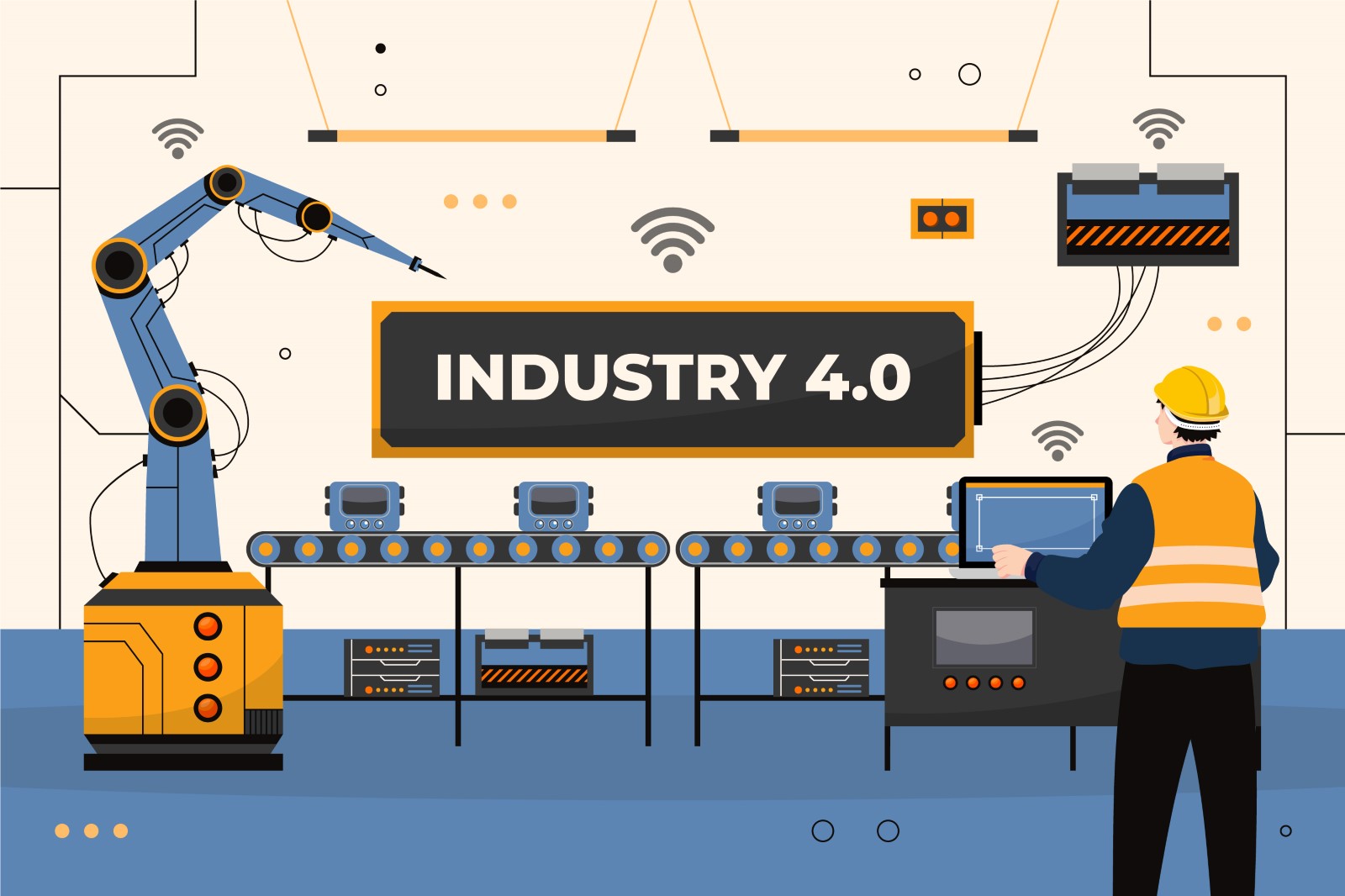
In this blog, we explore why robotics is no longer an option—but a strategic necessity—for manufacturers looking to stay competitive in the era of Industry 4.0.
- Evolution of Manufacturing – From Manual to Robotic
Manufacturing has come a long way from purely manual processes to mechanization, then automation, and now intelligent robotics. While traditional automation focused on repeatable tasks, today’s robotics offer adaptive, flexible, and scalable solutions that can handle variability, work collaboratively with humans, and even learn from experience.
Driven by:
- Workforce shortages,
- Global supply chain pressures,
- Need for hyper-efficiency,
robots are helping factories shift from reactive workflows to proactive, data-driven operations.
- Benefits of Robotics in Modern Manufacturing
Increased Productivity & 24/7 Operation
Robots don’t need breaks, sleep, or holidays. They can work around the clock with consistent performance, significantly increasing output and enabling manufacturers to meet rising global demands.
Enhanced Accuracy and Consistency
Precision is crucial in sectors like electronics and automotive. Robots perform tasks with micrometer-level accuracy, reducing errors, rework, and material wastage.
Improved Worker Safety
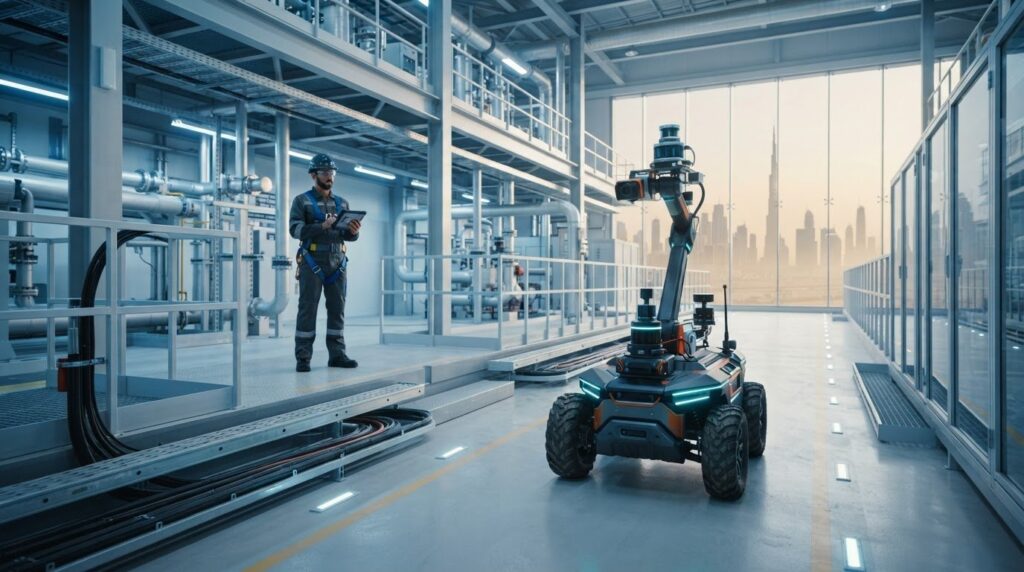
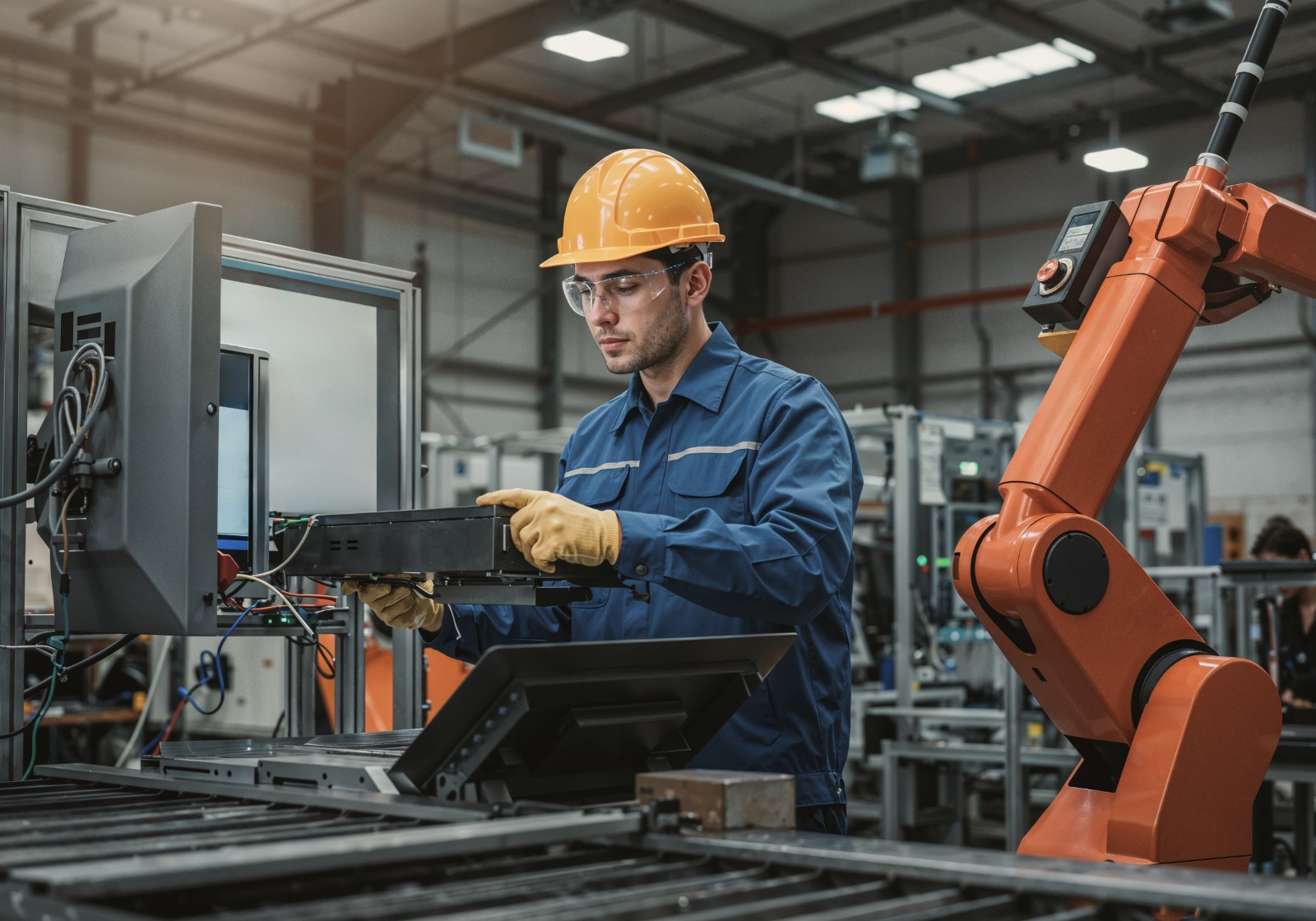
Dangerous and repetitive tasks, such as welding or heavy lifting, are best handled by robots. This reduces workplace injuries and allows human workers to focus on higher-value, creative roles.
Long-Term Cost Efficiency
While upfront costs exist, the ROI of robotics is strong. Robots lower operational costs, reduce downtime, and improve quality leading to substantial long-term savings.
Faster Time-to-Market
With quicker turnaround times and minimal disruption, manufacturers can launch new products faster and respond to changing market needs more efficiently.
- Types of Industrial Robots Driving Automation
A wide variety of robots are transforming factory operations:
- Collaborative Robots (Cobots): Designed to safely work alongside humans without safety cages, ideal for small-batch, flexible manufacturing.
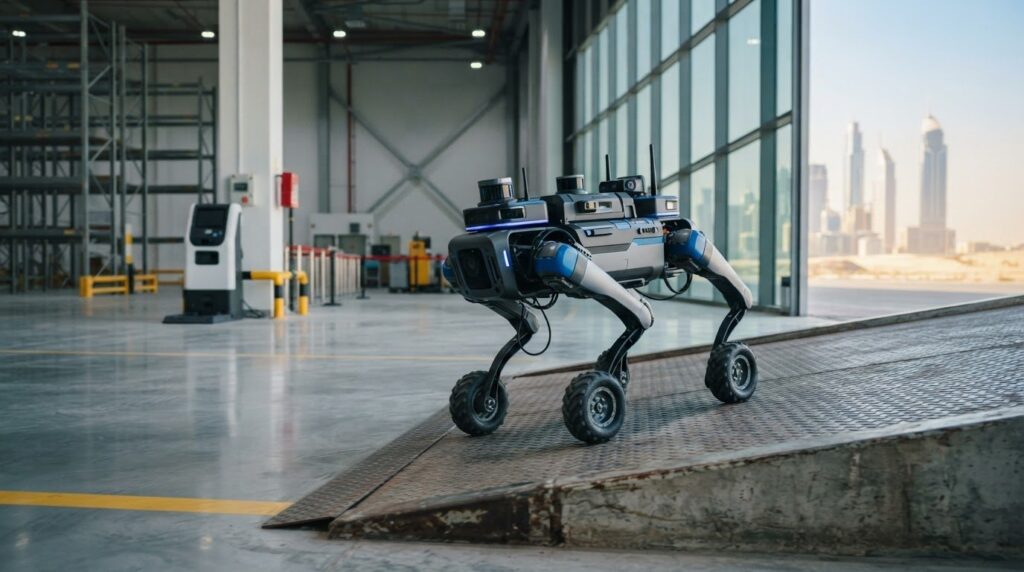
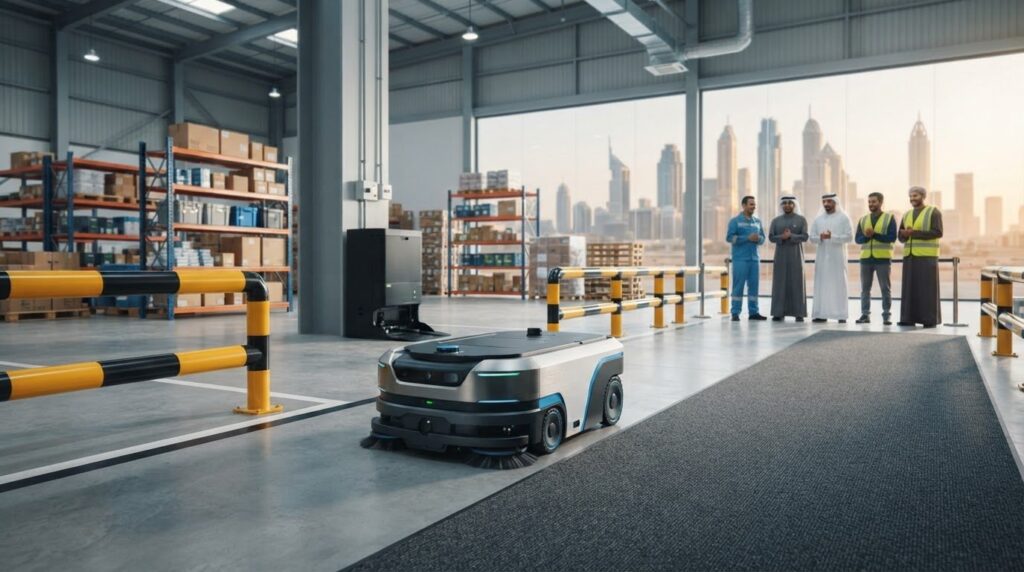
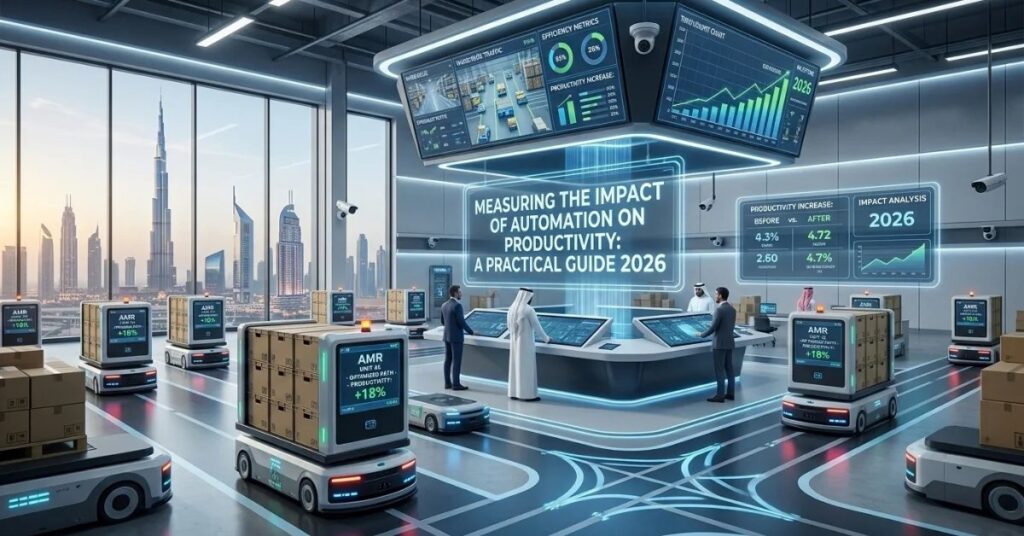
- Autonomous Mobile Robots (AMRs) & AGVs: These transport materials and goods across factory floors with real-time navigation, boosting intralogistics efficiency.
- Articulated Robots & SCARA Robots: Widely used in pick-and-place, assembly, and material handling tasks.
- Robotic Arms (e.g., Kinova Gen3): Ideal for high-precision applications like welding, painting, and inspection. These arms offer scalable payload options and programming flexibility.
At EdNex Automation, we integrate these advanced robotic systems to suit diverse industry applications, from manufacturing plants to educational institutions developing Industry 4.0-ready talent.
- Robotics + AI = Smart Factories
Robotics is powerful. But when combined with AI and IoT, it becomes transformative.
AI-powered robots can:
- Recognize patterns and anomalies using computer vision,
- Make decisions in real-time,
- Self-optimize workflows based on performance data,
- Predict maintenance before breakdowns happen.
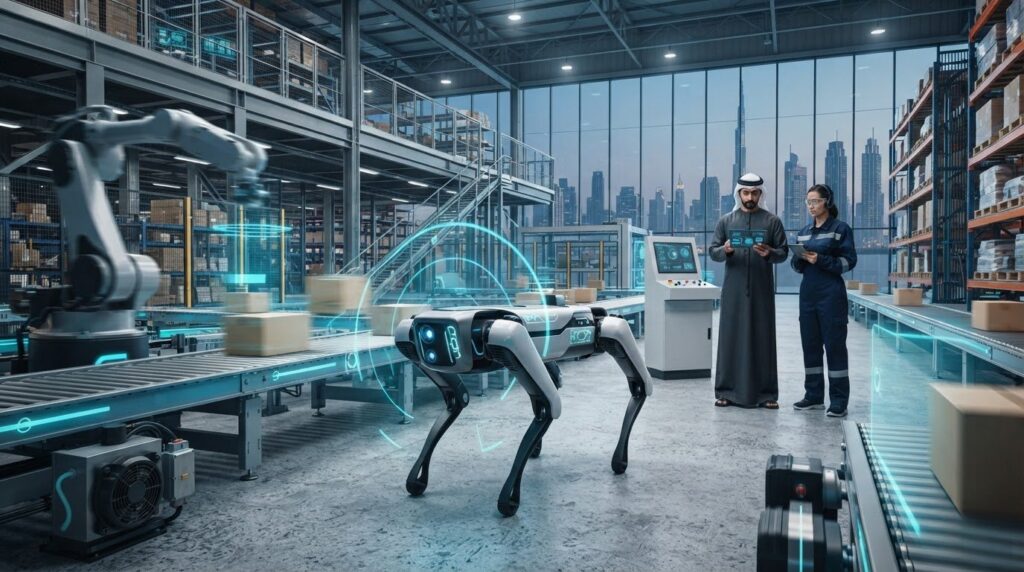
This intelligence is what defines a Smart Factory—an interconnected, data-driven ecosystem where machines, people, and processes communicate seamlessly to drive efficiency, innovation, and agility.
- Real-World Applications by Industry
Let’s explore how different sectors are leveraging robotics:
- Automotive: Robotic welding, assembly lines, and quality inspection for high-volume production.
- Electronics: Delicate PCB assembly and soldering performed with pinpoint precision.
- FMCG: Robotic packaging, sorting, and palletizing enable scalable operations.
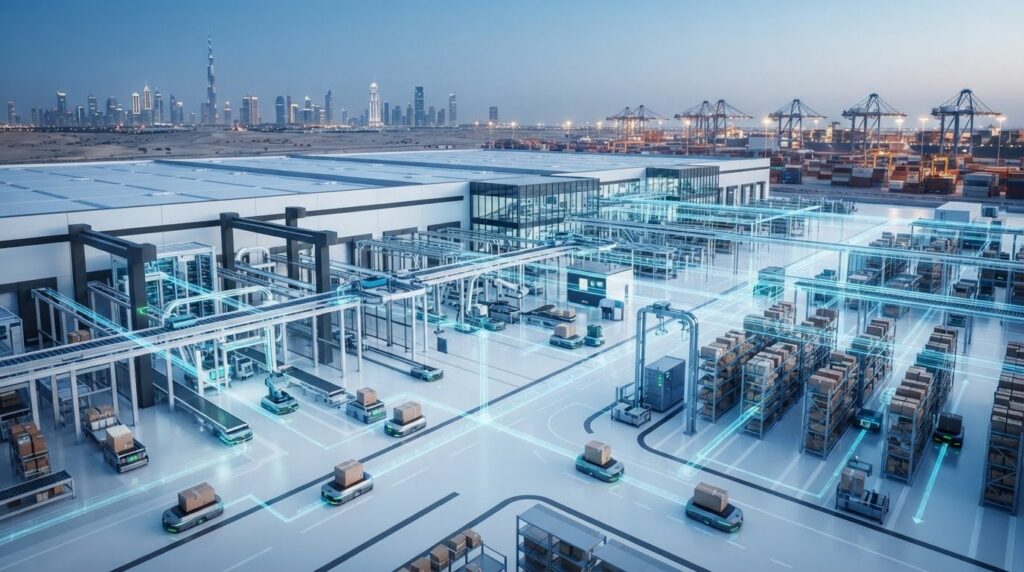
- Logistics & Warehousing: AMRs and robotic arms streamline inventory movement and order fulfillment.
Example: A major logistics client partnered with EdNex Automation to deploy AGVs in their UAE facility—resulting in a 35% reduction in internal transport time and improved operational throughput
- Barriers to Adoption & How to Overcome Them
Despite the clear benefits, some manufacturers still hesitate due to:
- Initial Investment Costs: While implementation requires capital, the long-term ROI often outweighs the expense.
- Integration with Legacy Systems: Upgrading or integrating robotics can be challenging but manageable with the right expertise.
- Lack of Skilled Talent: Robotics requires a trained workforce—which is why many institutions are now embedding robotics education into their programs.
Solution: This is where EdNex Automation comes in as your system integration partner offering end-to-end support, from planning and implementation to training and after-sales service.
Conclusion
Robotics in manufacturing is no longer a future vision it’s the reality driving today’s most successful factories. Whether you’re a multinational manufacturer or an ambitious mid-size operation, investing in industry automation solutions is key to staying competitive in a fast-evolving world.
As robots become more intelligent, more accessible, and more adaptable, now is the time to embrace their potential.