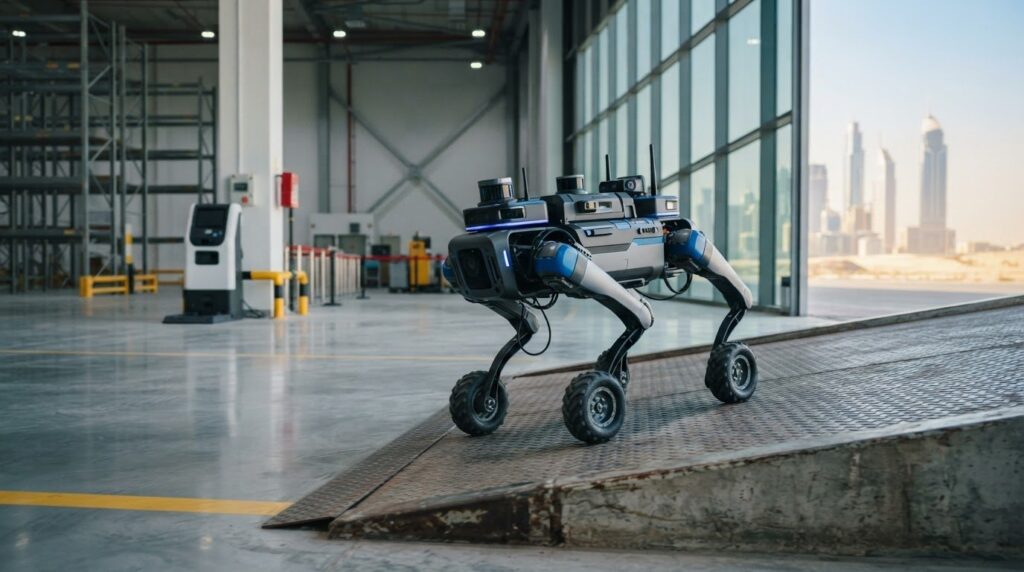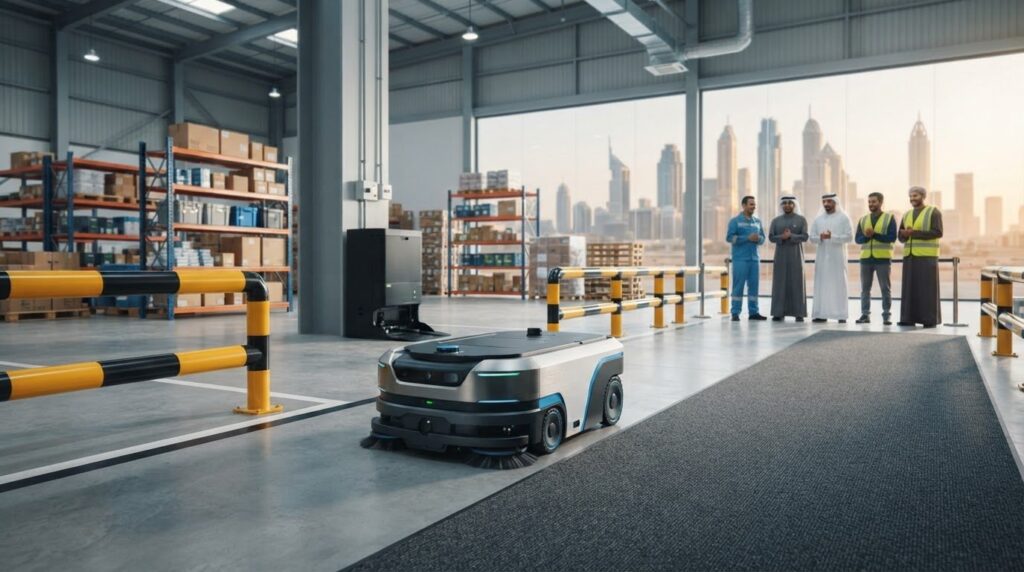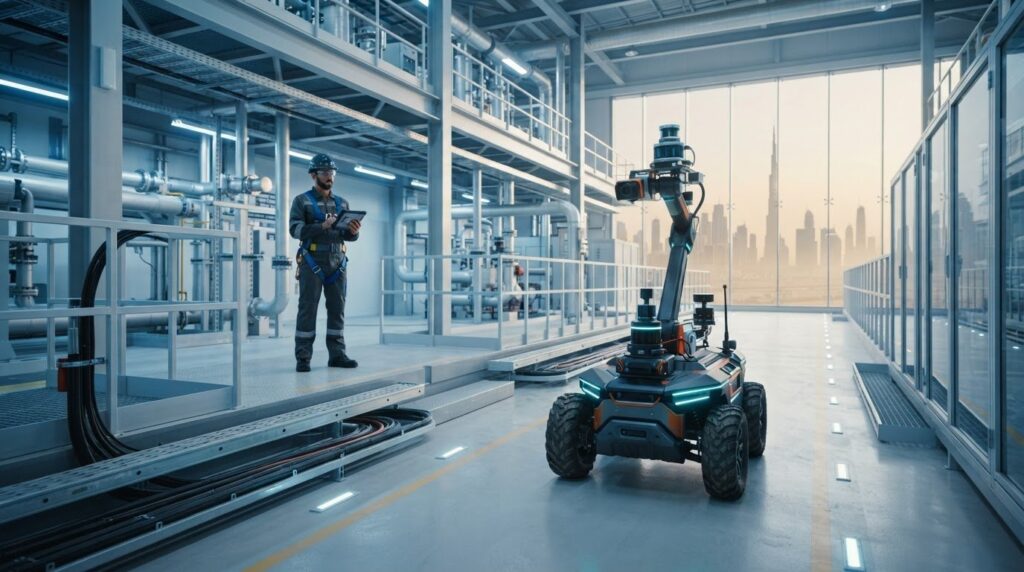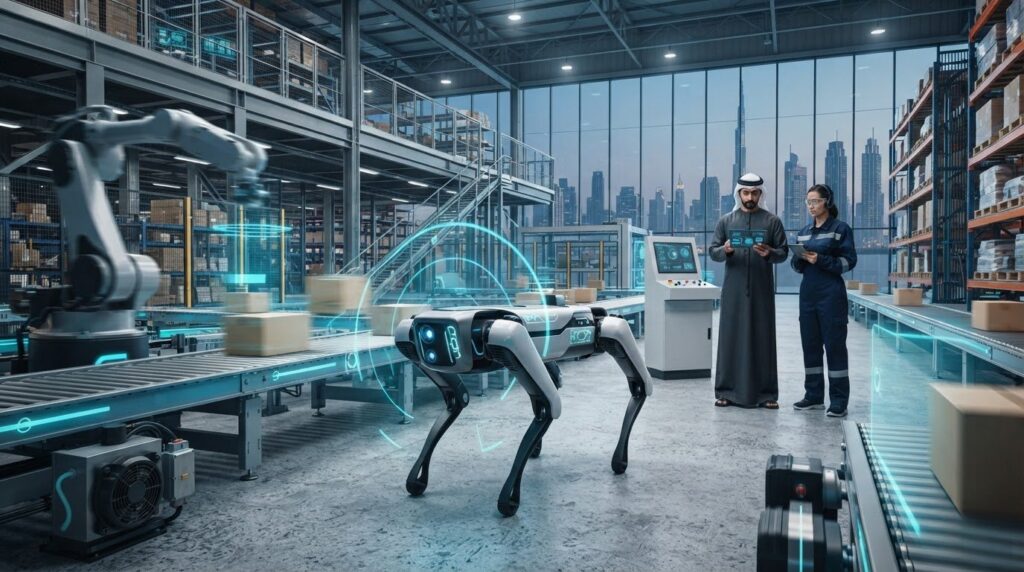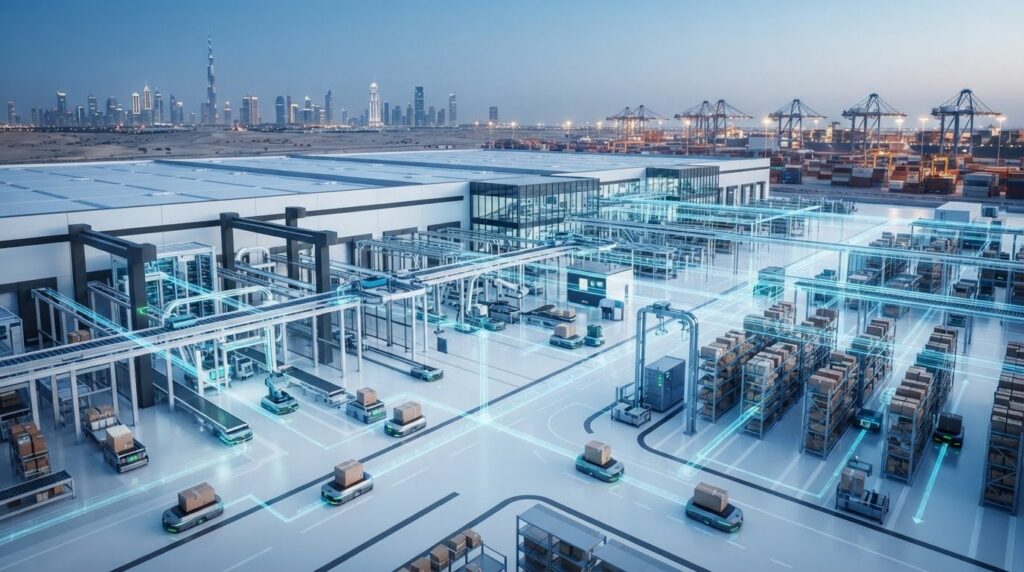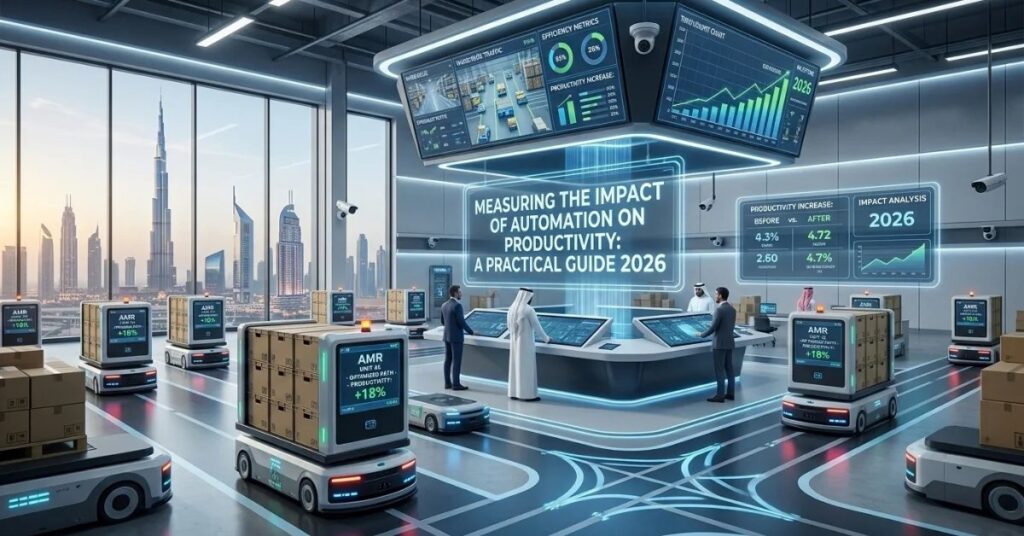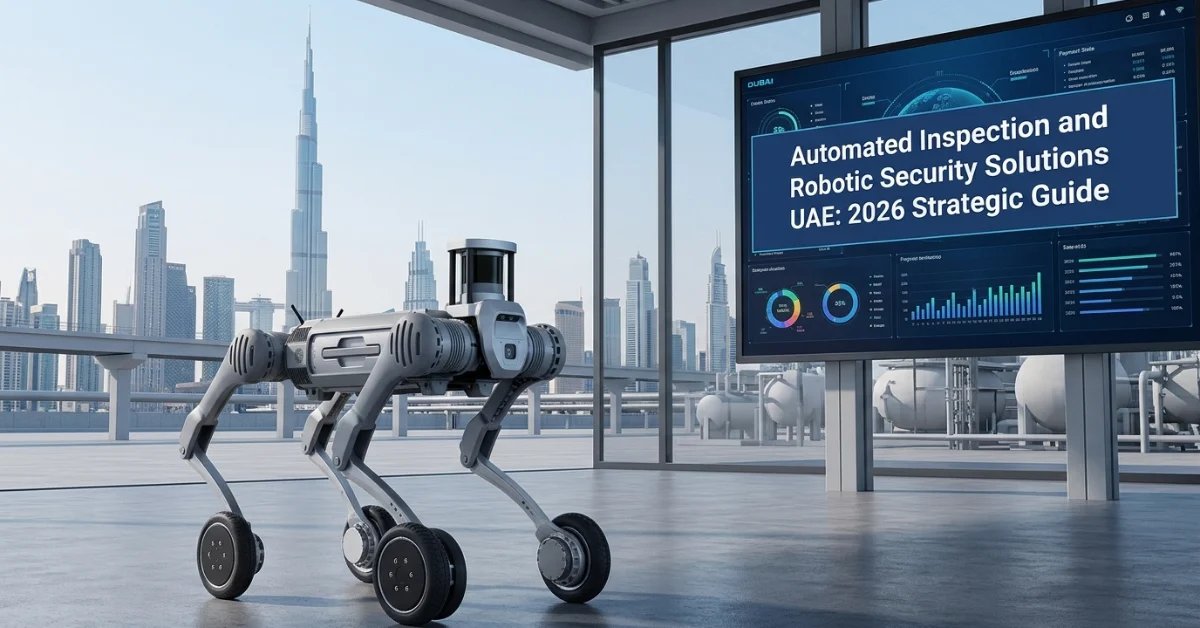
Achieving a zero-defect production environment in the United Arab Emirates requires more than incremental improvements; it demands a fundamental shift toward autonomous, data-driven oversight. You recognize that manual inspection errors lead to unacceptable scrap rates and that traditional surveillance often fails to secure the perimeter of a high-speed industrial facility. Leveraging advanced robotic security solutions UAE, organizations can now bridge the gap between physical security and digital quality control. This strategic guide details how to integrate sophisticated automated inspection systems into your existing PLC and SCADA architecture to optimize throughput and eliminate human error. By aligning your operations with the UAE’s Operation 300bn initiative, you can transform your facility into a model of industrial transparency and long-term viability. We’ll examine the technical frameworks for real-time dashboards and seamless MES integration, ensuring your transition to Industry 4.0 is both systematic and highly profitable. Providing the intellectual framework for this transformation, we explore how autonomous mobile robots and surveillance systems act as critical data nodes within a unified ecosystem.
Key Takeaways
- Transition from reactive quality control to proactive process optimization by leveraging multi-sensor, AI-driven feedback loops that ensure total industrial transparency.
- Identify the critical differences between rule-based precision and AI-driven intelligence to select the most effective robotic security solutions UAE for your specific manufacturing requirements.
- Learn how to integrate inspection robots as active data nodes within your PLC and SCADA infrastructure to enable automated parameter adjustments and real-time quality monitoring.
- Master the deployment of 3D metrology and deep learning systems to detect complex cosmetic defects and security gaps that traditional 2D imaging frequently overlooks.
- Follow a strategic roadmap for implementation in the UAE market, starting with a vision audit to pinpoint high-value ROI zones within your facility.
The Evolution of Quality and Security: Why Automated Inspection is Mandatory
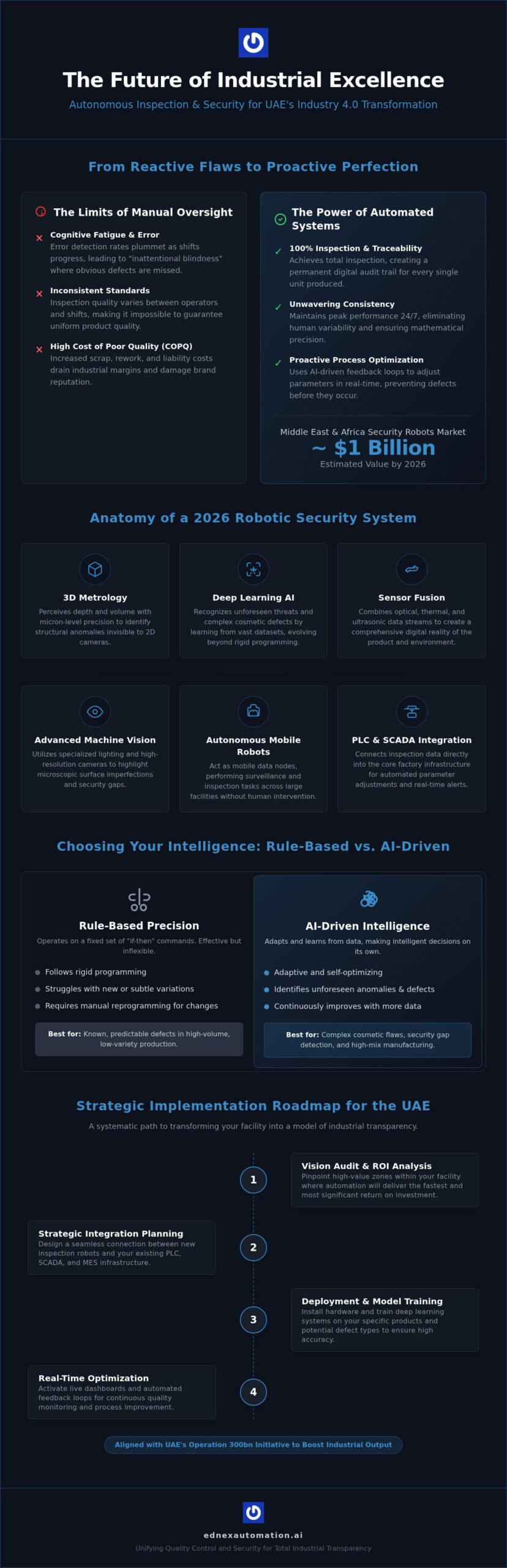
Driving the next wave of industrial excellence, automated inspection has transcended simple visual checks to become a multi-sensor, AI-driven feedback loop. This technological shift represents a move from reactive quality control, where defects are caught after production, to proactive, real-time process optimization. Integrating advanced robotic security solutions UAE into the factory floor ensures that security and quality are no longer siloed functions; they are unified data streams that inform the entire production cycle. As the Middle East and Africa security robots market reaches an estimated value of د.إ3.67 billion ($1 billion) in 2026, the transition toward autonomous oversight is becoming a prerequisite for regional competitiveness. This evolution is particularly critical as the UAE’s Operation 300bn initiative pushes manufacturers to adopt high-precision, digital-first methodologies that minimize waste and maximize output.
Manual inspection standards naturally drift across shifts as human operators face fluctuating energy levels and environmental distractions. In high-speed production environments, the cognitive load required to identify microscopic defects or subtle security breaches exceeds human capacity. This creates a labor gap that traditional hiring cannot fill. By deploying intelligent systems, facilities achieve a level of consistency that is mathematically impossible for manual teams to sustain. These systems don’t just “look” at a product; they analyze it against vast datasets to ensure every unit meets an exact digital twin specification.
Overcoming the Limitations of Manual Inspection
Analyzing human fatigue reveals a stark reality: error detection rates plummet as production lines accelerate. When operators are tasked with repetitive visual monitoring, cognitive saturation leads to “inattentional blindness,” where obvious defects are simply not processed by the brain. This failure contributes to a high Cost of Poor Quality (COPQ), a hidden drain on industrial margins that includes scrap, rework, and potential liability. Automated systems eliminate this variability, maintaining peak performance regardless of shift length or line speed. They provide the reliable intellectual framework needed to scale operations without a proportional increase in quality-related risks.
Meeting Modern Regulatory and Compliance Standards
Achieving 100% inspection rates is now a baseline requirement for high-stakes sectors like pharmaceuticals and aerospace. Utilizing Automated optical inspection (AOI) allows manufacturers to create a permanent digital record for every unit produced, ensuring total traceability. This digital audit trail is essential for complying with 2026 industrial standards and meeting the stringent requirements of global export markets. By implementing robust robotic security solutions UAE, organizations don’t just meet current regulations; they future-proof their operations against evolving cybersecurity and information assurance mandates, such as the UAE’s National Cyber Accreditation Programme (NCAP).
Core Technologies: The Anatomy of a 2026 Robotic Security System
Deploying a modern industrial ecosystem requires a sophisticated architecture where hardware and intelligence converge. By 2026, the standard for excellence has shifted from simple 2D imaging to high-resolution 3D metrology, allowing systems to perceive depth and volume with micron-level precision. This transition ensures that robotic security solutions UAE can identify structural anomalies that were previously invisible to traditional cameras. Utilizing sensor fusion, these systems combine optical, thermal, and ultrasonic data to generate a comprehensive digital reality, providing total transparency across complex infrastructure. Training these units through deep learning allows them to recognize unforeseen threats and defects, evolving beyond rigid programming into adaptive intelligence.
Advanced Machine Vision and Optical Sensors
Achieving total industrial clarity begins with specialized lighting configurations designed to eliminate shadows and highlight surface imperfections. Integrating hyperspectral imaging further enhances this capability, enabling material integrity checks that verify chemical consistency without physical contact. Operating at maximum production line velocity, high-speed capture systems maintain accuracy by processing thousands of data points per second. This level of precision is vital for maintaining a robust privacy and security infrastructure within the facility, ensuring that every visual data point is authenticated and secure.
Robotics and Autonomous Inspection Units
Deploying inspection robots allows for the oversight of non-linear production environments where fixed sensors cannot reach. These units navigate complex geometries, ensuring that every angle of a component is verified against its digital twin. Similarly, collaborative robots (cobots) assist human operators in complex assembly verification, acting as a secondary layer of high-precision validation. In large-scale logistics, Autonomous Mobile Robots (AMRs) serve as flexible quality checkpoints, patrolling vast areas to identify security gaps or environmental hazards before they escalate into operational failures.
Integrating these diverse technologies into a single, cohesive framework is essential for long-term operational resilience. Organizations looking to modernize their infrastructure should consider how a bespoke Industry 4.0 integration strategy can eliminate existing bottlenecks and secure their competitive standing. By moving beyond standalone hardware, you create a synergistic network that responds dynamically to the demands of a high-speed industrial landscape.
Comparing Methodologies: Rule-Based vs. AI-Driven Security Intelligence
Selecting the optimal methodology for industrial oversight requires a nuanced understanding of how different algorithmic approaches interact with physical production challenges. While earlier sections established the core technologies, the strategic value lies in choosing between rule-based precision and AI-driven adaptability. Rule-based systems provide the mathematical certainty necessary for high-precision measurement and fixed-geometry checks, ensuring that every component adheres to rigid dimensional tolerances. Conversely, AI-driven intelligence excels at identifying cosmetic defects and organic variations that defy simple programming. For organizations implementing robotic security solutions UAE, the gold standard in 2026 is a hybrid architecture that leverages the strengths of both paradigms. This integrated approach allows for the simultaneous verification of exact measurements and the classification of complex surface anomalies within a single, unified inspection cycle.
Solving the rare defect problem, synthetic data generation has become a cornerstone of modern AI training. It allows engineers to create thousands of photorealistic digital twins of potential defects, training models to recognize threats that haven’t yet occurred in the physical plant. This proactive training ensures that your security and quality systems aren’t just reacting to past failures but are prepared for future contingencies. By bridging the gap between mathematical rules and cognitive-like recognition, manufacturers achieve a level of industrial transparency that was previously unattainable.
When to Choose Traditional Machine Vision
Traditional machine vision is indispensable in high-speed pass/fail environments where logic is based on simple geometric shapes or barcode verification. These systems offer the low-latency processing required for high-volume packaging lines where AI processing overhead would create unnecessary bottlenecks. Utilizing traditional vision for OCR and label verification ensures that every unit is tracked accurately without the need for complex model retraining. It’s the reliable choice for standardized tasks where the parameters are fixed and the tolerance for processing delay is zero.
The Power of Deep Learning in Defect Classification
Deep learning transforms how systems detect scratches, dents, and texture anomalies on complex surfaces that vary under different lighting conditions. By reducing false rejects through iterative reinforcement, these models learn to distinguish between harmless material variations and critical defects. This adaptability is essential for modern production lines that handle multiple product types, as it allows the system to adjust to new variations without reprogramming the entire control architecture. It empowers your robotic security solutions UAE to provide a more sophisticated layer of intelligence that mirrors human judgment but operates with robotic consistency.
Strategic Integration: Connecting Inspection to PLC and SCADA Infrastructure
Achieving total industrial transparency requires transforming standalone hardware into high-functioning data nodes. By feeding quality metrics directly into a centralized SCADA dashboard, organizations monitor Overall Equipment Effectiveness (OEE) in real-time. This level of connectivity enables closed-loop control. Here, inspection data automatically triggers adjustments in PLC parameters to correct process drift before defects occur. Deploying robotic security solutions UAE within this integrated framework ensures that every quality anomaly is logged and acted upon without human delay. To maintain maximum processing speed, we utilize edge computing for local vision datasets, while the cloud handles long-term benchmarking and global trend analysis.
Protocol Standardisation and Interoperability
Establishing a common language between disparate systems is the foundation of a reliable automation architecture. Utilizing protocols like OPC UA and MQTT within our PLC and SCADA integration services ensures data flows securely from vision sensors to line controllers. This interoperability is vital when bridge-building between legacy hardware and modern inspection platforms. It allows older facilities to modernize without a complete rip-and-replace strategy. Low-latency communication ensures a “reject” signal reaches the actuator in milliseconds. This prevents defective units from progressing through the production line and reduces waste.
Data Visualisation and Predictive Quality
Building intuitive HMI layouts allows teams to interpret complex data streams at a glance, facilitating faster decision-making. By analyzing historical inspection data, these systems predict machine failure or tool wear before it impacts output. This transitions the facility from preventive to predictive maintenance. When a defect is identified, the system automatically integrates with automated storage and retrieval systems (ASRS) to route compromised units into secure quarantine zones. This automated management protects brand integrity and ensures only perfect products reach the consumer. To optimize your facility’s connectivity, partner with our expert integration team to build a future-ready infrastructure.
Implementation Roadmap: Deploying Robotic Security Solutions in the UAE
Deploying a sophisticated industrial framework requires a methodical transition from conceptual vision to operational reality. Commencing with an initial feasibility and vision audit, organizations must identify high-value ROI zones within their facility where automation can deliver the most immediate impact. This phase involves a comprehensive analysis of existing bottlenecks and the identification of critical data nodes that require autonomous oversight. Establishing a bespoke system design follows, ensuring that hardware configurations and AI models are precisely matched to the unique demands of specific industrial sectors. By integrating robotic security solutions UAE at this foundational level, manufacturers create a scalable architecture that supports long-term business viability and Industry 4.0 readiness. Pilot testing then utilizes synthetic data generation to prepare systems for rare defect detection, ensuring the AI is fully trained before full-scale integration begins.
Bespoke Solutions for National Industrial Sectors
Designing for the UAE’s specific economic landscape involves addressing environmental extremes and stringent regulatory requirements. In the Oil and Gas sector, we deploy specialized sensors engineered to withstand harsh, high-temperature environments, providing reliable oversight where traditional equipment fails. For high-volume logistics, the focus shifts toward integrating inspection protocols with autonomous mobile robots to create a fluid, mobile quality control network. Meanwhile, the Food and Pharma sectors demand strict serialization compliance and hygiene-focused hardware designs to maintain international export standards. These sector-specific applications ensure that the technology serves the precise operational needs of the facility rather than imposing a generic solution.
The EdNex Automation Advantage: Local Expertise, Global Technology
Navigating the complexities of industrial transformation requires a partner who acts as a systematic organizer, connecting global technological breakthroughs with regional needs. Accessing certified technical support across the entire national territory ensures that your transition is supported by experts who understand the gravity of large-scale infrastructure projects. We provide the intellectual framework necessary for full-scale integration, moving beyond simple tool delivery to comprehensive workforce training. This approach guarantees that your team is prepared to manage advanced robotic security solutions UAE, securing your competitive standing in an increasingly autonomous global market. Utilizing modular, scalable automation allows your facility to evolve alongside technological progress, ensuring that your investment remains a cornerstone of your operational strategy for years to come.
Securing the Future of Autonomous Industrial Oversight
Transitioning to an autonomous industrial ecosystem is no longer a choice but a necessity for maintaining a competitive edge in the Middle East. By unifying high-precision inspection with robust robotic security solutions UAE, manufacturers can achieve unprecedented levels of operational transparency and quality assurance. This strategic evolution depends on the seamless integration of multi-sensor data into existing control architectures, ensuring that every quality node informs the broader production cycle. As the UAE industrial sector accelerates toward its 2030 objectives, your ability to scale through modular, AI-driven oversight will define your long-term viability. Ensuring your transition is systematic and deliberate, we provide the intellectual framework required to bridge the gap between global innovation and regional application. Our team offers visionary Industry 4.0 consultancy backed by global technology alliances and national support. To begin your transformation, partner with EdNex Automation for a comprehensive industrial audit that aligns your facility with the highest standards of PLC and SCADA integration. It’s time to transform your production line into a self-optimizing engine of growth.
Frequently Asked Questions
What is the typical ROI for an automated inspection system?
ROI for automated inspection systems typically materializes within 12 to 24 months, depending on production volume and the complexity of the assembly. By reducing scrap rates and eliminating manual oversight costs, facilities realize significant operational savings. These systems also mitigate the risk of expensive product recalls and brand damage. Investing in robotic security solutions UAE ensures long-term business viability by protecting high-value industrial assets through continuous, autonomous monitoring and defect prevention.
Can robotic security solutions be integrated with legacy PLC hardware?
Integration with legacy PLC hardware is achievable through specialized bridge-building modules and protocol converters such as OPC UA gateways. These interfaces allow modern inspection nodes to communicate with older control architectures without requiring a total system overhaul. This methodical approach ensures that existing infrastructure remains functional while benefiting from advanced data analytics. By connecting legacy assets to a unified SCADA dashboard, organizations achieve a balanced modernization strategy that respects previous capital investments.
How does AI-driven inspection handle new types of defects it hasn’t seen?
AI-driven systems utilize unsupervised learning models to identify anomalies that deviate from the established digital twin, even if the specific defect type is new. Rather than relying solely on pre-programmed rules, the intelligence flags any variation in texture, color, or geometry as a potential threat. Synthetic data generation further prepares these models by simulating rare failure modes. This proactive capability ensures your facility remains protected against emerging quality issues and unforeseen security breaches.
What is the difference between machine vision and automated visual inspection?
Machine vision refers to the underlying technology, including sensors and algorithms, whereas automated visual inspection is the specific industrial application of that technology for quality control. While machine vision provides the “eyes” and processing power, the inspection process integrates these tools into a production line to make pass/fail decisions. Both components are essential for comprehensive robotic security solutions UAE, providing the intellectual framework necessary for autonomous, high-speed verification in complex manufacturing environments.
How do high-speed production lines maintain inspection accuracy?
Maintaining accuracy at maximum velocity requires high-speed global shutter cameras and synchronized strobed lighting to eliminate motion blur. These systems process visual data at the edge, ensuring that latency doesn’t impact the line’s throughput. By utilizing specialized optics and high-intensity illumination, the system captures micron-level details in milliseconds. This ensures that even on lines producing thousands of units per hour, every single item is verified against its exact design specifications.
Is it possible to inspect internal components without disassembling the product?
Inspecting internal components without disassembly is possible through non-destructive testing technologies like X-ray, thermal imaging, or ultrasonic sensors. These sensors penetrate the outer casing to verify internal alignment, solder joint integrity, or the presence of hidden contaminants. Integrating these multi-sensor streams into your robotic architecture provides total transparency into the product’s structural health. This capability is critical for sectors like aerospace and electronics, where internal failures can lead to catastrophic operational risks.
What environmental factors affect robotic security sensors in the UAE?
Industrial sensors in the UAE must account for extreme ambient temperatures, high humidity, and airborne particulates like fine desert dust. Utilizing IP67-rated enclosures and active cooling systems ensures that robotic security sensors maintain peak performance in these harsh conditions. Specialized optical coatings are often applied to prevent dust accumulation on lenses, which could otherwise degrade image quality. Addressing these regional challenges is essential for maintaining a reliable and durable autonomous security perimeter.
How does automated inspection improve Overall Equipment Effectiveness (OEE)?
Automated inspection directly enhances OEE by optimizing the Quality and Performance pillars of the metric. By identifying defects in real-time, the system prevents the production of scrap, thereby increasing the quality ratio. Additionally, because automated systems don’t suffer from fatigue or shift-change delays, they maintain a consistent performance rate. Feeding this data into a SCADA system allows for predictive maintenance, which reduces unplanned downtime and further boosts overall equipment availability.