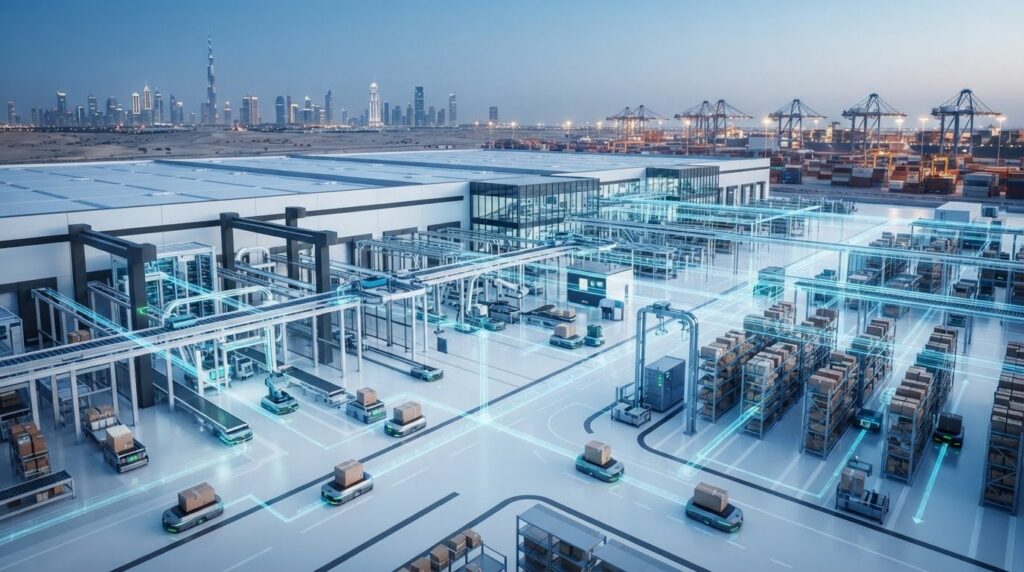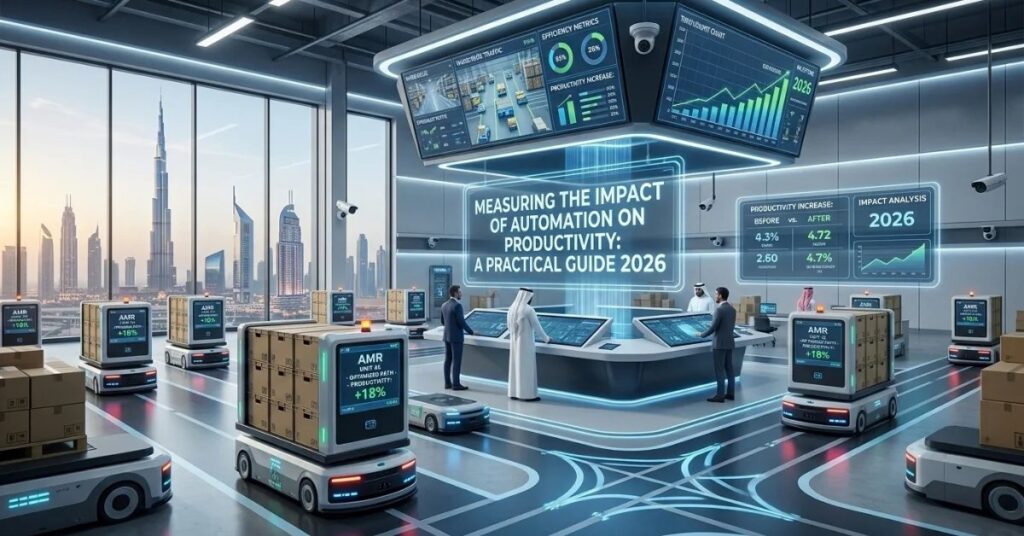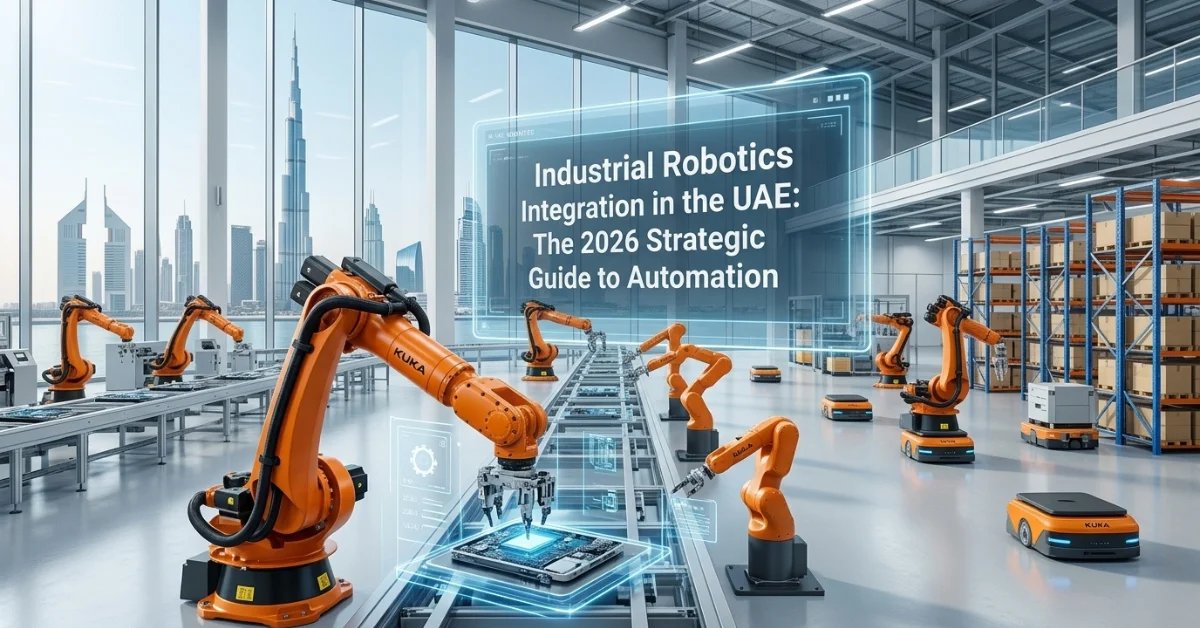
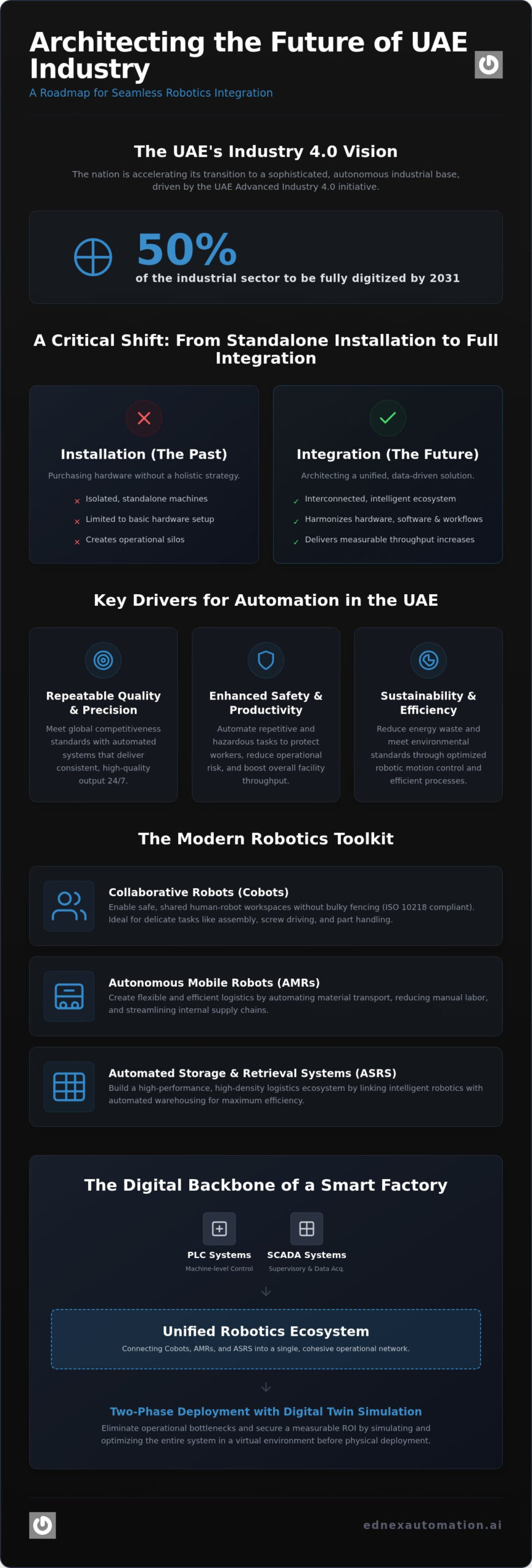
By 2031, the UAE Ministry of Energy and Infrastructure aims to have 50 percent of the nation’s industrial sector fully digitized. This ambitious target places immense pressure on local manufacturers to evolve or risk obsolescence in an increasingly autonomous global market. Achieving this level of sophistication requires a shift from viewing machines as isolated tools to seeing them as part of a unified ecosystem.
You likely understand that the transition to a smart facility involves more than just unboxing hardware. The anxiety surrounding high initial investments and the technical complexity of linking physical robots with existing PLC or SCADA systems can be daunting. It’s a challenge that demands a sophisticated technical partner who understands the gravity of large scale industrial transformation and the necessity of long term business viability.
This strategic guide provides the framework needed to architect a high performance automated facility through the seamless industrial robotics integration UAE requires for 2026. We’ll outline a unified automation roadmap that covers everything from Collaborative Robots (Cobots) and Autonomous Mobile Robots (AMRs) to Automated Storage and Retrieval Systems (ASRS). You’ll discover how to increase throughput and reduce operational risk while maintaining strict compliance with international safety and UAE industrial standards.
Key Takeaways
- Learn how to transition from manual labor to high-value automated manufacturing by synchronizing physical hardware with digital workflows.
- Understand the strategic deployment of collaborative robots and autonomous mobile robots to create safe, efficient, and shared workspaces.
- Discover the essential role of PLC and SCADA systems in providing the digital backbone for successful industrial robotics integration UAE facilities require for 2026.
- Master a two-phase deployment roadmap that utilizes digital twin simulations to eliminate operational bottlenecks and secure a measurable return on investment.
- Explore how linking automated storage and retrieval systems with intelligent robotics creates a unified and high-performance logistics ecosystem.
The Landscape of Industrial Robotics Integration in the UAE (2026)
The year 2026 marks a pivotal era for the Emirates as the nation accelerates its transition from traditional production methods to a sophisticated, autonomous industrial base. This evolution is driven by the UAE’s Advanced Industry 4.0 initiative, which seeks to digitize half of the industrial sector by 2031. Within this framework, industrial robotics integration UAE strategies have shifted from deploying standalone machines to architecting interconnected, data-driven ecosystems. A modern Industrial robot is no longer a solitary tool but a node in a larger intelligent network that prioritizes long term business viability. We are witnessing a definitive move from isolated robotic cells to fully integrated smart facilities where every mechanical action is informed by real time operational data.
Understanding the Integration vs. Installation Distinction
Simply purchasing a robotic arm and bolting it to the factory floor is an exercise in installation, not integration. Installation provides the hardware; integration provides the solution. The role of a specialized integrator is to bridge the gap between OEM hardware and the specific operational requirements of a facility. Robotic integration is the harmonious alignment of mechanical precision and digital control. By synchronizing hardware, software, and human workflows, integrators ensure that every movement contributes to a measurable increase in throughput while mitigating operational risks. Successful industrial robotics integration UAE projects focus on the intellectual framework of the implementation rather than just the tools. This process involves sophisticated logic programming and physical layout optimization that an off the shelf purchase can’t provide.
UAE Industrial Trends Driving Automation in 2026
The demand for repeatable quality and precision in UAE manufacturing has never been higher. As the labor market evolves, companies are adopting high tech autonomous solutions to handle repetitive or hazardous tasks. This shift isn’t just about speed; it’s about reliability. Automated systems provide the consistency required for global competitiveness. Sustainability has also become a core pillar of the national agenda. Optimized robotic motion control reduces energy waste, helping facilities meet environmental standards without compromising on output. These trends reflect a broader move toward smart facilities where automation acts as a systematic organizer of complex industrial environments. With over $200 million recently committed to regional robotics bases, the infrastructure for high value manufacturing is now a tangible reality for the region.
Strategic Robotics Categories: Beyond the Traditional Robotic Arm
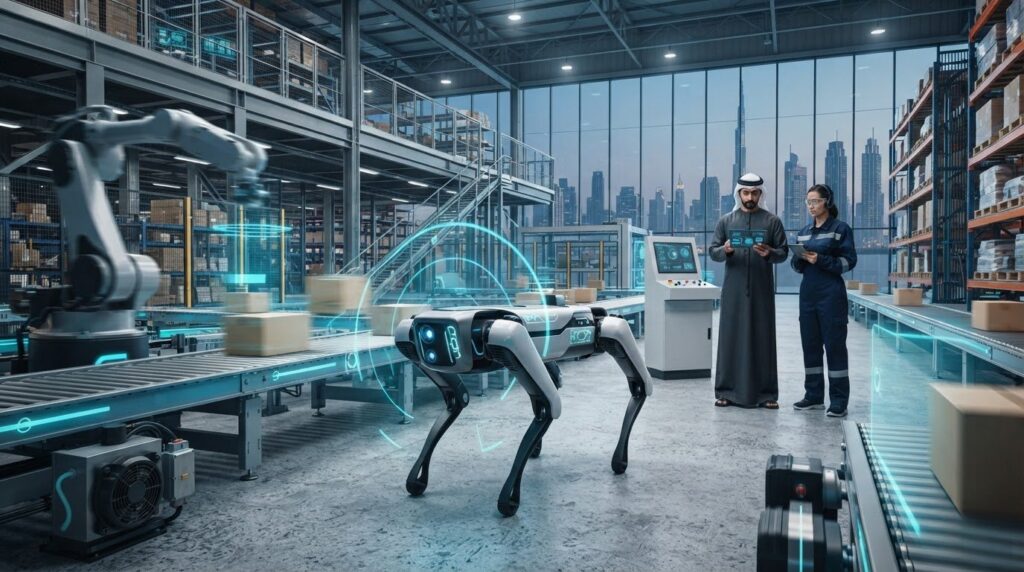
Modern automation is no longer confined to heavy duty 6-axis arms bolted to the factory floor. The landscape of industrial robotics integration UAE facilities now employ has diversified to include mobile, collaborative, and humanoid systems that work alongside human staff. This shift aligns with the national Smart Manufacturing Initiative, which encourages the adoption of versatile technologies that enhance operational flexibility. By moving beyond traditional pick and place applications, organizations can address complex challenges in logistics, hygiene, and security while maintaining a competitive edge in the global market.
Collaborative vs. Traditional Industrial Robots
Integrating collaborative robots (cobots) allows for safe, shared workspaces without the need for bulky safety fencing. These systems comply with ISO 10218 and ISO/TS 15066 safety protocols, utilizing advanced force sensing technology to detect human presence and immediately halt motion. By removing physical barriers, factories can maximize floor space while automating delicate tasks like screw driving, assembly, and part handling. This ‘no-fence’ advantage is particularly valuable in the region’s high density industrial zones where every square meter must be optimized for production efficiency. These robots act as a force multiplier for the existing workforce, taking over repetitive tasks without requiring massive structural changes to the facility.
Mobile Autonomy in Logistics and Warehousing
Material handling has undergone a similar transformation through the deployment of autonomous mobile robots (AMRs). Unlike traditional automated guided vehicles, AMRs utilize LiDAR and SLAM technology to navigate complex environments without fixed infrastructure like magnets or wires. They integrate directly with Warehouse Management Systems (WMS) to provide real time tracking and inventory updates. Scaling these logistics operations involves fleet management software that optimizes paths and reduces transit times, ensuring that material flow remains constant even in fluctuating demand cycles. This level of autonomy eliminates manual handling errors and significantly increases the speed of internal distribution.
Service Robotics: Cleaning and Surveillance
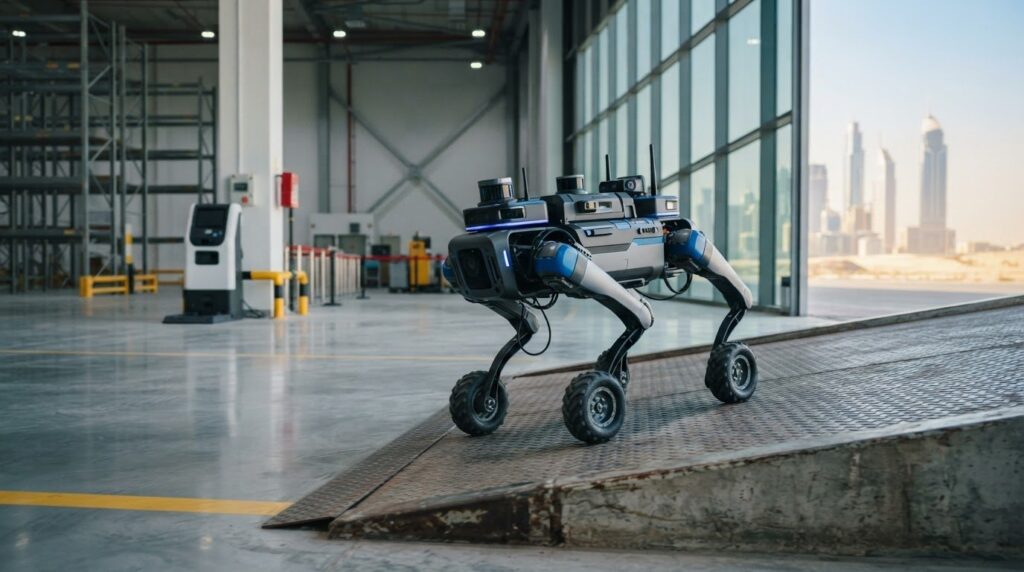
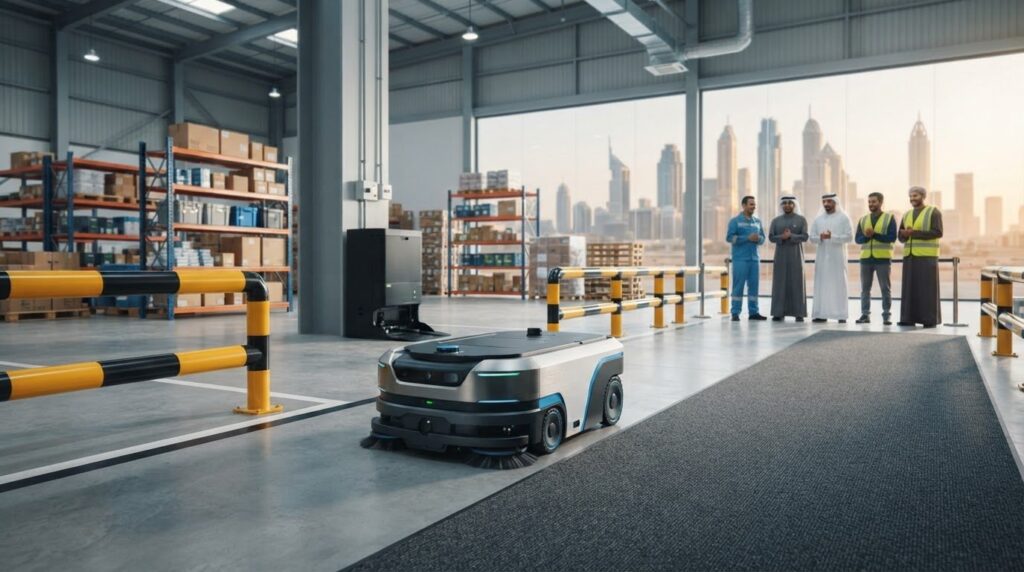
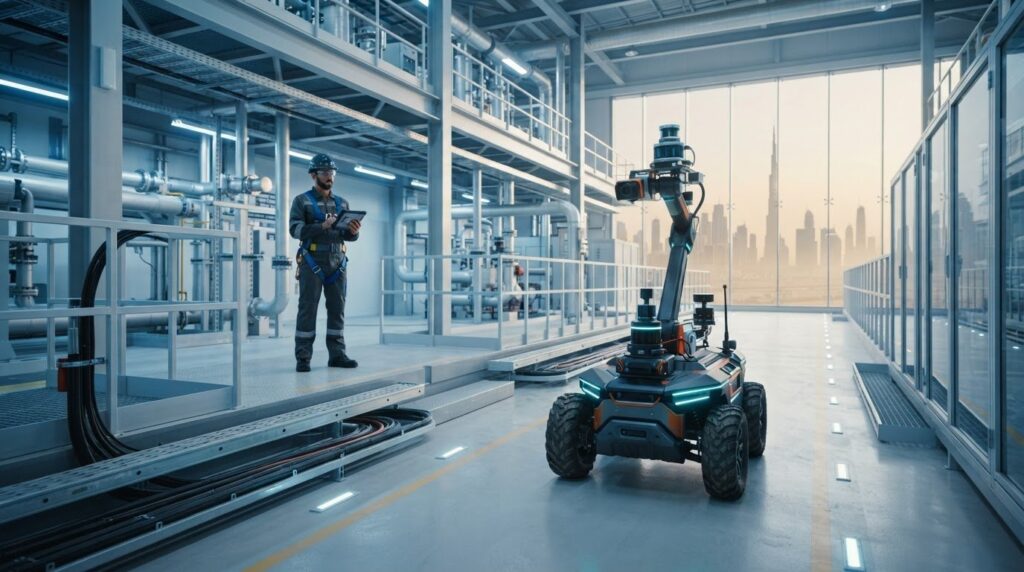
Maintaining facility hygiene is now managed through specialized autonomous cleaning robots. These units automate floor scrubbing and outdoor maintenance, ensuring high traffic zones remain compliant with stringent industrial hygiene standards without increasing labor costs. Beyond cleanliness, the emerging role of humanoid robots and autonomous surveillance units provides a new layer of facility management. These robots perform patrol duties and complex inspections, offering a level of security and data collection previously unattainable through manual observation. To determine which category best suits your specific facility, exploring tailored integration solutions is a necessary step for ensuring long term business viability.
The Digital Backbone: PLC, SCADA, and ASRS Integration
The true power of a robotic facility lies not in the physical movement of its arms but in the intelligence of its control systems. Establishing a robust digital foundation is essential for meeting the goals of the UAE’s “Operation 300bn” industrial strategy, which targets a significant leap in advanced technological contribution to the national GDP. High level PLC and SCADA integration services serve as the critical infrastructure for any robotic cell, ensuring that hardware remains synchronized with factory wide objectives. This digital backbone facilitates the industrial robotics integration UAE leaders require to transform simple production lines into smart, data driven ecosystems.
PLC Programming for Robotic Synchronization
Coordinating robotic motion with peripheral equipment like conveyors, sensors, and actuators requires specialized logic design. Programmable Logic Controllers (PLCs) act as the central nervous system, managing the communication between disparate components to prevent collisions and optimize cycle times. Expert integration involves developing modular and well documented code that simplifies maintenance and allows for rapid re configuration. By embedding comprehensive error handling and emergency stop logic, facilities can minimize downtime and ensure operator safety. This systematic approach to control logic transforms a collection of machines into a single, high performance unit that responds dynamically to operational demands.
ASRS: Maximizing Vertical Space and Robotic Throughput
Integrating automated storage and retrieval systems (ASRS) with robotic production lines creates a seamless flow from raw materials to finished goods. This synergy is particularly effective when linking ASRS units with robotic palletizing systems, allowing for high density storage that maximizes vertical space within UAE facilities. Intelligent retrieval algorithms optimize inventory flow by ensuring the most frequently used items are always accessible. This level of automation reduces cycle times and eliminates the bottlenecks often associated with manual warehousing. Utilizing vertical space allows organizations to scale their operations without expanding their physical footprint, providing a clear path to long term business viability.
Achieving total facility visibility requires the seamless exchange of data across multiple communication protocols, such as Modbus, Profinet, and EtherNet/IP. SCADA systems provide the necessary interface for data visualization, allowing operators to monitor robotic health and throughput metrics in real time. By analyzing this data, managers can identify performance trends and implement predictive maintenance schedules that prevent unexpected failures. This layer of digital intelligence ensures that the industrial robotics integration UAE companies invest in remains viable and competitive over the long term. It’s a strategic evolution that turns raw data into a measurable operational advantage.
A Roadmap to Successful Robotic Deployment in UAE Facilities
Deploying advanced systems requires a systematic organizer who brings order and efficiency to complex environments. Successful industrial robotics integration UAE facilities implement follows a deliberate five phase methodology designed to mitigate risk and maximize throughput. This roadmap ensures that every technological application links directly to a tangible business outcome, moving from initial conceptualization to continuous AI driven optimization. By adhering to a structured deployment plan, organizations can bridge the gap between global technological breakthroughs and regional industrial needs.
The process begins with a technical feasibility study and a rigorous ROI assessment tailored to regional operational costs. Utilizing Digital Twin technology, engineers then simulate workflows to identify potential bottlenecks before any hardware is installed. The subsequent mechanical and electrical integration phase is coupled with rigorous safety commissioning to ensure compliance with international standards. Transition management follows, focusing on workforce upskilling so that human staff can effectively manage the new autonomous systems. Finally, the facility enters a cycle of continuous optimization through AI driven data analytics to maintain peak performance, a goal that can be further optimized by exploring synthetic workforce development and AI agents through navoinc.com.
Achieving a clear return on investment requires looking beyond simple labor cost replacement. True value is found in the substantial gains in quality, safety, and facility uptime. For instance, the deployment of welding robots in the UAE construction sector has demonstrated a 40 percent cost reduction compared to manual labor over a three year amortization period. When calculating these figures, it’s essential to consider that the total cost of ownership (TCO) includes not only the initial purchase price but also long term maintenance and energy consumption. While collaborative robots often offer shorter payback periods due to lower integration complexity, high speed industrial arms provide the massive throughput necessary for large scale manufacturing environments.
Safety Standards and Regional Compliance
Adhering to international safety standards, such as ISO 10218, is a non negotiable requirement within the UAE industrial framework. Identifying potential hazards through comprehensive risk assessments must occur before any robotic deployment begins. In hybrid workspaces where humans and machines interact, integrators must implement a layered safety strategy. This includes the strategic placement of light curtains, area scanners, and pressure mats to create a responsive environment that protects personnel without halting production unnecessarily. Maintaining these high safety standards ensures long term business viability and protects the organization’s most valuable assets. To begin your facility’s transformation with a partner that prioritizes these standards, schedule a technical feasibility assessment today.
EdNex Automation: Your Partner for End-to-End Industrial Transformation
Leading the charge in the region’s industrial evolution, EdNex Automation acts as a pivotal bridge-builder, connecting global technological breakthroughs with the specific demands of regional enterprises. Providing a comprehensive suite of solutions that ranges from visionary humanoid robots to foundational PLC logic, we ensure that every deployment is grounded in technical excellence. Our role as a systematic organizer allows us to bring order, safety, and efficiency to complex environments through controlled and deliberate innovation. By prioritizing the industrial robotics integration UAE facilities need for long-term viability, we move beyond the role of a simple equipment vendor to become a reliable technical partner.
The EdNex Methodology: Consulting Meets Engineering
Our consultative approach ensures that every solution is engineered to solve a specific industrial challenge rather than merely providing generic hardware. Leveraging regional expertise founded in 2018, we manage national-scale automation projects with a palpable sense of confidence and a forward-looking perspective. This methodology combines high-level engineering with strategic consulting to deliver bespoke solutions that align with the UAE’s digital transformation journey. We don’t just implement tools; we provide the intellectual framework necessary for successful digital adoption across the manufacturing and logistics sectors. Our commitment to Industry 4.0 ensures that your facility transitions seamlessly from manual labor to high-value automated manufacturing.
Next Steps: Initiating Your Automation Audit
Initiating your journey toward full autonomy begins with a comprehensive automation audit to identify high-impact opportunities for immediate ROI. Preparing your facility for a robotics feasibility study involves documenting existing workflows and identifying manual bottlenecks that are ripe for modernization. Our technical team provides a bespoke integration roadmap that outlines the transition to advanced autonomy, identifying “low-hanging fruit” where automation can provide immediate operational improvements. By focusing on these high-value targets, organizations can achieve rapid gains in throughput while building the foundation for more complex integrated systems.
Maintaining an edge in a competitive global market requires a commitment to system evolution and future-proofing. Our long-term partnership model includes continuous support, maintenance, and the strategic integration of emerging technologies to ensure your facility remains at the cutting edge of innovation. As the industrial robotics integration UAE projects continue to expand, having a partner that understands the gravity of large-scale transformation is essential for sustained success. This full-service approach ensures that your investment remains a necessary evolution for remaining competitive in the future industrial landscape.
Architecting the Future of Emirati Industry
The transition to a fully autonomous industrial facility isn’t a speculative venture; it’s a strategic necessity for organizations aiming to remain competitive by 2026. This guide has detailed how successful industrial robotics integration UAE facilities implement relies on a unified digital backbone where PLC, SCADA, and ASRS systems work in perfect harmony. By following a structured roadmap from technical feasibility to AI driven optimization, manufacturers can mitigate investment risks and secure measurable returns. We’ve explored the critical shift from isolated robotic cells to integrated ecosystems that prioritize safety, precision, and scalability.
Securing long term business viability requires a partner who provides the intellectual framework for implementation rather than just the tools. EdNex Automation brings specialized Industry 4.0 expertise and national scale deployment capabilities to every project. Our comprehensive portfolio, ranging from autonomous mobile robots to sophisticated control logic, ensures your facility is prepared for the next era of manufacturing. Partner with EdNex Automation for your industrial transformation and begin building your high performance facility today. The path to a smarter, more efficient future starts with a single, deliberate step toward innovation.
Frequently Asked Questions
What is the typical timeline for industrial robotics integration in the UAE?
A typical industrial robotics integration UAE project spans between 12 to 24 weeks depending on the complexity of the digital infrastructure. This period includes initial technical feasibility studies, custom system design, and the rigorous mechanical commissioning of hardware. Larger deployments involving multiple robotic cells or complex ASRS systems may extend beyond this window. Establishing a clear roadmap ensures that each phase, from simulation to workforce upskilling, follows a logical and efficient progression.
Can collaborative robots (cobots) really work safely alongside human operators?
Collaborative robots work safely alongside human operators by utilizing integrated force sensing technology and power limiting features that comply with ISO 10218 standards. These systems are designed to detect human presence and immediately halt motion to prevent injury. Unlike traditional industrial arms that require safety fencing, cobots operate in shared workspaces, allowing for flexible production layouts. This safety profile makes them ideal for delicate assembly tasks where human dexterity and robotic precision must coexist.
How do I ensure my existing machinery is compatible with new robotic systems?
Ensuring compatibility involves a comprehensive audit of your current PLC and SCADA infrastructure to identify communication protocol requirements. Most modern robotic systems support standard protocols like Modbus or Profinet, which allow for seamless data exchange with legacy equipment. If your machinery uses older logic controllers, specialized gateway devices or custom middleware can bridge the gap. This integration ensures that new robotic cells synchronize perfectly with existing conveyors and actuators for unified facility control.
What are the maintenance requirements for autonomous mobile robots (AMRs)?
Maintenance requirements for autonomous mobile robots center on sensor calibration, battery health monitoring, and regular software updates. Since AMRs rely on LiDAR and SLAM technology for navigation, keeping optical sensors clean is critical for preventing operational delays. Mechanical components like drive wheels and lift mechanisms require periodic inspection to ensure long term reliability. Utilizing fleet management software allows for predictive maintenance, identifying potential issues before they lead to unexpected downtime in your logistics chain.
Does industrial automation in the UAE qualify for any government incentives in 2026?
Industrial automation projects in the UAE qualify for several government incentives under the Advanced Industry 4.0 initiative and Operation 300bn. These programs often provide customs duty exemptions on imported robotic components and specialized financing rates for digital transformation projects. Companies operating in free zones may also benefit from 100 percent foreign ownership and long term tax holidays. You’ll need to consult with the Ministry of Energy and Infrastructure to verify current eligibility criteria for your specific industrial sector.
How does SCADA integration help in managing a robotic fleet?
SCADA integration provides a centralized interface for monitoring robotic health and throughput metrics across an entire autonomous fleet. By visualizing real time data, managers can identify performance bottlenecks and optimize path planning for mobile units. This layer of digital intelligence facilitates the industrial robotics integration UAE facilities need to maintain high performance standards. It ensures that every robot, from humanoid units to cleaning systems, operates as a synchronized node within a unified, data driven ecosystem.
What is the first step a company should take when considering robotics integration?
The first step is conducting a technical feasibility study to determine which processes are most suitable for automation based on ROI potential. This assessment identifies “low hanging fruit” where robotic deployment can yield immediate gains in throughput or safety. You must evaluate your existing floor plan and digital infrastructure to ensure the facility can support advanced power and data requirements. Partnering with a specialized integrator at this stage ensures your automation roadmap aligns with long term business objectives.
How do cleaning robots handle large-scale industrial floor plans?
Cleaning robots handle large scale industrial floor plans by utilizing intelligent mapping algorithms and high capacity fluid tanks for autonomous operation. These units are programmed to navigate around permanent fixtures and dynamic obstacles while maintaining consistent coverage across vast surface areas. Outdoor cleaning robots utilize ruggedized chassis and advanced sensors to manage facility perimeters in harsh environments. This automated approach ensures that high traffic zones remain compliant with industrial hygiene standards without requiring constant human supervision.