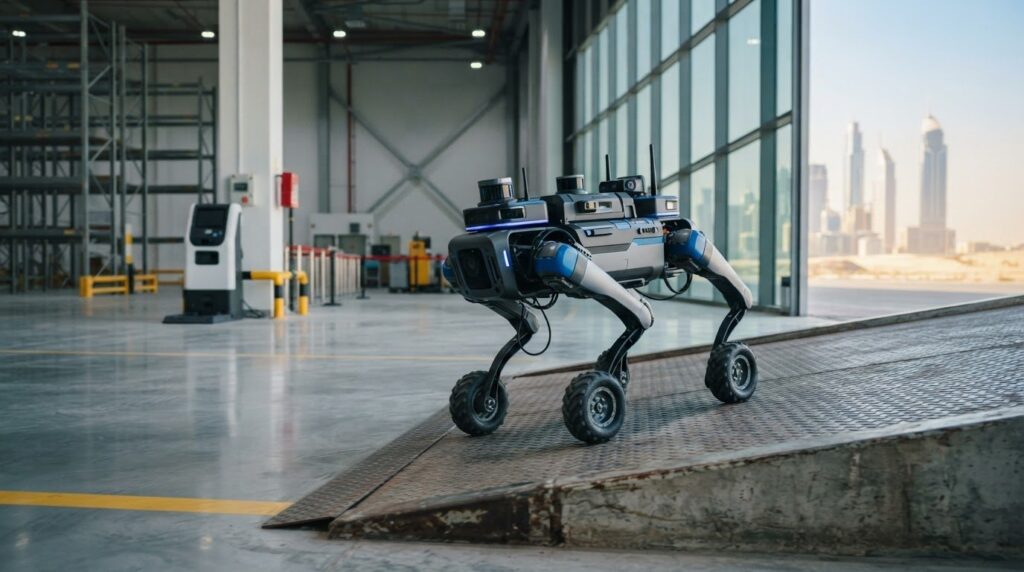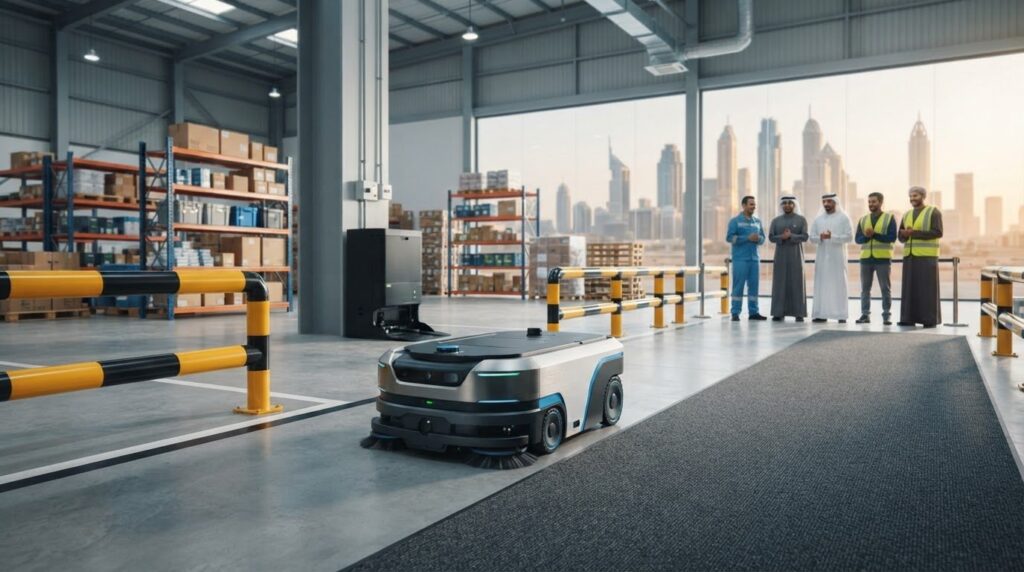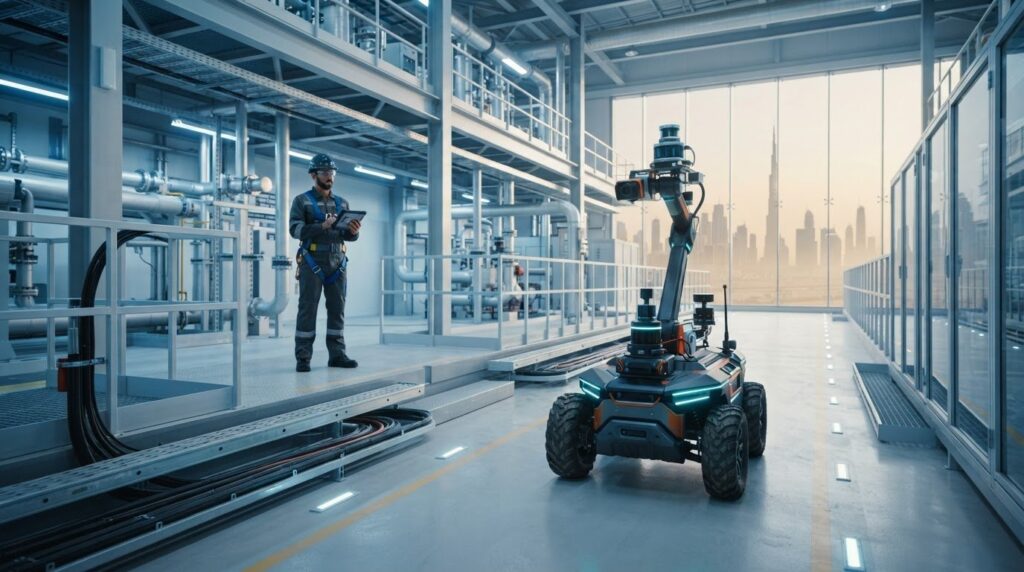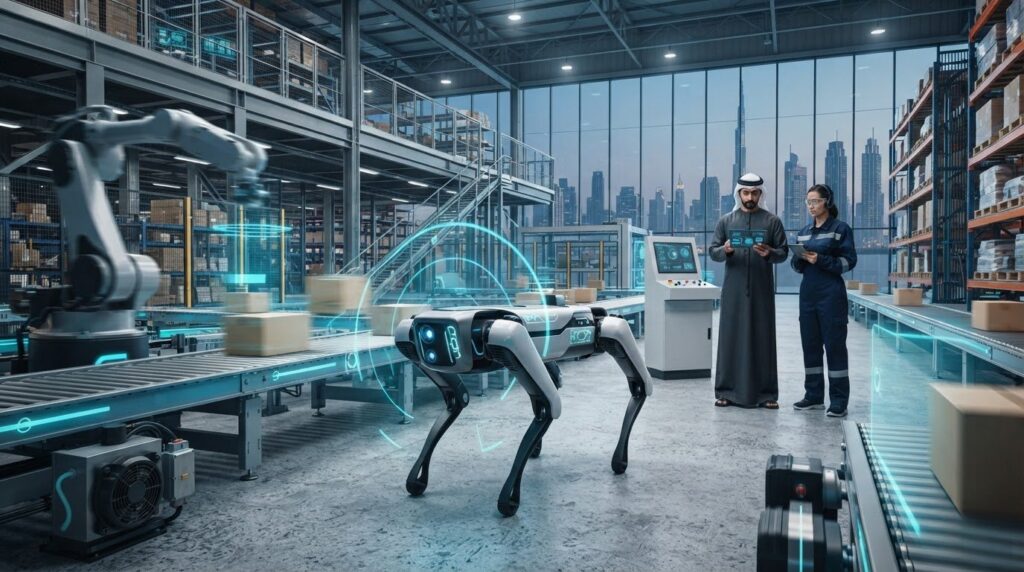
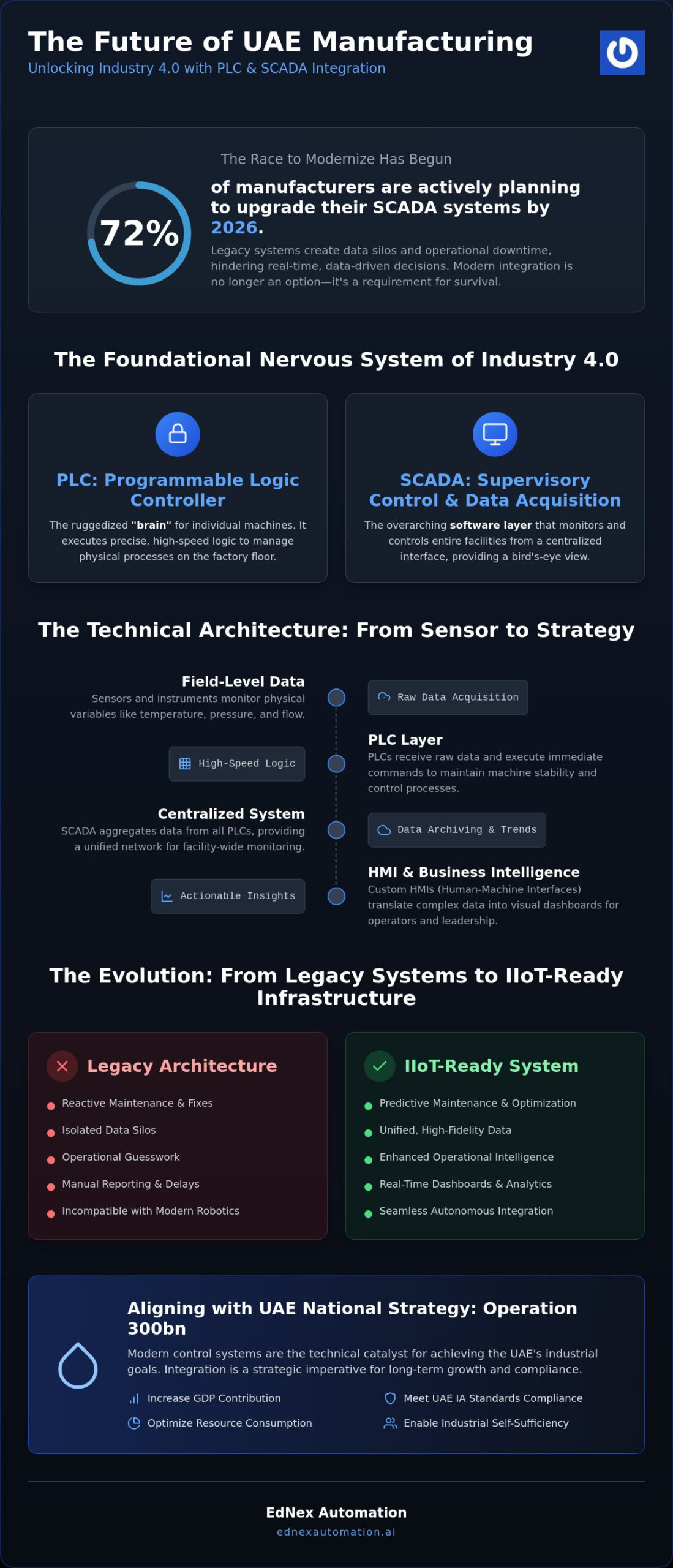
With 72% of manufacturers actively planning to upgrade their SCADA systems by 2026, the race to modernize industrial infrastructure has reached a critical tipping point. Utilizing expert PLC and SCADA integration services UAE is no longer a luxury for regional enterprises; it’s a fundamental requirement for survival in an increasingly autonomous market. You likely recognize the frustration of operational downtime caused by legacy control systems that refuse to communicate with modern robotics. These data silos don’t just hinder floor-level efficiency; they actively prevent leadership from making informed, real-time decisions that impact the bottom line.
This guide explores how advanced PLC and SCADA integration serves as the foundational nervous system for your Industry 4.0 transformation. By bridging the gap between global technological breakthroughs and regional industrial needs, we provide the intellectual framework necessary for high-level implementation. You’ll discover how to achieve seamless data flow from the factory floor to the boardroom while ensuring your operations align with the UAE national industrial strategy, Operation 300bn. We’ll also examine the technical requirements for complying with the UAE Information Assurance Standards as enforcement tightens across the industrial sector.
Key Takeaways
- Discover how aligning industrial control systems with the UAE National Strategy for Industry and Advanced Technology secures your competitive edge and long-term regulatory compliance.
- Understand the technical hierarchy of PLC and SCADA integration services UAE to ensure high-fidelity data acquisition from the factory floor to the boardroom.
- Identify the transition from legacy architectures to IIoT-ready systems that support predictive maintenance and the seamless integration of autonomous robotic solutions.
- Learn the strategic roadmap for implementation, including how to conduct a comprehensive facility audit and define KPIs for measurable operational improvement.
- Explore the benefits of a bespoke integration approach that bridges global technological innovation with specific regional industrial requirements.
The Strategic Role of PLC and SCADA in UAE Industrial Modernisation
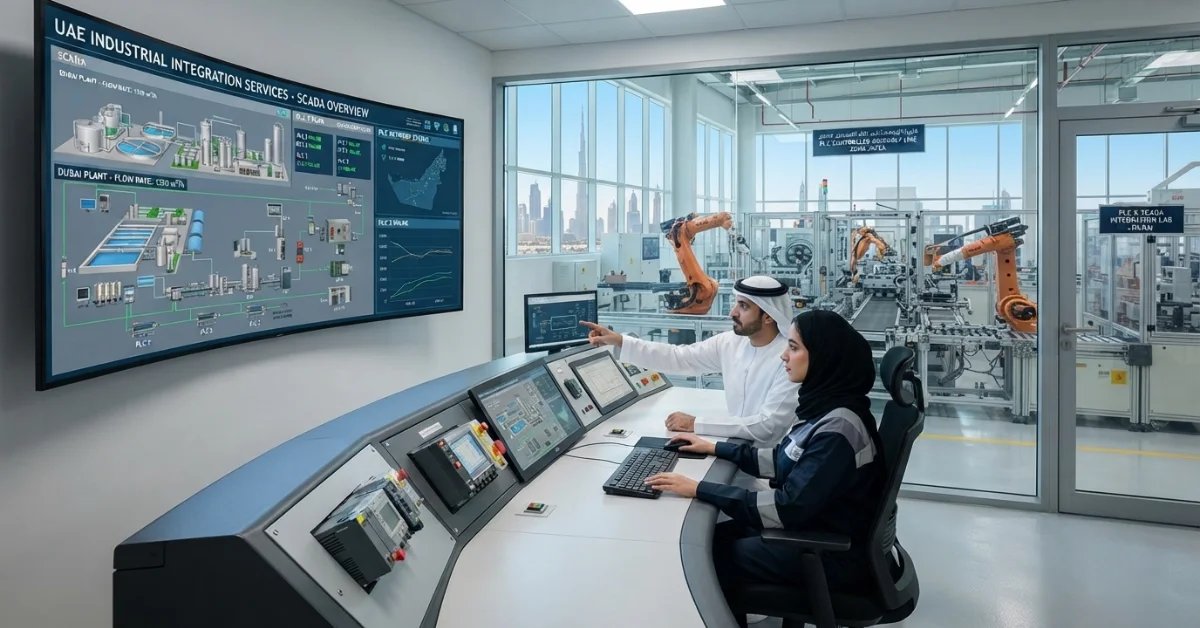
Modern industrial environments in the UAE demand more than just mechanical repetition; they require a sophisticated interplay between field-level execution and high-level supervision. At its core, a Programmable Logic Controller (PLC) functions as the ruggedized brain for specific machinery, executing precise logic to manage physical processes. Complementing this, SCADA (Supervisory Control and Data Acquisition) provides the overarching software layer that monitors and controls entire facilities from a centralized interface. Utilizing professional PLC and SCADA integration services UAE allows manufacturers to transform these isolated components into a unified, high-performance ecosystem. This shift from simple automation to Industry 4.0-driven Smart Manufacturing is essential for organizations aiming to maintain a competitive edge in a digital-first economy.
Real-time data visibility stands as the primary differentiator for regional leaders. By capturing granular metrics at the point of production, businesses can eliminate the guesswork that often plagues legacy operations. This intelligence enables a transition from reactive fixes to proactive optimization, ensuring that every kilowatt of energy and every man-hour is utilized with maximum efficiency. In a region where industrial growth is accelerating, the ability to see and react to floor-level events within milliseconds isn’t just an improvement; it’s a necessity for long-term viability.
Bridging the Gap Between Operational Technology (OT) and IT
The convergence of shop-floor hardware and enterprise-level software represents the next frontier of industrial excellence. Historically, Operational Technology (OT) and Information Technology (IT) existed in separate silos, creating friction in data flow and preventing a holistic view of the business. Modern integration resolves this by using SCADA as a visualization layer for complex PLC logic, translating raw electrical signals into actionable business insights. To further optimize these data streams, you can discover Nodal AI and their advanced analytics platform. Implementing unified communication protocols ensures that a national industrial network can function with total interoperability, allowing for the seamless exchange of data across diverse platforms and geographic locations.
Supporting the UAE’s Operation 300bn Initiative
Aligning facility automation with the UAE’s Operation 300bn initiative is a strategic imperative for manufacturers seeking to increase their GDP contribution through advanced technology. High-tech control systems play a pivotal role in meeting national sustainability and energy efficiency targets by optimizing resource consumption and reducing industrial waste. By adopting these sophisticated frameworks, facilities don’t just improve their own margins; they contribute to a resilient, tech-driven national economy. PLC and SCADA integration serves as the primary technical catalyst for achieving UAE industrial self-sufficiency by enabling the autonomous scaling of local production capabilities.
Technical Architecture: How PLC and SCADA Integration Works
Constructing a robust industrial framework requires a hierarchical approach to data flow, starting with the field-level sensors that monitor physical variables. These devices feed raw data into the PLC layer, where high-speed logic controllers execute immediate commands to maintain machine stability. By utilizing professional PLC and SCADA integration services UAE, manufacturers can bridge these local intelligence nodes with a centralized SCADA system, creating a unified network that ensures low-latency communication across the entire facility.
Effective data acquisition strategies focus on more than just capturing metrics; they involve structured archiving for long-term operational intelligence. Integrating The Industrial Internet Of Things (IIoT) into this architecture enables a more granular view of facility health, allowing for advanced trend analysis. This technical synchronicity prevents cascading failures, and it’s vital for high-performance UAE manufacturing plants that demand 100% uptime.
Designing custom HMIs (Human-Machine Interfaces) serves as the final, critical step in this architectural stack. A well-designed interface doesn’t just present operators with an overwhelming sea of raw data; it prioritizes intuitive visualization and actionable intelligence. These designs ensure that critical alerts are immediately recognizable while routine monitoring remains streamlined. If you are ready to modernize your facility’s backbone, our consultants can help you evaluate your current control architecture.
The Integration Lifecycle: From Design to Deployment
Mapping specific facility requirements through a comprehensive system audit is the essential first phase of any deployment. Following this diagnostic stage, engineers develop bespoke PLC programming that is precisely tailored to the plant’s unique industrial workflows and environmental conditions. The process concludes with the development of SCADA dashboards that provide a single pane of glass for facility management, transforming raw electrical signals into high-level strategic insights.
Hardware-Agnostic Integration
Addressing the challenges of multi-vendor environments is a common hurdle for UAE manufacturers who operate a diverse fleet of machinery. Achieving a unified control environment requires a hardware-agnostic strategy that bridges legacy hardware with modern SCADA platforms via specialized gateways or middleware. This approach ensures future-proof scalability, providing the necessary infrastructure to integrate autonomous mobile robots and other advanced robotic systems as your production needs evolve.
Legacy vs. IIoT-Ready Systems: Enhancing Operational Intelligence
Transitioning from traditional, isolated control systems to IIoT-ready architectures isn’t just a technical upgrade; it’s a strategic necessity for UAE manufacturers. Legacy systems often operate in functional silos, creating significant barriers to real-time decision-making and preventing the effective integration of advanced robotics such as AMRs or cobots. By leveraging professional PLC and SCADA integration services UAE, organizations can bypass these limitations, establishing a connected framework that supports remote monitoring and cloud-based analytics. This evolution transforms the facility from a collection of independent machines into a cohesive, intelligent organism capable of autonomous optimization.
Addressing the primary concern of operational downtime during system upgrades requires a phased, systematic approach. Modern integration strategies utilize parallel testing and modular deployments to ensure that new IIoT-ready PLCs are fully validated before they replace legacy components. This methodical transition minimizes disruption, allowing facilities to maintain production targets while migrating toward a more resilient, data-driven operational strategy. Shifting from reactive repairs to predictive intelligence ensures that your organization remains competitive in a market where 72% of manufacturers are already planning SCADA modernizations by 2026.
Predictive Maintenance and Risk Mitigation
Implementing SCADA analytics allows facility managers to move beyond the limitations of scheduled maintenance. By monitoring vibration, temperature, and cycle counts in real-time, integrated systems can predict component failures before they manifest as critical breakdowns. This capability significantly reduces the Mean Time to Repair (MTTR) and mitigates the risk of unplanned industrial downtime, which often carries heavy financial penalties in high-output UAE sectors. The result is a more predictable production schedule and a tangible improvement in long-term asset reliability.
Cybersecurity for Industrial Networks
Protecting SCADA systems from external threats is a critical requirement in an increasingly interconnected global economy. As OT and IT converge, implementing robust access controls and network segmentation becomes mandatory to prevent unauthorized intrusion into critical infrastructure. Adhering to the ISA/IEC 62443 standard and the UAE Information Assurance Standards (IAS) framework ensures that your industrial network remains compliant and secure against modern cyber threats. These controls provide the necessary intellectual framework to safeguard your assets while enabling the full benefits of secure, remote connectivity.
Roadmap to Implementation: Strategic Steps for UAE Manufacturers
Transitioning from high-level vision to shop-floor reality requires a methodical implementation framework that prioritizes operational stability. Utilizing professional PLC and SCADA integration services UAE ensures that every technical decision aligns with long-term business viability and national industrial standards. This process begins by defining clear Key Performance Indicators (KPIs), such as cycle time reduction or energy optimization, which serve as the benchmarks for project success. Selecting between a centralized or distributed control architecture depends on your facility’s geographic spread and the specific redundancy requirements of your production lines.
Adopting a phased rollout strategy allows for the validation of new control nodes in isolated zones before facility-wide deployment. This approach maintains production continuity while providing the engineering team with real-world data to refine system logic. Empowering the workforce through specialized technical training and HMI familiarization ensures that operators transition from manual supervisors to high-level system orchestrators. This human-centric approach to technology adoption reduces operational resistance and accelerates the realization of your return on investment.
Step 1: The Automation Readiness Assessment
Initial phases focus on evaluating the remaining lifespan of current hardware and the bandwidth of existing network infrastructure. Identifying specific bottlenecks that can be resolved through optimized PLC logic allows engineers to prioritize high-impact interventions that deliver immediate efficiency gains. A technical audit serves as the most critical phase of integration because it uncovers the hidden architectural constraints that would otherwise compromise the entire Industry 4.0 transition. To begin your modernization journey, request a comprehensive automation audit from our technical team.
Step 2: Designing for Scalability
Future-proofing your facility involves more than just meeting current production quotas; it requires an architecture that can grow alongside your business. Planning for the eventual inclusion of automated storage and retrieval systems (ASRS) requires a SCADA platform capable of handling exponentially larger data loads as your footprint expands. Selecting modular components and open communication standards allows for seamless future expansion without the need for a total system overhaul. This strategic foresight ensures that your initial investment remains a viable foundation for decades of industrial evolution.
EdNex Automation: Bespoke Industrial Control Solutions
Operating at the intersection of global innovation and regional necessity, EdNex Automation functions as a specialized division dedicated to navigating the complexities of industrial digital transformation. By bridging the gap between high-level strategic vision and ground-level technical execution, we ensure that your automation investments translate into tangible operational improvements. Our comprehensive approach to PLC and SCADA integration services focuses on creating a unified nervous system that orchestrates every component of your facility. This high-tech integration allows our wider portfolio of ASRS, AMRs, and inspection robots to function as a singular, intelligent entity, maximizing production throughput while minimizing human intervention.
Providing specialized PLC and SCADA integration services UAE allows us to empower manufacturers to move beyond isolated automation toward a fully synchronized Industry 4.0 ecosystem. We don’t view control systems as standalone tools; instead, we position them as the central brain that enables robotic autonomy and real-time data flow. Our commitment to long-term operational viability means that we don’t just deploy a solution and depart. We provide the regional technical support and intellectual framework necessary to ensure your systems evolve alongside the rapidly changing industrial landscape of the UAE.
The EdNex Advantage: Integrated Industrial Intelligence
Leveraging our expertise in complex deployments, including collaborative robots, we design control architectures that prioritize safety and flexibility. We reject the “one-size-fits-all” approach typical of standard hardware vendors, choosing instead to develop bespoke solutions that address the specific environmental and operational constraints of your plant. This partner-led approach ensures that every logic controller and visualization dashboard is optimized for your unique workflow. By acting as a systematic organizer, we bring order and efficiency to complex environments through controlled and deliberate innovation.
Next Steps: Consult with Our Automation Experts
Building a truly integrated enterprise requires looking beyond individual machines to the entire operational ecosystem. To learn how to unify your physical environment with intelligent workflows, discover J3 Automated Systems and their comprehensive automation services.
Initiating your modernization journey begins with a detailed technical consultation designed to align your existing infrastructure with future growth objectives. We provide customized reporting and ROI analysis for stakeholders, ensuring that the business case for integration is as robust as the technical architecture itself. Our team focuses on delivering high-level solutions that mitigate risk and improve operational margins from day one. You don’t have to navigate the transition to Industry 4.0 alone; our experts are ready to provide the roadmap you need. Contact EdNex Automation to modernise your facility and secure your place at the forefront of the UAE’s industrial evolution.
Securing Your Industrial Future through Intelligent Integration
Achieving a state of autonomous excellence requires a deliberate shift from fragmented control to a unified, data-driven ecosystem. As the UAE accelerates toward its Operation 300bn objectives, the deployment of professional PLC and SCADA integration services UAE becomes the defining factor in operational resilience. You’ve seen how bridging the gap between OT and IT eliminates data silos, allowing for the seamless orchestration of robotics, ASRS, and predictive maintenance protocols. Establishing this intellectual framework today ensures your facility remains adaptable to the technological breakthroughs of tomorrow while maintaining strict compliance with national industrial standards.
Our bespoke engineering solutions provide the necessary structure to connect global innovation with your specific regional requirements. By prioritizing long-term operational viability over short-term hardware fixes, we help you build a resilient infrastructure that supports sustainable growth. It’s time to transition from reactive management to visionary leadership by leveraging the power of integrated industrial intelligence. Consult with EdNex Automation Experts for Bespoke PLC and SCADA Integration to begin your transformation into a high-performance, Industry 4.0 leader. The path to industrial self-sufficiency is paved with intelligent data; it’s time to build the foundation your enterprise deserves.
Frequently Asked Questions
What is the difference between PLC and SCADA in an industrial setting?
PLCs function as the localized hardware brains for specific machinery, executing high-speed logic to manage physical processes at the machine level. In contrast, SCADA provides the overarching supervisory software layer that collects data from multiple PLCs to enable facility-wide monitoring and control. This hierarchy ensures that machine-level execution remains stable while providing leadership with a centralized interface for strategic decision-making.
How long does a typical PLC and SCADA integration project take in the UAE?
Typical integration projects generally span between 12 and 24 weeks depending on the scale of the facility and the complexity of the automation logic required. This timeline encompasses the initial readiness assessment, bespoke software development, and a phased commissioning process designed to maintain production continuity. High-performance projects may require additional time for rigorous testing against regional industrial standards and cybersecurity frameworks.
Can modern SCADA systems integrate with our existing legacy PLCs?
Modern SCADA platforms are engineered for high levels of interoperability and can successfully interface with legacy PLCs through specialized communication gateways or middleware. This hardware-agnostic strategy allows manufacturers to modernize their supervisory layer without the immediate necessity of a total hardware overhaul. Utilizing professional PLC and SCADA integration services UAE ensures that these disparate systems communicate with low latency and high data fidelity.
What are the main benefits of upgrading to an IIoT-ready control system?
Upgrading to IIoT-ready systems enables seamless data flow between shop-floor hardware and enterprise-level analytics platforms, supporting advanced predictive maintenance and real-time optimization. These systems provide the connectivity necessary to utilize AI-driven anomaly detection, which significantly reduces unplanned downtime. This transition is essential for any regional organization wishing to remain competitive within the Industry 4.0 landscape.
How does PLC and SCADA integration improve industrial safety?
Integrated systems enhance facility safety by providing real-time hazard monitoring and automated emergency shutdown protocols that respond to sensor data within milliseconds. By centralizing alarm management through a custom HMI, operators can identify and mitigate risks before they escalate into critical failures. This proactive approach to safety management ensures compliance with both international standards and specific UAE industrial regulations.
Is it possible to monitor my UAE facility remotely via SCADA?
Remote monitoring is a core capability of modern supervisory systems, allowing authorized personnel to access real-time facility metrics via secure web or mobile interfaces. This functionality supports efficient management of distributed assets while maintaining robust cybersecurity through encrypted connections and multi-factor authentication. Such remote access is vital for leadership teams who require constant visibility into production performance across multiple geographic sites.
What industries in the UAE benefit most from PLC and SCADA integration?
High-output sectors such as petrochemicals, water desalination, food processing, and advanced manufacturing derive the most significant value from PLC and SCADA integration services UAE. These industries operate in complex environments where even minor efficiency gains translate into substantial financial improvements. Aligning these operations with integrated control frameworks is a primary requirement for meeting the goals of the national Operation 300bn initiative.
How much does PLC and SCADA integration cost for a medium-sized plant?
The investment required for a medium-sized plant depends on the number of I/O points, the age of existing infrastructure, and the specific redundancy requirements of the production lines. Rather than focusing on a fixed initial cost, facility managers should evaluate the project based on its projected return on investment through reduced energy waste and minimized downtime. A technical consultation is necessary to provide an accurate scope based on your unique facility requirements.