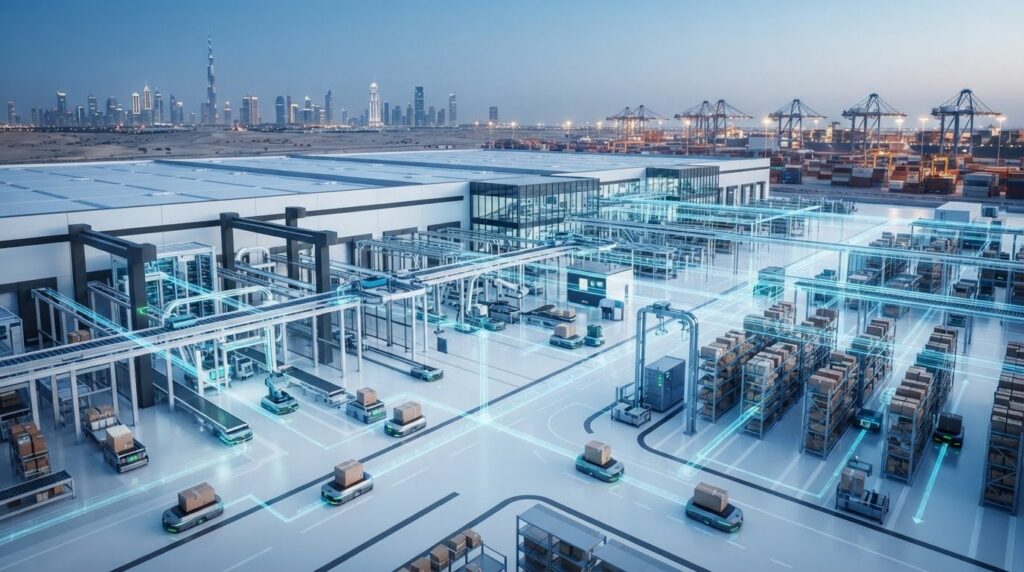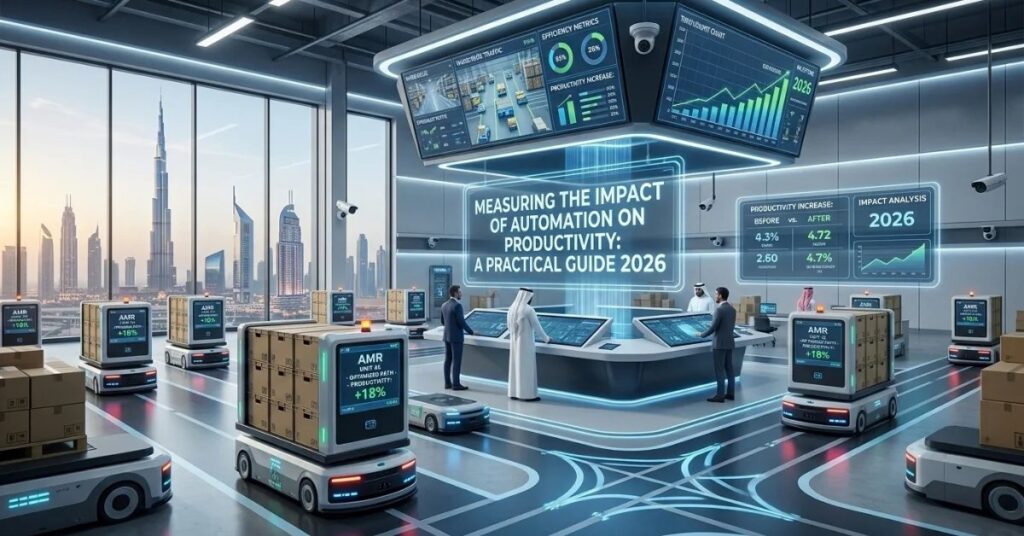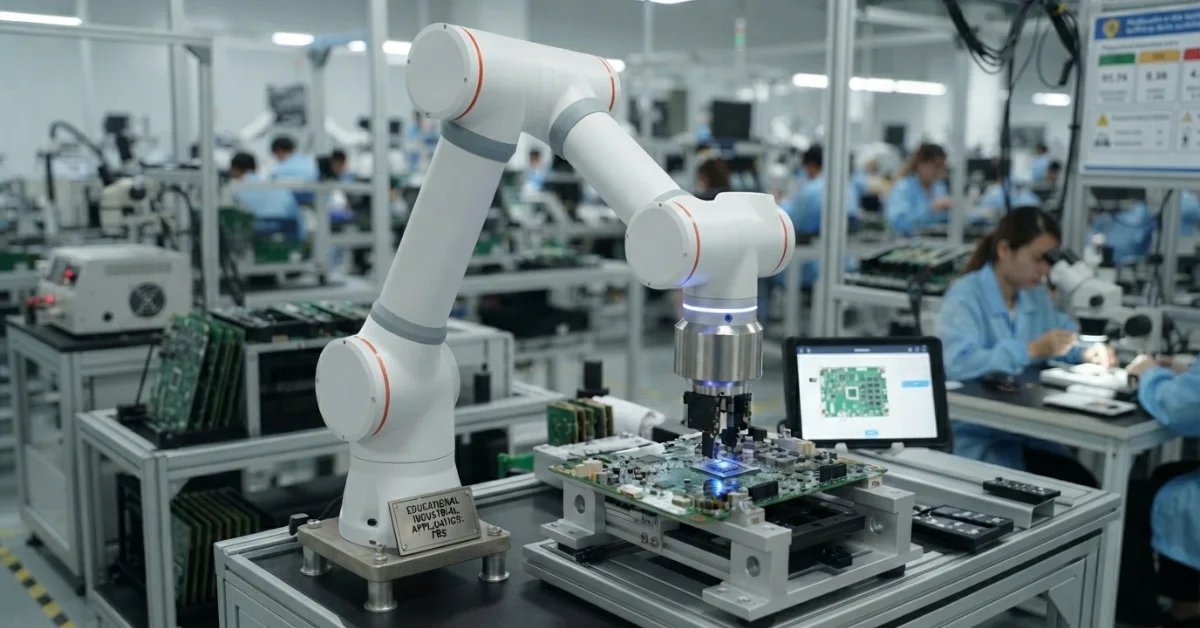
With the UAE warehouse robotics market projected to reach USD 280.06 million by 2035, the transition toward fully automated production environments has moved from a future goal to an immediate industrial mandate. Many manufacturers currently face the daunting reality of high manual assembly costs and the difficulty of finding technical integrators who can unify new hardware with existing infrastructure. Implementing sophisticated robotic assembly solutions UAE allows organizations to overcome these bottlenecks, replacing fragmented processes with intelligent, autonomous workflows. By leveraging the latest advancements in Physical AI and collaborative systems, companies can finally bridge the gap between their legacy control systems and the demands of modern Industry 4.0 standards.
You understand that maintaining a competitive edge requires more than just purchasing equipment; it demands a strategic alignment with national objectives like the “Make it in the Emirates” initiative. This guide details how integrated robotic assembly solutions, from high-speed cobots to comprehensive SCADA-managed ecosystems, are transforming manufacturing efficiency across the region. We’ll explore the technical frameworks necessary for increasing throughput and precision while ensuring long-term compliance with the UAE’s $50 billion industrial procurement roadmap. Discover how bespoke integration can turn your operational challenges into a scalable, high-performance ecosystem.
Key Takeaways
- Understand the critical transition from rigid, fixed automation to the flexible and intelligent assembly cells required for 2026 industrial standards.
- Discover how integrating cobots and AMRs optimizes safety and streamlines material flow across complex production environments.
- Learn to centralize operational data and ensure precise timing through sophisticated PLC and SCADA integration across multiple assembly cells.
- Identify high-ROI tasks by implementing robotic assembly solutions UAE using a structured approach that includes process auditing and digital twin modeling.
- Explore how a comprehensive, start-to-finish partnership provides the intellectual framework needed to bridge global technology with regional industrial goals.
The Evolution of Robotic Assembly Solutions in the UAE
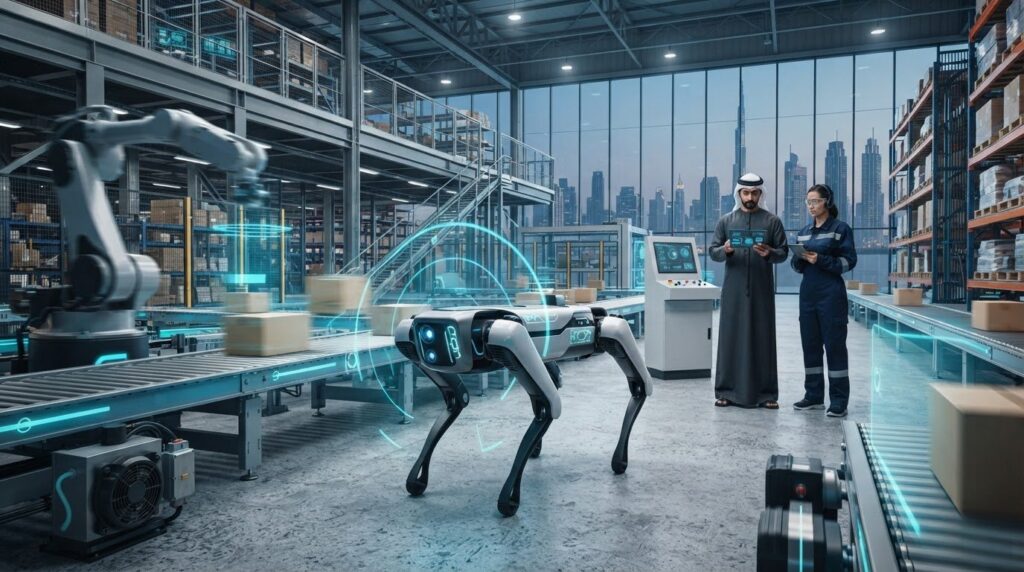
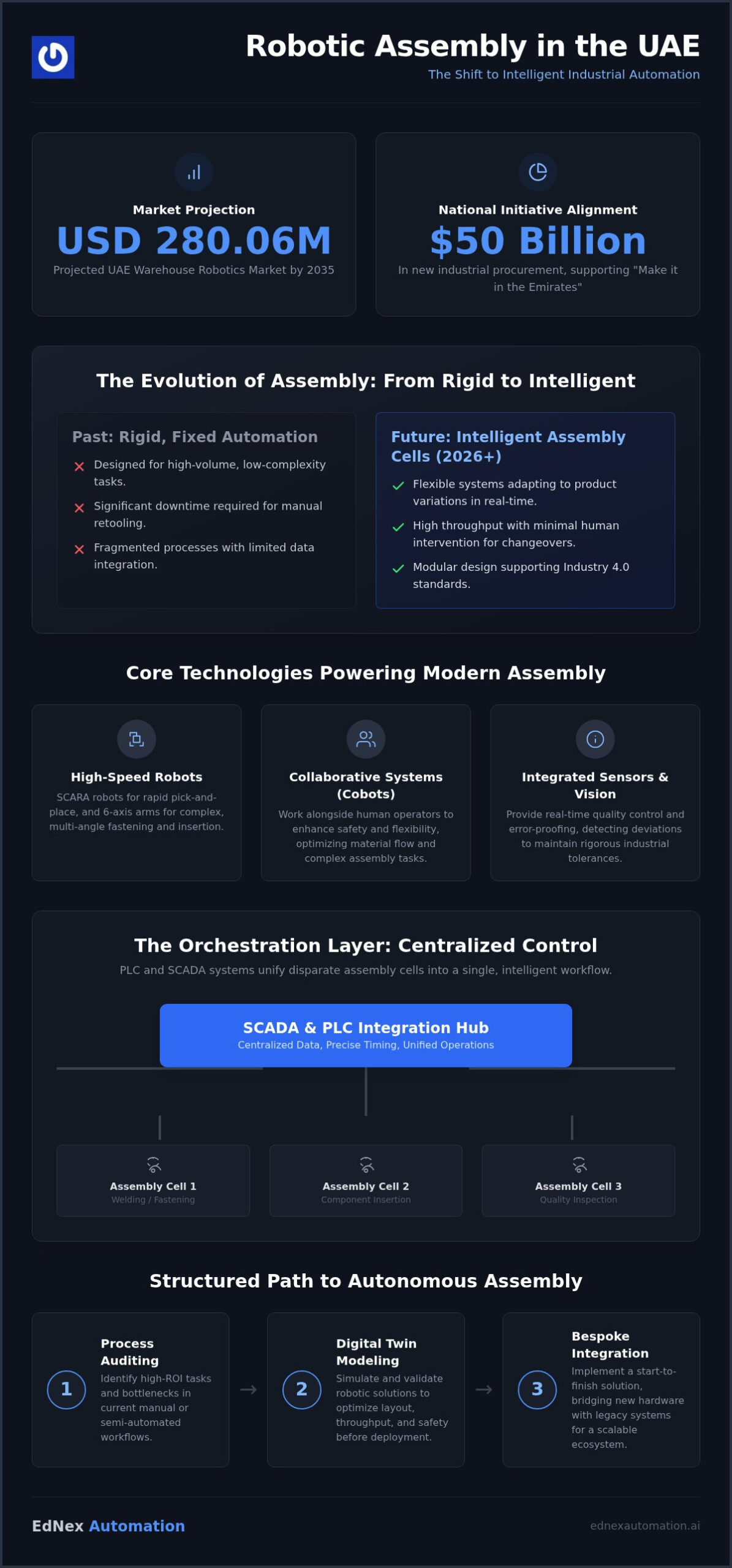
The industrial landscape of the Emirates is undergoing a radical transformation as traditional manufacturing models yield to high-precision robotic assembly solutions UAE. This evolution isn’t merely about replacing labor; it’s about redefining the architecture of production. While past decades focused on rigid, fixed automation for high-volume, low-complexity tasks, 2026 marks the era of flexible, intelligent assembly cells. These systems adapt to varying product specifications in real-time, allowing manufacturers to maintain high throughput without the downtime associated with manual retooling. Leading facilities now prioritize modularity, ensuring that a single assembly line can pivot between different product iterations with minimal human intervention.
Supporting the UAE’s ambitious ‘Operation 300bn’ industrial strategy, these advanced systems serve as the backbone for localized production. Implementing bespoke robotic assembly solutions UAE allows manufacturers to excel in sectors like electronics, automotive components, and medical devices where precision is paramount. The recent announcement of $50 billion in new industrial procurement opportunities underscores the government’s commitment to promoting localization through technology. By integrating sophisticated robotics, companies aren’t just improving efficiency; they’re building the supply chain resilience necessary to thrive in a globalized economy. This shift is particularly evident in the UAE’s burgeoning metal fabrication and aerospace industries, where autonomous welding and fastening systems are becoming standard.
To showcase these advancements to international stakeholders, manufacturers can visit United Broadcast & Media Solutions (UBMS) for high-end digital cinema cameras and professional video solutions based in Dubai.
Assembly vs. General Automation
Assembly requires a degree of precision that standard material handling often lacks. Modern industrial robots utilized in assembly must manage intricate tolerances, often involving the delicate placement of micro-components or the application of precise torque. Utilizing advanced end-effectors and intelligent vision systems allows these machines to perceive their environment and adjust their movements dynamically. Robotic assembly is a multi-stage integration of motion, logic, and feedback. This specialized focus ensures that every component is joined with repeatable accuracy, reducing waste and enhancing overall product quality. Unlike general automation, which might focus on moving a pallet from point A to point B, assembly automation involves the complex synchronization of multiple parts into a finished whole.
National Strategic Drivers for Automation
The push toward automation aligns perfectly with UAE Vision 2030 and the broader objectives of the Fourth Industrial Revolution. Government entities have introduced significant economic incentives, including R&D tax credits and specialized financing commitments from institutions like Mashreq Bank, to encourage the adoption of high-tech manufacturing solutions. These initiatives don’t just promote technology; they foster an ecosystem where localized production becomes a reality. This strategic alignment ensures that UAE-based manufacturers remain competitive on a global stage while contributing to the nation’s diversified economic future. By reducing the reliance on manual labor, these organizations are also addressing the critical shortage of specialized technical talent in the region.
Core Technologies Powering Modern Assembly Lines
The engineering of high-performance robotic assembly solutions UAE relies on a sophisticated hierarchy of hardware designed for specific mechanical outcomes. While precision is a foundational requirement, the speed of implementation and the ability to handle complex payloads define the modern assembly line. High-speed SCARA robots excel in pick-and-place tasks requiring rapid cycle times, whereas 6-axis arms provide the dexterity needed for multi-angle fastening and intricate component insertion. These mechanical systems are increasingly unified by integrated sensor technology, which provides real-time quality control and proactive error-proofing. By detecting deviations before they become defects, these sensors ensure that the assembly process remains within rigorous industrial tolerances without requiring manual inspection.
Collaborative vs. Industrial Robots for Assembly
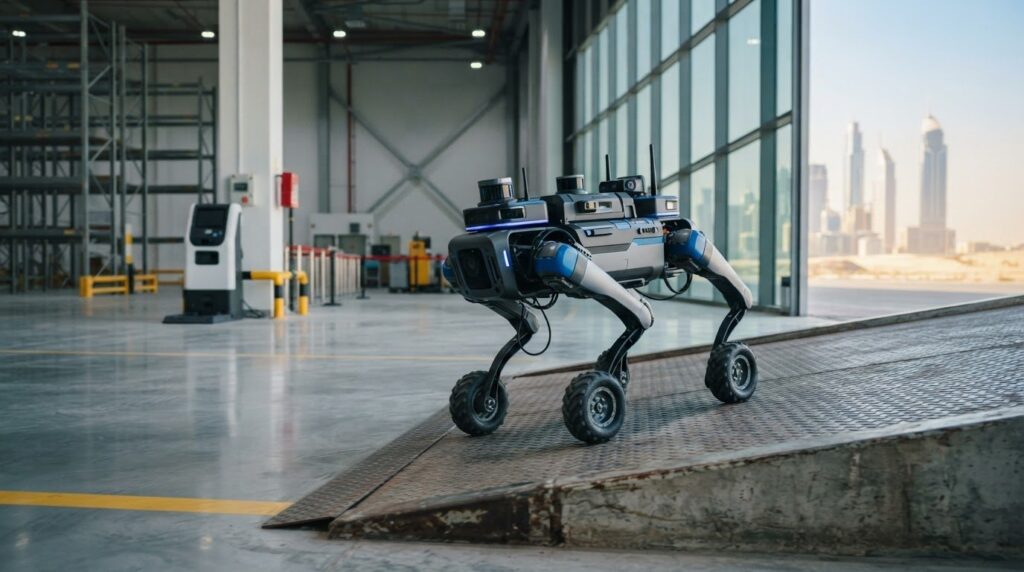
Choosing between traditional industrial robots and collaborative robots UAE depends largely on the proximity of human operators and the delicacy of the task. Industrial robots remain the standard for high-volume throughput where speed is the primary metric, but they require extensive safety fencing and dedicated floor space. In contrast, cobots allow for hybrid assembly environments where humans and machines share the same workspace safely. This collaboration is particularly effective for final assembly stages where human judgment and robotic repeatability must coexist. Rigorous risk assessments and adherence to ISO safety standards ensure these hybrid environments remain productive without compromising operator safety. For those seeking to modernize existing facilities, exploring bespoke cobot integration can provide the intelligence needed for high-mix production.
Mobile Robotics in Assembly Logistics
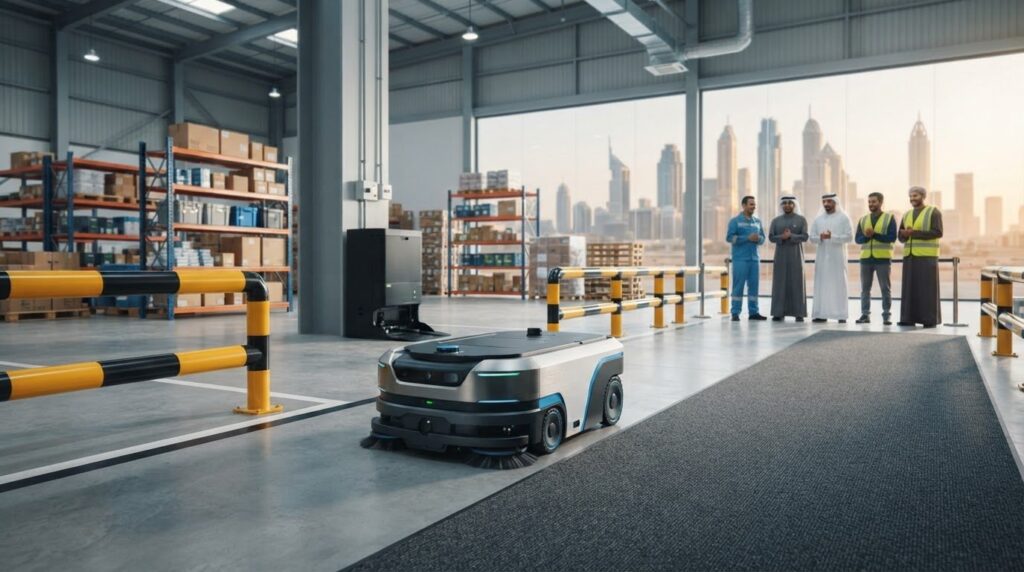
Efficient material flow is often the most overlooked bottleneck in traditional manufacturing environments. While fixed conveyors have long served as the standard for linear assembly, autonomous mobile robots are now replacing these rigid structures with dynamic, decentralized logistics. These mobile units navigate complex factory floors independently, delivering raw components to assembly stations and transporting finished goods to inspection areas. This autonomy allows for rapid line reconfiguration, as production managers can adjust material delivery paths through software rather than physical infrastructure changes. Integrating AMRs into the assembly ecosystem eliminates the downtime associated with manual material handling and ensures that high-speed robotic cells are never starved of parts. This level of synchronization is essential for achieving the throughput targets set by regional industrial leaders who prioritize operational agility.
The Orchestration Layer: PLC and SCADA Integration
The implementation of advanced robotic assembly solutions UAE reaches its full potential only when precision hardware is unified by a robust orchestration layer. While robotic arms provide the physical dexterity, Programmable Logic Controllers (PLC) manage the millisecond-accurate timing required for complex sequential tasks. This logic layer ensures that fastening, welding, and inspection cycles occur in perfect synchronization, preventing mechanical collisions and maintaining high-speed throughput. Achieving interoperability between disparate robotic brands and legacy control systems remains a primary challenge for many UAE facilities. Sophisticated integration strategies overcome these barriers by creating a common communication protocol, allowing for seamless data exchange across the entire production floor and ensuring that new investments work in harmony with existing infrastructure.
Centralizing these operations requires a shift from localized control to a holistic supervisory environment. By utilizing real-time monitoring, production managers can transition from reactive troubleshooting to proactive optimization. Predictive maintenance algorithms, powered by continuous data streams from the assembly line, identify potential component failures before they result in costly downtime. This level of technical oversight is essential for 24/7 assembly operations where even a minor disruption can ripple through the entire supply chain. Building this intellectual framework is what separates a simple equipment installation from a truly intelligent manufacturing ecosystem.
Unified Control Architecture
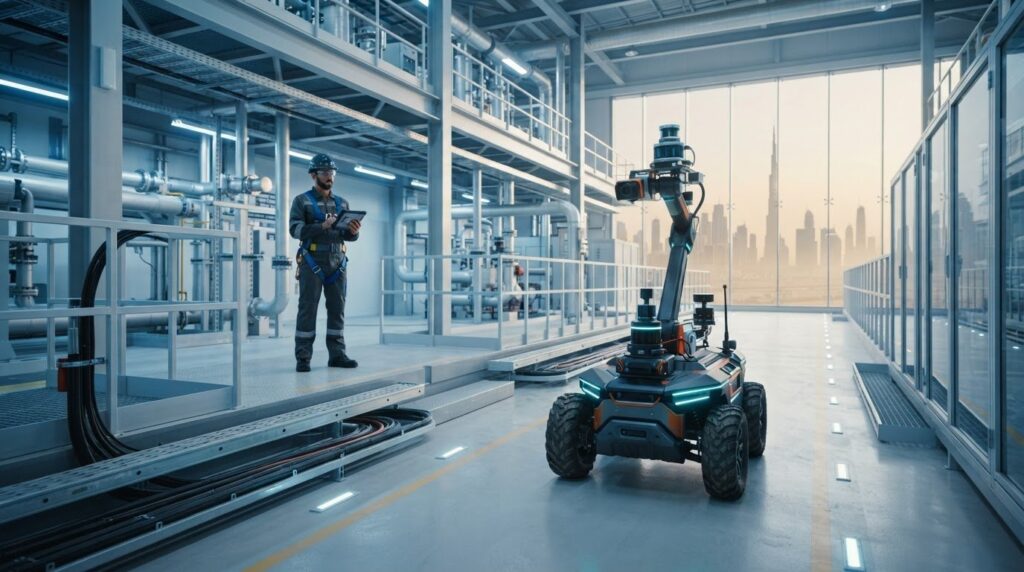
Deploying PLC and SCADA integration services provides the centralized oversight necessary for large-scale industrial transformation. These systems act as a bridge between the factory floor and the executive suite, translating raw machine data into actionable insights through high-fidelity visualization. SCADA serves as the central nervous system of the plant by aggregating real-time performance metrics and identifying operational bottlenecks before they impact the bottom line. This level of data acquisition supports improved decision-making, allowing engineers to adjust assembly parameters dynamically based on current environmental variables or material fluctuations.
Logistics Synchronization with ASRS
Modern assembly lines don’t exist in isolation; they require a constant, precisely timed supply of components to remain operational. Linking assembly cells with automated storage and retrieval systems (ASRS) creates a closed-loop environment where material flow is dictated by real-time production demand. This just-in-time (JIT) delivery model ensures that robots are never starved of parts, significantly reducing idle time across the facility. By optimizing floor space through vertical storage and automated retrieval, manufacturers can increase their production capacity without expanding their physical footprint. This integration ensures that the right component reaches the right robot at the exact moment it’s needed, eliminating the inefficiencies of manual material handling.
Strategic Implementation: From Manual to Autonomous Assembly
Transitioning from manual labor to fully autonomous workflows requires a methodical, multi-phase roadmap that aligns technological capability with business objectives. Identifying high-ROI tasks during the initial process audit ensures that early investments deliver immediate operational impact. Leveraging digital twin modeling allows for the virtual commissioning of robotic assembly solutions UAE, providing a risk-free environment to test cycle times and collision avoidance protocols before physical installation. Following this simulation, selecting bespoke hardware and designing custom end-effectors ensures the system can handle specific component geometries with repeatable precision. The final stages involve the seamless integration of hardware with the control layers discussed previously, alongside a commitment to upskilling the workforce to manage these sophisticated assets.
Once the system is live, the focus shifts toward continuous optimization through AI-driven data analytics. Analyzing real-time performance data allows for the fine-tuning of motion paths and gripper pressures, further reducing cycle times and energy consumption. For organizations utilizing AI agents to manage these complex datasets, NovaCortex offers a self-hosted, privacy-first memory layer to secure operational intelligence. This iterative approach ensures the assembly line evolves alongside changing product demands, maintaining its status as a high-performance industrial asset rather than a static piece of machinery. By adopting this systematic framework, manufacturers can bridge the gap between global technological breakthroughs and regional industrial needs.
Calculating ROI in Robotic Assembly
Calculating the return on investment for robotic assembly solutions UAE involves looking beyond simple labor cost reduction. While decreasing headcount is a factor, the true value lies in increased throughput, reduced material waste, and the elimination of human error in high-precision tasks. Future-proofing industrial assets through scalable automation ensures that the facility remains competitive as regional manufacturing standards become more rigorous. Organizations that prioritize long-term viability often see their initial capital expenditure offset by the substantial gains in operational agility and product consistency. This strategic focus frames automation—ranging from shop floor robotics to digital customer service solutions like Chatterbots—not just as a current acquisition, but as a necessary evolution for any organization wishing to remain competitive in the future.
Safety and Compliance Standards
Adhering to international ISO standards and local regulations is non-negotiable for modern manufacturing facilities. Cabinet Resolution No. (15) of 2026 mandates rigorous safety and quality standards for industrial plants, requiring a systematic approach to risk mitigation in hybrid environments. Ensuring cybersecurity in connected industrial networks protects the intellectual property and operational integrity of the plant from external threats. Comprehensive documentation and official certification status serve as markers of legitimacy, reassuring stakeholders that the facility operates at the global vanguard of safety and efficiency. To begin your transition toward an autonomous future, consult with an expert in industrial robotic integration to ensure your facility meets every regional mandate.
EdNex Automation: Your Partner for Industrial Transformation
Positioning itself at the vanguard of the Fourth Industrial Revolution, EdNex Automation serves as a visionary technical partner for manufacturers seeking to modernize their assembly environments. We provide the intellectual framework necessary for implementation rather than just the tools, ensuring that every deployment of robotic assembly solutions UAE is grounded in technical excellence and regional compliance. By providing comprehensive start-to-finish expertise, our specialized division bridges the gap between global technological breakthroughs and the specific economic needs of the Emirates. This full-service approach encompasses everything from initial hardware selection to the complex integration of control layers, ensuring a seamless transition to autonomous operations.
Maintaining strategic alliances with global technology leaders allows us to bring the most advanced Physical AI and motion control systems to the local market. This global standing, combined with our national reach, ensures that facilities across the UAE receive the high-level technical support and maintenance required for uninterrupted assembly. We’re committed to the UAE’s industrial growth and technological sovereignty, acting as a systematic organizer who brings order and efficiency to complex manufacturing environments. Our role as a high-level consultant ensures that your investment isn’t just a current acquisition, but a necessary evolution for long-term competitiveness.
Why Choose EdNex for Assembly Automation?
Delivering bespoke engineering for complex, high-precision assembly challenges is the cornerstone of our methodology. We understand that every production line has unique requirements, which is why our integration expertise spans the entire spectrum of Industry 4.0 hardware. Our team excels at:
- Bespoke Integration: Tailoring robotic assembly solutions UAE to meet specific mechanical tolerances and cycle time requirements.
- Unified Ecosystems: Synchronizing collaborative robots, AMRs, and ASRS through sophisticated PLC and SCADA layers.
- Risk Mitigation: Utilizing digital twin modeling to ensure operational safety and ROI before a single robot is installed.
Focusing on long-term business viability, we provide the tools and logic necessary to turn operational challenges into a sustainable competitive advantage.
The Future of Your Facility Starts Here
Transitioning from equipment acquisition to strategic industrial evolution requires a partner who understands the gravity of large-scale transformation. Leveraging our visionary approach allows your organization to lead its sector in 2026, staying ahead of both regulatory changes and market demands. The path to industrial excellence begins with a systematic evaluation of your current infrastructure and a clear roadmap for modernization. Contact our consultants today to schedule a detailed facility automation audit and discover how EdNex Automation can orchestrate your transition to a fully autonomous future.
Securing Your Competitive Edge in the 2026 Industrial Landscape
Transitioning toward fully integrated systems, manufacturers can bridge the gap between legacy limitations and the future of autonomous production. Implementing sophisticated robotic assembly solutions UAE allows facilities to replace manual bottlenecks with high-throughput, intelligent ecosystems that align with the nation’s localization goals. By unifying precision hardware with a robust orchestration layer, organizations don’t just improve current efficiency; they build the operational resilience required for the next decade of competition. This strategic evolution ensures that your production capabilities remain agile in a market defined by rapid technological shifts and rigorous safety mandates.
Achieving this level of technical synergy requires a partner who provides the intellectual framework for large-scale transformation. EdNex Automation brings a specialized Industry 4.0 division and comprehensive PLC/SCADA integration expertise to every project, ensuring that your facility remains at the cutting edge of innovation. Our strategic focus on UAE national industrial goals positions us as a reliable technical bridge between global breakthroughs and regional needs. Partner with EdNex Automation to modernize your assembly operations today and secure your place at the vanguard of the Fourth Industrial Revolution. Your journey toward a fully optimized, autonomous future is within reach.
Frequently Asked Questions
What are the primary benefits of robotic assembly solutions in the UAE?
Implementing robotic assembly solutions UAE delivers enhanced precision and repeatable accuracy, significantly reducing material waste in high-value sectors like electronics. These systems mitigate the operational risks associated with manual labor while ensuring compliance with the nation’s “Make it in the Emirates” initiative. By automating repetitive tasks, organizations can redirect human talent toward higher-level supervisory roles, ultimately driving long-term industrial excellence and regional competitiveness on a global scale.
How do collaborative robots (cobots) differ from traditional assembly robots?
Collaborative robots are engineered with safety-aware sensors that allow them to operate alongside human workers without physical barriers. Traditional industrial robots prioritize high-speed throughput and heavy payloads, often requiring dedicated safety fencing to protect personnel from high-velocity movements. While traditional systems excel in high-volume, isolated tasks, cobots offer the flexibility needed for high-mix production where human dexterity and robotic repeatability must coexist safely in a shared workspace.
Can robotic assembly systems be integrated with existing manual production lines?
Robotic assembly systems can be integrated into existing manual production lines through a modular, phase-based approach. Utilizing sophisticated PLC and SCADA integration allows for the synchronization of new robotic cells with legacy conveyors and manual stations. This hybrid configuration enables manufacturers to modernize their facilities incrementally, identifying specific bottlenecks for automation while maintaining the flexibility of human-centric assembly where it remains most effective for highly complex tasks.
What is the typical ROI timeline for an automated assembly project?
The ROI timeline for an automated assembly project typically ranges from 12 to 24 months, depending on the complexity of the integration and the resulting throughput gains. Organizations often see immediate value through the elimination of human error and the reduction of rejected components in precision manufacturing. Long-term profitability is further enhanced by the scalability of these assets, which allows manufacturers to adapt to changing market demands without significant additional capital expenditure.
How does SCADA integration improve robotic assembly efficiency?
SCADA integration improves efficiency by centralizing operational data and providing real-time visibility across multiple assembly cells. This supervisory layer identifies production bottlenecks and allows for the dynamic adjustment of parameters to optimize performance. By aggregating machine data, SCADA systems also enable predictive maintenance strategies, identifying potential hardware failures before they result in costly downtime, thereby ensuring 24/7 operational continuity and higher overall equipment effectiveness for robotic assembly solutions UAE.
What maintenance is required for industrial robotic assembly systems?
Industrial robotic assembly systems require a combination of routine mechanical maintenance and proactive software optimization to ensure peak performance. Essential tasks include the regular lubrication of joints, calibration of vision sensors, and the installation of firmware updates to maintain cybersecurity. Implementing AI-driven predictive maintenance allows for the monitoring of motor torque and vibration patterns, enabling technical teams to address wear and tear before it impacts the precision of the assembly process.
Is specialized training required for staff to work alongside assembly robots?
Staff must undergo specialized training to effectively monitor, troubleshoot, and collaborate with advanced assembly robots in a modern facility. This upskilling focuses on safety protocols, basic programming, and the use of SCADA interfaces for data-driven decision-making. Transitioning employees from manual labor to technical supervisory roles ensures that the workforce can manage the sophisticated intellectual framework required for Industry 4.0 environments, fostering a culture of innovation and safety throughout the organization.
How do robotic assembly solutions support the UAE’s Vision 2030?
Robotic assembly solutions support UAE Vision 2030 by driving economic diversification and reducing the reliance on external supply chains for critical components. These technologies facilitate the localization of manufacturing, helping to achieve the “Operation 300bn” target of increasing the industrial sector’s contribution to the GDP. By fostering a knowledge-based economy through high-tech implementation, robotic systems ensure that the UAE remains a global leader in industrial innovation and sustainable manufacturing practices.