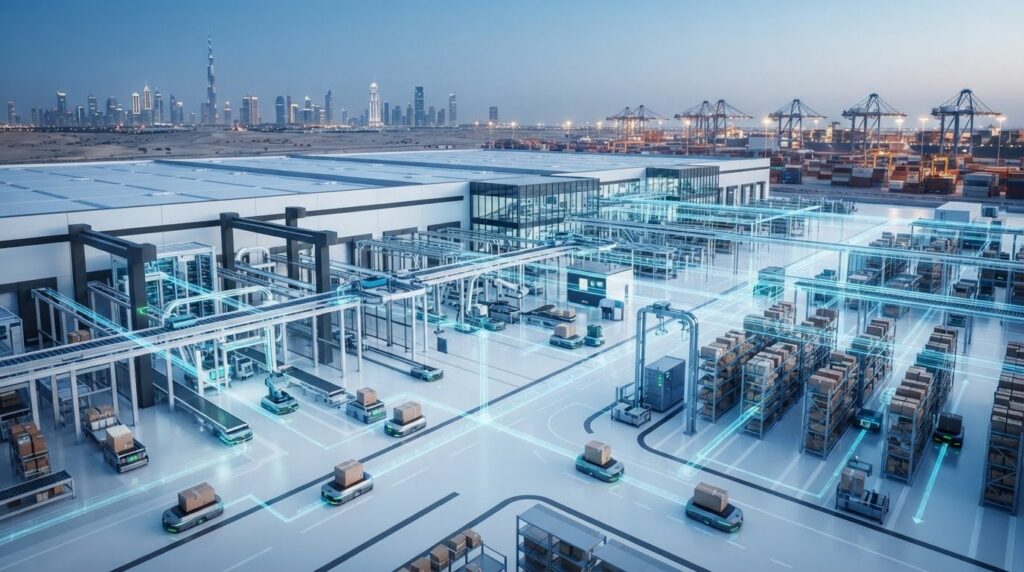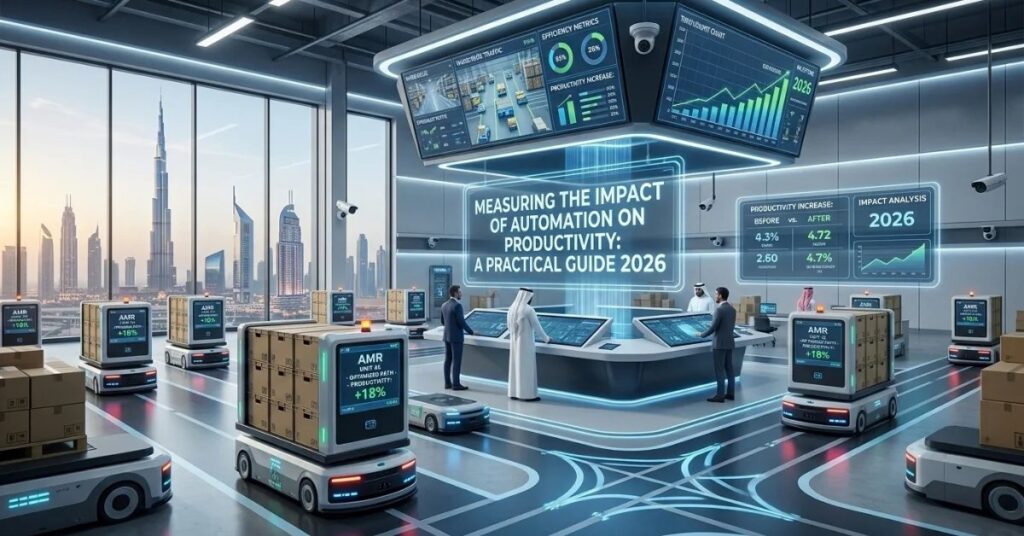
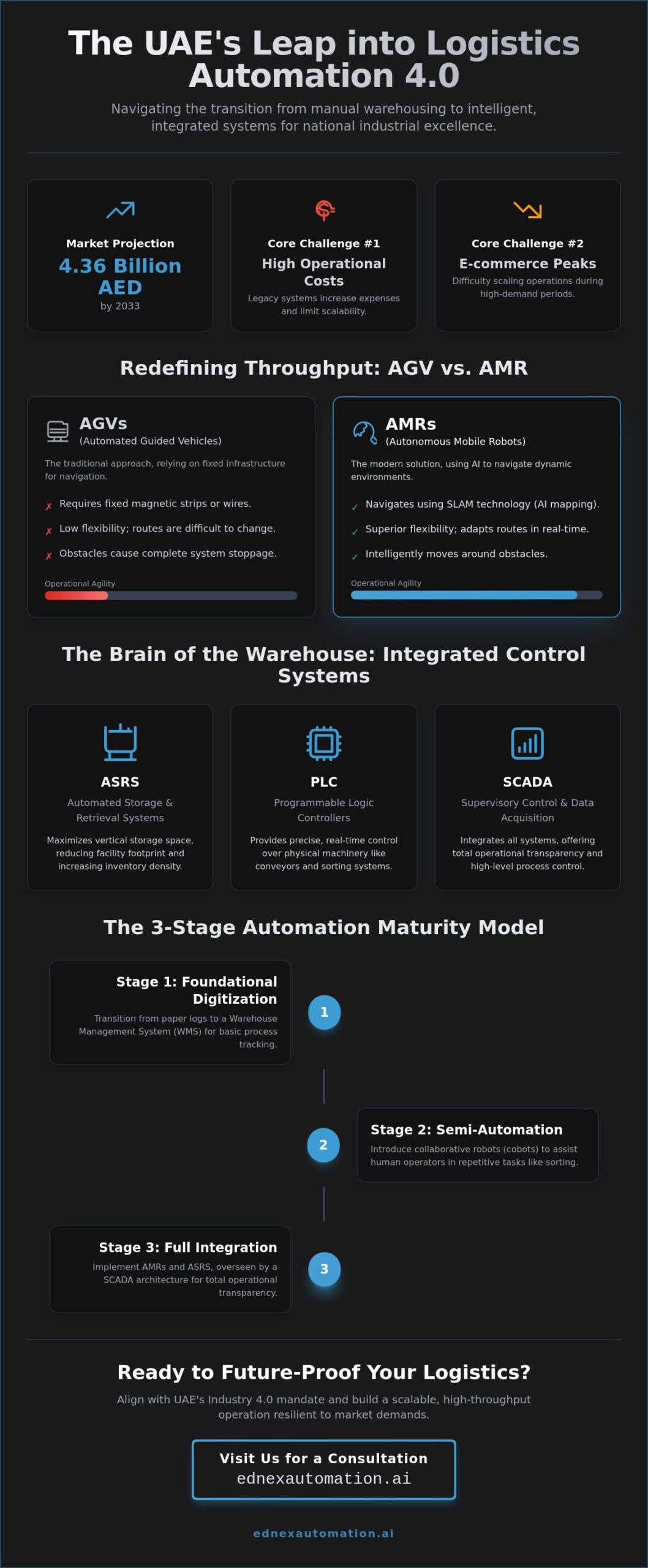
With the UAE logistics automation market projected to reach approximately 4.36 billion AED by 2033, the shift toward intelligent systems has evolved from a competitive edge into an absolute industrial necessity. You’re likely facing the mounting pressure of high operational costs and the difficulty of scaling during e-commerce peaks, especially when legacy systems struggle to communicate with modern hardware. Achieving true excellence in this sector requires more than just buying robots; it demands the systematic integration of autonomous technology with robust industrial control architectures.
This guide offers a comprehensive roadmap to navigating the Industry 4.0 transformation within the local landscape. You’ll discover how advanced robotics, ASRS, and integrated control systems are redefining the logistics automation UAE market and learn the precise steps to implement them for maximum ROI. We’ll clarify the functional differences between AGVs and AMRs, examine the necessity of PLC and SCADA integration, and provide the metrics needed to justify your investment in a future-proof facility. By aligning global technological breakthroughs with regional industrial needs, we’ll show you how to build a scalable, high-throughput operation that remains resilient in a rapidly evolving economy.
Key Takeaways
- Align your facility with the UAE’s Industry 4.0 mandate by transitioning from manual processes to integrated, intelligent warehousing systems.
- Discover how AMRs and logistics automation UAE solutions significantly enhance throughput by providing superior navigation flexibility compared to traditional AGVs.
- Learn to utilize ASRS and PLC integration to maximize vertical storage space and maintain precise control over complex conveyor and sorting operations.
- Apply a rigorous 5-step implementation framework designed to justify your investment through clear ROI metrics and performance-based KPIs.
- Identify the technical requirements for seamless SCADA integration to ensure your new robotic assets communicate effectively with existing industrial infrastructure.
The Strategic Imperative of Logistics Automation in the UAE
The UAE’s transition toward a knowledge-based economy has placed the industrial sector at the center of national development. Under the Operation 300bn strategy, the integration of logistics automation UAE solutions has become a fundamental requirement for enterprises seeking to maintain relevance in a hyper-competitive global market. Traditional manual warehousing, once the standard for regional trade, now faces obsolescence as the volume of goods passing through major logistics hubs exceeds the capacity of human-centric operations. By adopting logistics automation, organizations can transform their supply chains into high-velocity engines capable of supporting the nation’s ambitious growth targets.
The strategic location of the UAE as a gateway between East and West necessitates a logistics infrastructure that operates at peak efficiency. The nation’s extensive port facilities and associated free zones handle millions of TEUs annually. Without autonomous mobile robots and intelligent storage, the sheer scale of this throughput creates bottlenecks that ripple through the entire national supply chain. Intelligent automation resolves these constraints by providing 24/7 operational continuity and reducing the margin of error in order fulfillment. It’s not just about speed; it’s about the precision required to manage complex, multi-modal trade flows.
Operational inefficiencies in high-volume e-commerce environments often lead to significant revenue leakage. With e-commerce revenues in the region projected to surpass 50.6 billion AED by 2029, the ability to process thousands of orders with surgical precision is critical. Automation doesn’t just replace labor; it provides a scalable architecture that absorbs market volatility and seasonal peaks without compromising service levels. This technological shift ensures that local firms can meet the rising expectations of a digital-first consumer base while protecting their bottom line.
Aligning with National Industrial Strategies
The UAE Digital Economy Strategy and other forward-thinking national innovation programs serve as catalysts for radical supply chain innovation. These initiatives demand that businesses look beyond simple hardware procurement, focusing instead on how intelligent systems can create disruptive value. Local technical expertise is essential here. It ensures that global technological breakthroughs are calibrated to meet specific UAE regulatory standards and environmental conditions. Partnering with a regional authority allows firms to secure a national competitive advantage while contributing to the country’s broader digital transformation goals. It’s a necessary evolution for any organization wishing to remain competitive in the future.
From Manual to Autonomous: The Maturity Model
Scaling your facility requires a structured approach to technological adoption. Most successful enterprises follow a logical progression to mitigate risk while maximizing output:
- Stage 1: Transitioning from paper-based logs to basic digitization and manual process tracking via Warehouse Management Systems (WMS).
- Stage 2: Introducing semi-automated systems and collaborative robots UAE to assist human operators in high-repetition tasks like palletizing and sorting.
- Stage 3: Implementing full-scale integration of AMRs and ASRS, overseen by sophisticated SCADA architectures to ensure total operational transparency and logistics automation UAE excellence.
Autonomous Mobile Robots (AMRs) and Cobots: Redefining Throughput
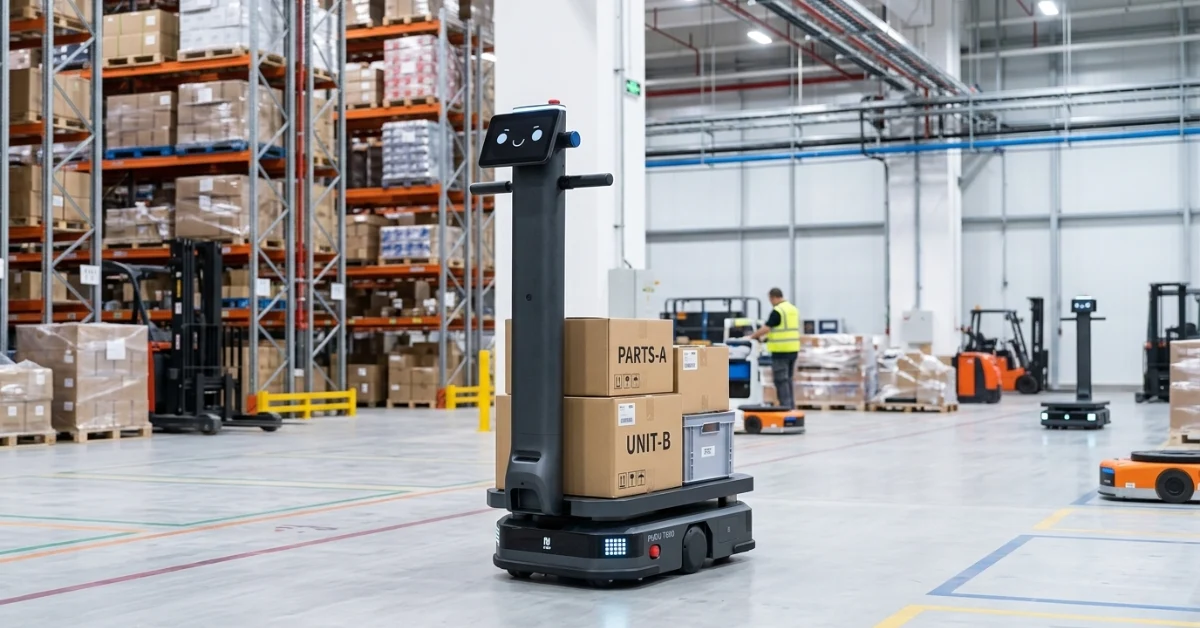
Identifying the technical limitations of legacy Automated Guided Vehicles (AGVs), forward-thinking facilities are now prioritizing Autonomous Mobile Robots (AMRs) to achieve superior operational agility. Unlike AGVs that require fixed magnetic strips or wires, AMRs utilize sophisticated SLAM (Simultaneous Localization and Mapping) technology to navigate dynamic warehouse floors. This shift is a key component of the UAE Industry 4.0 program, which targets a 30% increase in industrial productivity through the adoption of intelligent systems. By leveraging LiDAR and 3D vision sensors, these machines ensure safe human-robot coexistence, effectively mitigating the safety risks associated with high-traffic industrial zones.
Implementing logistics automation UAE strategies allows operators to address chronic labor shortages while simultaneously improving facility safety. AMRs take over the hazardous or monotonous task of long-distance material transport, which reduces worker fatigue and minimizes the potential for forklift-related accidents in congested aisles. These robots don’t just follow a path; they perceive their environment in real-time, allowing them to bypass obstacles and re-calculate routes without human intervention. This level of autonomy is essential for maintaining the high-speed throughput required by the region’s expanding e-commerce sector.
AMR Logistics Solutions for Dynamic Environments
Utilizing decentralized navigation, AMRs adapt instantly to changing warehouse layouts without requiring costly infrastructure modifications. These systems feature intelligent battery management for 24/7 operations, ensuring the fleet remains active during peak cycles. Real-time integration with a Warehouse Management System (WMS) provides total visibility, allowing managers to track every asset and payload with granular precision. You can explore our autonomous mobile robot fleet to see how these systems integrate into modern industrial architectures.
Cobots in the Packing and Palletizing Line
Integrating collaborative robots UAE into packing and palletizing lines offers a direct solution to the ergonomic challenges of repetitive heavy lifting. Unlike traditional industrial arms that require extensive safety caging, cobots are designed with force-limiting sensors to work safely alongside human staff. Their intuitive programming interfaces allow for rapid deployment, often within days. In the UAE, these systems must adhere to specific international safety standards like ISO 10218 to ensure compliant operation within regulated industrial zones. This combination of safety and ease of use makes them an ideal choice for facilities looking to enhance logistics automation UAE capabilities without a total overhaul of their existing floor plan.
The Brain of the Warehouse: ASRS, PLC, and SCADA Integration
Effectively managing a high-throughput facility requires more than just independent robotic assets; it demands a sophisticated nervous system to synchronize every movement. While mobile robots handle horizontal transport, the true intelligence of the warehouse lies in the integration of ASRS, PLC, and SCADA architectures. This hierarchical control layer is what separates a collection of machines from a fully autonomous industrial engine. According to the UAE Warehouse Automation market report, the increasing demand for these integrated systems has propelled the market to a value of approximately 4.4 billion AED. For enterprises in the region, achieving logistics automation UAE excellence depends on this bespoke integration to harmonize diverse fleets into a single, cohesive operation.
Bespoke integration isn’t just a technical preference; it’s a strategic necessity for facilities that mix legacy infrastructure with modern robotics. Without a unified control layer, robots from different manufacturers remain siloed, leading to traffic congestion and data gaps. By implementing a customized communication protocol, you ensure that your ASRS communicates perfectly with your sorting line, creating a seamless flow from storage to dispatch. This synchronization is the only way to maintain the 24/7 operational tempo required in the UAE’s competitive logistics hubs.
Maximizing Density with ASRS Technology
Utilizing Automated Storage and Retrieval Systems (ASRS) allows businesses to maximize their vertical footprint, which is critical in high-demand industrial zones where land availability is limited. These systems reduce the facility’s physical footprint while significantly increasing SKU capacity.
- Mini-load ASRS: Optimized for high-speed handling of smaller totes and cartons.
- Shuttle Systems: Designed for high-density storage and rapid retrieval in pallet-heavy environments.
- Unit-load ASRS: Engineered to manage heavy, palletized goods with surgical precision.
By automating the retrieval process, these systems eliminate human travel time and improve order accuracy, ensuring that the right product reaches the right dock at the right time.
Industrial Control Systems: PLC and SCADA
Programmable Logic Controllers (PLC) act as the localized intelligence for physical machinery, ensuring sub-second response times in sorting and conveyor systems. These controllers execute complex logic with a speed and reliability that manual operations can’t replicate. Sitting above the PLC layer, SCADA (Supervisory Control and Data Acquisition) serves as the overarching ‘eye’ for the entire facility. It provides real-time monitoring and data acquisition, allowing managers to identify operational bottlenecks before they cause downtime. This convergence of Information Technology and Operational Technology is essential for predictive maintenance, ensuring your logistics automation UAE investment remains a long-term asset rather than a depreciating tool.
Evaluating ROI and Implementation Frameworks for UAE Logistics
Justifying the transition to an autonomous facility requires a rigorous analysis that extends far beyond the initial capital expenditure for robotic hardware. For decision-makers in the region, the success of logistics automation UAE initiatives depends on a clear understanding of the Total Cost of Ownership (TCO). This calculation must account for long-term maintenance, software synchronization, and the critical calibration of control layers. By viewing automation as a multi-year strategic evolution rather than a simple equipment acquisition, organizations can secure the intellectual and physical infrastructure necessary for sustained growth in the region’s high-velocity trade environment.
Achieving a positive return on investment also necessitates a focused approach to workforce upskilling. As you deploy advanced robotics, the role of the warehouse operator shifts from manual labor to system supervision and technical troubleshooting. Investing in the proficiency of your team ensures that your human capital is prepared to work alongside intelligent systems, maximizing the operational longevity of your assets. This human-robot synergy is a cornerstone of the UAE’s broader industrial vision, where technology empowers the workforce to execute higher-value, data-driven tasks.
The 5-Step Automation Roadmap
Executing a successful transition from manual processes to an integrated autonomous environment follows a logical, hierarchical progression:
- Step 1: Process Audit. Conduct a comprehensive audit of current workflows to identify specific bottlenecks where manual intervention currently slows throughput.
- Step 2: Technical Specification. Define the precise requirements for PLC architectures, SCADA monitoring, and specific robotic payloads.
- Step 3: Partner Selection. Select an integration partner with established UAE national coverage and proven expertise in local industrial regulations.
- Step 4: Pilot Deployment. Launch a controlled pilot to test control logic and ensure seamless communication between new assets and legacy systems.
- Step 5: Full-Scale Rollout. Execute the final implementation and utilize real-time data analytics for the continuous optimization of the entire facility.
Calculating the Real ROI of Automation
Calculating the financial impact of logistics automation UAE involves measuring both direct and indirect value drivers. Direct savings are primarily found in the reduction of fulfillment errors and the mitigation of rising operational costs associated with manual sorting. Indirectly, automated systems improve safety records, which leads to lower risk-related expenses and reduced downtime. Strategically, the ability to scale throughput by 10x during peak e-commerce cycles ensures that your facility remains competitive even under extreme demand. To begin your facility’s transformation, you can consult with our automation specialists to develop a bespoke implementation roadmap tailored to your specific operational needs.
Partnering for National Industrial Excellence: The EdNex Automation Approach
Positioning the brand as a strategic technical partner, EdNex Automation serves as the essential bridge between global technological breakthroughs and the specific industrial requirements of the Middle East. Successfully managing the complexities of logistics automation UAE requires more than just high-end machinery; it demands a partner who provides the intellectual framework for start-to-finish project management. By aligning our deep technical expertise with the UAE’s national vision for industrial excellence, we ensure that your facility isn’t just automated but optimized for long-term business viability. Our approach prioritizes reliability and precision, providing the regional support necessary to maintain complex infrastructure components in a 24/7 economy.
Our role as a high-level consultant ensures that every system we deploy is calibrated for the specific geographic and economic context of your operations. We act as a systematic organizer, bringing order and efficiency to complex warehouse environments through controlled and deliberate innovation. This commitment to national industrial goals makes EdNex Automation a reliable partner for organizations that view automation as a necessary evolution rather than a temporary acquisition. By providing localized support and global expertise, we empower UAE enterprises to lead the regional supply chain transformation.
Bespoke Integration and Technical Expertise
Recognizing that off-the-shelf solutions often fail in the demanding environmental and regulatory conditions of the region, EdNex Automation focuses on bespoke integration. We don’t just supply hardware; we design the underlying PLC and SCADA architectures that allow diverse robotic fleets to function as a unified system. Our commitment to official certifications and alliances with global robotics leaders ensures that every deployment meets the highest international standards. This methodical approach mitigates risk and ensures that your automation architecture remains scalable as your SKU capacity and throughput requirements evolve. We provide the technical mastery required to bridge the gap between legacy systems and modern autonomous assets.
Comprehensive Service Portfolio
Our portfolio encompasses the full spectrum of Industry 4.0 hardware and software, ensuring that every facet of your logistics hub is modernized. From high-density ASRS and flexible AMRs to specialized cleaning and surveillance robots, we provide a holistic solution for modern warehousing. For organizations looking to pioneer advanced service roles within their facilities, we also offer humanoid robots for sale UAE to manage complex interactions and administrative tasks. This comprehensive range of services allows us to act as a single-source technical partner for your entire digital transformation journey. To secure your position at the cutting edge of the industry, consult with an EdNex Automation expert to design your logistics future.
Architecting the Future of Autonomous Supply Chains
Transitioning to an autonomous facility has evolved from a futuristic aspiration into a fundamental requirement for remaining competitive in the regional trade landscape. By integrating AMRs, ASRS, and sophisticated PLC architectures, you transform operational bottlenecks into high-velocity throughput. This systematic evolution ensures your organization meets the UAE’s Industry 4.0 standards while securing a measurable return on investment. Achieving excellence in logistics automation UAE requires a deliberate shift from isolated hardware to a unified, intelligent ecosystem that prioritizes data-driven precision.
EdNex Automation provides the intellectual and technical framework necessary to guide this complex industrial transformation. Through our specialized division focused on Industry 4.0, we provide national UAE technical support and bespoke integration services to ensure long-term operational viability. Our strategic alliances with global robotics leaders empower your facility with the most advanced autonomous technology available today. It’s time to evolve your supply chain into a resilient, high-performance asset. Design your automated future with EdNex Automation and lead the next era of regional industrial innovation.
Frequently Asked Questions
What is the primary difference between AGVs and AMRs in a warehouse setting?
Utilizing SLAM (Simultaneous Localization and Mapping) technology, AMRs navigate dynamic environments autonomously without the fixed infrastructure required by legacy AGVs. While AGVs follow magnetic strips or wires, AMRs perceive their surroundings in real-time to bypass obstacles. This flexibility is essential for modern logistics automation UAE strategies, allowing facilities to adapt layouts without costly floor modifications or operational downtime. It’s a shift from rigid paths to intelligent, decentralized navigation.
How long does a typical logistics automation project take to implement in the UAE?
Establishing a fully automated logistics facility typically requires a timeline of 6 to 18 months, depending on the scale of the integration. Initial phases focus on process audits and technical specification, followed by the procurement of robotic assets and PLC programming. Local integration partners ensure that the deployment phase accounts for regional regulatory compliance and environmental conditions, leading to a stabilized rollout that minimizes disruption to existing trade flows.
Can ASRS be integrated into an existing warehouse, or does it require a new build?
Integrating Automated Storage and Retrieval Systems (ASRS) into existing warehouses is entirely feasible, provided the facility’s floor load capacity and vertical clearance meet technical requirements. While new builds offer the advantage of purpose-built structural design, many brownfield sites in the UAE successfully undergo retrofitting to maximize vertical density. This approach allows enterprises to increase SKU capacity significantly without the capital expenditure of acquiring new land or constructing additional facilities.
What are the safety requirements for operating collaborative robots in the UAE?
Operating collaborative robots requires strict adherence to international safety standards, specifically ISO 10218 and ISO/TS 15066. These regulations dictate the force-limiting and speed-monitoring capabilities necessary for safe human-robot interaction in shared workspaces. In the UAE, industrial facilities must also ensure that all automated systems are commissioned by certified technical partners who verify that the deployment meets national health and safety mandates for industrial environments.
How do PLC and SCADA systems improve the ROI of logistics automation?
Implementing PLC and SCADA architectures improves ROI by providing the granular control logic and real-time data acquisition necessary to optimize facility throughput. These systems identify operational bottlenecks and predict maintenance needs before they escalate into costly equipment failures. By synchronizing diverse robotic fleets, a unified control layer ensures that your logistics automation UAE investment operates at peak efficiency, directly reducing the total cost of ownership over time.
Is logistics automation suitable for small to medium-sized enterprises (SMEs)?
Automation is increasingly accessible to small and medium-sized enterprises (SMEs) through modular, scalable solutions that allow for incremental investment. Instead of a full-scale overhaul, SMEs can begin with targeted applications like cobot palletizing or a small fleet of AMRs to address specific labor constraints. This phased approach allows smaller organizations to justify the investment through immediate efficiency gains while building a foundation for future Industry 4.0 expansion as their business grows.
What kind of maintenance is required for a fleet of autonomous mobile robots?
Maintaining a fleet of autonomous mobile robots involves regular sensor calibration, battery health monitoring, and periodic software updates to ensure peak navigation accuracy. Because AMRs utilize complex LiDAR and 3D vision systems, keeping the hardware clean and the firmware optimized is critical for preventing navigational errors. Establishing a proactive maintenance schedule with a local technical partner ensures that the fleet remains operational 24/7, protecting the long-term viability of the automation infrastructure.
How does EdNex Automation support the UAE’s Industry 4.0 goals?
Supporting the UAE’s national Industry 4.0 mandate, EdNex Automation provides the intellectual framework and technical expertise required for large-scale industrial transformation. We bridge the gap between global technological breakthroughs and regional needs by offering comprehensive PLC and SCADA integration alongside a diverse portfolio of autonomous robotics. Our focus on official certifications and national technical support ensures that UAE enterprises can adopt advanced automation with confidence, driving long-term economic growth and industrial excellence.