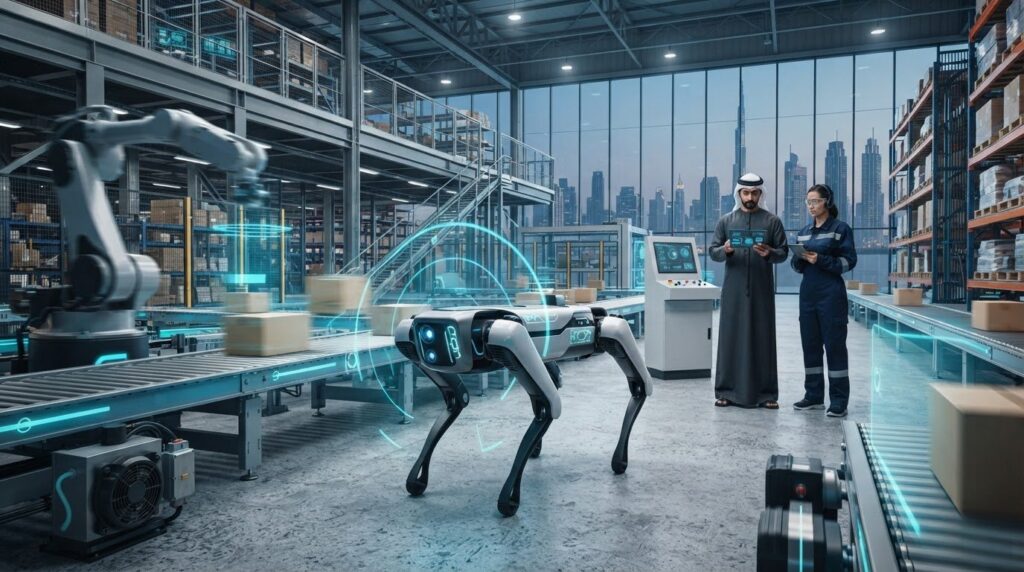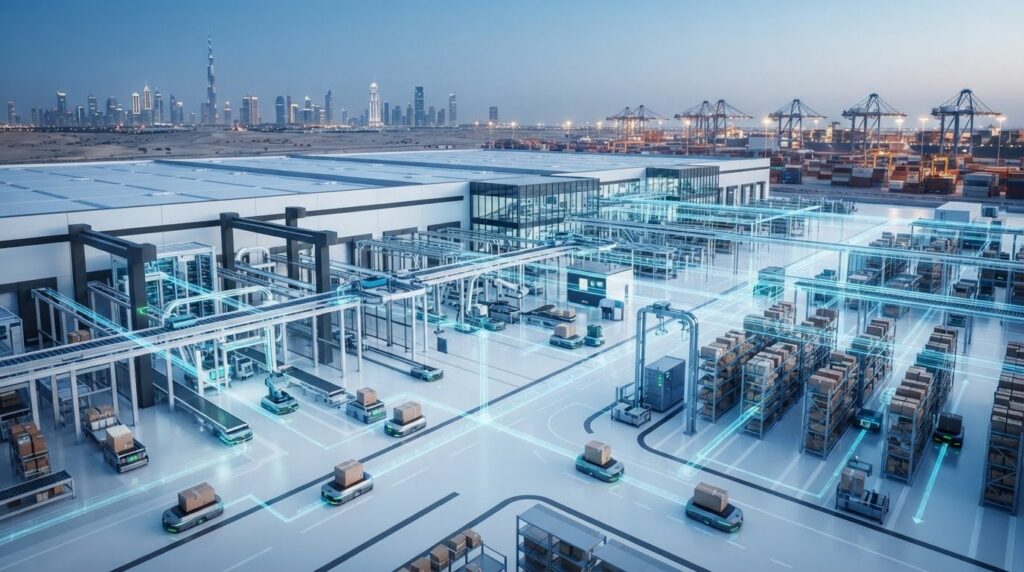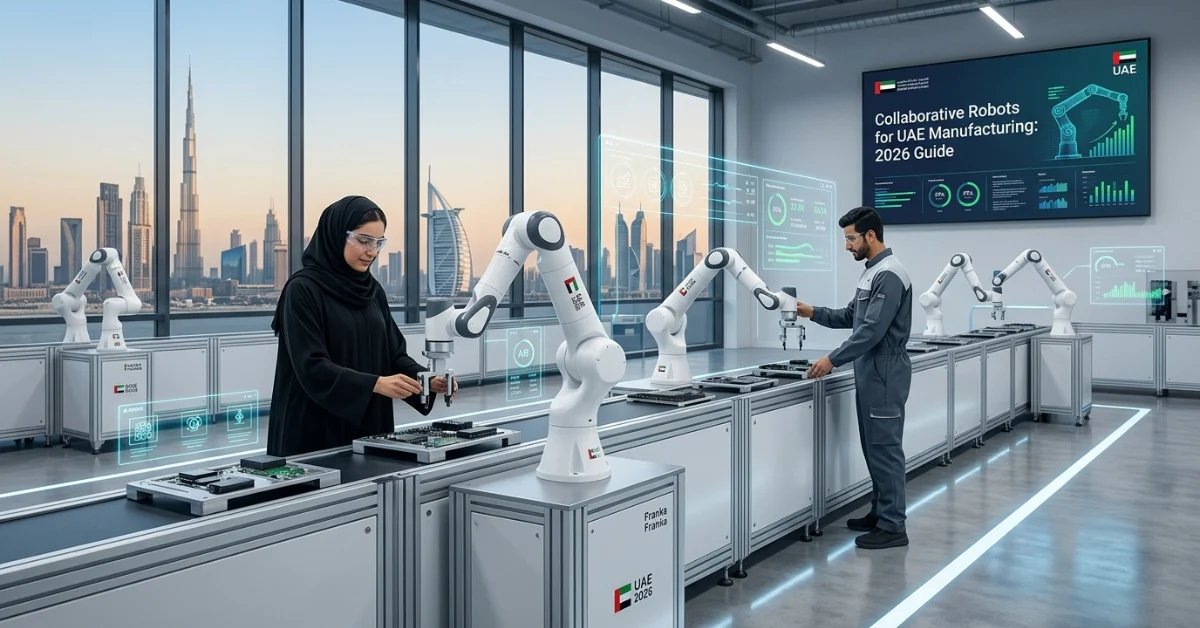
The era of isolating industrial automation behind safety cages has officially ended, replaced by a sophisticated ecosystem where human intelligence and machine precision operate in physical unison. By 2026, the deployment of collaborative robots for manufacturing UAE has transitioned from a competitive advantage to a fundamental requirement for industrial viability. As the UAE AI Act 2026 mandates stricter compliance and safety standards, manufacturers are moving beyond traditional robotics to embrace systems that share the workspace without compromising on security or floor space.
You’re likely facing the mounting pressure of rising labor costs for repetitive tasks and the technical complexity of integrating new hardware into your existing PLC and SCADA frameworks. It’s a challenge to scale production when floor space is at a premium and safety regulations are tighter than ever. This guide explores how advanced cobot systems redefine industrial efficiency by delivering increased throughput and a measurable reduction in workplace injuries. We’ll examine the technical architecture of seamless integration, the impact of the 2026 regulatory landscape, and the strategic pathways to modernizing your facility into a high-performance, Industry 4.0 compliant operation.
Key Takeaways
- Understand how the national shift toward Industry 4.0 is making automation a critical pillar for long-term industrial viability within the UAE manufacturing sector.
- Learn how collaborative robots for manufacturing UAE utilize advanced force-torque sensors and adaptive software to operate safely alongside human workers without traditional safety cages.
- Identify high-precision applications such as electronics assembly and machine tending that optimize throughput while significantly reducing workplace injuries.
- Master the implementation framework for robotic integration, focusing on the seamless synchronization of hardware with existing PLC and SCADA control systems.
- Discover the strategic steps for conducting feasibility studies and risk assessments to ensure long-term ROI and compliance with 2026 safety standards.
The Evolution of UAE Manufacturing: Embracing Industry 4.0 with Cobots
The industrial landscape across the Emirates is undergoing a profound metamorphosis. Driven by the national “Operation 300bn” strategy, the shift from manual labor to high-tech, automated environments has reached a critical tipping point in 2026. By positioning itself as a global hub for Industry 4.0 innovation, the UAE isn’t just adopting technology; it’s redefining the baseline for global manufacturing excellence. Integrating collaborative robots for manufacturing UAE is now the primary mechanism for achieving ambitious national productivity targets. Unlike traditional automation, which often requires rigid, permanent installations, modern cobots offer the flexibility that has become the new industrial currency.
National Vision and Industrial Digital Transformation
Aligning manufacturing strategies with long-term economic diversification goals requires a fundamental departure from legacy production models. Advanced robotics directly enhance regional supply chain resilience by allowing for rapid localized production that mitigates global shipping disruptions. Transitioning from antiquated systems to intelligent, data-driven production floors enables real-time optimization. These smart environments leverage hardware that communicates directly with central control systems, ensuring that every movement contributes to a leaner, more efficient operation. This digital maturity is no longer optional for organizations aiming to remain competitive within the regional market.
The Strategic Importance of Human-Robot Collaboration
Successful automation in 2026 centers on the synergy between human problem-solving and robotic repeatability. Understanding What is a Cobot? reveals a machine designed not to replace the workforce, but to empower it by assuming the burden of repetitive, physically taxing tasks. This partnership is particularly vital for the deployment of collaborative robots for manufacturing UAE within high-mix, low-volume environments where rapid changeovers are frequent. While traditional robots excel at high-speed, single-task execution, cobots provide the adaptability needed for bespoke production runs. By integrating these systems with broader infrastructure like ASRS systems, manufacturers create a seamless flow of materials and finished goods that maximizes both floor space and human ingenuity.
What is a Collaborative Robot? Defining the 2026 Standard
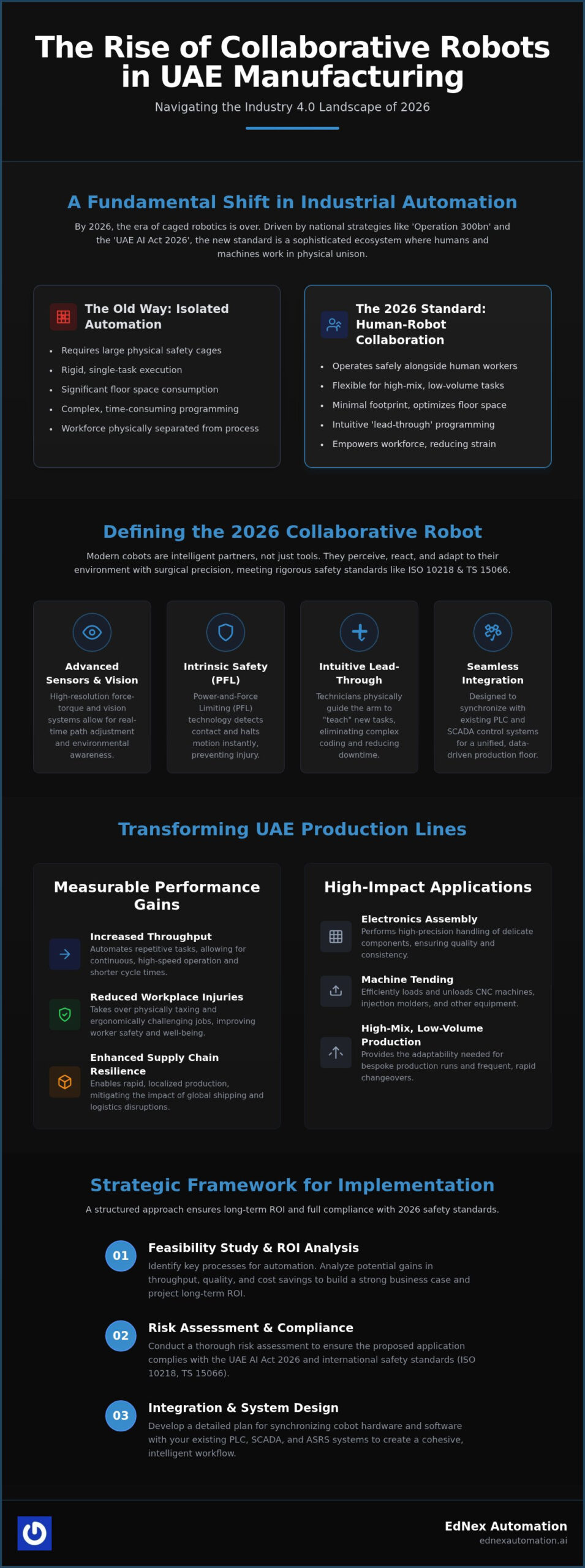
A collaborative robot, or cobot, represents a fundamental shift in industrial design philosophy. Unlike traditional automation, these systems are engineered to interact safely with humans within a shared workspace, eliminating the physical and psychological barriers of the past. As of 2026, the industry standard has moved beyond basic proximity detection. Modern units now integrate high-resolution force-torque sensors and sophisticated vision systems that allow for real-time path adjustment. Utilizing collaborative robots for manufacturing UAE enables facilities to maintain high-speed production while adhering to the rigorous ISO 10218 and TS 15066 safety specifications.
Advanced adaptive software ensures these machines respond instantaneously to human presence, providing a level of responsiveness that legacy systems cannot match. For those seeking expert perspectives on cobot integration, it’s clear that the convergence of AI and motion control is the defining characteristic of the current generation. These machines don’t just follow pre-programmed paths; they perceive and react to their environment with surgical precision. This intelligence allows them to handle delicate tasks that were previously reserved for human hands.
Core Features of Modern Collaborative Systems
Implementing power-and-force limiting (PFL) technologies allows the robot to detect the slightest contact and halt motion before injury occurs. This intrinsic safety is complemented by intuitive lead-through programming, which enables technicians to “teach” the robot by physically moving the arm through the desired sequence. This eliminates the need for complex coding and reduces the time required for task reconfiguration. Modular end-effectors, ranging from vacuum grippers for pick-and-place to precision welding tools, further enhance the utility of these systems across diverse production lines.
Cobots vs. Traditional Industrial Robots
The most significant differentiator lies in the physical footprint. Traditional robots require substantial safety cages and exclusion zones, often consuming vast amounts of valuable floor space. In contrast, cobots operate without restrictive fencing, making them the ideal solution for space-constrained manufacturing facilities. Deployment speed is another critical factor; while traditional integration can take weeks of engineering, a cobot setup often takes only days. When assessing the total cost of ownership, the lower barrier to entry and reduced infrastructure requirements make these systems a superior choice for rapid ROI. If you’re ready to evaluate how these systems fit into your facility, exploring tailored robotic solutions is the logical next step in your modernization journey.
Strategic Applications: Transforming UAE Production Lines
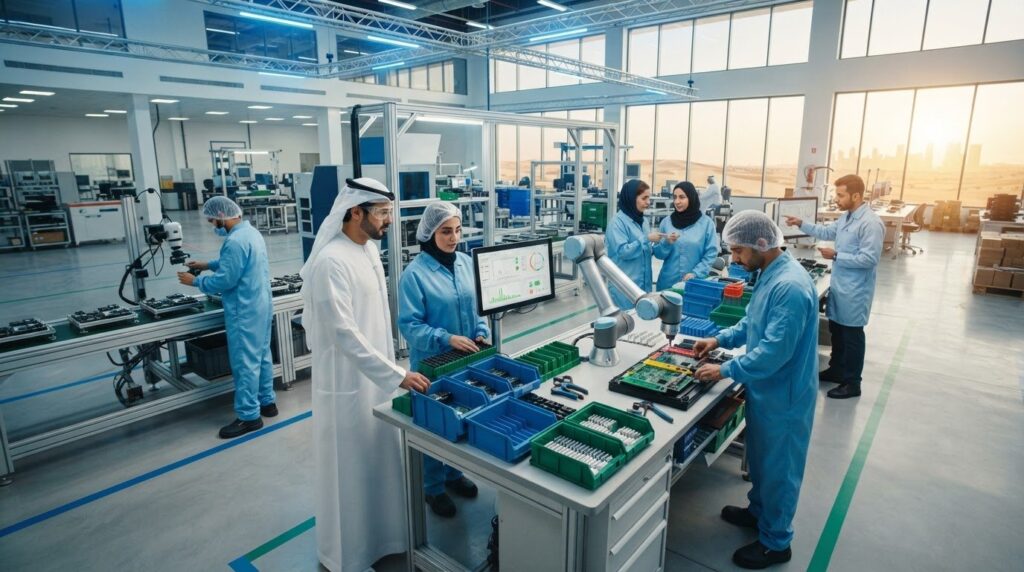
Integrating collaborative robots for manufacturing UAE has evolved beyond simple material handling into the execution of high-precision assembly tasks. In sectors like electronics, where delicate components require surgical accuracy, cobots provide the repeatability necessary for high-yield production. Machine tending represents another strategic pillar, where these systems optimize CNC and injection molding throughput by facilitating 24/7 autonomous operation. By assuming the burden of loading and unloading machinery, cobots allow human operators to focus on higher-level process optimization and quality oversight. This shift ensures that expensive machinery remains operational during off-hours, maximizing the return on capital equipment.
Achieving zero-defect manufacturing is now a realistic objective through the integration of AI-driven vision systems directly onto the robotic arm. These systems perform real-time quality inspections, identifying microscopic flaws that human inspectors might overlook. In the FMCG sector, streamlining end-of-line logistics through automated packaging and palletizing ensures that production speed is never throttled by manual bottlenecks. This comprehensive approach to automation ensures every stage of the production line operates at peak efficiency, creating a resilient and scalable manufacturing infrastructure.
Precision and Research Applications
Utilizing advanced platforms like Franka Research 3 allows organizations to push the boundaries of advanced R&D. These systems are instrumental in precision laboratory automation, where AI-driven experimentation requires extreme sensitivity and tactile data feedback. Such adaptive robotics are specifically supporting the UAE’s growing pharmaceutical and biotech sectors, providing the intellectual framework for rapid drug discovery and complex chemical analysis in controlled environments. The ability to automate repetitive lab work with high fidelity accelerates the time-to-market for critical medical innovations.
Heavy-Duty Industrial Collaboration
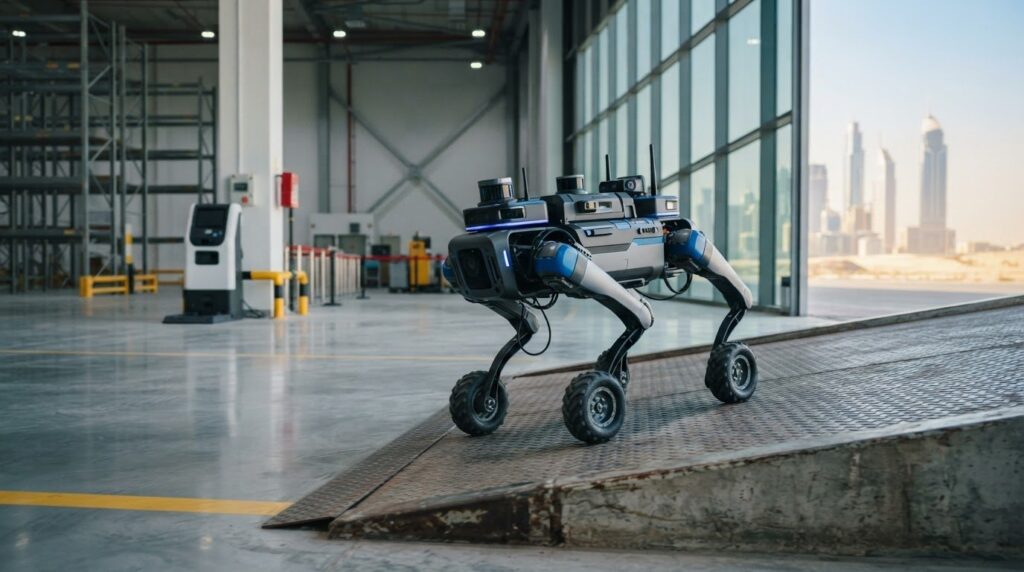
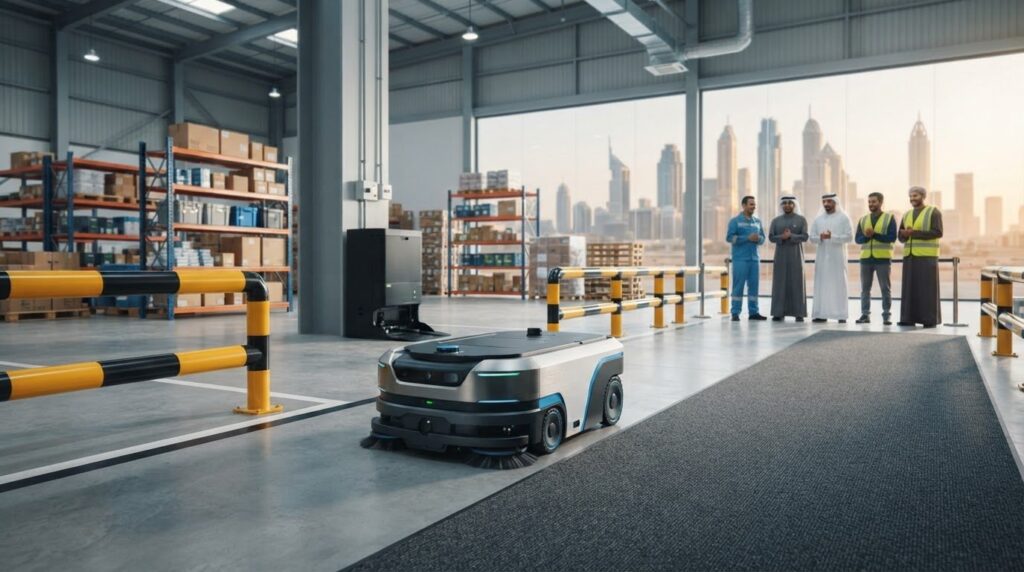
Deploying high-payload cobots has revolutionized material handling and heavy assembly in the metal fabrication industry. These systems handle collaborative welding and surface finishing with a level of consistency that manual processes cannot replicate, effectively mitigating the risks associated with hazardous industrial tasks. By integrating these units with autonomous mobile robots, manufacturers create a flexible logistics network where materials move autonomously between workstations. This synergy between stationary and mobile automation represents the pinnacle of industrial autonomy, allowing for a dynamic factory floor that adapts to changing production requirements in real-time.
Implementing Cobots: A Strategic Framework for ROI
Executing a successful deployment of collaborative robots for manufacturing UAE requires a transition from viewing hardware as a standalone tool to treating it as an integrated industrial asset. This process begins with a comprehensive feasibility study and a rigorous safety risk assessment to ensure the system meets the high standards of the 2026 regulatory environment. Selecting the right platform is a technical decision based on payload capacity, reach requirements, and environmental factors such as ambient temperature and dust levels. These variables dictate the long-term reliability of the system within the specific constraints of your facility.
True operational excellence is achieved when hardware is synchronized with existing PLC and SCADA systems. This level of connectivity enables centralized data collection and real-time process adjustments, moving beyond simple task automation toward full-scale industrial intelligence. When calculating the true ROI of these systems, visionary manufacturers look past initial labor costs. They factor in the tangible gains from increased production throughput, significant waste reduction, and the strategic reallocation of human talent to more complex, value-driven roles.
The Integration Phase: Connecting Hardware and Software
Ensuring seamless communication between new robotic units and factory-wide control architectures is the most critical technical hurdle. Expert system integrators play a vital role in this phase, utilizing their specialized knowledge to minimize deployment downtime and prevent costly production interruptions. Bespoke programming is frequently necessary for multi-stage manufacturing tasks that require high levels of coordination between multiple machines. This customized approach ensures that the robotic fleet doesn’t just perform tasks but actually enhances the overall flow of the production line.
Workforce Training and Cultural Adoption
Transitioning to an automated environment demands a parallel investment in human capital. Upskilling existing operators to manage and supervise collaborative fleets shifts their role from manual labor to technical oversight. Transparent automation roadmaps help address employee concerns by clearly outlining how technology supports job security through increased company competitiveness. Establishing a culture of continuous improvement involves creating feedback loops where human operators provide insights for robotic process optimization. This collaborative spirit ensures the technology remains an empowering force for the workforce. To begin architecting your facility’s future, partner with our integration specialists to develop a tailored automation strategy.
EdNex Automation: Your Partner for Scalable Robotic Integration
Leading the charge in industrial modernization, EdNex Automation delivers the intellectual framework required for large-scale transformation. We provide visionary automation solutions specifically engineered for the unique challenges of the national industrial landscape. By integrating collaborative robots for manufacturing UAE, we help organizations bridge the gap between global technological breakthroughs and regional operational needs. Our expertise extends beyond simple equipment delivery; we act as a systematic organizer, bringing order and efficiency to complex manufacturing environments through controlled and deliberate innovation.
Our team specializes in comprehensive end-to-end integration, managing everything from standalone robotic arms to complex ASRS systems. This holistic approach ensures that every component of your facility works in perfect synchronization. Accessing globally certified platforms and high-level technical support allows our partners to deploy cutting-edge technology with total confidence. We provide strategic consulting that prioritizes long-term business viability, ensuring your organization remains competitive throughout the 2026 economic cycle and beyond.
Comprehensive Automation Ecosystems
Creating a truly autonomous production facility requires the orchestration of multiple robotic tiers. We combine advanced cobots with autonomous mobile robots (AMRs) to facilitate a fully autonomous material flow that eliminates manual handling risks. Leveraging deep PLC and SCADA expertise, we build data-transparent manufacturing plants where every movement is tracked and optimized. While our primary focus remains on industrial excellence, we offer customized solutions for the hospitality, cleaning, and professional services sectors, ensuring the benefits of collaborative robots for manufacturing UAE are accessible across the entire economy.
Start Your Automation Journey with EdNex
Initiating a transformation of this scale requires a methodical approach that begins with a professional site assessment. Requesting a technical consultation allows our engineers to identify the specific bottlenecks in your current production line. We provide regional expertise that covers the entire lifecycle of the system, including ongoing maintenance and performance optimization. This ensures your investment continues to deliver peak performance as your production requirements evolve. To redefine your operational capacity and secure your place in the future of industry, consult with our automation experts to transform your production line today.
Architecting the Future of UAE Industrial Excellence
The 2026 industrial environment demands a transition from traditional automation to intelligent, collaborative systems that prioritize safety and operational flexibility. By deploying collaborative robots for manufacturing UAE, organizations don’t just optimize their output; they align themselves with the national vision for a high-tech, diversified economy. These systems provide the necessary precision for complex assembly while ensuring human workers remain central to the production process. Integrating these advanced platforms into your existing control architecture creates a data-transparent environment capable of sustaining long-term growth.
As a strategic partner for Industry 4.0 across the GCC, EdNex Automation offers the technical expertise required to navigate this evolution. Being an authorized integrator for world-class robotic platforms, we deliver comprehensive solutions that encompass PLC, SCADA, and ASRS systems. This ensures your facility operates with the highest level of autonomy and reliability. Design your future-ready factory with EdNex Automation to redefine your operational standards today. Your journey toward a more efficient, safer, and technologically superior manufacturing floor starts with a deliberate commitment to innovation.
Frequently Asked Questions
What are the primary safety requirements for collaborative robots in the UAE?
Compliance with ISO 10218 and ISO/TS 15066 standards is mandatory for all collaborative robots for manufacturing UAE. These regulations dictate power and force limiting thresholds to ensure safe human-robot interaction. Additionally, the UAE AI Act 2026 requires organizations to conduct mandatory self-assessments for AI-driven systems. Ensuring that every installation meets these global and regional certifications is critical for maintaining operational legality and workforce safety within any modern industrial facility.
How do collaborative robots differ from traditional industrial robots?
Traditional industrial robots operate in isolation behind safety cages to prevent human contact, whereas cobots utilize advanced force-torque sensors to work in shared spaces. This eliminates the need for expensive safety fencing and significantly reduces the physical footprint on the factory floor. While traditional systems excel at high-speed, high-volume production, cobots offer the flexibility required for high-mix, low-volume tasks. They’re designed for rapid redeployment across different stages of the manufacturing process.
Can cobots be integrated with my existing PLC and SCADA systems?
Seamless integration with existing PLC and SCADA systems is a core capability of modern collaborative platforms. These robots communicate through standard industrial protocols, allowing for real-time data transparency and centralized process control. This connectivity ensures that robotic movements are synchronized with the broader factory infrastructure, such as conveyors or ASRS systems. By bridging hardware and software, manufacturers create a unified ecosystem that supports data-driven decision-making and remote monitoring of production performance.
What is the typical ROI period for a cobot installation in manufacturing?
Most manufacturers achieve a full return on investment within six to eighteen months, depending on the complexity of the application. Calculating ROI involves factoring in increased production throughput, reduced material waste, and the strategic reallocation of human labor to higher-value technical roles. Because cobots require minimal infrastructure changes and offer rapid deployment, the initial setup costs are lower than traditional automation. Long-term business viability is further enhanced by the system’s ability to operate 24/7.
Do I need advanced programming knowledge to operate a collaborative robot?
Advanced coding expertise isn’t required to operate the current generation of collaborative robots for manufacturing UAE. Most systems feature intuitive drag-and-drop software interfaces and lead-through programming, where operators teach the robot by physically moving its arm through the desired sequence. This user-centric design allows existing floor staff to manage and reconfigure tasks without specialized software engineering training. This accessibility accelerates the deployment phase and empowers the workforce to take direct ownership of the automated processes.
What is the maximum payload capacity for modern industrial cobots?
Modern industrial cobots have expanded their capabilities to handle payloads ranging from 3kg to over 30kg. While earlier models focused on light-duty assembly, the 2026 standard includes high-payload units capable of managing heavy material handling and palletizing tasks. Selecting the appropriate model depends on the specific reach and torque requirements of the application. These high-capacity systems maintain the same safety certifications as their smaller counterparts, providing a versatile solution for diverse industrial needs across the Emirates.
How do cobots handle quality inspection in high-speed production?
Cobots handle quality inspection by integrating AI-driven vision systems directly onto the robotic arm or at fixed workstations. These high-resolution cameras scan components for microscopic defects at production speeds that exceed human capability. By utilizing machine learning algorithms, the system identifies anomalies in real-time and automatically diverts non-compliant parts. This zero-defect manufacturing approach reduces scrap rates and ensures that only high-quality products move through the final packaging and logistics stages of the production line.
Are collaborative robots suitable for small and medium-sized enterprises (SMEs) in the UAE?
Collaborative systems are exceptionally well-suited for small and medium-sized enterprises due to their lower barrier to entry and modular nature. SMEs benefit from the ability to automate specific bottlenecks without the massive capital expenditure required for full-scale traditional robotics. The ease of redeployment allows smaller facilities to use a single cobot for multiple different tasks throughout the week. This flexibility is vital for businesses looking to scale their production capacity while maintaining lean operational costs.