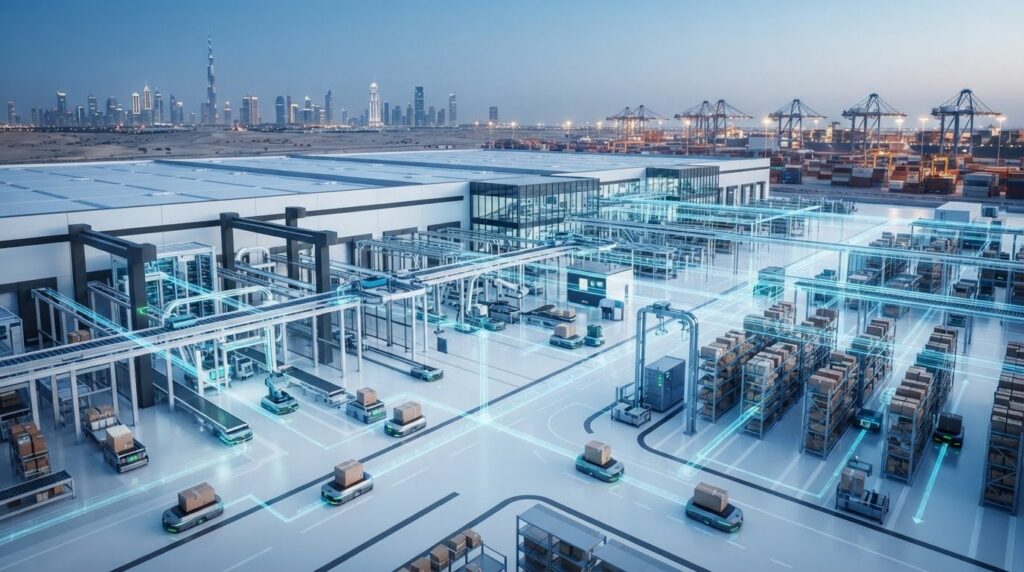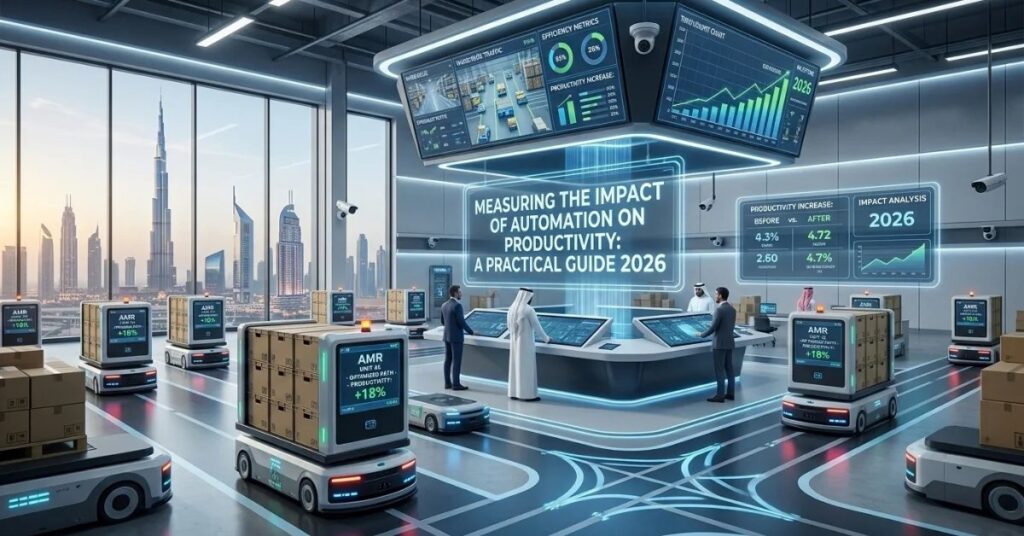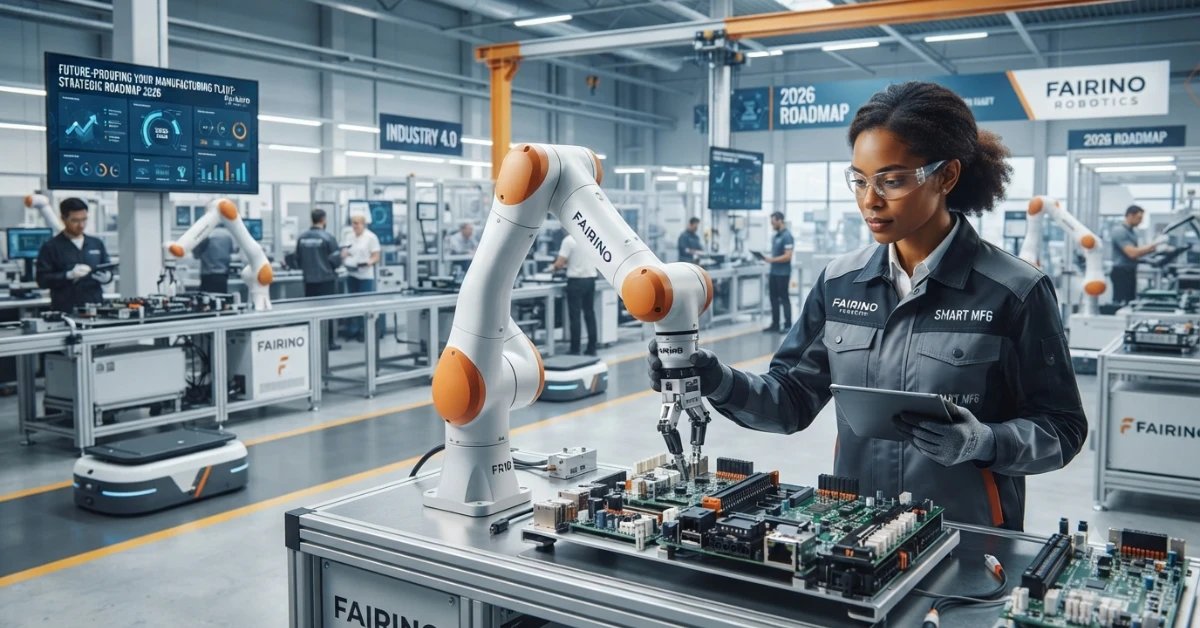
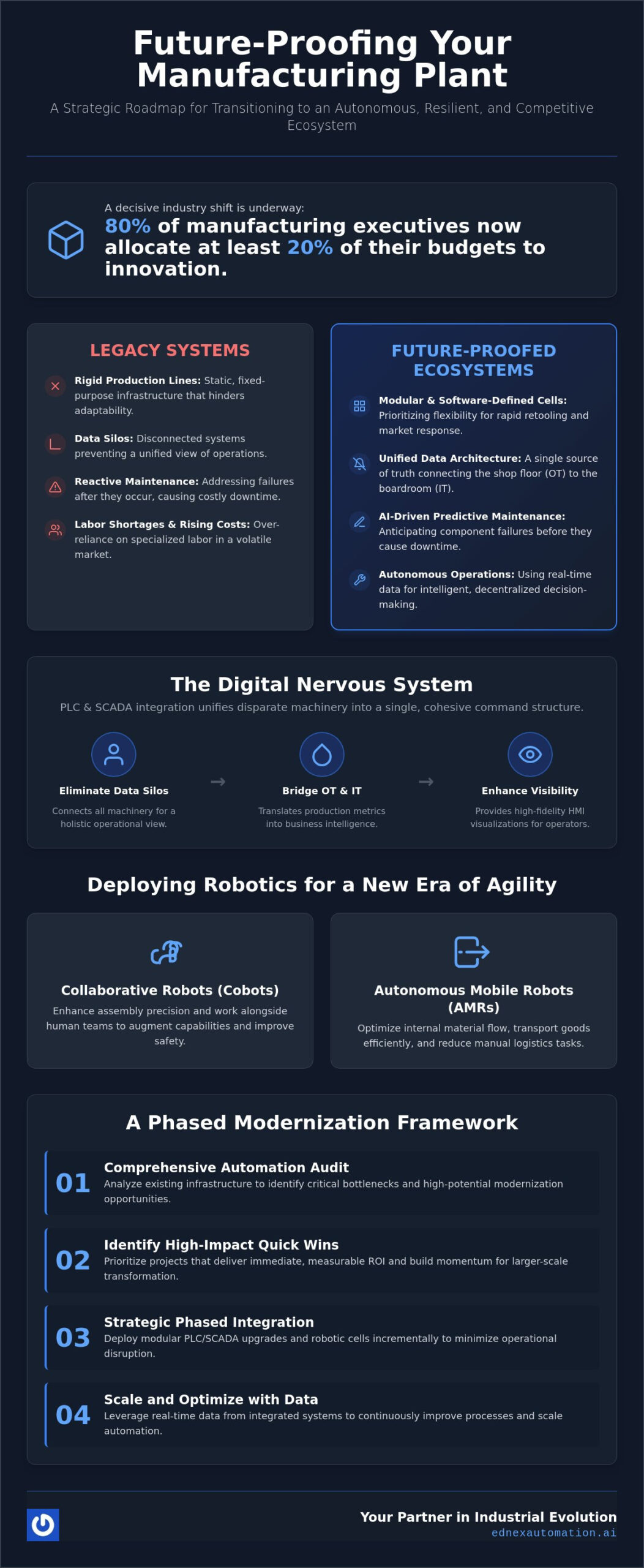
What if the legacy systems currently anchoring your production floor are the greatest threat to your 2026 growth targets? With 80% of manufacturing executives now allocating at least 20% of their budgets to innovative initiatives, it’s clear that future-proofing your manufacturing plant has evolved from a technological luxury to a strategic necessity. You’ve likely encountered the friction of specialized labor shortages and rising operational costs, challenges that demand a definitive departure from rigid, traditional infrastructure.
We agree that orchestrating a complete industrial transformation is a high-stakes endeavor that requires both technical precision and a clear ROI roadmap. This article promises to reveal how the integration of advanced robotics and intelligent control systems creates a resilient, scalable, and globally competitive manufacturing ecosystem. By examining the transition to modular, software-defined automation, we’ll preview the steps required to achieve real-time data visibility and build a self-optimizing production floor that aligns with national industrial standards.
Key Takeaways
- Learn how transitioning to modular, software-defined manufacturing cells creates the adaptability required to meet shifting 2026 market demands.
- Discover why integrating advanced PLC and SCADA systems is the essential first step for future-proofing your manufacturing plant by eliminating legacy data silos.
- Understand the strategic deployment of collaborative robots and autonomous mobile robots to enhance assembly precision and optimize internal material flow.
- Master a phased modernization framework that prioritizes comprehensive automation audits and identifies immediate, high-impact operational quick wins.
- Identify the critical criteria for selecting a technical partner capable of aligning global robotic innovations with specific regional industrial standards.
Defining Future-Proofing in the Era of Industry 4.0
Defining the trajectory of future-proofing your manufacturing plant requires a departure from traditional linear thinking. As we enter 2026, the industrial sector is witnessing a decisive shift from rigid, fixed-purpose production lines to modular, software-defined manufacturing cells. This evolution is a core component of the Industry 4.0 framework, where the primary objective is to build systems that prioritize flexibility over static throughput. In this high-stakes environment, adaptability has emerged as the primary KPI for success, as manufacturers must now pivot their entire floor configurations in response to volatile consumer trends and micro-shifts in global supply chains.
Transitioning toward autonomous operations represents the ultimate objective of modern industrial strategy. While basic automation focuses on executing repetitive scripts, autonomous systems utilize real-time data to make decentralized, intelligent decisions on the fly. This level of intelligence allows a facility to anticipate market demands and logistical bottlenecks before they impact the bottom line. By integrating these advanced control systems, you ensure your ecosystem remains resilient against the labor shortages and rising energy costs that define the current economic landscape.
Modularity as a Strategic Asset
Designing production layouts that facilitate rapid retooling is no longer a luxury; it’s a structural necessity for long-term viability. By adopting interoperable hardware standards across the plant, organizations can swap robotic components and sensors without facing the restrictive “walled garden” limitations of proprietary vendors. This modular approach significantly reduces the risk of long-term technology lock-in, allowing for incremental hardware upgrades that don’t require a total system overhaul. Leveraging these reconfigurable assets ensures that your capital investments remain relevant as new technological breakthroughs emerge.
Data Sovereignty and Predictive Intelligence
Establishing a single source of truth through a unified data architecture allows for a seamless transition from costly reactive maintenance to AI-driven predictive maintenance. This shift utilizes advanced sensor arrays to identify potential component failures before they occur, preserving the integrity of high-value machinery and eliminating unplanned downtime. Data sovereignty ensures that the plant owner retains full control over their operational intelligence, preventing critical performance insights from being siloed in external platforms. Industry 4.0 maturity is ultimately measured by the reduction of data-to-action latency, where the time between capturing a data point and executing a corrective action approaches zero.
The Central Nervous System: PLC and SCADA Integration
Establishing a robust digital foundation is the second critical step in future-proofing your manufacturing plant. While modular hardware provides the physical flexibility discussed in the previous section, the control layer acts as the digital brain that synchronizes these assets. Legacy control systems represent the primary bottleneck for modern facilities, often because they lack the high-speed communication protocols required for real-time interoperability. By utilizing specialized PLC and SCADA integration services, organizations can unify disparate machinery into a single, cohesive command structure that eliminates data silos and operational friction.
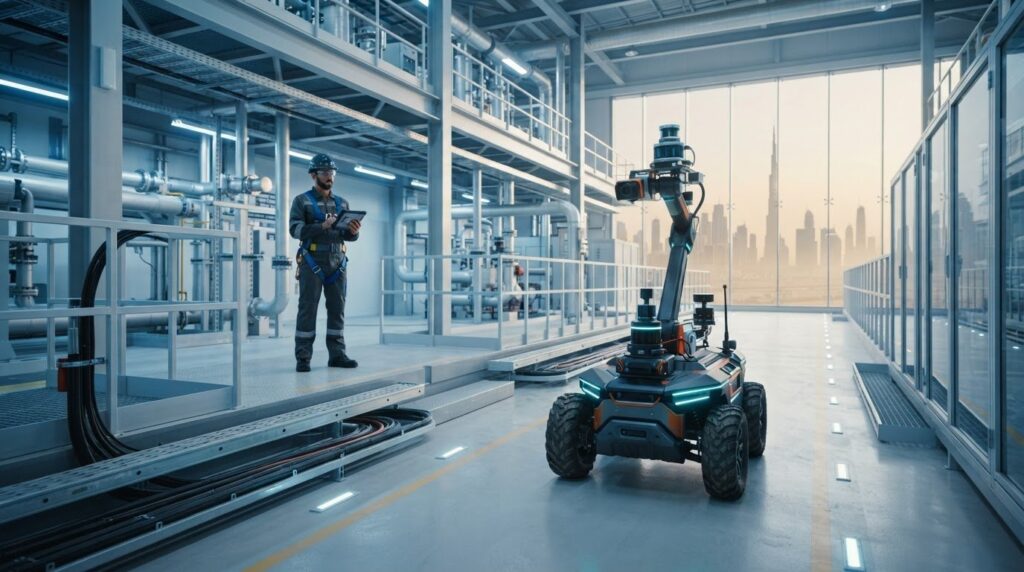
Bridging the gap between the shop floor (OT) and the boardroom (IT) is essential for maintaining a competitive edge in 2026. Modern integration ensures that raw production metrics are instantly translated into high-level business intelligence, allowing executives to make informed decisions based on live floor conditions. Advanced Human-Machine Interfaces (HMI) enhance this visibility, providing operators with intuitive, high-fidelity visualizations of complex processes. This transparency doesn’t just improve day-to-day oversight; it builds the intellectual framework necessary for scaling production rapidly without compromising quality or safety.
Upgrading Legacy Infrastructure
Retrofitting older plants with modern PLC controllers, such as the Siemens SIMATIC S7-1500 or Allen-Bradley ControlLogix 5580, provides the processing power required for complex, AI-driven logic. Implementing these upgrades requires a methodical approach to minimize downtime, often involving parallel testing phases before full cutover. Prioritizing cybersecurity-by-design within these industrial control networks is a non-negotiable requirement for 2026, ensuring that your connected infrastructure remains resilient against evolving digital threats. Successful migration strategies focus on maintaining continuity while laying the groundwork for future autonomous capabilities.
SCADA as an Optimization Engine
Modern SCADA platforms like Ignition by Inductive Automation or AVEVA System Platform have evolved into powerful optimization engines. With average industrial electricity prices reaching 13.64¢/kWh in 2026, these systems are now indispensable for real-time energy management and sustainability reporting. Customizing dashboards for specific stakeholder needs ensures that operators see technical alerts while management receives high-level production tracking and ROI metrics. Integrating your SCADA system with a Manufacturing Execution System (MES) creates a comprehensive end-to-end tracking ecosystem, aligning your facility with the latest IEC 62264-2:2026 standards for business-to-manufacturing integration. Exploring bespoke integration solutions is often the most direct path to achieving this level of operational maturity.
Deploying Collaborative and Autonomous Robotics for Agility
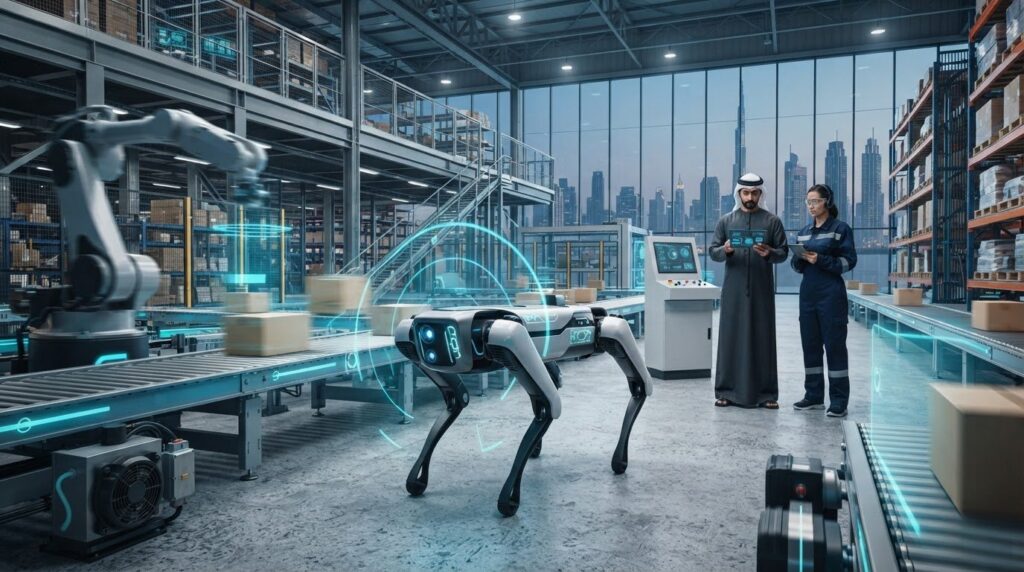
Implementing advanced robotic systems serves as the physical manifestation of the modularity and digital intelligence established in the preceding roadmap stages. In the context of future-proofing your manufacturing plant, the deployment of intelligent robotics is no longer limited to high-volume, low-mix scenarios. Today’s ecosystem demands a fleet of versatile machines capable of transitioning between complex assembly tasks and dynamic logistical support without extensive downtime. By integrating collaborative robots (cobots) alongside autonomous systems, manufacturers can achieve a level of operational agility that was previously unattainable with fixed infrastructure.
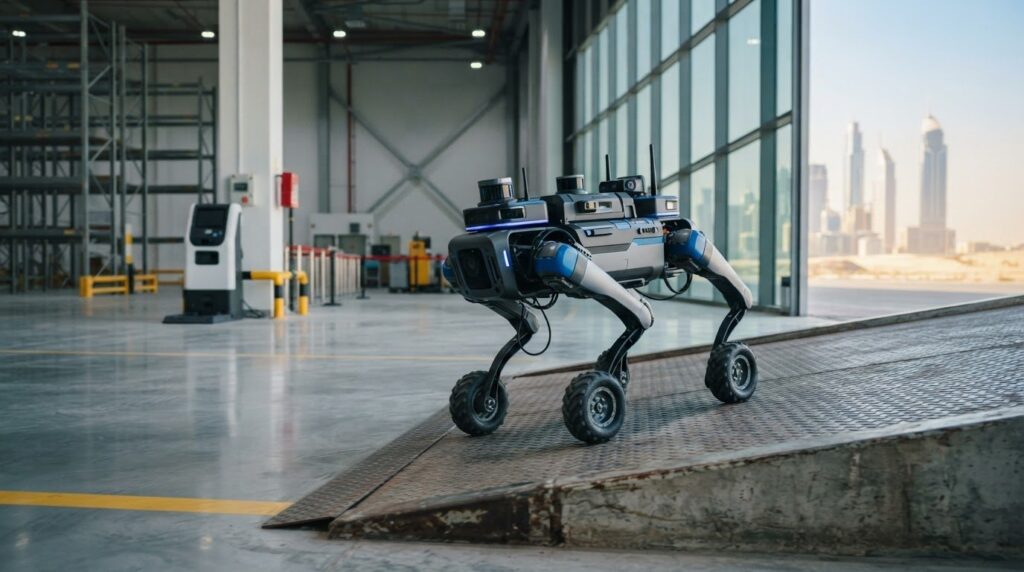
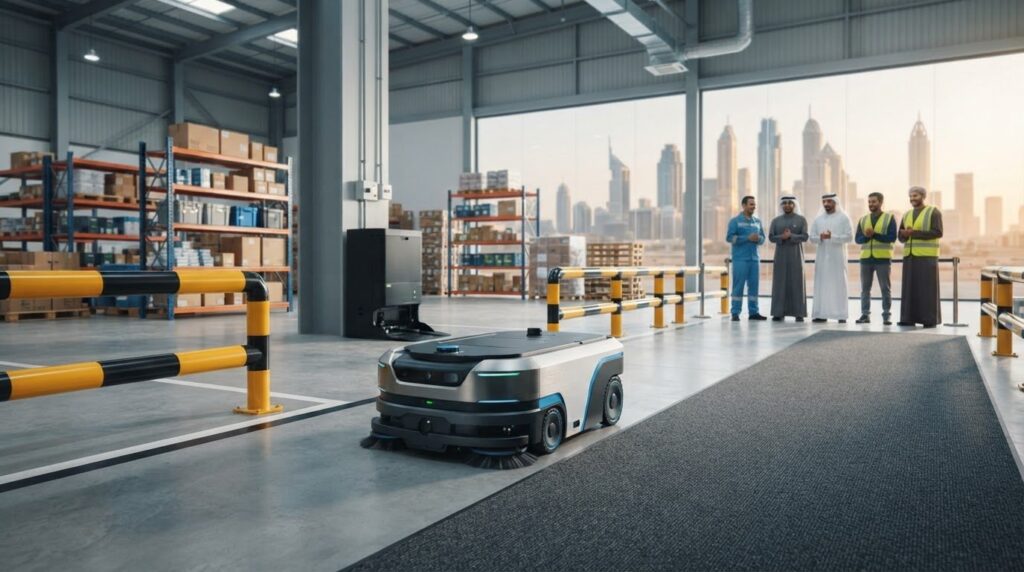
Replacing rigid, floor-mounted conveyors with autonomous mobile robots (AMRs) allows for a fluid material flow that adapts to real-time production requirements. Unlike traditional automated guided vehicles (AGVs) that rely on fixed magnetic strips or wires, AMRs utilize sophisticated SLAM (Simultaneous Localization and Mapping) technology to navigate unstructured environments safely. This autonomy is particularly valuable when integrated with automated storage and retrieval systems (ASRS), creating a seamless link between warehousing and the production floor. As humanoid robots begin to enter the workforce for complex, human-centric tasks, and specialized cleaning or surveillance robots manage facility overhead, the entire plant shifts toward a truly autonomous model.
Cobots vs. Traditional Industrial Robots
The primary advantage of collaborative systems lies in their advanced safety profiles, which utilize force-limiting sensors to work alongside human operators without the need for expensive safety caging. This lack of physical barriers reduces the total footprint of the automation cell and simplifies compliance with ANSI/RIA R15.06 standards. Because these units feature intuitive lead-through programming, they’re ideal for rapid deployment in high-mix/low-volume production environments where traditional robots would be cost-prohibitive. While traditional fixed robots offer high-speed repetition for static lines, collaborative units deliver a significantly faster ROI by enabling rapid redeployment across diverse high-mix production cycles.
Revolutionizing Internal Logistics with AMRs
The superior navigation capabilities of AMRs represent a fundamental shift in how facility managers approach internal logistics. By decoupling material movement from fixed paths, organizations can scale their logistics operations without expanding their physical footprints or modifying floor layouts. These robots communicate directly with the plant’s central SCADA system to prioritize deliveries based on live machine status, ensuring that raw materials arrive exactly when needed. Integrating AMRs with high-density ASRS solutions ensures that every square meter of the facility is optimized for throughput, effectively future-proofing the plant against the rising costs of industrial real estate and labor.
A Phased Approach to Plant Modernization
Executing a successful industrial transformation requires a methodical strategy that balances long-term ambition with immediate operational stability. Future-proofing your manufacturing plant isn’t achieved through a singular, disruptive event but through a series of calculated, high-impact upgrades. By prioritizing a phased rollout, organizations can validate technological performance in controlled environments before committing to facility-wide deployments. This systematic approach ensures that capital investments are protected and that each modernization milestone delivers a measurable improvement in throughput or efficiency.
Identifying high-impact, low-complexity “quick wins” is the most effective way to build internal momentum and secure early ROI. For instance, implementing predictive maintenance sensors on critical bottleneck machinery can reduce unplanned downtime by 30% to 50%, providing a rapid return on investment that supports subsequent phases. Aligning these initiatives with national industrial excellence standards ensures that your facility remains competitive within the regional economic landscape. Transitioning your workforce is equally vital, as operators must evolve into robot supervisors capable of managing the sophisticated interfaces discussed in our previous sections.
The Automation Audit
Conducting a comprehensive automation audit is the essential first step in assessing the “automation readiness” of your current workflows. This process involves evaluating the compatibility of existing hardware with modern software protocols and identifying the specific bottlenecks that cause the most significant operational friction. By establishing a clear baseline of your technical debt, you can design a roadmap that addresses immediate vulnerabilities while preparing the infrastructure for future autonomous capabilities. If you’re ready to evaluate your current facility’s potential, you can request a comprehensive automation audit from our expert engineering team today.
Scaling from Pilot to Plant-Wide
Developing a scalable pilot program allows for the rigorous testing of new robotic cells or control logic without risking total production output. Key performance indicators (KPIs) must be established early, focusing on metrics such as cycle time reduction, error rates, and energy consumption per unit. Managing the cultural shift is perhaps the most complex aspect of scaling; it requires transparent communication to address employee concerns regarding automation. By establishing robust technical support structures and maintenance protocols during the pilot phase, you ensure that the transition to a plant-wide Industry 4.0 ecosystem is both seamless and sustainable.
Partnering for Long-Term Industrial Evolution
Achieving a truly autonomous production environment requires more than just purchasing high-end hardware; it demands a synergy between advanced robotics and sophisticated control systems. Choosing a partner with cross-disciplinary expertise ensures that every robotic arm, AMR, and sensor works in perfect harmony with the underlying digital architecture. EdNex Automation specializes in this high-level integration, aligning global technological breakthroughs with the specific industrial standards required for success in 2026. This comprehensive approach covers the entire lifecycle of modernization, from initial hardware supply to complex PLC programming, ensuring that future-proofing your manufacturing plant results in a tangible, globally competitive advantage.
Sustainable success is maintained through continuous system optimization rather than static, one-time installations. As production requirements shift and new market demands emerge, your integrated ecosystem must be refined to maintain peak efficiency and maximum ROI. A dedicated technical partner provides the intellectual framework necessary to navigate these evolutions, acting as a bridge between current capabilities and the autonomous future. We’ve seen that organizations failing to integrate their OT and IT layers often struggle with data silos that hinder long-term growth. By unifying these layers, you create a self-optimizing floor that responds to real-time data with surgical precision.
Integrated Solutions for UAE Industry
The Future of Your Facility Starts Today
Delaying modernization initiatives only increases the technical debt of your plant, making future transitions more costly and complex. Technical debt isn’t just about aging machinery; it’s the cumulative cost of inefficient workflows and siloed data that prevent rapid scaling. Taking the first step toward a visionary, autonomous future ensures that your organization remains resilient against market disruptions and the rising logistics costs we’ve analyzed throughout this roadmap. The path to 2026 is clearly defined, and the tools for transformation are already available for those ready to lead. To begin your transformation and eliminate operational bottlenecks, Consult with EdNex Automation experts to audit your facility and identify your strategic path forward.
Mastering the Autonomous Industrial Frontier
Transitioning to a software-defined, modular ecosystem is the only viable path for manufacturers facing the labor and energy challenges of 2026. Establishing a digital central nervous system through robust PLC and SCADA integration provides the necessary visibility to scale production while mitigating technical debt. By deploying collaborative robotics and autonomous material flow, you ensure your facility remains adaptable to unpredictable market shifts. Future-proofing your manufacturing plant isn’t just about survival; it’s about securing a dominant position in the next industrial era.
Empowering your facility with these advanced systems requires a partner who understands the gravity of large-scale transformation. As a specialized division of the EdNex group founded in 2018, we provide the technical framework for complex ASRS, AMR, and Cobot integration. Our team delivers comprehensive PLC and SCADA support to transform your legacy infrastructure into a self-optimizing asset. The roadmap to industrial leadership is now within your reach, and the technology to achieve it is ready for implementation.
Secure Your Plant’s Future with EdNex Automation’s Integration Expertise
Frequently Asked Questions
What is the first step in future-proofing an existing manufacturing plant?
The initial phase involves conducting a comprehensive automation audit to identify technical debt and map out existing bottlenecks. This assessment establishes a clear baseline for your facility’s “automation readiness,” ensuring that subsequent investments in robotics or control systems are strategically prioritized. By identifying high-impact areas early, you can design a roadmap that supports incremental growth without risking total production output.
How do collaborative robots (cobots) differ from traditional industrial robots?
Collaborative robots are engineered with advanced force-limiting sensors, allowing them to work alongside human personnel without the requirement for expensive safety caging. While traditional industrial robots excel at high-speed, static tasks in isolated environments, cobots offer the flexibility needed for high-mix production. Their intuitive programming interfaces enable rapid redeployment, making them a more agile asset for facilities that manage diverse product lines.
Why is PLC and SCADA integration critical for Industry 4.0?
PLC and SCADA integration acts as the digital central nervous system, unifying disparate machinery into a single, cohesive command structure. This unification is essential for future-proofing your manufacturing plant because it eliminates data silos and provides the real-time visibility required for autonomous decision-making. By aligning your shop floor with high-level business intelligence, you create a self-optimizing ecosystem that responds instantly to supply chain shifts.
Can autonomous mobile robots (AMRs) work in older, crowded factory layouts?
Yes, AMRs utilize Simultaneous Localization and Mapping (SLAM) technology to navigate unstructured environments without the need for fixed tracks or magnetic tape. This autonomy allows them to safely bypass obstacles and personnel in older, more complex factory layouts where space is at a premium. Their ability to dynamically recalculate paths ensures that internal logistics remain fluid, even as floor configurations evolve.
What is the expected ROI period for a typical warehouse automation project?
While specific timelines vary by industry, most organizations achieve a positive return on investment within 18 to 36 months of full implementation. This ROI is driven by significant reductions in manual labor reliance, decreased energy consumption, and the elimination of costly human errors in logistics. In the regional market, these gains are often accelerated by the increased throughput and operational resilience that automation provides against global supply chain volatility.
How does future-proofing help in achieving sustainability and net-zero goals?
Future-proofing aligns your facility with net-zero targets by utilizing intelligent control systems to optimize resource consumption and minimize material waste. Advanced SCADA platforms provide the granular data needed for precise energy management, helping to offset the impact of rising commercial utility costs. By transitioning to a more efficient, autonomous model, you reduce your overall carbon footprint while maintaining a globally competitive production standard.
Is it possible to integrate new robots with 10-year-old control systems?
It’s possible to bridge the gap between legacy control systems and modern robotics through specialized protocol conversion and the use of intermediate integration layers. However, to unlock the full potential of autonomous features and real-time data analytics, we often recommend retrofitting older controllers with contemporary PLC hardware. This ensures that your entire infrastructure can support the high-speed communication required for modern Industry 4.0 standards.
What role do humanoid robots play in the future of manufacturing?
Humanoid robots are designed to bridge the gap in complex, unstructured tasks that require human-like dexterity and mobility. These systems are particularly valuable for augmenting the workforce in roles that are difficult to automate with traditional fixed machinery or cobots. As these technologies mature, they’ll become a key component of the “tech-enabled craftsmanship” model, allowing human operators to focus on higher-level supervisory and creative roles.