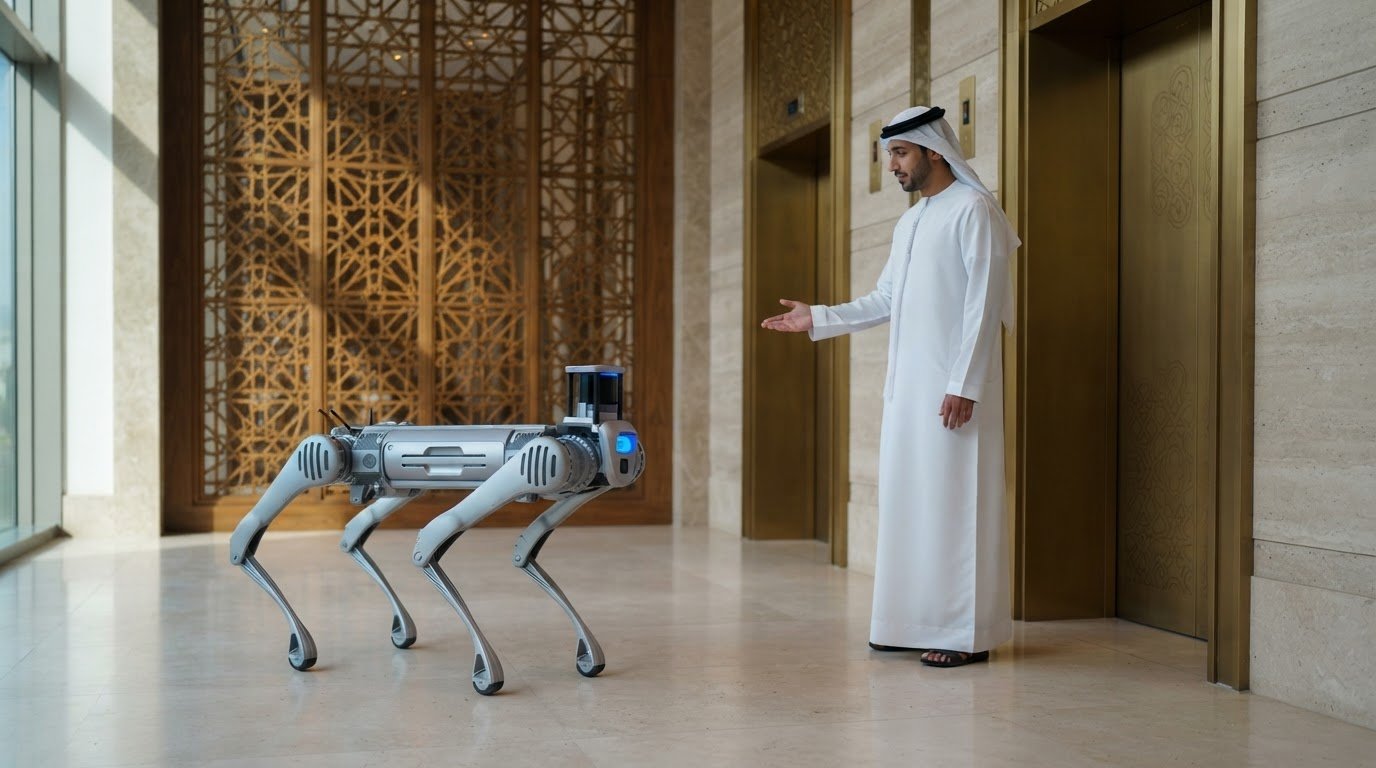
A human-shaped robot is valuable only when its form solves a real operational problem. Humanoid robots in the UAE may suit businesses that need machines to interact with people and move through environments designed for human use, such as hospitals, warehouses, and public spaces. The case for choosing one is strongest when human-like movement and interaction matter more than a simpler, task-specific robot.
It is understandable to focus on advanced AI: a capable model can help a robot interpret its surroundings and respond as conditions change. But the right choice also depends on the work, environment, safety requirements, and integration with existing operations. This guide explains how humanoid robots can support UAE businesses, what benefits and limitations to weigh, and which capabilities to examine when evaluating a model.
Pricing in AED depends on the robot’s capabilities, configuration, and integration requirements, and is provided after a quotation request. The sections ahead also explain how to assess the business case and when a different type of robot may better suit the task.
Key Takeaways
- Assess whether human-like movement and interaction suit the task, or whether a purpose-built robot is a better operational fit.
- Understand how configuration, AI capabilities, and integration needs shape humanoid robot pricing in AED.
- Identify the import, operating, and safety considerations that may affect deployment in the UAE.
- Evaluate technical reliability, privacy, and workforce impacts before introducing a humanoid robot into daily operations.
Why Choose a Humanoid Robot?
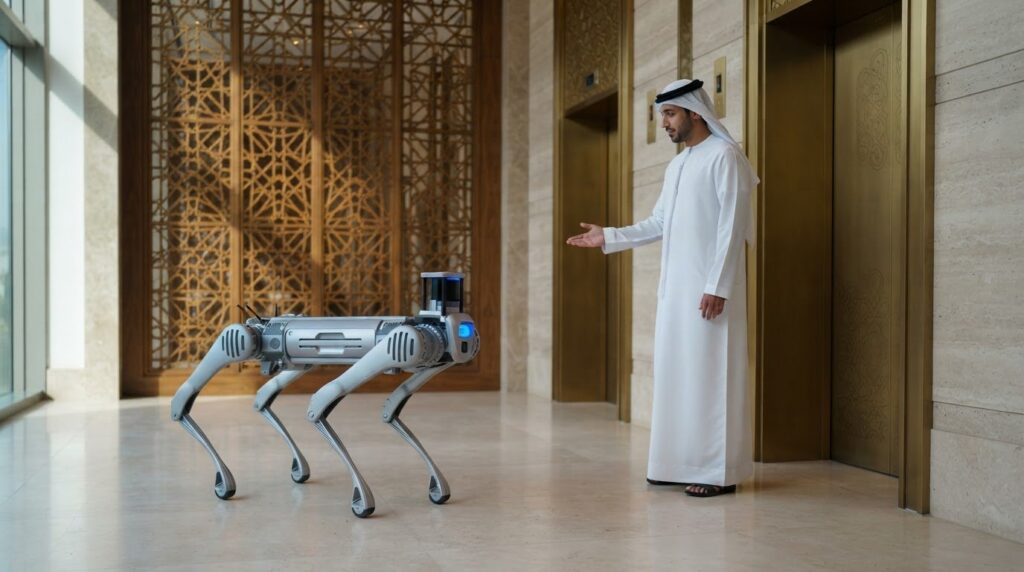
A humanoid platform makes sense when a task requires human-like movement, interaction, or access to spaces designed around people. In a UAE hospital, warehouse, or public area, that form may help a robot move through changing surroundings while engaging with nearby people. A fixed route or repetitive task may suit a purpose-built machine better.
Embodied AI allows a robot to interact with its surroundings, learn from them, and respond in real time. That capability can support changing tasks, but it doesn’t make every humanoid suitable for every operation. Compare the intended work, operating environment, human interaction, and required autonomy before selecting a model. Also assess whether its technology can be integrated into the site’s existing processes.
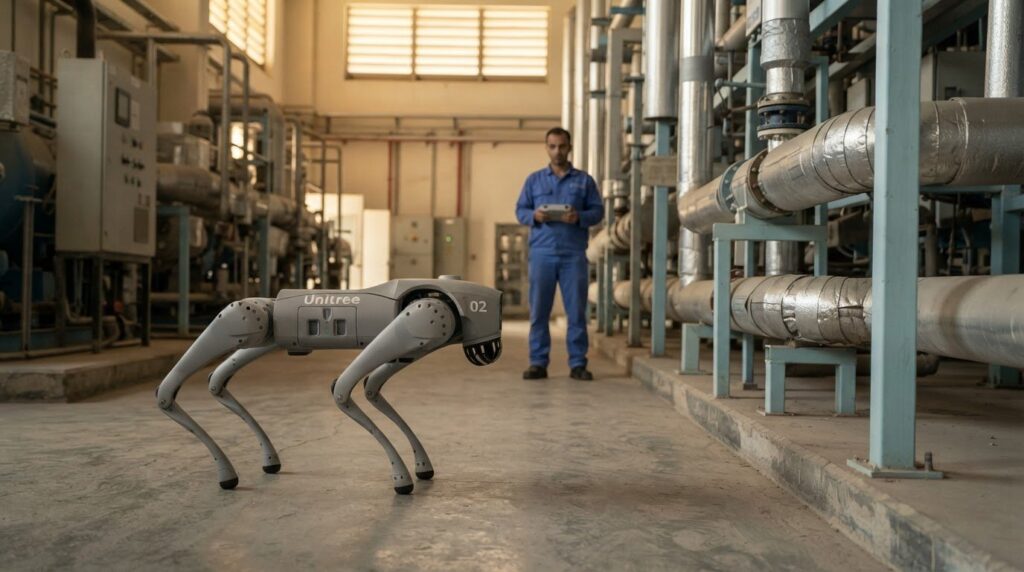
Buyers researching popular humanoid models may encounter Unitree names such as H1 and G1. Treat each model as a candidate to evaluate against the task, rather than assuming that a well-known name guarantees a suitable fit. Confirm the intended application, available functionality, support arrangements, and deployment requirements for the specific configuration being considered. Model names alone don’t establish operational performance.
For a practical comparison, assess each candidate against these requirements:
- Movement: Can it navigate the site’s floors, doorways, and work areas?
- Interaction: Does it support the human-facing tasks expected in reception or healthcare?
- Autonomy: Can its AI handle the environmental changes expected during operation?
- Integration: Can it fit the workflow and systems used at the facility?
A UAE business can evaluate, procure, and deploy a humanoid robot by defining the task, comparing model capabilities, and planning a controlled site deployment. For example, a logistics operation should test whether human-like mobility adds value over a robot designed specifically for transport. Humanoid robots in the UAE are most compelling when their flexibility serves a clear operational need, not simply because their design is advanced.
Humanoid robot prices in AED
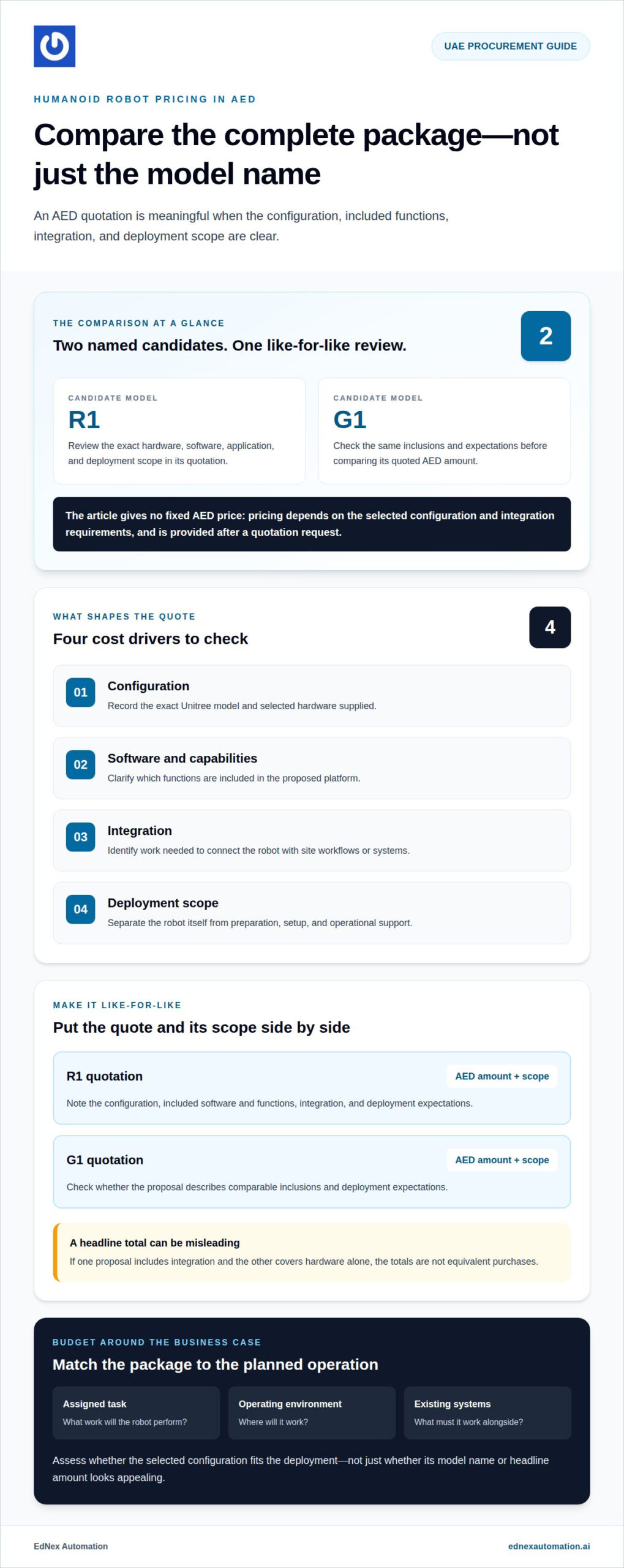
For a UAE purchase, compare the Unitree R1 and G1 using AED quotations for the exact configurations under consideration. Model names alone don’t establish a like-for-like price: the selected hardware, included software, and intended application all affect what a buyer is comparing. Treat each quotation as a defined package, not simply a price attached to “R1” or “G1.”
Build the comparison around the complete platform. A practical review should identify what the quoted amount covers, which configuration is supplied, and whether setup or integration is included. A robot intended for a controlled demonstration, for example, may need a different deployment plan from one assigned recurring work in a commercial facility. Those differences can affect the scope behind an AED quotation.
Before setting a budget, document the operating task and compare quotations against the same requirements. Consider these cost drivers:
- Configuration: Record the exact Unitree model and selected hardware.
- Software and capabilities: Clarify which functions are included in the proposed platform.
- Integration: Identify any work needed to connect the robot with site workflows or systems.
- Deployment scope: Separate the robot itself from preparation, setup, and operational support.
For instance, comparing an R1 quotation with a G1 quotation is useful only when both proposals describe comparable inclusions and deployment expectations. If one includes integration and the other covers hardware alone, their totals don’t represent equivalent purchases. Ask for the AED amount and scope to be presented together, so decision-makers can assess the full procurement requirement.
Plan the budget around the business case as well as the acquisition cost. A warehouse evaluating a humanoid platform should weigh the assigned task, its operating environment, and the systems it must work alongside. This makes the pricing discussion more actionable: procurement teams can judge whether the selected configuration fits the planned deployment, rather than choosing by model name or headline amount alone.
What UAE laws, permits, and safety requirements apply to importing and operating humanoid robots?
For a UAE deployment, structure the compliance review around the robot’s import, intended use, and operating environment. Assess applicable requirements for the specific machine and site rather than inferring them from its humanoid design alone. A robot used in a public-facing facility raises different operational questions from one working in a controlled industrial area.
Start by defining the use case and documenting the system’s core functions. Record whether it moves among employees, visitors, patients, or the public, and whether it collects or processes information. Include the operating location, routes, tasks, and human oversight. These details give compliance and safety teams a concrete basis for reviewing import and deployment obligations.
The UAE’s Technology Innovation Institute (TII) aims to develop regulatory and ethical frameworks for safe robotics deployment by engaging AI researchers, developers, and policymakers. TII identifies logistics, healthcare, infrastructure, construction, public safety, and smart cities as sectors where robots are designed to support the UAE. At a logistics site, for example, map robot routes around people and document who supervises its operation.
Build a deployment file with practical evidence to support a structured review:
- System details: Record the model, intended functions, operating instructions, and relevant technical documentation.
- Site assessment: Map work areas, access points, people’s routes, and foreseeable interactions.
- Operating controls: Define human oversight, permitted tasks, incident escalation, and shutdown procedures.
- Data handling: Identify what cameras, microphones, or other sensors collect and how the information is used.
Before commissioning, test the planned task in its actual operating area and record hazards, control measures, and staff responsibilities. A humanoid robot interacting with visitors needs clear supervision and escalation arrangements; an industrial deployment needs controls suited to its work zone. Keep the review current when the robot’s software, task, or site changes. This process helps UAE businesses connect import planning, safety governance, and responsible operation without assuming one checklist fits every deployment.
What are the main technical, safety, privacy, and workforce risks of humanoid robots in the UAE?
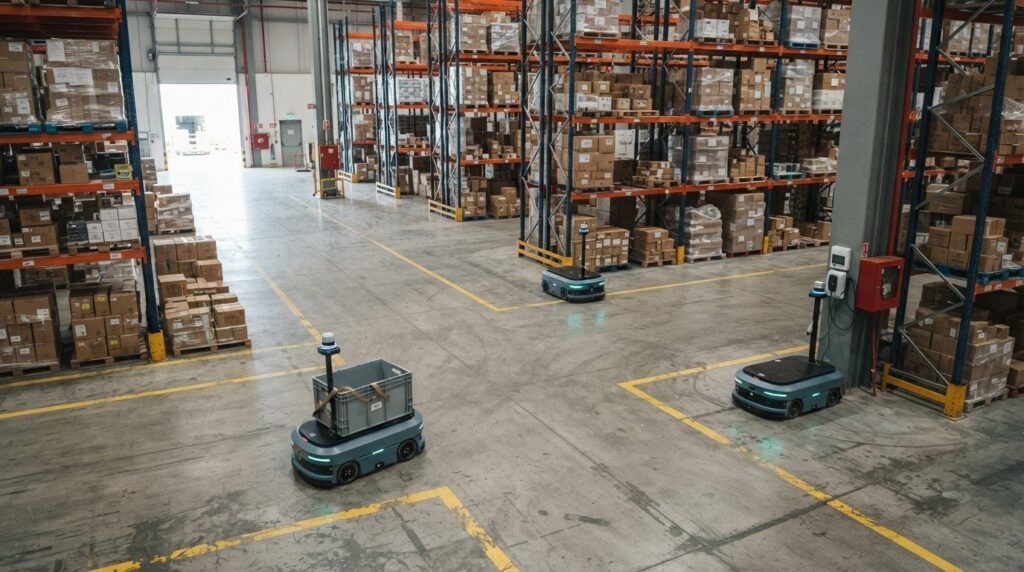
A humanoid robot’s performance depends on its sensors, software, connectivity, and operating environment. In a warehouse, changing layouts or blocked routes can disrupt navigation. AI may also misinterpret an unfamiliar object or instruction. Define task limits, monitor performance, and establish a safe response for unexpected behaviour.
Physical safety requires particular attention wherever people share space with moving robots. A robot handling a reception task, for example, may encounter visitors outside its expected workflow. Assess routes, access points, moving parts, and foreseeable contact risks before operation. Set supervision and shutdown procedures, then train staff to use them. Repeat the assessment when the task or site changes.
Privacy risks arise when cameras, microphones, or other sensors capture people or conversations. A public-facing robot could collect more information than its assigned task requires. Map what data each sensor gathers, who can access it, how it is used, and when it is removed. Limit collection to operational needs and clearly communicate the robot’s role to affected staff and visitors.
Workforce impacts also need active management. Employees may need new skills for supervision, exception handling, and reporting faults. If a robot takes over part of a process, explain how responsibilities will change and provide role-specific training. In a logistics operation, workers should know which tasks remain theirs and when to escalate a navigation or handling issue.
The Technology Innovation Institute (TII) aims to develop regulatory and ethical frameworks for safe robotics deployment by engaging AI researchers, developers, and policymakers. This highlights the importance of responsible deployment, while each business still needs controls suited to its own site. A practical risk review should cover:
- Technical: Test navigation, task performance, and failure responses.
- Safety: Define operating zones, supervision, and emergency stops.
- Privacy: Document sensor data and access controls.
- Workforce: Train employees for changed workflows and escalation.
Build these safeguards into deployment planning with a robotics deployment discussion.
EdNex Automation: Humanoid robots
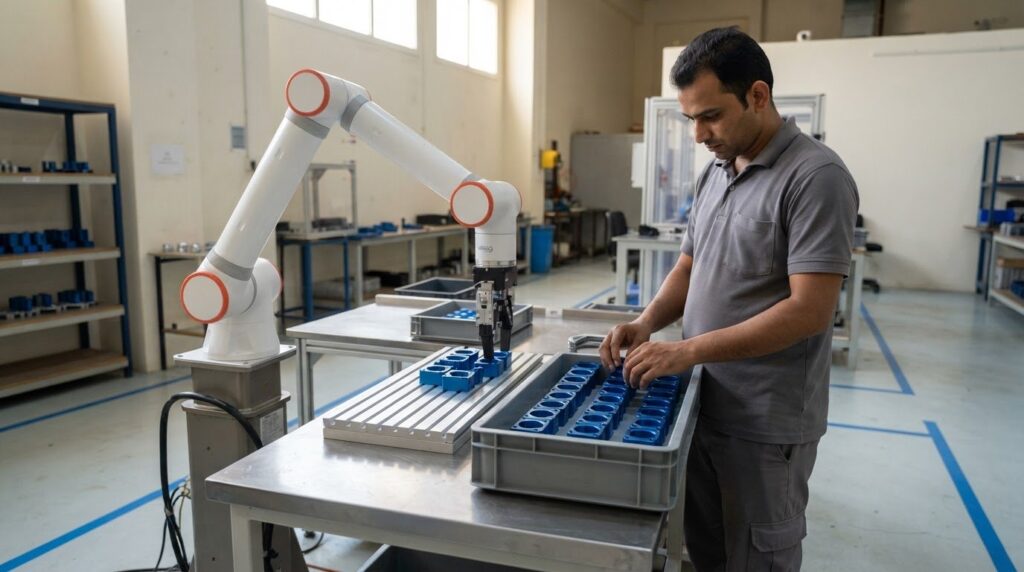
EdNex Automation helps UAE businesses assess humanoid robots against operational requirements and identify a suitable robotic approach. Its humanoid robot offering can support tasks where human-like movement or interaction serves a defined workplace need. For shared production tasks, collaborative robots (cobots) may be a more direct fit; autonomous mobile robots (AMRs) support material movement, while cleaning robots address facility-cleaning workflows.
Start with the task, environment, human interaction, and integration needs, rather than the appeal of a robot’s form. This comparison can clarify whether a humanoid platform supports the business case or a task-specific system better matches the operation. EdNex Automation provides advanced robotic solutions for commercial and industrial sectors across the UAE, helping businesses assess automation against their operational priorities.
Contact EdNex Automation to discuss your automation requirements.
Turn Robotics Planning into a Practical Roadmap
For businesses considering humanoid robots in the UAE, the next move is to turn ambition into an operating plan. Define the outcome the system should support, the teams and workflows it will affect, and the conditions it must handle. This framework helps decision-makers distinguish a promising demonstration from an automation initiative designed for sustained business value.
EdNex Automation offers humanoid robots alongside Collaborative Robots (Cobots), Autonomous Mobile Robots (AMRs), and cleaning robots. This range gives UAE businesses options to align automation with the task, whether the priority is human interaction, material movement, workstation collaboration, or facility cleaning. A clear operational objective can guide the discussion without assuming one platform fits every environment.
Bring your priorities, site context, and intended workflow into the next planning conversation. Discuss your automation roadmap with EdNex Automation and take a considered step toward the right robotic approach. Thoughtful planning can turn emerging technology into a deliberate investment in your organisation’s future.
Frequently Asked Questions
What are the main applications of humanoid robots in the UAE, including healthcare, hospitality, education, and industry?
Potential applications include visitor assistance, facility interaction, research, and support tasks in logistics, healthcare, infrastructure, construction, public safety, and smart cities. According to TII, these are sectors where robots are designed to support the UAE. A hospitality business might assess a humanoid for guest-facing interaction, while an education or research facility could explore it for supervised demonstrations. The appropriate use depends on the task and setting.
How much do humanoid robots cost to buy or lease in the UAE, including import and operating costs?
There is no single AED amount that applies across humanoid robots: cost depends on the model, configuration, software, integration, import arrangements, and operating requirements. For a purchase, request a quotation that separates the robot and deployment scope. For lease planning, account for the agreement structure and what it includes. Budget for site preparation, staff training, maintenance, and ongoing operation alongside the acquisition figure.
What humanoid robots are currently being developed, tested, or used in the UAE?
Unitree H1 and G1 are models buyers may evaluate for specific tasks and deployment requirements.
What is the UAE’s strategy and investment for robotics and artificial intelligence?
The Technology Innovation Institute aims to develop regulatory and ethical frameworks for safe robotics deployment by engaging AI researchers, developers, and policymakers. It identifies logistics, healthcare, infrastructure, construction, public safety, and smart cities as sectors where robots are designed to support the UAE.