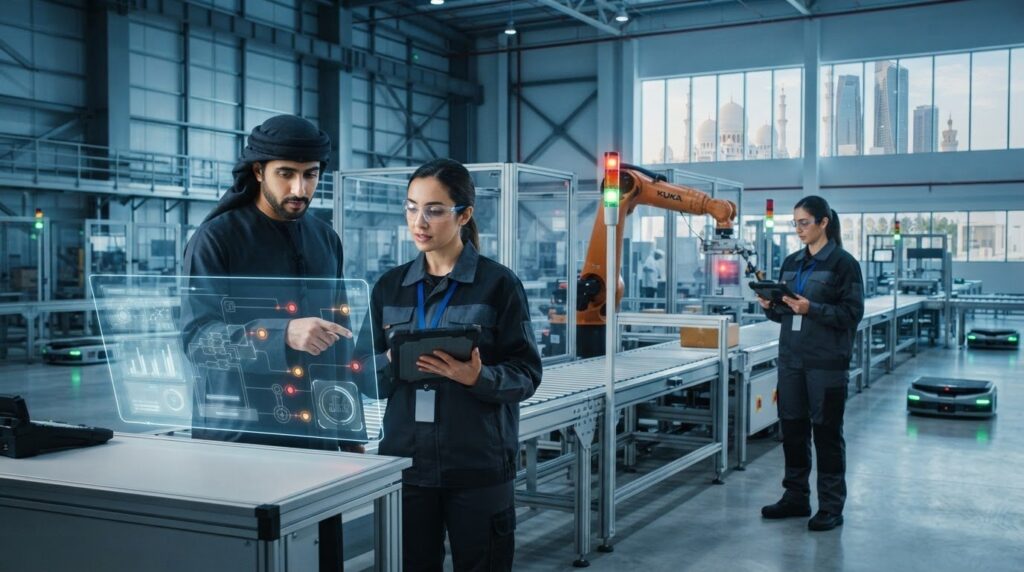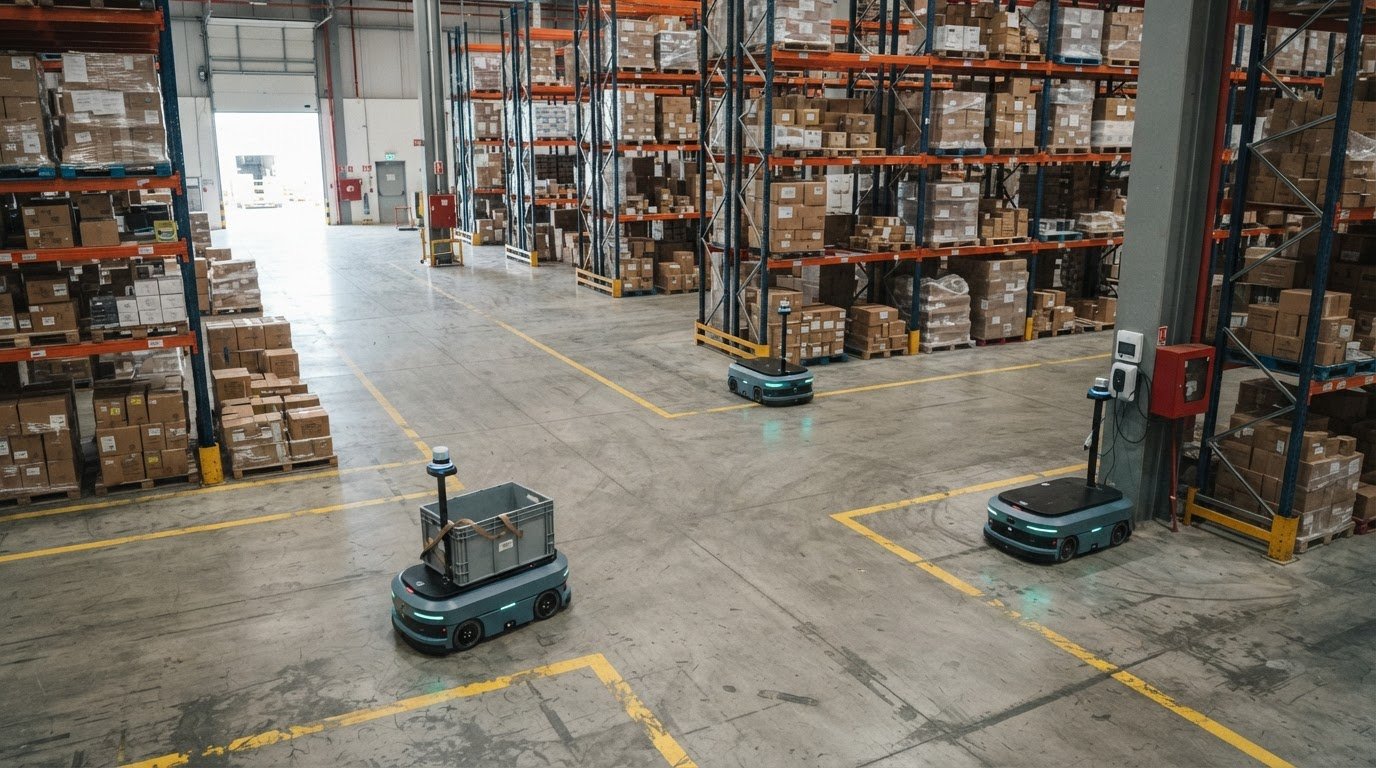
Robot Fleet Management Software does more than show where each machine is. It monitors robot status and coordinates dispatch, traffic, charging, and daily operations through a shared control layer. By linking operational data with actions, it helps robots work as a coordinated system rather than as separate machines.
Coordination matters in facilities where autonomous mobile robots, delivery robots, or other automated equipment share routes, tasks, and charging resources. A fleet platform can show which robots are available, assign or reprioritise work, and help prevent congestion and avoidable delays. Its role depends on how it connects with the robots and business systems already in use.
This article explains what fleet management software does, from status monitoring to dispatch, traffic control, and charging coordination. It also covers orchestration across robot types and workflows, how to assess a solution, and how these capabilities fit automation projects in the UAE.
Key Takeaways
- Understand how a fleet control layer connects robots with warehouse and business systems to coordinate complete workflows.
- Learn which status signals help teams identify availability, charging needs, faults, and performance issues.
- See how dispatch, shared-route traffic, and charging decisions work together to keep operations coordinated.
- Explore how to assess orchestration capabilities and connect automation needs with suitable robot types.
What is robot fleet management software?
Robot fleet management software coordinates robots through a control layer that links task assignment, operational data, and business systems. Its architecture matters: integration determines whether robot work fits existing processes.
Fleet Architecture and System Integration
The fleet layer connects robot controls with systems such as a warehouse management system (WMS), manufacturing execution system (MES), and enterprise resource planning (ERP) platform. A WMS can send a transport request; the fleet layer assigns it to a suitable robot and reports completion. This connects warehouse, production, and inventory workflows instead of isolating dispatch from business priorities.
Multi-Vendor Compatibility and Shared Data
Multi-vendor compatibility allows one fleet layer to coordinate robots from different manufacturers using shared commands and status data. Without a common data model, robots may report battery levels, locations, or task progress differently, making monitoring and assignment more difficult. Open-RMF is an open-source project designed to support interoperability between robot fleets and building infrastructure. Compatibility still depends on supported interfaces and the integration required for each robot model.
Integration with IoT Devices and Infrastructure
IoT integration connects fleet software with devices and infrastructure such as doors, lifts, charging stations, and sensors. A robot might request lift access during a delivery task, while a sensor reports whether a route is occupied. These connections help coordinate robot movement with the surrounding environment, provided the devices offer usable interfaces and reliable communication.
For UAE commercial fleets, account for applicable local workplace and product-safety obligations during system design. ISO 3691-4:2023 sets safety requirements and verification for driverless industrial trucks and their systems; it is a technical standard, not a statement of UAE law.
Core features include live status visibility, task assignment, traffic coordination, battery and charging information, fault reporting, and connections to operational systems. Cybersecurity risks include unauthorized access to robot controls and exposed operational data. Privacy considerations include personal information captured by sensors or stored in activity records.
Software licensing, integration, and support costs vary with robot compatibility, connected systems, deployment complexity, and ongoing maintenance needs. These factors also affect whether the platform can connect existing infrastructure without extensive custom work.
Fleet visibility and robot status monitoring
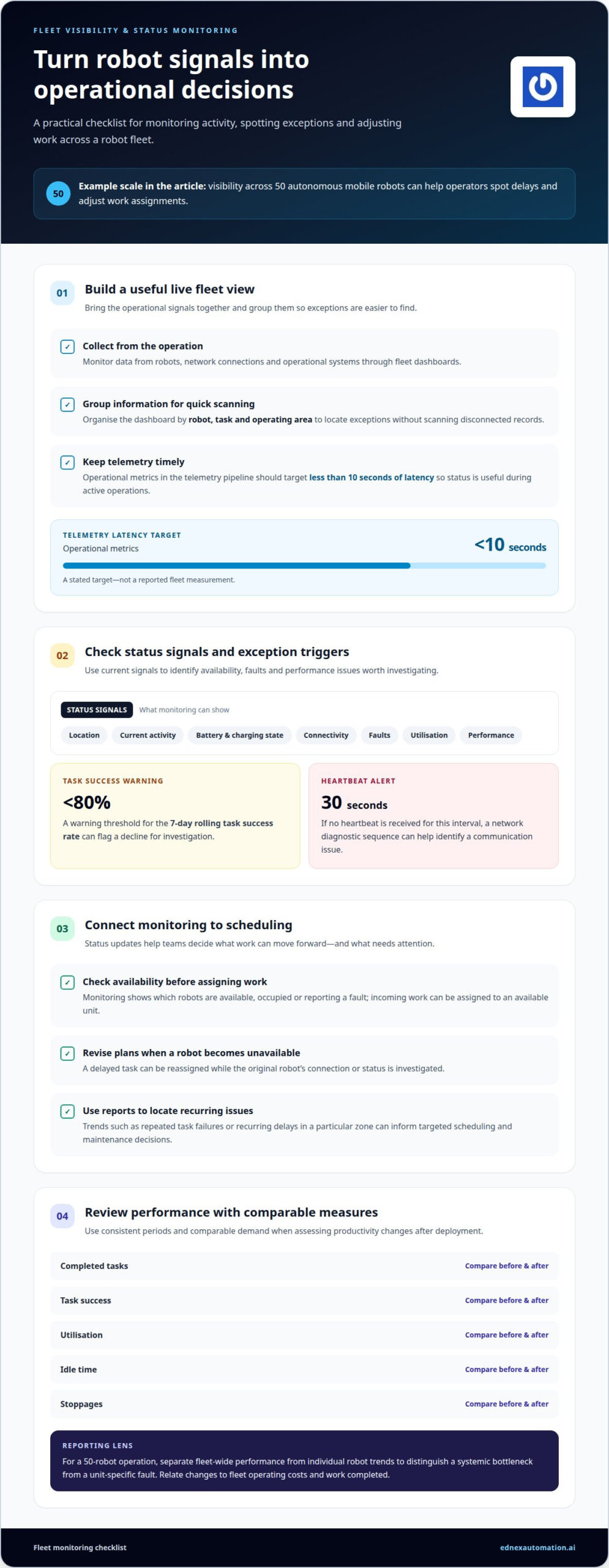
Fleet monitoring collects operational signals and presents them in dashboards, giving teams a current view of robot activity. For a warehouse using 50 autonomous mobile robots, this visibility can help operators spot delays and adjust work assignments.
Monitoring Infrastructure and Dashboards
Monitoring infrastructure collects data from robots, network connections, and operational systems, then displays it through fleet dashboards. A useful dashboard groups information by robot, task, and operating area, so teams can locate exceptions without scanning disconnected records. Operational metrics in a telemetry pipeline should target less than 10 seconds of latency. Timely updates make the displayed status more useful for decisions during active operations.
Robot Status and Fleet Reporting
Status monitoring can show location, current activity, battery and charging state, connectivity, faults, utilisation, and performance. Reports turn those signals into trends, such as recurring delays in a particular zone or repeated task failures. A warning threshold below 80% for the 7-day rolling task success rate can flag a decline for investigation. When a fleet manager receives no heartbeat for 30 seconds, a network diagnostic sequence can help identify a communication issue.
Monitoring and Task Scheduling
Monitoring informs scheduling by showing which robots are available, occupied, or reporting a fault. The system can use these updates to assign incoming work to an available unit and revise plans if a robot becomes unavailable. For instance, it can reassign a delayed task while the original robot’s connection or status is investigated. This feedback loop links operating conditions with scheduling decisions.
To assess ROI and productivity gains, compare operational measures before and after deployment, including completed tasks, task success, utilisation, idle time, and stoppages. Relate changes to fleet operating costs and work completed, using consistent periods and comparable demand.
For a 50-robot operation, reports can separate fleet-wide performance from individual robot trends, helping teams distinguish a systemic bottleneck from a unit-specific fault. Those insights support targeted scheduling and maintenance decisions.
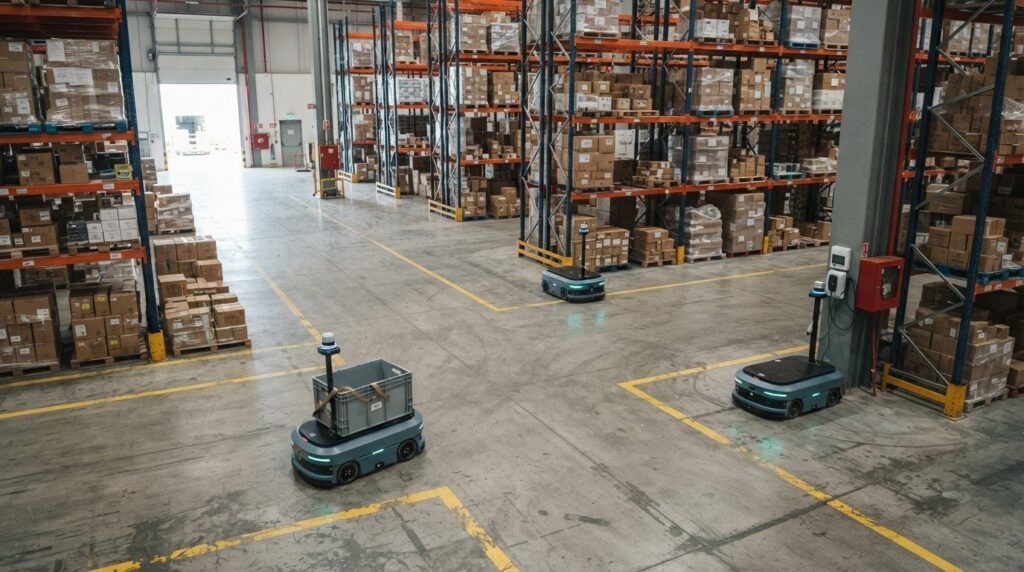
For transport workflows, autonomous mobile robots generate status and task data that fleet monitoring can bring into operational view.
Fleet dispatch, traffic control and charging
A fleet management system turns transport requests into robot assignments, then coordinates routes and charging. Dispatch, traffic control, and battery planning need to work together so robots are ready when applications need them.
Fleet Dispatch and Traffic Management
Dispatch selects a robot for each task, while traffic management coordinates movement through shared routes and spaces. The VDA 5050 standard defines how a master control system sends orders to driverless vehicles and receives their state through JSON messages over an MQTT broker. This gives dispatch and vehicle-status exchanges a defined structure. Reliable connectivity remains essential: without it, the system and robots cannot consistently communicate or coordinate movement.
Traffic Management and Charging Plans
Charging plans schedule battery replenishment around workload, available chargers, and expected demand peaks. Consider a warehouse example with 12 AMRs operating 16 hours per day, each requiring about one hour of charging per four hours of driving. About 2.4 robots would charge on average, leaving roughly 9.6 available. If an evening peak needs 11 moving robots, charging must be planned ahead to meet that demand.
Charging is an operational constraint, not simply a battery issue. A fleet management system can stagger charging so robots don’t all leave active service together, while traffic control routes available robots around occupied charging points. In the same example, charging takes 20% of each robot’s time. Scheduling must account for that unavailable time alongside task priorities and route capacity.
Robot health data adds another input: a battery warning below 20% state of charge can prompt a planned charge before a robot becomes unavailable mid-task. Reliable network coverage also matters across operating areas, since a disconnected device cannot receive assignments or report its state. These factors are especially important when the fleet approaches above about 85% utilisation, which leaves little headroom for demand peaks, faults, or charging.
Robot fleet management software solutions
Choosing a fleet platform means matching its orchestration capabilities to current workflows and planned growth. For UAE deployments, account for robot compatibility, integration requirements, and the operating environment.
Selecting Fleet Management Software
Defining the tasks, robot types, and systems the platform must support helps prevent a mismatch between software and operations. Start by mapping workflows, then assess whether the solution can prioritise tasks, manage dependencies, respond to events, and reassign work when a robot is unavailable. For mixed fleets, test compatibility across robot types and manufacturers, as well as access to operational data.
Next, assess whether the platform can coordinate shared resources and connect with the business systems used at the site. Custom integration may be needed when existing equipment or software uses different interfaces. Include licensing, integration, support, and maintenance in the evaluation, since these shape the ongoing effort of operating the system.
Deploying and Scaling Fleet Software
Begin deployment with a defined workflow and a controlled test. Expand after teams validate task execution, system connections, and operational reporting. For example, a mobile robot deployment can first test one transport process, including task assignment and handoffs with connected equipment. This reveals integration issues before extending the same configuration across a wider operation.
Plan for growth before choosing architecture. A platform that performs well with 20 robots may face limitations as a fleet expands to hundreds, so assess capacity, data access, and multi-site operations against the intended scale. Fleet operations practices can apply to teams running 5 to 500 robots across multiple sites. Software updates and maintenance also need to remain part of deployment planning.
In short, define workflows, confirm compatibility, test a representative deployment, then scale against measured operational needs. To connect robot deployment planning with suitable automation, discuss your robot deployment requirements.
EdNex Automation: Collaborative Robots (Cobots)
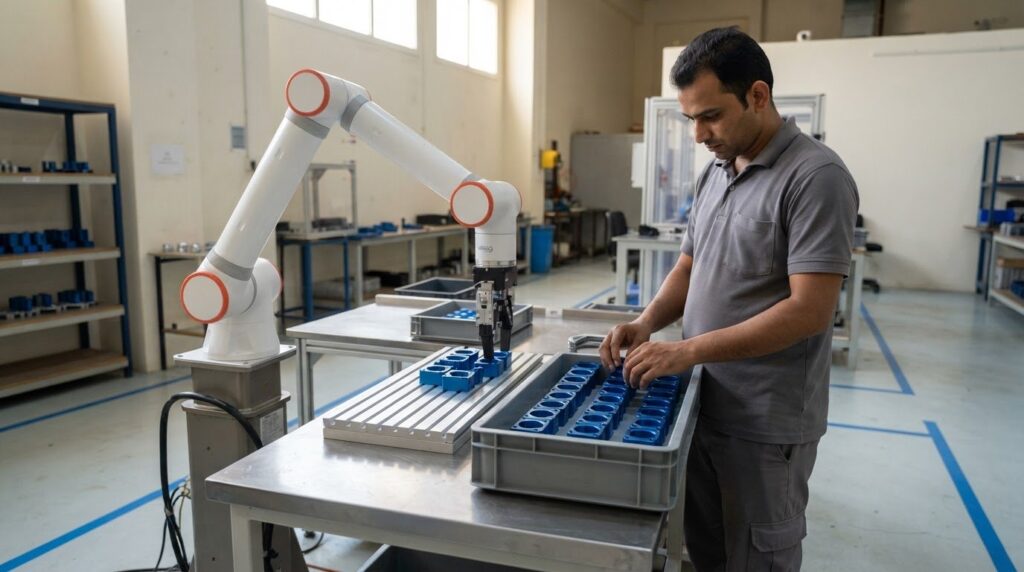
EdNex Automation helps businesses across the UAE explore automation options when workflows require robots to work alongside people or move materials through a facility. Collaborative Robots (Cobots) support tasks designed for human-robot collaboration, while Autonomous Mobile Robots (AMRs) can support internal transport workflows.
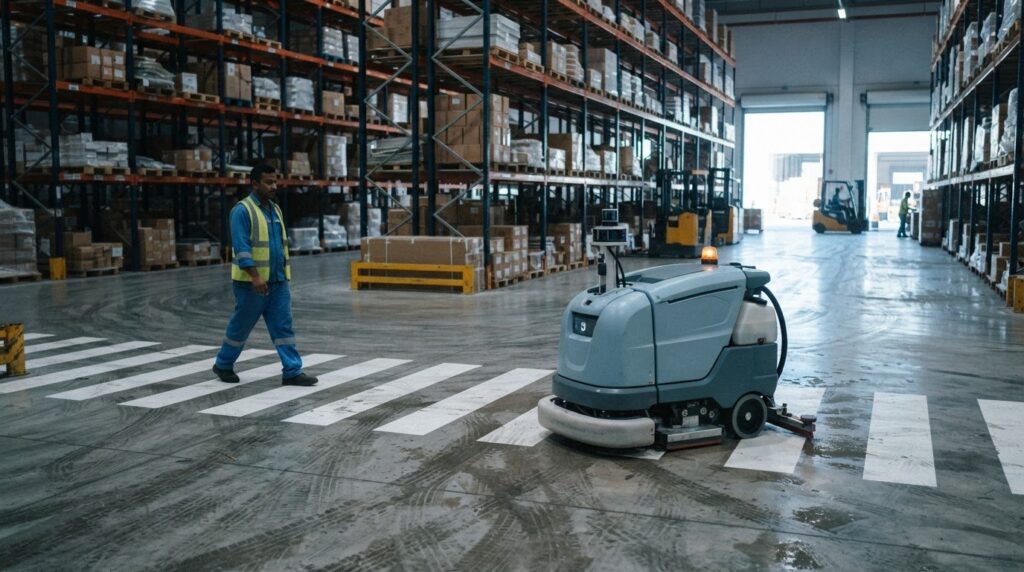
Cleaning robots and delivery robots address other operational tasks. The right category depends on the work, the environment, and how a robot fits into existing processes. For businesses planning fleet management software, defining workflows and robot roles first helps clarify the coordination the operation needs.
Contact EdNex Automation to discuss robotic solutions that fit your operational requirements.
Build the Next Stage of Your Automation Strategy
Automation creates more value when it develops alongside your operation instead of being treated as a one-time technology decision. As workflows change, robot roles and coordination needs may change too. Clear operational goals can help shape a practical path from an initial deployment to broader automation.
Robot fleet management software is one part of a longer-term design. Connect the technology decision to the work your teams need to improve, the environment where robots will operate, and the systems they must work alongside. EdNex Automation can help you explore robotic solutions in line with those priorities.
Contact EdNex Automation to discuss your automation goals and take the next step with confidence.
Frequently Asked Questions
What Is Multi-Robot Orchestration Software?
Multi-robot orchestration software coordinates different robots and equipment around shared operational goals. In a facility with transport and production tasks, for example, orchestration can manage task order and dependencies so one machine’s completed work triggers the next stage. It goes beyond individual robot movements by connecting equipment actions into an end-to-end workflow and helping operations respond when conditions change.
What is robot fleet management software and how does it work?
Robot Fleet Management Software coordinates robots as an operating fleet. It receives work requests, communicates assignments, and uses robot updates to manage execution. If a task pauses because its destination is unavailable, for instance, the platform can show the blockage and support a revised assignment. This gives operators a way to manage exceptions rather than treating each robot as an isolated device.
Which robot fleet management platforms are available in the UAE?
UAE operations can consider vendor-specific platforms, systems designed for mixed fleets, and open-source interoperability projects such as Open-RMF. Availability alone does not establish fit: platforms differ in supported robot models, interfaces, data access, and integration effort. For a mixed operation, assess whether the platform can represent each robot’s tasks and status consistently and connect with existing operational systems.
How do leading robot fleet management software solutions compare?
Compare solutions by operational fit, not feature count alone. Assess supported robot types, task prioritisation, recovery when a unit becomes unavailable, access to operating data, and integration with existing systems. A single-vendor site may prioritise straightforward support for its robot models, while a mixed fleet may need broader compatibility and a shared data model. Robot Fleet Management Software should match current workflows and planned scale.
How much does robot fleet management software cost, including licensing and implementation?
There is no single cost for every deployment; the price depends on the project and is provided after a quote request. Key factors include licensing structure, fleet size, integration with WMS, MES, ERP, or legacy equipment, custom development, and ongoing support. For budgeting, separate recurring licensing and maintenance expenses from initial implementation work, then assess them against the intended operating scope.
Which robots and systems can fleet management software integrate with?
Integration may cover autonomous mobile robots, collaborative robots, cleaning robots, and delivery robots, alongside operational systems such as WMS, MES, and ERP. Industrial environments may also connect PLC and SCADA systems or automated storage and retrieval systems. Compatibility depends on each device’s interface and data model, so define required tasks and information flows before selecting a platform or planning deployment.