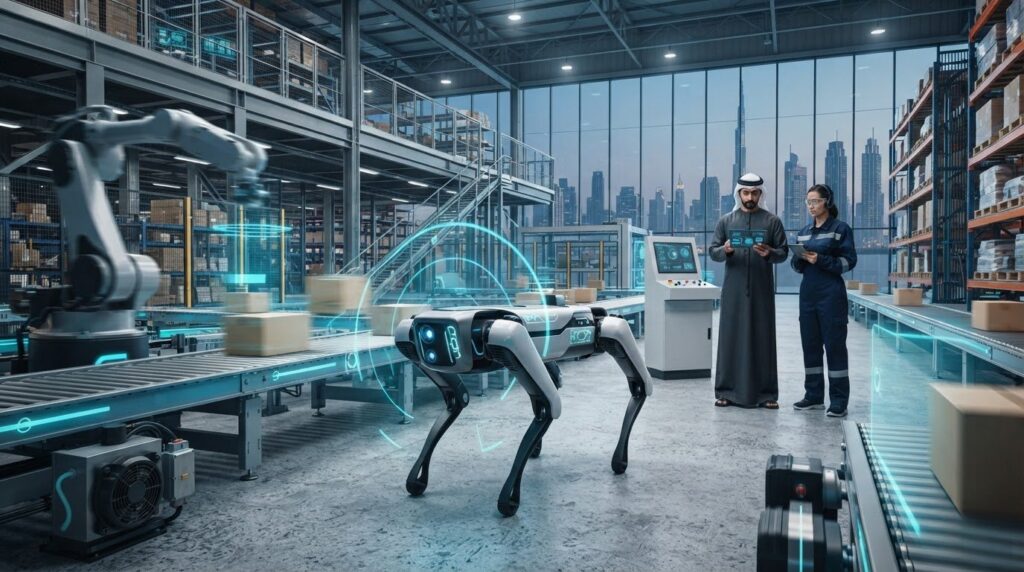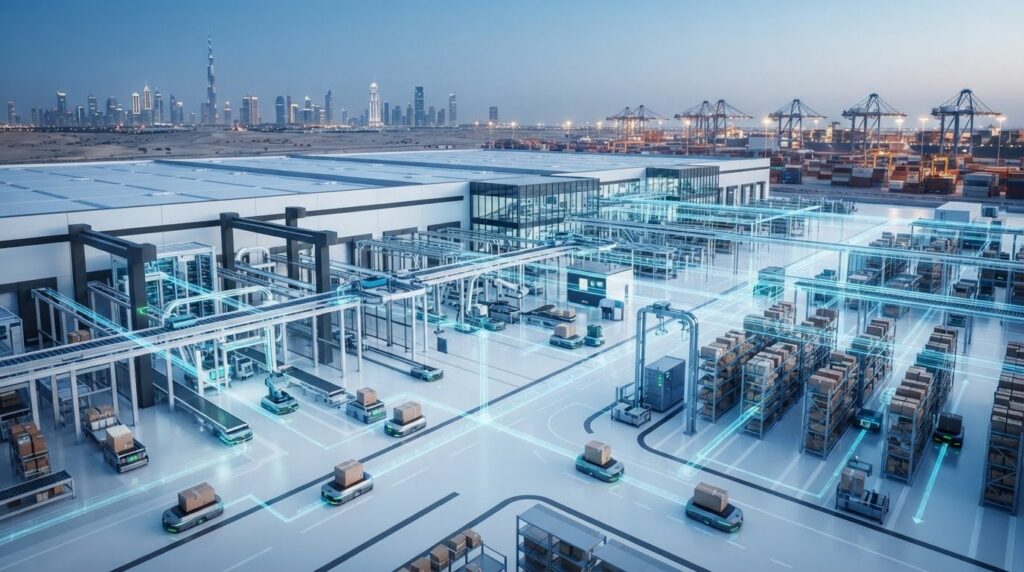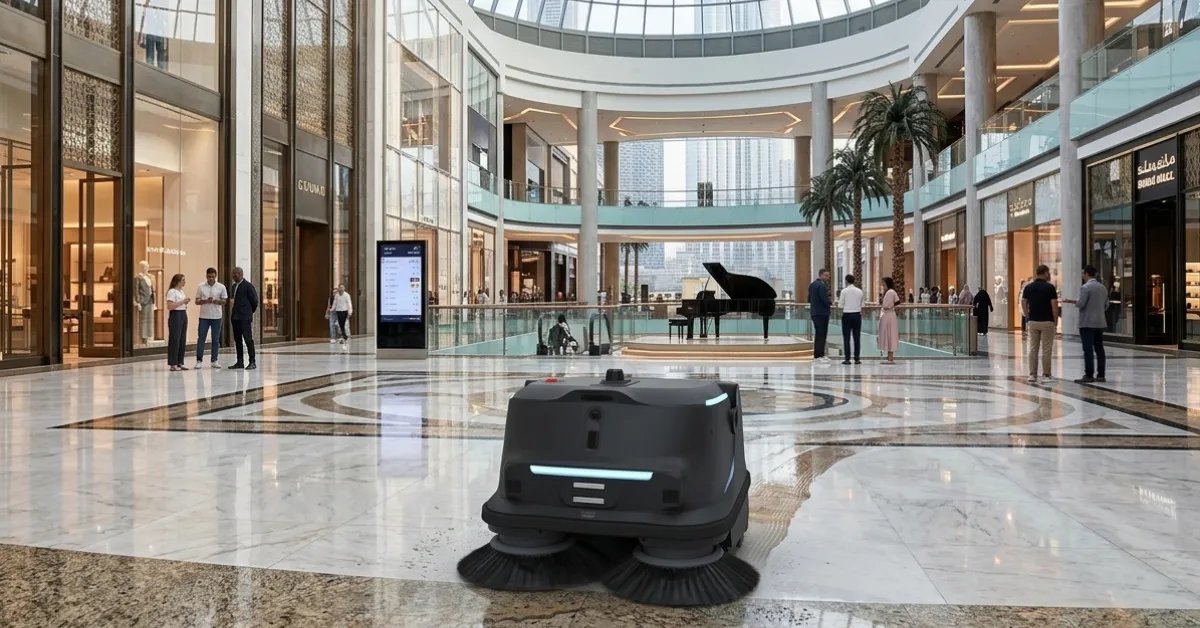
What if the most critical component of your facility’s infrastructure wasn’t the HVAC or the security system, but a self-optimizing fleet of autonomous sanitization units? Facing persistent labor shortages and the rising costs of manual training, UAE enterprises often struggle to maintain rigorous hygiene benchmarks in expansive, high-traffic environments. Leveraging large area robotic cleaning solutions has transitioned from a futuristic luxury to a strategic necessity for those managing industrial-scale footprints in an increasingly competitive market.
It’s clear that traditional janitorial models fail to provide the consistency or the real-time ROI tracking required for modern stakeholder reporting. This guide demonstrates how to scale facility hygiene and overcome labor constraints through advanced autonomous fleets integrated with your existing industrial automation systems. We will explore the technical frameworks for deploying these systems, ensuring full compliance with Dubai’s Law No. 9 of 2023 and the latest 2026 safety standards to secure long-term operational viability. By aligning your hygiene strategy with data-driven performance metrics, you can transform a standard operational necessity into a sophisticated asset that protects both your reputation and your bottom line.
Key Takeaways
- Transitioning from manual labor to autonomous systems ensures operational consistency and meets the rigorous 2026 UAE hygiene standards for high-traffic facilities.
- Implementing large area robotic cleaning solutions requires a robust technical architecture, utilizing LiDAR and SLAM technology to achieve precise navigation in complex industrial spaces.
- Evaluating actual versus theoretical performance metrics allows facility managers to select the optimal robot for specific surfaces, ranging from hard floor scrubbing to large-scale vacuuming.
- Conducting thorough technical site surveys identifies essential infrastructure needs, such as high-voltage charging stations and dedicated water hookups, to support a scalable fleet.
- Partnering with experts like EdNex facilitates the seamless integration of autonomous mobile robots into existing PLC and SCADA systems for comprehensive digital transformation.
The Shift to Autonomous Hygiene in Large-Scale Facilities
High-traffic UAE hubs like Dubai International Airport or the Dubai Mall represent complex environments where manual cleaning often falls short of the rigorous 2026 hygiene standards. Relying on human janitorial staff for 50,000+ square meter footprints leads to inconsistent performance, especially when facing the natural fatigue of repetitive manual cycles. Large area robotic cleaning solutions offer a paradigm shift. They move enterprises from a reactive model to predictive, autonomous hygiene cycles that run without interruption. By digitizing the cleaning process, facility managers gain total visibility into every square meter covered. This transparency is vital for stakeholders who demand data-driven reporting on facility safety and sanitation protocols.
Integrating these systems serves as the foundational layer for a fully automated facility. When hygiene is managed by intelligent machines, it ceases to be a variable cost and becomes a predictable, high-performance utility. This evolution is necessary for any organization wishing to remain competitive. It transforms a standard operational necessity into a sophisticated asset that protects both your reputation and your bottom line.
Overcoming Labor Shortages through Automation
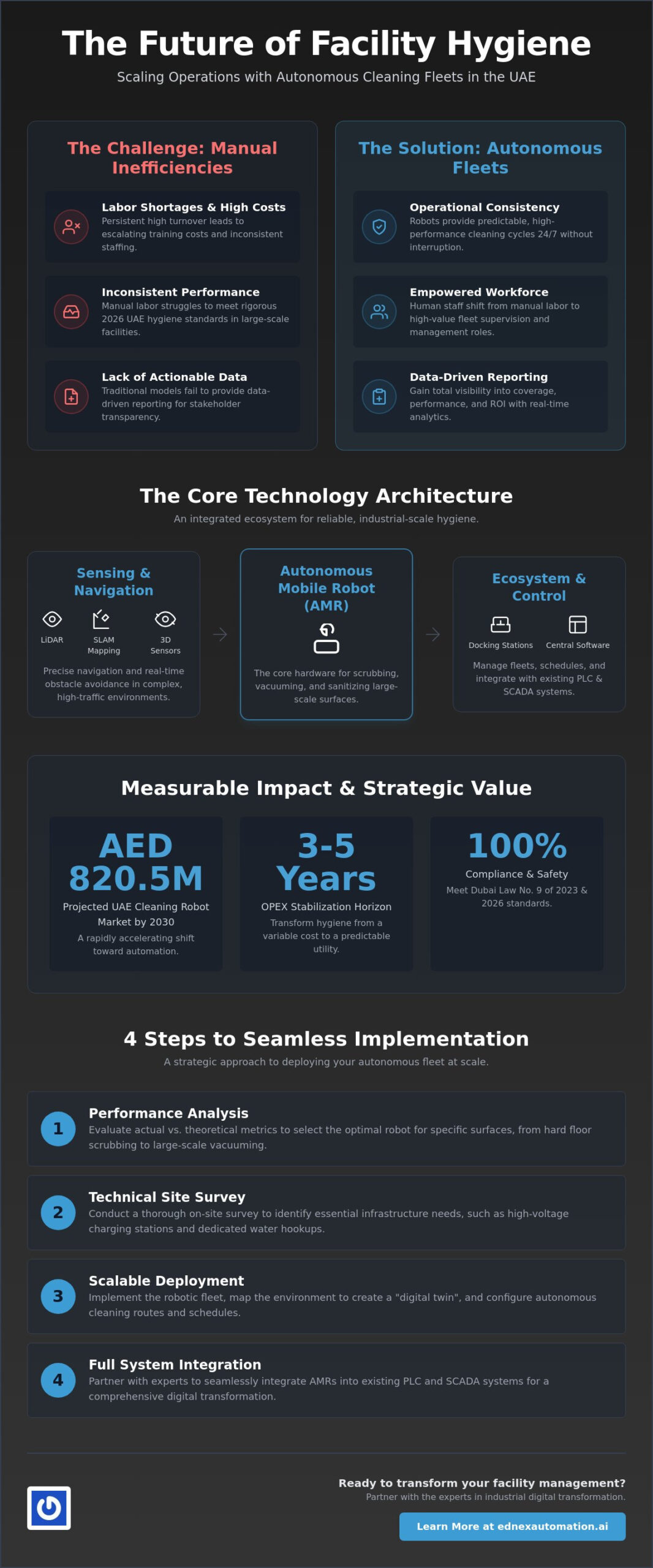
Addressing the chronic labor shortages in the regional cleaning sector requires a move away from the traditional recruitment treadmill. With the UAE cleaning robot market projected to reach AED 820.5 million by 2030, the shift toward automation is accelerating rapidly. High turnover rates in manual roles lead to escalating training costs and a constant loss of institutional knowledge. Implementing autonomous cleaning robots allows human staff to shift from back-breaking labor to high-value supervision. They begin managing fleets rather than pushing mops. This transition ensures 24/7 operational readiness, maintaining a pristine environment regardless of labor market fluctuations or regional holidays. It’s a strategic move that stabilizes OPEX over a 3-5 year horizon.
The Role of Industry 4.0 in Modern Facility Management
Defining the modern “Smart Facility” involves more than just connected thermostats; it requires a cohesive ecosystem of networked, communicative robotic assets. Utilizing advanced Robotic mapping and navigation, these units don’t operate in isolation. They build precise digital twins of their environment and communicate their status to centralized control systems in real-time. This connectivity allows cleaning automation to integrate with PLC and SCADA frameworks, ensuring that hygiene schedules align perfectly with facility traffic patterns and production requirements. For those looking to expand this intelligence into logistics or warehouse operations, exploring our autonomous mobile robots provides the necessary context for broader industrial autonomy. Moving beyond standalone units to networked assets ensures your facility remains at the cutting edge of industrial digital transformation.
Technical Architecture of Large Area Robotic Cleaning Solutions
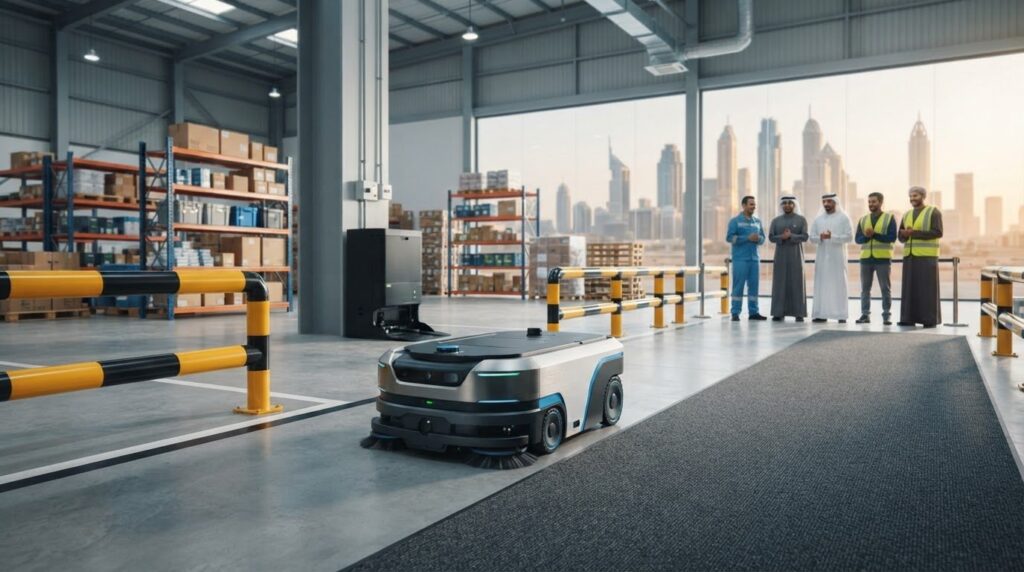
Achieving industrial-scale hygiene requires more than a standalone appliance; it demands a sophisticated technical architecture designed for high-availability environments. Modern large area robotic cleaning solutions function as integrated ecosystems, combining Autonomous Mobile Robots (AMRs) with dedicated docking stations and centralized control software. This infrastructure ensures that the cleaning process is no longer a manual task but a reliable industrial utility. By treating these units as critical assets, UAE enterprises can maintain rigorous hygiene standards while minimizing human intervention. The transition to this automated model relies on a synergy of advanced hardware and intelligent software layers that work in concert to protect large-scale facility investments.
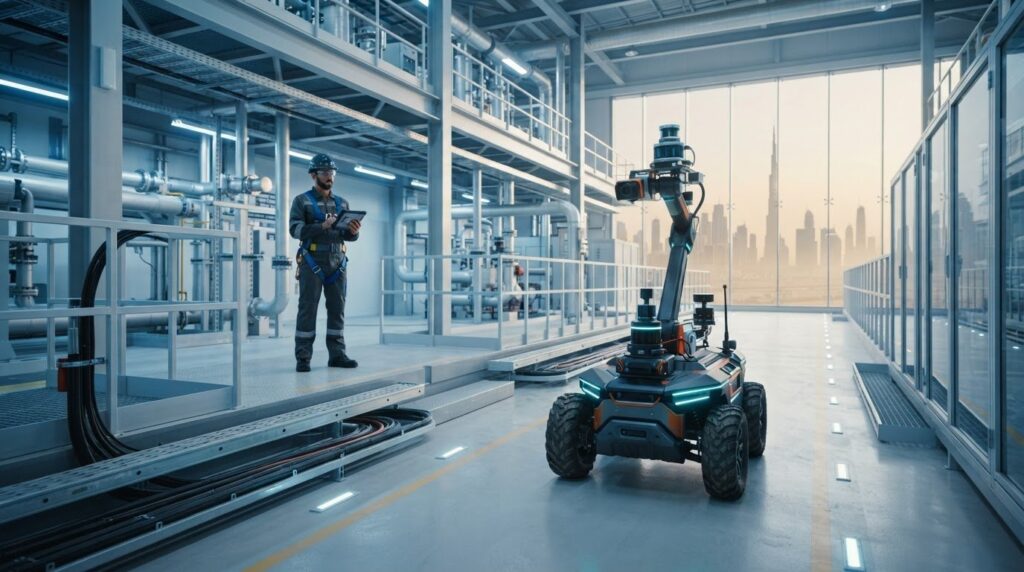
Safety remains paramount in high-traffic zones such as transit hubs and manufacturing floors. Utilizing a multi-layered sensor suite, including 3D cameras and ultrasonic sensors, these robots execute complex obstacle avoidance protocols in real-time. They don’t just stop for obstructions; they calculate alternative paths to maintain their schedule without compromising the safety of human personnel or nearby machinery. This level of autonomy is supported by robust battery management systems. When power levels reach a predefined threshold, the units initiate autonomous docking, ensuring zero-downtime operations through rapid charging or battery swapping cycles.
Navigation and Mapping Technologies
Leveraging high-frequency light pulses, LiDAR sensors generate real-time digital twins of the facility floor, enabling the system to identify subtle environmental changes that manual logs would overlook. This reliance on natural feature navigation eliminates the need for intrusive magnetic strips or physical beacons, allowing for rapid deployment in dynamic spaces. In the context of 50,000 sqm environments, Simultaneous Localization and Mapping (SLAM) is the computational process that allows a robot to construct a map of an unknown environment while simultaneously tracking its own location within that space to ensure centimeter-level precision. This high-fidelity mapping ensures that every corner of a vast facility receives consistent attention, regardless of how often the internal layout shifts.
Fleet Management and SCADA Integration
Managing a multi-robot deployment requires a centralized dashboard that provides granular visibility into the entire fleet’s performance. These dashboards track critical telemetry data, including water usage, chemical concentration, and real-time battery health. To maximize operational efficiency, leading organizations are moving toward PLC and SCADA integration services, which allow cleaning data to feed directly into broader building management systems. This integration enables the facility to respond dynamically to traffic surges, triggering cleaning cycles based on actual usage rather than static timers. Reviewing your current infrastructure with a specialized automation consultant ensures these technical layers align with your long-term facility goals.
Performance Analysis: Choosing the Right Industrial Robot
Identifying the optimal hardware for expansive facilities requires a departure from superficial specifications toward a data-driven performance analysis. When evaluating large area robotic cleaning solutions, stakeholders must distinguish between theoretical and actual coverage rates. Theoretical rates reflect a robot’s maximum speed in an empty corridor, whereas actual performance accounts for the navigation complexities of a dynamic environment. In a high-traffic UAE logistics hub, for instance, obstacle avoidance and path-overlap can reduce effective coverage by 20% to 30%. Selecting a unit with a duty cycle that aligns with the facility’s peak operational hours ensures the system provides consistent performance without mid-shift interruptions.
Operational efficiency is also dictated by how well a robot’s battery life matches the facility’s cleaning window. For environments operating on a continuous basis, choosing robots with rapid-charging capabilities or swappable battery modules is essential for maintaining zero-downtime hygiene. This strategic alignment between hardware capacity and facility demand prevents the accumulation of hygiene debt, where missed cycles lead to a decline in overall standards. By prioritizing actual square meters per hour over marketing data, facility managers can build a fleet that meets the specific demands of their infrastructure.
Industrial Floor Scrubbers vs. Robotic Vacuums
Selecting between high-pressure scrubbers and robotic vacuums depends entirely on the substrate and the nature of the debris. Industrial production floors require scrubbers capable of delivering significant brush pressure and managing large tank capacities to handle grease and heavy soilage. These advanced systems often achieve a 30-40% reduction in water and chemical usage compared to manual methods, according to industry performance data, which significantly lowers OPEX while meeting sustainability goals. For facilities aiming to formalize these environmental gains, consulting with a LEED BD+C consultant can ensure that automated cleaning protocols align with the requirements for prestigious green building certifications. Conversely, expansive commercial spaces like airports benefit from robotic vacuums equipped with multi-stage filtration to maintain air quality while covering thousands of carpeted square meters. Hybrid systems offer a versatile alternative for facilities with diverse zones, allowing a single fleet to manage both hard and soft surfaces through modular attachments.
Outdoor Cleaning Automation for Urban Infrastructure
Expanding the hygiene perimeter beyond the building envelope is now a standard requirement for UAE transit hubs and urban plazas. Specialized outdoor cleaning robots are engineered to withstand the regional challenges of extreme heat and pervasive dust, utilizing ruggedized chassis and advanced filtration to protect internal components. Integrating these outdoor units into a total facility hygiene plan ensures a seamless transition of cleanliness from the curb to the core. These systems utilize specialized sensors to navigate uneven surfaces and maintain performance in high-glare environments, providing a consistent aesthetic that reflects the facility’s professional standards. To extend this level of care to your corporate fleet or executive parking areas, you can visit Wipe Crew for professional detailing services that match your facility’s high hygiene benchmarks. Managing outdoor environments with autonomous assets reduces the need for manual labor in harsh conditions, enhancing both safety and operational reliability.
Strategic Implementation: Deploying at Scale
Deploying large area robotic cleaning solutions across an enterprise footprint requires a methodical engineering approach that transcends simple equipment delivery. Success begins with a comprehensive technical site survey designed to identify operational constraints, such as physical ‘no-go’ zones near sensitive machinery and wireless connectivity dead spots that could impede real-time SCADA communication. Preparing the facility infrastructure is equally critical. High-voltage charging stations, dedicated water hookups, and specialized drainage systems must be strategically positioned to facilitate autonomous docking and fluid management without manual intervention. This foundational work ensures that the robotic fleet operates as a high-availability utility rather than a collection of standalone tools.
Establishing a phased rollout strategy allows for the validation of performance metrics within a controlled pilot zone before full-scale deployment. This structured transition provides the data necessary for enterprise buy-in and helps refine the human-robot collaborative workflow. Human staff aren’t replaced; they’re upskilled to manage the fleet, ensuring that the integration of automation enhances rather than disrupts existing facility protocols. By aligning staff training with the technical capabilities of the robots, organizations foster a culture of innovation that is essential for long-term digital transformation.
The Deployment Roadmap
A successful roadmap follows three critical phases to ensure maximum operational efficiency. First, digital mapping and path optimization allow the fleet to cover the maximum area with minimum energy consumption. Second, integrating these assets with existing building management and security systems creates a unified operational picture, allowing for dynamic responses to facility events. Finally, continuous optimization based on real-world telemetry allows for the adjustment of cleaning frequencies and routes as facility usage patterns evolve. This iterative process ensures the system remains efficient as the business scales.
Maximizing ROI and Long-Term Value
Calculating the Total Cost of Ownership (TCO) is vital for long-term business viability, looking far beyond the initial hardware acquisition to include maintenance, software licensing, and utility savings. Implementing autonomous cleaning robots can lead to a 30-40% reduction in water and chemical usage, directly lowering OPEX while supporting the UAE’s sustainability mandates. Future-proofing your investment ensures that hardware remains compatible with upcoming software updates, securing your facility’s competitive edge for years to come. To begin your enterprise transformation, you should consult with our technical integration team to design a bespoke automation strategy that aligns with your specific industrial requirements.
EdNex Automation: Your Partner in Industrial Digital Transformation
Leading UAE enterprises recognize that successful automation requires more than just procurement; it necessitates a partnership with a technical authority capable of navigating complex industrial transformations. At EdNex Automation, we provide the intellectual and technical framework required to deploy large area robotic cleaning solutions that integrate seamlessly with your existing infrastructure. Our comprehensive approach bridges the gap between high-level global innovation and specific regional needs, ensuring that your facility remains at the forefront of the 2026 industrial landscape. By moving beyond standalone machinery, we help organizations implement networked systems that offer predictable performance and measurable ROI across expansive footprints.
Expertise in specialized outdoor and industrial cleaning automation allows us to address the unique environmental variables of the Middle East, from pervasive dust to extreme thermal conditions. We don’t just supply hardware; we engineer bespoke ecosystems where cleaning robots, delivery units, and surveillance systems work in a coordinated, autonomous fleet. This systematic approach ensures long-term business viability by protecting your facility assets and optimizing your operational expenditure through controlled, deliberate innovation. Every deployment is designed to meet the gravity of large-scale industrial transformation, providing a reliable foundation for your organization’s future growth.
The EdNex Advantage: Beyond Equipment Supply
Utilizing an engineering-minded methodology, we solve unique regional challenges through the customized integration of Automated Storage and Retrieval Systems (ASRS) and advanced robotics. Our status as a trusted partner is reinforced by official certifications and strategic alliances with global technology leaders, serving as markers of technical legitimacy in an increasingly crowded market. We provide the end-to-end expertise necessary to connect hardware with PLC and SCADA frameworks, transforming raw data into actionable hygiene reporting for your stakeholders. This full-service model ensures that every component of your automation strategy is optimized for safety, efficiency, and scale, reflecting our role as a high-level consultant rather than a simple equipment vendor.
Commence Your Automation Journey
Designing a bespoke cleaning fleet begins with a consultation with our technical specialists, who evaluate your facility’s specific topography and operational demands. Accessing our regional support network ensures that your transition to autonomous hygiene is supported by local expertise and rapid technical response. This partnership provides the intellectual framework necessary for implementation, allowing you to focus on high-level facility strategy while we manage the complexities of robotic integration. We invite you to Contact EdNex Automation to engineer your cleaning solution. By partnering with a systematic organizer of industrial change, you secure the intellectual capital necessary to lead your organization into a fully automated future.
Engineering the Future of Industrial Hygiene
Adopting large area robotic cleaning solutions is no longer a peripheral upgrade; it’s a fundamental shift toward long-term operational resilience. By integrating autonomous fleets into your facility’s core architecture, you eliminate the inconsistencies of manual labor and gain precise, data-driven control over hygiene standards. Transitioning to these intelligent systems allows your organization to meet the rigorous demands of the 2026 industrial landscape while significantly reducing OPEX through optimized water and chemical usage. Success depends on moving beyond standalone tools toward a networked environment where hygiene is a predictable, high-performance utility.
As a specialized division of the EdNex group founded in 2018, EdNex Automation provides the engineering expertise necessary to bridge global innovation with regional industrial needs. Our deep proficiency in PLC, SCADA, and ASRS integration ensures your robotic assets function as part of a cohesive, communicative ecosystem. With comprehensive national support across the UAE, we provide the intellectual framework and technical reliability required for a seamless digital transformation. It’s time to elevate your facility’s performance through controlled and deliberate innovation. Request a Technical Consultation for Your Facility today and secure your competitive edge in an automated world.
Frequently Asked Questions
What is the average area performance of a large area robotic cleaning solution?
Large area robotic cleaning solutions typically deliver an actual coverage rate ranging from 2,000 to 4,000 square meters per hour, depending on the environment’s complexity. While theoretical maximums are often higher, these real-world figures account for navigation around obstacles and necessary path overlaps. High-performance industrial units are specifically engineered to maintain these rates across 50,000+ square meter footprints without sacrificing hygiene consistency or operational speed.
Can autonomous cleaning robots operate in complete darkness or low-light conditions?
Autonomous cleaning robots operate with full precision in complete darkness or low-light conditions by utilizing active LiDAR sensors rather than passive visual cameras. These sensors emit their own light pulses to map the environment, ensuring that night-shift cycles are as accurate as those conducted during the day. This capability allows facilities to schedule deep-cleaning protocols during off-peak hours without requiring additional lighting expenditure or human supervision.
How do robotic cleaning solutions handle obstacles and high-traffic environments?
Robotic systems manage high-traffic environments through a multi-layered sensor suite that includes 3D cameras and ultrasonic sensors for real-time obstacle avoidance. When a robot encounters a dynamic obstruction, such as a passenger or a forklift, it instantly recalculates its path to ensure safety while maintaining its schedule. This advanced navigation prevents collisions and ensures that cleaning performance remains steady even in the busiest UAE transit hubs or logistics centers.
Is it possible to integrate cleaning robots with existing SCADA or building management systems?
Integration with existing SCADA or building management systems is not only possible but recommended for achieving a truly smart facility. By connecting large area robotic cleaning solutions to centralized control frameworks, facility managers can trigger cleaning cycles based on real-time occupancy data. This level of integration transforms standalone robots into communicative industrial assets that provide transparent reporting on water usage, battery health, and overall operational efficiency.
What are the maintenance requirements for industrial-grade cleaning robots?
Industrial-grade cleaning robots require a structured maintenance regimen to ensure long-term reliability and peak performance. Daily tasks typically involve emptying and rinsing recovery tanks, while weekly protocols focus on cleaning LiDAR lenses and checking brush wear for optimal floor contact. Systematic quarterly inspections by technical specialists ensure that the mechanical components and software layers remain optimized for the rigors of continuous industrial operation in demanding environments.
How does the UAE climate, particularly dust, affect robotic cleaning performance?
The UAE climate, characterized by pervasive dust and high ambient temperatures, necessitates robots with ruggedized chassis and high-efficiency particulate filtration. Specialized outdoor and industrial units are engineered to protect internal electronics from fine sand ingress while maintaining cooling efficiency in harsh conditions. These adaptations ensure that robotic performance remains consistent regardless of the regional environmental challenges that often compromise the longevity of standard manual cleaning equipment.
What is the typical ROI period for a large-scale robotic cleaning deployment?
The typical return on investment for a large-scale robotic deployment is achieved within 12 to 24 months, depending on the facility’s labor costs and operational scale. By replacing multiple manual janitorial roles with a single autonomous unit, enterprises can save an estimated $60,000 to $100,000 annually in labor-related expenses. These savings are further enhanced by a documented 30-40% reduction in water and chemical usage over the system’s lifecycle.
Do I need to modify my facility infrastructure to accommodate autonomous robots?
Most facilities require minimal infrastructure modifications, primarily focusing on the strategic placement of autonomous docking stations. These stations need access to standard high-voltage power for rapid charging and, in some cases, dedicated water hookups and drainage for automatic fluid management. A technical site survey identifies these requirements early, ensuring that the deployment integrates into your existing floor plan without disrupting primary production or logistics operations.