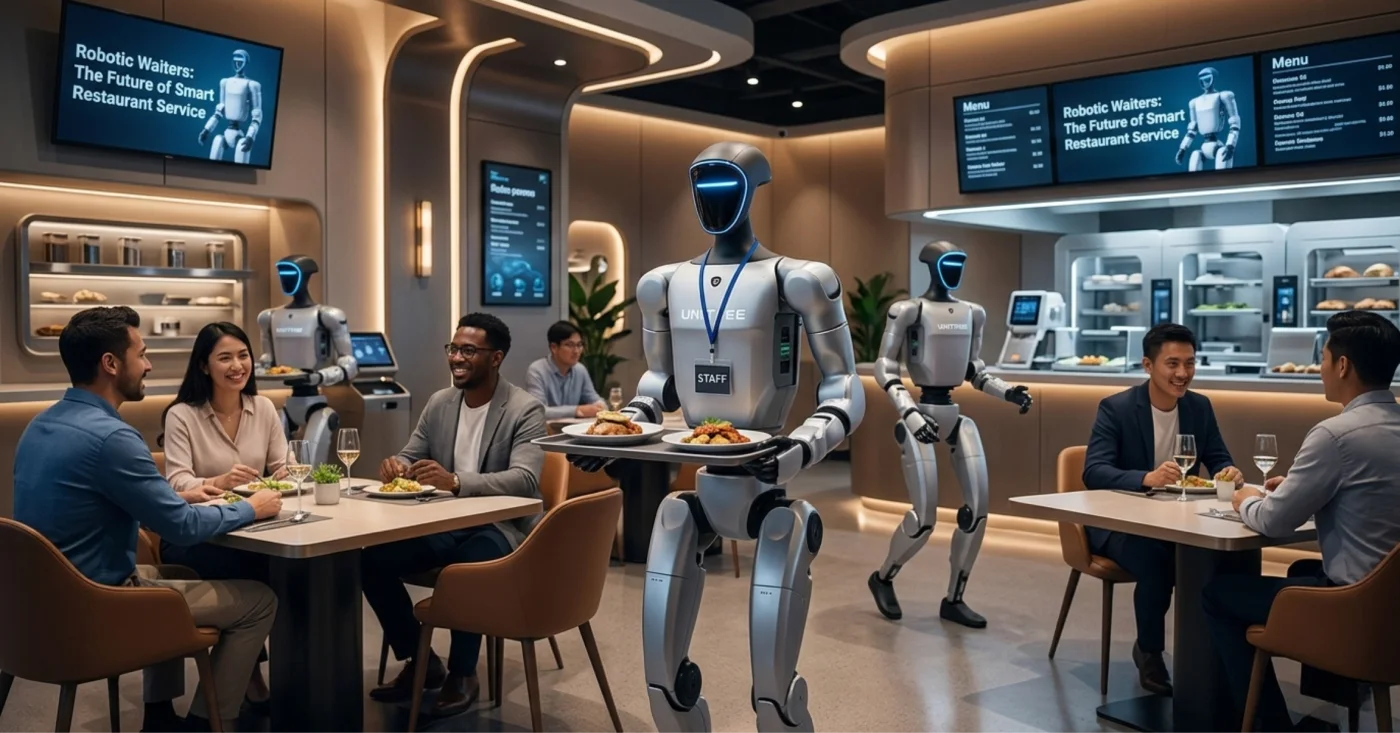
Have you recently dined out and received your meal from a smiling, gliding machine? Robotic waiters are rapidly becoming a standard feature in modern dining rooms. These intelligent machines assist human staff by running food, clearing tables, and entertaining guests.
Smart restaurant robots solve major industry challenges like labor shortages and slow table turnover. By handling repetitive physical tasks, they allow human waiters to focus entirely on customer satisfaction. You get faster service, hotter food, and a highly memorable dining experience.
This guide explores exactly how an AI robot waiter functions and why it makes financial sense for business owners. We will look at the technology, the benefits, and what the future holds for restaurant automation.
What Are Robotic Waiters?
Robotic waiters are autonomous service machines designed to deliver food and drinks directly to restaurant tables. They use advanced navigation systems to map the dining room and move safely around guests and furniture. These machines typically feature multiple tiered trays to carry several orders at once.
An automated food delivery robot is not designed to replace human hospitality. Instead, it acts as a tireless runner between the kitchen and the dining floor. The machine takes the heavy lifting out of a server’s shift, carrying stacks of plates without dropping a single item.
Most models come equipped with interactive screens and voice capabilities. They can greet customers, sing “Happy Birthday,” and politely ask people to step aside if they block the aisle. This combination of utility and personality makes them a massive hit with diners of all ages.
How Robotic Waiters Work
Robotic waiters work by combining LiDAR technology, 3D depth cameras, and smart mapping software to navigate complex environments. Before its first shift, a technician manually pushes the robot around the restaurant. The machine’s sensors build a high-resolution digital map of the entire floor plan.
Once the map is saved, kitchen staff simply load the robot’s trays and select a table number on the touchscreen. The robot calculates the most efficient route and safely glides to the destination. It constantly scans its surroundings to avoid sudden obstacles, like a pulled-out chair or a walking child.
If someone steps in front of an AI robot waiter, it stops immediately. It recalculates a new path within milliseconds, ensuring zero collisions. After the guests take their food from the trays, a simple tap on the screen sends the robot back to the kitchen for its next task.
Types of Restaurant Service Robots
Different dining establishments require different types of smart restaurant robots. Manufacturers design specific models to handle distinct hospitality tasks seamlessly.
Here are the most common types you will find in the industry:
- Food Delivery Runners: These feature open, multi-tiered trays designed to carry multiple dishes from the kitchen to the dining area in one trip.
- Busser Robots: Built with enclosed compartments, these heavy-duty robots transport dirty dishes and glassware back to the dish pit securely.
- Host and Greeter Robots: Positioned at the entrance, these interactive screens on wheels welcome guests, display the menu, and guide diners to their assigned tables.
- Barmaker Robots: Stationary robotic arms that mix, shake, and pour perfect cocktails with incredible precision and speed behind the bar.
Choosing the right machine depends entirely on the restaurant’s layout and biggest operational bottleneck.
Benefits of Robotic Waiters
The advantages of deploying an automated food delivery robot go far beyond novelty. Restaurants experience faster table turnover, reduced staff fatigue, and significantly higher customer satisfaction.
Here are the core benefits driving this automation trend:
- Increased Efficiency: Robots can carry three times the amount of food as a human server. They deliver large family orders in a single, perfectly balanced trip.
- Improved Staff Retention: By taking over the exhausting task of carrying heavy plates all day, robots reduce physical strain on your servers. Happy, energized staff stick around longer.
- Higher Ticket Averages: Because human servers spend less time walking to the kitchen, they spend more time upselling drinks and desserts to guests.
- Consistent Reliability: A robot never calls in sick, never takes a break during the dinner rush, and maintains the exact same pace from open to close.
Investing in these machines instantly elevates the operational capacity of the entire restaurant floor.
Real-World Examples of Robotic Waiters
Major hospitality brands are already proving the massive value of robotic waiters. Global chains like Pizza Hut and Denny’s have successfully integrated service robots into their daily operations.
At Din Tai Fung, famous for its delicate dumplings, robots transport heavy stacks of bamboo steamers from the kitchen to server stations. The human servers then present the food to the table. This hybrid approach keeps the premium customer interaction intact while speeding up the delivery process.
Independent sushi restaurants also rely heavily on these machines. Instead of using traditional conveyor belts, many now send specialized robots directly to tables with fresh, customized rolls. Customers frequently post videos of these interactions on social media, generating free viral marketing for the business.
The Impact on Restaurant Staff
A major misconception is that an AI robot waiter will steal jobs from human workers. In reality, robots act as assistants, making the human server’s job significantly easier and more lucrative.
When a restaurant is short-staffed, existing servers often have to cover too many tables. This leads to cold food, delayed drinks, and frustrated customers. By using robots to run the food, servers can handle larger sections effortlessly while maintaining exceptional service quality.
Because the service is faster and more attentive, customers usually leave better tips. Servers who work alongside robots frequently report higher nightly earnings and much less foot and back pain. It is a mutually beneficial partnership that elevates the entire workplace environment.
Cost and Investment
Understanding the financial commitment is crucial for any restaurant owner considering this technology. The average cost of a robotic waiter ranges from $10,000 to $20,000, but the return on investment (ROI) is typically realized within 8 to 12 months.
Many manufacturers offer Robotics-as-a-Service (RaaS) leasing models. For a few hundred dollars a month, a restaurant can deploy a fully supported robot without a massive upfront capital expense. This monthly lease often costs less than a fraction of a single human employee’s minimum wage salary.
The immediate savings come from increased table turnover. Serving guests five minutes faster means seating more parties per night, directly boosting daily revenue. Furthermore, reducing dropped plates and spilled drinks saves money on food waste and cleaning supplies.
Customer Experience with Robot Service
Diners absolutely love the addition of smart restaurant robots to their dining experience. These machines provide a fun, futuristic element that turns a standard meal into an exciting event.
Families with children are particularly drawn to restaurants that use robots. Kids eagerly wait for the glowing machine to bring their fries, and many robots feature cute digital faces that blink and smile. It creates a joyful atmosphere that encourages repeat visits.
For business lunches or dates, the robots provide quick, unintrusive service. Guests appreciate receiving their food exactly when it is hot, without a server interrupting their private conversation to awkwardly balance plates. The technology enhances the atmosphere by prioritizing speed and convenience.
Challenges of Using Robotic Waiters
While the technology is incredible, implementing an automated food delivery robot comes with specific operational challenges. Tight spaces, narrow aisles, and multi-level dining rooms can severely restrict a robot’s ability to navigate.
Restaurants with closely packed tables or numerous stairs are not ideal environments for these machines. They require smooth, flat surfaces and enough clearance to bypass human traffic safely. A restaurant must carefully evaluate its floor plan before making an investment.
Additionally, robots rely on strong, consistent Wi-Fi networks to communicate with the kitchen dispatch system. If the restaurant’s internet drops, the robot may stall mid-route. Proper IT infrastructure is an absolute requirement for successful deployment.
The Future of Smart Restaurants
The evolution of dining automation is moving at an incredible pace. The future of smart restaurants will feature seamless communication between ordering apps, kitchen automation, and robotic delivery systems.
Soon, we will see robots equipped with advanced AI that can take verbal orders directly at the table using natural language processing. These machines will understand complex dietary requests and instantly transmit them to automated kitchen grills and fryers. The entire lifecycle of a meal could be digitized.
Despite this automation, the human element of hospitality will never disappear. Restaurants will transform into spaces where technology handles the physical labor, and humans handle the emotional connection. It is an exciting era that promises better food, happier staff, and spectacular dining experiences.
Elevate Your Business with Ednex Automation
Ready to transform your facility’s efficiency? Ednex Automation proudly delivers cutting-edge cleaning robot solutions and automated service robots across major GCC countries, including the United Arab Emirates (UAE), Saudi Arabia (KSA), Qatar, Kuwait, Oman, and Bahrain. Our intelligent and reliable robotic systems are designed to enhance productivity, streamline operations, and bring smarter automation to modern facilities.
Upgrade your operations today and experience the future of automation with Ednex Automation.
Frequently Asked Questions (FAQ)
Can a robotic waiter take my order?
Most current robotic waiters only deliver food and bus tables. However, newer models are beginning to integrate touchscreen menus and AI voice recognition to accept basic drink and food orders.
Do robotic waiters bump into people?
No, they are incredibly safe. They use 3D cameras and LiDAR sensors to detect movement instantly. If a person or object crosses their path, they stop immediately and recalculate a safe route.
Do I still need to tip if a robot brings my food?
Yes! The robot is just a tool assisting the human staff. Your human server is still managing your experience, refilling drinks, and ensuring your meal is perfect, so standard tipping practices apply.
How much weight can a restaurant robot carry?
An average automated food delivery robot can easily carry between 60 to 80 pounds of food and dishware. This equals dozens of plates, which would normally take a human server multiple trips to manage.
About the Author
Ednex Automation is a premier technology integrator dedicated to bringing the future of automation into today’s businesses. With a deep passion for robotics, AI, and smart facility management, Ednex Automation helps companies streamline their operations, reduce costs, and dramatically enhance customer experiences. From cutting-edge restaurant service bots to industrial maintenance solutions, we empower businesses to thrive in the automated age.