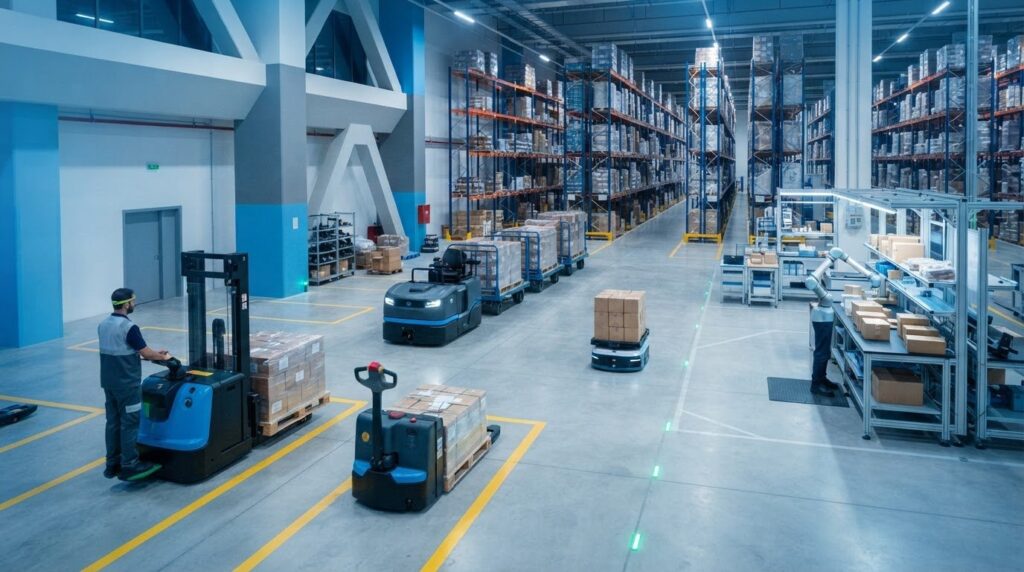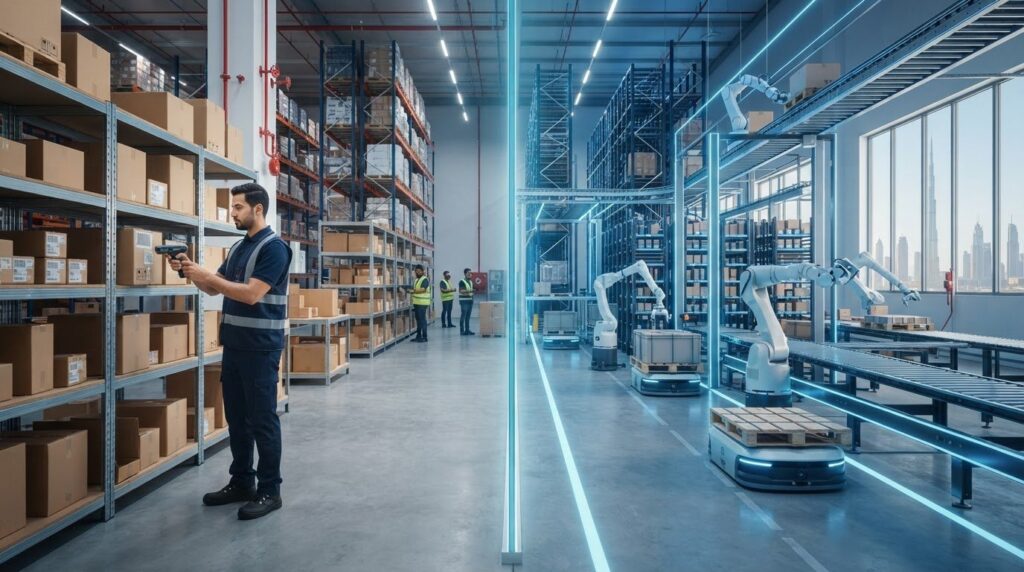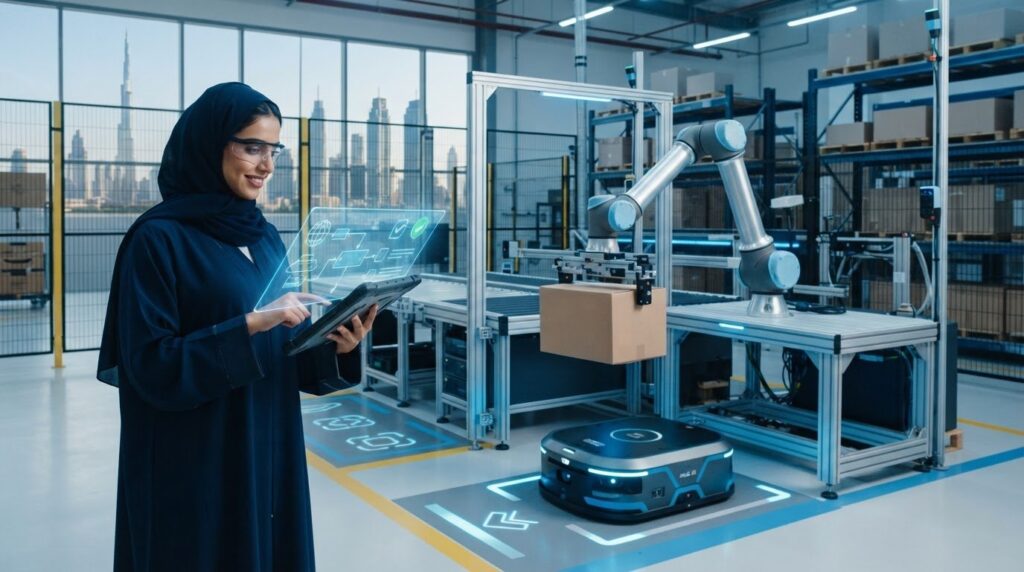
What if the biggest risk in warehouse automation isn’t choosing the wrong robot, but choosing a partner who can’t connect the technology to your operation? When selecting a warehouse automation partner in UAE, equipment is only one part of the decision. A system’s value depends on how well it fits your workflows, connects with operational controls, and can be deployed around real site requirements.
A capable partner matches technology to the work, then defines how deployment and integration fit the wider operating environment. EdNex Automation provides autonomous mobile robots (AMRs), Automated Storage and Retrieval Systems (ASRS), and PLC and SCADA integration, alongside consulting, deployment, integration, and ongoing support across the UAE.
This 2026 guide offers a practical framework for comparing partner expertise, assessing how systems may fit current operations, and clarifying responsibilities across a project. It explains how mobile robotics, automated storage, and control systems address different requirements, helping you move from a general interest in automation to a focused, project-specific discussion.
Key Takeaways
- Start with priority workflows, then identify which technology categories address them.
- When selecting a warehouse automation partner in UAE, assess integration and project delivery alongside equipment expertise.
- Compare each partner’s scope across needs assessment, system design, deployment, and ongoing support.
- Use a structured checklist to document requirements, responsibilities, and the decisions needed to define a project.
- Explore how EdNex Automation’s AMR, ASRS, and PLC and SCADA capabilities can align with different warehouse requirements.
Why selecting the right warehouse automation partner in UAE starts with your operation
Choose for operational fit and delivery capability, not a technology label alone. An autonomous mobile robot (AMR), an Automated Storage and Retrieval System (ASRS), and control-system integration address different needs. Start with the warehouse process you want to improve: moving materials, managing storage and retrieval, or connecting equipment with industrial controls.
Map how work moves through the warehouse before discussing equipment. Trace receiving, internal movement, storage, picking, and dispatch, noting where goods, inventory information, or decisions pass between teams and systems. Look for recurring queues, repeated handoffs, delays locating stock, or movement that interrupts other work. Record where each issue occurs and what happens next. This helps separate a persistent constraint from a general desire to add robotics.
Layout and inventory flow shape system requirements. Document aisle arrangements, storage locations, movement routes, the types of goods handled, and the equipment already in use. Note shared work areas and processes that need to continue during deployment. These details help define the operating conditions a proposed solution must fit and give a partner a clearer basis for tailoring project scope.
Which warehouse workflows should the partner understand?
A useful assessment looks at connected stages, not just one task. For example, a delay moving goods from receiving to storage may affect picking or dispatch later in the process. Include the Warehouse Management System (WMS) in your operational map, since it helps explain how warehouse work and inventory information are managed. List the systems in use and the information teams rely on, then trace the current process before proposing changes.
Review the warehouse as a connected operation. Consider how receiving, movement, storage, picking, and dispatch depend on one another, and note where a disruption in one stage affects the next. This gives your team a way to prioritize improvement opportunities by their operational impact, rather than selecting an isolated task simply because it appears easy to automate.
Why technology-first selection can miss the real requirement
Warehouses with similar goods or storage needs can still have different layouts, inventory flows, handoffs, and operating constraints. Starting with a preferred robot type can narrow the discussion before the underlying problem is understood. Instead, describe the repeated task or bottleneck, where it occurs, which teams or systems it affects, and what must stay in place. Then assess the technology categories against that requirement.
Partner fit begins with the workflow the warehouse needs to improve. Equipment supply is one part of a project; other responsibilities may include consulting, deployment, and integration. EdNex Automation provides AMRs, ASRS, and PLC and SCADA integration, alongside consulting, deployment, integration, and ongoing support. Define the workflow first to clarify which capabilities and responsibilities the project needs.
How to assess warehouse automation expertise across AMRs, ASRS, and control systems
Assess expertise by matching each system category to a defined warehouse requirement, then examine how the proposed scope fits existing processes. AMRs are relevant to material movement, ASRS to storage and retrieval, and PLC and SCADA integration to industrial control-system connectivity. These categories solve different operational problems, so compare them with your project needs rather than treating them as interchangeable options.
Technology fit depends on the workflow being improved and the systems it must work alongside. Use the comparisons below to focus discussions on operational purpose, site conditions, and integration scope.
- Material movement: AMRs. Map the routes between work areas and identify the materials that need to move. Note where transfers begin and end, how handoffs happen, and what routes share space with other activity. Ask how the proposed scope accounts for those conditions and fits into warehouse operations.
- Storage and retrieval: ASRS. Define the storage requirement, the inventory characteristics that affect handling, and how goods need to enter and leave storage. Explain how storage and retrieval currently connect with inventory processes, then ask how the proposed system is assessed against those requirements.
- Industrial control connectivity: PLC and SCADA integration. If the project involves connecting automation with industrial controls, identify the systems in scope, the information or signals that need to pass between them, and who is responsible for integration. Establish how responsibilities, interfaces, and testing are addressed in the project plan.
Use these as evaluation prompts, not assumptions about a particular system’s capabilities. Ask for an explanation of how the equipment category relates to the warehouse process and what the project scope includes. Specific answers make it easier to compare proposals and identify gaps before decisions are made.
When should a partner’s AMR experience matter?
AMR experience matters when the project includes moving materials through the warehouse. Look for a discussion grounded in actual routes, handoffs, and operating conditions, rather than a recommendation for mobile robotics in the abstract. Clarify how deployment fits around warehouse activity and how the proposed AMRs relate to the wider operational setup. For deeper background, explore the category of autonomous mobile robots as part of your technology assessment.
How do ASRS and control-system capabilities fit the decision?
Assess ASRS expertise against your storage and retrieval requirements, including how inventory is handled before and after it enters storage. Where industrial controls are part of the project, PLC and SCADA integration becomes relevant. Identify the systems involved, the connections required, and how integration responsibilities are assigned. Further reading on ASRS and PLC and SCADA integration can help your team prepare focused project questions.
For each category, distinguish equipment supply from the work needed to incorporate it into the operation. EdNex Automation provides AMRs, ASRS, and PLC and SCADA integration, together with consulting, deployment, integration, and ongoing support. Project scope is tailored to operational requirements. If you’re shaping a warehouse project, explore EdNex Automation’s warehouse automation capabilities as a starting point for a project-specific discussion.
How to compare warehouse automation partners beyond equipment selection
Equipment is only one part of a warehouse automation project. Compare how each partner translates operational requirements into a defined system scope, connects that system with existing operations, and supports deployment and handover. When selecting a warehouse automation partner in UAE, assess both the technologies in its portfolio and the responsibilities it takes on through the project lifecycle.
Review every proposal against the same delivery stages. Look for a clear account of what is included, where interfaces with existing systems sit, and how the project moves from planning into operation. Broad claims about end-to-end capability are less helpful than a scope that identifies work, ownership, and deliverables. If a proposal leaves an interface or responsibility unclear, record it as an open question.
- Needs assessment: How are operational requirements, constraints, and project boundaries established?
- System design: How are the selected technologies mapped to those requirements and the existing operation?
- Integration: Which system interfaces are in scope, and who is responsible for connecting them?
- Deployment: What activities does the partner own as equipment is introduced into the operating environment?
- Ongoing support: What support responsibilities are defined after deployment?
Compare each portfolio with the project in front of you, not with a generic list of technologies. A project involving material movement, automated storage, or industrial control connectivity may call for different combinations of AMRs, ASRS, and PLC and SCADA integration. Relevant technology categories can support a more coherent project discussion, but the proposed scope should still be tailored to the warehouse’s requirements.
What does end-to-end integration expertise look like?
Consulting helps define requirements and shape project scope. System supply identifies the equipment being provided. Integration addresses how that equipment connects with the operational environment, while deployment covers putting the solution into place. Ongoing support describes responsibilities that continue beyond deployment. Treat these as distinct parts of a proposal: equipment supply alone does not explain who manages interfaces, coordinates implementation, or supports the system afterward.
An automation partner connects project requirements, systems, deployment, and ongoing support through a defined scope. During evaluation, look for clarity around system interfaces, responsibility boundaries, and operational handover. A useful proposal explains what each party is responsible for, how the solution fits into warehouse processes, and what happens at each stage of delivery.
How should you assess technical provenance and support?
Partnerships can provide context for a robotics portfolio. EdNex Automation is an authorized partner of global robotics leaders including Pudu Robotics, Unitree Robotics, Franka Robotics, Kinova, and FARINO. Consider these relationships alongside the proposed technology and project-specific integration scope. They do not replace the need to define your requirements and responsibilities for the project.
Review support as a defined part of the delivery model, rather than an undefined promise. EdNex Automation’s scope includes consulting, deployment, integration, and ongoing support, alongside AMR, ASRS, and PLC and SCADA capabilities. A project discussion can establish how these responsibilities align with the warehouse’s operating requirements and handover needs.
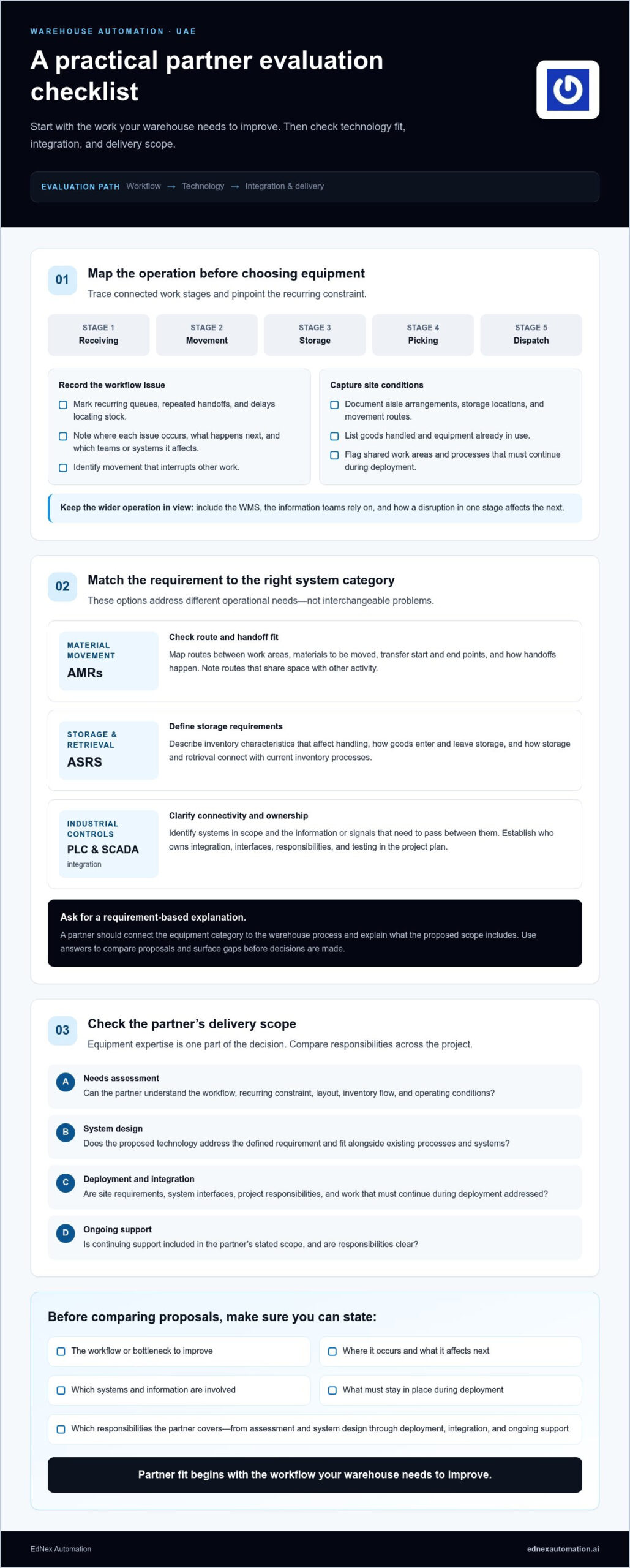
A practical UAE warehouse automation partner evaluation checklist
A consistent evaluation brief lets your team compare proposals on the same operational basis instead of relying on broad claims or equipment lists. When selecting a warehouse automation partner in UAE, document what the warehouse needs, what systems are already in place, and which responsibilities the project must cover. Separate confirmed requirements from assumptions so the proposed solution can be tailored without losing sight of the operational goal.
What should go into a partner evaluation brief?
Record priority workflows, current systems, site constraints, and the outcomes your team wants to achieve. State whether AMRs, ASRS, PLC and SCADA integration, or a combination should be assessed, without prescribing a system design prematurely. Describe expectations for integration, deployment, handover, and ongoing support. A shared brief makes proposals easier to compare while giving each partner room to explain a suitable technical approach.
- Define operational priorities. Describe the workflow to improve, where the issue occurs, and what your team wants the project to address.
- Map relevant systems. List existing operational and control systems, equipment, and interfaces that may affect integration.
- Compare project scope. Separate equipment supply from consulting, design, integration, deployment, handover, and support responsibilities.
- Assess delivery approach. Review how the proposed work fits the operating environment and how responsibilities are allocated.
- Agree next steps. Record open questions, operational information needed, and decisions required to develop a project-specific scope.
How can teams compare proposals consistently?
Use the same workflow requirements and evaluation categories for every proposal. Record what each partner has explicitly included, how it describes system interfaces, who owns deployment activities, and what ongoing support arrangements are stated. Mark unanswered points as open rather than assuming they are covered. This approach makes differences visible and gives your team a practical basis for follow-up and decision-making.
Adaptable comparison checklist
- Operational need: Which workflow and requirement does the proposal address?
- Technology scope: Does it assess the relevant AMR, ASRS, or PLC and SCADA integration categories?
- Integration: Which systems and interfaces are included, and how are responsibilities assigned?
- Delivery: What consulting, deployment, and handover activities are described?
- Ongoing support: What support responsibilities are stated for the project?
For an ASRS project, add storage and retrieval requirements to the brief and use a design and implementation checklist to structure the technical discussion. For any project, compare documented scope rather than inferred capabilities. EdNex Automation brings consulting, deployment, integration, and ongoing support together with AMR, ASRS, and PLC and SCADA capabilities, tailoring project scope to operational requirements. Discuss your warehouse automation requirements with EdNex to define a project-specific next step.
Why EdNex Automation is a partner to consider for UAE warehouse projects
A strong partner connects the technologies under consideration with the work required to assess, deploy, and support them. For teams selecting a warehouse automation partner in UAE, EdNex Automation provides consulting, deployment, integration, and ongoing support alongside autonomous mobile robots (AMRs), Automated Storage and Retrieval Systems (ASRS), and PLC and SCADA integration. This combination gives warehouse teams a basis for discussing equipment and implementation responsibilities together.
How EdNex’s capabilities align with warehouse requirements
Each capability relates to a different project question. AMRs are relevant when assessing mobile material movement. ASRS addresses projects involving automated storage and retrieval. PLC and SCADA integration applies when industrial control-system connectivity is part of the requirement. The appropriate scope depends on the operation, its existing systems, and the project objectives.
EdNex Automation is an authorized robotics distributor serving the UAE and an authorized partner of global robotics leaders including Pudu Robotics, Unitree Robotics, Franka Robotics, Kinova, and FARINO. These relationships provide context for its robotics portfolio. Project requirements still need to be defined, including which system categories fit the workflow and how integration, deployment, and support responsibilities are scoped.
Use your evaluation criteria to guide the discussion. If material movement is in scope, outline the routes and handoffs the project needs to address. If storage and retrieval are priorities, describe inventory and storage requirements. Where controls are involved, identify the systems and interfaces that matter. This turns a broad technology conversation into a practical review of operational fit.
What is the next step toward a project discussion?
Prepare a concise project brief with the workflows you want to assess, the systems already in use, relevant operating constraints, and the outcomes you’re targeting. You don’t need to arrive with a fixed technology choice. Share this context so the project scope can be tailored to your operational requirements, including whether AMRs, ASRS, PLC and SCADA integration, or a combination fits the need.
Discuss EdNex’s consulting, deployment, integration, and ongoing support against the responsibilities your project needs covered. Bring questions about system interfaces, implementation roles, and handover expectations so the conversation focuses on a practical scope, not equipment alone.
Start a warehouse automation discussion with EdNex Automation and outline the workflows, systems context, and objectives shaping your project.
Move from evaluation to a project-specific plan
Turn operational priorities into a decision-ready project brief. Identify the workflow you want to address, the constraints that could shape implementation, and what your team needs from integration and handover. This gives stakeholders a shared basis for refining scope and identifying dependencies before committing to a technology direction.
Selecting a warehouse automation partner in UAE is ultimately about aligning proposed work with your operation, not adopting automation for its own sake. A focused discussion can translate objectives into practical project questions, clarify the specialist input needed, and establish a path forward based on your warehouse requirements.
EdNex Automation provides consulting, deployment, integration, and ongoing support for warehouse automation projects, with AMRs, ASRS, and PLC and SCADA integration in its portfolio. As an authorized robotics distributor serving the UAE, EdNex can discuss a project scope tailored to your operational needs.
Discuss your warehouse automation requirements with EdNex Automation and take the next step toward a solution shaped around your operation.
Frequently Asked Questions
How do I choose a warehouse automation partner in UAE?
Choose a partner by how clearly it connects operational requirements to a deliverable project scope. Start with a specific process issue, such as replenishment delays or congestion where goods transfer between work areas. Compare how each approach fits your layout, current systems, deployment needs, and ongoing support requirements. When selecting a warehouse automation partner in UAE, clarity about responsibilities and system interfaces matters as much as the equipment category.
What should I look for in a warehouse automation integrator?
Look for an integrator that explains how the proposed system fits your warehouse and connects with existing operations. Review the integration boundaries, deployment responsibilities, testing approach, handover, and ongoing support. If the project connects equipment to operational controls, the scope should identify which interfaces are included and who owns them. A clear, project-specific explanation is more useful than broad technology claims.
Are AMRs or ASRS better for warehouse automation?
Neither is universally better; they address different operational needs. Autonomous mobile robots (AMRs) are relevant when assessing mobile material movement, such as transfers between work areas. Automated Storage and Retrieval Systems (ASRS) are relevant when the priority is automated storage and retrieval. A warehouse may assess one category or both, depending on its workflows. Compare each against the task, layout, inventory handling, and processes it needs to connect with.
Can warehouse automation integrate with existing control systems?
Warehouse automation projects can include connections with existing control systems, but the specific interfaces and responsibilities should be defined in the project scope. Map the systems involved, the information or signals that need to pass between them, and who handles integration. For example, a project involving industrial equipment may require PLC and SCADA integration. Planning interfaces early helps identify dependencies before deployment and clarify how the system will be handed over.
What does an end-to-end warehouse automation partner do?
An end-to-end partner can contribute across the project lifecycle, from consulting and defining requirements to system deployment and integration, with ongoing support after implementation. The scope should specify what the partner provides at each stage and where the customer or other project parties have responsibilities. Equipment supply alone does not explain how the system will be incorporated into warehouse operations or what support arrangements follow deployment.
How do I evaluate a warehouse automation proposal?
Evaluate proposals against the same written requirements so differences in scope are visible. Check whether each proposal addresses the intended workflow, identifies relevant existing systems, and explains integration, deployment, handover, and support responsibilities. Separate included work from assumptions and open questions. If one proposal covers equipment supply while another also defines integration activities, compare those scopes directly rather than treating them as equivalent based on equipment lists alone.
Does warehouse automation require AMRs, ASRS, and PLC integration together?
No. A project may focus on one category, combine technologies, or address a different automation requirement. AMRs relate to mobile material movement, ASRS to automated storage and retrieval, and PLC integration to industrial control connectivity. The appropriate combination depends on the operation and project objectives. For example, a warehouse addressing storage requirements may assess ASRS without automatically needing AMRs; control-system integration is relevant when the project requires that connectivity.