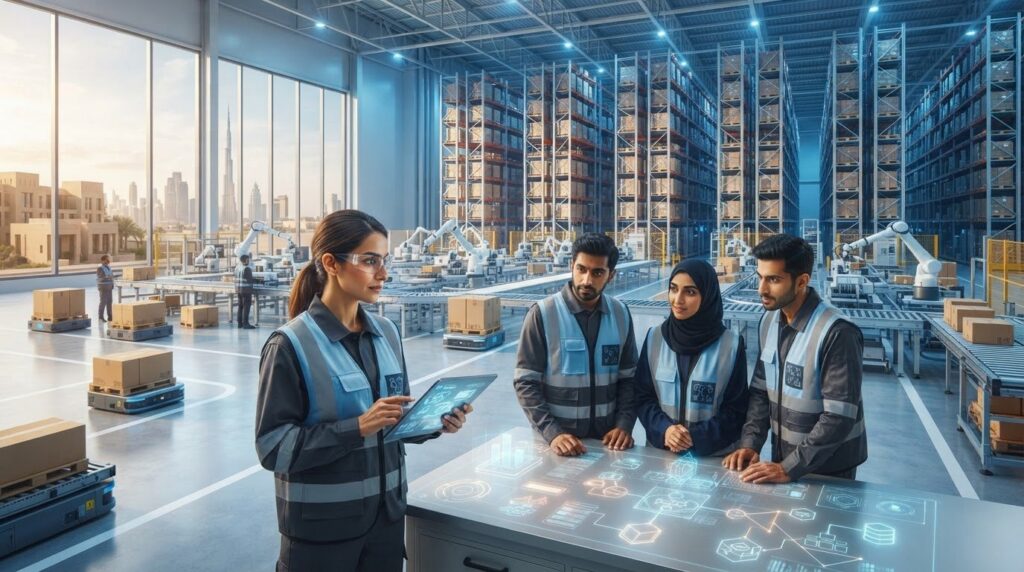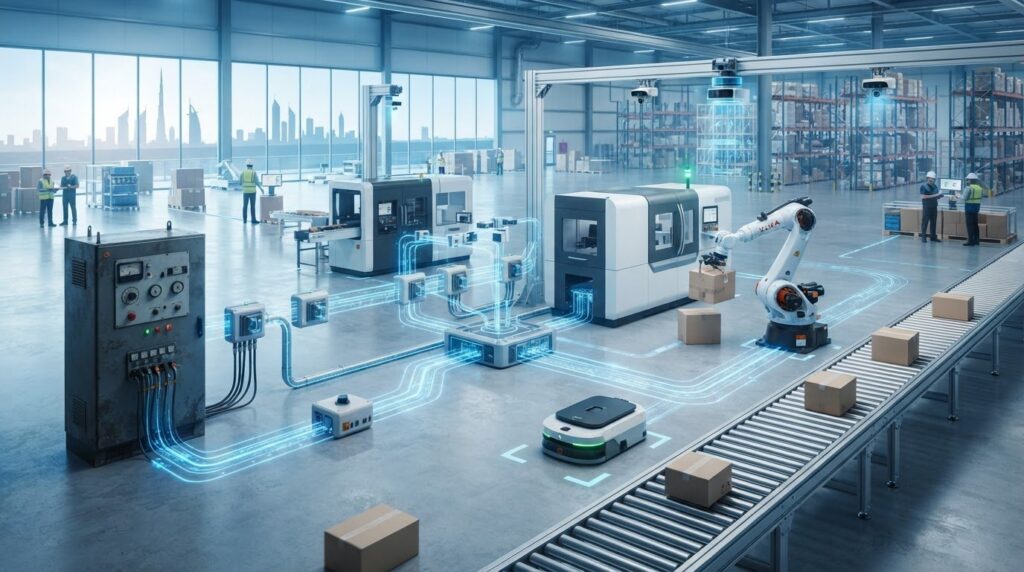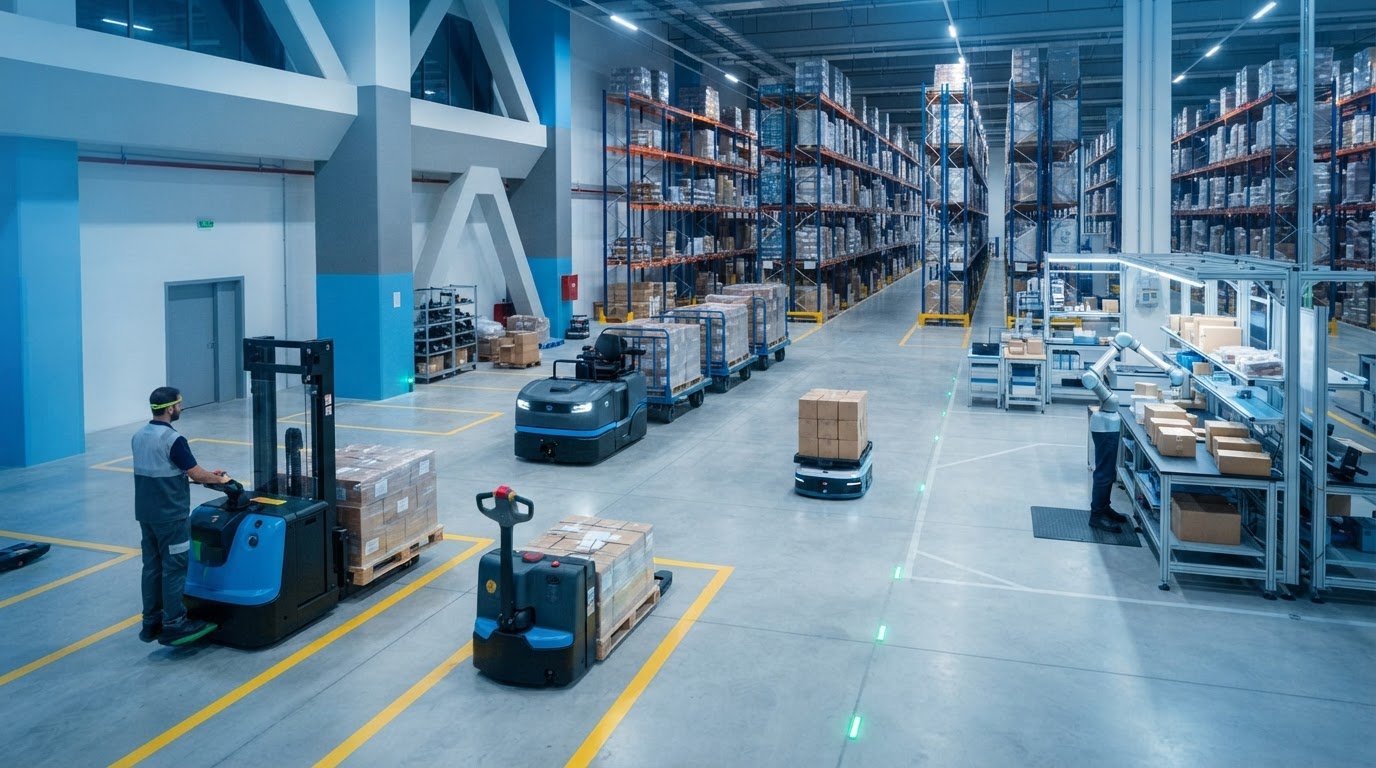
A forklift may be the wrong tool for a warehouse that needs narrower aisles, short pallet moves or more predictable movement through pedestrian areas. Practical forklift alternatives for modern warehouses include pallet stackers and pallet jacks for short lifts and moves, tow tractors for moving loads in trains, and automated systems for repeatable transport. Manual equipment reduces reliance on powered trucks, but depends on workers’ physical effort and may not suit frequent, heavy or high-level handling.
Compare more than purchase cost: aisle width, load weight and dimensions, lift height, operating conditions, traffic flow and safety all affect whether an alternative will work. A lower-cost or more compact option can become a bottleneck if it cannot meet the warehouse’s throughput or lifting requirements.
This guide compares the main options by cost considerations, safety, space, indoor and outdoor suitability, load capacity and manual limitations. It explains where pallet stackers work well, when a forklift remains the better fit, and how automation can support material movement when manual handling no longer suits the operation.
Key Takeaways
- Match equipment to aisle width, lift height and load dimensions before prioritizing purchase cost.
- Use pallet stackers and jacks for suitable pallet moves, while accounting for the physical effort and pace manual handling requires.
- Compare indoor and outdoor conditions, including floor surfaces, noise, emissions and maneuvering space.
- Assess actual and future load requirements, since rated capacity can change with load position and lift height.
- Consider cobots and autonomous mobile robots when repeatable material movement or task automation could better fit warehouse operations.
Pallet stackers for narrow aisles and pedestrian areas
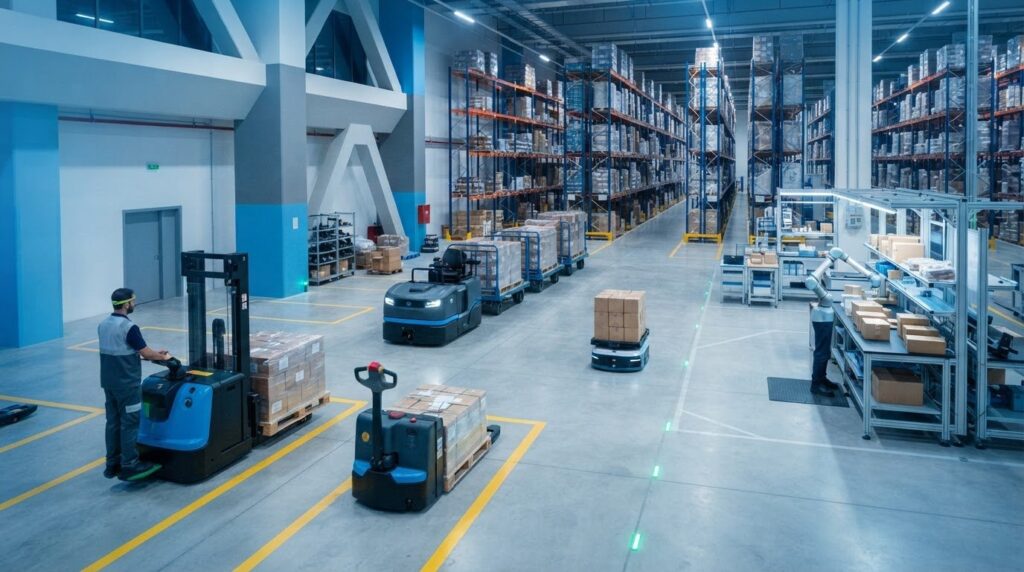
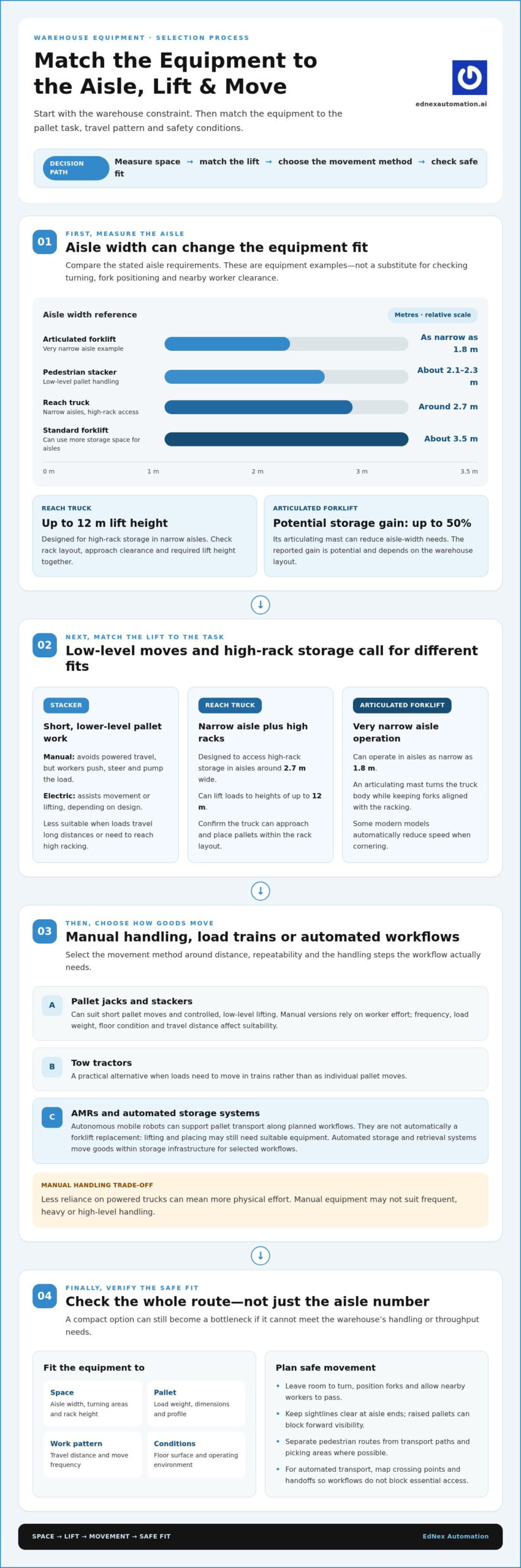
Electric pallet jacks and electric stackers suit warehouse operations where loads move through narrow aisles and need controlled, low-level lifting. Pedestrian stackers are described as requiring aisles approximately 2.1 to 2.3 metres wide. That makes them a possible fit where a standard forklift’s 3.5-metre aisle requirement consumes too much storage space. A stacker still needs room to turn, position its forks and let nearby workers pass safely.
Choose a stacker for the actual pallet task, not simply the aisle width. A manual model avoids powered travel but requires workers to push, steer and pump the load. An electric model assists movement or lifting, depending on its design. In either case, pallet dimensions and weight, floor condition, travel distance and daily move frequency affect its usefulness. A stacker is less suitable when loads must travel long distances or reach high racking.
Reach trucks address a different constraint: high-rack storage within narrow warehouse aisles. They are designed for narrow aisles around 2.7 metres wide and can lift loads to heights of up to 12 metres. That reach lets businesses use vertical storage instead of widening aisles, provided the rack layout and load requirements fit the equipment. Compare the lift height and aisle geometry together; a truck that reaches the required rack level still needs clearance to approach and place each pallet.
Articulated forklifts can operate in aisles as narrow as 1.8 metres. Their compact design combines features of reach and counterbalance forklifts. An articulating mast lets the operator turn the forklift body while keeping the forks aligned with the racking system. This can reduce aisle-width requirements, while some modern models automatically reduce speed when cornering. The research guidance reports potential storage-capacity gains of up to 50% without expanding premises, but actual fit depends on the warehouse layout.
Visibility and maneuvering space matter even in narrow aisles. A raised pallet can block the operator’s forward view, while rack uprights and stored goods can obscure cross-aisle traffic. Mark pedestrian routes, keep sightlines clear at aisle ends and separate transport paths from picking areas. For example, a stacker moving pallets near a picking zone needs room to turn without obstructing workers accessing shelves.
Autonomous operation offers another option, but an autonomous mobile robot is not automatically a forklift replacement. AMRs can support pallet transport along planned warehouse workflows, while lifting and placing may still require suitable equipment. Automated storage and retrieval systems can move goods within storage infrastructure, reducing reliance on manual pallet transport for selected workflows. Their fit depends on storage design, handling patterns and integration with receiving and dispatch.
Measure the layout before choosing equipment: aisle width, turning areas, rack height, pedestrian routes and pallet profiles all matter. A reach truck suits high-rack access, a stacker supports lower-level pallet handling, and an articulated forklift can work in very narrow aisles. For autonomous transport, map crossing points and handoffs so people and equipment can move through the same operation without blocking essential access.
Forklift costs, safety risks and space flexibility
Equipment cost is only one part of the decision. Layout changes, maintenance, energy and labour also affect warehouse efficiency. In UAE industrial operations, weigh these factors against load weight, traffic patterns and available space.
Forklift Costs and Space Flexibility
Total operating cost includes equipment purchase, servicing, energy, operator time and any changes required to loading zones or aisles. A standard counterbalance truck can limit storage options if its turning space conflicts with racking or pedestrian routes. Smaller equipment may fit tighter spaces, but its capacity and travel rate must still support daily operations.
Build the comparison around a representative task, such as moving a pallet from receiving to a rack. Account for the travel path, lift height, load size and handling frequency, then compare equipment needs with the layout. Electric forklifts can have lower operating costs, but total cost still depends on duty cycle, charging arrangements and maintenance. A redesign that saves floor space can also affect access to dispatch and loading areas.
Forklift incidents can involve pedestrian collisions, dropped loads, restricted sightlines and instability during turns. At a blind corner between storage aisles, for example, a driver may not see a worker entering the crossing. Separate pedestrian routes, improve visibility at intersections and control vehicle movement to address different parts of that risk. Equipment choice supports these controls but does not replace safe traffic planning.
In UAE warehouses, safety planning should reflect the workplace, equipment and movement patterns. Map vehicle routes, pedestrian crossings, loading areas and blind corners, then establish clear separation wherever people and trucks share space. A marked crossing near dispatch, for example, helps distinguish vehicle and pedestrian paths. Training, maintenance and clear operating procedures also support safe material handling.
Operator Comfort and Safety
Design equipment and workflows to reduce avoidable strain while preserving control and visibility. Operator comfort matters because repeated reversing, awkward steering and prolonged vibration can make precise handling harder across a shift. For example, a truck used for frequent loading transfers should give the operator a clear view of the route and practical access to controls.
Assess the operator’s sightlines, seating or standing position, control reach and exposure to vibration during the actual task. A compact truck may improve maneuverability in tight spaces, yet require more frequent turning. Pedestrian equipment removes the seated driving position, but operators still need clear routes and manageable handling demands. Match equipment to the task rather than treating comfort as an optional extra.
For a final comparison, map one receiving-to-storage workflow and record its turns, crossings, pallet movements and loading points. Include maintenance access and pedestrian movement in the same layout review. Warehouses assessing how automated transport might change vehicle traffic can explore warehouse automation systems alongside conventional equipment options.
Indoor versus outdoor equipment considerations
For pallets, cases and individual items, electric pallet jacks and stackers handle pallet movement; tow tractors transport loads on carts, and robots can automate repeatable routes. Deployment may require changes to storage layouts, marked travel paths, charging points and connections between equipment and warehouse systems.
Trials and Site Assessments
A site assessment matches equipment to the warehouse’s actual surfaces, routes, loads and operating conditions. This matters because an indoor solution may not perform well across outdoor yards, thresholds or uneven ground.
Indoor warehouse operations often suit electric equipment, compact designs and quieter, low-emission movement. Electric forklifts produce zero exhaust emissions, supporting indoor use where exhaust control matters. Outdoor work presents different demands: uneven surfaces may call for pneumatic tires, higher ground clearance, durability and stability. An articulated forklift can serve both indoor and outdoor tasks, such as unloading a truck outside and placing its goods directly onto warehouse racking.
Costs depend on the equipment category and the operation it must support. Purchase cost is only one factor: energy use, maintenance, operator time, charging needs and layout changes also affect total operating cost. Electric forklifts can have lower operating costs, but suitability depends on duty cycle and charging arrangements. The price depends on the equipment and project requirements, and a quote is needed to establish it. Cost factors include capacity, operating hours, site conditions and integration needs.
During an equipment trial, assess the route from receiving to storage and dispatch. Note floor transitions, turning points, pedestrian crossings, narrow aisles and outdoor exposure. For example, a robot transporting cases between picking and packing needs a route that avoids blocked passages and supports predictable handoffs. An AMR can transport materials along warehouse workflows, while a delivery robot can support the movement of smaller items. Neither replaces lifting equipment when loads need to be raised onto racks.
Infrastructure and Warehouse Changes
Infrastructure changes are the layout, access and system adjustments that help alternative equipment operate reliably. They matter because a machine’s performance depends on its route, storage interface and handoff points.
For AMRs, map travel paths, crossings, pickup locations and charging areas, and keep routes compatible with pedestrian and equipment traffic. An ASRS changes the storage and retrieval process, so receiving, inventory flow and dispatch must connect with its storage interface. For outdoor material handling, account for ground conditions and the transition into the building. Across UAE facilities, assess indoor routes and exposed yard areas under their actual operating conditions.
Compare alternatives by task rather than choosing one machine for every movement. A pallet jack may suit short, ground-level transfers; an AMR may suit repeatable transport; and an ASRS may suit automated storage and retrieval. The right combination depends on the load, route, storage method and indoor or outdoor environment.
Load capacity and load-center requirements
Choose equipment based on the pallets the warehouse actually handles, not just the largest load it might occasionally move. Compare average and maximum weight, pallet dimensions, load centre, lifting height and future expansion needs. These factors determine usable capacity and whether equipment can move safely through aisles and pedestrian areas. For example, a long pallet shifts its load centre forward, which can reduce a truck’s effective lifting capacity.
A forklift’s rated capacity applies under defined conditions, not every position or height. A forklift rated for 1,500 kg at ground level has reduced capacity when lifting at 4 metres. The load chart accounts for factors such as lift height and load center, so operators should use the rating that matches the actual task. A pallet that weighs less than the headline rating can still exceed safe capacity when its load is long or raised.
Alternatives have different capacity profiles. Electric pallet jacks can lift loads weighing 6,000 to 8,000 lbs., but pallet jacks have lower lifting capacity than forklifts. Tow tractors can handle loads up to 60,000 lbs. by towing a load train, making them useful for horizontal transport rather than rack placement. A telehandler may lift 10,000 lbs., depending on its configuration and the task. These figures describe different functions, so they aren’t interchangeable ratings.
Check the warehouse’s pallet mix before selecting a truck around its maximum possible load. If 95 percent of pallets weigh less than 1,000 kg, a 2.5-tonne forklift may be unnecessarily large for the aisles. That does not mean capacity can be sized to the average alone: the heaviest load, its dimensions and required lift height still matter. Industrial loads handled by manufacturers commonly weigh between 2,000 and 20,000 kg, which can require a different handling strategy from ordinary pallet work.
Storage density also depends on equipment dimensions and lifting reach. A larger-capacity truck may need more aisle space, limiting rack positions. A narrower machine can improve access only if it handles the required load at the required height. Reach trucks support high-rack storage in narrow aisles, but their rated capacity must suit each pallet and lift condition. Evaluate capacity and layout together rather than optimizing either in isolation.
Automated storage offers another way to match the handling system to the load profile. Unit-load AS/RS handles large and heavy pallets and cases weighing from 1,000 to 5,500 lbs.; mini-load AS/RS handles loads up to 75 lbs. The distinction helps separate pallet-scale storage from smaller-item workflows. Before selecting either system, map the load dimensions, weight range, storage locations and retrieval pattern, then align the system with receiving and dispatch needs.
Compare each alternative against a representative heavy load and the highest required placement. Record the load’s weight, dimensions, centre of load and destination, then check the equipment’s capacity for that exact condition. This makes trade-offs clear: an electric pallet jack may suit floor-level movement, while high-rack placement or unusually heavy industrial loads call for equipment designed for that lifting task.
Manual forklift limitations in modern warehouses
Manual equipment can reduce reliance on powered vehicles, but it shifts effort and pace to workers. A hand-operated pallet jack, for example, moves a pallet along the floor; it does not provide powered travel or high-rack access for every logistics task. The challenge grows when facilities handle frequent transfers, long routes or a wide mix of loads.
A general manual-lifting guideline sets 50 pounds as the maximum weight one person should lift. That is a guideline, not a UAE legal limit, and it highlights why repetitive handling deserves attention. Moving a pallet jack still requires pushing, steering and controlling the load. Repeated trips between receiving and storage can make manual transport a productivity constraint, especially when operations depend on consistent movement throughout a shift.
Manual equipment also has practical height limits. Manual stacking above six or seven meters is described as routine, but height alone does not establish whether a task is suitable. A worker must position each item accurately, maintain control and manage access to the storage location. As racks rise, reach and placement precision become more demanding; manual handling can be slower and harder to coordinate than ground-level movement.
Throughput is another constraint. If one person must push each pallet from dispatch to storage, the route and handling time limit how quickly a machine-free process can meet demand. A facility with repeated pallet transfers, for example, may need powered equipment or a redesigned flow. Manual tools remain useful for occasional moves over short distances, but are less suited to frequent transport or elevated placement.
Manual methods can also complicate coordination in shared spaces. A worker steering a loaded pallet jack needs clear sightlines and room to maneuver, while nearby people may be picking or replenishing stock. At a crossing between a storage aisle and a packing area, separate pedestrian paths and defined handoff points clarify responsibilities. Without those controls, manual equipment can still create traffic conflicts despite having no powered vehicle.
For modern facilities, the decision is not simply manual versus powered. Identify which tasks involve repetitive pallet transport, elevated placement or consistent delivery between work areas. Keep manual equipment for suitable, low-frequency movements; assess powered or automated machines where volume, travel distance or lifting demands exceed that workflow. Explore automation options for warehouse workflows when repeatable material movement is a persistent productivity challenge.
EdNex Automation: Collaborative Robots (Cobots)
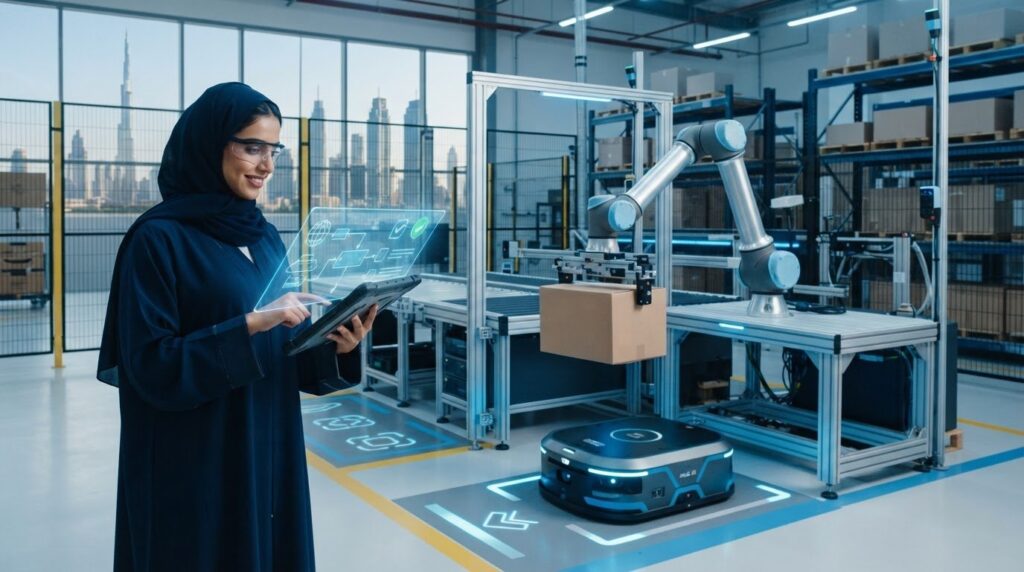
EdNex Automation helps UAE warehouses assess where automation can complement material-handling equipment and support repetitive workflows. Collaborative Robots (Cobots) can work alongside people, while Autonomous Mobile Robots (AMRs) support material movement along warehouse routes. Cleaning robots and delivery robots address other operational tasks, helping teams consider automation beyond pallet transport.
Consider automation when repeated movements, routine work or coordination between warehouse areas create a clear operational challenge. The right fit depends on the task, facility layout and how equipment must work within existing operations. For manual pallet handling or loads requiring specific lifting capacity, automation may complement rather than replace suitable lifting equipment.
Contact EdNex Automation to discuss automation options for your warehouse operations.
Design the Next Stage of Warehouse Operations
Modernization does not require replacing every vehicle at once. Start by deciding which warehouse workflow should evolve first, then align people, equipment and automation around that operational priority. This keeps the focus on practical fit rather than technology for its own sake.
For UAE businesses evaluating forklift alternatives for modern warehouses, automation can extend beyond moving goods. EdNex Automation offers Collaborative Robots (Cobots), Autonomous Mobile Robots (AMRs) and cleaning robots for different operational needs across commercial and industrial environments. The right starting point depends on the work your facility wants to improve and how a solution fits its existing processes.
Contact EdNex Automation to discuss your warehouse and explore a considered path toward more capable operations. Every well-chosen improvement can help build a more adaptable facility.
Frequently Asked Questions
What are the main alternatives to forklifts in modern warehouses?
Common alternatives include pallet jacks, pedestrian stackers, tow tractors, conveyors, automated guided vehicles, autonomous mobile robots and automated storage systems. Each serves a different movement pattern. A pallet jack, for example, moves a single pallet over a short floor route, while a tow tractor pulls several carts between work zones. Choosing forklift alternatives for modern warehouses depends on whether the task involves lifting, horizontal transport, item delivery, or storage and retrieval.
How do AMRs and AGVs compare with forklifts for warehouse material handling?
AMRs and AGVs automate movement, while forklifts provide operator-controlled lifting and transport. AGVs commonly follow defined routes or guidance infrastructure; AMRs can navigate routes that change as warehouse conditions shift. Neither label alone establishes a robot’s lifting capability. Moving totes between picking and packing, for example, differs from lifting pallets onto racking. Compare payload, route design, handoff points and lift requirements against the specific workflow.
When should warehouses use conveyors, pallet shuttles, or automated storage and retrieval systems instead of forklifts?
Conveyors suit steady movement between fixed points, such as packing and dispatch. Pallet shuttles fit storage layouts that move pallets within dedicated racking lanes. Automated storage and retrieval systems suit operations seeking automated placement and retrieval within a designed storage system. These options are less flexible than vehicles serving changing destinations, so compare product mix, routing changes, storage strategy and how often goods need to move.
How much do warehouse robots and other forklift alternatives cost to buy or lease?
Costs depend on equipment, capacity, software or infrastructure needs, integration scope, installation and ongoing support. A standalone transport robot and a connected storage system involve different project requirements, so a single price range can mislead. Leasing terms also depend on the agreement and equipment. For a defined project, the price depends on the case and is provided after a quote request, based on system and implementation requirements.
What are the operating costs and potential labor savings of forklift alternatives?
Operating costs include energy, maintenance, software or system support, downtime and infrastructure upkeep. Labour savings may come from reducing repetitive travel or reallocating staff to tasks requiring human judgment, such as exception handling and quality checks. For a useful comparison, map labour hours, equipment use and delays in the current workflow, then model the proposed system’s equivalent costs. Savings depend on the workflow and deployment, not the robot alone.
How much warehouse space and throughput can forklift alternatives save or improve?
Changes to space and throughput depend on the layout, storage method, equipment dimensions, route design and order pattern. A shuttle or automated storage system can change how goods access storage, while mobile robots can support recurring transport routes. Measure current travel distance, congestion points, storage access time and completed orders across representative shifts. Compare those measures with the proposed design to identify practical capacity or throughput improvements without assuming a fixed gain.
What safety risks and regulations apply to warehouse robots and forklift-free operations?
Risks include collisions, blocked routes, unexpected equipment movement, unstable loads and unsafe interaction between people and machines. A forklift-free site still needs traffic controls and safe material-handling practices. Before deployment, document a site risk assessment, pedestrian routes, emergency procedures, equipment training and maintenance responsibilities. Align controls with applicable UAE workplace safety requirements and the specific equipment’s operating instructions. Automation changes hazards, but does not remove the need to manage them.
How should a warehouse choose and implement the right forklift alternative?
Start by defining the task, then document load type, travel route, storage destination, handoffs and current bottlenecks. Match equipment to its function: transport, lifting, fixed-route movement or automated storage. Next, assess site layout and system integration needs, then test the proposed workflow under representative operating conditions. Track measures such as completed moves, delays and manual interventions. A phased implementation helps teams identify process adjustments before expanding the solution across facilities.