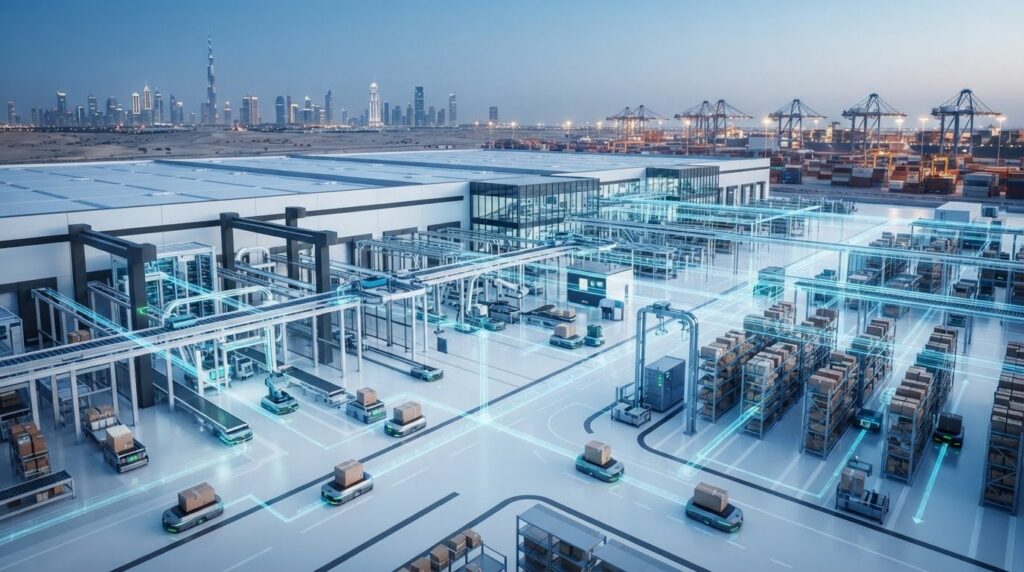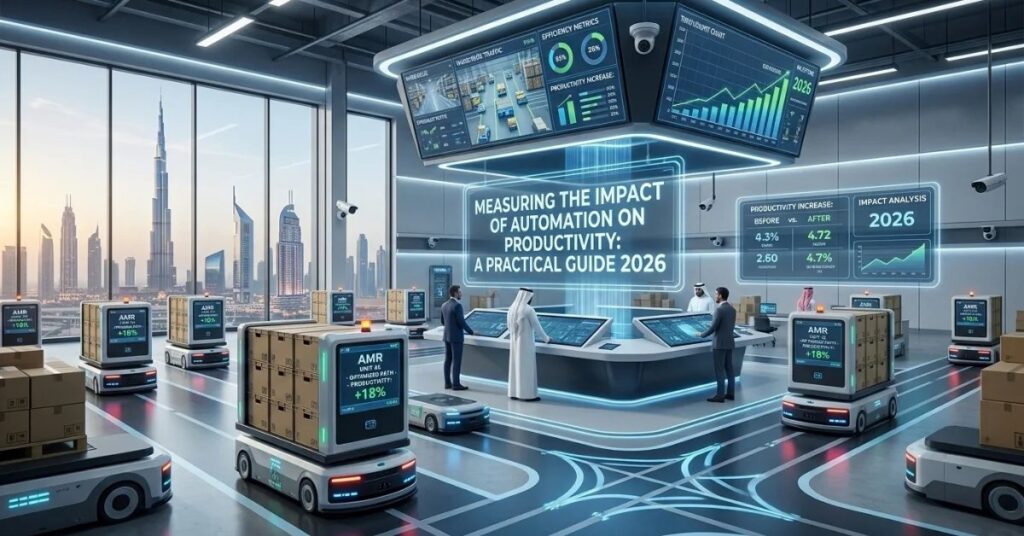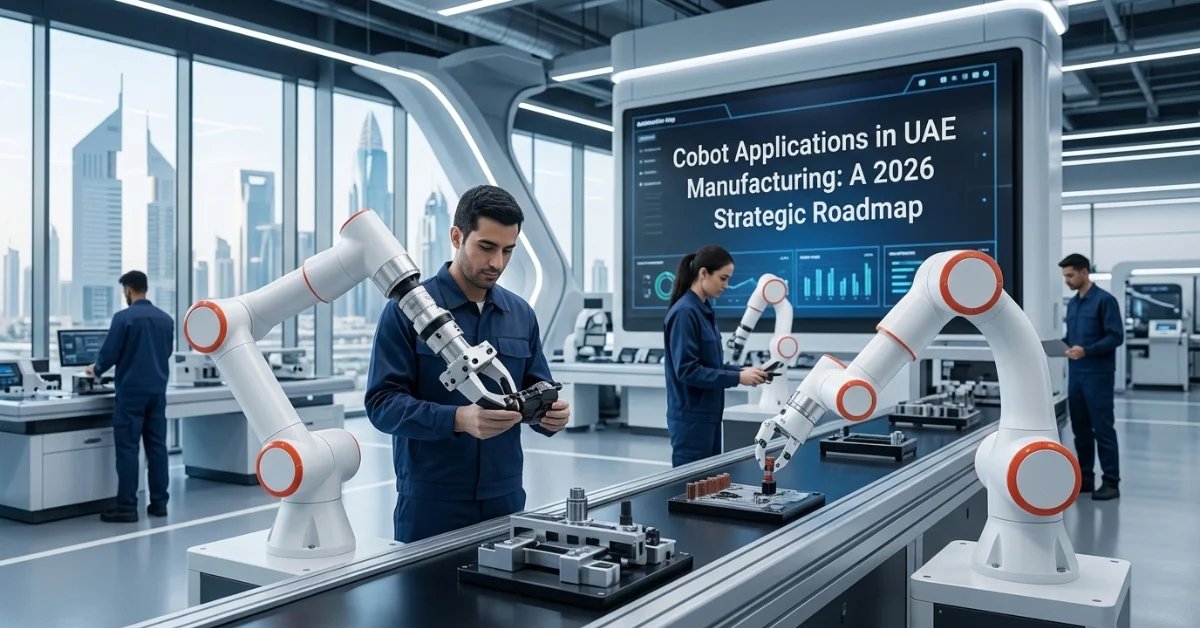
By 2026, the era of isolated industrial machinery has ended, replaced by a sophisticated ecosystem where collaborative robots serve as the central nervous system of the factory floor. Transitioning to advanced cobot applications in UAE manufacturing is no longer a luxury for early adopters but a strategic necessity for any facility aiming to thrive within the national industrial strategy. You’ve likely felt the mounting pressure of escalating costs associated with recruiting and housing international labor, all while struggling to maintain precision in repetitive tasks within constrained floor spaces.
This strategic roadmap reveals how integrating these intelligent systems allows you to lower operational overhead and achieve the production flexibility required to meet global market demands. We’ll examine the technical integration of cobots with existing PLC and SCADA infrastructure, the regulatory implications of the 2026 UAE AI Act, and the specific pathways to achieving a fully realized Industry 4.0 environment. By aligning high-tech automation with regional economic goals, your organization can bridge the gap between current manual limitations and future autonomous excellence.
Key Takeaways
- Understand how collaborative robotics addresses the critical shortage of skilled labor by transitioning from manual-heavy workflows to intelligent, tech-driven production systems.
- Evaluate specific cobot applications in UAE manufacturing, including high-precision pick-and-place sorting and autonomous machine tending for CNC and injection molding operations.
- Learn the technical requirements for integrating robotic arms with PLC and SCADA systems to ensure real-time monitoring and seamless material flow through ASRS.
- Discover the strategic framework for calculating ROI through labor savings and waste reduction while adhering to the latest 2026 UAE industrial safety standards.
- Explore the roadmap for future-proofing facilities through the convergence of collaborative arms, humanoid systems, and adaptive machine learning.
Addressing the UAE Manufacturing Labor Gap through Collaborative Robotics
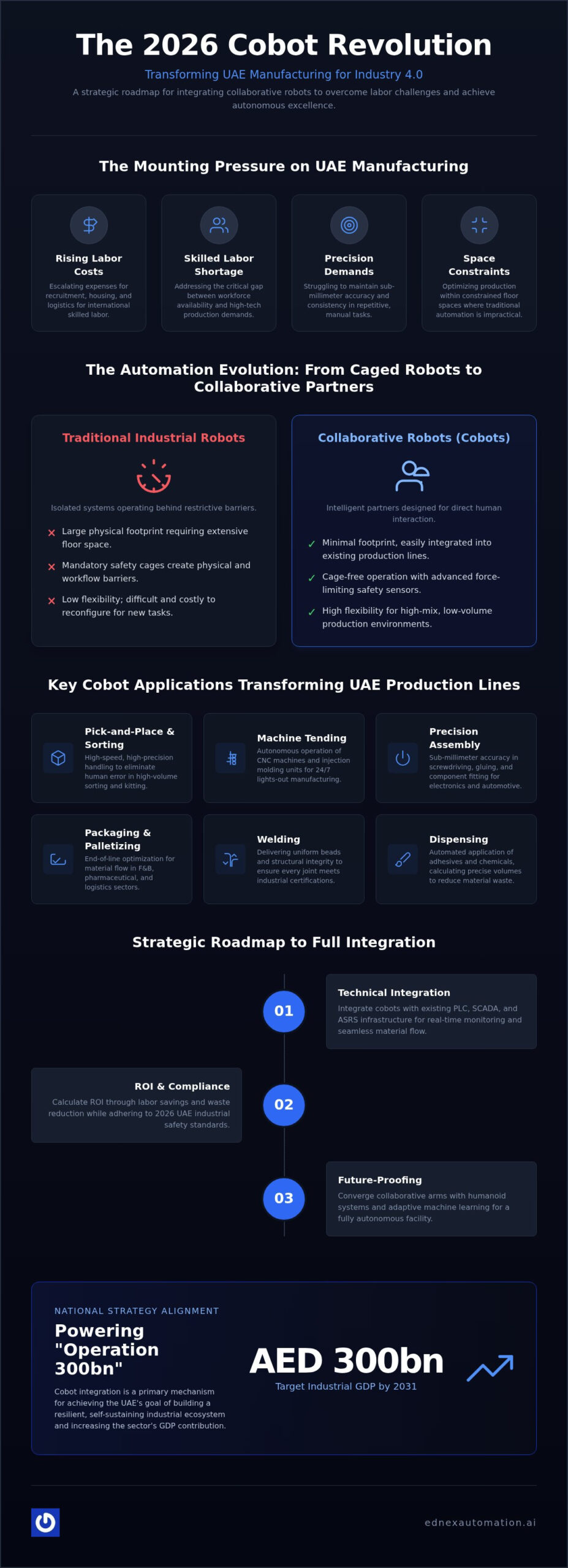
Identifying the specific labor challenges within the region is the first step toward industrial modernization. Integrating advanced automation is the primary mechanism for overcoming the traditional reliance on large-scale international labor forces. By deploying a collaborative robot (cobot), manufacturers create a workspace where humans and machines interact directly without the need for physical barriers. This shift is essential in the 2026 UAE manufacturing landscape, where the transition from manual-heavy assembly to tech-driven production is accelerating. Using specific cobot applications in UAE manufacturing, enterprises can mitigate the rising costs of recruitment, housing, and visa logistics for skilled labor. These systems align perfectly with the national “Operation 300bn” strategy, which aims to increase the industrial sector’s contribution to the GDP to AED 300 billion by 2031. It’s a systematic approach to building a resilient, self-sustaining industrial ecosystem.
The Shift from Traditional Industrial Robots to Collaborative Systems
Leveraging space-saving designs, cobots offer a distinct advantage over their caged predecessors. Traditional industrial robots often require substantial floor space for safety cages, limiting their utility in smaller facilities. Cobots utilize advanced force-limiting technology and safety sensors, allowing for cage-free operation within a minimal footprint. This compact design proves vital for high-mix, low-volume environments where production lines must be reconfigured frequently. By removing the physical divide between the operator and the machine, facilities achieve a level of flexibility that traditional automation simply cannot match. Every square meter of the factory floor becomes an active, productive asset rather than a restricted zone.
Economic Drivers for Automation in the UAE National Market
Responding to the pressures of a globalized economy, regional manufacturers must optimize their output to remain competitive. Shifting global supply chains have increased the demand for localized production, requiring UAE factories to maintain 24/7 operational capability. Achieving this level of output without a proportional increase in human overhead is the core value proposition of modern robotics. Scalable models like “Cobots-as-a-Service” are emerging, providing manufacturers with the ability to integrate high-level automation without massive upfront capital expenditure. By prioritizing cobot applications in UAE manufacturing, companies can pivot quickly to new product lines without the extensive downtime usually associated with retooling. Implementing these systems ensures long-term business viability by stabilizing production costs against fluctuating labor markets. This transition represents a necessary evolution for any organization wishing to secure its position in the future industrial landscape.
Primary Applications: How Cobots Are Transforming UAE Production Lines
Transitioning from strategic planning to operational execution requires a deep understanding of functional robotics. Deploying diverse cobot applications in UAE manufacturing allows facilities to convert manual bottlenecks into high-efficiency workflows. Automating high-speed sorting and kitting with precision, pick-and-place systems eliminate human error in high-volume environments. Similarly, machine tending cobots manage CNC machines and injection molding units without human intervention, facilitating continuous lights-out manufacturing cycles. In the electronics and automotive sectors, these systems perform collaborative screwdriving, gluing, and component fitting with sub-millimeter accuracy. This high-precision automation is essential for specialized vehicle fabrication and military-grade conversions, where Auto Industries Factory LLC leads the way in regional innovation. End-of-line logistics also see significant improvements, as streamlined packaging and palletizing solutions optimize material flow for the food, beverage, and pharmaceutical industries.
Precision Tasks: Welding and Dispensing
Achieving consistent weld quality in metal fabrication is often a significant challenge for manual operators. Cobot-led welding delivers uniform beads and structural integrity across complex geometries, ensuring every joint meets industrial certifications. In chemical and adhesive applications, automated dispensing systems reduce material waste by calculating precise volumes for every cycle. These systems are characterized by their ease of programming, allowing technical teams to map complex paths and patterns without extensive coding knowledge. Organizations seeking to implement these precise solutions often find that collaborative robots in the UAE provide the necessary flexibility to adapt to changing product designs.
Advanced Quality Inspection and Testing
Ensuring 100% quality compliance is a non-negotiable requirement for manufacturers competing in the global market. Integrating vision systems for real-time defect detection allows cobots to identify anomalies that the human eye might overlook. During the automated testing of electronic components, these robots handle delicate sensors and precision instruments with controlled force, preventing damage to sensitive circuitry. This level of autonomy in inspection protocols ensures that only perfect units move toward the packaging stage. By utilizing intelligent testing rigs, factories can maintain rigorous standards while increasing overall throughput. Every inspection cycle serves as a data point, feeding back into the system to optimize upstream processes and minimize future defects. This systematic approach to quality control is a hallmark of a mature Industry 4.0 facility, positioning the enterprise as a leader in technical reliability.
Beyond the Arm: Integrating Cobots with PLC, SCADA, and ASRS
Achieving true industrial autonomy requires moving beyond the deployment of standalone robotic units. To realize the full potential of cobot applications in UAE manufacturing, these systems must be woven into a broader digital fabric. Utilizing PLC and SCADA integration services provides the essential framework for real-time monitoring and advanced data visualization. This connectivity allows SCADA systems to aggregate performance metrics from every robotic arm, enabling predictive maintenance protocols that prevent costly downtime. By centralizing these controls, manufacturers can transition toward the “Dark Factory” model, where human presence is minimized in hazardous or high-precision zones, enhancing overall safety and operational continuity.
Centralized Control and Data Visualization
Orchestrating multiple robotic units across a sprawling production floor necessitates a centralized Programmable Logic Controller (PLC) architecture. This master system ensures that every movement is synchronized, preventing collisions and optimizing cycle times. SCADA dashboards serve as the primary interface for operational visibility, allowing technical teams to identify bottlenecks and adjust parameters on the fly. Within the UAE national context, these connected industrial networks must adhere to rigorous cybersecurity standards to protect critical infrastructure from digital threats. This layered approach to control ensures that automation remains both efficient and secure.
Logistics Synergy: Cobots and ASRS Integration
Establishing a seamless material flow involves the deep integration of robotics with automated storage and retrieval systems (ASRS). In this ecosystem, cobots act as the dexterous “hands” that perform kitting and assembly, while the ASRS functions as the “brain” managing inventory and retrieval. To bridge the physical gaps between these stations, autonomous mobile robots transport raw materials and finished goods without human intervention. Synchronizing these technologies reduces internal logistics time significantly, ensuring that cobot applications in UAE manufacturing operate at peak capacity. This total-site integration transforms isolated processes into a singular, high-performance machine.
Strategic Implementation: Navigating ROI and Safety Standards
Quantifying the financial impact of automation is the critical final hurdle for executive approval. Beyond the technical benefits discussed in previous sections, implementing cobot applications in UAE manufacturing requires a robust Return on Investment (ROI) framework. This calculation factors in direct labor savings, specifically the reduction in costs related to international recruitment, housing, and visa logistics. Precision tasks reduce material waste, while the ability to operate 24/7 significantly increases throughput. Deploying collaborative robots in the UAE also enhances the long-term valuation of the business, positioning the facility as a modern, high-tech asset that is attractive to global investors and partners.
Securing the necessary regulatory compliance is equally vital for operational legitimacy. Adhering to the revised 2025 edition of ISO 10218-1 and -2 ensures that your facility meets the most current global safety benchmarks for industrial robotics. This is supplemented by the UAE AI Act 2026, which mandates that all organizations deploying AI-driven systems complete a self-assessment by the September 2026 deadline. A comprehensive Risk Assessment must precede every deployment. It’s not just about the robot arm; the assessment must evaluate the end-effector and the specific workpiece to ensure a safe environment for human coworkers. To ensure your facility meets these rigorous standards, you can consult with our technical integration experts for a full safety audit.
Calculating the Total Cost of Ownership (TCO)
Analyzing the Total Cost of Ownership (TCO) reveals the hidden efficiencies of collaborative systems compared to traditional automation. While the initial hardware and specialized end-of-arm tooling (EOAT) represent the primary capital expenditure, integration costs are often lower due to the flexible nature of the technology. Modern 2026 cobot models prioritize energy efficiency, utilizing high-torque, low-draw motors that reduce monthly utility overhead. Training expenses are also minimized, as intuitive interfaces allow existing staff to master basic operations without needing a degree in computer science. This lean cost structure ensures a faster path to profitability.
The Human Element: Training and Reskilling
Future-Proofing UAE Factories: The Visionary Path to Autonomous Excellence
Leading the charge toward full industrial autonomy requires a perspective that extends beyond current hardware capabilities. Looking ahead, the convergence of humanoid robots for sale UAE and collaborative arms represents the next frontier in manufacturing dexterity. While cobots handle specialized production tasks with extreme precision, humanoid systems provide the mobile versatility needed for complex facility management and cross-functional logistics. This synergy creates a truly adaptive environment where cobot applications in UAE manufacturing are enhanced by broader autonomous agents. Organizations that integrate these technologies deeply into their core infrastructure secure a significant competitive advantage, ensuring their facilities remain resilient against future market shifts and technological disruptions.
AI-Enhanced Collaboration
Utilizing edge AI, cobots in 2026 achieve a level of environmental awareness previously considered impossible. These systems perform real-time obstacle avoidance and path optimization, allowing them to work safely in dynamic spaces without the need for pre-defined zones. Natural interaction is further improved through integrated voice and gesture control, enabling operators to command complex sequences with intuitive human signals rather than traditional coding. Intelligence also extends to fleet maintenance, where machine learning algorithms facilitate autonomous troubleshooting or “self-healing” protocols. By identifying potential mechanical failures before they occur, these intelligent systems maintain the steady rhythm of production without requiring constant human intervention.
Scaling with EdNex Automation
Partnering with a full-service integrator is the only way to ensure long-term scalability in a rapidly evolving industrial market. EdNex Automation serves as the essential bridge between global technological breakthroughs and national industrial requirements, providing the intellectual framework necessary for successful implementation. Our comprehensive support model covers every phase of the transformation journey, from initial design and risk assessment to complex PLC and SCADA integration. By choosing a UAE-based technical partner, you ensure the reliability of long-term maintenance and access to regional expertise. We invite stakeholders to engage in a strategic consultation to define their bespoke roadmap toward Industry 4.0 excellence. Establishing this foundation now ensures your organization is not just a participant in the future, but a leader in the autonomous industrial era.
Securing Industrial Dominance through Synchronized Automation
Positioning your facility at the forefront of the global market requires a shift from isolated tools to integrated, intelligent ecosystems. By mastering diverse cobot applications in UAE manufacturing, enterprises effectively solve labor shortages while achieving the precision necessary for Industry 4.0. We’ve explored how these systems bridge the gap between manual limitations and autonomous excellence, particularly when synchronized with advanced PLC and SCADA infrastructure. This transition isn’t just a technical upgrade; it’s a strategic evolution that ensures long-term business viability within the national economic framework.
EdNex Automation acts as the bridge between global innovation and regional industrial needs, utilizing a specialized Industry 4.0 division to deliver high-level solutions. As an official integrator of advanced PLC and SCADA systems with a comprehensive portfolio including AMRs and ASRS, we’re ready to modernize your operations from design to deployment. Consult with EdNex Automation to design your collaborative ecosystem today. Your journey toward a fully autonomous, high-performance manufacturing environment begins with a deliberate commitment to innovation.
Frequently Asked Questions
What are the most common cobot applications in the UAE manufacturing sector?
High-speed pick-and-place, CNC machine tending, and end-of-line palletizing represent the most prevalent cobot applications in UAE manufacturing as of 2026. These systems are also extensively utilized for precision welding in metal fabrication and delicate component assembly in the electronics sector. By offloading repetitive manual tasks to collaborative arms, facilities can maintain consistent quality while optimizing their human workforce for higher-level supervisory roles.
How much does it cost to implement a collaborative robot in a UAE factory?
Total implementation costs depend on the specific payload requirements, reach, and complexity of the end-of-arm tooling. Beyond the initial hardware acquisition, manufacturers should factor in technical integration, safety audits, and potential PLC synchronization. While fixed pricing isn’t provided without a site-specific assessment, the long-term TCO is often lower than traditional robotics due to reduced floor space needs and faster reconfiguration times.
Do cobots require specialized safety fencing in UAE industrial zones?
Collaborative robots are designed to operate without traditional safety fencing, provided a comprehensive risk assessment confirms the application is safe for human proximity. These systems utilize force-limiting sensors and power-limiting technology to mitigate impact risks. All deployments must adhere to the 2025 edition of ISO 10218-1 and -2 standards to ensure full compliance with the latest safety regulations within UAE industrial zones.
Can cobots be integrated with existing PLC and SCADA systems?
Seamless integration with existing PLC and SCADA systems is not only possible but essential for a mature Industry 4.0 environment. This connectivity allows for real-time performance monitoring, predictive maintenance data collection, and centralized control of multiple robotic units. Establishing this digital thread ensures that your robotic assets are synchronized with the broader factory floor for maximum operational efficiency and data visibility.
What is the typical ROI for a cobot investment in the UAE?
ROI is typically achieved through a combination of reduced labor overhead, minimized material waste, and the ability to maintain 24/7 production cycles without increasing human headcount. Manufacturers often see substantial gains in throughput and business valuation by transitioning to high-tech automation. The specific timeline for a return on investment varies based on the intensity of the application and the current manual labor costs being offset.
Are cobots suitable for small and medium-sized enterprises (SMEs) in the UAE?
Small and medium-sized enterprises find cobots particularly attractive due to their minimal footprint and high degree of flexibility. Unlike large-scale industrial robots, these systems can be easily redeployed across different production lines as demand shifts. This adaptability allows SMEs to compete globally by maintaining high-precision standards without the need for massive capital investment in fixed infrastructure or extensive facility modifications.
How do cobots help UAE manufacturers meet Industry 4.0 standards?
Cobots serve as a primary pillar of Industry 4.0 by enabling data-driven manufacturing and human-machine synergy. By integrating AI and machine learning, these systems become more adaptive to changing environments and product variations. This intelligence, combined with cloud-based SCADA monitoring, allows UAE manufacturers to meet the rigorous digital transformation goals outlined in national industrial strategies like Operation 300bn.
What training is required for employees to work alongside cobots?
Most employees transition quickly through intuitive lead-through programming, which allows them to teach the robot new paths by manually moving the arm. Specialized coding knowledge isn’t usually required for daily operations, though basic training on safety protocols and routine maintenance is necessary. This reskilling process transforms manual operators into robot supervisors, enhancing their role and value within the modernized, high-tech factory ecosystem.