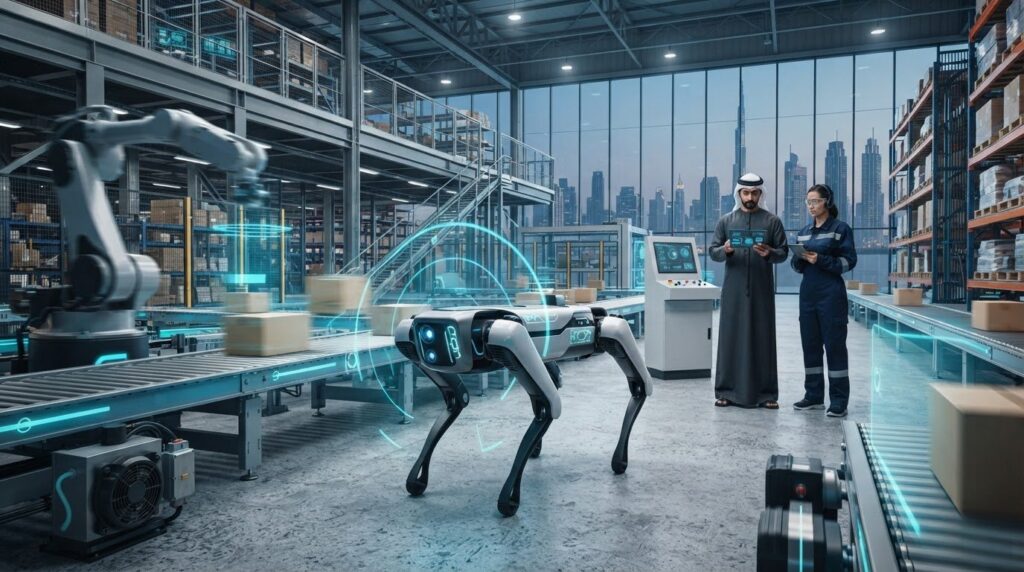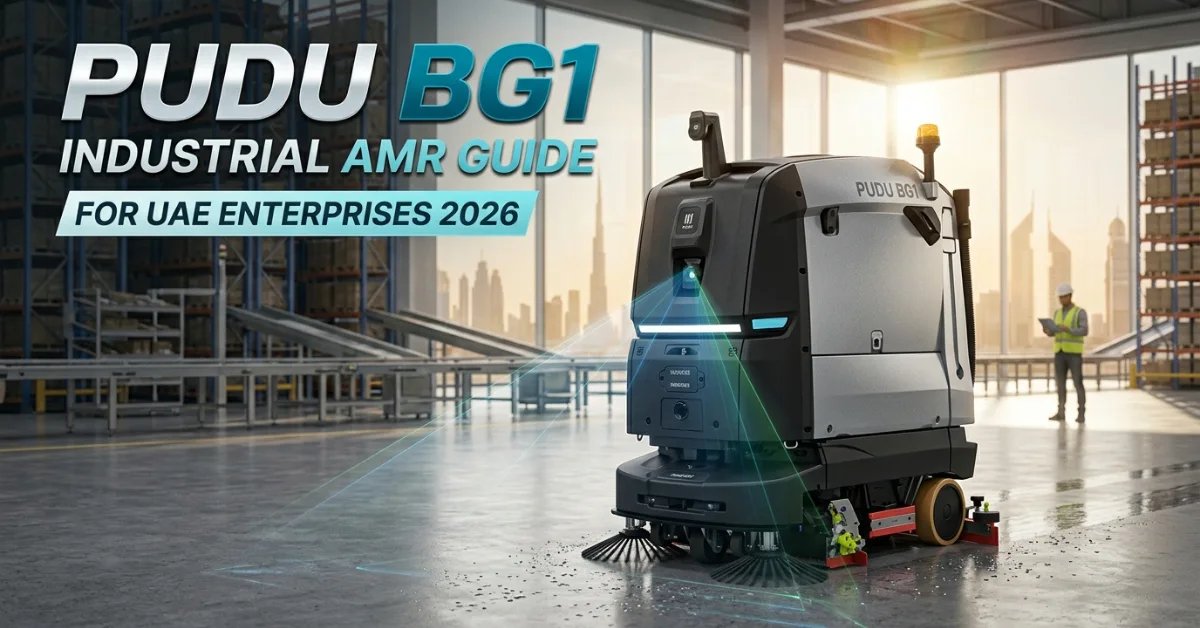
Relying on manual labor for large-scale floor maintenance in a high-output industrial facility is no longer just an operational cost; it’s a strategic vulnerability that compromises the integrity of your entire automation stack. You’ve likely experienced the frustration of manual cleaning bottlenecks and the persistent challenge of high labor turnover within your logistics and maintenance teams. Integrating the pudu bg1 into your facility addresses these systemic inefficiencies by replacing inconsistent manual efforts with a sophisticated, AI-native autonomous solution. Launched on March 25, 2026, this series represents a fundamental shift in how UAE enterprises maintain operational environments, moving away from isolated tools toward integrated industrial assets.
By leveraging 3D VSLAM and LiDAR fusion, the PUDU BG1 ensures your facility remains pristine without disrupting complex workflows or requiring constant human intervention. This guide demonstrates how the BG1 series bridges the gap between hardware and industrial system architecture, offering a path to full automation of internal maintenance logistics. You’ll discover how the PUDU Open Platform facilitates seamless interaction between these AMRs and your existing PLC or SCADA systems, ensuring that your cleaning protocols are as data-driven as your production lines. We’ll analyze the technical specifications, from the 7.5-hour runtime to the dual-agent detergent mixing, providing the intellectual framework you need to achieve a measurable ROI through reduced downtime and enhanced operational safety.
Key Takeaways
- Understand how the AI-native pudu bg1 series transforms industrial floor maintenance from a manual bottleneck into a high-performance autonomous operation.
- Explore the multi-sensor fusion technology, including 3D LiDAR and Visual SLAM, that allows these robots to navigate complex industrial environments with precision.
- Learn the technical requirements for bridging robotic hardware with centralized control systems via expert PLC and SCADA integration services.
- Quantify the operational benefits of transitioning to 24/7 autonomous cleaning cycles, focusing on measurable ROI through reduced labor turnover and minimized downtime.
- Gain insights into the systematic national deployment process, starting from comprehensive facility audits to seamless workflow mapping for UAE-wide enterprises.
Defining the Pudu BG1: High-Performance Industrial Delivery
Establishing a new benchmark for autonomous systems, the pudu bg1 serves as a robust, high-payload Autonomous Mobile Robot (AMR) engineered specifically for the rigors of large-scale facility management. While many associate robotics with the lightweight service units found in hospitality sectors, the BG1 series is a distinct class of Industrial Robots designed to withstand harsh environments and high-traffic logistics hubs. Its architecture prioritizes structural durability and high-capacity performance, moving beyond the simple point-to-point logic of its predecessors. By integrating this platform, enterprises can transition from reactive maintenance to a proactive, data-driven operational model that safeguards both personnel and infrastructure.
Contrasting sharply with smaller service robots, the pudu bg1 features an industrial-grade chassis and a sophisticated sensor suite tailored for the complexities of manufacturing plants and regional distribution centers. These sectors require a level of reliability and autonomous decision-making that consumer-grade units can’t provide. EdNex Automation fulfills a critical role here, acting as the strategic bridge between this advanced hardware and your existing industrial system architecture. They provide the bespoke integration necessary to ensure these AMRs don’t operate in a vacuum but instead function as a coordinated component of your facility’s wider technological ecosystem.
The Evolution of Industrial AMRs in 2026
Driven by the UAE AI Act 2026 and national Operation 300bn targets, the landscape of industrial automation has shifted toward intelligent, AI-native material handling. Modern robotic fleets are no longer judged solely on their mechanical output but on their modularity and ability to perceive, decide, and act in real-time. The pudu bg1 aligns with these UAE Industry 4.0 mandates, offering a scalable solution that adapts to changing production demands. This evolution ensures that investment in robotics translates into long-term business viability rather than temporary mechanical assistance.
Core Capabilities for Enterprise Environments
Ensuring safety in high-traffic industrial zones, the BG1 utilizes a fusion of 3D VSLAM and LiDAR technology to navigate around unpredictable obstacles with millimetric precision. These capabilities allow for 24/7 autonomous fleet management, effectively removing the reliance on human shifts for repetitive logistics and maintenance tasks. In warehouse environments, this translates to consistent performance across three shifts, minimizing human error and maximizing throughput. The result is a seamless interaction between autonomous assets and automated storage, creating a truly synchronized industrial environment.
Engineering Excellence: Pudu BG1 Technical Specifications
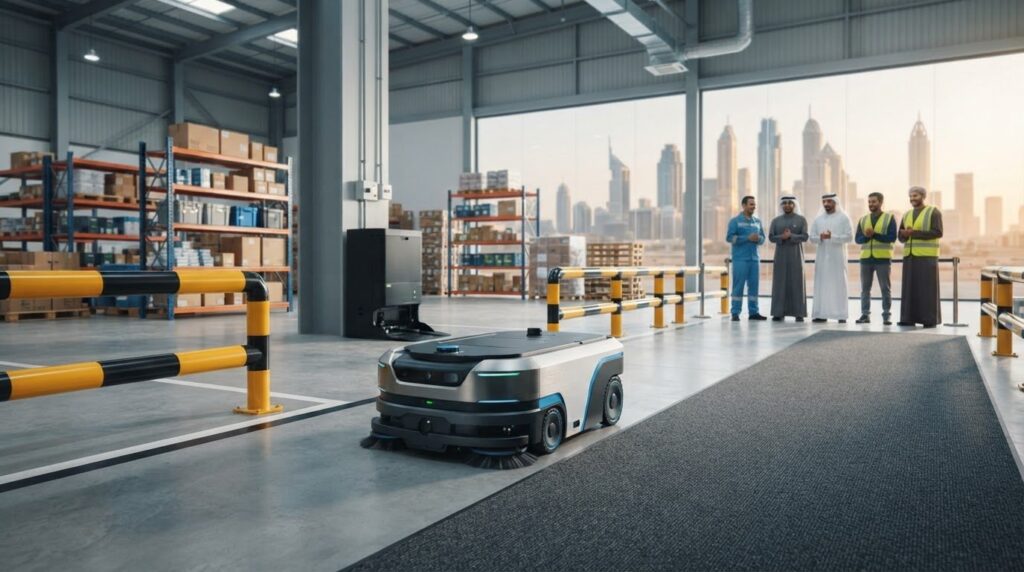
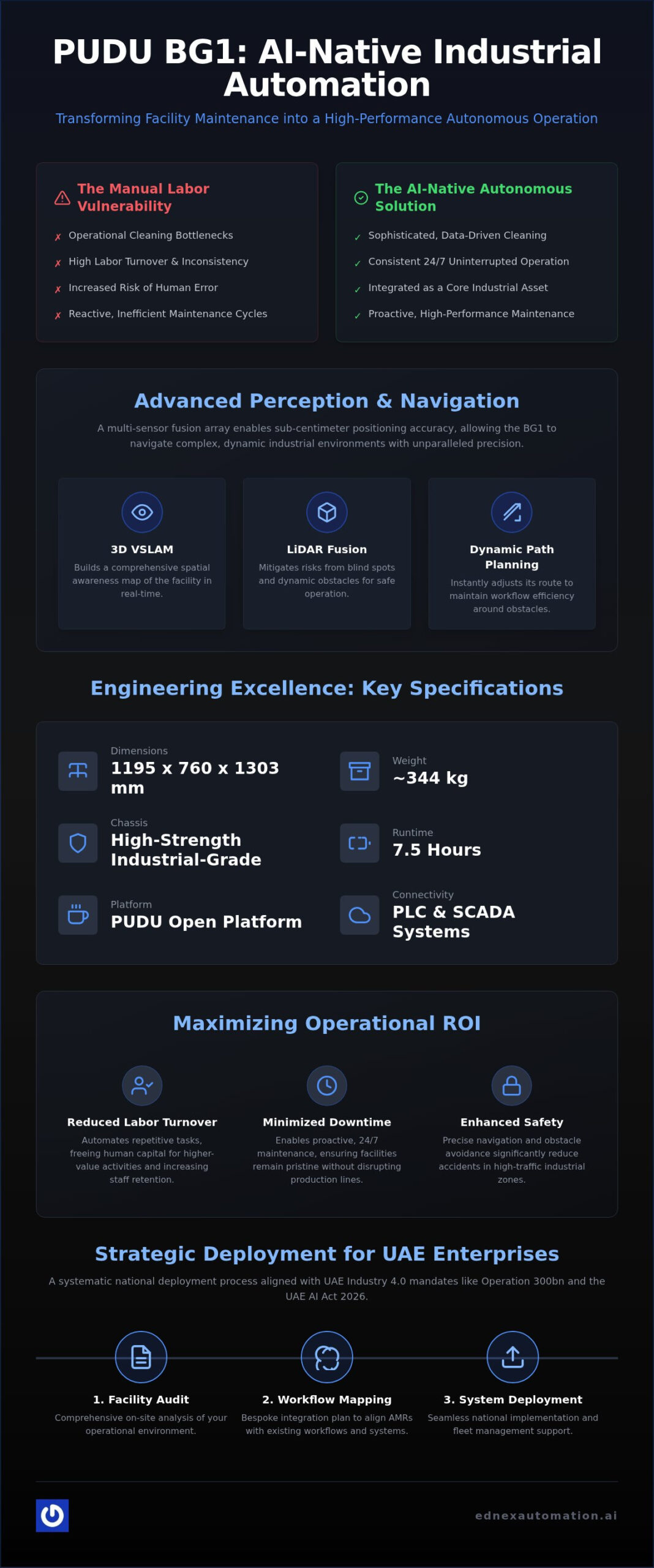
Engineered to thrive within the demanding environments of UAE manufacturing and logistics, the pudu bg1 features a high-strength, industrial-grade chassis designed for long-term durability. Weighing approximately 344 kg, the unit possesses the structural integrity required to handle heavy operational cycles without compromising its internal sensitive electronics. This robust framework protects a sophisticated multi-sensor fusion array, combining 3D LiDAR, Visual SLAM (VSLAM), and RGBD cameras. Utilizing these diverse data streams allows the robot to build a comprehensive spatial awareness that far exceeds the capabilities of standard single-sensor units. By processing environmental data in real-time, the system effectively mitigates the risks associated with blind spots and dynamic obstacles in busy industrial corridors.
Navigation and Path Planning Architecture
Achieving sub-centimeter positioning accuracy, the PUDU SLAM system enables the pudu bg1 to perform precise docking and navigation tasks within complex facility layouts. This advanced architecture supports dynamic environment mapping, allowing the AMR to adjust its path instantly when encountering unexpected machinery or personnel. Its compact dimensions, measuring 1195 x 760 x 1303 mm, ensure it can navigate narrow aisles and congested floors where larger, less agile systems might struggle. For organizations seeking to optimize these workflows, consulting with experts in robotic system architecture ensures that path planning is perfectly aligned with existing facility infrastructure.
Power Management and Fleet Uptime
Maintaining continuous operations requires a sophisticated approach to energy, which the BG1 delivers through its 90 Ah battery and intelligent power management logic. Providing up to 7.5 hours of runtime, the system is designed to maximize utility across extended shifts. When energy levels deplete, the robot initiates an autonomous charging sequence, returning to its station without human intervention. This auto-charging capability minimizes downtime and ensures the fleet remains operational during critical production windows. The maintenance-friendly design also allows for rapid component access, ensuring that routine inspections don’t interfere with the overall productivity of your national enterprise deployment.
Adapting to diverse operational needs, the modularity of the platform allows it to interface with various industrial containers and specialized attachments. This flexibility ensures that the investment remains viable as facility requirements evolve, positioning the BG1 as a versatile asset rather than a single-purpose tool. By combining high-capacity hardware with intelligent software, the system provides the reliable foundation necessary for a fully automated internal logistics ecosystem.
Industrial Connectivity: Integrating BG1 with PLC and SCADA
Achieving true operational synergy requires moving beyond island automation, where robotic assets function in isolation from the broader facility infrastructure. For UAE enterprises, the pudu bg1 serves as the mobile connective tissue within a sophisticated industrial ecosystem. By leveraging the PUDU Open Platform, this AMR provides the necessary Cloud APIs and SDKs to facilitate a bi-directional data flow between the robot’s onboard sensors and enterprise management dashboards. This connectivity allows maintenance and logistics tasks to be monitored, scheduled, and optimized in real-time, ensuring that autonomous actions are always aligned with high-level business objectives. Transitioning to this integrated model ensures that every robotic movement is recorded and analyzed, providing the granular data needed for continuous process improvement.
EdNex Automation specializes in bridging the gap between raw robotic hardware and complex industrial system architecture. Their team provides the intellectual framework and technical expertise required to transform a standalone unit into a fully integrated asset. This process involves mapping the robot’s internal logic to the facility’s centralized control systems, allowing for a unified view of all automated operations across the national landscape. By positioning the pudu bg1 as a node within a wider network, enterprises can achieve a level of transparency and control that was previously unattainable with traditional, disconnected equipment.
Protocols and Interoperability
Establishing reliable communication between mobile assets and fixed machinery necessitates the use of robust industrial protocols such as OPC UA or Modbus. Utilizing PLC and SCADA integration services ensures that the BG1 can interpret signals from production lines and respond dynamically to environmental changes. Beyond basic operation, these integrations incorporate stringent security measures for robotic network communication. This protects sensitive industrial data from external vulnerabilities while maintaining the high-speed interoperability required for real-time fleet monitoring and safety coordination across large-scale facilities.
Warehouse Management System (WMS) Synergy
Synchronizing robotic tasks with real-time inventory data allows for a level of responsiveness that manual systems simply cannot match. The BG1 can be configured to trigger specific workflows based on production line signals, such as automated maintenance cycles after a high-volume pallet movement session. This synergy is particularly potent when integrated with automated storage and retrieval systems (ASRS). In this configuration, the AMR functions as an extension of the storage logic, ensuring that the physical environment remains optimized for the high-speed throughput required by modern UAE-wide distribution centers.
Maximizing Operational ROI with Autonomous Logistics
Manual material handling and floor maintenance remain among the most volatile cost drivers within a modern industrial facility. High labor turnover and the inherent risks of human error create systemic inefficiencies that directly impact the bottom line. By deploying the pudu bg1, enterprises can transition to a 24/7 autonomous maintenance and delivery cycle that eliminates the downtime associated with shift changes and fatigue. This shift doesn’t just stabilize operational costs; it significantly reduces workplace accidents and the associated insurance liabilities. Safeguarding your personnel through robotic intervention provides a level of risk mitigation that manual processes can’t match, ensuring long-term business viability in an increasingly competitive landscape.
Labor Optimization and Resource Allocation
Integrating autonomous mobile robots into your logistics framework solves the persistent challenge of labor shortages while enhancing overall throughput. Rather than replacing human talent, this technology allows for reassigning human capital to higher-value technical roles, such as fleet supervision and system optimization. This strategic reallocation ensures that your workforce focuses on complex problem-solving while the pudu bg1 handles repetitive, high-volume tasks with consistent precision. Maintaining operational consistency across three shifts becomes a reality, providing a steady flow of support that aligns with the UAE’s ambitious manufacturing growth targets under Operation 300bn.
Reducing Indirect Operational Costs
Beyond direct labor savings, the precision of autonomous pathfinding significantly reduces indirect expenses related to material and equipment damage. While human-operated machinery often leads to costly collisions in narrow aisles, the BG1 utilizes its multi-sensor array to navigate with millimetric accuracy. This precision extends to energy consumption, where optimized routing ensures the most efficient path is taken every time, preserving battery life and reducing overall power costs. Utilizing the data-driven insights provided by built-in fleet analytics allows facility managers to identify and resolve bottlenecks before they impact production. If you’re ready to evaluate the financial impact of these efficiencies on your facility, you can consult with our integration specialists to build a customized ROI model.
The scalability of a robotic fleet offers a flexible path toward future-proofing your operations. Adding a new unit to an existing ecosystem is a systematic process that doesn’t require the extensive onboarding and training cycles associated with new hires. This modular approach ensures that as your facility expands, your logistics and maintenance capabilities grow in tandem, maintaining a lean and efficient operational profile. Investing in high-performance AMRs today establishes the technological foundation necessary to remain competitive as the UAE’s industrial sector continues its rapid modernization.
Strategic Implementation: Deploying Pudu BG1 Nationally
Transitioning from theoretical value to physical implementation requires a methodical approach that accounts for the specific environmental variables of the UAE industrial landscape. Successfully deploying the pudu bg1 across a national enterprise network involves more than simple hardware delivery; it necessitates a comprehensive alignment between robotic autonomy and human-centric workflows. EdNex Automation acts as the systematic organizer in this process, ensuring that every unit is optimized for its specific facility while maintaining a unified standard of performance across the entire organization. This strategic implementation focuses on minimizing friction during the adoption phase, positioning the brand as a reliable technical partner rather than a mere equipment vendor.
Establishing a robust operational foundation, the deployment process begins with a deep dive into the facility’s unique topography and existing digital infrastructure. It’s not enough to simply map a floor; we must understand the rhythm of your production cycles and the specific challenges of your logistics environment. By prioritizing an intelligent framework over a basic hardware rollout, EdNex ensures that the integration of the pudu bg1 enhances your long-term business viability. This comprehensive strategy includes dedicated staff training and change management protocols, empowering your workforce to transition into supervisory roles while the robots handle repetitive maintenance tasks.
The EdNex Deployment Framework
Providing a structured path to automation, the EdNex framework follows a logical progression designed to mitigate technical risks and ensure high-level performance. This three-step approach ensures that every deployment meets the rigorous standards required by national enterprises:
- Step 1: Conducting a comprehensive site survey and technical feasibility analysis to evaluate floor topography, connectivity strength, and traffic density.
- Step 2: Executing custom integration with existing industrial infrastructure, including the PLC and SCADA architectures discussed previously.
- Step 3: Performing rigorous testing and safety validation on-site to ensure compliance with the UAE AI Act 2026 and national safety standards.
National Support and Lifecycle Management
Maintaining a high-performance robotic fleet requires a dedicated support structure that provides local technical expertise and immediate access to spare parts. EdNex Automation leverages its national presence to provide preventative maintenance schedules that prevent mechanical degradation and ensure your fleet operates at peak efficiency throughout its lifecycle. This full-service approach minimizes the risk of unexpected downtime and ensures that your investment remains a productive asset for years to come. As you look toward the future of your facility, we invite you to explore the wider UAE robotics industry to discover further innovations that can complement your autonomous ecosystem.
Future-Proofing UAE Industrial Logistics through Autonomous Integration
Adopting the pudu bg1 represents a decisive step toward achieving the operational excellence mandated by the UAE’s Industry 4.0 objectives. By moving beyond standalone automation and embracing a fully integrated SCADA-driven ecosystem, enterprises can finally eliminate the manual maintenance bottlenecks that hinder scalability. This transition ensures measurable ROI through 24/7 autonomous cycles and the strategic reallocation of human capital to higher-value technical roles. It’s a fundamental evolution from reactive maintenance to a proactive, data-driven operational model.
As an official industrial integration partner with national UAE service coverage, EdNex Automation provides the intellectual and technical framework necessary for a seamless deployment. Our Industry 4.0 certified experts act as the bridge between advanced robotic hardware and your specific facility requirements, ensuring long-term business viability. We invite you to Request a Technical Consultation for Pudu BG1 Integration to begin your comprehensive facility audit and workflow mapping process. The era of fragmented logistics is ending; it’s time to synchronize your operations for a more efficient, autonomous future.
Frequently Asked Questions
What is the maximum payload capacity of the Pudu BG1 in industrial settings?
The pudu bg1 is an AI-native scrubber-dryer with a functional payload defined by its high-capacity fluid reservoirs. It features a 75-liter clean water tank and a 60-liter waste water tank, allowing it to manage large-scale industrial floor maintenance without frequent refills. While it’s not a pallet-carrying AMR, its 344 kg chassis is built to handle the weight of these full tanks while maintaining high-speed operational efficiency across expansive facility floors.
How does the Pudu BG1 navigate around obstacles in a busy warehouse?
Navigation is achieved through a sophisticated fusion of 3D VSLAM and LiDAR technology. This multi-sensor array allows the robot to perceive its environment in real-time, identifying both static machinery and dynamic obstacles like personnel or moving forklifts. By processing these data streams instantly, the system plans optimal paths that avoid collisions while maintaining cleaning throughput. This level of spatial awareness is critical for safe operation in busy, high-traffic warehouse corridors.
Can the Pudu BG1 be integrated with existing PLC and SCADA systems?
Yes, the pudu bg1 can be integrated with existing industrial control systems through the PUDU Open Platform. This platform provides Cloud APIs and an OS SDK that allow our technical teams to bridge the robot with your facility’s PLC and SCADA architecture. EdNex Automation specializes in this bespoke integration, ensuring that your autonomous cleaning fleet communicates directly with centralized management dashboards for real-time monitoring and automated task triggering.
What is the typical battery life and charging time for the BG1 model?
Equipped with a 90 Ah battery, the unit provides up to 7.5 hours of continuous runtime on a single charge. Charging times vary based on the available voltage; it takes approximately 3 hours with high voltage and up to 4.5 hours with low voltage. This efficient power management system ensures that the fleet maintains high uptime, especially when utilizing the robot’s autonomous self-charging capabilities to return to its station without human intervention.
Is the Pudu BG1 suitable for outdoor industrial environments in the UAE?
While the BG1 is designed for large-scale commercial and industrial floor scrubbing, it’s primarily optimized for indoor or covered environments. The intense environmental conditions of the UAE, such as extreme heat and sand, require specific hardware protections found in specialized machinery. For facilities with significant outdoor requirements, we recommend consulting our specialists to evaluate if the BG1 or our dedicated outdoor cleaning robots are better suited for your specific site conditions.
How does the Pudu BG1 communicate with other robots in a fleet?
Fleet communication is managed through a centralized cloud-based management system that coordinates multiple units simultaneously. Using the PUDU Open Platform, individual robots share positional data and task status to prevent congestion and redundant cleaning of the same zones. This synchronization allows large enterprises to deploy dozens of units across a single facility, ensuring they operate as a cohesive, efficient maintenance ecosystem rather than isolated machines that might interfere with each other.
What safety certifications does the Pudu BG1 hold for human-robot collaboration?
The system is engineered to comply with the UAE AI Act 2026 and adheres to the safety standards set by the Emirates Authority for Standardisation and Metrology (ESMA). Its safety framework includes 3D obstacle avoidance and emergency stop protocols that ensure secure human-robot collaboration in shared workspaces. These certifications verify that the robot can operate autonomously without compromising the safety of your workforce or interfering with the operation of existing industrial machinery.
What level of technical support does EdNex Automation provide for Pudu robots?
EdNex Automation provides comprehensive, start-to-finish technical support including facility audits, custom PLC integration, and national UAE-wide maintenance coverage. Our role as a long-term technical partner involves establishing preventative maintenance schedules and providing rapid access to spare parts through our regional distribution network. We ensure your robotic assets remain operational and continue to deliver a measurable ROI by providing the intellectual framework necessary for successful long-term implementation and fleet optimization.