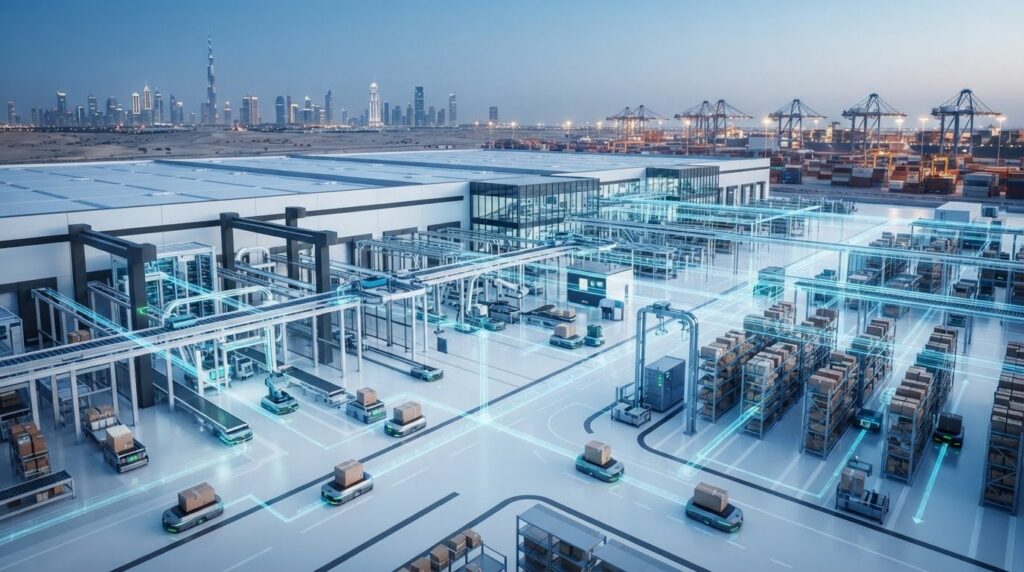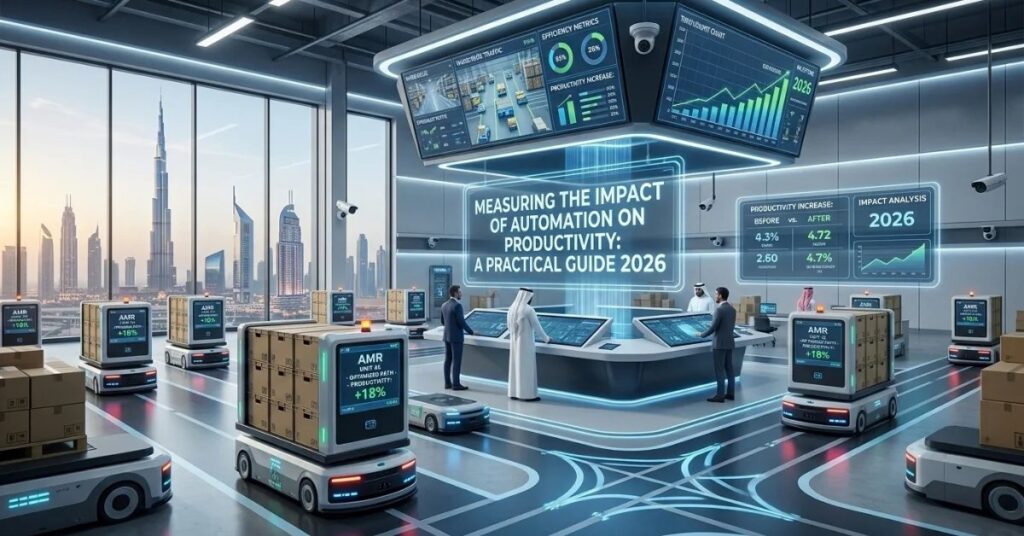
With the UAE logistics automation market projected to reach USD 1,186.8 million by 2033, the transition from manual parcel routing to intelligent, autonomous architectures is no longer a luxury but a mandate for long-term viability. You understand the friction caused by high labor dependency and the inevitable bottlenecks that paralyze operations during peak e-commerce seasons. Leveraging automated sortation systems UAE allows organizations to bypass these traditional constraints, achieving a 40% improvement in processing speeds compared to manual methods. This 2026 strategic guide details how these systems serve as a sophisticated intelligence layer, transforming warehouses into high-velocity hubs through seamless synchronization with ASRS and AMRs. By integrating these technologies under a unified PLC and SCADA framework, you’ll establish a scalable facility capable of zero-error fulfillment regardless of SKU complexity. We’ll examine the technical roadmap for deploying these Industry 4.0 solutions to ensure your infrastructure remains resilient and competitive in a rapidly diversifying regional economy.
Key Takeaways
- Identify the optimal technical architecture for your facility by evaluating the performance differences between traditional linear sorters and modern, AMR-driven robotic sortation systems.
- Learn how the strategic deployment of automated sortation systems UAE facilitates a seamless communication flow between storage, retrieval, and fulfillment layers via advanced SCADA integration.
- Implement a data-driven throughput analysis to accurately forecast ROI and ensure your sortation infrastructure can scale alongside increasing SKU counts and seasonal demand spikes.
- Transition from labor-dependent manual routing to an intelligent Industry 4.0 ecosystem that prioritizes zero-error fulfillment and high-density operational efficiency.
Table of Contents
- Scaling Logistics Through Automated Sortation Systems in the UAE
- Technical Architectures: From Linear Sorters to Robotic Sortation
- The Integration Ecosystem: Linking Sortation with ASRS and SCADA
- Strategic Implementation: Throughput Analysis and ROI Forecasting
- Future-Proofing with EdNex Automation: Bespoke Sortation Integration
Scaling Logistics Through Automated Sortation Systems in the UAE
Leading the charge in global trade, the UAE has positioned itself as a critical nexus for international logistics and cross-border commerce. Within this high-velocity environment, a sophisticated sortation system acts as the central nervous system of the modern warehouse. It’s the high-speed identification and routing of items, ensuring every parcel reaches its destination with surgical precision. As we approach 2026, the adoption of automated sortation systems UAE has transitioned from a competitive advantage to a foundational requirement for any facility aiming for “lights-out” operational efficiency.
Manual sorting cycles are increasingly becoming relics of an era defined by lower throughput and higher error margins. With the UAE’s e-commerce sector projected to grow by 20% annually, the pressure on fulfillment centers is immense. Transitioning to automated environments eliminates the bottlenecks inherent in human-centric workflows. This shift isn’t just about speed; it’s about maintaining 24/7 accuracy in a region that serves as a bridge between East and West. By removing human dependency from the sorting cycle, operators ensure that their facilities can handle the relentless pace of global supply chains without compromise.
The Economic Imperative for Automation
Rising SKU counts and escalating order volumes demand high-throughput systems that don’t fatigue. In the UAE, where consumers expect near-instant delivery, sortation speed directly influences brand loyalty and market share. The strategic deployment of automated sortation systems UAE allows operators to mitigate the risks of labor dependency, especially during peak seasonal surges. These solutions provide several critical economic benefits:
- Scalable throughput that adjusts to rising SKU counts without proportional labor increases.
- Drastic reduction in error rates for high-speed parcel routing.
- Enhanced operational reliability during peak e-commerce demand periods.
Automated solutions provide a stable, predictable throughput that manual teams simply can’t match. This is particularly true when dealing with the high-density inventory profiles common in modern urban fulfillment centers where space is at a premium.
Sortation as a Pillar of Industry 4.0
Modern sortation is no longer just mechanical movement; it’s an intelligent layer driven by real-time data and complete operational visibility. This evolution aligns perfectly with the UAE’s national industrial strategy, which aims to increase the manufacturing sector’s contribution to GDP to 25% by 2025. These systems integrate with broader digital twins and SCADA architectures to create a responsive, self-optimizing environment. Sortation data feeds directly into enterprise-level decision-making by providing granular insights into inventory velocity and routing efficiency. This connectivity ensures that every movement within the facility is tracked, analyzed, and optimized for future performance.
Technical Architectures: From Linear Sorters to Robotic Sortation
Designing a high-performance logistics facility requires a granular understanding of hardware architectures and their specific throughput limitations. Selecting the right automated sortation systems UAE involves balancing raw speed against the need for operational flexibility. While traditional linear sorters have long dominated high-volume hubs, the emergence of modular robotic systems is redefining how regional operators approach facility design. Understanding these technical distinctions is vital for ensuring that your infrastructure remains resilient as SKU profiles and order volumes evolve toward 2026.
Mechanical Sorter Variants and Applications
Mechanical sorters serve as the high-velocity workhorses of centralized distribution centers, utilizing fixed conveyor paths to route thousands of items per hour. Cross-belt and tilt-tray sorters represent the pinnacle of high-speed parcel handling, employing individual motorized belts or tilting mechanisms to discharge items into specific chutes with extreme precision. For facilities managing a diverse range of item profiles, sliding shoe sorters provide a gentler alternative, using slats and sliding blocks to divert fragile goods without the impact associated with other mechanical types. Smaller operations or those with limited throughput requirements often utilize pivot-wheel or pop-up sorters, which offer a compact footprint for secondary sortation stages.
Integrating Dimensioning, Weighing, and Scanning (DWS) stations at the induction point is critical for these mechanical systems. By capturing accurate volumetric data in real-time, DWS hardware allows the control layer to optimize downstream routing and storage. This data-driven approach is a significant factor in the growth of logistics automation in UAE, where precision in revenue recovery and transport planning is paramount.
The Rise of Robotic Sortation
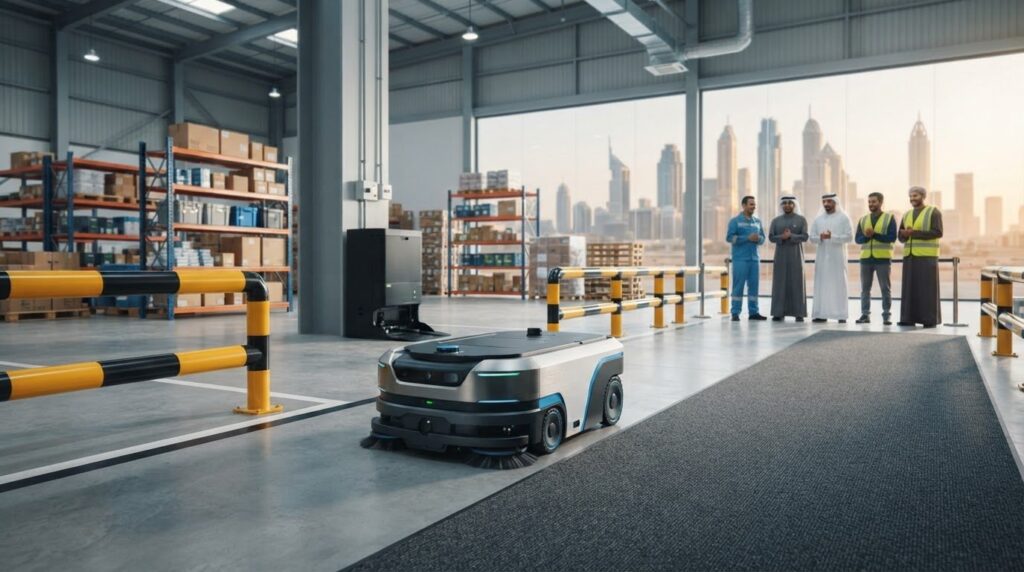
Leveraging the modular nature of autonomous mobile robots (AMRs), robotic sortation provides a flexible alternative to fixed-path conveyors. Unlike traditional systems that require extensive floor bolting and rigid layouts, AMR-based sorting utilizes a fleet of intelligent robots that navigate dynamic environments to deliver parcels to their respective bins. This architecture is particularly advantageous for facilities with limited space or those that anticipate frequent changes in their operational layout. Utilizing AI-powered vision systems, these robots achieve error-free item identification, ensuring that even non-conveyable or oddly shaped items are routed correctly.
Comparing these architectures reveals a clear trade-off: mechanical sorters offer unmatched high-volume throughput for standardized parcels, while robotic fleets provide the scalability to add or remove capacity as demand fluctuates. For organizations seeking a tailored approach to these complex transitions, EdNex Automation provides the technical framework necessary for bespoke integration of both mechanical and robotic solutions. This hybrid potential ensures that your facility can maintain peak efficiency regardless of SKU complexity or seasonal shifts.
The Integration Ecosystem: Linking Sortation with ASRS and SCADA
True operational excellence within a logistics hub isn’t achieved through isolated hardware but through a synchronized integration ecosystem. Establishing automated sortation systems UAE requires a control layer that bridges the gap between physical movement and digital intelligence. Without this connectivity, even the fastest sorter becomes a localized island of automation, prone to upstream bottlenecks and downstream congestion. Providing the necessary cognitive framework, PLC and SCADA integration services serve as the brain of the facility, orchestrating high-speed routing with millisecond precision. This unified architecture ensures that sortation data flows bi-directionally between the warehouse management system and the physical equipment, preventing the friction typically found in multi-vendor environments.
Unifying Control with SCADA
Implementing a robust SCADA system allows warehouse managers to maintain a high-level view of the entire sortation line in real-time. This visibility is vital for identifying emerging congestion points before they escalate into full-scale operational shutdowns. Utilizing precise PLC programming, the system makes instant routing decisions based on package dimensions and destination requirements. This level of granular control eliminates the lag time associated with manual overrides, ensuring that the facility maintains its peak throughput during high-pressure e-commerce cycles. Managers can leverage interactive data visualizations to monitor equipment health and routing efficiency, transforming raw sensor data into actionable strategic insights.
Sortation and ASRS: A Seamless Handshake
Linking sortation units with automated storage and retrieval systems (ASRS) creates a high-density environment where storage and fulfillment exist in a continuous loop. This “handshake” allows the facility to buffer items effectively, holding inventory in high-density storage until the exact moment it’s required for a specific sorting wave. Integrating these technologies provides several operational advantages:
- Maximizing vertical space utilization by feeding sorted items directly into high-density ASRS racks.
- Optimizing “pick-to-sort” workflows where robots retrieve items and deliver them directly to sortation induction points.
- Reducing the physical footprint of the facility by eliminating the need for large manual staging areas.
By synchronizing these layers, organizations ensure that their automated sortation systems UAE don’t just move items quickly but move them intelligently. This integration reduces the total travel distance for each SKU, directly lowering energy consumption and operational costs. It’s this level of bespoke integration that distinguishes a modern Industry 4.0 facility from a traditional warehouse, providing the scalability needed to handle the UAE’s increasingly complex SKU profiles.
Strategic Implementation: Throughput Analysis and ROI Forecasting
Successful deployment of automated sortation systems UAE hinges on a rigorous pre-engineering phase that aligns technical capacity with commercial objectives. This isn’t merely a hardware procurement exercise; it’s a strategic overhaul of your fulfillment logic. Organizations must move beyond surface-level specifications to conduct a deep-dive analysis of their operational reality. Following a structured implementation roadmap ensures that the chosen architecture supports both current throughput and the projected growth of the regional logistics sector.
- Step 1: Conduct a comprehensive throughput analysis based on peak demand periods to ensure the system remains resilient during high-volume surges.
- Step 2: Define your SKU profile, including precise dimensions, weight, and fragility, to select the appropriate mechanical or robotic sorting mechanism.
- Step 3: Evaluate facility layout constraints and future scalability needs to avoid infrastructure dead-ends as your business grows.
- Step 4: Calculate the total cost of ownership (TCO) by factoring in maintenance schedules and energy consumption alongside the initial CAPEX.
- Step 5: Select an integration partner capable of handling the full automation stack, ensuring that hardware and software layers communicate without friction.
Calculating Throughput and Accuracy Goals
Defining your parcels per hour (PPH) targets is the first step toward establishing a high-performance facility that meets international standards. Industry leaders typically set error-rate benchmarks at 99.9% accuracy to eliminate the hidden costs of manual re-sorting and expensive customer returns. Achieving these metrics requires a system that can handle the specific physical characteristics of your inventory without sacrificing speed. Seasonal peaks in the UAE market, such as major e-commerce sales events, dictate that system headroom must accommodate volumes significantly higher than your daily average to prevent catastrophic bottlenecks.
Forecasting Long-Term ROI
Moving beyond initial capital expenditure allows operators to visualize the transformative impact of automation on their bottom line. Long-term ROI is driven by substantial labor savings and the near-total elimination of misrouting costs that plague manual operations. The adoption of automated sortation systems UAE transforms these operational expenses into predictable, optimized assets. Factoring in the value of real-time data for supply chain optimization provides a competitive edge that manual systems cannot replicate. Reduced product damage through gentler handling further stabilizes profit margins, making the transition to advanced automation a necessary evolution for business viability. To begin your facility’s transformation, you can consult with our integration experts to design a bespoke sortation roadmap.
Future-Proofing with EdNex Automation: Bespoke Sortation Integration
Establishing a resilient industrial infrastructure requires a partner who views automation not as a series of isolated hardware purchases, but as a comprehensive digital transformation. EdNex Automation serves as the critical bridge connecting global technological breakthroughs with the specific industrial requirements of the Middle East. By deploying automated sortation systems UAE, we empower organizations to transcend traditional operational limits, ensuring their facilities are prepared for the logistical demands of 2026 and beyond. Our visionary approach prioritizes long-term business viability, providing the intellectual framework and technical precision necessary to execute large-scale industrial shifts without compromising safety or efficiency.
Start-to-Finish Automation Expertise
Managing the complex interplay between specialized hardware, sophisticated software, and real-time control systems demands a high level of technical mastery. EdNex provides start-to-finish expertise, guiding partners through every phase from initial strategic consulting to final technical integration. This comprehensive oversight ensures that your automated sortation systems UAE are perfectly synchronized with your existing enterprise resource planning layers. Understanding the unique economic and industrial landscape of the region allows us to design solutions that aren’t just technically advanced, but strategically aligned with local regulatory standards and market expectations. We don’t just deliver tools; we deliver a systematic organization of your entire fulfillment cycle, ensuring operational excellence remains a constant even as SKU complexity rises.
Beyond Sortation: A Comprehensive Portfolio
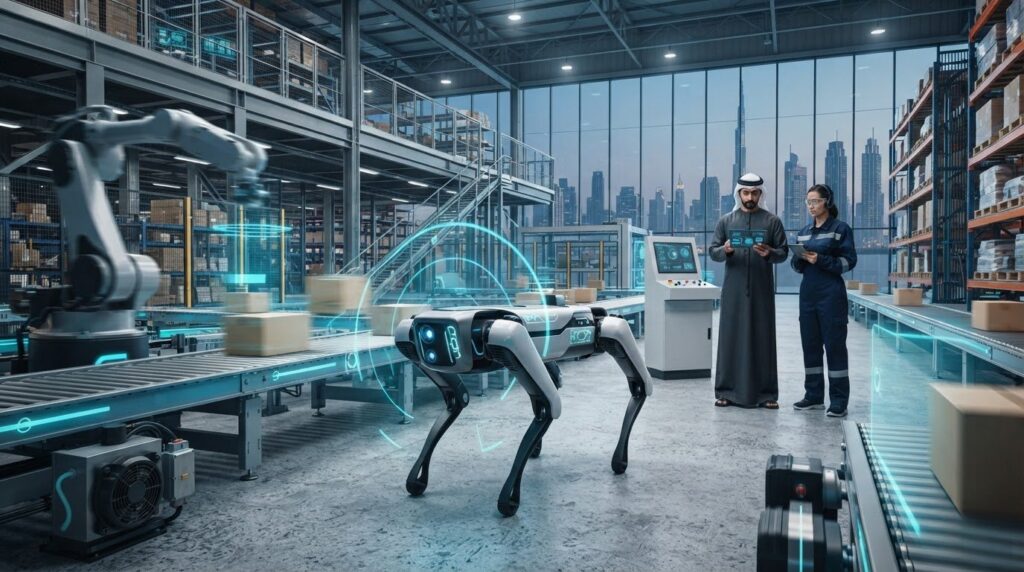
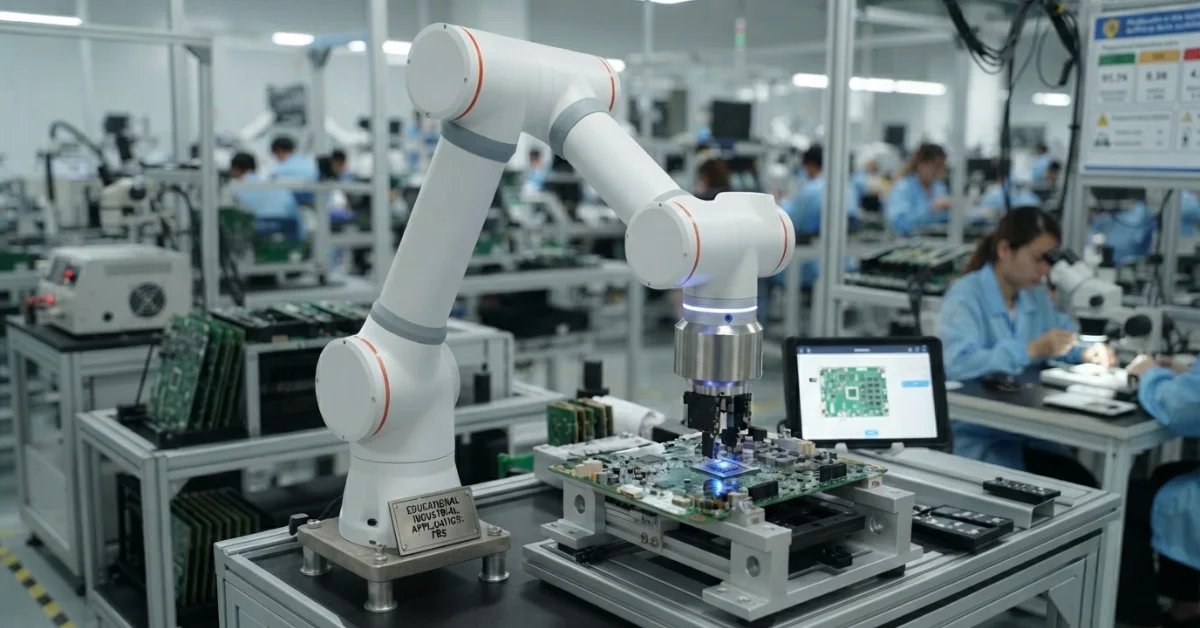
True facility autonomy is achieved when every component of the logistics chain communicates within a unified Industry 4.0 architecture. While sortation provides the necessary routing speed, the integration of collaborative robots for secondary packing and palletizing ensures that the entire outbound flow remains unhindered by manual bottlenecks. Our portfolio extends far beyond simple conveyor paths, encompassing a wide array of specialized robotics designed to create a truly autonomous warehouse environment. This includes:
- Autonomous Mobile Robots (AMRs) for flexible, dynamic transport.
- High-density ASRS for maximized vertical storage utilization.
- Advanced PLC and SCADA integration for centralized, real-time control.
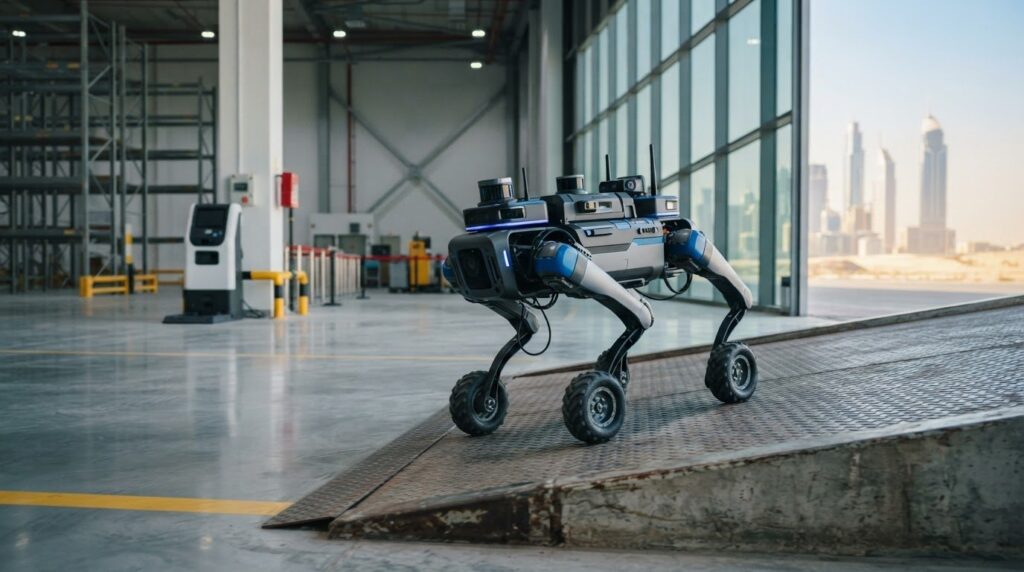
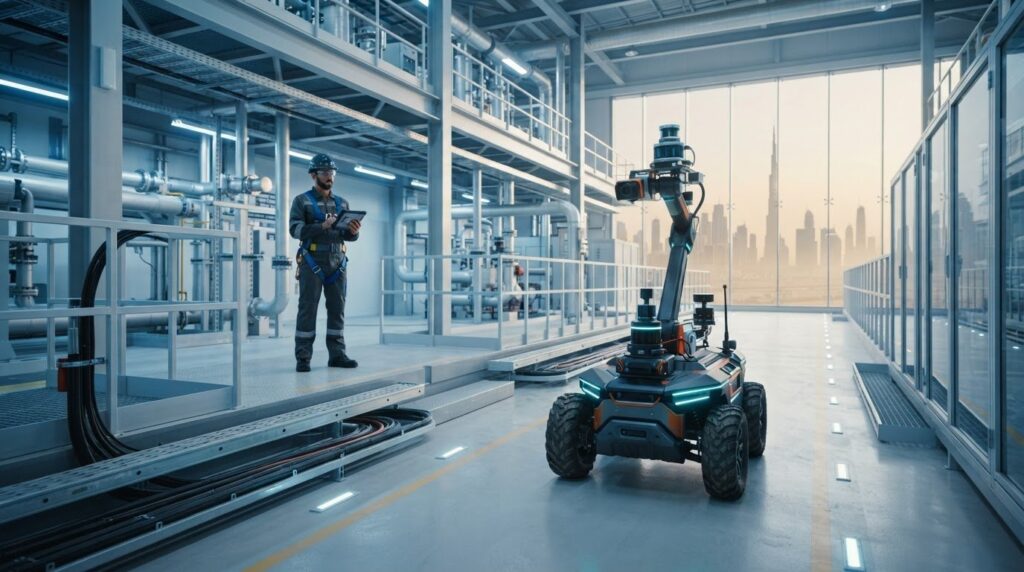
- Humanoid and inspection robots for enhanced facility safety and monitoring.
Developing a customized automation roadmap is the first step toward securing your organization’s position in an increasingly competitive global market. We invite you to consult with our engineering experts to evaluate your current throughput data and design a bespoke integration strategy. By partnering with an industry leader who understands the gravity of industrial transformation, you ensure that your investment delivers measurable results and scales alongside your ambitions. It’s time to move beyond reactive logistics and embrace a proactive, data-driven future where every parcel is a testament to operational precision.
Mastering the Future of Regional Logistics
Deploying advanced automated sortation systems UAE transforms your facility from a reactive cost center into a high-velocity strategic asset capable of handling the most complex SKU profiles. By prioritizing the seamless integration of PLC and SCADA frameworks, you ensure that every parcel routing decision is driven by millisecond-perfect intelligence and real-time data visibility. Selecting the appropriate architecture, whether high-volume linear sorters or flexible AMR-based fleets, allows your infrastructure to scale alongside the region’s rapid economic diversification. Achieving long-term viability requires moving beyond isolated hardware to embrace a unified Industry 4.0 ecosystem where sortation, storage, and fulfillment operate in a continuous, self-optimizing loop.
Leveraging our national UAE coverage and comprehensive portfolio of industrial robotics, EdNex Automation provides the intellectual framework necessary for successful large-scale transformation. We invite you to Partner with EdNex Automation for your bespoke sortation and industrial integration needs. Our expert PLC and SCADA integration services ensure your facility remains at the absolute cutting edge of global logistics standards. It’s time to build a resilient, autonomous future that powers your growth for years to come.
Frequently Asked Questions
What are the main types of automated sortation systems used in the UAE?
Logistics hubs in the region primarily utilize high-speed linear sorters, such as cross-belt, tilt-tray, and sliding shoe variants, alongside modular robotic systems. While linear architectures provide unmatched volume for standardized parcels, the adoption of AMR-driven automated sortation systems UAE is increasing due to their superior flexibility in dynamic warehouse environments. These systems are often selected based on the specific SKU profile and required throughput of the facility.
How much throughput can a robotic sortation system handle compared to linear sorters?
High-volume linear sorters typically process up to 20,000 items per hour, whereas robotic throughput is determined by fleet size and floor layout. Robotic systems provide a modular alternative that allows operators to scale capacity by simply adding more AMRs during seasonal peaks. This scalability ensures that facilities can handle fluctuating demand without the need for permanent, rigid conveyor expansions.
Can automated sortation systems integrate with my existing WMS?
Modern sortation architectures are engineered for seamless integration with existing Warehouse Management Systems through standardized communication protocols. Establishing a robust PLC and SCADA control layer ensures that sortation data flows bi-directionally, allowing for real-time inventory tracking and automated routing based on current order priorities. This connectivity eliminates data silos and ensures that the sortation layer remains synchronized with the broader enterprise resource planning software.
What is the typical ROI period for a warehouse sortation system in the UAE?
Organizations typically realize a full return on investment within 18 to 36 months, depending on their specific order volumes and labor costs. This period is shortened by significant reductions in manual routing errors and the elimination of bottlenecks during peak e-commerce seasons. Facilities benefit from lower operational expenses through energy-efficient machinery and a drastic reduction in the costs associated with misdirected shipments.
How do PLC and SCADA systems improve sortation accuracy?
PLC and SCADA systems serve as the operational brain, providing millisecond-perfect timing for every divert and routing action across the facility. By centralizing control and monitoring, these systems identify mechanical deviations before they lead to sorting errors, maintaining a consistent accuracy rate of 99.9%. This high level of precision is vital for meeting the UAE’s fast-delivery consumer expectations and reducing the overhead of manual re-sorting.
Is robotic sortation suitable for small-to-medium-sized warehouses?
Robotic sortation is exceptionally suitable for small-to-medium-sized warehouses because it requires minimal fixed infrastructure and a lower initial capital expenditure. Unlike traditional linear systems that demand extensive floor bolting, modular robotic fleets allow SMEs to automate specific workflows incrementally. This approach ensures that the technology grows in parallel with SKU counts and order volumes, providing a low-risk entry into Industry 4.0.
What maintenance is required for high-speed sortation conveyors?
High-speed sortation conveyors require a structured preventive maintenance schedule that focuses on belt tensioning, sensor calibration, and motorized roller health. Implementing predictive maintenance through SCADA monitoring allows technicians to address potential component failures before they cause unplanned downtime. This proactive strategy ensures 24/7 operational reliability in high-throughput hubs where equipment failure can lead to significant logistical delays.
How does ASRS integration improve the sortation process?
Integrating ASRS provides a high-density buffer that regulates the flow of items entering or exiting the sortation stage. This synergy maximizes vertical space utilization and ensures that automated sortation systems UAE operate at peak efficiency by preventing upstream congestion. By holding inventory in high-density racks until the exact moment of sorting, facilities can optimize their “pick-to-sort” workflows and significantly reduce the physical footprint of their operations.