Introduction
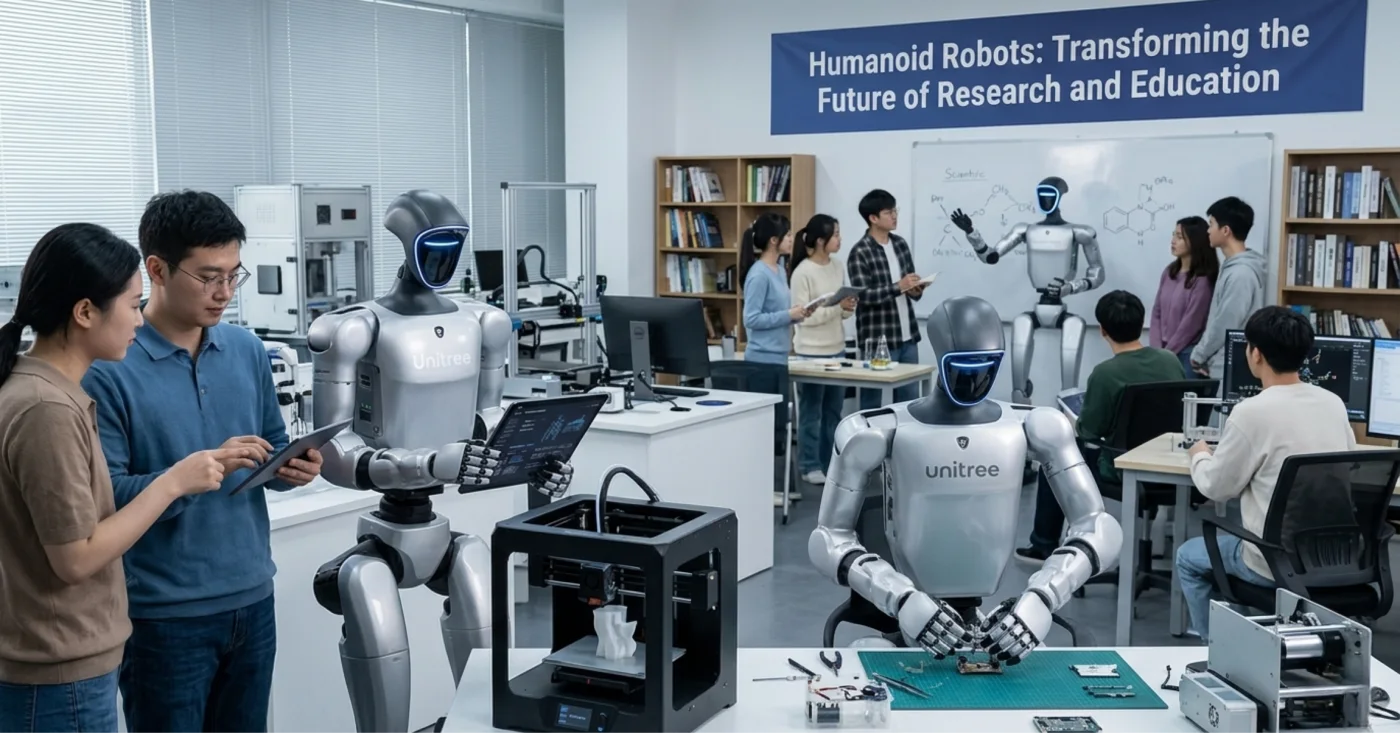
Humanoid robots are rapidly changing how we learn and conduct scientific studies. These advanced machines offer interactive, lifelike experiences that traditional tools simply cannot match. By bridging the gap between digital intelligence and physical presence, they create entirely new possibilities for students and scientists alike.
Integrating humanoid robots in education makes complex subjects easier to grasp. Students engage more deeply when interacting with a physical entity rather than a screen. This hands-on approach builds confidence and sparks curiosity in learners of all ages.
In laboratories, the role of humanoid robots in scientific research is equally groundbreaking. They perform repetitive tasks with perfect precision, freeing human researchers to focus on complex analysis. As technology evolves, these robots will become standard fixtures in classrooms and testing facilities worldwide.
What Are Humanoid Robots?
Humanoid robots are machines built to resemble the human body and mimic human movements. They typically feature a head, torso, arms, and legs, allowing them to interact naturally within environments designed for people. This human-like design makes them highly relatable and effective for social interactions.
AI humanoid robots rely on artificial intelligence to process information and respond to their surroundings. They use sensors, cameras, and microphones to recognize faces, understand speech, and navigate complex spaces. This combination of physical mobility and cognitive processing sets them apart from traditional industrial robots.
These machines are not just mechanical tools; they are highly adaptable platforms. Researchers program them to perform tasks ranging from teaching languages to conducting hazardous experiments. Their versatility makes them incredibly valuable across multiple sectors.
Role of Humanoid Robots in Education
Engaging Students Through Interaction
Robotics in education transforms passive learning into an active, engaging experience. When a robot leads a lesson or assists a teacher, students pay closer attention and retain information longer. The novelty and interactivity of the robot capture focus naturally.
Understanding how humanoid robots are used in education involves looking at their role as teaching assistants. They can lead reading exercises, guide students through coding challenges, and provide instant feedback. This personalized attention helps students learn at their own pace without feeling judged.
Key benefits for classrooms include:
- Boosted engagement: Students are eager to interact with lifelike machines.
- Personalized pacing: Robots can repeat lessons endlessly without fatigue.
- Social skill development: Humanoid designs help autistic children practice communication.
Humanoid Robots for STEM Education
Using humanoid robots for STEM education gives students hands-on experience with the technology of the future. Learners program the robots to walk, talk, or solve puzzles, turning abstract coding concepts into physical actions. This tangible feedback is crucial for mastering science, technology, engineering, and math.
Educational applications of humanoid robots extend into higher learning as well. In universities, engineering students use these platforms to test new algorithms in artificial intelligence and machine learning. This direct access prepares them for advanced careers in tech and robotics.
Applications of Humanoid Robots in Research
Humanoid robots in research serve as both the subject of study and the tools conducting the study. Scientists use them to model human biomechanics, testing how we walk, balance, and interact with objects. These insights drive advancements in prosthetics and physical therapy.
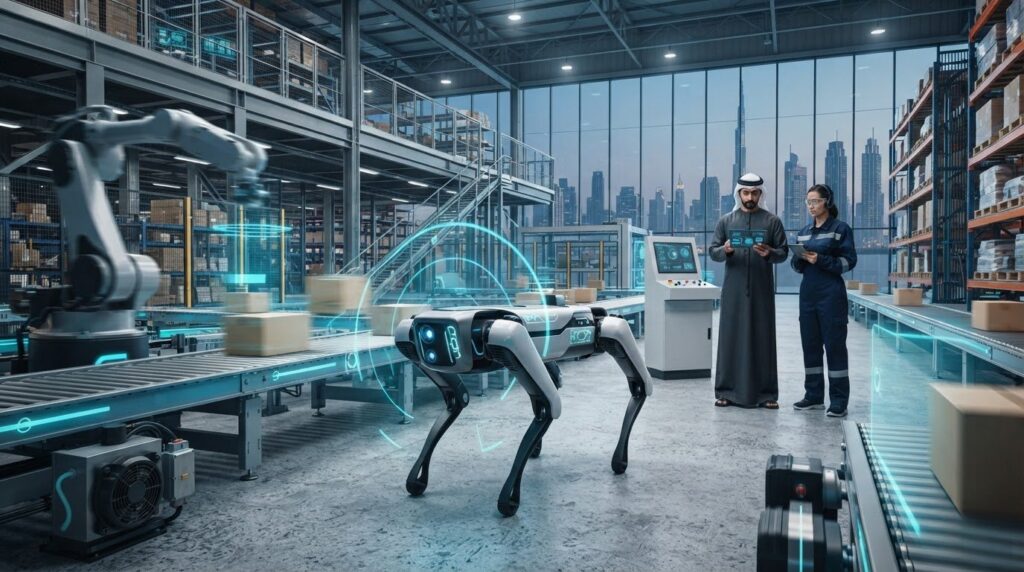
In hazardous environments, AI humanoid robots take the place of human researchers. They handle toxic chemicals, navigate extreme temperatures, and manage radioactive materials safely. Their human-like hands allow them to use standard laboratory equipment without requiring customized tools.
Benefits of humanoid robots in research labs include:
- Enhanced safety: Robots handle dangerous materials so humans do not have to.
- Unmatched precision: They perform repetitive experiments with zero variation.
- Data collection: Built-in sensors capture vast amounts of real-time environmental data.
Benefits of Using Humanoid Robots in Education and Research
The integration of humanoid robots in universities and schools significantly improves learning outcomes. They serve as patient, unbiased tutors that provide consistent instruction. This reliability ensures every student receives the exact support they need to succeed.
When deploying AI humanoid robots for teaching and learning, institutions notice a drop in student anxiety. Learners often feel less intimidated asking a robot to repeat a concept than they would a human teacher. This creates a safe, low-pressure environment for mastering difficult subjects.
For scientific teams, the benefits revolve around efficiency and scalability. Robots can run experiments 24/7 without needing breaks or sleep. This continuous operation accelerates the pace of discovery and reduces the timeline for critical research projects.
Real-World Examples of Humanoid Robots
Several notable humanoid robots are already making an impact in schools and labs globally. SoftBank’s Pepper is widely used to greet students, teach basic programming, and assist in special education. Its ability to read human emotions makes it an excellent companion for interactive learning.
Another prominent example is the Nao robot, heavily utilized in robotics in education. Nao helps students learn coding from primary school up through university levels. Because it is small, durable, and highly programmable, it is the perfect tool for classroom environments.
In advanced research, Boston Dynamics’ Atlas pushes the boundaries of mobility and balance. Researchers use Atlas to study advanced locomotion and disaster recovery tactics. These real-world applications prove that humanoid robots are practical tools, not just science fiction.
Challenges and Limitations
The primary barrier to adopting humanoid robots is their high cost. Purchasing, maintaining, and repairing these advanced machines requires a significant budget. Many public schools and smaller research facilities simply cannot afford the initial investment required.
Technical limitations also present ongoing challenges. While AI humanoid robots are intelligent, they still struggle with complex, unstructured human conversations. They require highly controlled environments and strong network connections to function optimally.
Other major challenges include:
- Maintenance requirements: Specialized technicians are needed for repairs.
- Training barriers: Teachers and researchers must invest time to learn how to program them.
- Ethical concerns: Data privacy and the impact on human jobs remain hotly debated topics.
The Role of Humanoid Robots in Future Learning
In the coming years, humanoid robots will act as personalized learning companions for students. They will travel with learners throughout their educational journey, adapting to their evolving skills and interests. This continuous, customized support will revolutionize the traditional classroom model.
We will see a seamless integration of AI humanoid robots for teaching and learning across all subjects, not just STEM. Robots will assist in history simulations, language practice, and art instruction. They will bridge the gap between digital curriculum and physical interaction.
Furthermore, cloud connectivity will allow these robots to share teaching strategies globally. If a robot in Japan discovers an effective way to teach fractions, it can instantly update the software of a robot in the United States. This collective intelligence will elevate educational standards worldwide.
Future Trends in Humanoid Robotics
Advancements in artificial intelligence will make humanoid robots exponentially smarter and more autonomous. They will soon possess the ability to read subtle human body language and adjust their teaching or research methods accordingly. This emotional intelligence will make interactions feel entirely natural.
New materials and battery technologies will also make these robots lighter, stronger, and longer-lasting. We will move away from rigid plastics and metals toward soft robotics that mimic human skin and muscle. This will drastically improve their safety when working closely with humans.
Key trends to watch include:
- Decreased production costs: Mass manufacturing will make robots more affordable for everyday use.
- Improved mobility: Enhanced balancing algorithms will allow robots to navigate stairs and uneven terrain easily.
- Advanced AI integration: Chatbot technology will give robots the ability to hold fluid, complex conversations.
Ready to Transform Your Classroom or Lab?
Humanoid robots represent a massive leap forward for both education and scientific research. By combining artificial intelligence with physical presence, they offer unique benefits that screens and software alone cannot provide. From tutoring students to conducting hazardous lab work, their potential is limitless.
While challenges like cost and technical limitations remain, the future of robotics in education is bright. As technology improves, these machines will become more accessible, intuitive, and capable. Educational institutions and research facilities that embrace this technology now will lead the way into a new era of discovery.
Now is the time for educators and researchers to explore how humanoid robotics can elevate their work. Integrating these tools today prepares students and scientists for a highly automated, AI-driven future.
Bring the future of learning and research to your institution today. Partner with Ednex Automation to seamlessly integrate advanced humanoid robots into your programs. Contact our expert team now to schedule a customized demonstration and discover how our AI solutions can elevate your educational and scientific goals!
Proudly Serving the GCC Countries:
- United Arab Emirates (UAE)
- Saudi Arabia
- Qatar
- Oman
- Kuwait
- Bahrain
Frequently Asked Questions (FAQs)
What is the main purpose of humanoid robots in education?
The main purpose is to enhance engagement and provide personalized learning experiences. They act as interactive tools that help students grasp complex subjects, particularly in STEM fields. Their physical presence makes learning more dynamic and memorable.
How do humanoid robots benefit research labs?
They automate repetitive tasks and safely handle dangerous materials. This allows human scientists to focus on data analysis rather than physical labor. Furthermore, they provide exact, unvarying precision during experiments.
Are AI humanoid robots replacing human teachers?
No, they are designed to assist teachers, not replace them. Humanoid robots act as teaching aides to lead specific exercises or help individual students. The empathy, adaptability, and emotional support of a human teacher remain irreplaceable.
What is the biggest challenge facing robotics in education?
The high cost of acquisition and maintenance is the biggest barrier. Many schools lack the funding required to purchase these robots and train staff to use them. Additionally, technical glitches can disrupt the learning process.
Can humanoid robots be used for non-STEM subjects?
Yes, they are highly effective for teaching languages, history, and social skills. For example, they can converse with students in foreign languages or act out historical events. They are also widely used to help neurodivergent students practice social interactions.
Author Bio: Ednex Automation
Ednex Automation is a leading provider of innovative robotics and AI solutions. We specialize in integrating cutting-edge technology into educational institutions and research facilities. Our mission is to empower the next generation of learners and scientists by providing access to world-class humanoid robots, comprehensive training, and forward-thinking STEM curriculum.