Robots don’t automatically cut construction labor costs; they change where people spend their time. Top Construction Robotics technologies can take on repeatable work such as moving materials, cleaning and inspection, while the project’s actual savings depend on task frequency, setup, operator needs and how well the system fits the site workflow.
For UAE contractors, the practical question behind Top Construction Robotics is not simply whether a robot can perform a task, but whether it can do so reliably on an active construction or fit-out site. There is no single labor-saving figure that applies to every project. The value depends on the task, its frequency, and the time needed for setup, supervision, and maintenance. This guide compares key construction applications with indoor robots for material movement and cleaning, and outlines what to assess before deployment.
Key Takeaways
- Assess potential labor savings by looking at how inspection, quality checks, and site monitoring affect rework and crew time.
- Understand how repeatable tasks and workforce pressures are shaping construction robotics adoption, including the role of measured pilots.
- Compare autonomous and remotely operated heavy machinery by the work it performs and the conditions of the jobsite.
- Explore how mobile robots can support material movement and repetitive tasks during interior construction and fit-out.
How much labor cost can these construction robots save on a typical project?
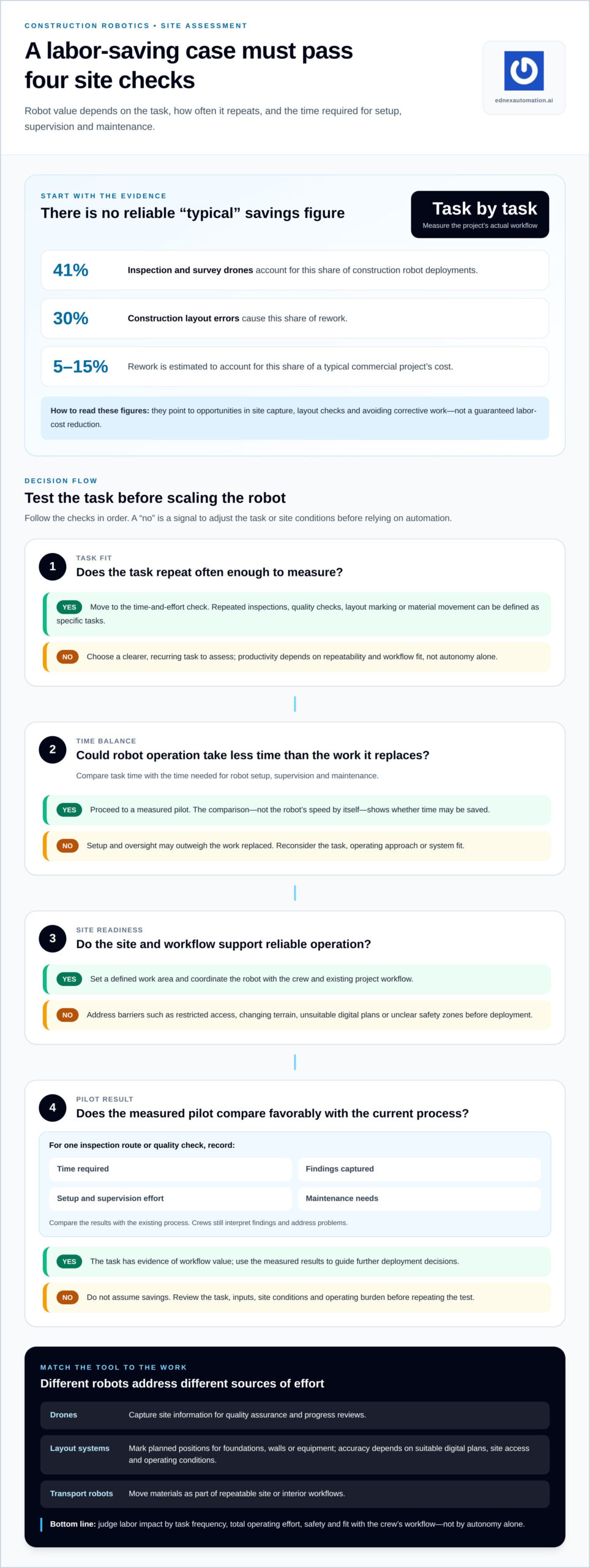
There is no reliable labor-saving figure for a typical UAE project. Savings depend on the task, how often it repeats, and whether robot setup, supervision, and maintenance take less time than the work being replaced.
Inspection and survey drones account for 41% of construction robot deployments, while construction layout errors cause 30% of rework. These figures point to two practical opportunities: capture site conditions more consistently and catch layout discrepancies before they trigger corrective work. Reality capture can connect site images with project information, giving teams a clearer record for quality assurance and progress reviews.
For a useful pilot, define one inspection route or quality check, record the time and findings, then compare them with the existing process. Site-monitoring robots can collect repeatable observations, but crews still need to interpret results and address problems. Rework is estimated to account for 5-15% of a typical commercial project’s cost, so preventing avoidable corrections can matter alongside direct labor savings.
Outdoor surveying and solar-site marking use positioning data to transfer planned coordinates to the ground. Automated layout systems can mark points for foundations, walls, or equipment, reducing repetitive manual setting-out. Accuracy depends on suitable digital plans, site access, and operating conditions.
Construction-site intelligence and AI can help organize captured images, identify changes, and flag items for review. They do not replace professional judgment: incomplete inputs or changing site conditions can affect the usefulness of the output. Key considerations include setup, operator training, maintenance, and integration of robot data with project workflows.
Relevant construction robotics categories in the UAE include inspection drones, layout systems, autonomous material-transport machines, and robots for repetitive site tasks. Each serves a different purpose: drones capture site information, layout robots mark positions, and transport robots move materials. Productivity depends on repeatability and workflow fit, not autonomy alone.
UAE projects must follow applicable site safety requirements. Before deploying a robot, define safety zones, operator responsibilities, and crew coordination. Account for restricted access, changing terrain, and the risk of people or equipment entering the work area.
Are construction companies finally using robots at scale?
Adoption is increasing, though use ranges from trials to established workflows. Bricklaying robots build masonry, layout systems mark positions, demolition robots handle controlled removal, and rebar machines automate tying.
Automation and Labour Shortages
Automation can help construction teams manage repetitive work when worker availability is constrained. The useful measure is not simply robot speed, but whether automation helps a crew complete more planned work while maintaining quality and coordination across the site.
BuiltWorlds’ 2026 contractor survey found that 79% of respondents had used jobsite robotics to some degree, compared with 29% in its 2025 survey. These results suggest wider exposure, not universal deployment. For infrastructure projects, assess whether the robot’s task is repeatable and whether workers can integrate it into the existing sequence.
Rebar-tying robots are reported to work 2-3 times faster than manual tying. That can make them relevant to repetitive steel work, but placement, access, and coordination with crews still shape productivity. Bricklaying and demolition robots address different tasks, so no single machine suits every construction site.
Piloting Construction Automation
A pilot should test productivity, accuracy, safety, and workflow impact before wider deployment. Define one task, such as tying rebar in a consistent work zone, then record the quality of completed work and effects on worker coordination. Construction automation is easier to assess when the task is clearly prepared and measured.
BuiltWorlds’ 2026 survey reported robotics pilots or trials among 32% of respondents, up from 12% in 2025. For automated indoor building layout, a pilot can compare marked positions with digital plans and note interruptions from changing site conditions. Use those results to decide whether the system can enable a repeatable process.
To explore automation options for repetitive material movement or indoor tasks, review construction robotics solutions suited to defined workflows.
Autonomous and remotely operated heavy machinery
On a UAE construction project, autonomous heavy machinery can follow programmed tasks, while remotely operated machines respond to a human operator. This distinction matters: grading a defined area may suit repeatable machine paths, while changing ground conditions can call for live decisions. Before deployment, map the work zone, set operating boundaries, and coordinate machine movements with other crews.
For piling, automation can support equipment positioning and consistent execution at planned pile locations. A practical sequence connects the digital foundation plan to site coordinates, positions the rig, and records completed work for review. Operators still need to manage access and changing conditions. Autonomous piling is most relevant when locations and work sequences are clearly defined.
Autonomous earthmoving equipment can perform repeated grading or material-moving passes across a prepared area. Its usefulness depends on accurate design data, the ground surface, and coordination with trucks and site personnel. For example, a grader following a digital terrain model can shape a work zone while a human supervisor monitors progress and adjusts the operation as conditions change.
Remotely operated machines offer a different control model for demolition and other demanding tasks. An operator directs the equipment from a separate position, helping keep people away from the immediate work area. The machine still needs a clear operating path, defined boundaries, and coordination with workers managing debris, utilities, or nearby structural elements.
Construction robotics do not address every project stage in the same way. Heavy machines can support earthmoving and piling; specialized robots may handle bricklaying, concrete placement, or repetitive finishing. Because these systems require different inputs and work zones, start with a defined task rather than a broad automation target. Map dependencies, prepare digital plans, and identify handoffs between machines and trades. The workflow determines whether automation supports the structural sequence or delays finishing crews.
Mobile robots for interior construction and fit-out
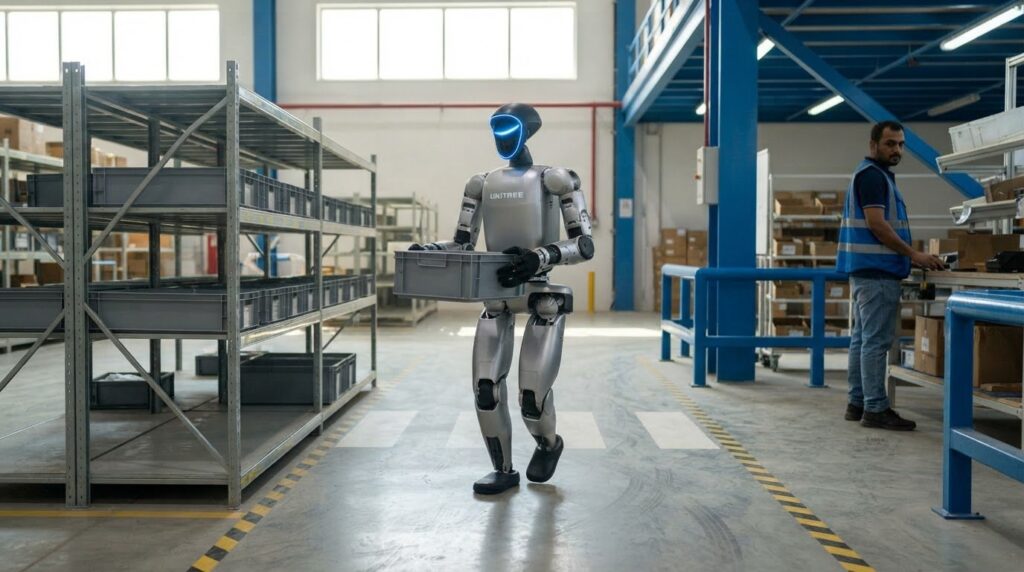
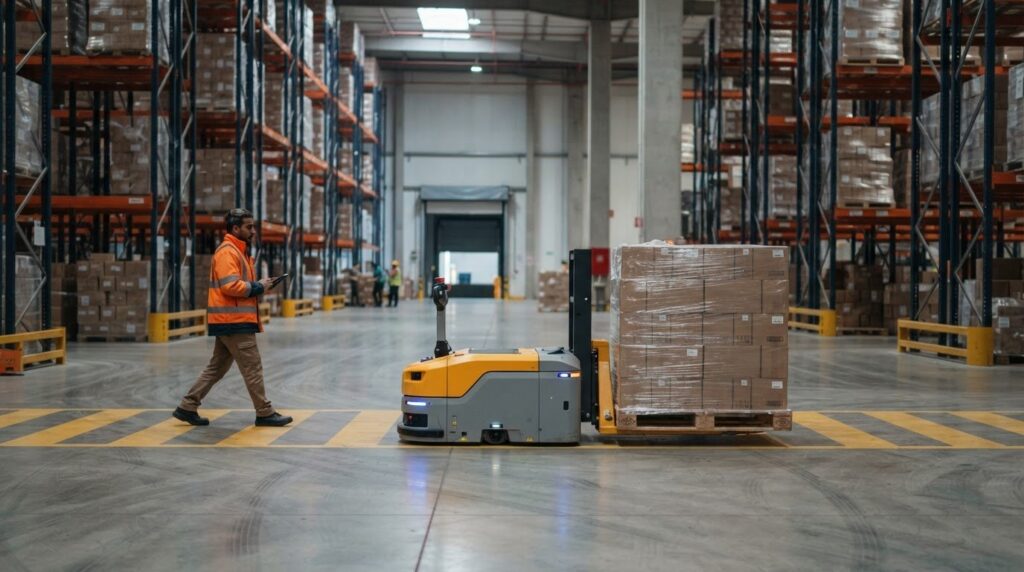
Interior fit-out brings trades, tools, and materials into confined, changing work areas. A mobile robot can move materials from a designated delivery point to a work zone, reducing repeated manual trips. For example, a fit-out crew can schedule deliveries around floor installation, keeping bulky supplies out of finished corridors and helping maintain a steady workflow.
Start by defining the route: identify the loading point, destination, access constraints, and handoff. Align deliveries with the work sequence, such as moving ceiling components before overhead installation begins. This connects robot movement to site progress instead of treating transport as a separate activity.
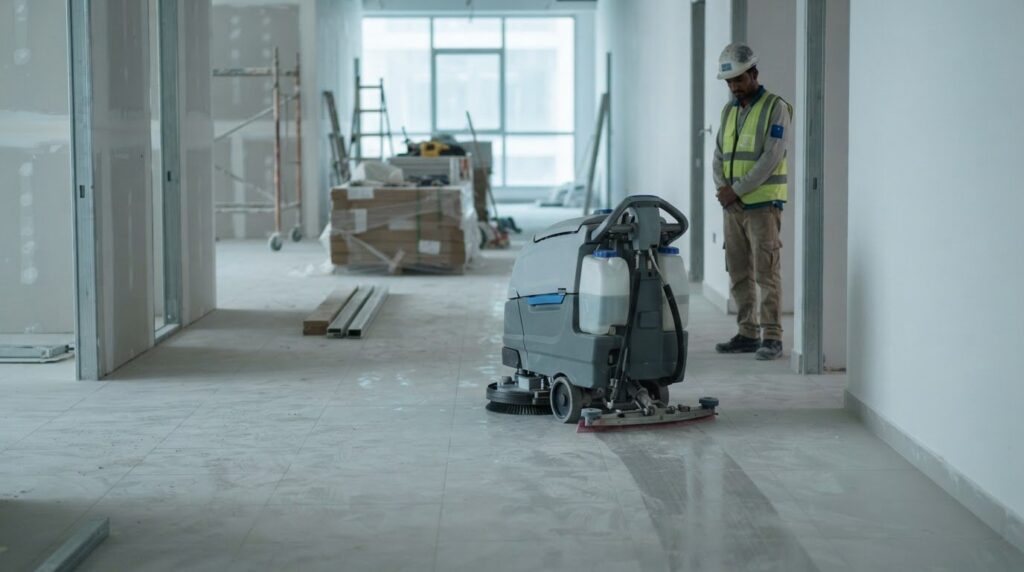
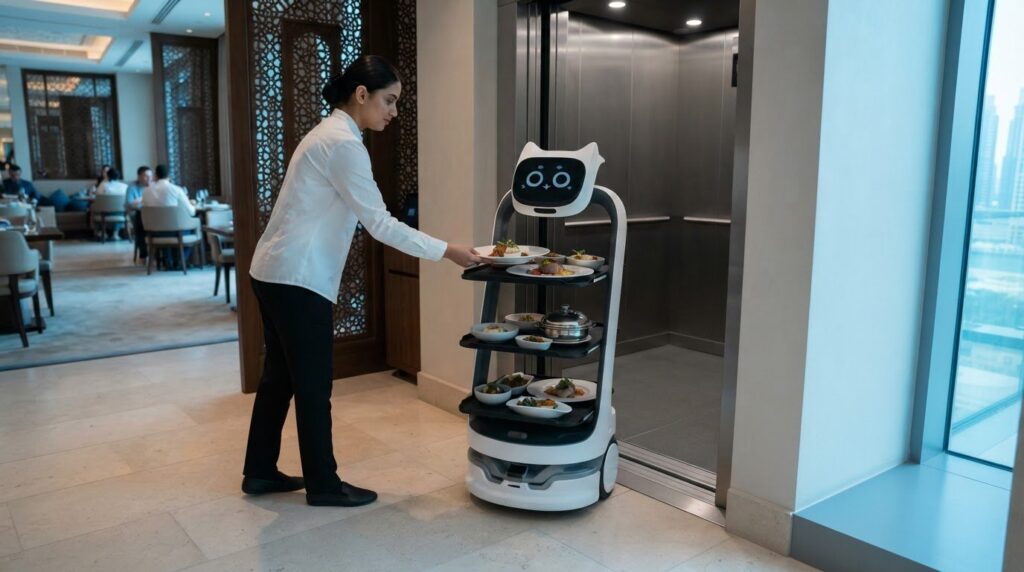
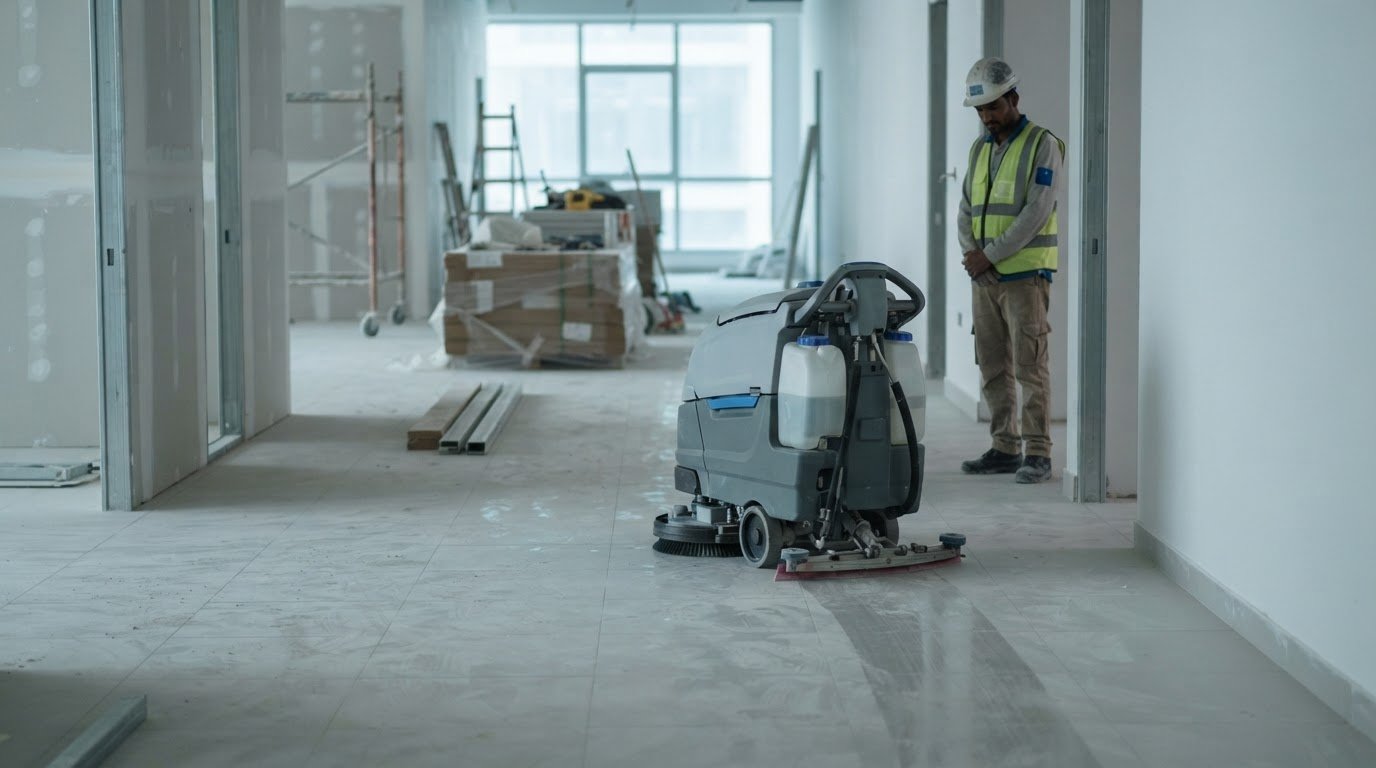
Autonomous mobile robots suit repeatable indoor material movement, while delivery robots can support scheduled transport of smaller items. Cleaning robots can handle routine floor cleaning as work areas become available. Before integrating them into an active fit-out zone, map each robot’s task and account for site traffic patterns.
Timing matters at handoffs. A delivery that arrives too early can obstruct workers; one that arrives after installation begins can interrupt the task. Set delivery windows and clear stopping points, and establish a process for changing routes as site conditions shift. Track whether the workflow reduces avoidable trips and keeps materials available where they are needed.
Advanced automation can also support interior layout work, where digital plans guide marking and repeatable placement. Robotic printing serves a different purpose: it produces components from digital designs rather than transporting supplies. Treat these as separate applications and select a system based on the task, required precision, floor access, and other trades’ schedules.
To map mobile automation to an interior fit-out workflow, explore construction robotics options for material delivery and site operations.
EdNex Automation
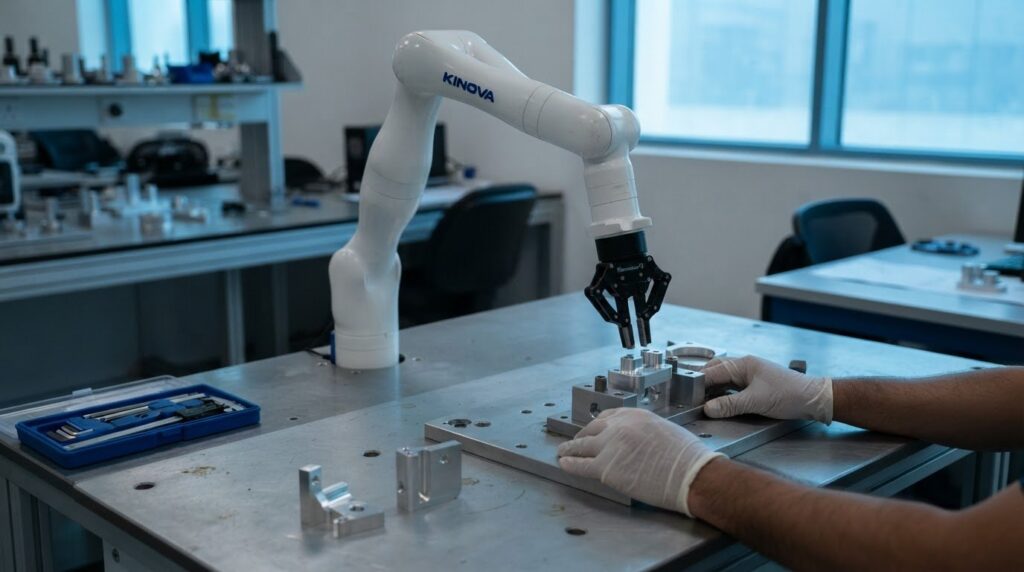
EdNex Automation helps UAE organizations assess robotics for repetitive tasks in commercial and industrial environments. For material movement, routine cleaning, or work shared between people and machines, its portfolio includes autonomous mobile robots, delivery robots, cleaning robots, and collaborative robots.
Start by defining the operational problem: where work slows, which task repeats, and how a robotic system could fit existing workflows. This provides a practical basis for considering automation without assuming every task or project needs a robot. Contact EdNex Automation to discuss robotics for your operational needs.
Turn a Defined Site Need into the Next Step
Construction automation becomes a strategic capability when teams connect a specific operational need to a clear implementation plan. Identify where work is repetitive, coordination is difficult, or material movement disrupts the schedule. Then define what a successful deployment should improve, such as task completion, consistency, or handoffs between crews.
Use that scope to assess top construction robotics against the actual conditions of a UAE project. Site access, task sequence, digital information, and worker coordination all affect how a system fits. A focused pilot can help establish practical operating procedures and identify what to refine before extending automation to other workflows.
EdNex Automation can help organizations explore robotics that align with their commercial and industrial needs. If you’re ready to discuss a suitable starting point, contact EdNex Automation about construction robotics. A clear operational objective is a strong foundation for the next phase of project innovation.
Frequently Asked Questions
Are contractors buying construction robots or just renting them for trials?
Contractors use robotics both to evaluate new workflows and as part of ongoing operations, but survey results don’t establish whether systems are rented or purchased. BuiltWorlds reported that 32% of 2026 survey respondents had robotics pilots or trials, compared with 12% in 2025. To choose a deployment model, consider how regularly the task occurs, how much setup it needs, and who will operate and maintain the equipment.
Can Advanced Construction Robotics really replace manual construction work?
Robots can perform defined, repetitive tasks, but construction still requires people to plan work, manage changing conditions, and coordinate trades. A rebar-tying system, for example, handles tying, not the full sequence of steel installation. Assign automation to a clear task and define how workers will manage preparation, quality review, exceptions, and handoffs so the machine supports the crew’s workflow.
How are automation and robotics in construction implemented?
Implementation begins by selecting a repeatable task and documenting its current workflow. Prepare compatible digital plans, define where the system will operate, and establish operator roles and safety coordination. Then use a pilot to test productivity, accuracy, safety, and workflow impact. For example, a contractor could trial automated material movement in one work zone before integrating it with deliveries and trade schedules across the site.
What are the top construction robotics companies and products in 2026?
There is no single ranking that fits every construction task. Relevant categories include mobile robots for material movement, collaborative robots for shared work, inspection systems, and machines for repetitive site activities. For UAE organizations assessing robotics, EdNex Automation offers collaborative robots, autonomous mobile robots, cleaning robots, and delivery robots. Match the category to the job rather than treating a broad ranking as a substitute for task-specific fit.
How much do construction robots cost to buy, lease, or operate?
Cost depends on the robot, deployment model, site conditions, and operating requirements. A project budget should account for more than equipment: freight, commissioning, training, software, consumables, attachments, maintenance, and service agreements can affect the total. EdNex Automation provides pricing after a quote request. Define the intended task and deployment scope to make that request more useful.
What are the measurable productivity and labor savings from construction robotics?
Measure task time, labor hours, rework, and completed output before and during a deployment. One reported project using 12-inch split-face CMUs finished in 15 days instead of an estimated 22 days. That is a schedule comparison, not a direct labor-cost saving. Track crew hours and output alongside completion time to understand whether automation changes labor needs or simply moves effort to setup and supervision.