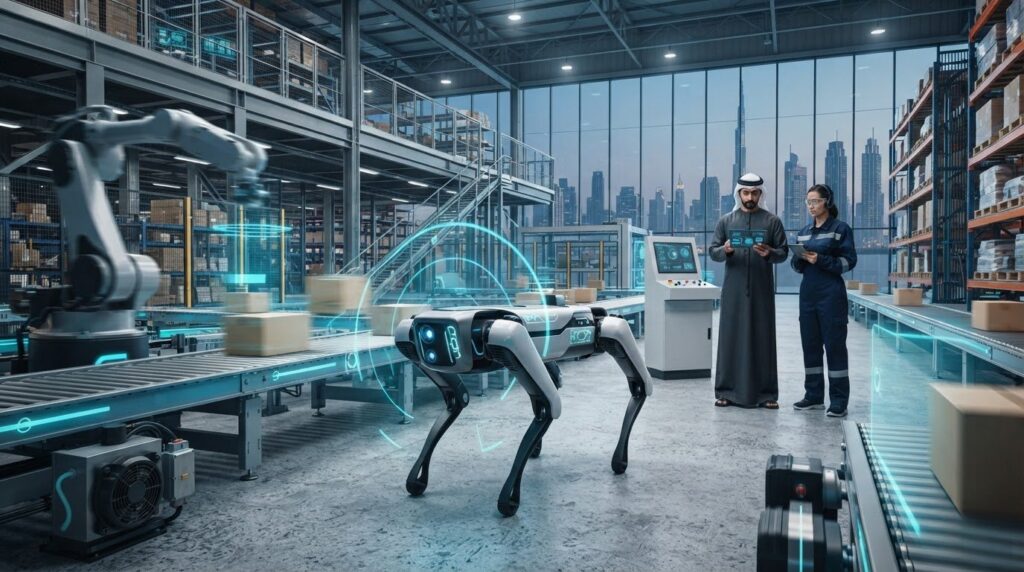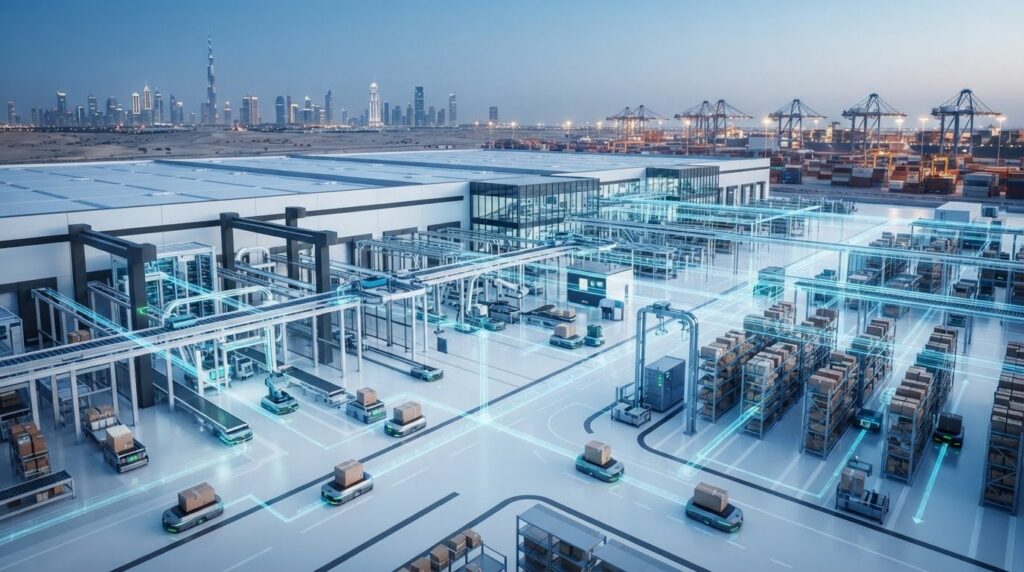
By the close of 2026, AI-driven navigation systems will have boosted warehouse throughput by 25 percent across the region, yet many facilities remain trapped in a cycle of fragmented automation. Many logistics leaders recognize the frustration of operating sophisticated autonomous mobile robots (AMRs) that cannot communicate with existing ASRS or PLC layers, creating “automation silos” that drain ROI. Achieving seamless warehouse robotics integration UAE requires moving beyond simple equipment procurement toward a unified, intelligent ecosystem that operates with 24/7 precision.
Providing the intellectual framework for industrial autonomy, this guide enables you to master the complexities of orchestrating diverse robotic systems into a single, cohesive operational flow. We will examine the critical role of SCADA logic in bridging hardware gaps and ensuring full compliance with the UAE National Programme for Coders and Industry 4.0 standards. By aligning your infrastructure with Grade A specifications and the latest safety protocols, you can transform your logistics into a world-class autonomous operation that thrives in the national market. This roadmap bridges global technological breakthroughs with regional industrial needs to ensure long-term business viability.
Key Takeaways
- Understand how the UAE National Strategy for Industry 4.0 mandates a shift toward high-density autonomous storage to maintain national competitiveness.
- Learn the technical differences between legacy AGVs and modern AMRs to ensure your warehouse robotics integration UAE supports flexible, infrastructure-free navigation.
- Discover the role of PLC and SCADA integration in orchestrating hardware and eliminating automation silos for 24/7 operational intelligence.
- Implement a structured five-step roadmap that utilizes digital twin simulations to optimize hardware selection and control architectures before physical deployment.
- Leverage the expertise of a specialized Industry 4.0 partner to bridge the gap between global technological breakthroughs and regional industrial requirements.
The Strategic Imperative for Warehouse Robotics Integration in the UAE (2026)
Aligning with the UAE National Strategy for Industry 4.0 has become the defining benchmark for logistics excellence in 2026. As the national economy pivots toward high-tech manufacturing and distribution, warehouse robotics integration UAE serves as the critical bridge between traditional storage and intelligent industrial autonomy. This transition isn’t merely about speed; it’s about establishing a resilient framework that ensures long-term business viability across the GCC. By digitizing the physical environment, operators unlock the ability to predict demand spikes and adjust robotic workflows in real-time. Efficiency is now mandatory.
Drivers of Automation in the National Logistics Sector
The surge in regional e-commerce demand has reached a critical tipping point, forcing a departure from manual palletizing toward high-density autonomous storage. With the UAE warehouse automation market projected to grow at a CAGR of 13.4 percent through 2026, firms are leveraging specific catalysts to maintain their competitive edge:
- Infrastructure Modernization: Utilizing Grade A facilities with 12 to 14 meter clearance heights to support vertical robotics.
- Fiscal Support: Accessing the AED 1 billion National Industrial Resilience Fund to offset initial capital expenditure.
- Sustainability Goals: Transitioning to “Dark Warehouse” operations that align with the UAE Net Zero 2050 vision.
These sustainable systems provide the high-power capacity required to maintain 24/7 throughput without the limitations of human shifts. Utilizing solar-ready infrastructure ensures that throughput remains consistent regardless of external labor market fluctuations.
The Shift from Manual Labour to Robotic Orchestration
Integrating robotic systems fundamentally alters the risk profile of a facility by mitigating hazards associated with heavy manual handling and repetitive motion. Implementing a robust warehouse robotics integration UAE strategy allows operators to maximize their vertical footprint while ensuring strict compliance with ISO 10218 and TS 15066 safety standards. By deploying Automated Storage and Retrieval Systems (ASRS), organizations can achieve a 40 percent reduction in retrieval times, directly addressing the shortage of specialized technical expertise in the current market.
This shift redefines the national labor market, evolving the role of the warehouse manager from a floor supervisor into a sophisticated systems orchestrator. These professionals now manage complex logic layers and sensor networks rather than physical tasks. The push for high-skill technical roles ensures that the workforce is capable of maintaining the sophisticated PLC and SCADA systems that drive modern throughput. In the 2026 UAE landscape, Industry 4.0 integration is the systematic synchronization of hardware, software, and human intelligence to create a self-optimizing logistics ecosystem that powers national economic resilience.
Defining the Integrated Robotic Ecosystem: AMRs, ASRS, and Cobots
Achieving a truly autonomous facility requires more than just deploying independent machines; it demands a unified fleet that shares a common intelligence layer. In the context of warehouse robotics integration UAE, the distinction between legacy systems and modern autonomy has never been sharper. By moving away from rigid, fixed-path Automated Guided Vehicles (AGVs), operators are now adopting Autonomous Mobile Robots (AMRs) that navigate via LiDAR and SLAM without the need for floor magnets or wires. This infrastructure-free approach allows for rapid scalability, enabling robots to dynamically reroute around obstacles in shared human-robot environments while maintaining strict safety protocols. Using these flexible units ensures that throughput isn’t bottlenecked by fixed tracks.
Maximizing Vertical Space with ASRS
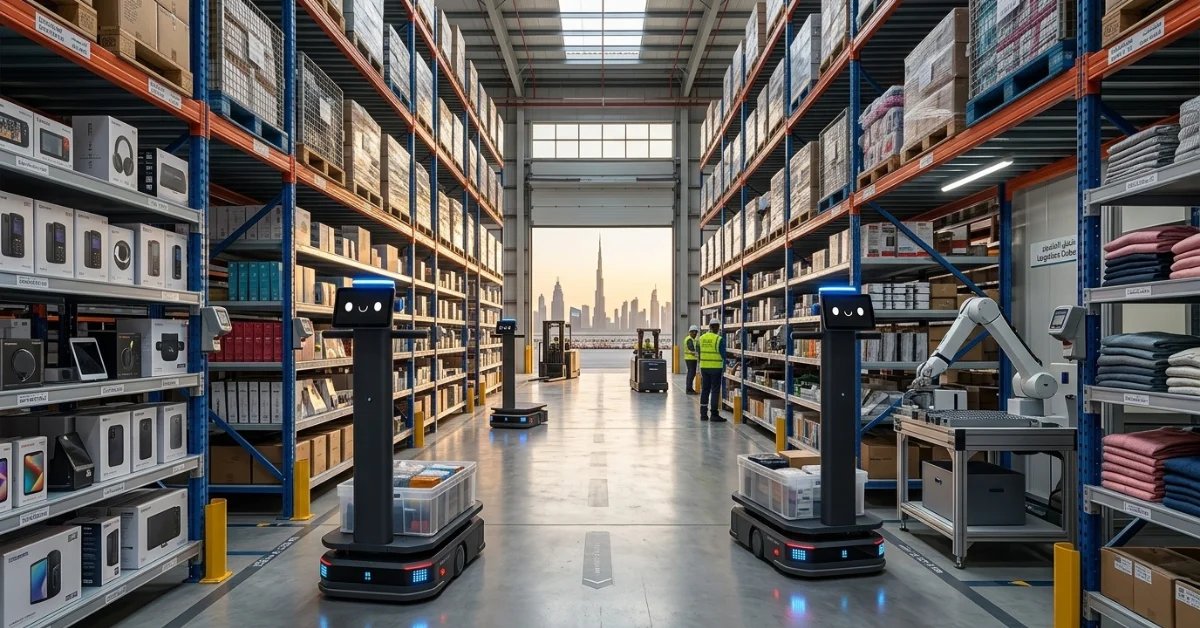
Addressing the persistent shortage of Grade A warehouse space, automated storage and retrieval systems provide a technical solution for maximizing vertical density. While heavy-duty industrial racking for ASRS typically costs between AED 2,200 and AED 4,000 per pallet position, the investment is justified by the massive increase in cubic storage capacity. Shuttle systems offer high-speed access for high-turnover SKUs, whereas mini-load architectures prioritize high-density storage for smaller items. Seamlessly integrating these systems with an existing Warehouse Management System (WMS) ensures that inventory data remains accurate across the entire autonomous ecosystem, providing real-time visibility into stock levels.
Synergy Through Collaborative Robotics
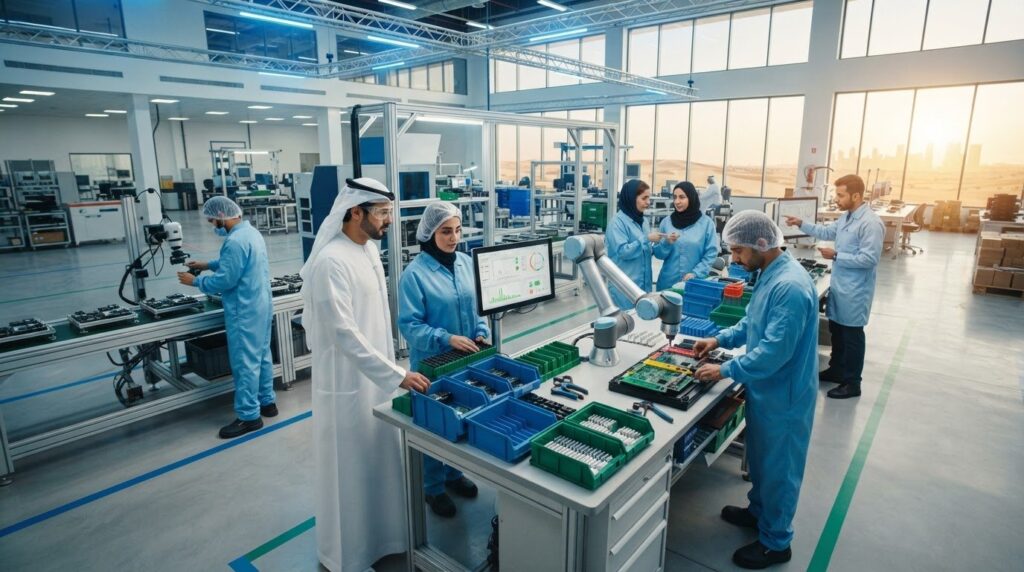
Utilizing collaborative robots UAE allows for a hybrid approach where humans and machines work in close proximity on kitting and packing lines. These cobots utilize safety-rated monitored stops and force-limiting technology to prevent accidents, adhering to ISO 10218 standards. As research indicates regarding the impact of robots on jobs, these systems don’t replace labor but rather augment human capability by handling repetitive, high-risk tasks. In 2026, industrial cobots have evolved to support payload capacities reaching 25kg to 30kg, facilitating the handling of heavier industrial components without compromising safety.
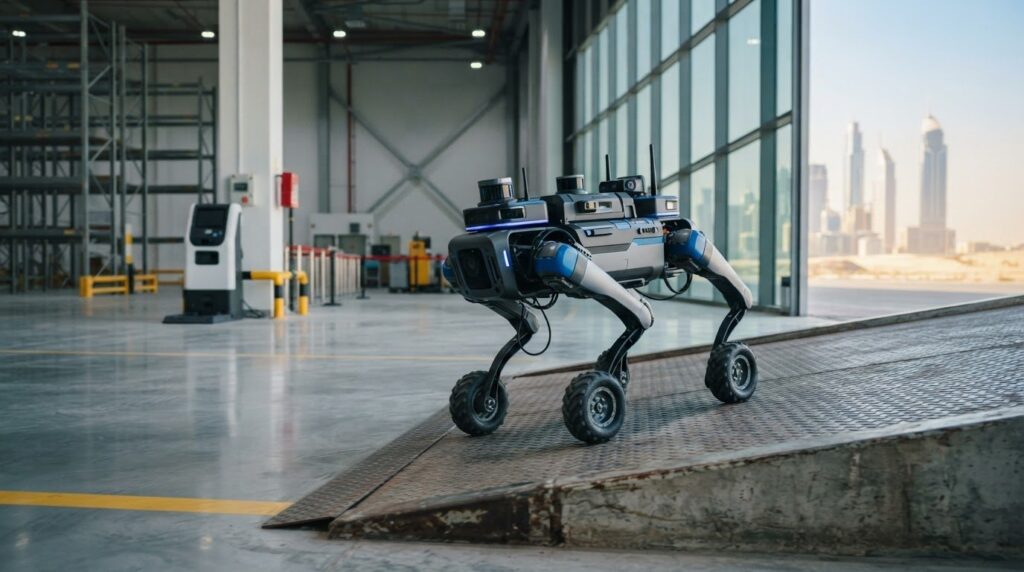
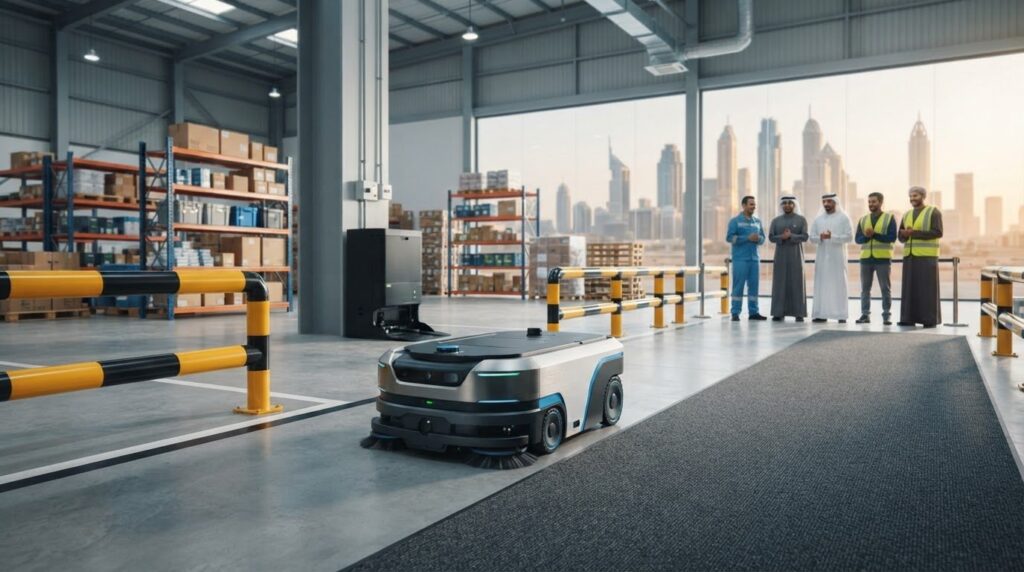
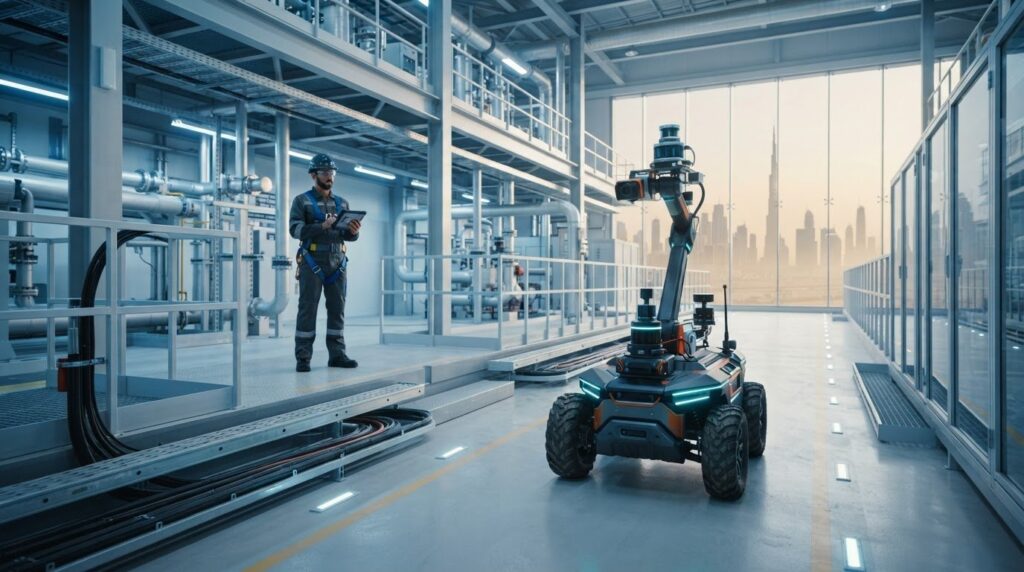
Beyond the picking floor, integrating autonomous cleaning and surveillance units ensures that the facility remains operational and secure without manual intervention. By exploring comprehensive robotics solutions, facility managers can synchronize these diverse units into a single workflow. This holistic orchestration ensures that cleaning cycles don’t interfere with AMR traffic, creating a truly intelligent industrial environment that operates with minimal human oversight.
The Technical Backbone: Orchestrating Hardware via PLC and SCADA Integration
Deploying high-performance hardware represents only the first phase of a successful digital transformation. Without a robust control layer, even the most advanced AMRs and ASRS function as isolated units rather than a synchronized fleet. Mastering warehouse robotics integration UAE requires a deep understanding of the Programmable Logic Controllers (PLCs) that orchestrate these movements with microsecond precision. These controllers serve as the localized intelligence, ensuring that robotic cells communicate seamlessly with conveyor systems and safety sensors to eliminate operational bottlenecks. This technical “glue” is what transforms individual machines into a unified autonomous ecosystem.
Orchestrating Hardware with PLC Logic
Implementing professional PLC and SCADA integration services is essential for minimizing latency in high-throughput environments. Utilizing real-time communication protocols such as EtherCAT, PROFINET, and OPC UA allows for the high-speed data exchange necessary for sub-millisecond synchronization between robotic arms and moving tracks. By adopting modular PLC programming, engineers ensure that a single component update doesn’t lead to facility-wide downtime, maintaining the steady, hierarchical flow of industrial operations. This technical resilience separates an experimental pilot from a world-class autonomous operation that supports 24/7 throughput.
Operational Intelligence via SCADA
Transitioning from localized control to facility-wide visibility is achieved through Supervisory Control and Data Acquisition (SCADA) systems. These platforms offer high-fidelity HMI interfaces that provide a “single pane of glass” view of the entire robotic ecosystem, from vertical ASRS units to mobile floor robots. Utilizing SCADA data for predictive maintenance allows managers to anticipate robotic component failure before it impacts the supply chain, transforming reactive repairs into strategic optimizations. As organizations plan these technical deployments, they must also consider the strategic support for workers affected by automation, ensuring that the human workforce evolves alongside the cyber-physical infrastructure.
Securing the bridge between physical robotics and enterprise-level ERP data is the final, critical step in the technical framework. Modern industrial networks must be designed with cyber-physical security at their core to protect sensitive operational data from external threats. By establishing a secure, bi-directional data flow, warehouse robotics integration UAE enables leaders to align real-time inventory movements with high-level financial reporting. This comprehensive approach ensures that every robotic cycle contributes directly to the organization’s long-term business viability and national industrial standing, fulfilling the promise of Industry 4.0.
Roadmap to Autonomy: A 5-Step Integration Framework for UAE Enterprises
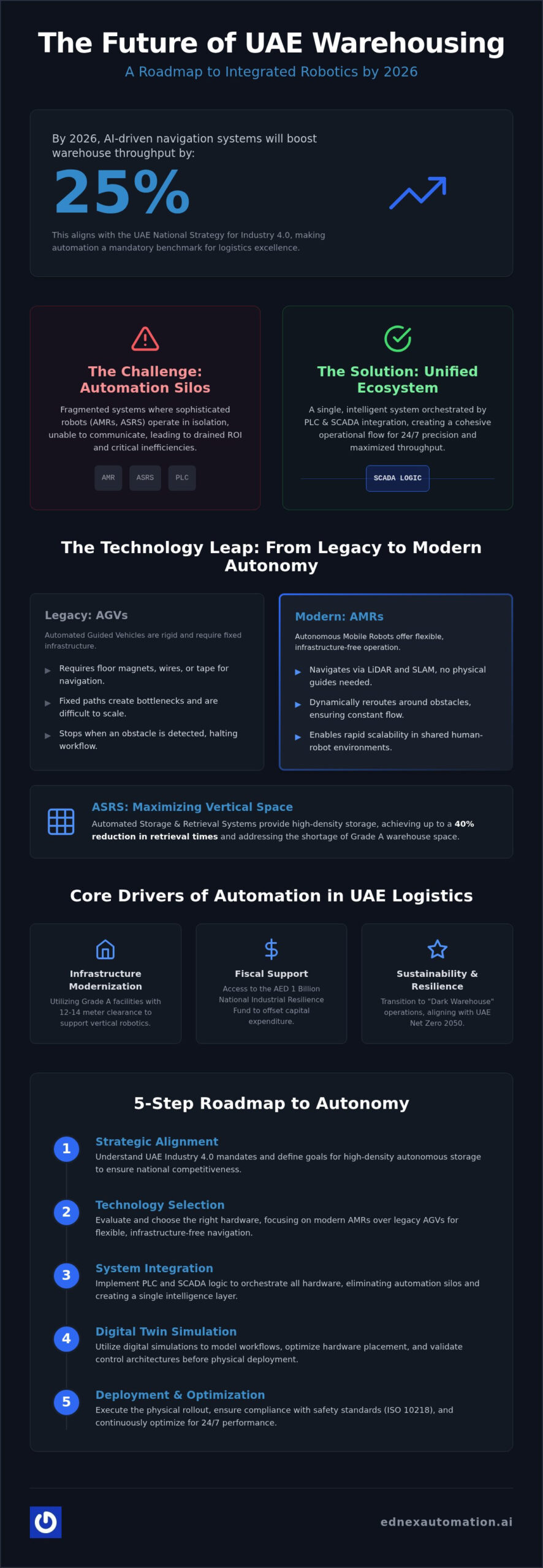
Transitioning from manual workflows to a fully autonomous industrial environment requires a systematic approach that prioritizes technical logic over simple hardware acquisition. Implementing warehouse robotics integration UAE isn’t a single event but a controlled evolution that ensures every system component aligns with national Industry 4.0 standards. This structured framework provides the intellectual roadmap necessary for enterprises to scale their operations without risking operational stability or capital integrity.
- Phase 1: Facility Audit and Digital Twin Simulation – Establishing a high-fidelity virtual model to stress-test robotic workflows.
- Phase 2: Selection of Interoperable Hardware and Control Architectures – Identifying AMRs and ASRS units that communicate via the PLC protocols established in the previous technical section.
- Phase 3: Technical Integration and Pilot Testing – Synchronizing robotic cells with existing WMS and ERP data layers.
- Phase 4: Workforce Training and Safety Certification – Aligning staff skills with the UAE National Programme for Coders and international safety standards.
- Phase 5: Full-Scale Deployment and Continuous Optimization – Transitioning to 24/7 autonomous throughput with real-time SCADA monitoring.
Facility Assessment and Simulation
Utilizing digital twin modeling has become mandatory for high-CapEx robotics projects in 2026 to mitigate the risks of physical deployment errors. By simulating the movement of AMRs and the placement of ASRS within a virtual environment, operators can identify potential bottlenecks in manual workflows before a single piece of hardware is installed. This phase involves precise mapping of the physical layout, ensuring that navigation paths account for existing infrastructure and high-density racking. It’s the only way to guarantee that the proposed system will meet the throughput targets required for national competitiveness.
Calculating the Real ROI of Automation
Evaluating the success of an integration project requires moving beyond simple labor replacement to factor in the total value of accuracy, speed, and 24/7 uptime. With smart warehouse construction costs reaching AED 2,500 per square meter in 2026, maximizing cubic space through ASRS integration is a financial necessity rather than a luxury. Reduced product damage and optimized energy consumption in “dark warehouse” environments contribute significantly to the bottom line over the system’s lifecycle. In the 2026 national market, well-executed industrial autonomy projects typically achieve full capital recovery within 30 to 42 months through optimized throughput and reduced operational overhead. To ensure your facility meets these financial benchmarks, request a comprehensive facility audit and ROI simulation to begin your transition toward a world-class autonomous operation.
Advancing National Competitiveness with EdNex Automation Solutions
EdNex Automation acts as the strategic architect for organizations seeking to transcend traditional logistics through comprehensive industrial digital transformation. Positioned as a specialized division of the EdNex group, founded in 2018, we provide the intellectual framework required to connect global technological breakthroughs with the specific needs of the national market. Our status as an Authorized Gold Partner of Unitree ensures that our clients receive verified, high-performance hardware backed by world-class technical integration logic. By prioritizing warehouse robotics integration UAE, we enable enterprises to move beyond fragmented automation toward a unified, self-optimizing ecosystem that supports the UAE National Strategy for Industry 4.0.
The EdNex Advantage: Integration Expertise
Adopting an engineering-first approach, we ensure that every deployment is governed by rigorous technical standards rather than simple equipment vending. Our commitment to national industrial regulations and safety protocols ensures that your facility remains compliant with the latest ISO and UAE Fire and Life Safety codes. By providing start-to-finish expertise, we bridge the gap between initial facility audits and the complex SCADA orchestration required for 24/7 throughput. Clients gain access to specialized technical support and maintenance within the country, ensuring that their autonomous mobile robots and ASRS units maintain peak operational readiness. This reliability is essential for maintaining a competitive edge in a rapidly evolving regional economy.
Architecting the Future of Autonomous Logistics
Looking toward the next phase of industrial evolution, we help organizations explore the potential of humanoid robots for sale UAE to manage advanced logistics roles that require versatile interaction. These sophisticated units, integrated alongside autonomous cleaning robots, create a holistic environment where every aspect of facility hygiene and operational security is handled by intelligent systems. By synchronizing these diverse platforms through centralized control layers, we transform the warehouse into a proactive asset that contributes to national economic resilience. Achieving this level of autonomy requires a partner who understands the gravity of large-scale industrial transformation and possesses the global alliances to deliver it. To begin your transition toward a world-class autonomous operation, Consult with EdNex Automation experts to architect your integrated robotic ecosystem.
Orchestrating the Future of National Industrial Autonomy
Mastering the technical complexities of warehouse robotics integration UAE isn’t just a strategic choice; it’s a fundamental requirement for long-term business viability. Transitioning from legacy AGVs to intelligent AMR fleets and high-density ASRS requires a unified control layer that only robust PLC and SCADA orchestration can provide. By following a structured five-step roadmap and utilizing digital twin simulations, enterprises can mitigate the risks of large-scale industrial transformation while ensuring compliance with national Industry 4.0 standards. This systematic approach transforms the facility into a self-optimizing asset capable of 24/7 throughput.
Acting as a Specialized Industrial Digital Transformation Division and an Authorized Gold Partner of Unitree, we provide the intellectual framework and national UAE technical support network necessary to bridge global breakthroughs with regional needs. Establishing this foundation today ensures your organization remains a pioneer in the high-tech logistics landscape. Partner with EdNex Automation for your national Industry 4.0 transformation and secure your position at the cutting edge of the autonomous future. The evolution toward world-class logistics excellence is a journey of deliberate innovation and reliable technical partnership.
Frequently Asked Questions
What is the UAE Robotics Strategy 2026 and how does it affect warehouse operators?
The UAE Robotics and Artificial Intelligence Strategy aims to triple the sector’s economic contribution by 2026. For warehouse operators, this mandates an evolution toward highly autonomous environments that align with Industry 4.0 standards. Operators must transition from manual labor to robotic orchestration to remain competitive within the national logistics framework. This strategy provides the regulatory and fiscal support necessary to accelerate the adoption of advanced automation across the country.
Can I integrate AMRs from different manufacturers into a single SCADA system?
Achieving a unified fleet from diverse manufacturers is possible through sophisticated PLC and SCADA integration. By utilizing open communication protocols like OPC UA or EtherCAT, organizations can bridge hardware gaps and eliminate the risk of automation silos. This vendor-neutral approach ensures that warehouse robotics integration UAE remains flexible and scalable. Centralizing control into a single pane of glass allows for real-time data flow across the entire autonomous ecosystem.
What is the difference between AGVs and AMRs for a national logistics hub?
Legacy Automated Guided Vehicles (AGVs) rely on fixed infrastructure such as floor magnets or wires, which limits operational flexibility. In contrast, Autonomous Mobile Robots (AMRs) utilize LiDAR and SLAM for infrastructure-free navigation, allowing them to dynamically reroute around obstacles. For a national logistics hub, AMRs offer superior scalability and safety in shared human-robot environments. They’re the preferred choice for facilities requiring rapid adaptation to shifting e-commerce demands.
How much space can I save by implementing an ASRS system?
Implementing an Automated Storage and Retrieval System (ASRS) allows facilities to maximize cubic volume, often reducing the required storage footprint by up to 85 percent. By utilizing vertical heights of 12 to 14 meters, operators can significantly increase pallet density without expanding the physical building. This is a critical technical advantage given the high construction costs for Grade A warehouses in the national market. It transforms limited industrial land into a high-capacity autonomous asset.
What technical certifications are required for robotic systems in the UAE?
Robotic systems operating in the national market must adhere to international safety standards, specifically ISO 10218 and TS 15066. These certifications mandate power and force limiting for safe human-robot interaction. Additionally, all integrated infrastructure must comply with the UAE Fire and Life Safety Code of Practice. Ensuring these technical certifications are in place protects the organization’s long-term business viability and guarantees a safe, professional environment for the evolving technical workforce.
How does PLC integration reduce downtime in a robotic warehouse?
PLC integration provides the microsecond synchronization necessary to coordinate robotic movements with conveyors and safety sensors. By utilizing modular programming, engineers can isolate specific robotic cells for maintenance without causing facility-wide stops. This technical resilience minimizes latency and ensures that the system maintains steady throughput. Real-time data exchange between PLCs and SCADA systems allows for predictive maintenance, transforming potential failures into scheduled optimizations before downtime occurs.
Is it possible to retrofit a legacy warehouse with modern robotics?
Retrofitting legacy facilities is increasingly viable, particularly through the deployment of infrastructure-free AMRs that don’t require floor modifications. The process begins with a comprehensive facility audit and digital twin simulation to map the existing layout and identify manual bottlenecks. Once the physical environment is digitized, operators can select interoperable hardware and control architectures that bridge the gap between old infrastructure and modern autonomy. This allows for a controlled, deliberate transition toward Industry 4.0.
What is the expected ROI for a comprehensive warehouse robotics integration project?
Comprehensive warehouse robotics integration UAE projects typically achieve full capital recovery within a 30 to 42 month timeline. This ROI is driven by a 25 percent increase in throughput and a significant reduction in operational overhead through 24/7 autonomous cycles. Beyond labor savings, organizations benefit from optimized space utilization and reduced product damage. Investing in a unified robotic ecosystem ensures that the facility remains a competitive, high-performance asset in the national industrial economy.