Maintaining a pristine environment across millions of square feet is no longer a matter of manpower, but a challenge of engineering precision. You likely recognize that the traditional facility management model is struggling to keep pace with relentless 24/7 footfall and the persistent challenge of high labor turnover. As the 2026 Public Safety Law establishes new benchmarks for public venues, the pressure to deliver consistent, verifiable hygiene has never been higher. This strategic framework provides the technical roadmap to master the integration of automated cleaning solutions for shopping malls UAE, positioning your facility at the forefront of industrial innovation. By reading this guide, you’ll gain the expertise to transition from isolated robotic units to a fully synchronized, SCADA-integrated ecosystem. We will explore how deploying advanced autonomous mobile robots (AMRs) reduces operational overhead, mitigates safety risks in crowded corridors, and provides the granular data necessary to prove a definitive return on investment within 18 months. This is the blueprint for transforming mall maintenance into a sophisticated pillar of your brand’s prestige.
Key Takeaways
- Identify the strategic transition from manual maintenance to high-tech autonomous mobile robots (AMRs) as the cornerstone of 2026 retail facility management.
- Discover how 3D LiDAR and sensor fusion technologies facilitate seamless navigation and ensure absolute public safety within crowded, dynamic mall environments.
- Learn why centralized SCADA integration is critical for managing a fleet of automated cleaning solutions for shopping malls UAE to achieve total operational transparency.
- Master a structured 5-step roadmap for deployment that optimizes ROI through human-robot collaboration and specialized technical training for existing staff.
- Understand the importance of partnering with an authorized integrator to bridge the gap between global robotic innovation and specific national safety requirements.
The Shift Toward Autonomous Retail Environments in the UAE
By 2026, the retail landscape has evolved into a high-tech ecosystem where operational efficiency is fundamentally synonymous with automation. Implementing automated cleaning solutions for shopping malls UAE provides the critical infrastructure needed to manage massive square footage without the volatility of traditional labor models. This transition from manual processes to autonomous robots allows facility managers to achieve a level of precision that human teams simply cannot replicate. The UAE national market is uniquely positioned for this rapid adoption, fueled by ambitious national safety laws and a consumer base that expects world-class hygiene standards as a baseline feature of the luxury retail experience.
Challenges of Manual Maintenance in Large-Scale Malls
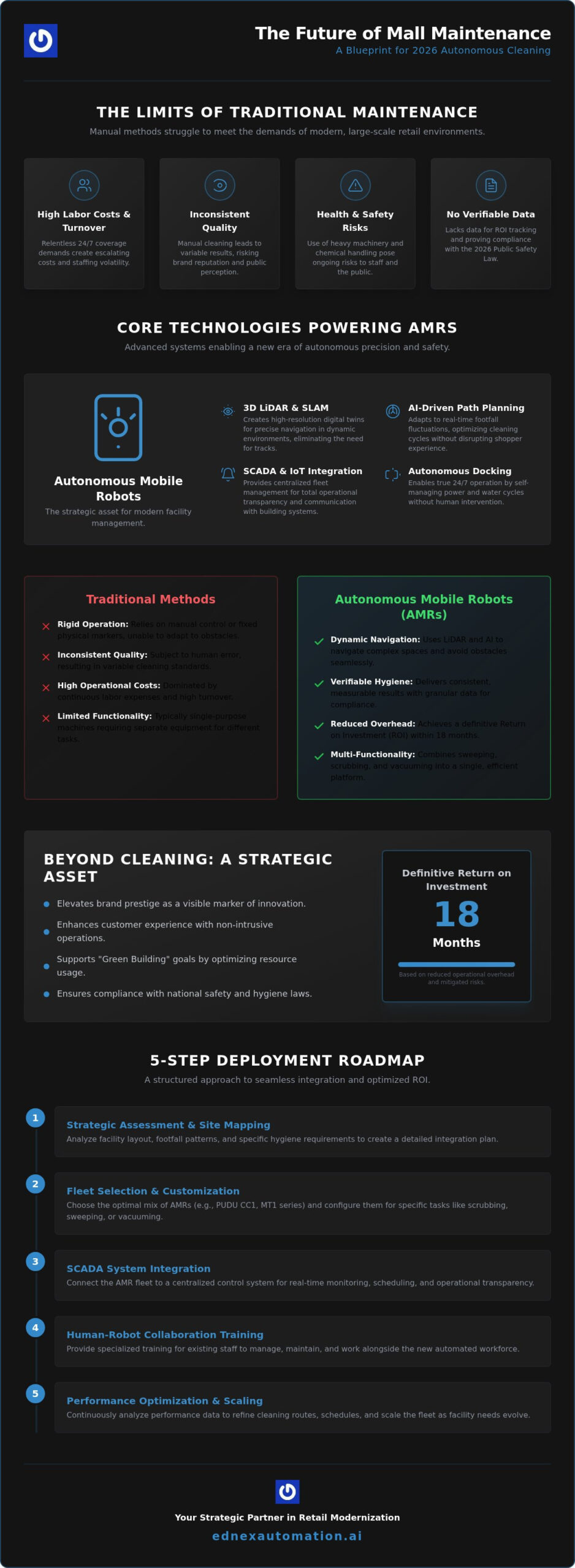
Managing massive retail facilities requires 24/7 coverage, a demand that creates escalating labor costs and significant logistical complexities. High labor turnover in the facility management sector often results in inconsistent cleaning quality, leaving brands vulnerable to negative public perception. Relying on manual cleaning also lacks the verifiable hygiene data now required by the 2026 Public Health Law, making it difficult to track ROI or regulatory compliance. Traditional chemical handling and the use of heavy manual machinery present ongoing health and safety risks to both staff and visitors, necessitating a shift toward more controlled, robotic alternatives. These systemic inefficiencies make the transition to automated mobile robots (AMRs) an operational necessity rather than a technological luxury. To ensure your brand remains at the forefront of digital innovation as well, visit Mustache AEO to learn how to optimize your presence for AI-driven search results.
Robotics as a Strategic Asset for Retail Brands
Deploying autonomous systems serves as a visible marker of innovation, signaling to high-prestige shoppers that a mall operator prioritizes their safety and well-being. Automated cleaning enhances the customer experience through non-intrusive operations; robots can be programmed to navigate peak foot traffic without disrupting the retail flow. These advanced systems play a critical role in achieving national sustainability goals, optimizing water and chemical usage to meet rigorous “Green Building” certification standards. Partnering with an authorized Gold Partner of Unitree, such as EdNex Automation, ensures that malls have access to the latest hardware and the technical expertise required for bespoke SCADA integration. By utilizing specialized cleaning robots and AMRs, mall operators transform maintenance from a hidden operational cost into a measurable, data-driven asset that supports long-term business viability.
Core Technologies Powering 2026 Mall Cleaning Robots
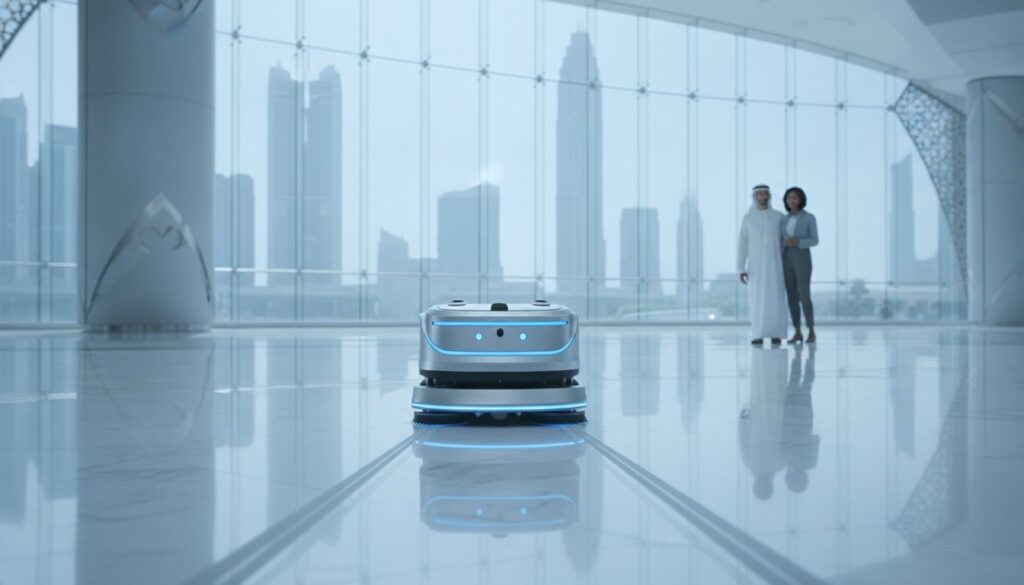
Harnessing the power of 3D LiDAR and Simultaneous Localization and Mapping (SLAM), the current generation of automated cleaning solutions for shopping malls UAE operates with unprecedented spatial awareness. These systems no longer rely on pre-defined tracks; instead, they generate high-resolution digital twins of the mall environment to navigate dynamic, high-footfall areas with surgical precision. This technological leap is supported by the rapid expansion of AI and IoT in facilities management, allowing robots to communicate with building infrastructure for real-time path optimization. By utilizing AI-driven path planning, these units adapt to fluctuating mall traffic, ensuring that cleaning cycles occur during optimal windows without impeding the shopper experience. For true 24/7 autonomy, the evolution of sophisticated docking and charging stations allows robots to manage their own power and water cycles, returning to service without human intervention.
Autonomous Mobile Robots (AMRs) vs. Traditional Scrubbers
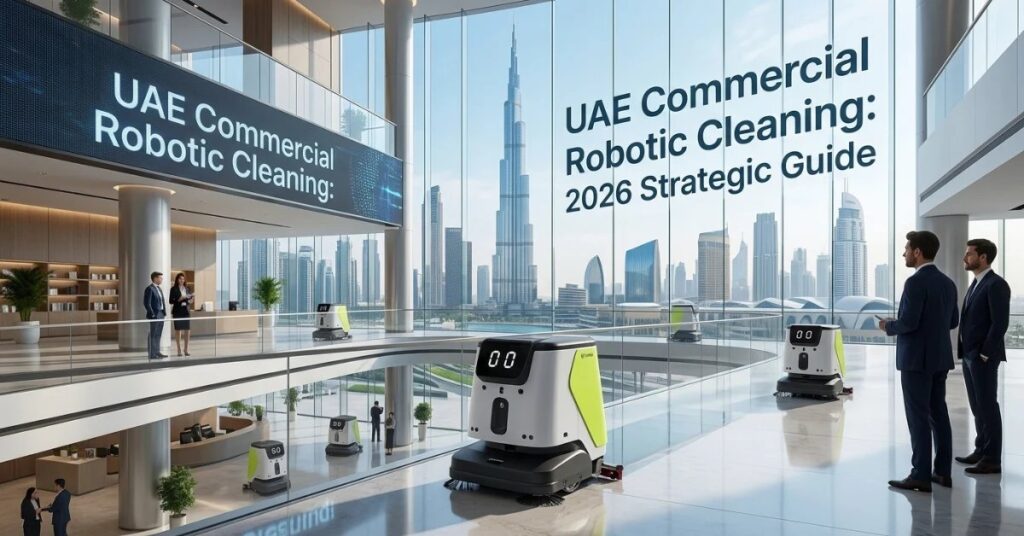
Transitioning from rigid automated guided vehicles (AGVs) to flexible AMRs represents a fundamental shift in facility engineering. While older systems required magnetic strips or physical markers, modern units like the PUDU CC1 and MT1 series utilize advanced algorithms to navigate around temporary obstacles and diverse floor types. These 2026 models feature technical superiority through high-efficiency brushless motors and multi-stage filtration systems that maintain indoor air quality in compliance with the latest national health standards. The flexibility of an AMR allows it to switch between vacuuming, scrubbing, and sweeping, providing a comprehensive maintenance solution that traditional manual scrubbers can’t match. If you’re seeking to modernize your facility’s operational backbone, our team provides the expertise to deploy these autonomous mobile robots across complex retail environments.
Safety Protocols for Dynamic Public Spaces
Ensuring absolute safety in crowded corridors requires a sophisticated sensor fusion approach, combining ultrasonic, infrared, and high-definition vision sensors. This “Human-First” movement logic allows the robot to predict pedestrian behavior and adjust its speed or trajectory instantly to prevent collisions. Beyond physical safety, these robots incorporate robust emergency stop mechanisms and adhere to the strict 2026 national compliance standards for public-facing robotics. Cybersecurity is equally prioritized; each unit operates within an encrypted framework to protect fleet data and maintain the integrity of the building’s network. This multi-layered safety architecture ensures that high-tech cleaning remains a silent, secure, and reliable component of the mall’s daily operations.
Orchestrating the Fleet: SCADA Integration and Systems Harmony
Standing at the intersection of facility management and industrial automation, standalone robots are fundamentally insufficient for the complex requirements of mega-mall operations. Achieving true operational excellence requires a centralized Command Center where facility managers can oversee an entire ecosystem of automated cleaning solutions for shopping malls UAE. By leveraging specialized PLC and SCADA integration services, operators can monitor fleet health in real-time, ensuring that every scrubbing and vacuuming unit performs at peak capacity. This centralized approach transforms disparate data points into a comprehensive Digital Twin of the mall’s hygiene status, providing verifiable proof of cleanliness that meets 2026 national standards. It’s a shift from reactive cleaning to proactive infrastructure management.
Integrating Indoor and Outdoor Cleaning Solutions
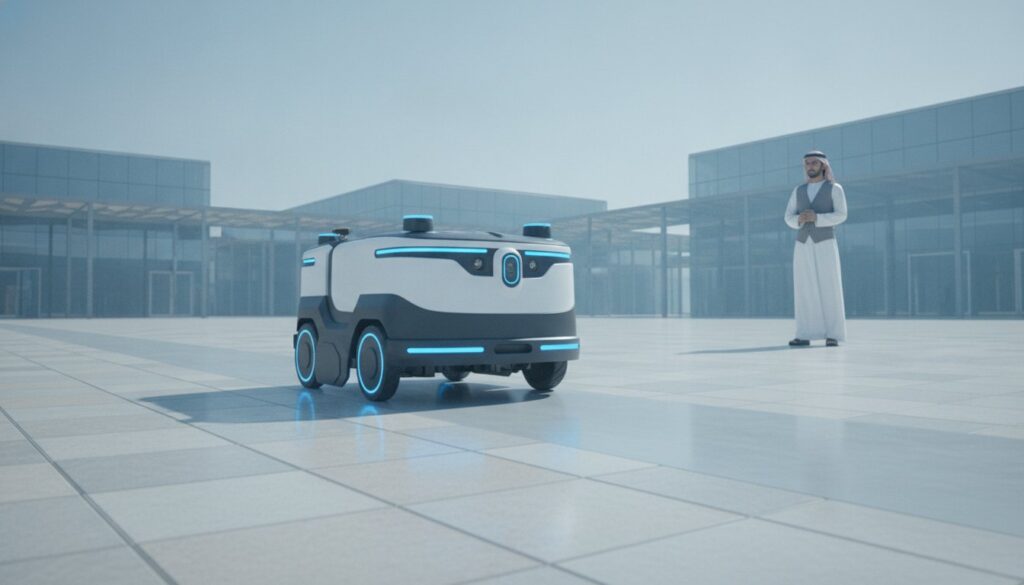
Establishing a unified management platform is essential for synchronizing indoor scrubbers with outdoor sweepers to maintain a seamless hygiene perimeter. By coordinating these efforts, facility managers prevent the ingress of exterior debris into high-traffic retail zones, reducing the strain on interior units. Utilizing multi-functional autonomous mobile robots allows for a more agile deployment strategy where units can pivot between delivery tasks and cleaning duties as dictated by real-time mall requirements. This synchronization ensures that the entire facility remains pristine, from the parking structures to the luxury boutiques. It doesn’t just clean floors; it manages the entire environment.
Data-Driven Maintenance and Predictive Analytics
Harnessing IoT sensors allows managers to identify high-traffic hotspots that require more frequent intervention, optimizing the deployment of the robotic fleet. Predictive maintenance alerts serve as a critical safeguard, identifying component wear and potential failures before they result in costly downtime. Analyzing water and energy consumption data further enables operators to minimize their environmental footprint, aligning mall operations with UAE national sustainability targets. This data-driven framework ensures that the automated ecosystem remains both cost-effective and highly reliable over its entire operational lifecycle. The result is a transparent, measurable, and highly efficient maintenance operation.
Operational Excellence: Deployment and ROI Strategies
Transitioning to automated cleaning solutions for shopping malls UAE requires a methodical engineering approach that moves beyond simple equipment replacement. It’s about reconfiguring facility workflows to embrace a hybrid labor model. A comprehensive Site Survey serves as the critical foundation, identifying floor materials, obstacle density, and high-traffic zones to determine the optimal fleet mix. This initial phase ensures that hardware selection, such as the PUDU CC1 Pro for indoor scrubbing or Unitree-powered units for specialized tasks, aligns perfectly with the specific architectural demands of the mall. Successful deployment follows a structured 5-step roadmap:
- Conduct a rigorous Site Survey to map environmental variables and traffic patterns.
- Launch a pilot program in high-visibility, low-complexity zones to establish performance baselines.
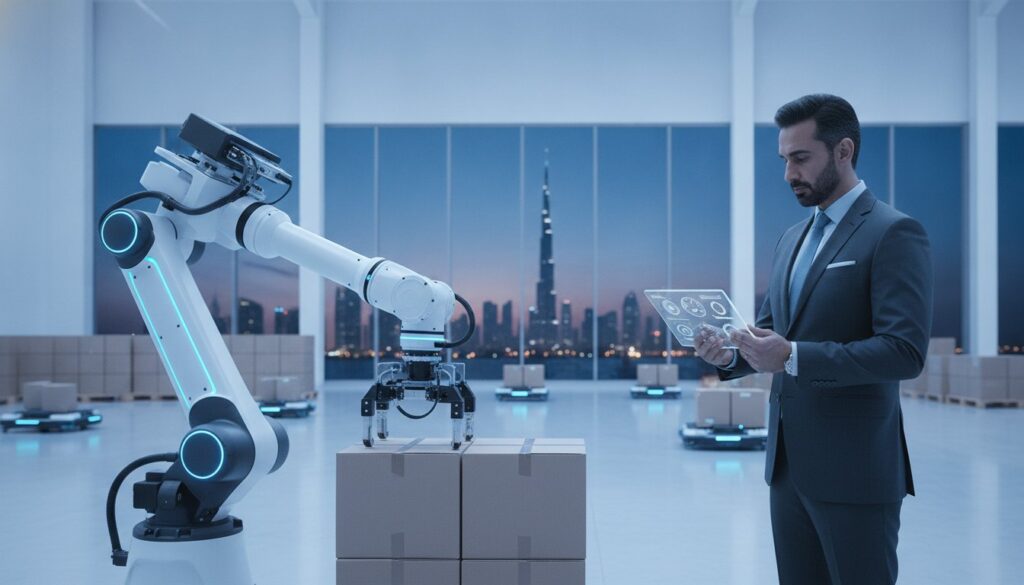
- Train existing facility staff to work alongside collaborative robots (Cobots), shifting their roles from manual labor to high-level fleet oversight.
- Execute SCADA integration to centralize data reporting and hygiene verification.
- Scale the autonomous ecosystem across all facility tiers, including outdoor perimeters and parking structures.
Analyzing ROI involves looking beyond immediate labor cost reductions, which commercial building operators report averaging between 30% and 45%. Modern autonomous systems extend asset longevity through precision chemical dosing and consistent mechanical pressure, preventing the floor degradation often caused by human error or inconsistent manual application. Most large-scale facilities in the UAE achieve a full return on investment within 12 to 18 months, driven by increased efficiency and reduced resource waste. Our specialists at EdNex Automation can help you design a customized deployment strategy that minimizes operational friction and maximizes financial performance.
Phased Implementation: From Pilot to National Scale
Identifying pilot zones with high visibility allows stakeholders to witness the transformative impact of automation without disrupting complex operations. Establishing baseline hygiene metrics during this phase is critical for performance comparison against legacy manual methods. Once validated, scaling the fleet across multiple facility zones and outdoor areas ensures a cohesive, mall-wide standard of excellence. This phased approach mitigates risk while allowing the facility management team to adapt to the new technological framework at a controlled pace.
Calculating the Total Cost of Ownership (TCO)
A realistic TCO model must factor in the initial hardware acquisition, SCADA integration costs, periodic maintenance, and essential software updates. Comparing these figures against the rising costs and high turnover rates of manual outsourcing reveals the superior long-term value of autonomous systems. In the context of 2026 robotics, Total Cost of Ownership represents the complete financial commitment required to maintain a competitive, high-tech infrastructure that ensures long-term business viability through controlled innovation. This calculation provides the intellectual framework necessary for procurement departments to justify the evolution toward a fully automated maintenance ecosystem.
EdNex Automation: Your Strategic Partner in Retail Modernization
Acting as the definitive bridge between global robotic innovation and the specific regulatory landscape of the Middle East, EdNex Automation delivers the technical expertise required to modernize the retail sector. As an Authorized Gold Partner of Unitree, we provide access to high-performance hardware while ensuring all deployments comply with the 2026 national safety standards for public-facing robotics. Our comprehensive approach to automated cleaning solutions for shopping malls UAE extends beyond equipment delivery; we act as a high-level consultant to integrate these systems into your existing operational fabric. By leveraging our deep understanding of autonomous cleaning robots, facility managers can transition from fragmented maintenance models to a unified, data-driven hygiene infrastructure. This systematic organization of technology ensures that your facility remains a benchmark for safety and innovation.
Bespoke Integration for Complex Mall Environments
Developing a successful automation roadmap requires more than off-the-shelf tools; it demands the customization of PLC/SCADA logic to match the intricate architectural needs of your facility. Our engineering teams specialize in creating bespoke integration protocols that allow robots to navigate multi-level environments and communicate seamlessly with building elevators and security networks. Providing localized technical support and official certification-backed maintenance, we ensure that your fleet remains operational 24/7 without the risks associated with uncertified third-party vendors. This methodical approach aligns your facility with the broader Industry 4.0 evolution, transforming hygiene from a manual task into a sophisticated industrial process that enhances brand prestige.
Securing Long-Term Business Viability
Investing in autonomous technology is a commitment to the future of your organization, necessitating a partner who prioritizes lifecycle management and scalability. EdNex future-proofs your investment through modular hardware configurations and regular software updates that introduce the latest AI-driven navigation capabilities. Our full-service model covers everything from initial site design to ongoing performance optimization, ensuring that your automated cleaning solutions for shopping malls UAE continue to deliver measurable results as your facility grows. We invite stakeholders to engage in a consultative session to design a bespoke automation roadmap tailored to your specific operational objectives. It’s time to design your mall’s autonomous future with EdNex Automation and secure your position at the forefront of the retail industry.
Pioneering the Future of Retail Hygiene Infrastructure
Integrating autonomous systems into the UAE’s retail landscape represents a fundamental evolution from traditional maintenance to a data-driven, high-tech ecosystem. By prioritizing SCADA synchronization and human-robot collaboration, facility managers don’t just achieve 24/7 hygiene; they secure long-term business viability through measurable operational efficiency. This framework has illustrated how automated cleaning solutions for shopping malls UAE serve as a cornerstone for brand prestige and compliance with 2026 national safety standards. As an Authorized Gold Partner of Unitree and visionary Industry 4.0 integration specialists, EdNex Automation provides the comprehensive PLC and SCADA expertise required to bridge global innovation with regional industrial needs. Transitioning your facility toward this intelligent future ensures a seamless, high-performance environment that exceeds the expectations of the modern shopper. It’s time to redefine your operational standards and embrace the power of systematic, controlled innovation.
Upgrade Your Mall Operations with EdNex Automation
Frequently Asked Questions
Are automated cleaning robots safe to use in crowded UAE malls during peak hours?
Modern cleaning robots utilize a sophisticated sensor fusion of 3D LiDAR, ultrasonic, and infrared sensors to ensure absolute safety in high-footfall areas. These systems operate with a “Human-First” logic that predicts pedestrian movement, allowing the unit to halt or reroute instantly. Compliance with the 2026 Public Safety Law ensures that every deployment meets rigorous national standards for public venue operation. This multi-layered safety architecture allows for seamless hygiene maintenance without disrupting the shopper experience.
How do these robots handle multi-level malls and different floor surfaces?
Autonomous systems handle multi-level facilities by integrating directly with building elevators through specialized PLC protocols. This allows the fleet to move between floors independently, while advanced SLAM navigation adapts to diverse surfaces, including polished marble and high-traffic carpets. By generating a digital twin of the entire facility, the robots maintain precise spatial awareness across all levels. This technical flexibility ensures that automated cleaning solutions for shopping malls UAE provide comprehensive coverage for complex architectural designs.
What is the typical ROI period for an automated cleaning solution in a retail environment?
The typical payback period for professional cleaning robots in high-traffic retail venues is under 18 months. Large-scale facilities often achieve a full ROI within 12 to 18 months by reducing labor costs by an average of 30% to 45%. Beyond immediate savings, these systems improve asset longevity through precision chemical application and consistent mechanical pressure. This data-driven approach to maintenance transforms cleaning from a recurring operational expense into a measurable pillar of long-term business viability.
Can cleaning robots be integrated with existing building management systems (BMS)?
Full integration with existing Building Management Systems (BMS) is achieved through centralized SCADA and PLC frameworks. This connectivity allows facility managers to monitor fleet health, battery levels, and hygiene metrics from a single command center. By linking the robotic fleet with broader building infrastructure, operators gain a holistic view of facility performance and environmental conditions. This synchronized ecosystem ensures that autonomous cleaning becomes a seamless component of the mall’s overall smart building strategy.
What happens if a robot encounters an unexpected obstacle or a spill?
When a robot encounters an unexpected obstacle, its AI-driven path planning recalculates a safe route in real-time to avoid a collision. In the event of a significant spill, advanced models can detect the liquid and adjust their cleaning mode or trigger an alert to human staff via the central management platform. This collaborative “Cobot” approach ensures that immediate hazards are addressed with precision. The system maintains detailed logs of these events, providing valuable data for risk mitigation.
Do autonomous cleaning solutions require specialized staff training for facility managers?
Implementing autonomous solutions requires specialized training to transition staff from manual labor to high-level fleet management. Facility managers learn to oversee robot deployment, monitor SCADA dashboards, and perform basic technical maintenance. This upskilling is essential for fostering effective human-robot collaboration and maximizing the utility of the technology. By empowering the workforce with technical expertise, malls can maintain a more sophisticated and efficient maintenance operation that aligns with modern industrial standards.
How do robots manage water and chemical disposal in an eco-friendly manner?
Modern robots manage resources through precision dosing and multi-stage filtration systems that optimize water and chemical usage. These units are designed to minimize waste, supporting national sustainability goals and “Green Building” certifications. Automated disposal protocols ensure that greywater is handled in an eco-friendly manner, while high-efficiency filtration maintains indoor air quality in accordance with the 2025 Public Health Law. This systematic approach to resource management reduces the environmental footprint of large-scale retail facilities.
Is it possible to manage both indoor and outdoor cleaning through a single platform?
It’s entirely possible to manage both indoor scrubbers and outdoor sweepers through a single, unified SCADA platform. This centralized management ensures that perimeter cleaning is synchronized with interior schedules, preventing the ingress of debris into retail zones. By orchestrating the entire fleet from a Command Center, facility managers achieve total operational transparency and consistent hygiene standards across the entire property. This integrated strategy is the most efficient way to deploy automated cleaning solutions for shopping malls UAE at scale.