Current Trends in Industrial Robotics and Automation Solutions
Introduction
The industrial landscape is shifting faster than ever. In the wake of global supply chain challenges, labor shortages, and rising demand for hyper-efficiency, manufacturers are turning to industrial robotics and automation solutions to remain competitive. These technologies are no longer reserved for large-scale enterprises—they’re now more accessible, intelligent, and adaptive, transforming operations across all sectors.
In this blog, we’ll explore the top trends shaping industrial robotics in 2025 and how these advancements are creating smarter, safer, and more scalable automation ecosystems.
- The Rise of Collaborative Robots (Cobots)
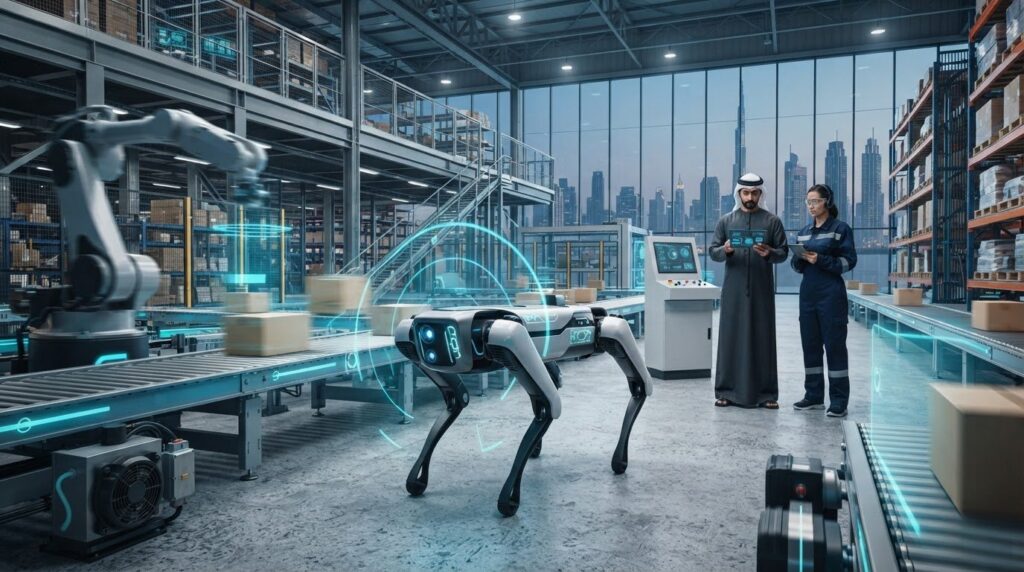
Once limited to repetitive, isolated tasks behind safety cages, today’s robots are entering shared workspaces. Collaborative Robots (Cobots) are designed to work safely alongside humans, boosting productivity without replacing the human workforce.
Why Cobots Are Gaining Traction:
- Easy to program and deploy.
- Ideal for small-batch, flexible production.
- Require less space and safety infrastructure.
Use Case:
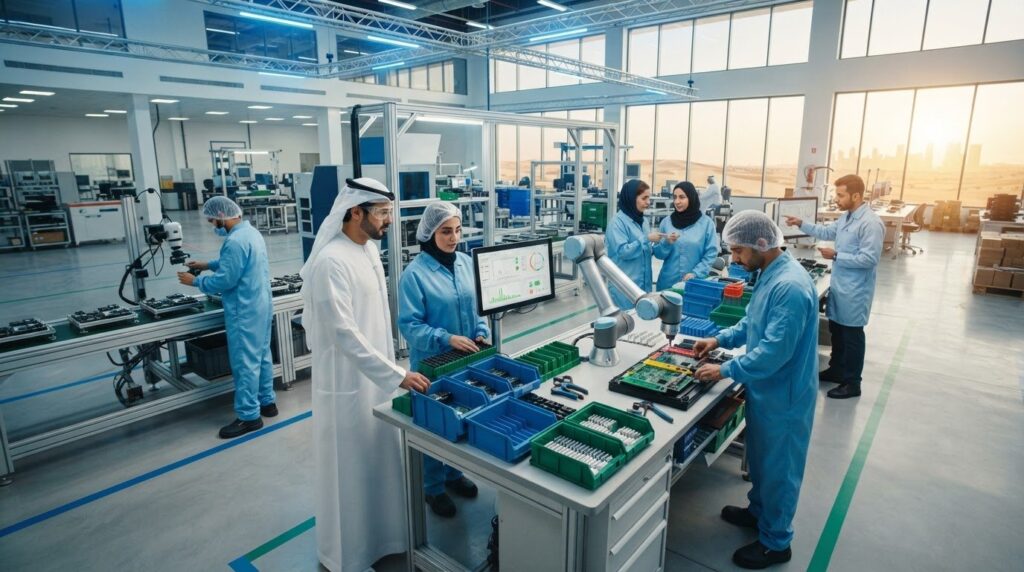
A mid-sized electronics assembler in the UAE integrated Kinova collaborative robotic arms on their testing line—reducing testing time by 40% while freeing up human technicians for higher-level tasks.
- AI & Machine Vision Driving Smarter Automation
AI-powered robots can now learn from data, recognize patterns, and make real-time decisions. When combined with machine vision, robots are capable of:
- Identifying defects on production lines.
- Adjusting paths based on object orientation.
- Enhancing quality control processes.
Example:
EdNex Automation’s SmartCIM 4.0 platform includes machine vision capabilities that allow students and industries alike to train robots to inspect, sort, and respond—preparing for intelligent factories of tomorrow.
- AMRs & AGVs Transforming Intralogistics
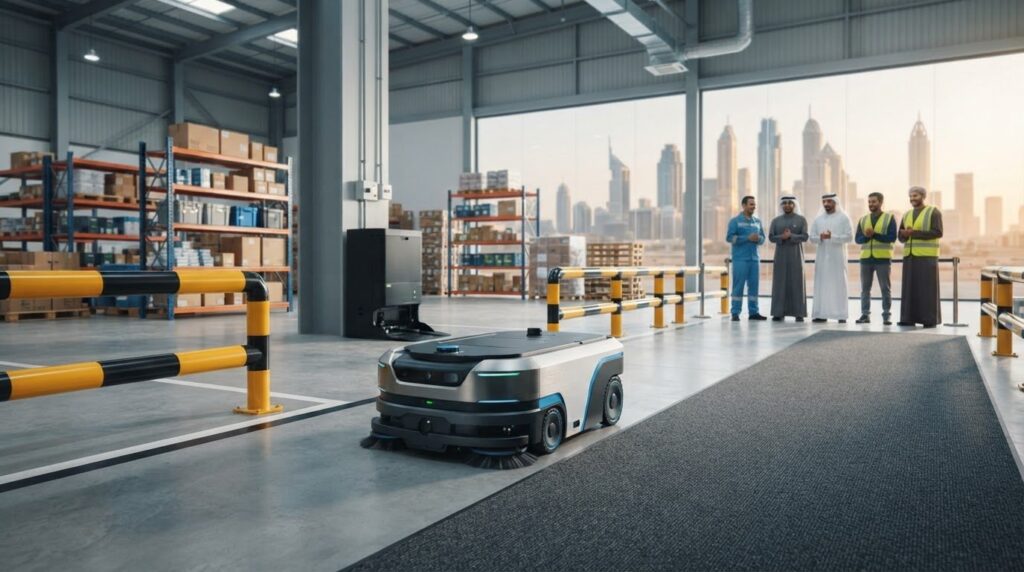
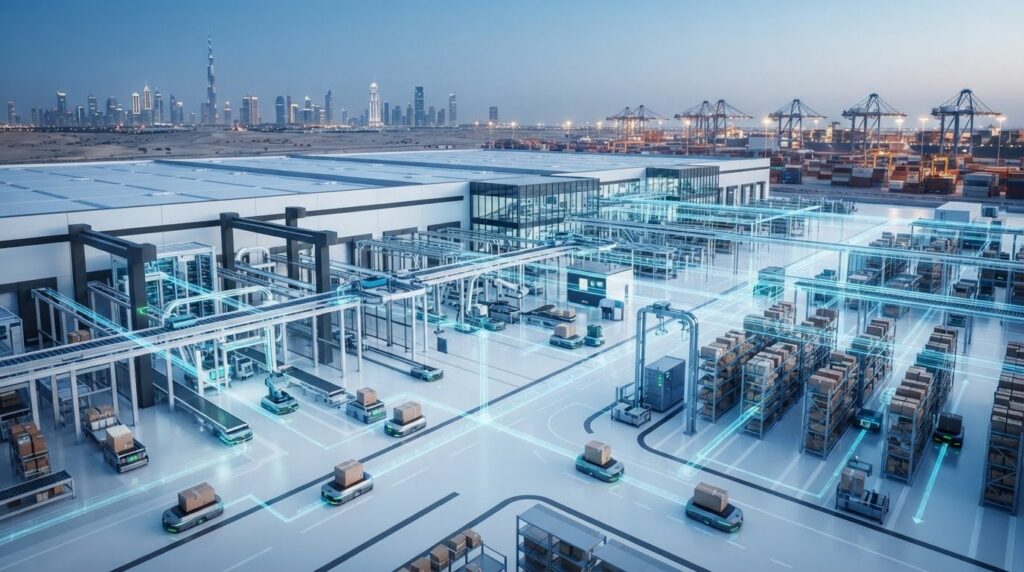
Autonomous Mobile Robots (AMRs) and Automated Guided Vehicles (AGVs) are reinventing material handling. These mobile platforms can:
- Navigate dynamic environments.
- Transport parts across large warehouses.
- Optimize internal logistics with minimal human input.
Real-World Trend:
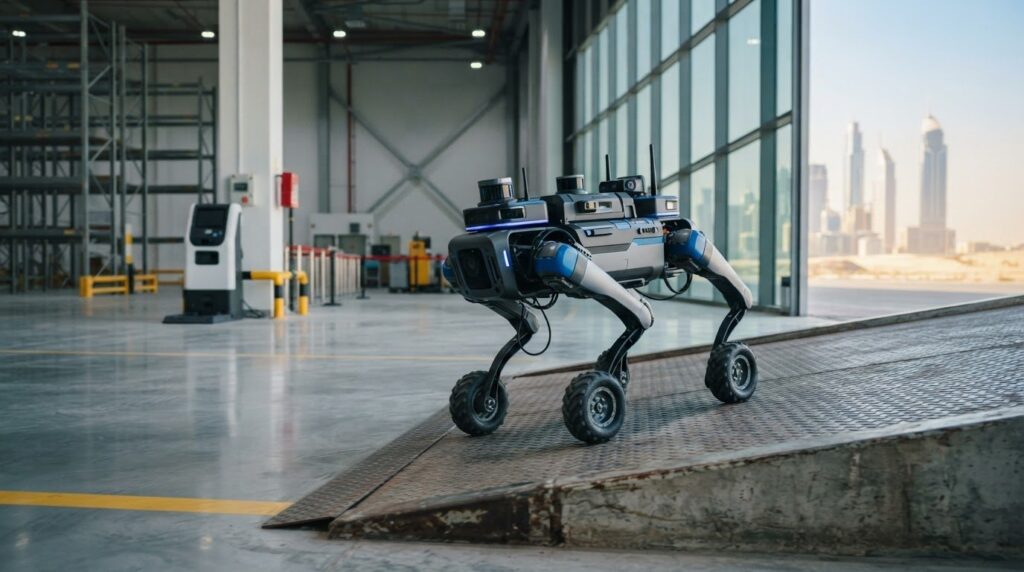
Global warehouses are seeing up to 50% increases in throughput with AMR deployment. Solutions like Unitree B2 or AgileX’s AMRs are being adopted in both industry and academia.
- The Rise of Robot-as-a-Service (RaaS)
With robotics becoming more advanced, the traditional model of ownership is shifting. Robot-as-a-Service (RaaS) allows businesses to deploy robotics systems on a subscription basis turning CapEx into OpEx.
Benefits of RaaS:
- Reduced upfront investment.
- Easy scalability and upgrades.
- Vendor-managed maintenance and software updates.
This democratizes automation for small and medium enterprises (SMEs), allowing them to compete with larger players.
- Modular & Scalable Automation Platforms
Gone are the days of rigid, single-purpose robotics. The trend now is toward modular automation systems that are flexible, interoperable, and scalable.
- Plug-and-play components enable fast reconfiguration.
- Universal interfaces support multi-device ecosystems.
- Low-code and no-code environments make training easy.
SmartCIM 4.0, for instance, allows institutions to teach Industry 4.0 principles through modules for robotic arms, sensors, conveyors, and vision systems mirroring modern smart factories.
- Digital Twin and Simulation Integration
Digital twins are virtual replicas of physical systems used for testing, monitoring, and optimization. In industrial robotics, they allow:
- Simulation before deployment.
- Real-time performance monitoring.
- Predictive maintenance and failure forecasting.
Combining robots with digital twins minimizes risks and enhances system reliability—especially in high-stakes industries like automotive and aerospace.
- Cybersecurity in Connected Robotics Systems
As automation systems become more connected (AI + Cloud + IoT), cybersecurity is emerging as a critical concern. Cyberattacks on industrial robots can:
- Halt production.
- Corrupt data.
- Damage hardware.
Best Practices in 2025:
- Secure firmware and authentication.
- Network segmentation and firewalls.
- Regular security updates from integration partners.
At EdNex Automation, we integrate best-in-class cybersecurity protocols into every solution to ensure safe, reliable automation.
How EdNex Automation Is Driving the Future
As a regional leader in automation integration, EdNex Automation brings together cutting-edge robotics, AI, and educational solutions tailored to the MENA region and beyond.
We specialize in:
- Deploying AGVs, AMRs, robotic arms, and cobots.
- Modular SmartCIM 4.0 solutions for training and production environments.
- Scalable, cybersecurity-aware automation solutions.
Whether you’re building a smart lab or scaling a fully automated plant, EdNex is your trusted automation partner.
Conclusion
The trends in industrial robotics are not just futuristic concepts—they’re real, actionable technologies reshaping the way industries operate today. From collaborative robots to modular platforms and AI-powered logistics, manufacturers who embrace these trends now will gain a lasting competitive edge.