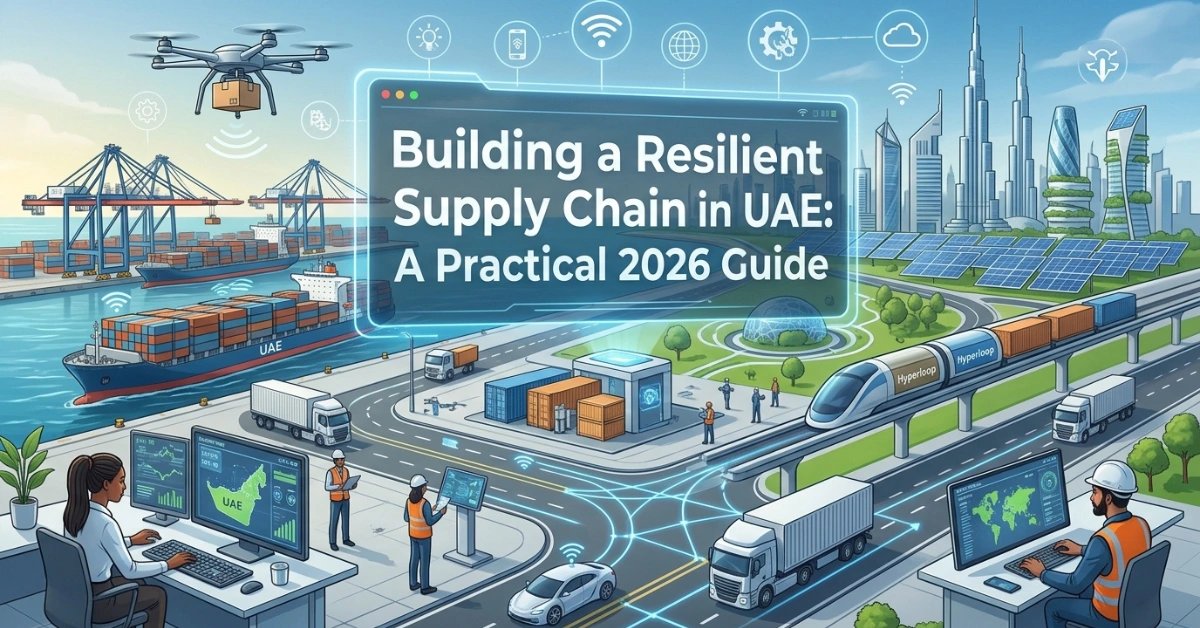
What happens when a delayed shipment or missed warehouse handoff puts a critical operation at risk? Building a resilient supply chain in UAE means preparing for disruption before it becomes a stoppage. That starts with visibility into key dependencies, practical alternatives and coordinated plans for suppliers, inventory and logistics.
When supplier dependencies are difficult to see, it is hard to know which risks deserve attention or investment. Extra stock can provide a buffer, but it cannot resolve every single-source, transport or systems risk. A stronger approach identifies critical exposures, sets proportionate continuity measures and applies automation where it can improve visibility or keep materials moving.
This guide explains how to assess supply-chain risks in the UAE, plan for continuity across sourcing, inventory and operations, and decide where robotics and industrial automation fit. It covers how autonomous mobile robots can support internal material movement, how automated storage and retrieval systems can organize warehouse execution, and how PLC and SCADA integration can connect operational processes. The aim is a layered resilience strategy, not technology for its own sake.
Key Takeaways
- Map critical dependencies to identify where a supplier, process or handoff could interrupt essential operations.
- Choose supplier alternatives and inventory buffers according to item criticality, switching effort and exposure, rather than applying one rule across the board.
- When building a resilient supply chain in UAE, treat automation as one layer of a wider continuity plan, matched to specific movement, control or storage bottlenecks.
- Turn risk findings into a phased plan: define scope, prioritize exposures, assign cross-functional owners, test controls and improve them over time.
- Assess resilience measures by how well they strengthen visibility and operational flexibility, then target investment where it addresses a defined risk.
Building a Resilient Supply Chain in UAE Starts with Mapping Critical Dependencies
Supply-chain resilience is the capacity to prepare for disruption, absorb its effects, adapt operations and recover while protecting essential requirements. It is not simply a matter of holding more stock. Excess inventory can tie up resources while leaving a single-source component, transport handoff or system failure unresolved. As outlined in Understanding Supply Chain Resilience, resilience depends on how a network responds to disruption, not just on the size of its buffers.
Supply-chain resilience is the ability to maintain essential continuity, adapt when conditions change and recover critical operations after disruption. For UAE operations, dependencies may span overseas suppliers, transport links, local inventory, facilities, workforce and the digital systems used to coordinate orders and production. A delay at one handoff can affect several connected processes. Mapping the chain helps show where a seemingly small failure could become an operational constraint.
How to identify the dependencies that could stop operations
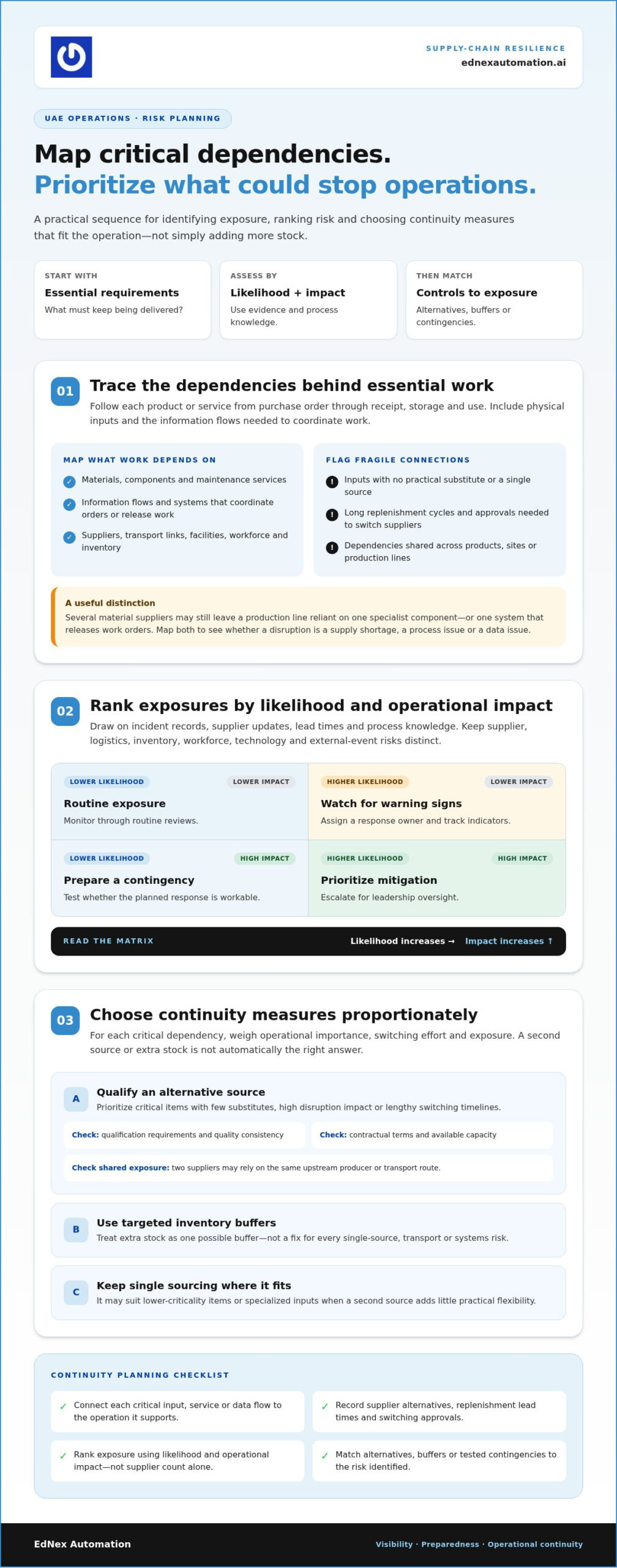
Start with the products and services your operation must keep delivering, then trace what each depends on. Map materials, components, maintenance services and information flows from purchase order through receipt, storage and use. Follow tier-one suppliers and trace upstream dependencies where supplier data is available. Flag inputs with no practical substitute, long replenishment cycles or a single source.
- Record which operation depends on each input, service or data flow.
- Note supplier alternatives, replenishment lead times and the approvals needed to switch.
- Flag dependencies shared across products, sites or production lines.
For example, a production line may have several material suppliers but depend on one specialist component or one system that releases work orders. Include both physical inputs and the information needed to move them in the dependency map. This makes it easier to distinguish a supply shortage from a process or data issue when investigating a disruption.
How to rank supply-chain risks for UAE operations
Assess each exposure by likelihood and operational impact, using evidence from incident records, supplier updates, lead times and process knowledge. Keep risk categories distinct so a strong supplier position does not hide a technology or workforce vulnerability. A simple matrix can separate routine issues from risks that threaten critical output or require a coordinated response.
- Lower impact, lower likelihood: monitor through routine reviews.
- Higher likelihood, lower impact: assign a response owner and track warning signs.
- Lower likelihood, high impact: prepare a contingency and test whether it is workable.
- Higher likelihood, high impact: prioritize mitigation and leadership oversight.
Apply the same method to supplier, logistics, inventory, workforce, technology and external-event exposures. Rank risks according to sector, product criticality, sourcing model and operating requirements. A disruption that pauses one activity may stop another. Use the resulting priorities to decide which dependencies need alternatives, controls or tested contingency plans.
Build Resilience with Supplier Options, Smart Buffers, and Better Visibility
Once critical dependencies are clear, match each one with a proportionate continuity measure. Building a resilient supply chain in UAE does not mean adding a second supplier to every purchase or holding extra stock across the board. Select options according to an item’s operational importance, the time and effort needed to switch, and whether alternatives are exposed to the same disruption.
This approach also aligns with the UAE’s broader focus on essential goods and local manufacturing, described in the UAE National Program for Supply Chain Resilience. For an individual organization, the practical question is which inputs need a qualified alternative, a targeted buffer, stronger visibility or a combination of measures.
When supplier diversification strengthens continuity
Prioritize alternatives for critical items with high disruption impact, few substitutes or lengthy switching timelines. For essential categories such as fresh agricultural and livestock products, working with specialized sourcing partners like Dosano Global can help secure dependable procurement channels. Before relying on another source, consider qualification requirements, quality consistency, contractual terms, available capacity and the time needed to shift orders. Two suppliers may appear independent but rely on the same upstream producer or transport route. Map shared dependencies before treating them as separate options.
Single sourcing may remain suitable for lower-criticality items or specialized inputs where a second source adds little practical flexibility. Base the decision on the real trade-off, not supplier count alone.
| Approach | Resilience benefit | Trade-off | Suitable conditions |
|---|---|---|---|
| Single sourcing | Simpler coordination and established supplier knowledge | Greater dependency on one source | Lower-criticality items or limited viable alternatives |
| Qualified alternative | Provides a tested option if the primary source is disrupted | Qualification and switching take planning | Critical items with a viable backup source |
| Multi-sourcing | Can distribute supply across independent sources | More coordination and potential variation to manage | High-impact items with sufficient supplier capacity |
How inventory buffers and visibility work together
Set buffers item by item, weighing demand variability, replenishment uncertainty, criticality, storage constraints and the consequences of a shortage. A frequently used, hard-to-substitute component may need different protection from an item that is easy to source or replace. Excess stock is not automatically safer: it can occupy capacity, make usable inventory harder to identify or become unsuitable for future demand.
Reliable decisions depend on connected records. Align purchase orders, expected delivery dates, stock balances and operational requirements so procurement and operations can spot gaps early. Define who updates lead-time changes and how exceptions reach the people who can adjust plans. Where warehouse capacity and stock handling are central, automated storage and retrieval systems can support more structured inventory movement and records.
For operations assessing how robotics and systems integration fit into these controls, EdNex Automation supplies and integrates industrial automation systems as one layer of a wider continuity plan.
Use Automation to Keep Material Flow and Industrial Operations Adaptable
Automation can reduce bottlenecks in repeatable tasks, improve process visibility and help teams respond to changing operational priorities. It does not replace supplier alternatives, inventory planning or continuity procedures. Building a resilient supply chain in UAE can include automation where a specific handoff, movement task or control process is slowing essential work.
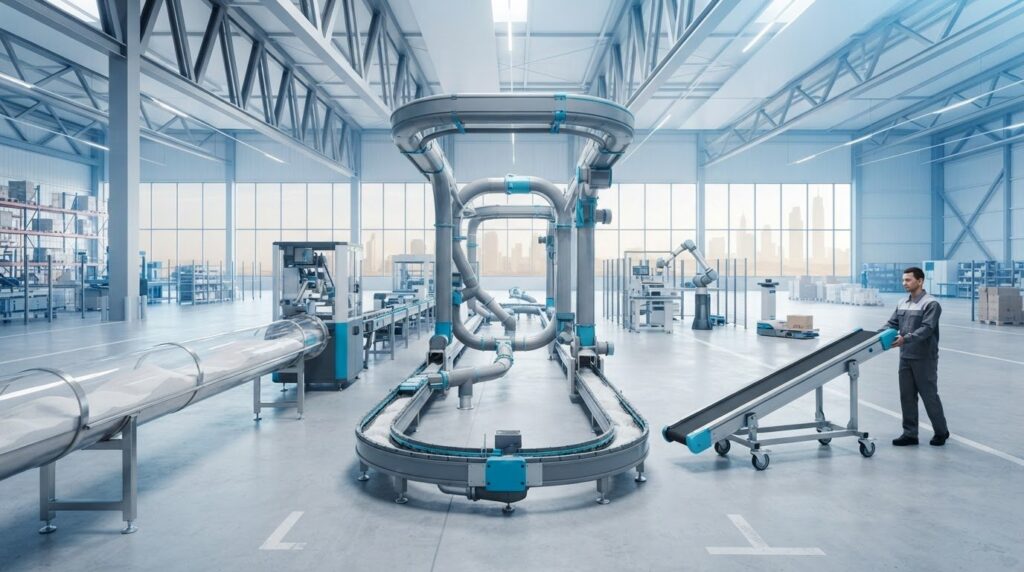
Match the technology to the process. Autonomous mobile robots (AMRs) can move materials along internal routes, PLC and SCADA integration can coordinate equipment and process information, and automated storage and retrieval systems (ASRS) can structure how goods are stored and retrieved. Their value depends on how they connect with people, workflows and operational data.
“Real-time operational visibility helps teams recognize disruption earlier and make faster, better-informed decisions.” That visibility is useful when the data is accurate and relevant, and teams know how to act on it.
Where autonomous mobile robots can support material movement
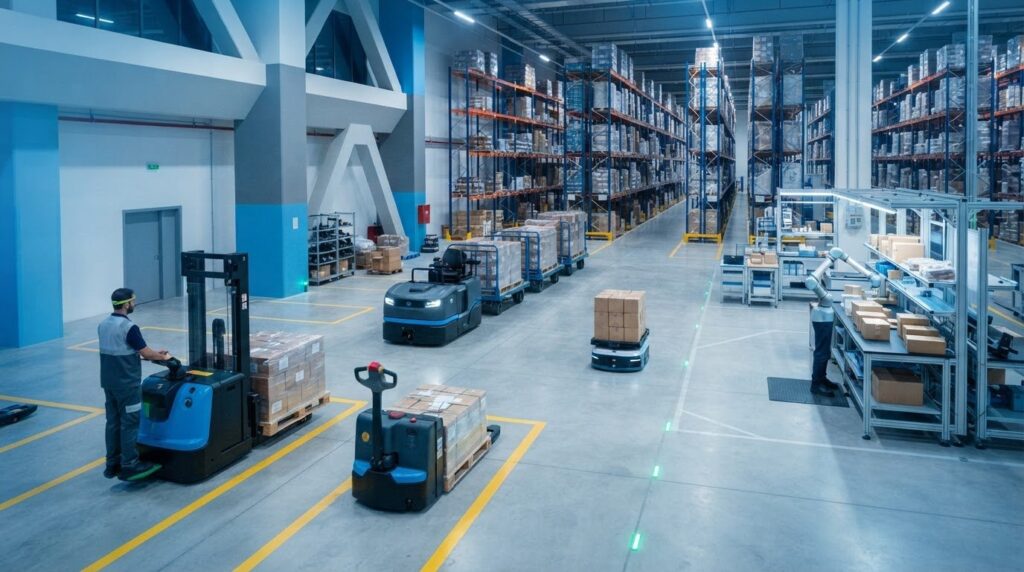
AMRs can suit repeatable internal transport, such as moving components from a receiving or storage area to a production workstation, or transferring finished goods between defined process points. By handling routine movement, they can reduce reliance on manually coordinated trips and make material flow easier to monitor. Define their role around a real workflow rather than adding automation without a clear operational need.
Production schedules, order mix and available routes can change. Adaptable routes and workflows can support those changes when the movement plan reflects facility conditions, safety procedures and handoffs with staff or equipment. Assess AMRs against the task, route and constraints they are intended to address.
How control systems and automated storage support coordination
PLC and SCADA integration can connect industrial equipment with process information, helping operators monitor activity and identify where a workflow needs attention. If a production stage is waiting on an upstream process, for example, accessible status information can help teams locate the hold-up and coordinate a response. Integration should account for how information moves between equipment and operational teams, not just the control hardware. The PLC and SCADA integration guide covers this control-system role in greater detail.
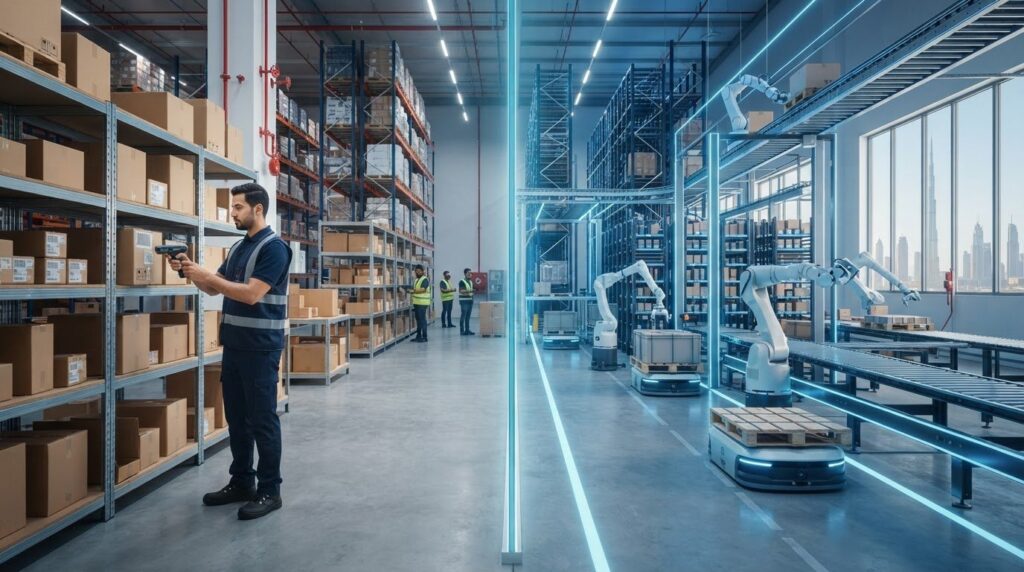
ASRS can structure storage and retrieval by linking inventory locations with planned material movement. Its contribution to resilience depends on its fit with warehouse workflows, inventory records and downstream requirements. A storage system disconnected from planning may automate retrieval without resolving visibility gaps.
- Warehouse movement: consider AMRs for repeatable internal transport.
- Production control: use connected PLC and SCADA information to support monitoring and coordination.
- Storage: align ASRS processes with inventory records and material-flow plans.
Before selecting equipment, define the bottleneck, the information required to manage it and the fallback process if an automated function is unavailable. Systems integration and operational readiness make individual technologies a coordinated layer of a broader continuity plan.
Turn Supply-Chain Risk Findings into a Phased UAE Resilience Plan
Risk findings become useful when they lead to assigned actions, tested procedures and measures that show whether critical operations can continue. For organizations building a resilient supply chain in UAE, the plan should reflect actual products, sourcing arrangements, facilities and recovery priorities rather than generic industry benchmarks.
Use an ordered cycle to turn assessment into implementation:
- Set scope: Define the products, services, operating processes and customer commitments the plan must protect.
- Map exposures: Record dependencies, potential disruption points and existing controls.
- Prioritize: Rank risks by likelihood and impact, considering how long critical operations can tolerate interruption.
- Select controls: Match each priority risk with a practical mitigation, contingency or combination of both.
- Test: Exercise the response and verify that people, information and alternatives are available when needed.
- Improve: Review findings, update ownership and adjust controls as operations or dependencies change.
Assign a lead for each risk and involve the functions needed to manage it. Procurement can own supplier options and purchasing actions; operations can coordinate workarounds and production priorities; IT can address system availability, access and data flows; leadership can resolve trade-offs and authorize cross-functional decisions. Give shared risks a named coordinator rather than assuming another team will act.
Track indicators that reveal whether controls work, such as supplier concentration for critical inputs, inventory-record accuracy, recovery time after a disruption and fulfillment continuity. Define each measure, its review frequency and its thresholds using company records and operating requirements. A generic target can mislead if it does not reflect an item’s replenishment pattern or the operation’s tolerance for interruption.
Create a practical continuity and response plan
Document who can make decisions, what conditions trigger escalation, how teams communicate and which alternate operating procedures apply. For priority inputs, record approved suppliers and substitute materials. Where feasible, describe manual workarounds for system or process interruptions. Schedule scenario exercises around plausible high-priority disruptions, then record gaps, corrective actions, owners and review dates. Teams need to be able to locate and use the plan for it to be actionable.
Sequence automation investments around resilience priorities
Start with a defined bottleneck or visibility gap from the risk assessment. Record a baseline and agree on success criteria before changing workflows. A material handoff, for example, may need clearer status information before adding autonomous movement, while a control gap may call for better-connected process data. Plan training, system interfaces, maintenance ownership and fallback procedures alongside deployment so continuity does not depend on equipment alone.
EdNex Automation supplies and integrates robotics and industrial automation systems for commercial and industrial operations across the UAE. Treat automation as one part of the continuity plan, with each system selected to address a defined operational priority.
Strengthen UAE Supply-Chain Resilience with Integrated Automation
Resilience takes shape through a sequence: identify critical dependencies, select controls for the highest-priority exposures, improve operational visibility and introduce automation where it addresses a defined constraint. Building a resilient supply chain in UAE is not a technology project alone. It combines sourcing choices, inventory and continuity planning with systems that support reliable execution across commercial and industrial operations.
EdNex Automation supplies and integrates robotics and industrial automation systems across the UAE. Its autonomous mobile robots (AMRs), PLC and SCADA integration, and automated storage and retrieval systems (ASRS) can support operations as tools within a wider plan. The right configuration depends on the process, facility, existing systems and continuity objectives. Equipment alone cannot guarantee a particular resilience outcome.
Match automation capabilities to the operational constraint
Begin with the point where a delay, manual handoff or lack of process information most affects critical flow. Then match the capability to that need:
- AMRs: Consider autonomous movement for repeatable internal material transfers, with workflows designed to accommodate changing operational priorities.
- PLC and SCADA integration: Connect industrial equipment and process information to support coordination and operational visibility.
- ASRS: Organize storage and retrieval in alignment with warehouse or production workflows, inventory records and downstream material needs.
These capabilities can work together, but integration should follow the operating model. Automated storage may address a retrieval constraint, while an AMR may move materials from the storage area to a work point. Connected control information can help teams understand process status across the handoff. Consider the intended operating sequence, information flow and response if a system becomes unavailable as parts of the same design.
Move from resilience priorities to an integration discussion
Prepare a concise project brief before evaluating an automation approach. Include the critical material or process flow, the bottleneck or visibility gap, the systems involved, the teams responsible and the continuity objective. Identify where improved control, storage or material movement would matter most, and describe how the process works today. This gives integration planning a clear operational starting point instead of beginning with equipment selection.
Also outline the constraints that shape implementation, such as existing interfaces, workflow changes, staff training, maintenance ownership and fallback procedures. These details connect the proposed system to the broader resilience plan and clarify how success will be assessed. Define the intended function and boundaries before setting expectations for how automation will fit the operation.
With critical flows and priorities mapped, EdNex Automation supplies and integrates robotics and industrial automation systems to support commercial and industrial operations. Explore industrial automation with EdNex to discuss an integration approach aligned with your continuity objectives.
Make Resilience a Capability You Keep Advancing
The next step in building a resilient supply chain in UAE is to make continuity an operating discipline, not just a document revisited after disruption. Choose a critical flow where a clearer signal, more adaptable movement or better-controlled storage could support response. Define what teams need to know, who acts when conditions change and how you will assess whether an adjustment strengthens continuity. A focused starting point creates practical learning for future decisions without treating automation as a substitute for sourcing options or contingency planning.
Keep the plan current as suppliers, workflows and operating requirements evolve. Review whether responsibilities remain clear, measures still reflect business priorities and the chosen process is performing as intended. This creates a path for measured improvement rather than change for its own sake.
EdNex Automation provides robotics and automation integration for commercial and industrial operations across the UAE, including AMRs, PLC and SCADA integration, and ASRS. The right starting point depends on the operational constraint and how equipment, systems and people need to work together. Discuss your industrial automation priorities with EdNex to identify an integration path aligned with your continuity objectives.
Frequently Asked Questions
What does a resilient supply chain mean for a UAE business?
For a UAE business, a resilient supply chain keeps priority operations functioning through disruption and restores normal service in a controlled way. In practice, decide in advance which orders, products or production lines receive constrained materials first, and what service levels can be temporarily adjusted. Building a resilient supply chain in UAE means protecting business-critical commitments, not treating every order or input as equally urgent.
How can a company measure supply-chain resilience?
Measure performance against your own operating baseline and definitions. For example, track the proportion of a critical item sourced from each supplier, compare inventory records with physical counts, and measure recovery time from disruption until an agreed level of operation resumes. Assess fulfillment continuity by monitoring whether priority orders are completed during a disruption. Review trends and investigate changes rather than relying on generic benchmarks that may not fit your operation.
Should businesses hold more inventory to protect against supply disruptions?
Not across the board. Additional stock may help for an essential input with uncertain replenishment, but it can also create storage pressure, tie up working capital or become unusable if specifications change. Consider how quickly an item is consumed, whether it can be substituted and how it must be stored. Then compare the risk of a shortage with the consequences of holding extra stock, using actual demand and replenishment records.
How often should a supply-chain continuity plan be tested?
Test the plan on a schedule that reflects the importance and pace of change in your operations, and after material changes such as a new critical supplier, process, system or facility. Use discussion exercises to test decisions and communications, then practical simulations where appropriate. A short scenario could test how teams respond if a key input becomes unavailable. Record unclear responsibilities, missing information and corrective actions, then retest important changes.
Can automation make a supply chain resilient on its own?
No. Automation can support execution, but it cannot replace sourcing options, decision authority or a workable continuity procedure. A material-handling robot, for instance, may support internal movement, while teams still need a response if its route, equipment or connected system is unavailable. Define manual or alternate procedures and ownership alongside the technology. Resilience depends on how equipment, people, information and recovery plans function together.
What role does cybersecurity play in supply-chain resilience?
Cybersecurity helps protect the availability and integrity of the systems and information used to coordinate operations. A compromised account or unavailable control system could disrupt order processing, inventory visibility or production coordination. Identify essential systems and data flows, restrict access to business needs, maintain recoverable backups and include cyber incidents in continuity exercises. Coordinate IT and operations so recovery actions address both digital access and physical processes.
How can a business prepare for supplier disruption without changing every supplier?
Focus preparation on the inputs and services whose interruption would most affect operations. Confirm current contacts and escalation paths, understand supplier notification procedures, and document what internal teams should do if an expected delivery changes. For selected critical items, assess whether an approved substitute or temporary operating adjustment is feasible. This targeted approach strengthens readiness while preserving established supplier relationships where changing them would add little practical protection.