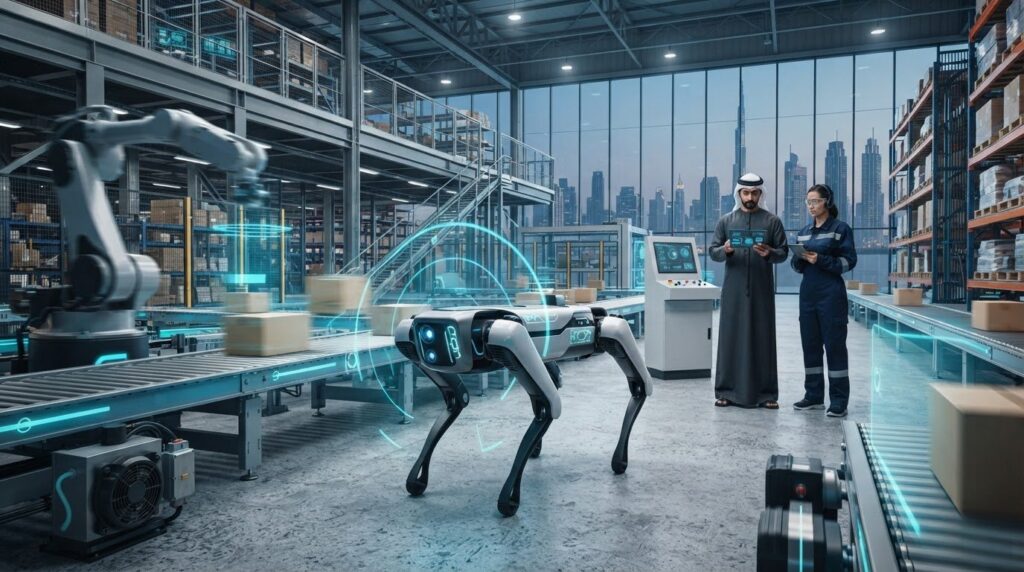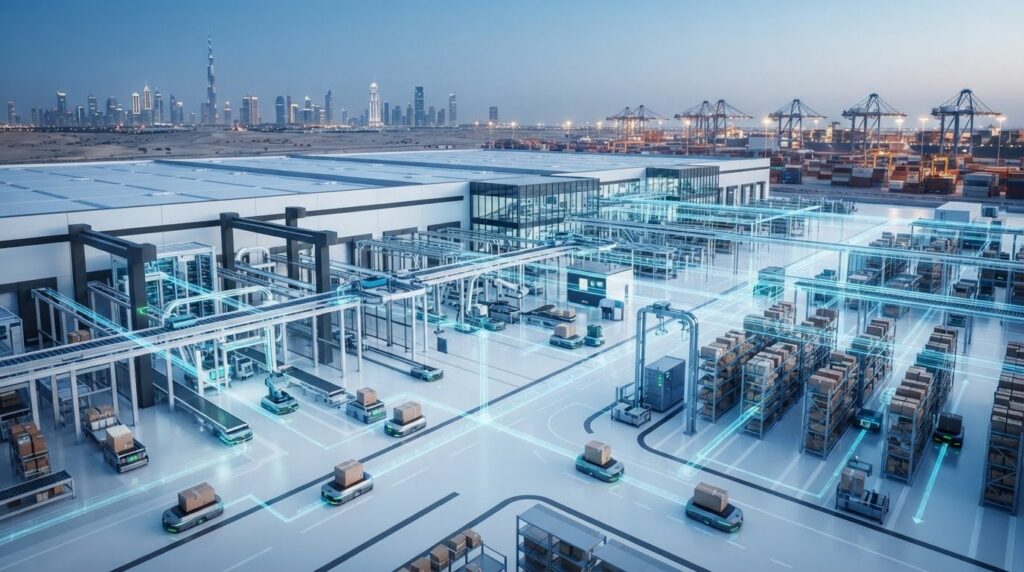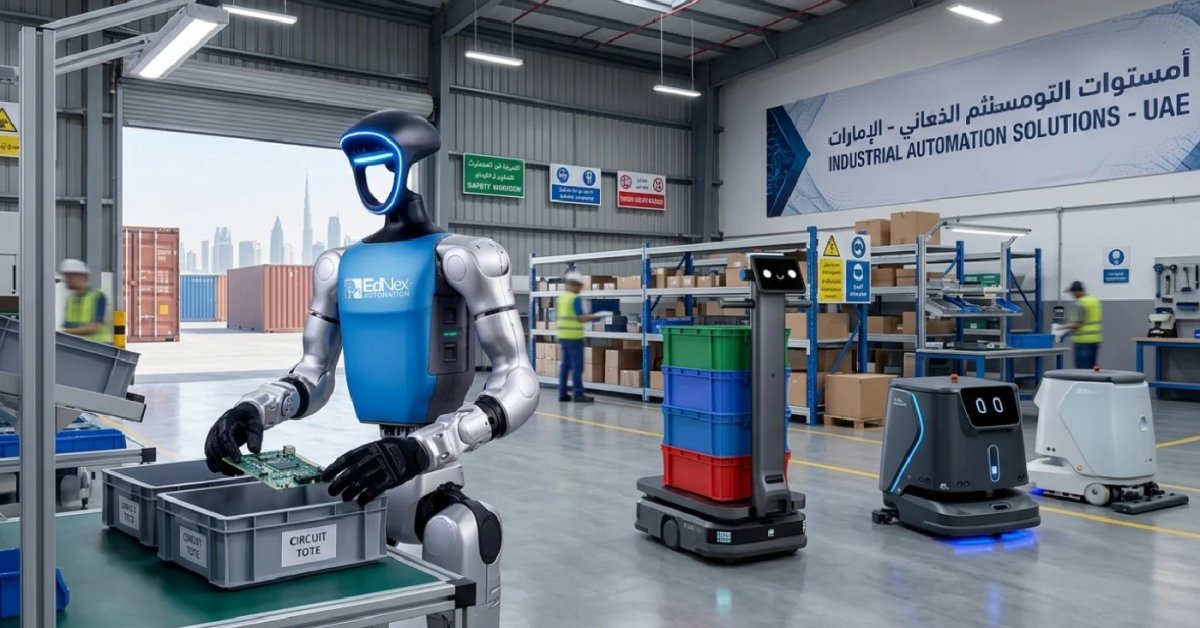
With AED 18 billion in new industrial financing recently unlocked by major UAE banks, the race to modernize isn’t a distant goal; it’s an immediate requirement for any competitive operation. You’ve likely seen how labor shortages in logistics and the persistent downtime from legacy control systems can cripple your output. Finding a partner capable of delivering integrated industrial automation solutions UAE that bridge the gap between global innovation and local industrial needs is the primary challenge for today’s technical leaders.
We understand that integrating next-gen robotics with existing SCADA infrastructure often feels like a technical hurdle rather than a solution. This guide explores how to implement advanced robotics and AI-powered systems to achieve a seamless Industry 4.0 transition. You’ll discover how to leverage the MoIAT’s ITTI Use Case Guide 2.0, launched in May 2026, to optimize your facility and ensure your robotics deployments comply with the latest DIFC Regulation 10 standards for autonomous systems. We’ll provide a clear roadmap to help you secure maximum ROI through precision engineering and expert reliability.
Key Takeaways
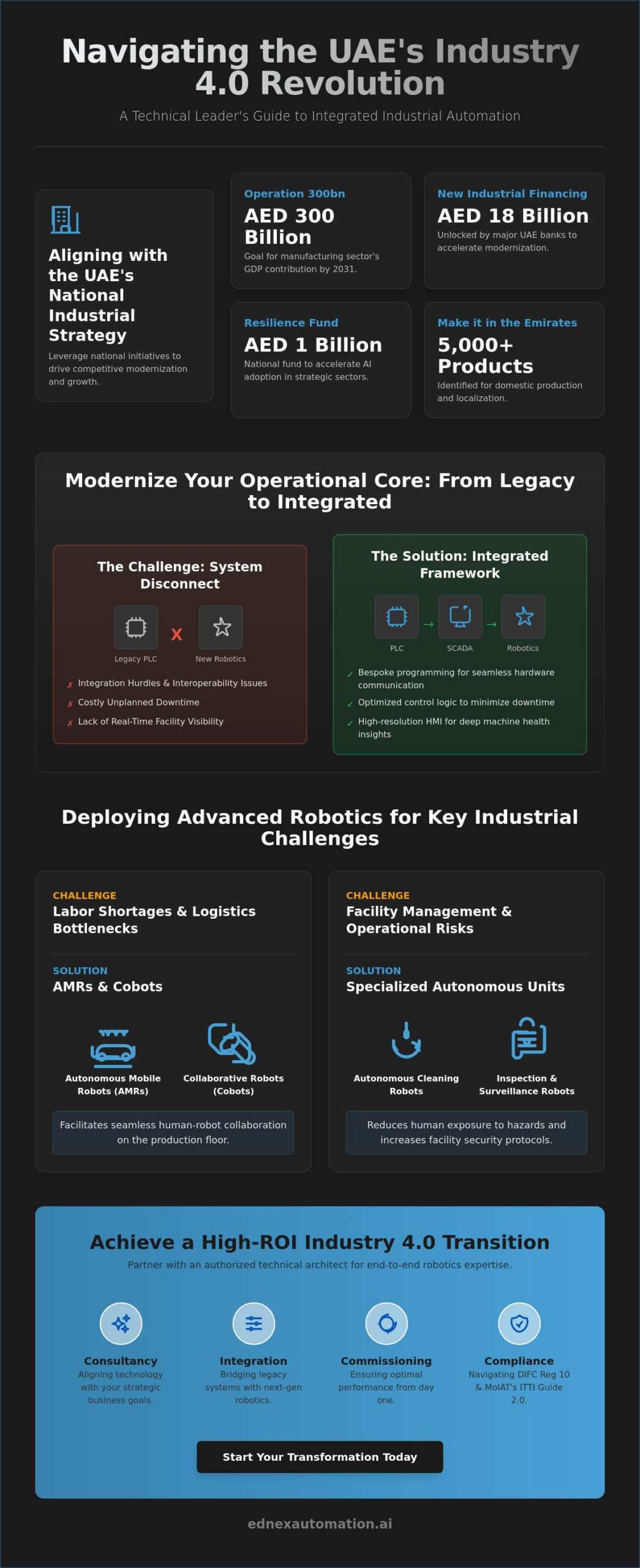
- Align your facility with the UAE’s “Operation 300bn” strategy to leverage national initiatives and the AED 1 billion National Industrial Resilience Fund.
- Modernize your operational core by integrating advanced PLC and SCADA frameworks with the latest industrial automation solutions UAE to ensure real-time facility visibility.
- Address labor shortages and logistics bottlenecks by deploying AMRs and Cobots that facilitate seamless human-robot collaboration on the production floor.
- Streamline facility management and reduce operational risks through specialized autonomous cleaning and surveillance robots designed for large-scale industrial environments.
- Achieve a high-ROI Industry 4.0 transition by partnering with an authorized technical architect providing end-to-end robotics expertise from consultancy to commissioning.
The Evolution of Industrial Automation Solutions in the UAE
The UAE’s industrial sector is undergoing a profound metamorphosis as of May 2026. This shift isn’t merely about replacing manual tasks; it’s about building a cognitive infrastructure. Under the mandate of Sheikh Mohammed bin Rashid Al Maktoum, the AED 1 billion National Industrial Resilience Fund now accelerates the adoption of AI technologies across strategic sectors. This initiative, coupled with the “Make it in the Emirates” framework, has positioned the country as a global epicenter for high-tech manufacturing. Modern automation in this region has evolved from simple mechanical repetition into complex, data-driven ecosystems that utilize AI-powered control systems and autonomous robotics to drive the national economy.
Integrating industrial automation solutions UAE is now the cornerstone of the “Operation 300bn” strategy. This ambitious plan aims to double the manufacturing sector’s GDP contribution by 2031, reaching AED 300 billion. Achieving this requires a transition from legacy systems to integrated infrastructures where every sensor and robotic arm communicates in real-time. By fostering an environment where global technological breakthroughs meet local industrial requirements, the UAE is setting a new world-class standard for robotic integration.
Aligning with the UAE National Industrial Vision
Diversifying the economy away from oil reliance requires high-efficiency industrial sectors that don’t depend on massive labor pools. Deploying global technological breakthroughs within the GCC requires deep local expertise to navigate regional regulations, such as the DIFC’s Regulation 10 on autonomous systems enforced since January 1, 2026. Industry 4.0 is the convergence of physical robotics and digital intelligence. This synergy allows for “Purchase Opportunities” within the localization framework, identifying 5,000 products for domestic production as of the May 2026 “Make it in the Emirates” event.
Beyond Productivity: Safety and Risk Mitigation
Protecting the workforce is a primary driver for the adoption of autonomous systems. Inspection robots and surveillance units now handle high-risk monitoring in the oil and gas sector, drastically reducing human exposure to hazardous environments. These systems provide a level of consistency that manual oversight can’t match. Building a “Future-Ready Enterprise” means prioritizing worker safety through controlled innovation. By utilizing specialized robotics, companies can mitigate operational risks while simultaneously increasing their facility’s security protocols. This methodical approach, rooted in end-to-end robotics expertise, ensures that industrial automation solutions UAE deliver both commercial value and human-centric safety.
The Core Infrastructure: PLC and SCADA Integration Services
At the center of every high-performance facility lies the Programmable Logic Controller (PLC). This device acts as the central nervous system, orchestrating complex workflows with microsecond precision. While the PLC handles the logic, Supervisory Control and Data Acquisition (SCADA) systems provide the visual and analytical layer necessary for real-time facility monitoring. In the context of industrial automation solutions UAE, these two components must work in perfect harmony to transform a standard factory into a high-yield environment. Achieving this requires more than just hardware; it demands bespoke programming that eliminates the “one-size-fits-all” limitations of generic setups.
Interoperability remains a significant hurdle for many UAE manufacturers. You’ve likely faced the frustration of trying to integrate a modern collaborative robot with a legacy PLC framework. A truly future-ready architecture bridges this gap, ensuring that legacy hardware communicates seamlessly with modern robotic units. By optimizing control logic, enterprises can minimize unplanned downtime, which remains one of the costliest variables in industrial production. This systematic approach allows for a controlled transition to Industry 4.0 without requiring a total overhaul of existing assets.
Advanced Control Architectures for UAE Manufacturers
Modern facility management relies on the evolution of the Human-Machine Interface (HMI). These interfaces have shifted from basic button panels to intuitive, high-resolution dashboards that offer deep insights into machine health. Integrating Manufacturing Execution Systems (MES) with your SCADA layer creates a transparent reporting environment where production data flows directly into business intelligence tools. Maintaining an authorized partner status with global leaders like Siemens or Rockwell Automation ensures your system utilizes the latest software versions, such as TIA Portal V21, guaranteeing long-term support and system longevity.
Predictive Maintenance and Data Analytics
Data is only valuable if it’s actionable. High-tier SCADA systems now leverage automated data acquisition to anticipate equipment failure before it occurs. This shift toward predictive maintenance transforms how facilities manage risk. Optimized PLC programming services reduce operational overhead by 20% by eliminating redundant logic and streamlining communication protocols between field devices. By utilizing remote diagnostics, technical teams can troubleshoot issues without being physically present on the floor, further reducing the response time for critical repairs and ensuring the facility remains operational 24/7.
Advanced Robotics: Cobots, AMRs, and Specialized Units
While PLC and SCADA systems provide the cognitive framework, advanced robotics represent the physical execution of Industry 4.0. In the UAE, where the Middle East industrial automation market is projected to reach USD 5.78 billion by 2031, the demand for flexible, high-tech machinery is surging. These aren’t the rigid, caged machines of the past. Today’s industrial automation solutions UAE focus on agility and intelligence, allowing enterprises to scale operations without the traditional constraints of fixed floor plans. This shift is fueled by a regional need to solve labor shortages while maintaining the high-precision standards required in manufacturing and logistics.
The UAE’s commitment to this sector is underscored by massive capital injections. Lianhe Sowell International Group is currently investing USD 200 million to establish a specialized industry robotics base within the country, targeting an annual production of up to 80,000 robots. This local manufacturing capacity ensures that next-gen units, from humanoid service robots to rugged inspection quadrupeds, are readily available to support the region’s “Future-Ready Enterprises.”
Cobots vs. Traditional Industrial Robots
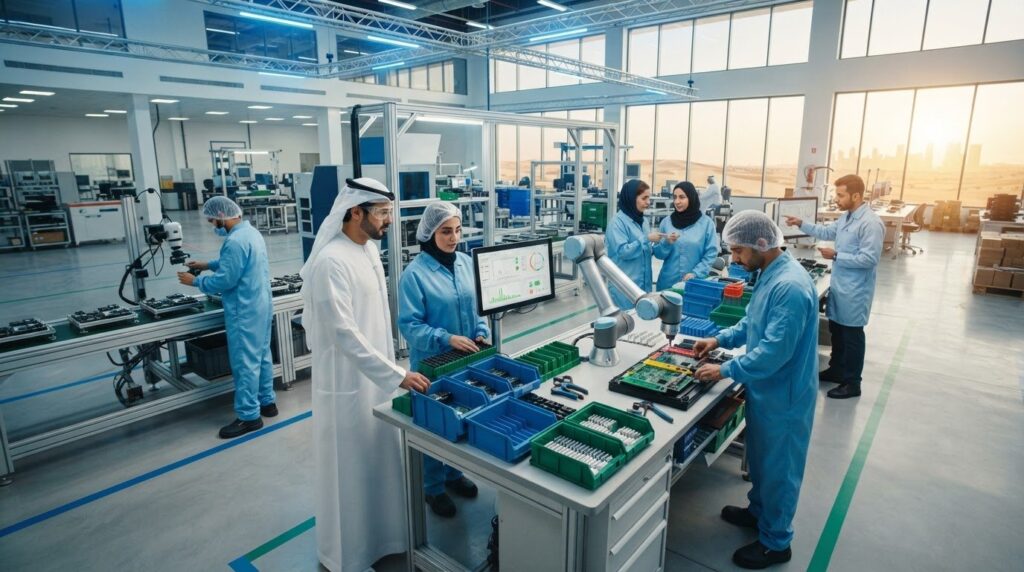
Collaborative robots, or cobots, have redefined the assembly line by eliminating the need for bulky safety cages. These units use advanced force-torque sensors to stop immediately upon contact, allowing them to work safely alongside human technicians. For a deeper dive into their application, read our guide on Collaborative Robots in the UAE: A Strategic Guide to Industry 4.0 in 2026. Their rapid deployment and intuitive programming make them ideal for facilities requiring frequent task changes without extensive downtime.
Revolutionizing Logistics with AMR and ASRS
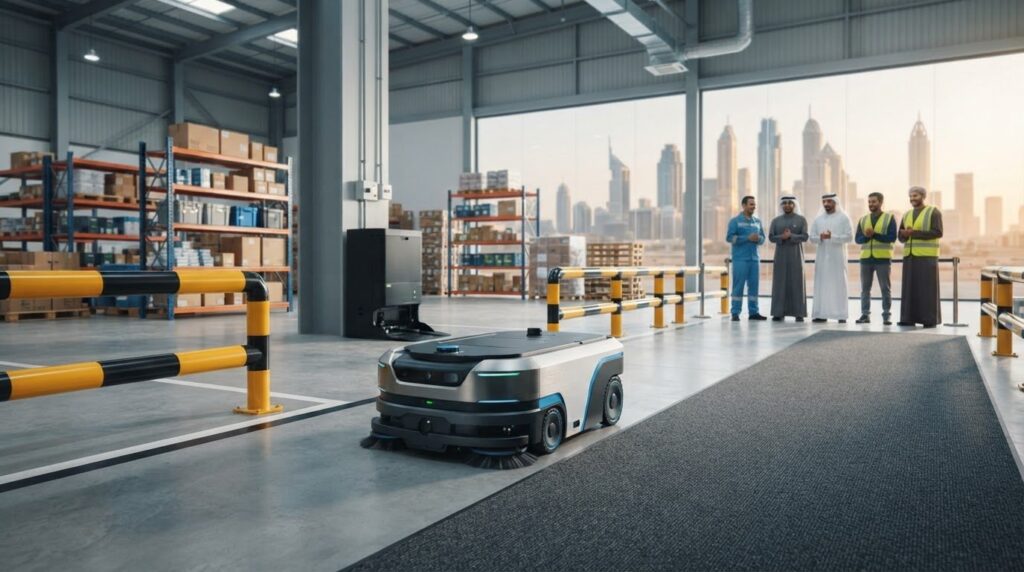
Logistics providers are rapidly transitioning from Automated Guided Vehicles (AGVs) to Autonomous Mobile Robots (AMRs). Unlike legacy AGVs that require fixed magnetic strips, AMRs utilize AI-powered SLAM technology to navigate dynamic warehouse floors independently. Integrating these with Automated Storage and Retrieval Systems (ASRS) maximizes vertical space and ensures 24/7 throughput. This combination is particularly effective in solving labor shortages in the logistics sector, as it allows for the seamless transport of goods with zero human intervention. By deploying these industrial automation solutions UAE, businesses can achieve a level of operational efficiency that was previously unattainable with manual labor alone.
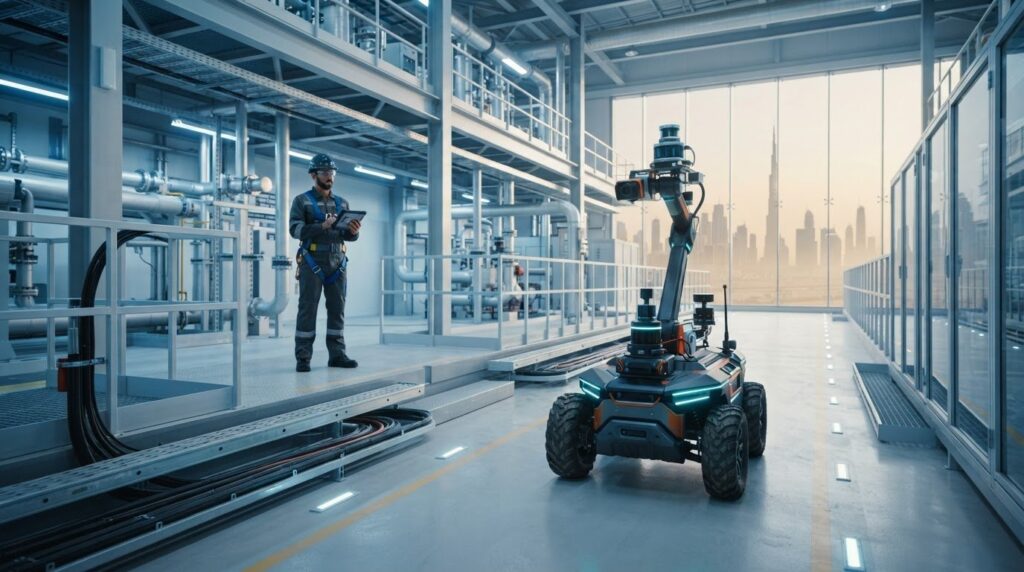
Beyond the warehouse, specialized inspection and surveillance robots are becoming mandatory in the oil, gas, and utility sectors. These autonomous units perform high-risk monitoring of critical infrastructure, providing real-time data that SCADA systems use for predictive maintenance. This multi-layered approach to robotics ensures that every facet of an industrial operation is optimized for safety, reliability, and maximum ROI.
Implementing Autonomous Cleaning and Facility Solutions
Beyond the factory floor, facility management is the next frontier for autonomous transformation. Large-scale commercial environments in Dubai and Abu Dhabi face unique challenges, from extreme temperatures to high foot traffic. Integrating industrial automation solutions UAE into facility maintenance protocols allows enterprises to maintain world-class standards while drastically reducing reliance on manual labor. These systems aren’t just tools; they’re intelligent assets that provide consistent performance without the fatigue or inconsistency associated with human crews. It’s about precision at scale.
Outdoor cleaning robots are now maintaining modern urban areas with minimal human intervention, utilizing AI to handle complex tasks like waste segregation and pavement scrubbing. For indoor environments, autonomous floor scrubbers must meet rigorous technical requirements to operate in high-traffic zones. These units utilize advanced SLAM (Simultaneous Localization and Mapping) technology to map environments in real-time. This ensures they navigate around obstacles and pedestrians safely without disrupting daily operations. If you’re ready to modernize your facility, explore our autonomous facility management solutions to see how these technologies integrate into your existing workflow.
The ROI of Robotic Cleaning
Manual labor costs in the maintenance sector continue to fluctuate, but an autonomous unit provides 24/7 availability with zero downtime. Hygiene standards become measurable and consistent, which is critical for the healthcare and hospitality sectors. Precision in chemical dispensing ensures that surfaces are sanitized correctly every time. Modern robotic floor scrubbers are also engineered for sustainability, often reducing water consumption by up to 70% compared to traditional manual mopping methods. This efficiency directly impacts the bottom line while supporting corporate environmental goals.
Surveillance and Inspection Automation
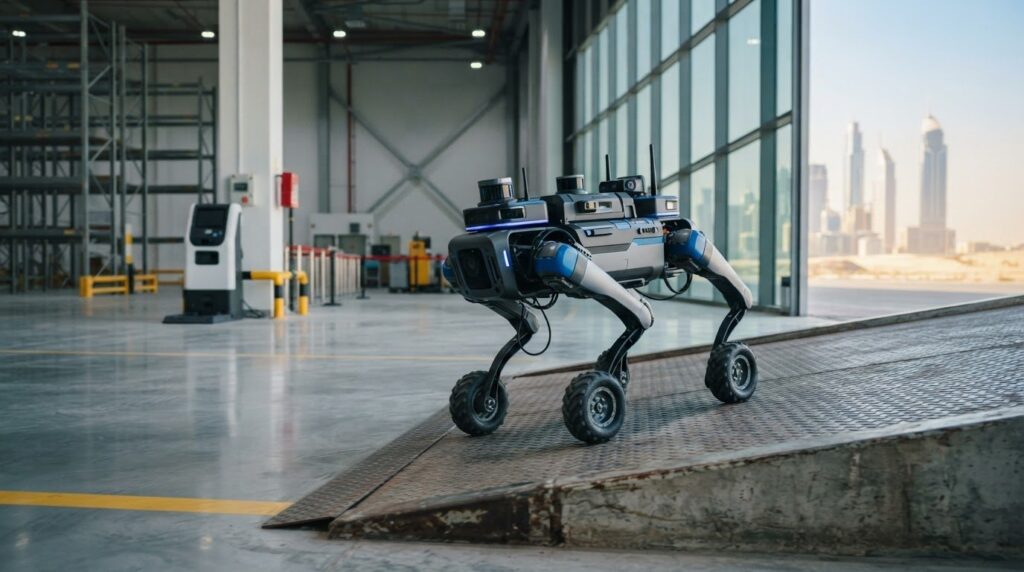
Site inspection in rugged or dangerous terrains no longer requires putting personnel at risk. Quadruped robots equipped with thermal imaging and gas sensors can patrol facilities autonomously, reaching areas that are inaccessible to wheeled units. These industrial automation solutions UAE feed data directly into centralized SCADA dashboards, providing a unified view of facility security and structural integrity. By enhancing facility security through autonomous patrolling, enterprises can detect thermal anomalies or unauthorized access in real-time, allowing for immediate intervention based on high-accuracy data.
Delivery robots are also revolutionizing internal logistics within the hospitality and healthcare sectors. They handle the routine movement of linens, medication, or food, allowing human staff to focus on high-value patient or guest care. This shift doesn’t just improve efficiency; it elevates the entire service experience through controlled, reliable innovation.
EdNex Automation: Your Technological Architect in the UAE
EdNex Automation operates as more than a simple hardware provider; we function as a Technological Architect for the GCC region. Our End-to-End Robotics Expertise ensures that your transition to an autonomous facility is both strategic and sustainable. By maintaining Authorized Partner status with global leaders, we provide best-in-class hardware and software that’s specifically optimized for the UAE’s unique industrial requirements. It’s not just about purchasing a robot. It’s about integrating a comprehensive system that evolves alongside your business. We provide the intellectual framework necessary to implement these technologies for maximum ROI.
Maintaining a “Future-Ready” status requires more than an initial installation. It demands continuous support and regular firmware updates to ensure your systems remain at the absolute cutting edge of innovation. Our role is to act as your grounded technical partner, bridging the gap between global breakthroughs and local operational needs. Whether you’re implementing cobots on a production line or deploying autonomous cleaning units in a commercial hub, our solutions are tailored to the specific economic climate of the UAE.
A Methodical Approach to Digital Transformation
Success begins with a comprehensive site assessment. We don’t guess; we analyze your existing infrastructure to provide accurate ROI projections for your automation investments. This data-driven approach allows you to leverage the AED 18 billion in industrial financing currently available through regional banks with total confidence. Once the strategy is set, we handle the customized integration of PLC, SCADA, and robotic hardware. We prioritize operator training and local technical support to ensure your team is fully equipped to manage these next-gen systems. This methodical transition reduces risk and ensures seamless adoption across your entire enterprise.
Join the Industry 4.0 Revolution
Partnering with a Technological Architect is fundamentally superior to engaging with a traditional hardware vendor. A vendor sells you a machine and leaves the integration challenges to you. An architect designs the entire ecosystem, ensuring every sensor and autonomous unit communicates perfectly within your control infrastructure. This is the level of precision required to survive and thrive in the coming decade. Don’t let legacy inefficiencies hold your operation back while the rest of the region moves toward total autonomy.
Transform your facility into a world-class autonomous operation that sets the standard for efficiency and safety. We invite you to explore the full range of industrial automation solutions UAE to discover how we can streamline your path to Industry 4.0. Let’s build a future-ready enterprise together, starting today.
Scaling Your Enterprise with Intelligent Automation
The transition to a cognitive industrial ecosystem is no longer a choice; it’s the standard for any business aiming to thrive under the UAE’s “Operation 300bn” strategy. Integrating robust PLC frameworks with autonomous robotics like AMRs and Cobots allows your facility to achieve 24/7 productivity while drastically reducing operational risks. By prioritizing high-tech industrial automation solutions UAE, you position your enterprise at the forefront of the region’s digital transformation.
Success in this high-stakes environment requires more than just hardware. It demands a partner who understands the gravity of industrial transformation. As an Authorized Partner of Global Robotics Leaders with End-to-End Integration Expertise, EdNex Automation provides the intellectual framework needed to modernize your operations. Our dedicated regional support team ensures your systems remain optimized for the unique demands of the GCC market. We don’t just sell machines; we provide the architectural foundation for your long-term success.
It’s time to move beyond legacy limitations and embrace a systematized approach to innovation. Consult with our experts to design your future-ready industrial automation roadmap and secure your place in the UAE’s high-tech future. Your journey toward a world-class autonomous operation starts with a single strategic decision.
Frequently Asked Questions
What are the main benefits of industrial automation solutions in the UAE?
Primary benefits include increased operational efficiency, reduced labor dependency, and enhanced worker safety in hazardous zones. These systems allow UAE enterprises to align with national industrial visions by doubling manufacturing output through high-precision logic. By implementing industrial automation solutions UAE, facilities achieve a level of consistent quality that manual processes simply can’t replicate. It’s about building a cognitive infrastructure that scales with your business.
How do autonomous mobile robots (AMRs) differ from automated guided vehicles (AGVs)?
AMRs utilize AI-powered SLAM technology to navigate dynamically without the fixed infrastructure required by legacy AGVs. While AGVs rely on magnetic strips or wires, AMRs use advanced sensors to reroute around obstacles in real-time. This flexibility makes AMRs the superior choice for high-traffic warehouse environments where layouts change frequently. They don’t require costly floor modifications, ensuring a faster deployment and a more adaptable logistics framework.
Can collaborative robots (cobots) be integrated with existing PLC systems?
Yes, collaborative robots are designed for seamless integration with modern PLC and SCADA frameworks to ensure unified facility control. Authorized partners facilitate this through industry-standard communication protocols, allowing the cobot to act as a physical extension of the existing logic controller. This integration ensures that all robotic data is fully visible on centralized dashboards. It allows for real-time monitoring and data-driven decision-making across the entire production floor.
What industries in the UAE benefit most from robotic cleaning solutions?
Large-scale commercial hubs, healthcare facilities, and the hospitality sector benefit most from autonomous cleaning units. These environments require rigorous hygiene standards and often operate 24/7, making the consistency of a robot more reliable than manual crews. Hospitality managers use these units to handle routine floor maintenance, which allows their human staff to focus on high-value guest services. It’s a strategic shift that elevates service quality while reducing overhead.
How much does a typical industrial automation project cost in the UAE?
Costs for an industrial automation solutions UAE project vary based on the scope of integration, hardware complexity, and the level of software customization required. Factors such as the number of robotic units, the depth of PLC programming, and the need for specialized sensors dictate the total investment. Many businesses now utilize the AED 18 billion in competitive financing announced in May 2026 to fund these transformative and high-ROI upgrades.
What is the role of SCADA in a modern Industry 4.0 facility?
SCADA acts as the analytical layer that provides a high-resolution visual interface for managing complex industrial workflows. It collects real-time data from field devices to enable predictive maintenance and remote diagnostics. In a modern facility, SCADA ensures that technical architects can identify and resolve anomalies before they lead to costly downtime. This visual layer is essential for maintaining total transparency across every stage of the manufacturing process.
How does EdNex Automation support local businesses after the initial installation?
EdNex Automation provides continuous technical support, comprehensive operator training programs, and regular firmware updates to keep systems future-ready. Our dedicated regional support team handles everything from initial commissioning to long-term maintenance within the GCC. This end-to-end expertise ensures that your enterprise remains operational and competitive long after the initial deployment. We don’t just provide machines; we provide the intellectual framework for sustained industrial success.
Is it possible to automate outdoor cleaning for large commercial developments?
Yes, specialized outdoor cleaning robots are engineered to maintain modern urban developments with minimal human intervention. These rugged units handle large pavements and public squares, utilizing AI to navigate safely around pedestrians and street furniture. They provide a high-ROI solution for maintaining the pristine appearance of the UAE’s commercial districts. These autonomous units are built to withstand regional climate conditions while delivering precision cleaning at a scale manual labor can’t match.