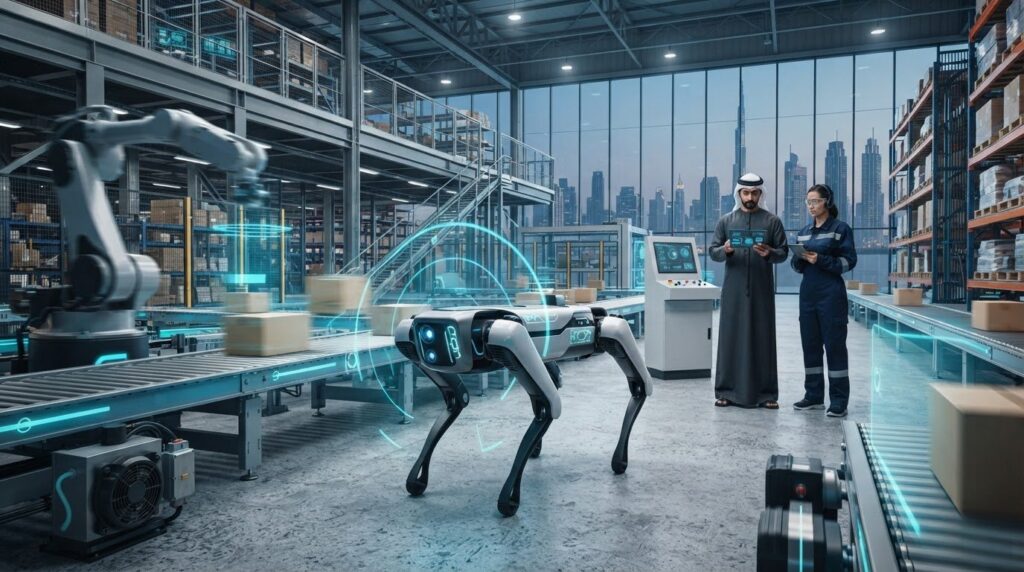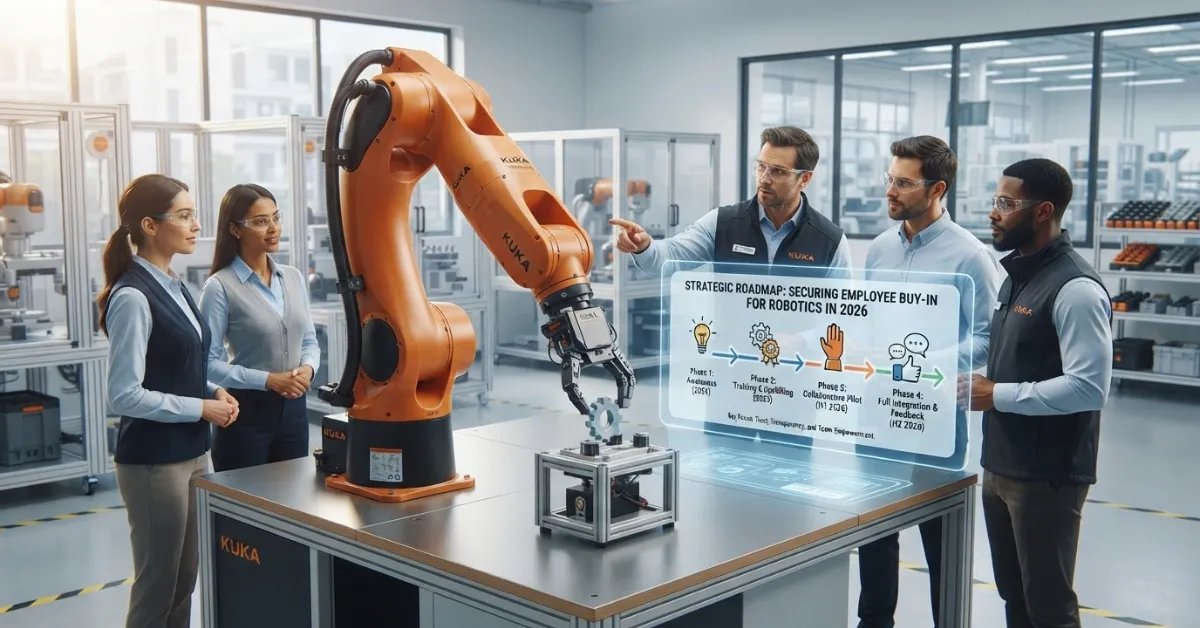
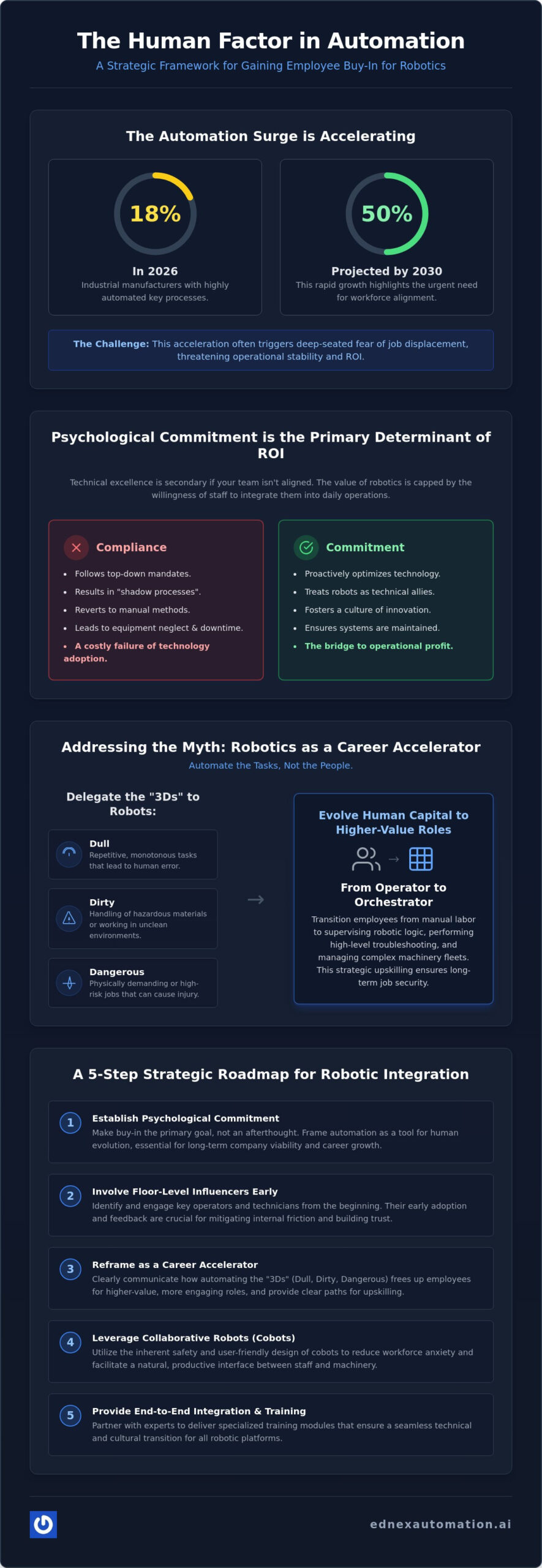
By 2026, only 18% of industrial manufacturers have achieved highly automated key processes, yet this figure is projected to surge to 50% by 2030. This rapid acceleration frequently triggers a deep-seated fear of job displacement among manual laborers, threatening the stability of the plant floor. Achieving high ROI on automation investments requires more than just deploying autonomous mobile robots; it demands a sophisticated strategy for getting employee buy-in for robotics.
You likely recognize that technical excellence remains secondary if your engineering team and floor staff are locked in a cycle of internal friction. This article delivers the authoritative framework necessary to transform advanced machinery from a perceived threat into an essential catalyst for career advancement and operational excellence. Positioning industrial robotics as a tool for human evolution, we’ll examine how to navigate the updated ISO 10218-1:2025 safety standards while building a culture of innovation that ensures the long-term viability of your organization.
Key Takeaways
- Understand how establishing a psychological commitment to automation serves as the primary determinant of ROI in complex industrial transformation projects.
- Implement a five-step strategic roadmap for getting employee buy-in for robotics, prioritizing the early involvement of floor-level influencers to mitigate internal friction.
- Reframe robotic integration as a career accelerator by automating dull, dirty, and dangerous tasks to optimize human capital for higher-value operational roles.
- Leverage the inherent design of collaborative robots to reduce workforce anxiety and facilitate a natural, productive interface between staff and advanced machinery.
- Discover the advantages of end-to-end integration and specialized training modules to ensure a seamless transition for both humanoid and industrial robotic platforms.
Defining Employee Buy-In for Robotics in the Industry 4.0 Era
Establishing a successful automation strategy requires shifting focus from hardware procurement to the psychological commitment of the human workforce. In the high-stakes environment of 2026, getting employee buy-in for robotics represents the primary determinant of return on investment (ROI) for industrial projects. While equipment like Autonomous Mobile Robots (AMRs) or Automated Storage and Retrieval Systems (ASRS) offers immense technical potential, their functional value is capped by the willingness of the floor staff to integrate them into daily operations.
We must distinguish between compliance and commitment. Compliance involves a workforce that utilizes robotic systems because of top-down mandates, often resulting in “shadow processes” where employees revert to manual methods the moment supervision wanes. In contrast, commitment signifies a proactive optimization of the technology. This distinction is vital for the UAE’s industrial sector as it works toward the “Operation 300bn” goal. With government R&D tax credits of up to 50% now supporting technology adoption, the pressure to demonstrate tangible operational excellence has never been higher.
Why Traditional Change Management Fails in Robotics
Conventional organizational shifts often struggle with the “Black Box” problem. This occurs when employees don’t understand the underlying logic of Vision-Language-Action (VLA) models or autonomous decision-making. Unlike software updates, robotics introduces a visceral fear of physical interaction with heavy machinery. This anxiety often stems from historical concerns regarding Technological Unemployment, creating a disconnect between the visionary executive suite and the reality of the plant floor.
The Economic Imperative of Workforce Alignment
Low engagement leads directly to equipment neglect and increased downtime; staff may ignore maintenance alerts or fail to clear obstructions for AMRs. Achieving getting employee buy-in for robotics ensures that these systems are treated as technical allies rather than intrusive replacements. This alignment prevents the high cost of failed technology adoption and fosters a culture of continuous innovation. Workforce alignment is the bridge between capital expenditure and operational profit. By synchronizing human expertise with machine precision, organizations secure their long-term viability in a competitive global market.
Addressing the Displacement Myth: Robotics as a Career Accelerator
Reframing the industrial narrative requires a fundamental shift in how leadership presents automation to the workforce. Instead of viewing robotics as a replacement for human labor, visionary organizations position these systems as a mechanism for human capital optimization. This evolution hinges on the strategic removal of the “3Ds”—tasks that are dull, dirty, or dangerous. By delegating repetitive or hazardous duties to machines, companies allow their staff to focus on high-value cognitive tasks that require human intuition. Research from the International Federation of Robotics highlights how robots are transforming the workplace by increasing productivity and creating new roles that were non-existent in the previous decade.
From Operator to Orchestrator: The New Industrial Role
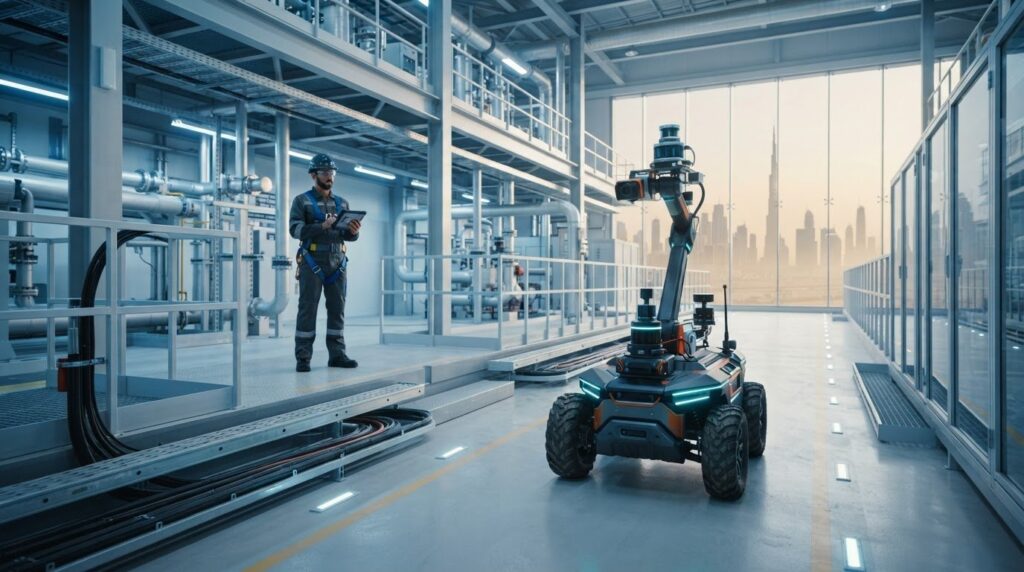
The transition from manual labor to supervising autonomous mobile robots represents a significant elevation in professional status for the modern worker. Industrial roles are rapidly evolving into “system orchestrators” who oversee robotic logic and perform high-level troubleshooting. As employees master Industry 4.0 technologies, their internal and market value increases, anchoring their careers in the high-tech infrastructure of the future. Mastering these sophisticated systems allows workers to move from physical exertion to strategic oversight, improving both safety and job satisfaction.
Transparent Communication Strategies
Securing psychological commitment requires radical transparency from a project’s inception. Hosting town halls to present the “Why” behind automation, such as maintaining regional competitiveness or improving ergonomic safety, is far more effective than simply announcing the hardware arrival. Sharing long-term growth plans that explicitly include current staff helps demystify the technology and its purpose. When leadership clearly outlines safety protocols and human-machine proximity rules, it builds the trust necessary for a collaborative environment. Developing a workforce that views robots as technical allies is a cornerstone of securing industrial longevity and operational excellence.
The Collaborative Framework: Positioning Cobots as Technical Allies
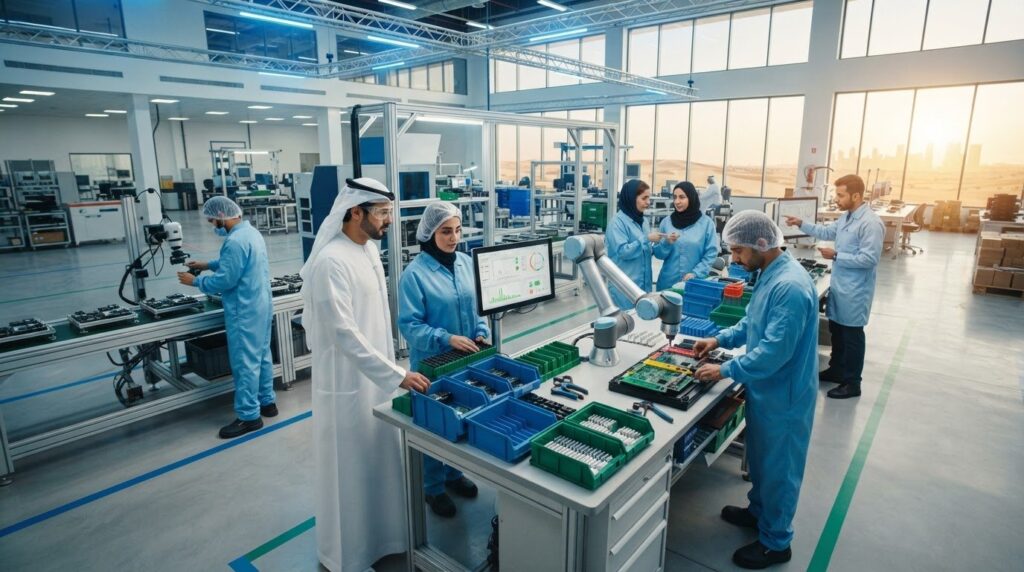
Utilizing the inherent safety features of collaborative robots UAE allows manufacturers to bypass the traditional psychological barriers associated with heavy automation. Unlike massive, caged industrial arms, cobots are engineered to operate in direct proximity to human workers. This physical closeness effectively dismantles the “uncanny valley” fear that often stalls technological adoption; when a machine responds to a human’s physical guidance or stops instantly upon contact, it ceases to be a mysterious threat. It becomes a technical ally. This shift in perception is a foundational requirement for getting employee buy-in for robotics as organizations transition toward more complex, autonomous systems.
Positioning cobots as the “entry point” for wider factory automation provides a low-friction introduction to the Industry 4.0 era. Because these systems are designed for interaction, they offer a tangible demonstration of how technology supports rather than replaces human effort. Getting employee buy-in for robotics becomes a natural byproduct of positive, hands-on experience. By starting with collaborative units, leadership can build a reservoir of trust that facilitates the later introduction of more autonomous systems like AMRs or ASRS. This phased approach ensures that the workforce remains engaged and confident throughout the entire digital transformation journey.
Human-Centric Design in Automation
Selecting hardware that complements human dexterity is essential for long-term operational success. We don’t want robots that mimic human movement poorly; we want systems that excel where humans struggle, such as maintaining precision over long shifts. Intuitive, no-code interfaces empower non-programmers to take ownership of the machinery, shifting the power dynamic from the machine to the operator. Demonstrating immediate ergonomic relief from heavy lifting or repetitive twisting builds instant floor-level support, as employees quickly recognize the personal health benefits of the new infrastructure. This human-centric approach aligns with the revised ISO 10218-1:2025 safety standards, ensuring both physical protection and psychological security.
Case Studies in Successful Human-Robot Collaboration
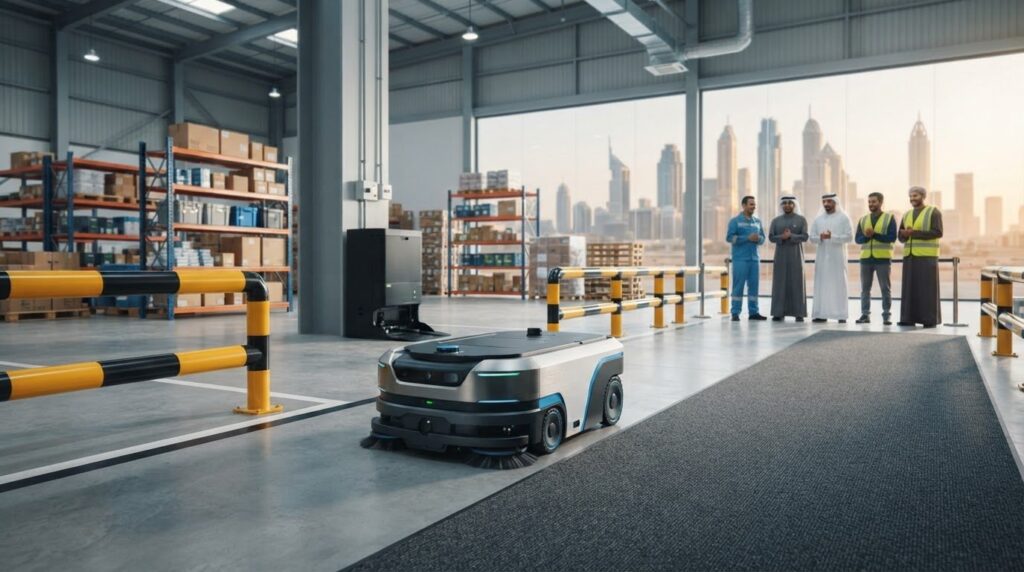
Assembly lines across the manufacturing sector show that worker satisfaction scores rise when cobots take over repetitive strain tasks, allowing staff to focus on quality control and process optimization. In the facility management sector, the deployment of autonomous cleaning robots has significantly improved morale by allowing staff to focus on specialized hygiene protocols rather than monotonous floor scrubbing. These implementations prove that workers value technology when it removes the “3D” tasks from their daily routine. Human-centric automation standardises quality while empowering the individual worker.
A 5-Step Strategic Roadmap for Robotic Integration
Executing a successful transition to automated workflows requires a methodical approach that prioritizes human psychology alongside technical calibration. Getting employee buy-in for robotics isn’t a singular event but a continuous process of alignment that begins long before the first machine arrives on the plant floor. By following a structured roadmap, organizations can transform potential resistance into proactive collaboration, ensuring that the workforce feels like architects of the change rather than its victims.
- Step 1: Early Involvement. Including floor-level influencers in the initial hardware selection process ensures that the chosen systems address real-world operational bottlenecks. When operators have a voice in the procurement phase, they develop a sense of ownership that is vital for long-term adoption.
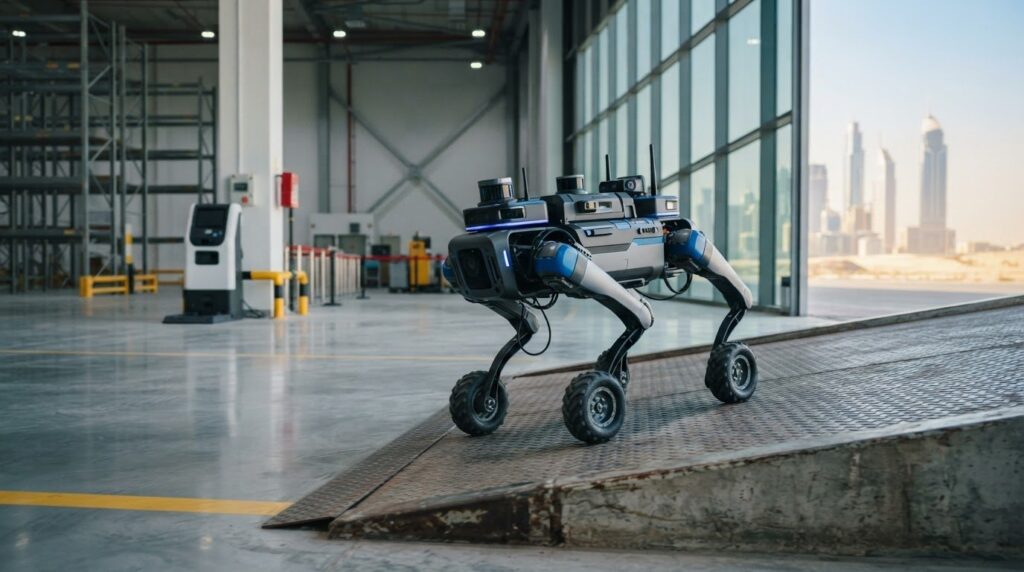
- Step 2: The Pilot Program. Deploying a single unit, such as an autonomous mobile robot, allows the workforce to witness the technology’s reliability in a controlled setting. This phase is essential for demystifying robotic logic and proving that the system serves as a functional aid.
- Step 3: Comprehensive Training. Organizations must move beyond basic operational instructions to provide deep PLC and SCADA integration services education. This empowers staff to understand how their local robotic cell interacts with the broader factory data architecture, elevating their technical status.
- Step 4: Feedback Loops. Establishing formal channels for employees to suggest robotic optimizations leverages local expertise. Workers often identify micro-efficiencies that engineers might overlook, and acknowledging these suggestions reinforces their value in the automated ecosystem.
Identifying and Empowering Automation Champions
Leveraging influential employees to act as peer-to-peer trainers reduces management-to-staff friction through internal advocacy. These champions serve as the bridge between engineering goals and floor-level execution, translating complex technical requirements into practical daily habits. By providing advanced certifications to these individuals, leadership validates their new expertise and provides a clear path for professional advancement. This peer-led model is often more effective than top-down mandates, as it builds trust through shared experience and mutual respect.
Iterative Implementation and SCADA Visibility
Utilizing data dashboards to show employees how robots are helping meet production targets provides tangible proof of the technology’s value. When staff can see that a cleaning robot has reduced their manual workload by 40%, the benefits become undeniable. Linking robotic performance to team-based incentives further encourages a collective effort toward optimization. Ensuring the technical infrastructure supports employee feedback on machine behavior creates a responsive environment where humans and machines evolve together. To begin your transition, explore our comprehensive automation consulting services.
Partnering for Success: How EdNex Automation Ensures Seamless Transition
Leading the transition to a fully automated facility requires more than high-performance hardware; it necessitates a partner capable of synchronizing technical deployment with human capital development. EdNex Automation provides end-to-end integration services that prioritize technical precision while ensuring workforce readiness. Utilizing our deep regional expertise, organizations can bridge the gap between global technological breakthroughs and the specific industrial requirements of the UAE market. Getting employee buy-in for robotics is significantly enhanced through our specialized training modules, which cover both industrial units and the latest humanoid robots for sale UAE. This comprehensive approach ensures that every team member feels equipped to manage advanced systems with confidence and technical authority.
Safety remains the cornerstone of our deployment strategy. By adhering to the revised ISO 10218-1:2025 standards, we eliminate workforce anxiety regarding human-machine proximity. Our commitment to safety-first integration ensures that getting employee buy-in for robotics is built on a foundation of trust and physical security. When employees recognize that their safety is the primary consideration in the system’s logic, their willingness to adopt and optimize the technology increases exponentially. This deliberate and controlled innovation path secures the intellectual and operational framework necessary for large-scale industrial transformation.
Comprehensive Training and After-Sales Support
Providing certified training programs allows us to standardize technical knowledge across your entire facility, creating a unified language for automation. This intellectual alignment reduces the friction between engineering and floor staff, facilitating a culture where innovation is the expected standard rather than a source of stress. Our local technical support team focuses on minimizing downtime through proactive SCADA optimizations and continuous system updates. Ensuring the long-term business viability of your infrastructure requires this level of start-to-finish expertise, transforming a simple equipment acquisition into a necessary evolution for competitive survival.
Advanced Solutions for Diverse Sectors
Deploying specialized cleaning robots allows facility managers to elevate hygiene standards without increasing manual labor, effectively removing monotonous tasks from the human workload. Similarly, streamlining logistics with automated storage and retrieval systems allows for high-density efficiency while maintaining a human-centric interface for operators. These advanced systems are designed to act as technical allies, providing the reliability and intelligence required for modern industrial environments. Contact EdNex Automation today to begin your strategic transition to Industry 4.0 and secure your organization’s future in the global economy.
Architecting the Automated Future: Human-Centric Industrial Excellence
Transitioning to a highly automated environment is no longer just a technical challenge; it’s a strategic evolution of your most valuable asset: your people. By reframing robotics from a threat to a career accelerator, organizations can eliminate internal friction and unlock the true potential of their capital investments. Successful integration hinges on a structured approach that prioritizes transparency, early involvement, and continuous technical upskilling. Mastering the art of getting employee buy-in for robotics transforms your plant from a site of resistance into a hub of innovation, ensuring long-term operational throughput.
Achieving this level of synergy requires a partner with a deep understanding of the regional industrial landscape. EdNex Automation, the specialized division of the EdNex group focused on Industry 4.0, provides the intellectual and technical framework necessary for seamless transformation. With certified expertise in PLC, SCADA, and ASRS integration, we’ve established a proven track record across the UAE’s diverse industrial sectors. Partner with EdNex Automation for a visionary approach to industrial robotics and ensure your organization remains a leader in the global competitive market. Your workforce is ready for the next step in their professional evolution.
Frequently Asked Questions
How do I start the conversation about robotics with my employees?
Initiate the dialogue by focusing on the removal of the “3Ds”—tasks that are dull, dirty, or dangerous. Instead of presenting technical specifications, lead with the ergonomic benefits and the reduction of physical strain. Transparency regarding the project’s timeline and goals helps mitigate the visceral fear of the unknown from the outset.
Will introducing robots lead to immediate job losses in my factory?
No; the primary objective of modern automation is task evolution rather than job replacement. Most industrial implementations in 2026 focus on human capital optimization, where manual laborers transition into higher-value roles as system orchestrators. This shift ensures the long-term viability of the workforce within an increasingly automated global economy.
What kind of training do employees need to work alongside collaborative robots?
Staff require training focused on safety protocols, basic troubleshooting, and the use of intuitive no-code interfaces. While engineers handle the deep logic, floor staff learn to guide the machine’s physical movements and respond to maintenance alerts. This foundational knowledge is essential for getting employee buy-in for robotics during the initial deployment phase.
How can I identify which employees will be the best “automation champions”?
Look for floor-level influencers who demonstrate technical curiosity and possess high levels of peer trust. These individuals often identify micro-efficiencies during the pilot program that engineers might overlook. By empowering these early adopters with advanced certifications, you create internal advocates who reduce friction between management and staff.
What are the biggest safety concerns employees have about robotics?
Most anxiety stems from concerns regarding collision risks and the perceived unpredictability of autonomous systems. Addressing these fears involves demonstrating the ISO 10218-1:2025 compliant sensors that allow for safe human-machine proximity. Showing employees that the machine is programmed to stop instantly upon contact builds the psychological security necessary for a collaborative environment.
How does robotic buy-in affect the overall ROI of the project?
Getting employee buy-in for robotics directly impacts ROI by preventing equipment neglect and reducing unnecessary downtime. A committed workforce proactively identifies ways to optimize robotic logic for higher throughput. Without this psychological commitment, even the most advanced hardware will fail to meet its projected operational efficiency targets.
Can older employees adapt to working with advanced robotic systems?
Yes; older workers bring invaluable process knowledge that is critical for troubleshooting complex automated workflows. Modern robotic interfaces are designed for accessibility, utilizing visual guidance and touch-based controls rather than traditional coding. Their experience allows them to oversee robotic cells with a level of intuition that newer staff may lack.
How often should we update our workforce training as robotics technology evolves?
Training should follow an iterative schedule synchronized with major system updates or the introduction of new AI models. As Vision-Language-Action (VLA) models become more prevalent, annual technical audits ensure your staff remains proficient in the latest SCADA optimizations. Continuous education ensures that your facility maintains its status as a high-tech industrial leader.