With the UAE’s national AI market projected to reach an estimated $221.38 billion by 2034, the era of relying on manual oversight for industrial precision is rapidly closing. You likely recognize the mounting pressure of Cabinet Resolution No. (15) of 2026, which mandates rigorous safety and quality standards for industrial gas facilities and manufacturing plants across the region. Implementing robotic quality control solutions UAE is no longer just an upgrade; it’s a strategic necessity for operators struggling with high rejection rates and a shortage of specialized technicians.
We understand that achieving zero-defect manufacturing requires more than just hardware; it demands a data-driven nervous system that links directly into your existing infrastructure. This article explores how integrated robotic inspection and automated vision systems are revolutionizing quality assurance by providing real-time reporting and autonomous oversight. You’ll discover how these advanced systems reduce operational costs while ensuring seamless integration with Industry 4.0 PLC and SCADA frameworks, positioning your facility at the forefront of the Emirates’ industrial evolution.
Key Takeaways
- Understand how the transition from manual sampling to 100% automated inspection aligns with the UAE’s strategic vision for industrial modernization and diversification.
- Explore the specific technical capabilities of cobots and multi-spectral vision systems that define high-precision robotic quality control solutions UAE.
- Evaluate the long-term economic impact of automation by analyzing Total Cost of Ownership (TCO) and the elimination of data integrity risks and reporting bias.
- Discover how PLC and SCADA integration transforms raw inspection data into autonomous, real-time process adjustments to achieve zero-defect production.
- Identify the critical phases of a professional integration framework, ensuring a seamless transition from initial technical feasibility to full-scale industrial commissioning.
The Evolution of Quality Assurance: Robotic QC in the UAE
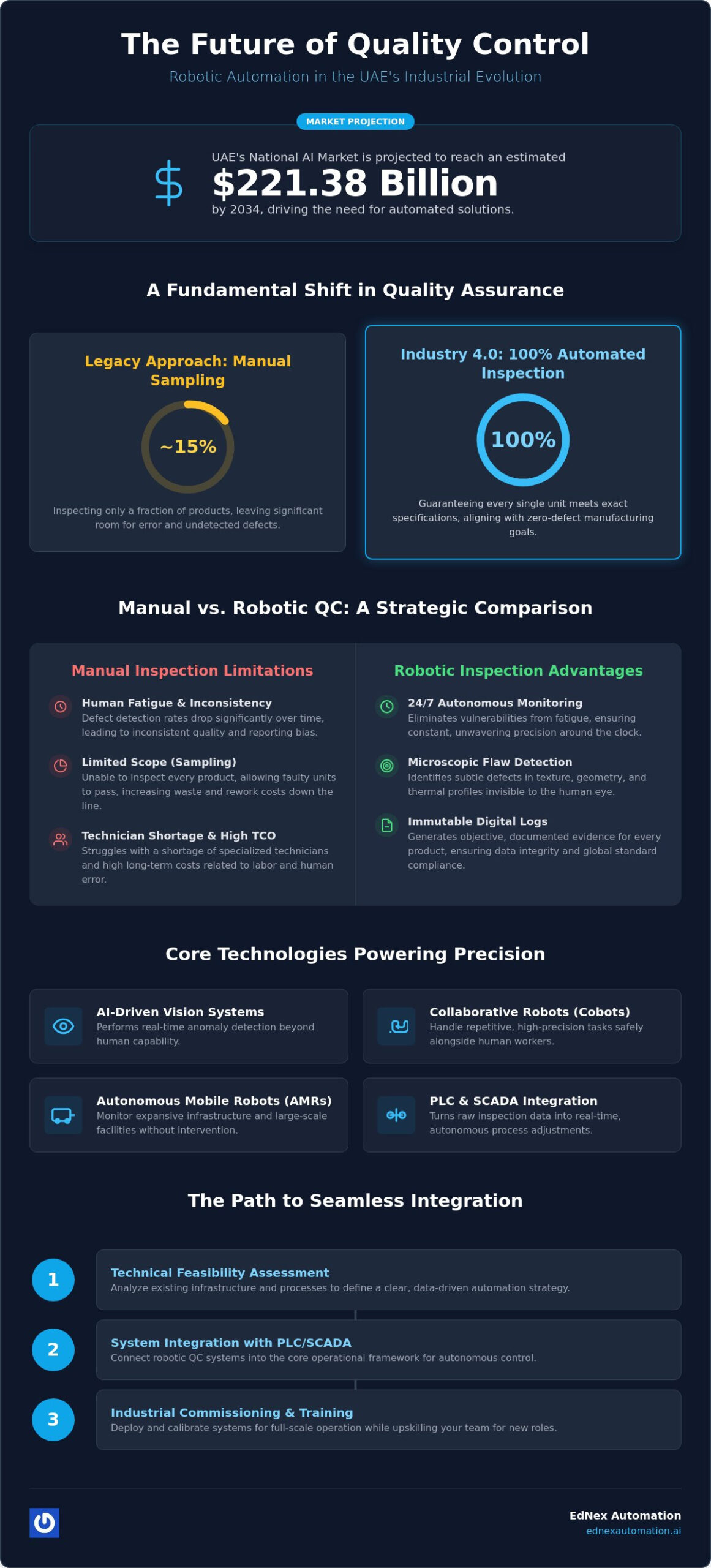
The UAE industrial sector is undergoing a profound metamorphosis. Moving beyond traditional manufacturing models, the nation is aggressively adopting the principles of Industry 4.0 to secure its position as a global manufacturing hub. Central to this transition is the deployment of high-precision robotic quality control solutions UAE. These systems represent a departure from legacy manual sampling techniques, where only a fraction of products were inspected, to a comprehensive model of 100% automated inspection. By integrating an Industrial robot into the inspection line, manufacturers can guarantee that every single unit leaving the facility meets exact specifications, a feat impossible with human-centric processes.
This technological shift aligns perfectly with the UAE National Strategy for Artificial Intelligence 2031. It isn’t just about speed; it’s about industrial diversification. As the Emirates expands into high-stakes sectors like aerospace, pharmaceuticals, and advanced electronics, the tolerance for error disappears. Autonomous inspection addresses the persistent challenge of finding and retaining highly skilled QC technicians. Instead of struggling with workforce limitations, companies can reallocate human talent to high-value roles such as system programming and process optimization, while the robots handle the repetitive, high-precision tasks. Maintaining global export standards requires this level of technological maturity, ensuring the “Made in UAE” label remains a symbol of uncompromising quality.
Meeting Global Standards with Local Expertise
Achieving international quality certifications requires rigorous, documented evidence of consistency. Automated inspection systems provide this by generating immutable digital logs for every product. This level of transparency is vital for the ‘Make it in the Emirates’ initiative, ensuring that locally manufactured goods command respect in global markets. Designed to operate flawlessly in the UAE’s extreme industrial environments, these robotic quality control solutions UAE withstand high temperatures and dust that might compromise human performance or sensitive manual equipment. They provide a bridge between global technological breakthroughs and regional industrial needs.
Overcoming the Limitations of Manual Inspection
Human fatigue is an unavoidable variable in any manual QC process. Studies often show that defect detection rates drop significantly after just a few hours of repetitive visual inspection. Transitioning to 24/7 autonomous monitoring eliminates this vulnerability. Leveraging sophisticated algorithms and high-speed sensors, these systems identify microscopic flaws that the human eye simply cannot perceive. By identifying defects at the earliest possible stage, robotic systems prevent the compounding costs of waste and rework. You don’t just find errors; you prevent them from moving down the value chain, which directly enhances operational profitability and long-term business viability.
Core Technologies Powering Robotic Quality Control Solutions
Implementing sophisticated robotic quality control solutions UAE requires a precise orchestration of sensory inputs, mechanical agility, and computational intelligence. While the International Federation of Robotics highlights the global surge in automated inspection, the UAE’s industrial landscape demands a more specialized approach. Modern systems now move beyond simple binary “pass or fail” logic, utilizing AI-driven computer vision to perform real-time anomaly detection. These systems identify subtle deviations in texture, geometry, and thermal profiles that would remain invisible to the human eye, ensuring that every component meets the highest standards of structural integrity.
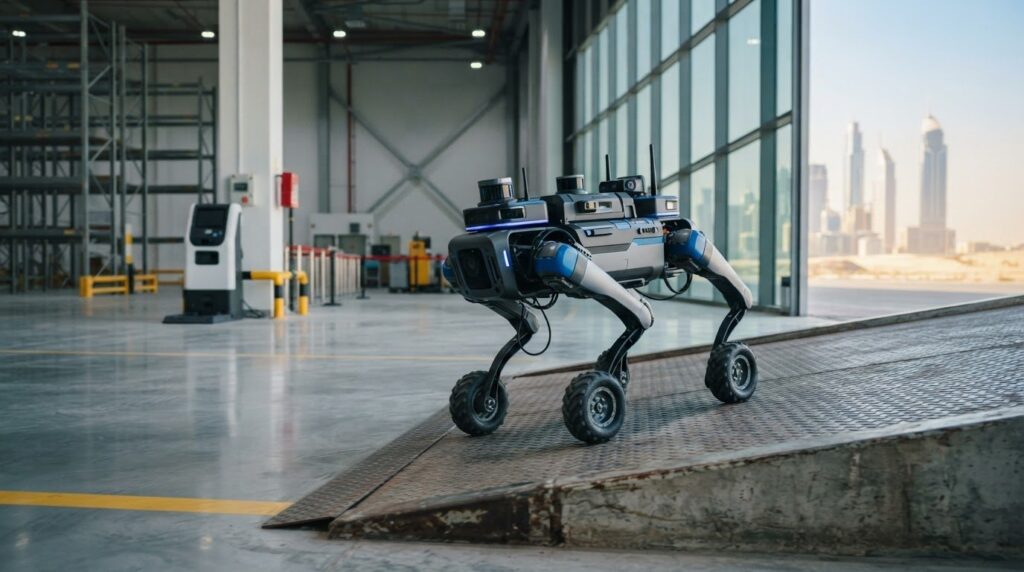
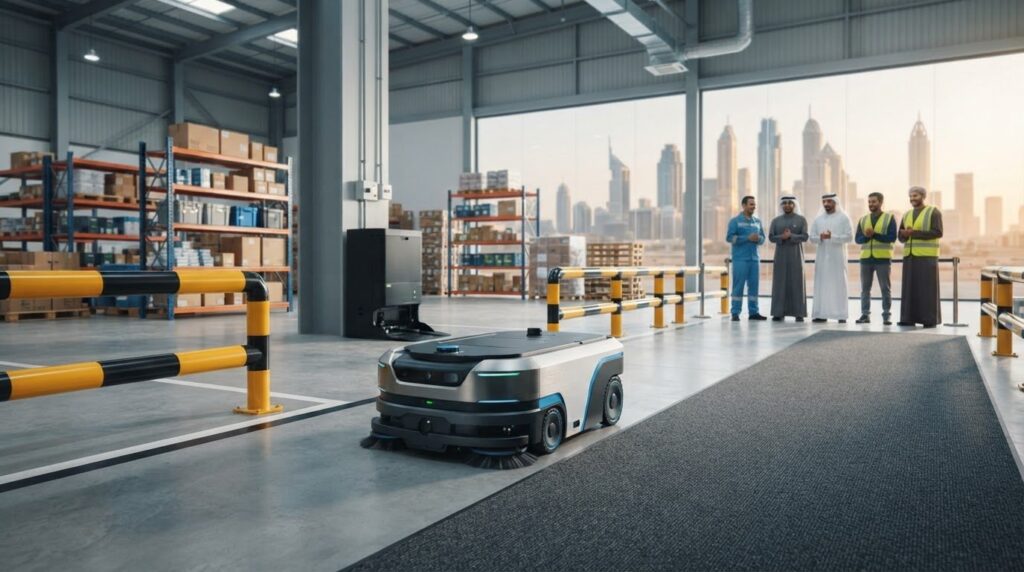
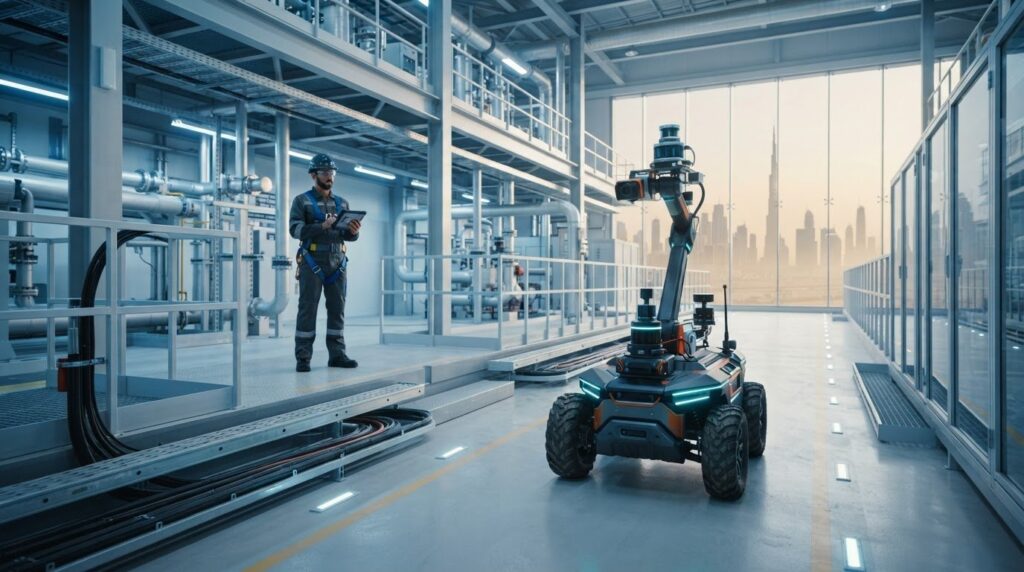
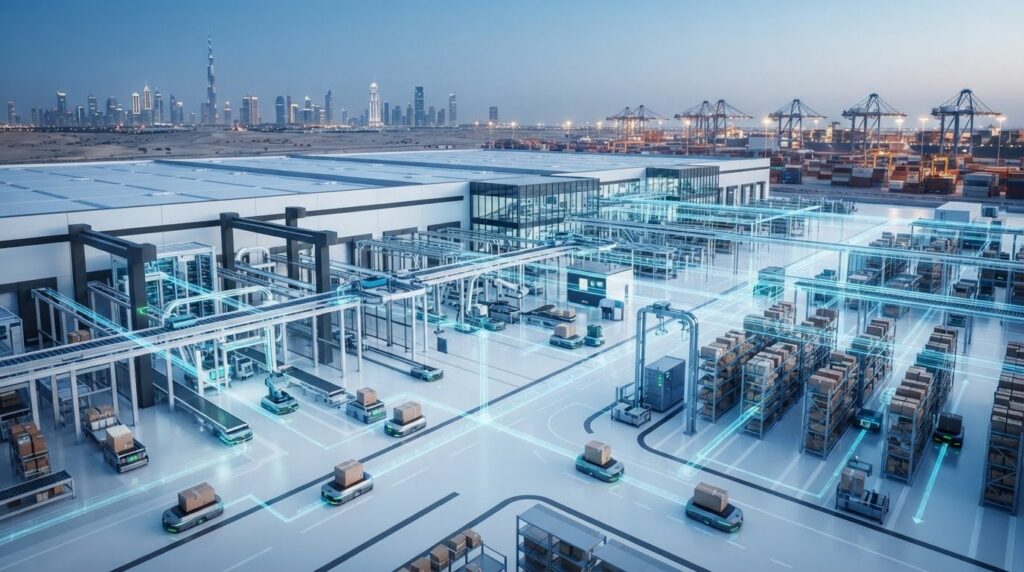
Leveraging Autonomous Mobile Robots (AMRs) for large-scale facility inspection allows operators to monitor expansive infrastructure without human intervention. These mobile units, combined with specialized inspection robots, create a multi-layered defense against quality degradation. With the UAE robot guidance systems market projected to grow at a CAGR of 8-12% through 2035, the emphasis is shifting toward intelligent navigation and sensor fusion. This evolution ensures that inspection is no longer a bottleneck but a continuous, value-adding process. If you’re looking to optimize your facility’s oversight, exploring a tailored integration through EdNex Automation provides the technical roadmap necessary for such a transition.
Vision Systems and Sensor Fusion
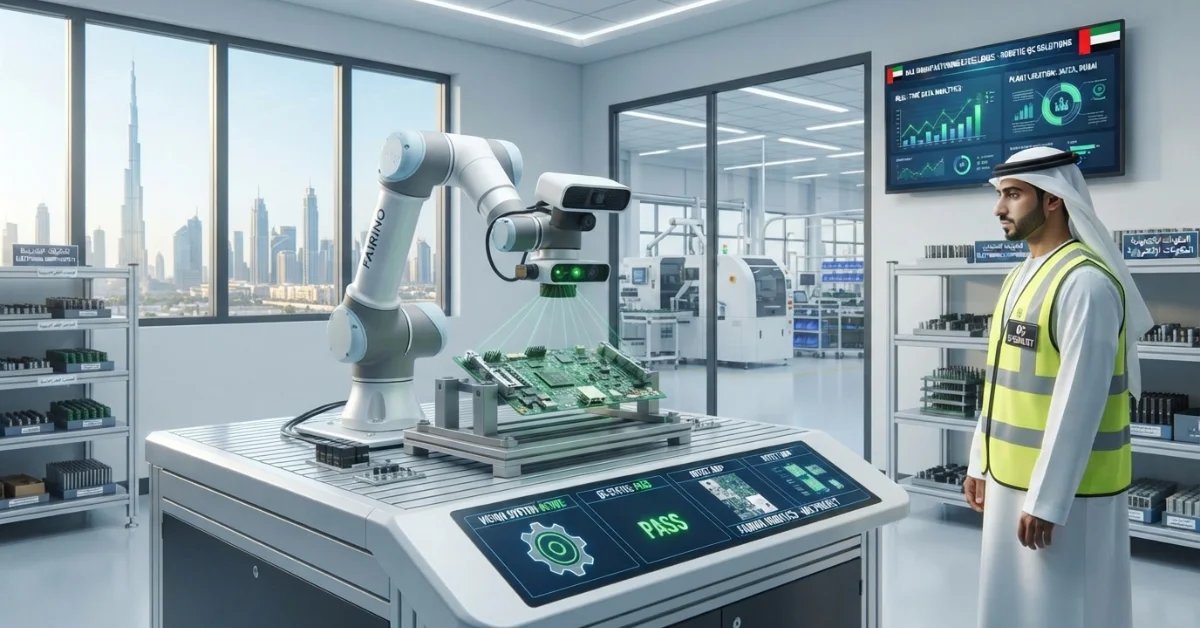
Achieving sub-millimeter precision in high-speed production environments depends on the seamless integration of 3D laser profiling and thermographic sensors. This sensor fusion allows the system to detect subsurface defects and internal stress points that visual cameras might miss. AI algorithms play a critical role here, distinguishing between harmless cosmetic flaws and critical structural failures. By processing high-bandwidth data streams locally, these systems provide instantaneous feedback, allowing for immediate intervention before a minor defect results in significant waste.
Collaborative vs. Dedicated Inspection Cells
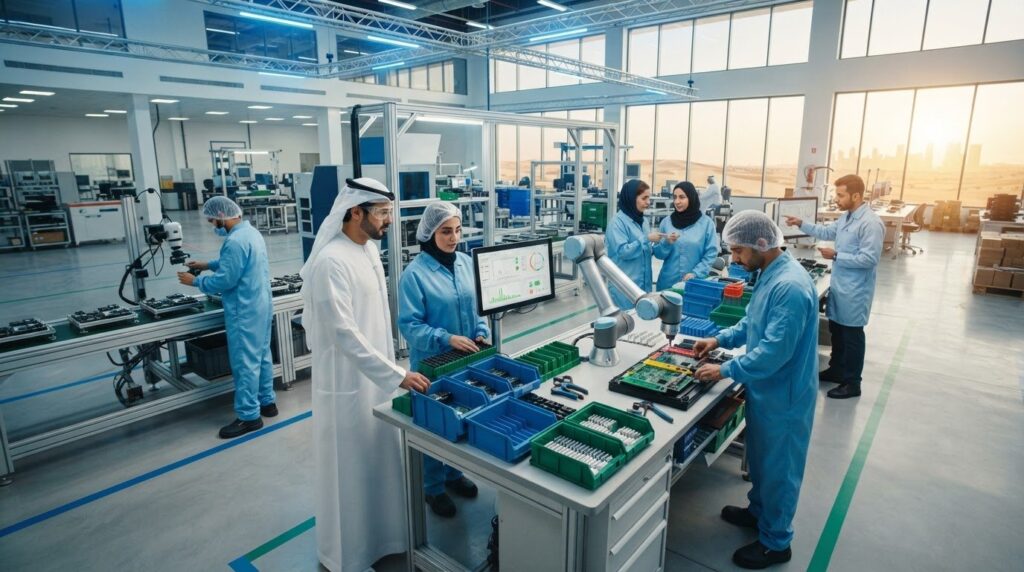
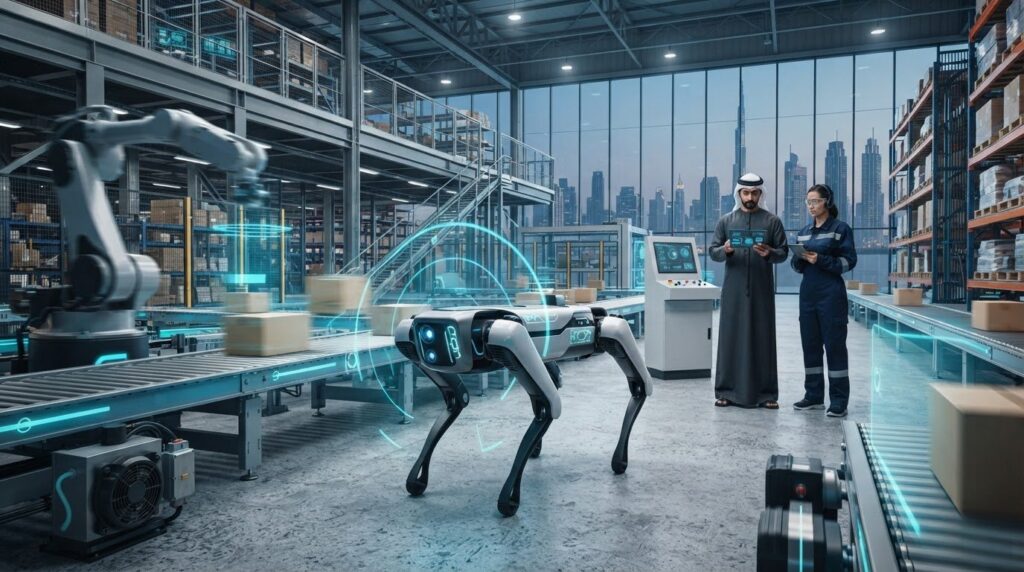
Choosing between agile and high-volume setups is a strategic decision for any UAE enterprise. Deploying collaborative robots UAE offers unparalleled flexibility for human-adjacent inspection stations where frequent product changeovers are common. These cobots work safely alongside technicians, handling repetitive measurement tasks while humans focus on complex decision-making. Conversely, dedicated inspection cells are engineered for maximum throughput in high-volume manufacturing environments. We’re also seeing the strategic emergence of humanoid robots for sale UAE for complex assembly inspections, where human-like dexterity is required to navigate intricate components that traditional arms cannot easily reach.
Manual vs. Robotic QC: A Strategic Comparison for UAE Enterprises
Evaluating the long-term viability of your production line requires a rigorous comparison between legacy manual inspection and modern robotic quality control solutions UAE. While manual processes often seem flexible, they introduce significant risks related to human fatigue and subjective judgment. Transitioning to an autonomous framework eliminates “reporting bias,” ensuring that quality logs remain immutable and objective. This transparency is indispensable for high-stakes industries like Oil & Gas, where a single undetected flaw can lead to catastrophic operational failure. By deploying robotic systems, enterprises achieve a level of reliability in harsh environments that human technicians simply cannot sustain over extended shifts.
Scalability remains a primary driver for this technological migration. Increasing production throughput in a manual system necessitates a proportional increase in headcount, bringing additional recruitment, training, and housing costs. Conversely, robotic systems allow for 24/7 operation with minimal incremental expense. Considering the Total Cost of Ownership (TCO) over a five-year horizon, the initial capital expenditure is offset by the dramatic reduction in rejection rates and the elimination of human-related variability. Research indicates that the 7-year TCO for industrial robotics typically ranges from 1.8 to 2.5 times the initial investment, a figure that highlights the importance of looking beyond the sticker price to understand long-term value.
ROI and Long-Term Value Realization
Calculating the payback period involves more than just comparing labor hours; it requires a deep dive into the costs of waste, rework, and potential liability. Reducing rejection rates by even a small percentage can save millions in raw materials and energy costs. Beyond immediate savings, these systems protect your brand reputation in the competitive UAE market by ensuring that only perfect products reach the end consumer. Industrial organizations within the GCC typically realize a complete return on investment for robotic quality control systems within 18 to 36 months, depending on the complexity of the inspection tasks and the volume of production.
Precision and Repeatability Metrics
Engineering excellence is defined by statistical control, and robotic systems offer superior Ppk and Cpk indices compared to manual processes. These metrics quantify the system’s ability to produce parts within specified tolerances consistently. Achieving 100% part traceability ensures total regulatory compliance, providing a digital birth certificate for every unit. A recent transition of a UAE-based assembly line to a zero-defect status demonstrated that removing human variability from the final check resulted in a significant reduction in customer-reported issues within the first year of operation. This shift from reactive to proactive quality management is the hallmark of a modern, competitive enterprise.
Closing the Loop: Integrating QC with PLC and SCADA Systems
Establishing a seamless connection between robotic quality control solutions UAE and the broader industrial ecosystem represents the final frontier of factory automation. Many legacy facilities treat inspection as an isolated “end-of-line” event, which creates a significant lag between defect detection and process correction. By establishing a direct link between inspection sensors and the plant’s control architecture, manufacturers can close the loop, enabling autonomous fault correction. This integration ensures that when a robot identifies a recurring dimensional deviation, the system automatically adjusts the upstream CNC parameters or assembly torque settings without human intervention, effectively preventing waste before it accumulates.
The deployment of PLC and SCADA integration services transforms raw vision data into actionable intelligence displayed on a unified facility-wide dashboard. This centralized view provides engineers with real-time quality metrics, allowing them to spot microscopic trends before they result in mass rejections. As these systems become increasingly interconnected, cybersecurity considerations for QC robots on the industrial network are paramount. Protecting high-bandwidth vision streams and control commands from external interference is a non-negotiable requirement for modern industrial security, especially in the UAE’s high-stakes energy and manufacturing sectors.
Real-Time Data Acquisition and Analytics
High-speed production lines generate massive volumes of data that can overwhelm traditional networks if not managed correctly. Using edge computing allows for local processing of high-bandwidth vision data, reducing latency in defect rejection to milliseconds. This real-time acquisition also facilitates predictive maintenance for the QC robots themselves. By monitoring the performance of servos and sensors via the SCADA interface, the system can schedule maintenance activities during planned downtime, ensuring 100% operational availability and long-term reliability.
Interoperability in the Modern Factory
Achieving interoperability requires standardizing communication protocols such as OPC UA or MQTT to bridge the gap between proprietary robotic controllers and centralized PLCs. This seamless data flow is essential for coordinating complex logistics, such as utilizing autonomous mobile robots to transport rejected parts to dedicated rework stations or repositioning flexible QC modules based on fluctuating production demands. To ensure your facility benefits from this level of synchronization, you should partner with EdNex Automation to design an integrated control framework that supports your long-term industrial evolution.
Partnering for Success: EdNex Automation’s Integration Framework
Transitioning from the technical nuances of SCADA integration to physical implementation requires a partner capable of managing high-level complexity. EdNex Automation operates as a strategic bridge-builder, connecting global technological breakthroughs with the specific industrial needs of the Emirates. Our deployment of robotic quality control solutions UAE isn’t a mere equipment installation; it’s a systematic transformation of your industrial framework. We provide start-to-finish expertise, ensuring that every sensor and robotic arm functions as a cohesive unit within your existing facility, from the initial technical feasibility study to the final commissioning of the system.
Customizing these solutions for the unique demands of the UAE’s energy and manufacturing sectors is a core component of our value proposition. We recognize that high-stakes environments like industrial gas facilities require specialized oversight. By focusing on long-term business viability, we help organizations evolve their quality assurance from a cost center into a competitive advantage. Our approach ensures that your facility is not only compliant with current standards but is also future-proofed for the next generation of Industry 4.0 innovations, maintaining your status as an industry leader in an increasingly automated global market.
Our Systematic Implementation Process
Our methodology is divided into three distinct phases designed to mitigate risk and maximize operational improvement. During Phase 1, we conduct a comprehensive technical audit and ROI mapping for your QC automation, establishing a clear baseline for success. Phase 2 involves the bespoke integration of robotics with your existing automated storage and retrieval systems, ensuring that quality data flows seamlessly across your entire logistics chain. Finally, Phase 3 consists of rigorous testing and ISO-compliant safety commissioning. We strictly adhere to Cabinet Resolution No. (15) of 2026, verifying that every deployment meets the latest safety requirements for industrial facilities in the region.
Why UAE Industry Leaders Choose EdNex
Industrial leaders prioritize reliability and intellectual depth when selecting a technical partner. Our official certification status and alliances with global robotics leaders serve as a marker of legitimacy, reassuring clients of our global standing and technical prowess. We don’t just provide tools; we deliver the intellectual framework necessary for operational excellence. Our visionary approach is grounded in the specific economic context of the UAE, ensuring your strategy remains resilient. To begin your facility’s transformation, consult with our automation experts to design your robotic QC solution and secure your organization’s position at the cutting edge of industrial precision.
Securing Your Industrial Future in the Emirates
The transition toward autonomous oversight is no longer a distant prospect; it’s a current operational imperative for any facility seeking long-term viability. Implementing robotic quality control solutions UAE allows manufacturers to transcend the limitations of manual inspection, replacing subjective judgment with sub-millimeter precision and real-time data integrity. By closing the loop between advanced vision systems and centralized PLC/SCADA architectures, your facility can achieve the zero-defect status required to compete on a global scale while ensuring strict compliance with evolving regional regulations.
EdNex Automation stands as your dedicated bridge between global innovation and local industrial excellence. As certified PLC/SCADA integration experts and a full-service Industry 4.0 partner with national UAE coverage, we provide the intellectual and technical framework necessary for a seamless digital transformation. It’s time to evolve your quality assurance from a reactive necessity into a proactive engine for growth and reliability. We’re ready to help you lead the next wave of industrial progress and secure your position at the forefront of the region’s manufacturing evolution.
Request a Strategic Automation Assessment for Your Facility
Frequently Asked Questions
What are the primary benefits of robotic quality control for UAE manufacturers?
The primary benefits include achieving 100% inspection coverage and the total elimination of human error in defect detection. These robotic quality control solutions UAE provide real-time data acquisition, allowing operators to optimize production processes instantaneously. By ensuring every unit meets exact specifications, manufacturers can uphold the high-speed throughput and rigorous export standards required by the national industrial strategy.
How do robotic vision systems handle complex or reflective surfaces?
Advanced vision systems utilize multi-spectral lighting and 3D laser profiling to effectively neutralize glare and accurately map complex geometries. By employing polarized filters and sophisticated computer vision algorithms, these systems identify microscopic anomalies on polished or metallic surfaces. This ensures that even the most challenging materials are inspected with a level of precision that manual visual checks cannot replicate.
Can robotic quality control solutions be integrated with legacy PLC systems?
Yes, modern inspection robots can be successfully integrated with legacy PLC systems through specialized industrial gateways and standardized protocols like OPC UA. This allows older manufacturing facilities to modernize their quality assurance frameworks without the need for a complete infrastructure overhaul. Bridging this gap ensures that legacy hardware can still contribute to a data-driven, Industry 4.0 environment.
What is the typical ROI for an automated inspection system in the GCC?
Industrial organizations within the GCC typically realize a complete return on investment for automated inspection systems within 18 to 36 months. This timeframe is driven by significant reductions in material waste, lower rejection rates, and the optimization of labor costs. Over time, the increased brand reputation and reduced liability costs further enhance the long-term economic value of the system.
Are collaborative robots (cobots) safe for quality control in human-centric environments?
Collaborative robots are engineered with integrated force-torque sensors and speed-limiting functions specifically designed for safe human-adjacent operation. These cobots automatically slow down or stop upon detecting contact, ensuring they meet rigorous international safety standards. They’re ideal for agile QC stations where human oversight is required, providing a reliable partner for repetitive measurement tasks.
How does EdNex Automation provide local support for integrated robotic systems?
EdNex Automation delivers comprehensive local support through a certified team of engineering experts based directly within the UAE. We provide start-to-finish expertise, ranging from initial technical audits to final commissioning and ongoing system updates. This regional presence ensures that your robotic quality control solutions UAE receive rapid maintenance and technical optimization to maintain 100% operational uptime.
What certifications are required for industrial robots in the UAE?
Industrial robots in the UAE must comply with international safety standards, specifically ISO 10218-1 and ISO 10218-2, which govern robotic safety and integration. Furthermore, facilities must adhere to regional mandates, including Cabinet Resolution No. (15) of 2026, regarding safety requirements in industrial environments. Ensuring these certifications are in place is vital for maintaining legal compliance and operational safety.
How can robotic QC improve compliance in the Oil and Gas sector?
Robotic QC improves compliance by providing immutable digital traceability for every critical component inspected within the Oil and Gas sector. Automated systems eliminate reporting bias and human error, ensuring that infrastructure parts meet exact safety specifications. This rigorous documentation helps operators meet strict environmental and safety regulations while significantly reducing the risk of catastrophic operational failure.