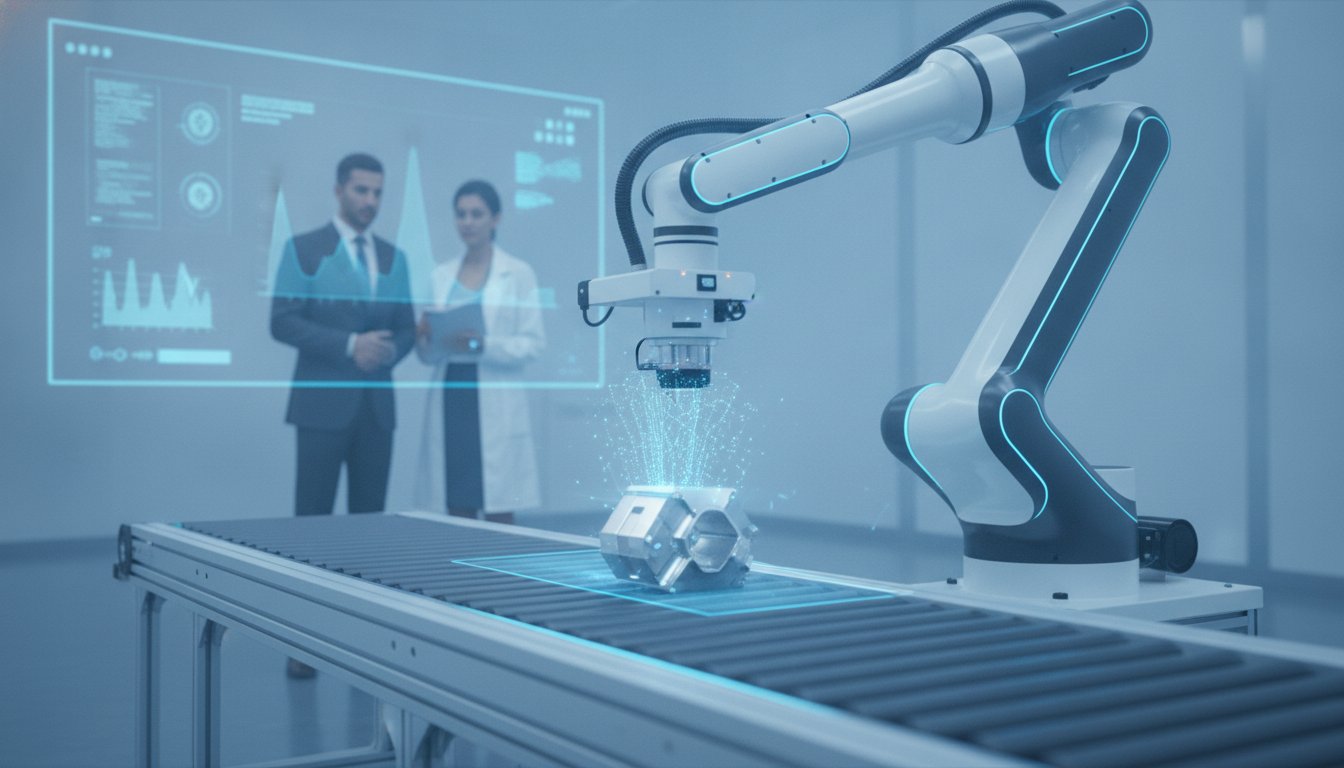
By 2026, relying on manual quality checks won’t just be an inefficiency; it will be a systemic risk to your competitive standing. As production speeds accelerate, the margin for human error disappears, leaving manufacturers struggling with high scrap rates and inconsistent quality benchmarks. Implementing a sophisticated automated inspection system for production lines has become the only viable path for organizations aiming to maintain rigorous standards while scaling output. You understand that traditional inspection methods often create data silos that fail to communicate with your broader control architecture, hindering your ability to make informed, real-time decisions.
Leveraging our expertise as a strategic integrator of Industry 4.0 technologies, this guide provides a roadmap for achieving total industrial transparency. You’ll discover how to transition toward zero-defect production by synchronizing advanced inspection robots with your existing SCADA and MES frameworks. We will examine the critical steps for deploying intelligent vision systems that don’t just identify errors but actively optimize your throughput. By the end of this strategic guide, you’ll possess the intellectual framework required to transform your quality control from a bottleneck into a high-performance data node within a unified industrial ecosystem.
Key Takeaways
- Transition from reactive quality checks to proactive AI-driven feedback loops to eliminate defects before they propagate through the manufacturing cycle.
- Discern the critical functional differences between rule-based precision for fixed geometries and deep learning models for identifying organic cosmetic variations.
- Discover how to integrate an automated inspection system for production lines as a central data node that feeds real-time quality metrics into your SCADA dashboard.
- Leverage closed-loop control strategies to enable your inspection systems to automatically adjust PLC parameters for optimized industrial throughput.
- Navigate a comprehensive deployment roadmap designed for the UAE industrial sector, focusing on high-ROI zones and bespoke technological alignment.
The Evolution of Quality Control: Why Automated Inspection is Mandatory
Industrial quality control has undergone a fundamental transformation, moving away from isolated, end-of-line checks toward a continuous, intelligent oversight model. Modern manufacturing demands more than simple pass-fail results; it requires a multi-sensor, AI-driven feedback loop that functions as the nervous system of the facility. By implementing a sophisticated automated inspection system for production lines, organizations can transition from reactive defect management to proactive process optimization. This evolution is necessitated by the widening labor gap in high-precision sectors where the scarcity of specialized technicians makes manual oversight an unsustainable risk. Manual oversight won’t suffice when precision is measured in microns and production cycles are measured in milliseconds.
Overcoming the Limitations of Manual Inspection
Relying on human vision introduces an inherent level of variability that modern industrial standards can’t tolerate. Analyzing human fatigue and cognitive load reveals that error detection rates inevitably decline during repetitive visual tasks, especially as production line speeds accelerate to meet global demand. While a human inspector might maintain focus for several hours, an automated system provides unwavering precision across every shift. This shift directly addresses the Cost of Poor Quality (COPQ), which acts as a hidden drain on industrial margins through excessive scrap and expensive warranty claims. By replacing subjective human judgment with objective, high-speed vision sensors, manufacturers eliminate the “standards drift” that typically occurs between morning and night shifts.
Meeting Modern Regulatory and Compliance Standards
Securing a competitive position in the global market requires adherence to increasingly stringent digital traceability requirements. Achieving 100% inspection rates is no longer an aspirational goal but a mandatory requirement for high-stakes industries such as aerospace, medical devices, and pharmaceuticals. Utilizing an automated inspection system for production lines ensures that every single unit produced is documented within a permanent digital record, providing total industrial transparency. As we approach 2026, industrial standards will likely mandate this level of granular data for all global exports. By integrating inspection robots directly with PLC and SCADA systems, UAE-based manufacturers can provide the verified data trails necessary to satisfy international auditors and regional regulatory bodies alike. This comprehensive approach transforms quality data into a strategic asset, ensuring long-term business viability in a rapidly modernizing landscape.
Core Technologies: The Anatomy of a 2026 Inspection System
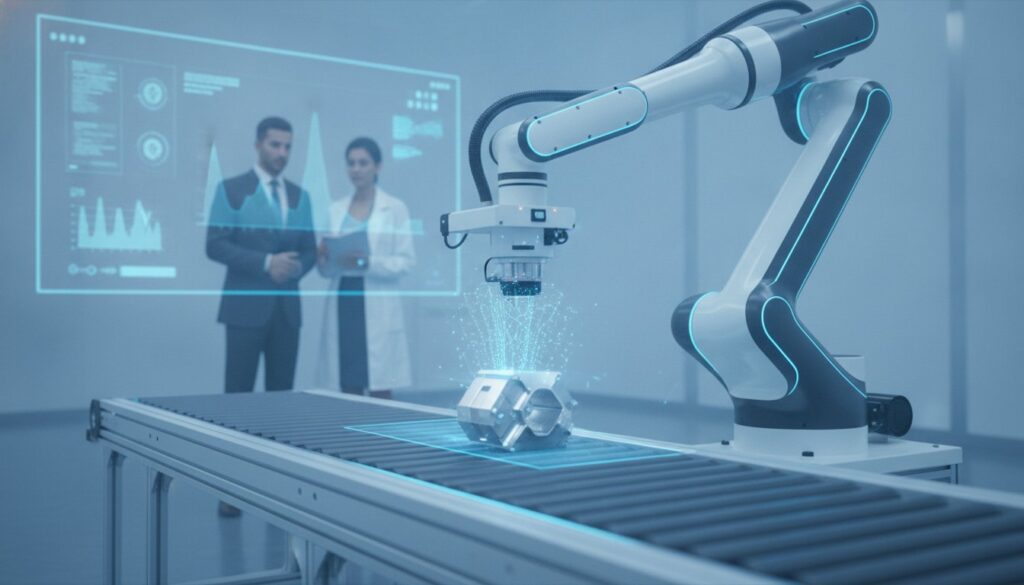
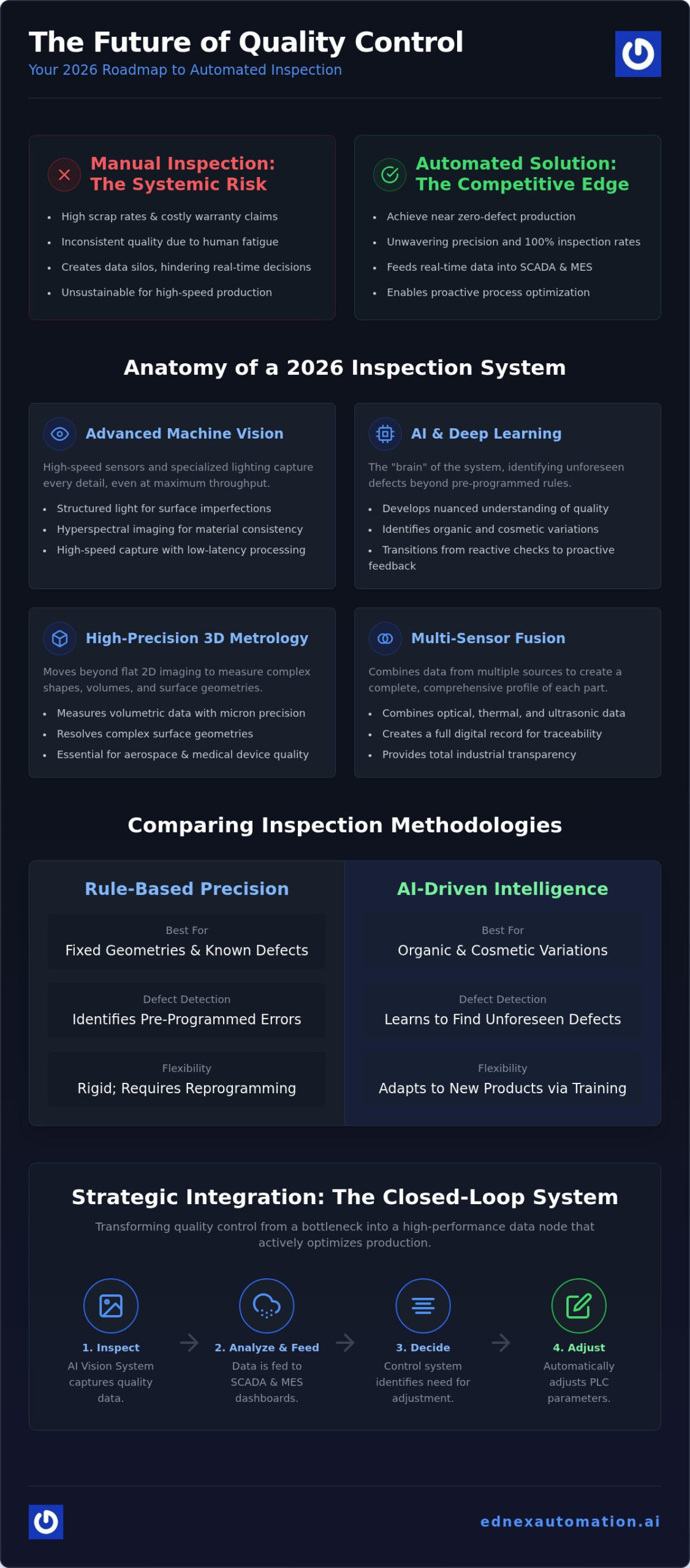
The anatomy of a modern automated inspection system for production lines extends far beyond simple optical capture. In the 2026 industrial cycle, these systems function as a sophisticated stack of hardware and intelligence, moving from standard 2D imaging into high-precision 3D metrology. This transition allows for the measurement of volumetric data and complex surface geometries that 2D systems simply cannot resolve. AI and deep learning algorithms now form the core of these architectures, enabling systems to identify unforeseen defects that haven’t been pre-programmed into a rule-based library. By training on vast datasets, these systems develop a nuanced understanding of acceptable variance versus critical failure. Sensor fusion enhances this perspective by combining optical data with thermal and ultrasonic inputs, creating a comprehensive profile of every component processed.
Advanced Machine Vision and Optical Sensors
Precision in automated inspection relies heavily on the synergy between sensors and specialized lighting. Structured light and dark-field illumination techniques are essential for revealing surface imperfections that remain invisible under standard factory conditions. Hyperspectral imaging takes this a step further, analyzing chemical and material consistency by capturing data across hundreds of spectral bands. Maintaining accuracy at maximum line velocity requires high-speed capture technology with ultra-low latency processing. These sensors ensure that even at peak throughput, the system captures every detail without motion blur or data loss, providing the granular data needed for total industrial transparency.
Robotics and Autonomous Inspection Units
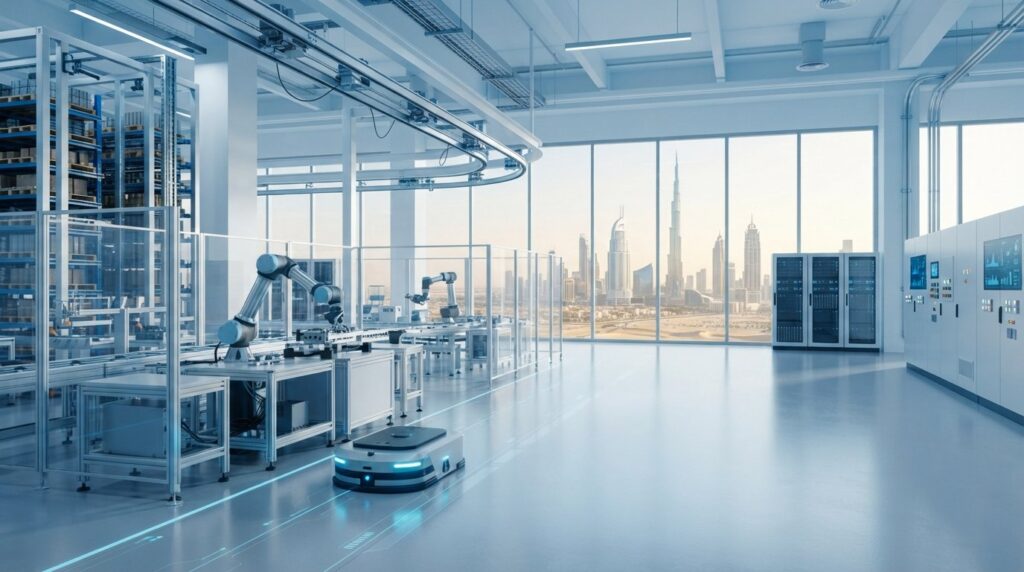
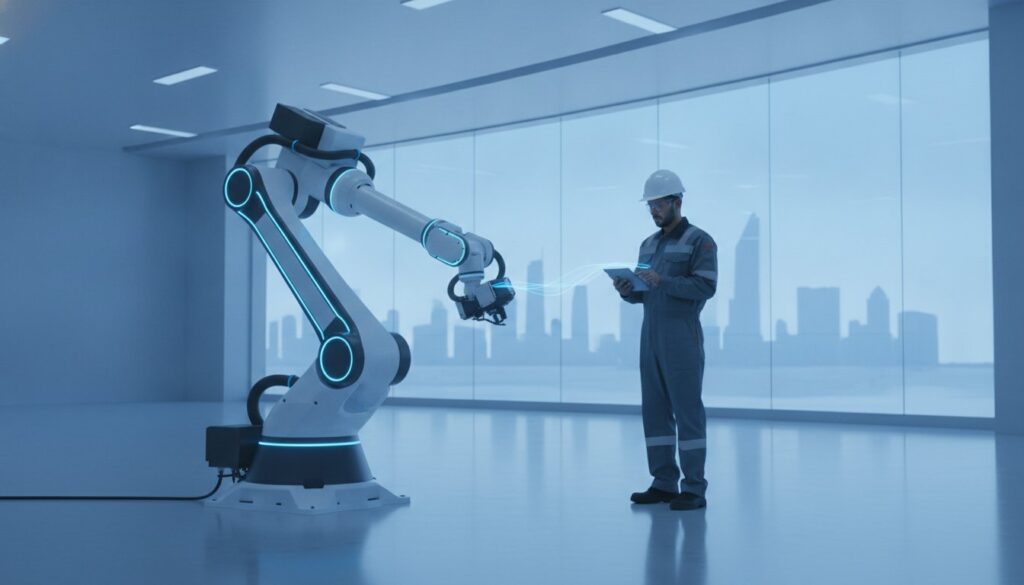
Static sensors are often insufficient for non-linear production environments or complex geometries. Deploying inspection robots allows for dynamic, multi-angle verification that fixed cameras cannot achieve. These mobile units navigate around large assemblies, ensuring every joint and fastener meets specifications. Additionally, collaborative robots (cobots) assist in complex assembly verification by working alongside human operators to inspect hard-to-reach internal components. Autonomous Mobile Robots (AMRs) serve as flexible quality checkpoints throughout the facility, moving between stations to perform spot checks or material verification.
For organizations seeking to modernize their infrastructure, exploring a bespoke automation framework is the first step toward achieving these high-tech benchmarks. Integrating these robotic elements ensures your automated inspection system for production lines is as mobile and adaptable as the rest of your facility, effectively bridging the gap between global technology and regional industrial needs.
Comparing Inspection Methodologies: Rule-Based vs. AI-Driven
Selecting the appropriate logic for an automated inspection system for production lines requires a strategic understanding of your product’s physical characteristics and acceptable variances. For decades, manufacturers relied on rule-based systems that utilize deterministic algorithms to measure fixed dimensions or verify the presence of specific components. While these systems remain unmatched for high-speed dimensional metrology, they struggle with organic defects like surface scratches or variable textures. AI-driven inspection, utilizing deep learning neural networks, bridges this gap by mimicking human visual perception but with industrial-scale consistency. By 2026, the industry gold standard has shifted toward hybrid architectures that combine the rigid precision of rule-based logic with the flexible intelligence of AI. This synergy allows for the identification of rare defects using synthetic data generation, effectively training models on anomalies that may only occur once in a million cycles.
When to Choose Traditional Machine Vision
Rule-based machine vision is the optimal choice for high-speed pass/fail logic where the criteria are strictly defined by geometric shapes or numerical values. These systems excel in barcode reading, Optical Character Recognition (OCR), and label verification where the environment is controlled and the target is consistent. Because these algorithms require less computational overhead than deep learning models, they’re ideal for low-latency environments where processing speed is the primary constraint. Utilizing traditional vision ensures that high-volume production lines maintain maximum throughput without the need for the extensive GPU resources required by complex AI models. It’s a reliable, cost-effective solution for high-velocity environments with fixed parameters.
The Power of Deep Learning in Defect Classification
Implementing deep learning becomes essential when your quality benchmarks involve subjective or complex visual criteria. Detecting scratches, dents, or texture anomalies on reflective or curved surfaces presents a challenge that traditional algorithms can’t solve reliably. AI-driven systems reduce false rejects by iteratively learning the difference between a critical defect and a harmless cosmetic variation. This adaptability is crucial for facilities that handle frequent product changes; the system can be retrained on new variations without a total overhaul of the underlying code. By integrating these intelligent models, your automated inspection system for production lines becomes a dynamic asset that evolves alongside your manufacturing complexity, ensuring that even the most subtle deviations are captured and classified with surgical precision. The cross-industry impact of these AI models is significant, as seen in the work of Omdena, which highlights how similar deep learning technologies are being deployed in sectors like precision agriculture.
Integrating an automated inspection system for production lines into a unified control architecture transforms quality data from a static report into a dynamic operational lever. By treating every inspection point as a high-frequency data node, manufacturers can feed granular quality metrics directly into the SCADA dashboard for centralized oversight. This connectivity enables closed-loop control, where real-time inspection data triggers automatic adjustments to PLC parameters to correct process drift before it results in scrap. Deciding between edge computing and cloud processing is critical for this synchronization; edge processing ensures the sub-millisecond response times required for high-speed rejection, while the cloud handles long-term trend analysis. This seamless flow of information is what allows for the achievement of true real-time OEE tracking across the entire facility.
Protocol Standardization and Interoperability
Establishing a reliable communication bridge requires strict adherence to industry-standard protocols such as OPC UA and MQTT. These frameworks are the backbone of professional PLC and SCADA integration services, ensuring that data moves securely from the vision sensor to the line controller without latency. Bridge-building between legacy hardware and modern inspection platforms is a common challenge, yet it’s essential for achieving total industrial transparency. By utilizing standardized middleware, we ensure that disparate systems speak the same language, allowing for a cohesive automation environment that doesn’t require a total equipment overhaul. It’s about creating a systematic organizer that brings order to complex, multi-vendor environments.
Data Visualization and Predictive Quality
Developing an intuitive HMI for quality teams ensures that complex data is translated into actionable insights. Beyond simple monitoring, historical inspection data serves as a foundation for predictive quality models that identify machine failure patterns before they manifest as defects. For instance, integrating quality data with automated storage and retrieval systems (ASRS) enables instantaneous quarantine management; if a batch fails inspection, the ASRS automatically moves the affected materials to a secure zone for review. This level of synchronization reduces manual handling and prevents compromised goods from reaching the shipping stage, protecting your long-term business viability.
To optimize your facility’s data architecture and ensure your automated inspection system for production lines is fully synchronized, consider consulting with our team for a comprehensive industrial integration audit.
Implementation Roadmap: Deploying Inspection Systems in the UAE
Navigating the complexities of industrial transformation, a structured implementation roadmap ensures that your automated inspection system for production lines delivers maximum operational impact from day one. The process begins with a comprehensive feasibility and vision audit, a critical phase where high-value ROI zones are identified to ensure that automation investments align with specific production bottlenecks. Following this assessment, bespoke system design bridges the gap between global hardware capabilities and the unique requirements of regional infrastructure. This stage involves matching high-resolution sensors and specific AI models to the environmental and mechanical constraints of your facility. Pilot testing utilizes synthetic data generation to simulate rare defects, ensuring the system is fully prepared for real-world anomalies before full-scale integration occurs. Finally, workforce training programs ensure your team is Industry 4.0 ready, capable of managing and interpreting the data streams generated by these advanced platforms.
Bespoke Solutions for National Industrial Sectors
Developing specialized inspection frameworks requires a deep understanding of the diverse sectors that drive the national economy. In the Oil & Gas industry, for example, inspection systems utilize specialized sensors designed to maintain precision in harsh, high-temperature environments where standard hardware might fail. Within high-volume logistics centers, the synergy between vision systems and autonomous mobile robots allows for dynamic quality checkpoints that adapt to changing floor layouts. For the food and pharmaceutical sectors, the focus shifts toward ensuring total serialization compliance and maintaining strict hygiene standards through non-contact, high-speed verification. These tailored applications ensure that every unit produced meets both international quality benchmarks and regional regulatory mandates.
The EdNex Advantage: Local Expertise, Global Technology
Positioning your organization for long-term business viability requires a partner who acts as a systematic organizer rather than a mere equipment vendor. EdNex Automation provides the intellectual framework necessary for successful implementation, offering end-to-end expertise that spans from initial consultation to certified technical support across the entire UAE. By connecting global technological breakthroughs with regional industrial needs, we ensure that your automated inspection system for production lines is both modular and scalable. This approach allows your facility to evolve as new challenges emerge, securing your competitive standing in an increasingly automated world. We don’t just provide the tools; we deliver a comprehensive, start-to-finish partnership that guarantees your industrial infrastructure remains at the cutting edge of innovation.
Future-Proofing Quality through Industrial Intelligence
Identifying the shift from reactive checks to proactive, AI-driven feedback loops represents the most significant evolution in modern manufacturing. By integrating a sophisticated automated inspection system for production lines, organizations eliminate the inherent variability of human judgment and achieve 100% inspection rates. This transformation requires a unified architecture where vision data flows seamlessly into PLC and SCADA systems, enabling the real-time process adjustments necessary for zero-defect production.
Securing long-term business viability in 2026 and beyond demands a partner who provides the intellectual framework for such complex transformations. EdNex Automation offers visionary Industry 4.0 consultancy backed by expert PLC and SCADA integration and global technology alliances. We provide national UAE support to bridge the gap between global technological breakthroughs and your specific operational needs. Partner with EdNex Automation for a comprehensive industrial audit to begin your journey toward total industrial transparency. Your facility’s evolution into a high-performance, data-driven ecosystem starts today.
Frequently Asked Questions
What is the typical ROI for an automated inspection system?
ROI typically manifests through a drastic reduction in scrap rates and the elimination of manual inspection labor costs. Most industrial facilities observe a full return on investment within 12 to 24 months, depending on production volume and defect complexity. By preventing defective batches from reaching the shipping stage, these systems protect brand reputation and mitigate the risk of expensive product recalls, ensuring long-term business viability in a competitive global market.
Can automated inspection systems be integrated with legacy PLC hardware?
Integration with legacy PLC hardware is entirely possible through the use of standardized communication protocols like OPC UA or MQTT. Modern inspection platforms act as a bridge, utilizing specialized middleware to translate data between older line controllers and advanced vision sensors. This approach allows manufacturers to modernize their quality control without requiring a total equipment overhaul, effectively extending the lifecycle of existing infrastructure while adding Industry 4.0 capabilities to the production line.
How does AI-driven inspection handle new types of defects it hasn’t seen?
AI-driven systems utilize deep learning and anomaly detection to identify deviations that fall outside of normal parameters, even if those specific defects weren’t in the initial training set. By analyzing pixel-level variations and texture anomalies, the system flags unforeseen irregularities for human review. Over time, these new defects are labeled and integrated into the model, allowing the automated inspection system for production lines to evolve and improve its classification accuracy iteratively.
What is the difference between machine vision and automated visual inspection?
Machine vision refers to the underlying technology stack, including cameras, sensors, and processing software used to analyze images. Automated visual inspection is the specific industrial application of this technology to replace human oversight on the production floor. While machine vision provides the technical eyes and brain, automated inspection represents the comprehensive process of identifying, classifying, and acting upon defects within a high-speed manufacturing environment to ensure total quality compliance.
How do high-speed production lines maintain inspection accuracy?
Accuracy at high velocities is maintained through the use of ultra-low latency processing and high-speed global shutter sensors that eliminate motion blur. Specialized strobe lighting is synchronized with the camera trigger to provide consistent illumination for every frame, regardless of line speed. These components ensure that the automated inspection system for production lines captures granular detail in milliseconds, allowing for precise pass/fail decisions without slowing down the overall manufacturing throughput.
Is it possible to inspect internal components without disassembling the product?
Non-destructive testing methods such as X-ray, thermal imaging, and ultrasonic sensors allow for the inspection of internal components without disassembly. These sensors penetrate the exterior casing to verify solder joints, internal alignments, or material densities that remain invisible to standard optical cameras. Integrating these multi-spectral inputs into a unified inspection framework provides a comprehensive view of product integrity, ensuring that internal assemblies meet rigorous industrial safety and performance standards.
What environmental factors affect the performance of inspection sensors in the UAE?
Performance in the UAE is primarily influenced by extreme ambient temperatures, high humidity, and airborne dust particles. These factors can cause sensor drift or obscure optical lenses if they aren’t properly managed. To maintain precision, inspection systems are often deployed within IP-rated, climate-controlled housings that protect sensitive electronics. Utilizing air-knives to keep lenses clear of dust ensures that vision sensors provide consistent, high-resolution data even in challenging regional industrial environments.
How does automated inspection improve Overall Equipment Effectiveness (OEE)?
Automated inspection directly improves the Quality component of OEE by drastically reducing the percentage of defective units produced. Because these systems don’t suffer from fatigue, they also optimize the Performance metric by eliminating the bottlenecks associated with manual checks. Real-time data integration with SCADA systems allows for immediate process adjustments, which reduces downtime caused by recurring defects and ensures that the entire production ecosystem operates at peak efficiency and reliability.