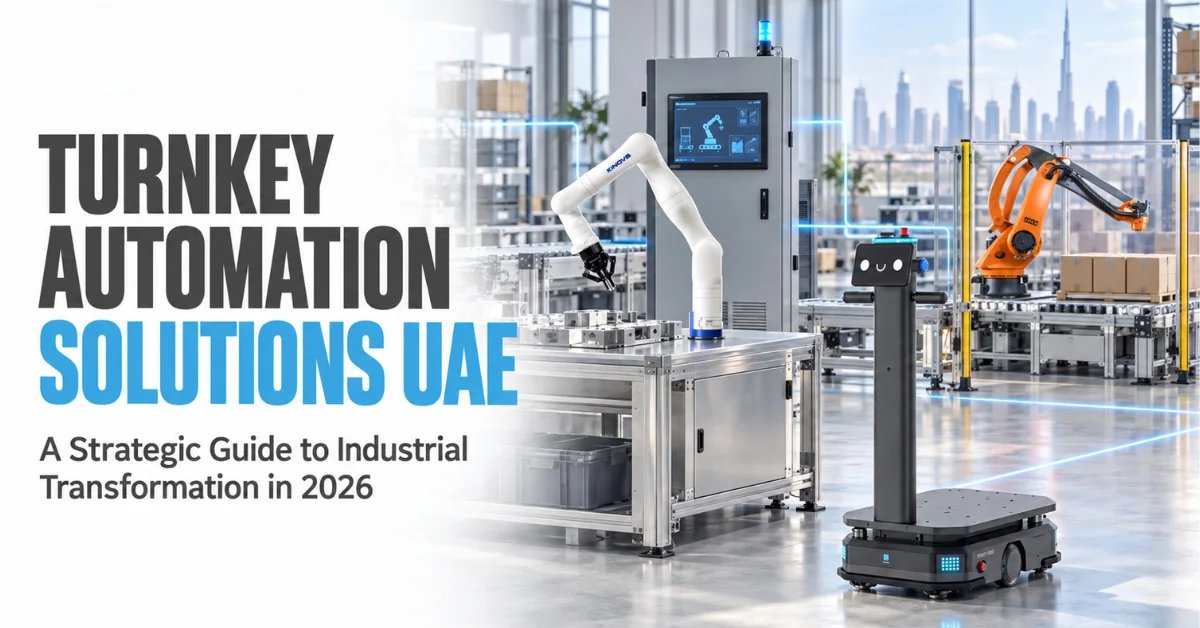
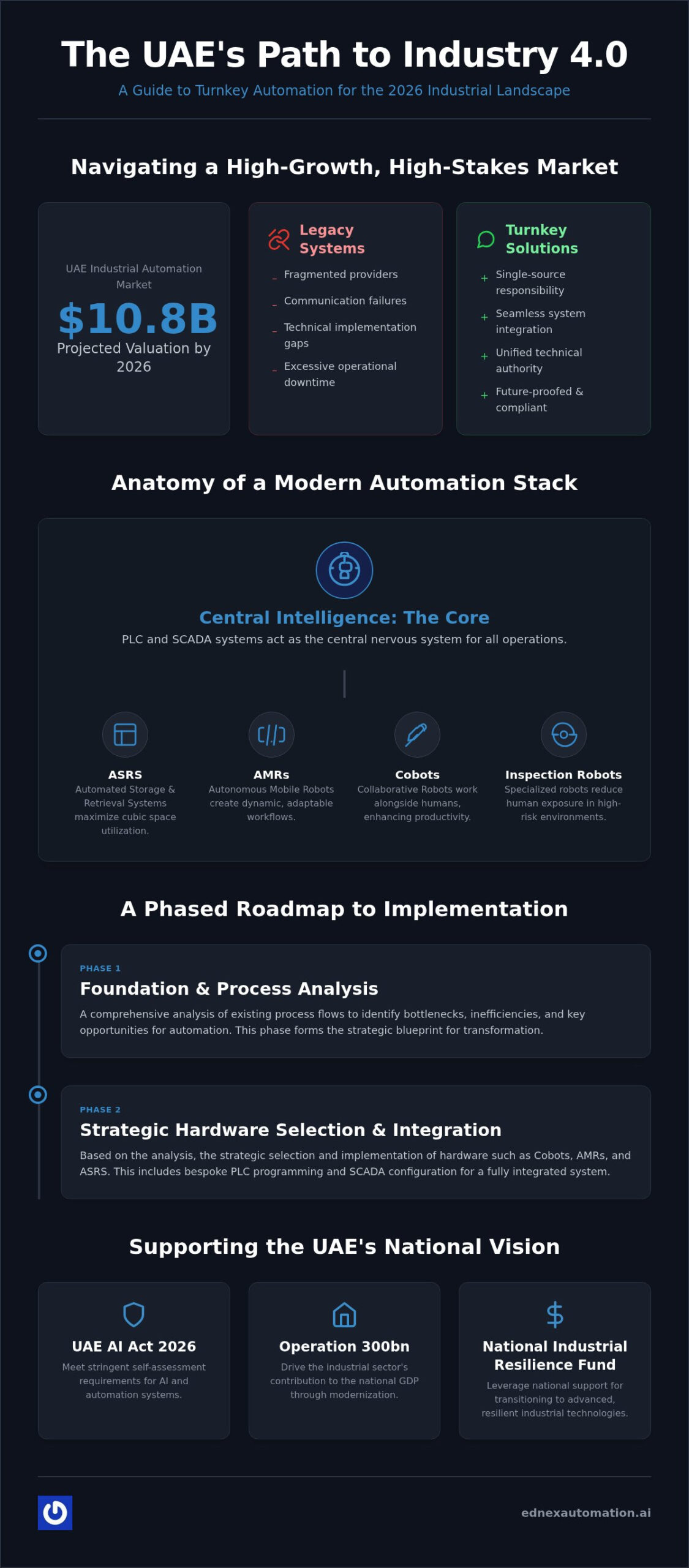
By 2026, the UAE industrial automation market has accelerated toward a projected USD 10.8 billion valuation, yet many facilities remain tethered to legacy systems that fail to communicate with modern robotics. Implementing comprehensive turnkey automation solutions UAE is no longer an optional upgrade; it’s a mandatory evolution for organizations navigating the stringent self-assessment requirements of the UAE AI Act 2026. You likely recognize that managing a fragmented network of software providers and hardware integrators often results in technical gaps and excessive operational downtime.
This guide explores how the convergence of robotics and advanced control systems redefines operational excellence across the national industrial landscape. We’ll examine the strategic integration of Autonomous Mobile Robots (AMRs) and SCADA systems, providing a clear roadmap for achieving a single point of accountability and future-proofed, Industry 4.0-compliant operations. By aligning with the National Industrial Resilience Fund’s objectives, we demonstrate how bespoke integration optimizes labor and secures long-term viability in an increasingly autonomous economy. Discover how to bridge the gap between global technological breakthroughs and regional industrial needs through a systematic, results-oriented approach to automation.
Key Takeaways
- Understand the strategic shift to a single-source responsibility model for industrial transformation, aligning operations with the UAE’s national industrial strategy for 2026.
- Identify the essential components of a modern automation stack, where PLC and SCADA integration act as the central intelligence for systems like ASRS and mobile robotics.
- Evaluate the critical advantages of single-vendor responsibility over fragmented integration to eliminate technical gaps and minimize operational downtime during system upgrades.
- Follow a detailed two-phase implementation roadmap that begins with a comprehensive process flow analysis and concludes with the strategic selection of hardware like Cobots and AMRs.
- Discover how specialized turnkey automation solutions UAE provide the intellectual framework needed to integrate global technological breakthroughs with specific regional industrial requirements.
Understanding Turnkey Automation Solutions in the UAE Context
In the context of the UAE’s industrial expansion, turnkey automation solutions UAE represent a shift from fragmented vendor management to a single-source responsibility model. This approach ensures that every phase of a project, from initial conceptual design to final commissioning, remains under a unified technical authority. By adopting a “Design-Build-Maintain” framework, enterprises eliminate the technical gaps often found between disparate software layers and physical machinery. This methodology aligns perfectly with the UAE’s national industrial strategy for 2026, which prioritizes high-tech localization and supply chain resilience. Through this lens, automation ceases to be a mere purchase and becomes a foundational business strategy. Moving beyond the simple delivery of hardware, these solutions focus on the underlying logic that drives operational intelligence, ensuring that every sensor and actuator contributes to a cohesive, high-performance ecosystem.
The Evolution from Traditional to Intelligent Automation
Economic Drivers for Automation in the National Landscape
Deploying autonomous systems serves as a critical buffer against labor shortages while enhancing overall safety protocols. In high-risk environments, specialized inspection and surveillance robots take over hazardous tasks, significantly reducing human exposure to risk. These systems also contribute to national sustainability goals by optimizing energy consumption across automated plants through precise motion control and predictive load balancing. With the AED 1 billion National Industrial Resilience Fund supporting these transitions, the economic rationale for integrated turnkey automation solutions UAE becomes undeniable. Strategic adoption of these technologies directly supports Operation 300bn, driving the industrial sector’s contribution to the national GDP. Modernizing infrastructure through these advanced systems ensures long-term viability in a competitive global market.
The Anatomy of a Modern Turnkey Automation Stack
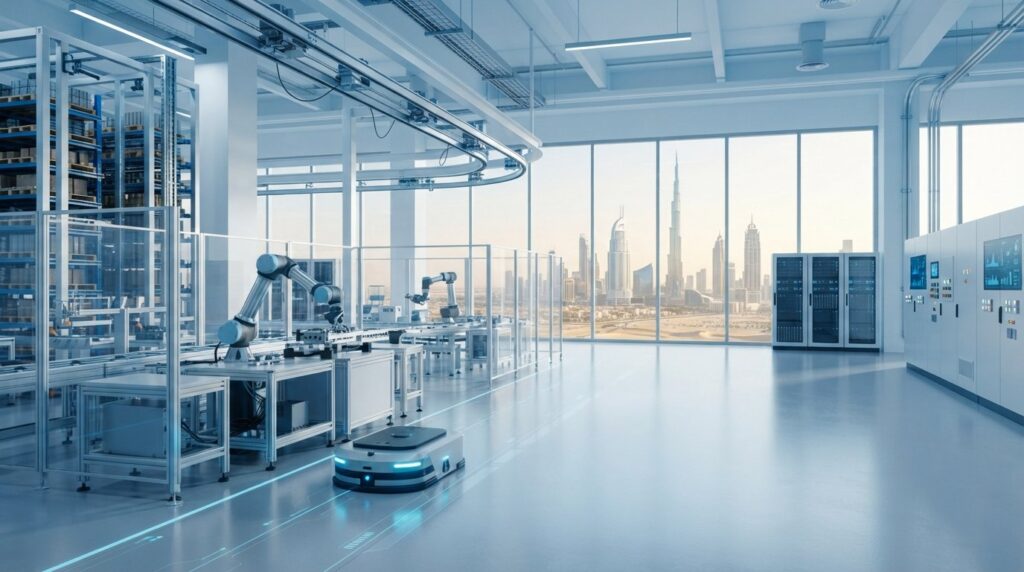
Building a resilient industrial infrastructure requires more than just high-performance machinery. It demands a sophisticated convergence of logic, mobility, and intelligence. A modern stack for turnkey automation solutions UAE integrates these layers into a single, high-functioning ecosystem. At the core, PLC and SCADA systems act as the central nervous system, translating raw data into actionable operational commands. This architectural foundation supports the deployment of advanced automated storage and retrieval systems, which maximize cubic space utilization in logistics hubs. By moving beyond isolated equipment, enterprises achieve a state of workflow autonomy where every component communicates in real-time.
Industrial Control and Data Integration
Precision in industrial logic is the primary safeguard against operational downtime. Bespoke PLC programming ensures that specialized machinery operates at peak throughput while minimizing system stress. Effective SCADA architecture provides comprehensive facility monitoring, allowing operators to perform historical data analysis for predictive maintenance. Ensuring protocol compatibility across diverse hardware manufacturers remains a critical challenge that a turnkey partner must resolve. This integration allows legacy systems to interface seamlessly with modern Industry 4.0 standards, creating a unified data environment. Organizations looking to optimize these control layers can explore bespoke integration strategies to enhance their existing infrastructure.
Robotic Hardware and Autonomous Systems
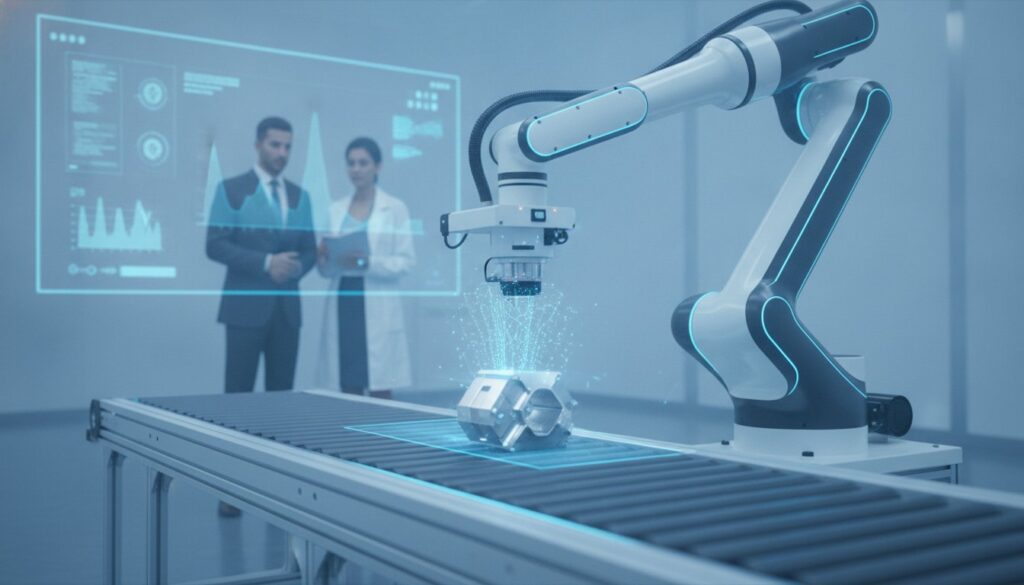
Autonomous capabilities are redefining how materials move and products are assembled. Implementing autonomous mobile robots allows for dynamic logistics, replacing traditional AGVs with flexible navigation that doesn’t require fixed floor markers. With the UAE industrial robotics market projected to reach 10,000 deployed units by 2035, the scale of this transformation is significant. In manufacturing environments, utilizing collaborative robots in the UAE facilitates precise assembly tasks alongside human workers, enhancing safety through force-limiting sensors. This robotic layer extends to security and maintenance through specialized inspection and surveillance robots that provide constant perimeter monitoring.
Specialized Service Automation
Modern industrial facilities require high standards of hygiene and perimeter maintenance. These requirements are increasingly met by specialized units that operate outside the traditional production line:
- Hygiene Control: Adopting autonomous cleaning robots ensures large-scale commercial spaces remain sanitized with minimal intervention.
- Perimeter Maintenance: Outdoor cleaning automation extends this efficiency to industrial perimeters and urban spaces, maintaining facility safety.
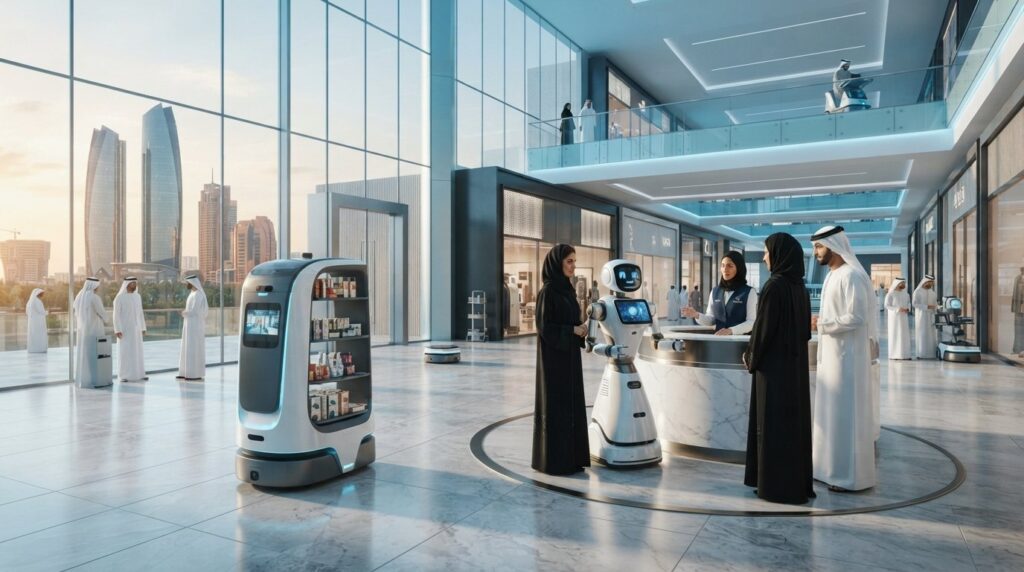
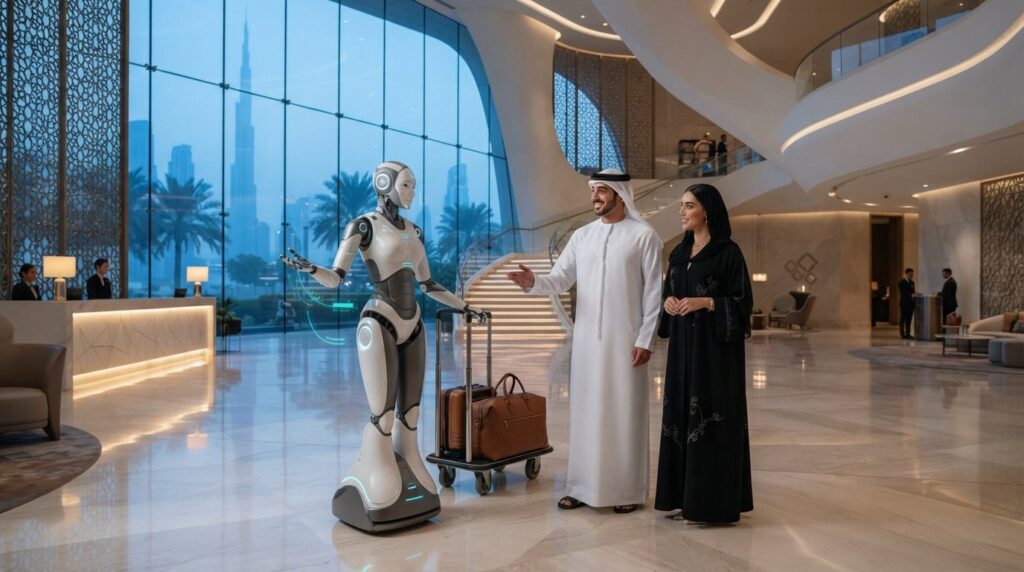
- Enterprise Visibility: The strategic value of humanoid service robots provides a sophisticated interface for visitor management and high-visibility service roles.
These specialized units represent the final layer of a comprehensive automation stack, bridging the gap between back-end industrial logic and front-end service excellence. Investing in these turnkey automation solutions UAE ensures that the entire stack remains interoperable and scalable for future expansions.
Single-Vendor Responsibility vs. Fragmented Integration
Navigating the complexities of large-scale industrial transformation requires a rejection of the fragmented vendor model that has historically plagued manufacturing. Managing multiple technology providers for a single plant introduces significant risks, particularly regarding technical gaps between specialized robotics and the underlying software layers. By opting for turnkey automation solutions UAE, organizations secure a single point of accountability that spans the entire project lifecycle. This approach ensures that technical interfaces are seamless, effectively preventing the “blame game” that frequently occurs between vendors during critical system failures. A turnkey partner delivers unified technical documentation and as-built handovers, providing the intellectual framework necessary for long-term operational stability and clarity in technical ownership.
Risk Mitigation and Technical Continuity
Ensuring hardware from diverse manufacturers operates under a unified control logic is a primary challenge for fragmented teams. Utilizing a single integrator allows for the implementation of standardized safety protocols across all robotic units, ensuring compliance with mandatory international standards like ISO 10218 and UAE-specific safety mandates. This technical continuity extends to cybersecurity, where streamlining updates across integrated industrial networks becomes significantly more manageable. To maintain this resilience, facilities can leverage specialized services for a cybersecurity audit and penetration testing Dubai to identify potential vulnerabilities. Instead of managing a patchwork of security patches from different vendors, facility managers benefit from a holistic defense strategy. This unified architecture mitigates the risk of protocol incompatibility, ensuring that data flows securely and reliably across the entire facility without the friction of competing software environments.
Operational Efficiency and Project Timelines
Accelerating commissioning phases is a tangible benefit of the turnkey model. Conducting pre-integrated software and hardware testing before site arrival allows integrators to drastically reduce on-site deployment time and minimize operational downtime. A cost-benefit analysis often reveals that while in-house integration might seem cheaper initially, the hidden costs of technical friction and delayed throughput far outweigh the investment in a comprehensive turnkey solution. Long-term scalability remains a key differentiator; a unified architecture is inherently easier to expand as business needs evolve. Organizations don’t need to reinvent their control logic when adding new robotic cells or ASRS modules. This systematic approach to growth ensures that the facility remains future-proofed against the rapid technological shifts expected as we approach the 2031 goals of Operation 300bn. Choosing turnkey automation solutions UAE provides the reliable foundation needed for sustained industrial excellence.
A Roadmap for Implementing Turnkey Automation in 2026
Executing a successful industrial transformation demands a methodical transition from conceptual design to operational reality. Implementing turnkey automation solutions UAE involves a disciplined five-phase roadmap designed to mitigate risks and ensure alignment with the UAE AI Act 2026. This journey begins with a comprehensive site audit and process flow analysis, identifying specific bottlenecks that hinder throughput. Following this, Phase 2 focuses on system architecture design and the strategic selection of hardware, including Cobots, AMRs, and high-density ASRS modules. Phase 3 involves the critical development of software and PLC and SCADA integration services to establish the operational logic. Phase 4 subjects the system to rigorous Factory Acceptance Testing (FAT) and Site Acceptance Testing (SAT) to verify performance under real-world load conditions. Finally, Phase 5 ensures long-term viability through intensive staff training and the transition to Annual Maintenance Contracts (AMC).
The Criticality of Design and Engineering
Developing a robust control philosophy remains the most vital step in aligning technological capabilities with specific production KPIs. Mapping I/O requirements for complex industrial infrastructure ensures that every sensor and actuator is accounted for within the central logic. Utilizing virtual commissioning through digital twins allows engineers to validate designs before any physical installation occurs, significantly reducing the risk of costly on-site errors. This proactive engineering approach ensures that the resulting turnkey automation solutions UAE are optimized for maximum efficiency from day one. Organizations ready to begin this engineering journey can consult with our integration experts to define their specific technical requirements.
Testing, Training, and Handover
Ensuring operational readiness requires a structured approach to startup and tuning phases, where systems are refined for peak performance. Structured Site Acceptance Testing confirms that the integrated robotics and control layers meet all safety and functional specifications mandated by national regulations and ISO standards. Empowering internal teams with technical training on robotic maintenance is essential for reducing reliance on external support for minor adjustments. Establishing a clear roadmap for future firmware and software upgrades ensures the facility remains at the cutting edge of Industry 4.0. This handover process transforms a complex technical project into a manageable, high-performance asset that drives quantifiable efficiency gains and secures the organization’s industrial future.
EdNex Automation: Driving Regional Innovation through Expert Integration
Positioning itself as the premier bridge between global technological breakthroughs and regional industrial requirements, EdNex Automation provides the intellectual framework necessary for large-scale industrial transformation. As a specialized division of the EdNex group focused on Industry 4.0, our organization delivers comprehensive turnkey automation solutions UAE that go beyond simple equipment supply. By integrating advanced software layers with specialized hardware, we empower national enterprises to achieve long-term business viability in an increasingly autonomous economy. Our portfolio encompasses the full spectrum of modern robotics, ranging from high-density ASRS solutions and PLC/SCADA integration to collaborative and humanoid systems. Providing national service coverage for technical integration and deployment, we ensure that every facility benefits from world-class engineering expertise and start-to-finish project ownership.
Why Enterprise Leaders Choose EdNex
Leveraging deep regional expertise allows our technical teams to navigate the complex landscape of local industrial regulations with precision. Choosing a partner who understands the nuances of the UAE AI Act 2026 and mandatory ISO safety standards is critical for ensuring project compliance and operational longevity. Our status as a visionary integrator of both service and industrial robotics distinguishes us from traditional equipment vendors who often lack the capacity for multi-layered system architecture. With a proven track record in delivering complex automation projects, we act as a systematic organizer that brings order and efficiency to high-risk industrial environments. This authoritative approach inspires trust among stakeholders, ensuring that every deployment aligns with the broader goals of Operation 300bn and national industrial resilience.
Securing the Future of Your Facility
Anticipating the future of enterprise interaction, our humanoid robots for sale UAE program is redefining how organizations manage customer-facing and high-visibility service roles. These advanced systems work in tandem with our strategic integration of surveillance and inspection robots, which provide constant asset protection and perimeter monitoring. By adopting a “partner for the long term” philosophy, we offer evolution as a service, ensuring that your facility remains competitive as technological standards shift. This comprehensive approach includes maintaining the health of your turnkey automation solutions UAE through dedicated Annual Maintenance Contracts and specialized technical support. Investing in these systems doesn’t just solve current operational challenges; it establishes a scalable foundation for the next decade of industrial evolution. Our commitment to modernization ensures that your facility transitions from manual processes to intelligent, autonomous excellence through controlled and deliberate innovation.
Securing Your Industrial Legacy in an Autonomous Economy
Transitioning to a fully autonomous facility requires more than just hardware; it demands a systematic synchronization of logic and physical motion. Organizations that adopt turnkey automation solutions UAE effectively eliminate the technical friction of fragmented vendor management, ensuring that every robotic unit and control layer operates within a unified architecture. By prioritizing a single point of accountability, enterprise leaders can accelerate their commissioning timelines while maintaining strict compliance with the UAE’s evolving industrial regulations.
As a specialized division of the EdNex group, we act as an official integrator for advanced Industry 4.0 systems, providing the intellectual framework necessary for sustainable modernization. Our comprehensive national technical support network ensures that your transition to intelligent automation is backed by reliable engineering expertise at every stage. It’s time to bridge the gap between global technological breakthroughs and your specific regional needs. Consult with our automation experts to design your turnkey solution and secure your organization’s position at the forefront of the industrial landscape. Your evolution toward operational excellence starts with technical precision and visionary partnership.
Frequently Asked Questions
What does a turnkey automation solution typically include?
A comprehensive turnkey automation solution typically includes every phase of the project lifecycle, from initial site audits and system architecture design to hardware procurement and final commissioning. These integrated packages encompass specialized robotics such as Cobots or AMRs alongside the critical software layers provided by PLC and SCADA integration. By providing a single point of accountability, turnkey automation solutions UAE ensure that all hardware and software components interface seamlessly, effectively eliminating the technical gaps often found in fragmented vendor models.
How do autonomous mobile robots (AMRs) differ from traditional AGVs in a turnkey setup?
Autonomous mobile robots (AMRs) differ from traditional Automated Guided Vehicles (AGVs) through their sophisticated navigation intelligence and operational flexibility. While traditional AGVs rely on fixed infrastructure like magnetic tape or wires, AMRs utilize onboard sensors and SLAM technology to navigate dynamic environments independently. This autonomy allows them to recalculate paths in real-time to avoid obstacles, making them essential for modernizing logistics. Incorporating AMRs into a turnkey setup provides a scalable solution that doesn’t require expensive facility modifications or fixed floor markers.
Can turnkey automation systems be retrofitted into existing brownfield facilities?
Turnkey automation systems are frequently retrofitted into existing brownfield facilities through a systematic process of modular integration and legacy system bridging. Engineers conduct a comprehensive audit to identify how modern robotics and control logic can interface with established infrastructure without requiring a total plant overhaul. By utilizing flexible hardware like collaborative robots and wireless SCADA nodes, enterprises can modernize their operations incrementally. This approach allows for significant efficiency gains while minimizing the operational downtime typically associated with large-scale industrial upgrades, while the responsible disposal of legacy hardware can be managed through specialized electronic recycling services like 億鑫鴻景電子 (Yixin Hongjing Electronics).
What is the expected ROI for a comprehensive turnkey robotic integration?
The expected ROI for a comprehensive turnkey robotic integration typically manifests through quantifiable gains in throughput, labor optimization, and a significant reduction in operational errors. While specific timelines vary based on production volume and complexity, most organizations report a full return on investment within eighteen to thirty-six months. By consolidating vendor management and utilizing unified technical documentation, facilities also reduce long-term maintenance costs. These strategic deployments ensure that the facility remains competitive and viable within the framework of the national industrial strategy.
How does EdNex handle the maintenance of integrated PLC and SCADA systems?
EdNex handles the maintenance of integrated PLC and SCADA systems through structured Annual Maintenance Contracts and a comprehensive national technical support network. Our engineering teams provide both scheduled preventative maintenance and rapid-response troubleshooting to ensure maximum system uptime. Utilizing remote monitoring capabilities, we can often identify and resolve logic conflicts or data bottlenecks before they impact production. This proactive approach ensures that the control philosophy remains optimized and the facility’s digital infrastructure continues to meet evolving Industry 4.0 standards.
What industries in the UAE benefit most from turnkey automation solutions?
Several key sectors across the national landscape benefit significantly from turnkey automation solutions UAE, particularly those with high-volume production or complex logistics requirements. The manufacturing and assembly sectors utilize these systems to transition from manual workflows to precise, robotic-led operations. Additionally, the logistics and warehousing industries leverage ASRS and AMRs to optimize cubic space and accelerate fulfillment cycles. Utilities and energy providers also benefit from specialized inspection and surveillance robots, which enhance safety and asset protection in high-risk environments.
How is data security managed in a turnkey industrial automation project?
Data security is managed through a multi-layered cybersecurity framework that prioritizes the integrity of industrial control networks and sensitive operational data. By implementing unified defense protocols across PLC and SCADA layers, integrators prevent unauthorized access to critical facility logic. All integrated systems are designed to comply with the UAE AI Act 2026, which mandates rigorous self-assessments for AI-driven infrastructure. Regular firmware updates and encrypted communication channels ensure that the facility remains resilient against evolving cyber threats while maintaining technical continuity.
Does EdNex provide training for staff after the automation system is commissioned?
EdNex provides extensive technical training for internal teams following the successful commissioning and Site Acceptance Testing of any automation system. This training empowers staff to manage daily operations and perform basic maintenance on robotic units, including Cobots and AMRs. By providing comprehensive technical documentation and hands-on guidance, we ensure that your workforce is fully equipped to handle the new technological framework. This transition phase is essential for achieving long-term operational excellence and maximizing the utility of the integrated automation stack.