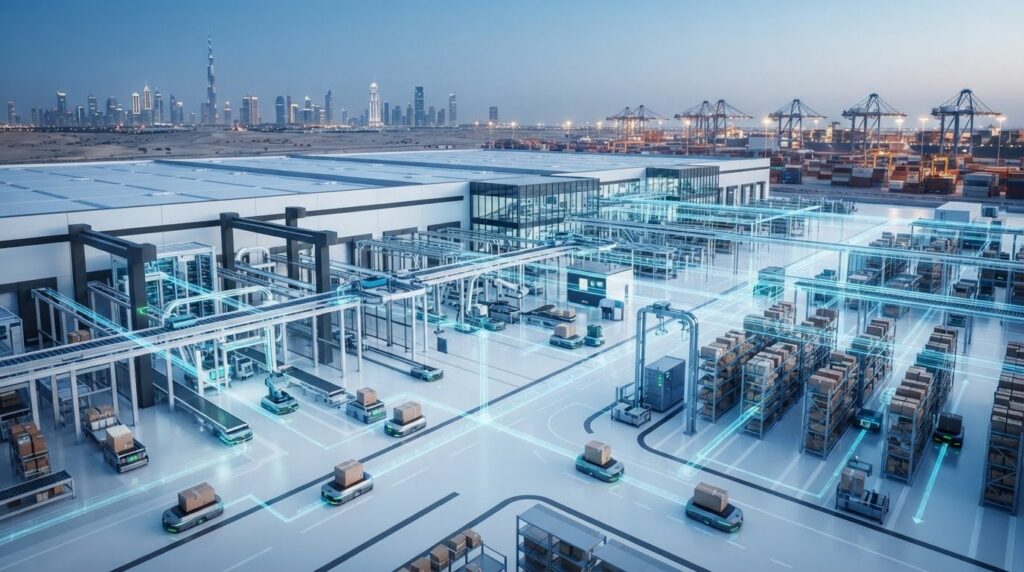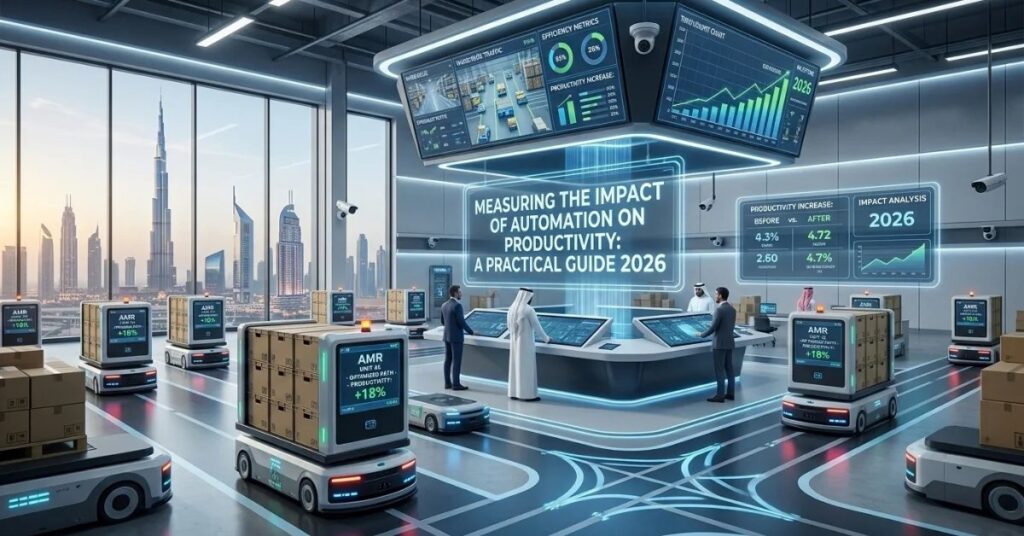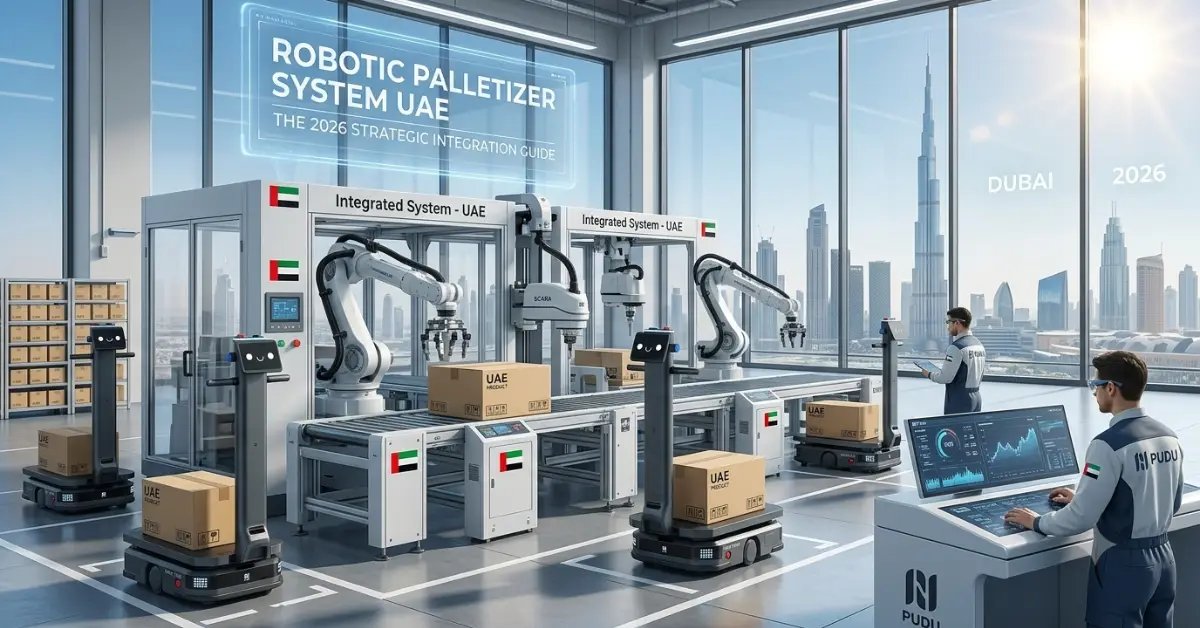
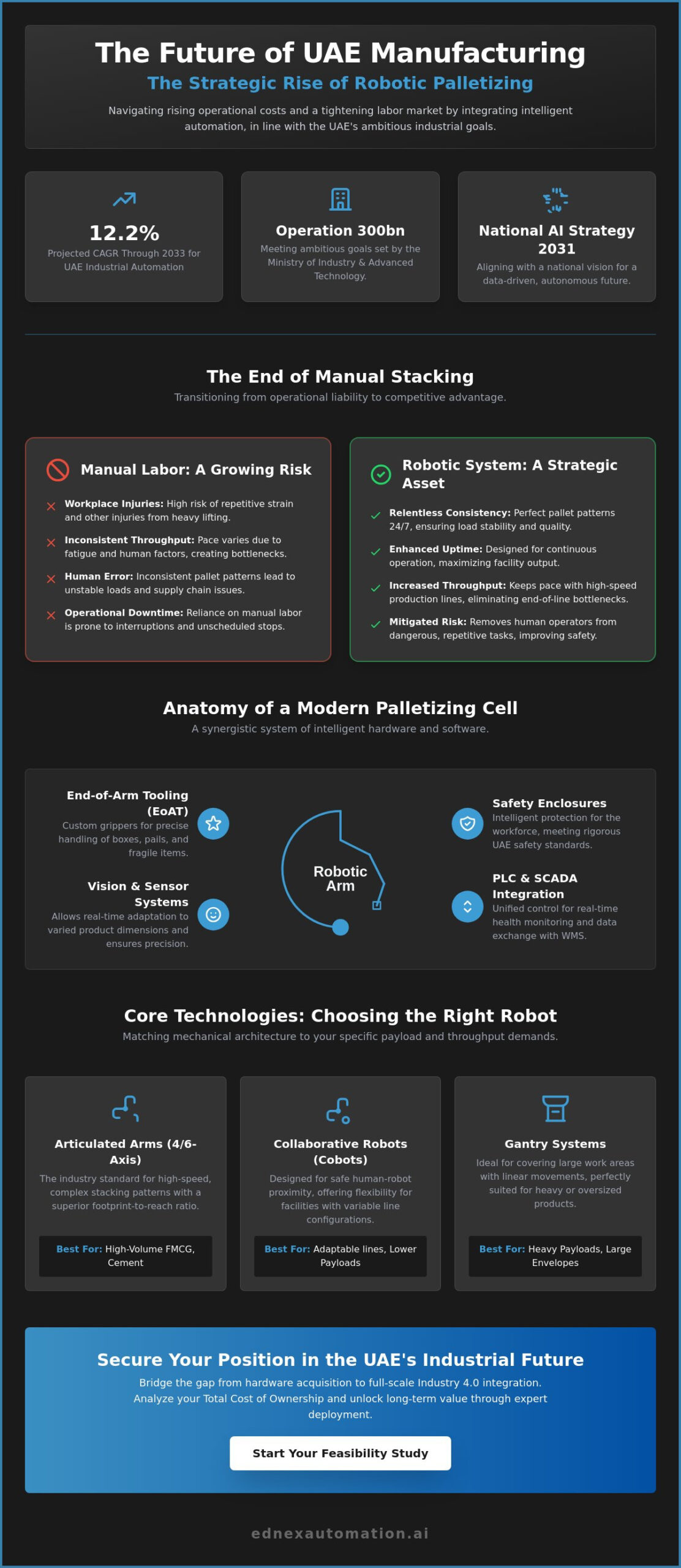
Projecting a compound annual growth rate of 12.2% through 2033, the UAE industrial automation sector is currently undergoing a radical structural transformation that renders traditional manual stacking obsolete. Implementing a high-performance robotic palletizer system UAE is no longer a luxury for regional manufacturers; it’s a strategic necessity for those navigating the volatility of rising operational costs and a tightening labor market. You recognize that inconsistent manual throughput and workplace injuries represent significant risks to your bottom line, especially as the Ministry of Industry and Advanced Technology accelerates its Operation 300bn initiatives.
This strategic integration guide provides the technical roadmap required to transition your facility into a seamless Industry 4.0 architecture. By reading this analysis, you’ll discover how advanced robotic systems optimize throughput and ensure a fluid data exchange between your hardware and warehouse management systems. We’ll examine the critical steps for integrating autonomous palletizing nodes that align with the UAE National AI Strategy 2031, focusing on safety compliance, operational reliability, and long-term industrial viability.
Key Takeaways
- Identify why implementing a robotic palletizer system UAE is essential for meeting the ambitious goals of Operation 300bn and securing a competitive edge in the regional industrial market.
- Compare the capabilities of articulated arms and cobots to ensure your robotic architecture aligns perfectly with your facility’s payload demands and cycle times.
- Analyze the total cost of ownership to reveal how automation delivers long-term value through reduced labor dependency and enhanced operational uptime.
- Discover the role of PLC and SCADA integration in creating a unified control environment that allows for real-time health monitoring of your end-of-line assets.
- Learn how to bridge the gap between hardware acquisition and full-scale Industry 4.0 integration through structured feasibility studies and expert deployment.
The Evolution of End-of-Line Automation in the UAE
UAE industrial facilities are undergoing a structural shift as they pivot from traditional production models toward fully autonomous ecosystems. A modern robotic palletizer system UAE represents far more than a simple mechanical stacker; it’s an intelligent, data-driven node that serves as the final, critical touchpoint in a high-speed production line. By 2026, the strategic necessity of these systems has been solidified by the Ministry of Industry and Advanced Technology through initiatives like Operation 300bn. Integrating advanced robotics isn’t merely about hardware acquisition. It’s about securing a place within the “Make it in the Emirates” framework by ensuring every pallet that leaves the floor meets global standards for structural integrity and load stability.
Defining the modern Palletizer in this high-tech context requires looking beyond the arm itself. These systems now leverage vision-language-action models and sophisticated sensors to adapt to varied product dimensions in real time. This evolution drives precision and speed that manual teams simply can’t replicate, transforming the end-of-line process from a potential bottleneck into a competitive advantage. With the UAE offering 0% import duties on industrial robots under HS Code 8479.50, the economic barrier to entry has never been lower for organizations ready to modernize.
Why Manual Palletizing is Becoming a Liability
Relying on manual labor for repetitive, high-volume stacking has become a significant operational risk. The hidden costs of manual intervention are substantial, ranging from frequent workplace injuries to the inevitable downtime caused by fatigue and human error. In the UAE’s high-volume manufacturing sectors, even a minor inconsistency in pallet configuration can lead to catastrophic supply chain delays or rejected shipments. As throughput demands increase across the region, manual processes create rigid bottlenecks that stifle growth and compromise national supply chain competitiveness. Transitioning to a robotic palletizer system UAE mitigates these risks by delivering relentless consistency and removing the human element from high-risk, repetitive tasks.
Key Components of an Industrial Palletizing Cell
Building a resilient palletizing solution requires a sophisticated synergy between hardware and software. The robotic arm serves as the core mechanical driver, providing the reach and payload capacity necessary for industrial-scale operations. However, the system’s versatility is defined by its End-of-Arm Tooling (EoAT). These custom grippers are engineered to handle everything from heavy pails to fragile corrugated boxes with surgical precision. Surrounding this core are advanced safety enclosures and sensor arrays. These components don’t just protect the workforce; they utilize intelligent detection to allow for safe human-robot proximity, ensuring that your facility maintains peak efficiency without compromising on the rigorous safety standards required by the Emirates Authority for Standardisation and Metrology.
Core Technologies: Articulated Arms, Cobots, and Gantry Systems
Selecting the appropriate robotic palletizer system UAE requires a nuanced understanding of how specific mechanical architectures align with your facility’s operational throughput. While the previous section highlighted the move away from manual labor, the technical success of your integration depends on matching kinematics to your payload requirements. Leading facilities are increasingly leveraging advancements in manufacturing robotics to build modular lines that can adapt to changing market demands without requiring total hardware overhauls. Future-proofing your facility starts with choosing a system that supports flexible robotic programming, allowing your team to update stacking patterns as your product portfolio evolves.
Articulated Robotic Arms for High-Speed Throughput
Dominating the high-volume FMCG and cement sectors, 4-axis and 6-axis articulated robots provide the agility needed for complex stacking patterns at extreme speeds. Integrating a high-speed robotic palletizer system UAE into your FMCG line ensures that end-of-line packaging keeps pace with modern filling and capping machinery. These systems offer a superior footprint-to-reach ratio, allowing them to operate within confined spaces while handling up to 30 cycles per minute. Choosing the right arm involves balancing the maximum reach against the required vertical stroke, ensuring the robot doesn’t just move fast but moves efficiently within its prescribed work envelope.
Collaborative Robots (Cobots) for Flexible Palletizing
Smaller-scale operations and multi-SKU lines often find that collaborative robots UAE offer the most versatile path to automation. Unlike their high-speed industrial counterparts, cobots are engineered with safety-first power and force limiting sensors. This allows them to function alongside human workers without the need for extensive safety fencing, significantly reducing the total installation footprint. Their ease of redeployment makes them ideal for facilities that frequently change packaging formats or require a mobile palletizing solution. Because they’re easy to program, they reduce the technical barrier for teams that don’t have dedicated robotics engineers on-site.
Gantry and Layer Palletizers for Heavy Payloads
When your application involves ultra-heavy industrial components or requires the highest possible throughput for beverage and bottling lines, gantry or layer palletizers become the logical choice. Gantry systems operate on an overhead X-Y-Z frame, providing massive payload capacities and the ability to service multiple pallet stations simultaneously. Conversely, layer palletizers handle entire product layers at once, achieving speeds that individual arms can’t touch. While these systems involve higher mechanical complexity, their ability to stabilize massive loads ensures long-term business viability for heavy industry. Comparing maintenance requirements is vital; gantry systems often require more specialized structural inspections, whereas articulated arms benefit from standardized service intervals. If you aren’t sure which architecture fits your floor, exploring bespoke automation consulting can clarify your technical requirements.
The ROI Framework: Evaluating Palletizing Automation
Establishing the financial viability of advanced automation requires a shift from viewing hardware as a capital expense to recognizing it as a high-yield operational asset. While the initial acquisition of a robotic palletizer system UAE represents a significant commitment, the Total Cost of Ownership (TCO) reveals a much more compelling narrative when you account for energy efficiency, reduced maintenance cycles, and the elimination of human-related variability. Direct savings through labor reduction are easily quantified, yet the most profound impact often stems from indirect gains like increased line uptime and the “Quality Dividend” of perfectly stacked pallets. By removing the physical limitations of the human workforce, you secure a predictable throughput that serves as the foundation for scalable growth.
Implementing rigorous robotic safety standards serves as a critical component of this financial justification, as it directly reduces the long-term burden of workplace accidents and insurance premiums. Precision in stacking doesn’t just improve aesthetics; it ensures that products arrive at their destination without the crushing or shifting damage common in manual loads. A strategically deployed robotic palletizer system UAE typically achieves full return on investment within a 24 to 36 month payback period, assuming a multi-shift operation that aggressively mitigates labor volatility and operational waste.
Key Decision Factors for UAE Enterprises
Determining the right system starts with a granular analysis of your throughput requirements, specifically your target cycles per minute (CPM). It isn’t enough to match current speeds; your system must accommodate future growth. You also need to evaluate product variability, ensuring the robotic controller can handle multiple SKUs and complex pallet patterns without excessive downtime for reprogramming. Finally, space constraints within existing UAE facilities often dictate the choice between a compact articulated arm and a more expansive gantry system, making floor space utilization a primary financial metric in your feasibility study.
Manual vs. Robotic Palletizing: A Strategic Comparison
Comparing manual labor to robotics reveals a stark contrast in consistency, especially during grueling 24-hour shifts where human performance naturally degrades. Robotic systems maintain a relentless pace, ensuring that the final pallet of the day is as stable and precise as the first. This consistency translates to superior pallet stability for long-distance transport, reducing the risk of costly returns or supply chain disruptions. When seasonal demand spikes occur, robotic systems scale effortlessly, requiring only a software adjustment or a power cycle rather than the complex and expensive process of sourcing and training temporary labor in a competitive regional market.
Seamless Integration: Linking Palletizers with ASRS and SCADA
Achieving true industrial autonomy requires moving beyond the installation of individual machines to the creation of a unified, intelligent control architecture. A standalone robotic palletizer system UAE provides localized efficiency, yet its true value is unlocked only when it’s fully integrated into the broader facility ecosystem. By utilizing expert PLC and SCADA integration services, manufacturers enable a bidirectional flow of information that connects end-of-line stacking with upstream production data. This connectivity ensures that the palletizer isn’t just reacting to incoming products but is actively synchronized with the entire manufacturing sequence, allowing for real-time adjustments based on live throughput metrics.
Ensuring cybersecurity within these connected robotic cells is a non-negotiable priority in the 2026 industrial landscape. Robust network design prevents unauthorized access while maintaining the high-speed data exchange required for precision automation. When your palletizer communicates flawlessly with your enterprise resource planning (ERP) system, you eliminate the data silos that traditionally lead to inventory discrepancies and logistical delays. This holistic approach transforms a simple mechanical process into a strategic data node, providing the visibility necessary for high-level decision-making and long-term business viability.
Palletizing and Automated Storage (ASRS) Synergy
Streamlining the transition from the palletizing cell to automated storage and retrieval systems represents the next frontier in warehouse optimization. Instead of relying on manual forklifts, forward-thinking facilities employ autonomous mobile robots to bridge the gap between the palletizer and storage racks. This end-to-end automation includes integrated RFID and barcode systems that apply automated labeling and tracking data the moment a pallet is completed. Such precision ensures that every load is accounted for within the ASRS, facilitating a “dark warehouse” environment where human intervention is minimized and accuracy is absolute.
Data-Driven Optimization via SCADA
Visualizing robotic palletizer system UAE performance through centralized SCADA dashboards allows operators to monitor Overall Equipment Effectiveness (OEE) in real time. Leveraging this sensor data enables predictive maintenance strategies, identifying potential component failures before they result in unplanned downtime. Remote diagnostics further enhance this reliability, as technical partners can provide high-level support and software updates without the need for immediate on-site visits. If you’re ready to modernize your end-of-line operations, you can consult with our integration experts to design a bespoke connectivity framework.
Recognizing that industrial hardware is only as effective as the logic driving it, EdNex positions itself as the primary technical architect for your facility’s modernization. While purchasing a robotic palletizer system UAE provides the physical tools for automation, the true competitive advantage stems from the seamless integration of that system into your existing infrastructure. We provide the intellectual framework necessary for implementation, acting as a systematic organizer that brings order and efficiency to complex manufacturing environments. By aligning global innovation with the specific economic goals of the UAE, we ensure your facility is prepared for the rigorous demands of the 2026 industrial market.
The EdNex Integration Process
Delivering a high-level automation solution requires a methodical, top-down approach that begins with consultative discovery. During this phase, we identify specific throughput bottlenecks and define the precise cycle-per-minute targets required to meet your long-term business objectives. Following this analysis, our team moves into bespoke system design, engineering the robotic arm, custom end-of-arm tooling, and safety sensor arrays to fit your unique floor plan. The process concludes with hands-on implementation and training, which empowers your workforce to manage these advanced systems while ensuring that every operation meets the safety standards set by the Emirates Authority for Standardisation and Metrology.
Maintaining Peak Performance
Ensuring the continuous reliability of your robotic assets requires a commitment to ongoing technical support and periodic PLC programming updates. As your production requirements evolve, our scalable architecture allows you to introduce auxiliary technologies, such as humanoid robots for sale UAE, to manage complex service and inspection tasks that complement your palletizing line. This steady progression toward a fully autonomous enterprise secures your operational viability and enhances your standing within the regional supply chain. To begin your transition to a smarter, more efficient facility, you should consult with EdNex Automation experts to design your robotic palletizing system and experience the transformative power of integrated robotics.
Securing Your Position in the UAE Industrial Future
Leading your organization toward a fully autonomous future requires a strategic shift from isolated equipment to integrated intelligence. As explored in this guide, the implementation of a robotic palletizer system UAE is the decisive factor in mitigating labor risks and achieving the throughput consistency demanded by the Ministry of Industry and Advanced Technology. By bridging the gap between mechanical hardware and unified control architectures, you transform a simple end-of-line process into a high-value data node that ensures long-term business viability.
Leveraging our official global technology alliances and comprehensive Industry 4.0 expertise, EdNex provides the intellectual and technical framework necessary for large-scale industrial transformation. Our national UAE technical support team stands ready to ensure that your transition to advanced automation is supported by local expertise and relentless reliability. It’s time to evolve beyond manual limitations and embrace a systematic approach to growth. Partner with EdNex Automation for your robotic integration needs and secure your facility’s place at the forefront of the regional industrial revolution.
Frequently Asked Questions
What is the average ROI for a robotic palletizer system in the UAE?
Payback periods for a robotic palletizer system UAE typically range between 24 and 36 months when implemented in high-volume, multi-shift environments. This calculation accounts for direct labor savings and the significant reduction in product damage and line downtime. Organizations should evaluate the Total Cost of Ownership to understand long-term viability beyond the initial capital expenditure.
Can a robotic palletizer handle multiple different SKUs on the same line?
Modern robotic systems utilize advanced vision-language-action models and sophisticated grippers to manage multiple SKUs simultaneously. Intelligent controllers allow the robot to identify different product dimensions and weights in real time, adjusting stacking patterns dynamically. This flexibility is essential for facilities dealing with high product variability and frequent packaging format changes.
How much floor space is required for a standard robotic palletizing cell?
Space requirements depend heavily on the chosen architecture, with collaborative robots requiring as little as 4 to 6 square meters due to their fence-free operation. Traditional industrial arms require larger footprints, often exceeding 15 square meters, to accommodate necessary safety enclosures and sensor arrays. Optimizing floor space utilization is a primary goal during the initial engineering and design phase.
Is it possible to integrate a new palletizer with my existing PLC and SCADA system?
Seamless integration with existing PLC and SCADA frameworks is a standard requirement for modern Industry 4.0 deployments. By utilizing standardized communication protocols, integrators ensure that palletizer health and performance metrics are visualized on centralized dashboards. This connectivity enables predictive maintenance and ensures that end-of-line stacking remains synchronized with upstream production data.
What maintenance is required for an industrial robotic palletizer?
Routine maintenance includes mechanical lubrication, sensor calibration, and periodic software updates to ensure peak operational efficiency. Proactive inspections of the End-of-Arm Tooling and safety systems prevent unplanned downtime and extend the lifespan of the robotic asset. Implementing a data-driven maintenance schedule through your SCADA system allows for the identification of potential failures before they occur.
Do I need a cobot or a traditional industrial robotic arm for palletizing?
Selecting between a cobot and an industrial arm depends on your specific throughput requirements and payload weights. Cobots are ideal for smaller-scale, flexible operations where human-robot collaboration is necessary without extensive safety fencing. Traditional industrial arms are the preferred choice for high-speed, heavy-duty applications that demand relentless consistency and maximum cycles per minute.
How do robotic palletizers improve workplace safety in manufacturing?
Integrating a robotic palletizer system UAE eliminates the physical risks associated with repetitive heavy lifting and ergonomic strain. By removing human workers from high-risk, monotonous tasks, facilities significantly reduce the incidence of workplace injuries and long-term health issues. Advanced safety sensors and enclosures further protect the workforce by ensuring controlled human-robot proximity during operation.
What is the maximum payload a robotic palletizer can handle?
Payload capacities vary widely, with standard articulated arms handling between 10kg and 300kg, while heavy-duty gantry systems can manage loads exceeding 1,000kg. The choice of payload capacity must align with your heaviest product units and potential future requirements. Engineering the correct End-of-Arm Tooling is critical to maintaining grip integrity when handling these substantial industrial loads.