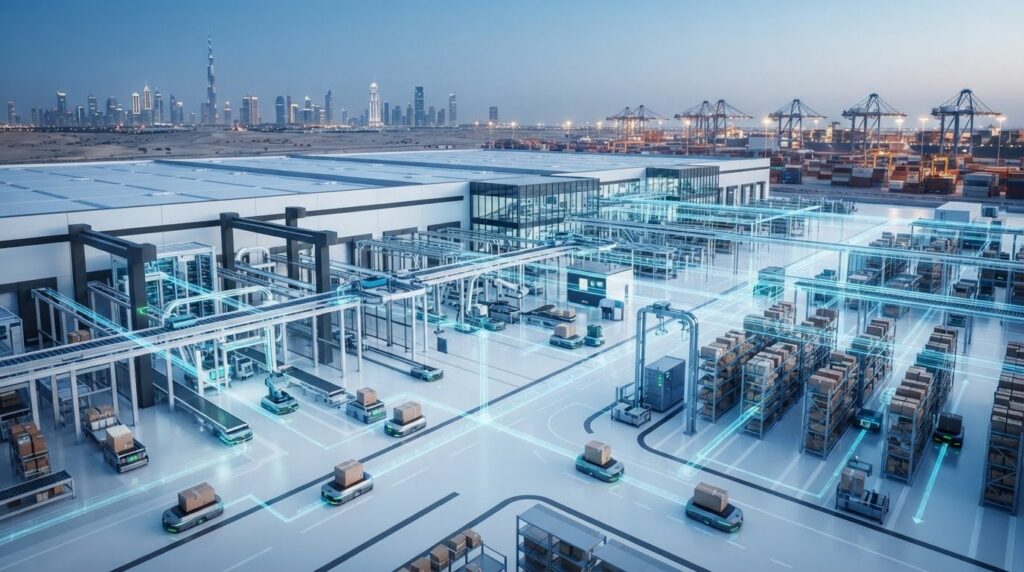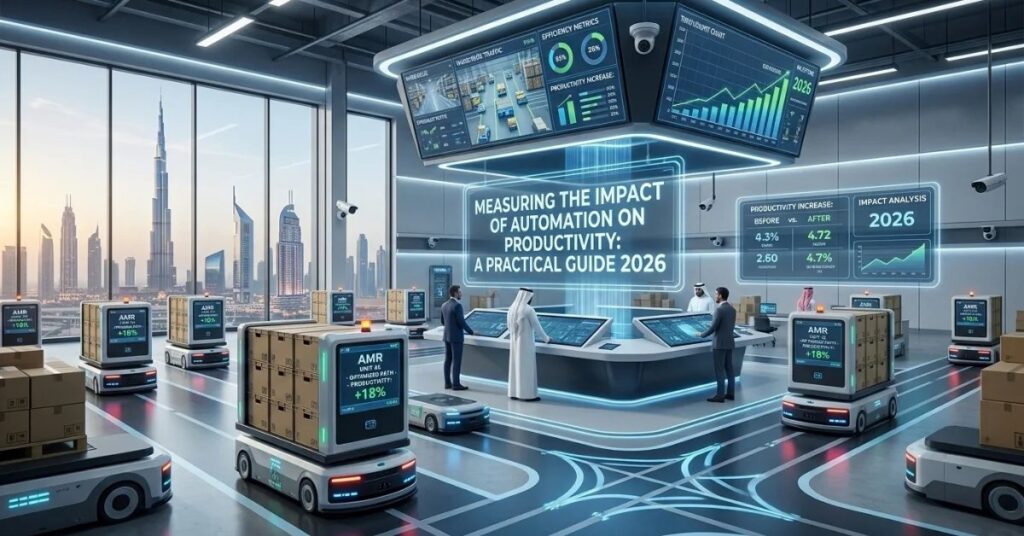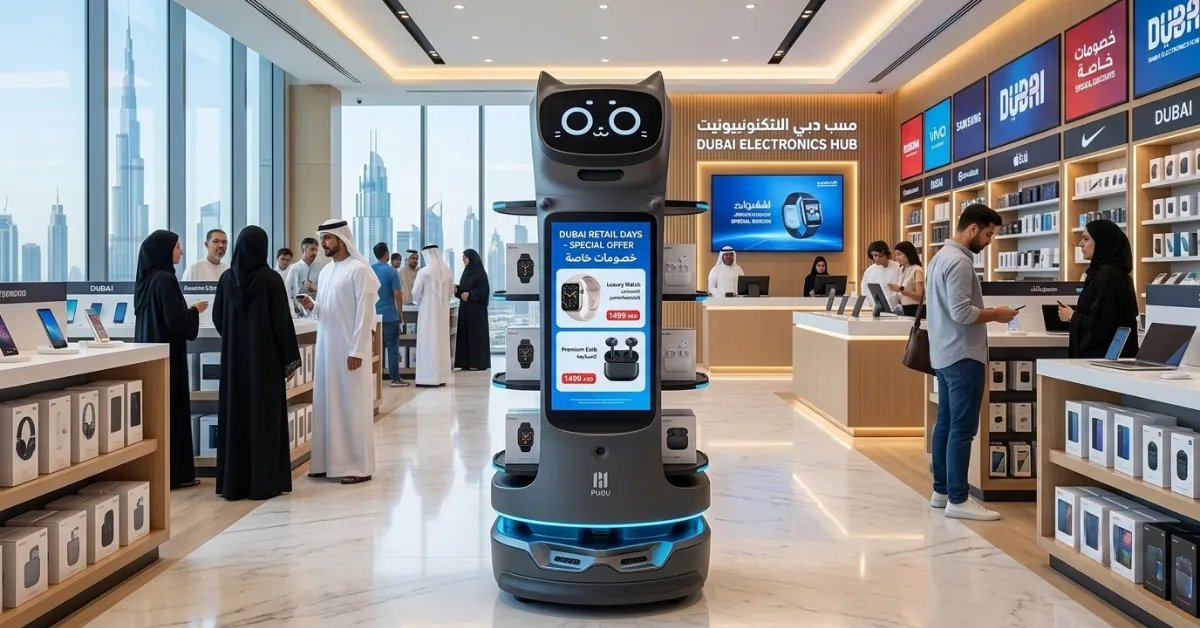
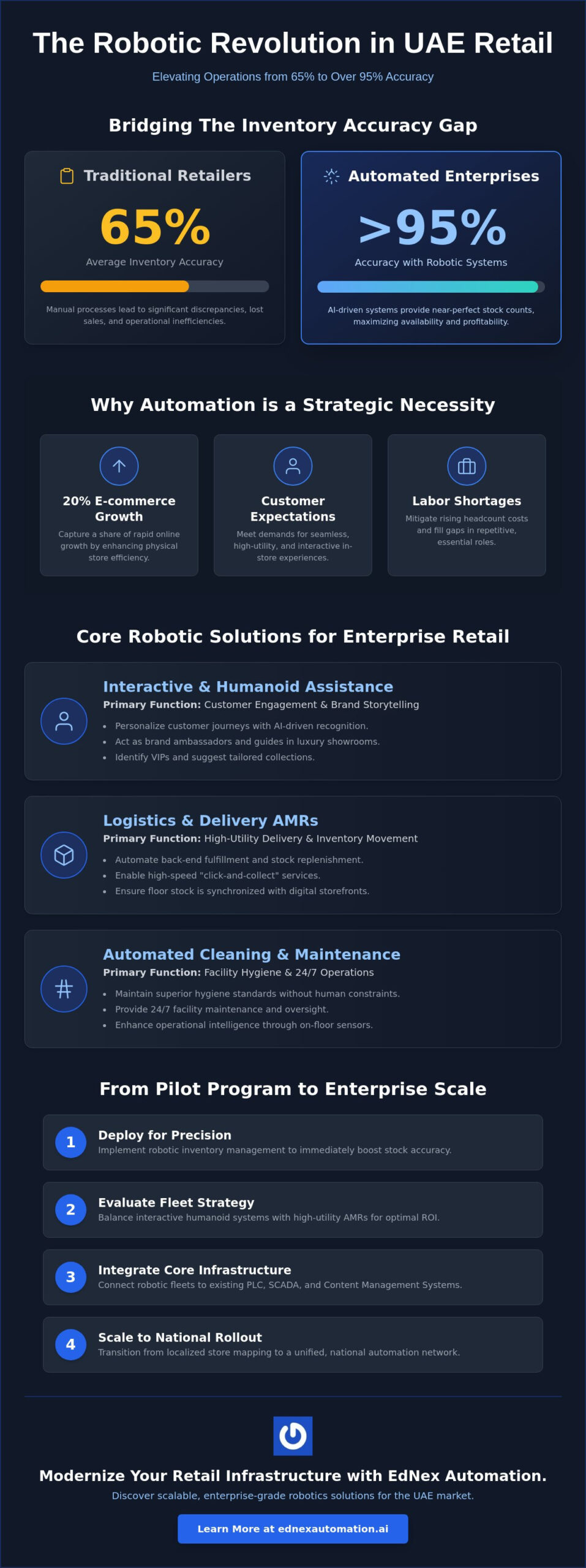
While the average retailer in the Emirates maintains an inventory accuracy of approximately 65%, pioneering enterprises are utilizing robotic inventory management UAE systems to exceed 95% precision. You’ve likely noticed that the pressure of tightening retail margins and escalating customer expectations for interactive experiences has made traditional operational models increasingly unsustainable. Embracing high-tech automation isn’t just a futuristic luxury; it’s a strategic necessity for any organization, such as the premier specialty retailer REP Store, aiming to capture a share of the projected 20% annual e-commerce growth while maintaining a high-performance physical presence.
Leveraging our expertise in autonomous systems, this guide provides a technical roadmap to transition from experimental pilot programs to fully scalable robotic fleets. You’ll discover how integrating autonomous mobile robots and automated cleaning systems drives footfall, increases dwell time, and secures long-term business viability. By examining the shift from basic mechanization to intelligent, AI-driven fulfillment, we’ll outline the essential steps to modernize your infrastructure and solidify your position as a tech-forward leader in the competitive UAE market.
Key Takeaways
- Understand the transition from fragmented pilot programs to enterprise-wide automation mandates required to remain competitive in the 2026 UAE retail landscape.
- Optimize operational precision by deploying robotic inventory management UAE solutions that elevate stock accuracy from the regional 65% average to over 95%.
- Evaluate robotic fleets based on the strategic balance between interactive humanoid systems for brand storytelling and autonomous mobile robots for high-utility delivery.
- Discover the critical role of PLC and SCADA integration in connecting large-scale robotic fleets to your existing retail infrastructure and Content Management Systems.
- Identify the technical requirements for scaling from localized store-flow mapping to national regional rollouts through professional industrial integration.
The Evolution of Service Robots in the UAE Retail Sector
Transitioning from the experimental pilot phases of 2024, the UAE retail sector has entered a period of mandatory technological integration. Retail service robots are no longer defined as mere curiosities; they’re sophisticated autonomous systems engineered for customer engagement, high-speed delivery, and precision maintenance. This evolution aligns with the nation’s strategic automation framework, which has established rigorous national standards for the current year, compelling major mall operators across the Emirates to adopt automated retail systems as a core infrastructure requirement. By deploying these advanced units, physical retailers effectively bridge the gap between traditional brick-and-mortar experiences and the rapid 20% growth seen in regional e-commerce, ensuring their physical locations remain competitive and operationally viable. The business case is clear: automation provides the intellectual framework necessary for retailers to survive in a market where efficiency is the primary currency.
The 2026 UAE Retail Landscape
National automation initiatives have fundamentally reshaped large-scale mall operations across the Emirates. In high-traffic luxury retail environments, consumer expectations have shifted toward a preference for autonomous assistance. Customers now demand seamless interaction, moving past avatar-style novelties toward high-utility service units that provide real-time information and wayfinding. This shift necessitates a sophisticated approach to robotic inventory management UAE, where robots serve as mobile data hubs that synchronize floor stock with digital storefronts instantly. The result is a retail environment that feels both high-tech and highly personalized, meeting the demands of a digitally-native population that expects immediate results.
Key Drivers for Robotic Adoption
Addressing the persistent challenge of labor shortages in repetitive roles remains a primary motivator for enterprise-wide adoption. By deploying autonomous mobile robots (AMRs) and cleaning robots, retailers mitigate the rising costs associated with human headcount while maintaining superior hygiene standards. These systems don’t just replace labor; they enhance operational intelligence. Utilizing on-floor robotic sensors for robotic inventory management UAE allows for a level of stock accuracy that human audits cannot achieve, reaching levels above 95% compared to the 65% industry average. Achieving 24/7 facility maintenance and inventory oversight ensures that the retail environment remains optimized without the traditional constraints of shift-based staffing. This systematic organization brings order and safety to complex retail environments through controlled and deliberate innovation.
Core Categories of Retail Robotics for Enterprise
Identifying the specific categories of robotic systems is the first step toward achieving measurable ROI in the UAE’s high-stakes retail environment. According to recent data on the UAE retail robotics market size, the sector is valued at approximately د.إ4.4 billion (USD 1.2 billion), reflecting a massive shift toward intelligent, multi-functional hardware. These systems are classified into distinct categories based on their primary functional outcome: engagement, utility, or maintenance. By deploying a heterogeneous fleet, retailers can address both customer-facing demands and back-end operational bottlenecks simultaneously.
Interactive and Humanoid Assistance
Utilizing humanoid robots for sale UAE allows retailers to personalize customer journeys through sophisticated AI-driven facial and voice recognition. These units act as brand ambassadors, executing complex storytelling and guiding visitors through luxury showrooms. In fashion retail and high-end electronics, humanoid assistants identify returning VIPs, suggesting tailored collections based on previous purchase history. This level of bespoke interaction transforms a standard visit into a memorable brand event, effectively driving footfall and increasing dwell time in physical locations.
Logistics and Delivery AMRs
Deploying autonomous mobile robots addresses the core operational challenge of restocking during peak hours. These AMRs function as the backbone of robotic inventory management UAE, navigating crowded aisles with millimetric precision to ensure shelves remain full. Specialized units like the BellaBot Pro provide premium retail hospitality by managing multi-tray deliveries in high-volume department stores. By automating these repetitive transport tasks, staff can focus on high-value sales interactions rather than manual labor. This systematic organization brings order to complex environments through controlled and deliberate innovation.
The demand for millimetric precision and systematic organization is a common thread across all high-tech sectors, including those focused on behavioral management. For those interested in how these principles of advanced remote technology are applied in other contexts, you can discover Educator Collars and their specialized training systems.
Hygiene and Maintenance Automation
Integrating autonomous cleaning robots into facility management workflows ensures that high-gloss retail floors remain pristine without human intervention. These systems utilize advanced Lidar and SLAM technology to maintain hygiene in large-scale malls 24/7. Outdoor cleaning automation further extends this capability to retail promenades and exterior plazas. If your goal is to modernize your facility, exploring the full range of robotic solutions from EdNex Automation can streamline your transition to an automated future. These systems provide the intellectual framework necessary for implementation, ensuring long-term business viability in a competitive landscape.
Selecting the Right Robotic Fleet: A Comparison Framework
Developing a robust automation strategy requires a transition from viewing robots as standalone tools to treating them as integrated infrastructure. Selecting the ideal fleet involves a rigorous evaluation of operational utility versus customer engagement. While a greeting robot might drive initial footfall, the long-term ROI is often found in systems that optimize backend processes. Identifying the specific aisle widths and floor materials of your facility is the first technical step, as these factors dictate the necessary payload capacity and navigation agility of your units. In the context of robotic inventory management UAE, choosing a system that balances these requirements ensures that your automation efforts translate into tangible margin improvements rather than just technological novelty.
Engagement Robots vs. Utility Robots
Prioritizing screen-based advertising through units like the KettyBot Pro is often the most effective strategy for high-traffic promenades where capturing attention is paramount. These engagement-focused systems utilize expressive user interfaces to deliver real-time promotions, whereas high-payload AMRs focus on the industrial performance needed for heavy restocking. It’s essential to distinguish between humanoid robots designed for educational environments and those built for pure retail assistance. Retail-specific units must withstand the rigors of a 12-hour mall shift while providing the intellectual framework for customer interaction. Balancing these roles allows a retailer to create a multi-layered service experience that addresses both brand storytelling and operational efficiency.
Technical Specifications for Retail Floors
Mapping dynamic environments requires sophisticated SLAM (Simultaneous Localization and Mapping) technology to ensure robots can navigate without the need for physical floor markers. This flexibility is vital in UAE malls where store layouts and promotional displays change frequently. Incorporating advanced safety sensors and multi-layered obstacle avoidance systems protects both shoppers and the robotic assets in high-density areas. Managing a fleet of 10 or more units necessitates a centralized dashboard that provides real-time telemetry and battery status. Ensuring each unit has auto-charging capabilities allows for continuous operation throughout the retail day. Finally, securing a partner with local UAE expertise is non-negotiable for maintaining these complex systems and ensuring the robotic inventory management UAE infrastructure remains operational at all times.
Integration: Connecting Robots to Your Retail Infrastructure
Standalone robotic units often fail to deliver sustainable value because they lack the necessary connection to a retailer’s core digital nervous system. Disconnected hardware creates operational silos. Achieving true industrial-grade performance requires a shift from isolated hardware to fully integrated ecosystems. By utilizing PLC and SCADA integration services, enterprises can centralize the management of diverse fleets, ensuring that every movement is synchronized with broader business objectives. This connectivity is particularly critical given the September 2026 deadline for the UAE AI Act, which requires all industrial entities to classify and inventory their AI systems via a mandatory self-assessment. Without a unified backend architecture, managing the risk profiles and operational data of multiple robotic endpoints becomes an insurmountable administrative burden.
The Backend Architecture
Implementing a sophisticated SCADA framework allows for real-time monitoring of robotic health and telemetry across multiple store locations. This systematic approach ensures that robotic inventory management UAE remains reliable, providing the intellectual framework needed to identify mechanical issues before they disrupt operations. Customizing robotic behavior through advanced PLC programming enables units to react dynamically to store conditions, such as adjusting paths during high-traffic events or prioritizing specific aisles for restocking. These industrial-grade solutions transform robots from simple tools into intelligent extensions of the store’s infrastructure, ensuring they function as high-level consultants rather than simple equipment.
Data and Content Orchestration
Connecting your robotic fleet to a centralized Content Management System (CMS) enables the scheduling of time-aware promotions that adapt to real-time shopper demographics. When integrated with Loyalty and POS systems, robots can recognize premium customers and deliver personalized greetings or exclusive offers directly on the showroom floor. This orchestration extends to capturing shopper flow data, providing insights that allow managers to optimize store layouts for maximum conversion. Ensuring cybersecurity across this industrial network is paramount; every robotic endpoint must be secured against unauthorized access to protect sensitive customer data. To secure your infrastructure for the future, you should evaluate the comprehensive integration capabilities offered by EdNex Automation to ensure your fleet remains both compliant and competitive. Training store teams to collaborate with these autonomous units is the final step in creating a cohesive, tech-forward retail environment that drives long-term business viability.
The EdNex Automation Advantage: National Robotics Integration
Leading the region’s industrial transformation, EdNex Automation provides the intellectual framework necessary for retailers to move beyond isolated technology acquisitions toward comprehensive, national-scale automation. We act as a systematic organizer, connecting global technological breakthroughs with the specific economic needs of the Emirates to ensure long-term business viability. Our approach prioritizes a full-service philosophy, managing every phase of the transition from initial store-flow mapping to a coordinated regional rollout across all seven Emirates. Integrating our solutions into your existing infrastructure allows for a seamless transition to robotic inventory management UAE standards that meet the highest international certifications and local regulatory requirements.
Securing a competitive edge in 2026 requires more than just hardware; it demands a partner who understands the gravity of large-scale industrial transformation. Our strategic partnerships with global leaders in service and industrial robotics allow us to deliver bespoke systems that are both ambitious and grounded in technical reality. We provide the regional expertise and comprehensive national support needed to maintain high-performance fleets, ensuring that your investment continues to drive operational efficiency and brand differentiation. By positioning EdNex Automation as your high-level consultant, you gain access to the visionary Industry 4.0 expertise required to navigate the complexities of the modern Middle Eastern retail landscape.
Our Deployment Process
Beginning with a rigorous initial site survey, our engineers conduct use-case scoping to identify the specific operational bottlenecks within your retail environment. This methodical approach ensures that every robotic unit is deployed with a clear functional purpose, whether it’s enhancing customer engagement or automating repetitive maintenance tasks. Linking new mobile robots with fixed automated storage and retrieval systems (ASRS) optimizes the entire supply chain from the back-of-house warehouse to the showroom floor. We conclude each deployment with comprehensive training programs for retail staff and facility managers, ensuring your team possesses the technical proficiency to collaborate effectively with autonomous systems.
Transforming Your Retail Surface
Transitioning from static spaces to active selling surfaces is the hallmark of the EdNex Automation solution. Our systems turn every square meter of your facility into a data-rich environment, where robotic inventory management UAE protocols provide real-time stock transparency and consumer insights. This evolution future-proofs your operations by fostering sophisticated human-robot collaboration, where robots handle the high-volume, repetitive tasks while your human capital focuses on high-value sales and brand strategy. We don’t just provide tools; we provide the roadmap for a controlled and deliberate innovation that brings order and efficiency to complex retail environments. Contact our consultants for a strategic retail automation roadmap to begin your enterprise-wide transformation and secure your position at the cutting edge of the UAE’s retail future.
Secure Your Competitive Advantage in the UAE Retail Future
Leading the transition from experimental pilots to high-performance infrastructure requires a systematic approach to automation. By prioritizing seamless backend integration and selecting specialized units for either engagement or utility, retailers effectively mitigate labor constraints while elevating the customer experience. Implementing robotic inventory management UAE protocols ensures your organization remains compliant with evolving national AI standards while delivering the operational precision necessary for long-term growth. This evolution transforms static showrooms into active, data-driven selling surfaces that meet the high expectations of the modern Emirati consumer.
As a specialized division of the EdNex group founded in 2018, we serve as the official integrator for world-leading robotic brands. Our comprehensive national UAE support and maintenance infrastructure provides the reliability required for large-scale enterprise deployments. This intellectual framework ensures that your transition to an automated retail surface is both controlled and deliberate, positioning your brand as a pioneer in the region’s industrial transformation. Request a tailored quote for retail robotics and integration to begin your strategic modernization today. The future of Middle Eastern retail belongs to those who embrace intelligent, autonomous systems as a core pillar of their business strategy.
Frequently Asked Questions
How do service robots navigate crowded UAE malls safely?
Service robots utilize a multi-layered sensor suite comprising Lidar, 3D depth cameras, and ultrasonic sensors to navigate high-traffic UAE environments with millimetric precision. These systems employ Simultaneous Localization and Mapping (SLAM) technology to create real-time environmental maps, allowing them to detect and bypass unpredictable obstacles such as shoppers or promotional displays. This ensures a safe and fluid movement pattern that maintains the high standards of safety required in luxury mall settings.
Can retail robots be integrated with my existing POS system?
Integration with existing Point of Sale (POS) and Enterprise Resource Planning (ERP) systems is achievable through sophisticated PLC and SCADA integration services. This connectivity allows the robotic fleet to access real-time transaction data, facilitating personalized customer interactions based on loyalty status or purchase history. Such integration is a cornerstone of effective robotic inventory management UAE strategies, as it ensures that on-floor robotic actions are perfectly synchronized with back-end business logic.
What is the typical ROI period for a retail service robot?
The return on investment (ROI) for retail service robots is typically realized through a combination of reduced repetitive labor costs and increased consumer dwell time. While specific timelines vary based on deployment scale, industry professionals often report a full capital recovery within 12 to 24 months. This period is further optimized by the robots’ ability to drive basket size through targeted promotions and maintain 24/7 operational readiness without increasing human headcount.
Are these robots capable of multi-floor operation using elevators?
Modern retail robots are fully capable of multi-floor operation through integration with smart elevator systems via standardized IoT protocols. By communicating directly with the elevator controller, the robot can call the lift, select the desired floor, and exit autonomously without human intervention. This capability is essential for large-scale department stores and multi-level showrooms across the Emirates, ensuring a comprehensive service presence across all retail surfaces.
What maintenance is required for a fleet of cleaning robots?
Maintaining a fleet of autonomous cleaning robots requires a structured regimen of daily and periodic technical checks to ensure peak industrial performance. Daily tasks involve emptying recovery tanks and cleaning the sensor arrays to maintain navigational accuracy, while weekly inspections focus on brush wear and drive-wheel integrity. Regular firmware updates and remote telemetry monitoring further ensure that the systems operate at the cutting edge of hygiene automation.
Do retail robots require a constant Wi-Fi connection to function?
While many autonomous systems can perform basic navigation tasks using locally stored maps, a stable Wi-Fi or 5G connection is necessary for real-time data orchestration and remote monitoring. Constant connectivity allows for the immediate synchronization of stock levels within a robotic inventory management UAE framework and enables fleet-wide content updates for advertising robots. Robust network infrastructure ensures that the robots remain integrated with your store’s digital nervous system.
How do humanoid robots handle different languages and dialects in the UAE?
Humanoid robots deployed in the UAE utilize advanced Natural Language Processing (NLP) engines that are specifically optimized for the region’s diverse linguistic landscape. These systems support a wide array of languages, including Arabic with various regional dialects, English, Hindi, and Urdu, allowing them to engage effectively with a global customer base. This multilingual capability is vital for executing brand storytelling and providing concierge services in the UAE’s cosmopolitan retail hubs.
What is the difference between an AMR and an AGV in a retail setting?
The primary distinction between an Autonomous Mobile Robot (AMR) and an Automated Guided Vehicle (AGV) lies in their navigational intelligence and flexibility. An AGV typically follows a fixed path defined by wires or magnetic strips, making it less suitable for dynamic retail environments. In contrast, an AMR uses on-board sensors and SLAM technology to navigate autonomously, allowing it to calculate new routes dynamically and work safely alongside human staff and shoppers.