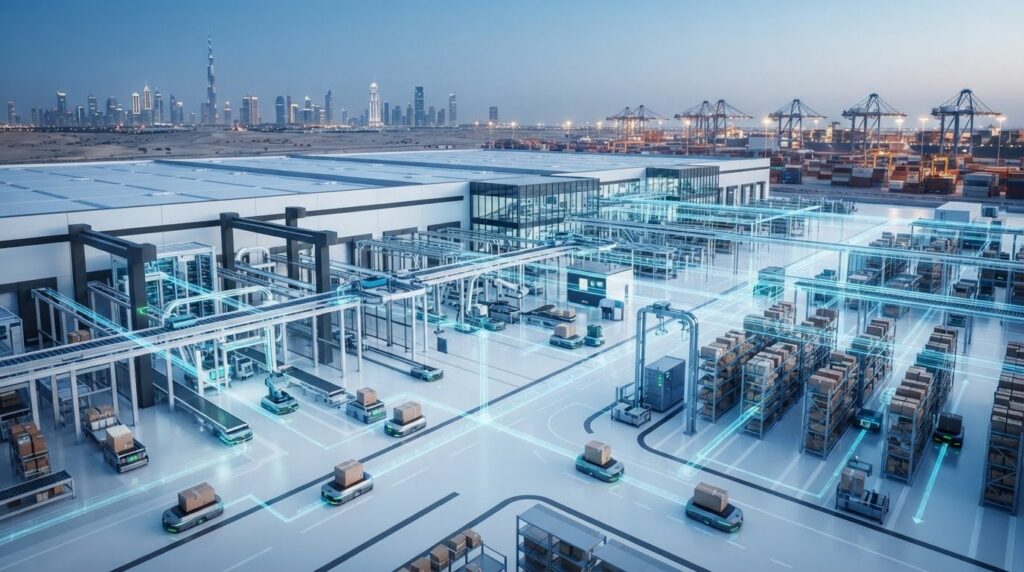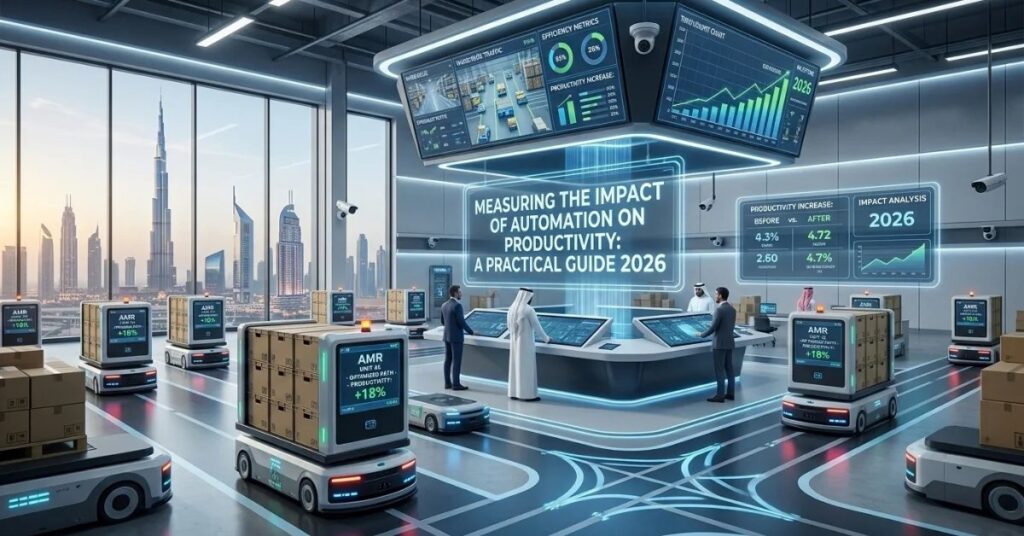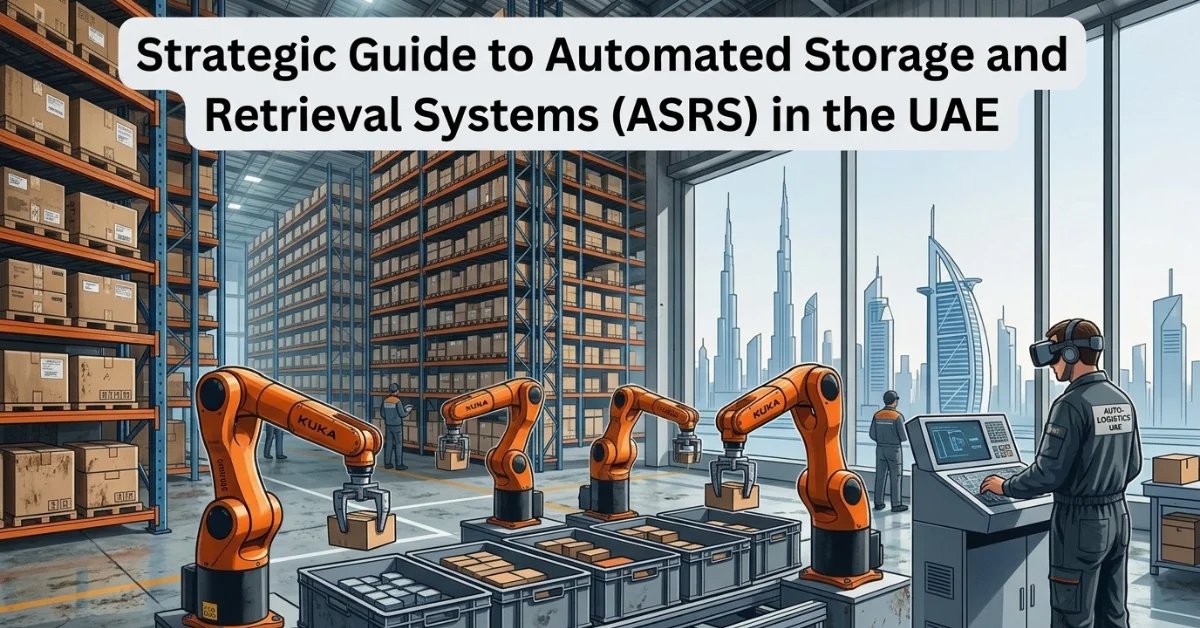
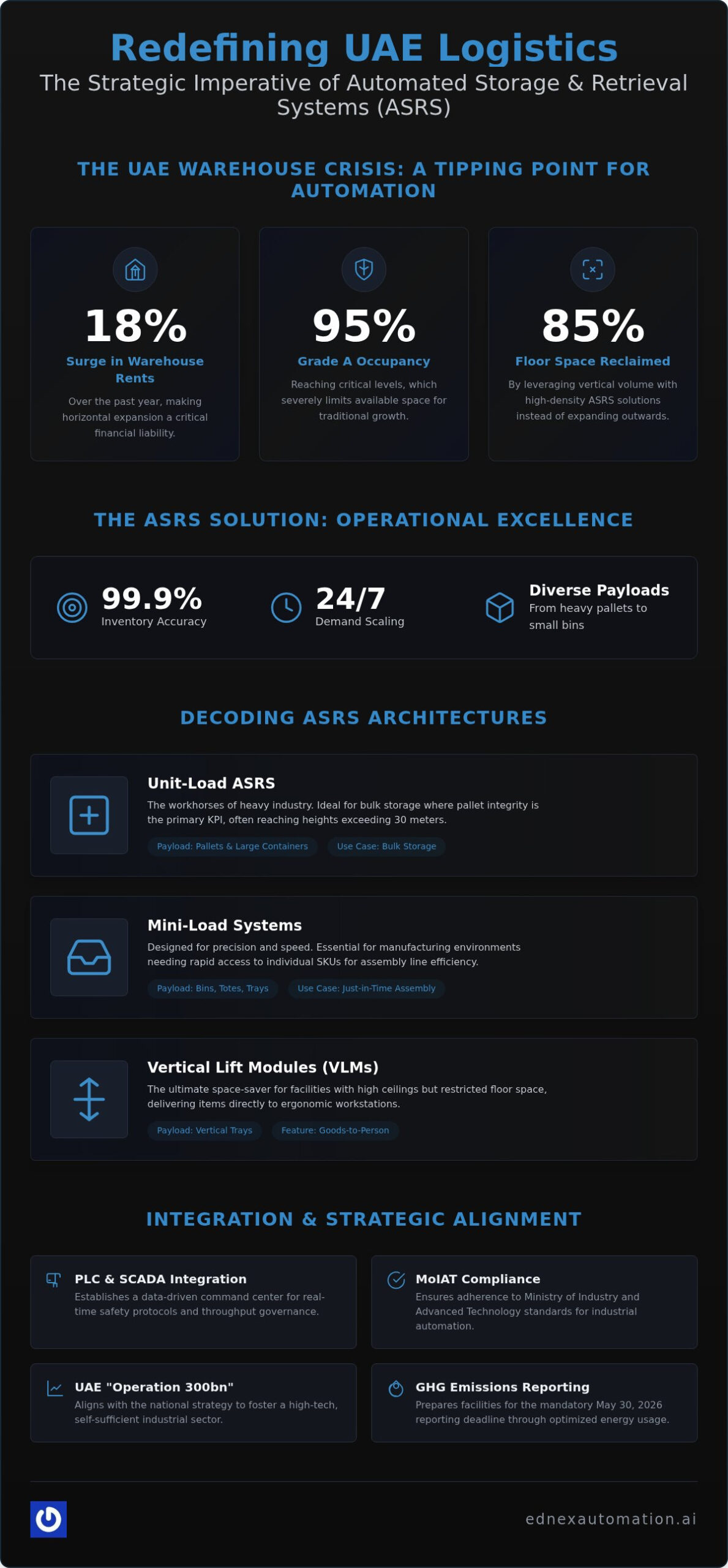
With warehouse rents in the UAE surging by 18% over the past year and Grade A occupancy reaching a critical 95%, the traditional strategy of horizontal expansion has transitioned from a growth tactic into a financial liability. You understand that maintaining 99.9% inventory accuracy while scaling to meet 24/7 demand requires a fundamental shift in how industrial space is utilized. Implementing a sophisticated automated storage and retrieval system UAE offers the technical framework necessary to convert these spatial constraints into operational strengths. By prioritizing high-density vertical automation and intelligent system integration, organizations can mitigate rising real estate costs while establishing a resilient foundation for long-term industrial viability.
This guide provides a comprehensive analysis of how ASRS technology is redefining the logistics landscape in the Emirates. We’ll examine the integration of PLC and SCADA systems, the impact of mandatory GHG emissions reporting due by May 30, 2026, and the specific methodologies for achieving unparalleled spatial efficiency. Discover the strategic pathways to reducing labor costs and optimizing throughput through the deployment of autonomous, high-tech infrastructure tailored for the UAE’s evolving regulatory environment.
Key Takeaways
- Leveraging vertical volume allows facilities to counteract rising industrial real estate costs by reclaiming up to 85% of floor space through high-density storage.
- Implementing a specialized automated storage and retrieval system UAE provides the technical precision required to handle diverse payloads, from heavy pallets to small-part bins, with 99.9% accuracy.
- Strategic integration with PLC and SCADA systems is critical for establishing a data-driven command center that governs real-time safety protocols and operational throughput.
- A methodical implementation strategy, beginning with a rigorous facility audit and throughput analysis, ensures the technology scales effectively to meet 24/7 demand.
The Evolution of UAE Warehousing: Why ASRS is Essential in 2026
The industrial landscape of the United Arab Emirates is currently undergoing a radical restructuring. With warehouse rents surging by 18% and Grade A occupancy rates reaching 95%, the economic viability of traditional horizontal storage has collapsed. The UAE’s logistics sector, valued at approximately 84.4 billion د.إ in 2026, requires a more sophisticated approach to density and throughput. Forward-thinking enterprises are now pivoting toward high-density vertical solutions to maintain profitability. An automated storage and retrieval system UAE provides the technical infrastructure needed to maximize existing footprints without the prohibitive expense of acquiring additional industrial land. This transition isn’t just about saving space; it’s about aligning with the UAE’s “Operation 300bn” strategy to foster a high-tech, self-sufficient industrial sector.
Overcoming the Limitations of Conventional Racking
Traditional selective racking and manual forklift operations are increasingly becoming operational bottlenecks. In high-volume environments, the reliance on human-operated machinery introduces significant variability in cycle times and heightens the risk of inventory damage. Safety also remains a paramount concern; manual retrieval from high-elevation racks presents inherent risks that automation eliminates. By removing human operators from the high-density storage grid, facilities achieve a controlled, predictable flow of goods. An Automated Storage and Retrieval System (ASRS) stands as the definitive cornerstone of modern intralogistics in 2026.
The Drive Toward Industrial Digital Transformation
Integrating an automated storage and retrieval system UAE is a primary step in a broader Industry 4.0 roadmap. These systems don’t operate in isolation; they function as the physical execution layer of a digital ecosystem. By utilizing real-time data from integrated PLC and SCADA controls, businesses gain a transparent view of their inventory at every micro-moment. This intelligence allows logistics managers to move from reactive storage to proactive, demand-driven fulfillment. Adopting these technologies also ensures compliance with Ministry of Industry and Advanced Technology (MoIAT) standards for industrial automation. This level of autonomy ensures that UAE enterprises remain competitive in a global market that rewards speed and precision over sheer scale.
Decoding ASRS Architectures: Selecting the Right Technology
Selecting the optimal automated storage and retrieval system UAE involves more than just evaluating physical footprint; it requires a deep understanding of how different architectures interact with specific payload profiles and throughput objectives. The hardware is the muscle of the operation, and for those constructing the heavy-duty frameworks required for these systems, JABAL AL NOOR Steel provides the high-quality long and flat steel products essential for industrial durability. Its effectiveness depends entirely on choosing the right mechanical configuration for the task at hand, as the architecture you deploy defines your facility’s long-term operational ceiling.
- Unit-Load ASRS: These are the workhorses of heavy industry, utilizing high-capacity cranes to manage pallets and large containers. They often reach heights exceeding 30 meters, making them ideal for bulk storage where pallet integrity is the primary KPI.
- Mini-Load Systems: Designed for precision, these handle smaller bins, totes, or trays. They’re essential for manufacturing environments where rapid access to individual SKUs is vital for assembly line efficiency.
- Vertical Lift Modules (VLMs): For facilities with restricted floor space but significant overhead clearance, VLMs act as enclosed, vertical tray-storage systems that deliver items directly to ergonomic workstations.
Comparing Unit-Load vs. Mini-Load Applications
Choosing between these systems depends heavily on your fulfillment cycles. Heavy-duty cranes provide stability for massive loads, but agile bin-picking solutions deliver the speed required for just-in-time assembly. When evaluating the ROI of ASRS, technical leaders must weigh the initial capital expenditure against the long-term gains in picking accuracy and labor reduction. This comparison table outlines the core differences in performance metrics:
| System Type | Payload Capacity | Throughput Speed | Typical Use Case |
|---|---|---|---|
| Unit-Load | 500kg – 1,500kg | Moderate | Bulk Pallet Storage |
| Mini-Load | 5kg – 50kg | High | Spare Parts & Electronics |
| Shuttle | Up to 50kg | Very High | E-commerce Fulfillment |
The Power of Shuttle-Based Automation
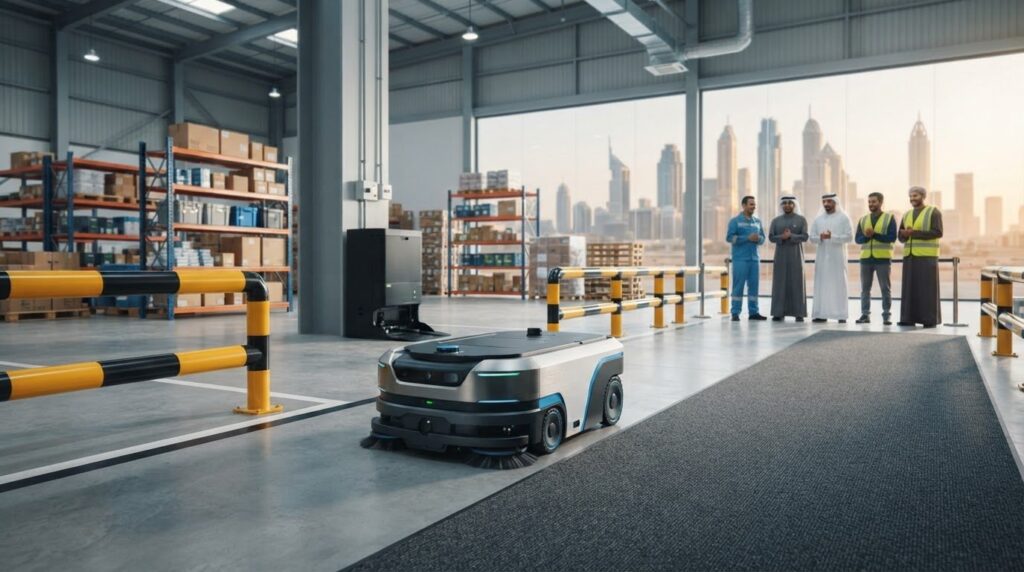
Shuttle technology represents the next evolution in high-density storage. Using 2-way or 4-way radio shuttles allows for multi-directional movement within a deep-lane grid, maximizing every cubic centimeter of the warehouse. These robots operate independently, which significantly reduces total energy consumption compared to large, centralized crane systems. For a truly autonomous end-to-end material flow, these shuttles integrate seamlessly with autonomous mobile robots to bridge the gap between the storage grid and the dispatch bay. Organizations looking to modernize their infrastructure should consider how bespoke system integration can harmonize these diverse architectures into a single, cohesive operational unit.
The Economic Impact: ROI and Operational Efficiency
Evaluating the financial viability of industrial automation requires moving beyond simple capital expenditure. In the Emirates, where Grade A warehouse occupancy has reached a critical 95%, the cost of operational friction is no longer sustainable. Transitioning to an automated storage and retrieval system UAE allows enterprises to dismantle the financial burden of manual dependency. By identifying hidden expenses, such as the escalating cost of human error and the underutilization of expensive vertical volume, logistics leaders can transform their warehouses from passive storage sites into high-velocity profit centers. This evolution isn’t merely about speed; it’s about securing long-term business viability in an increasingly competitive regional market.
Quantifying the ROI of Warehouse Automation
Direct labor savings represent only the surface of the total economic gain. When organizations eliminate manual picking errors, they simultaneously remove the costs associated with returns, re-shipping, and customer dissatisfaction. Achieving 99.9% inventory accuracy ensures that capital isn’t tied up in “safety stock” or lost due to misplacement. Operating with 24/7 autonomy allows for a continuous throughput that manual shifts can’t replicate without exponential increases in overhead. In high-density UAE environments, the ROI of ASRS typically realizes within 3 to 5 years, providing a predictable timeline for fiscal recovery and subsequent profit maximization. This timeframe is accelerated by the reduction in product damage and the optimization of utility costs through more compact facility footprints.
Space as a Strategic Asset
Reclaiming up to 85% of floor space by utilizing vertical volume fundamentally changes the real estate equation. Instead of pursuing expensive facility relocations or land acquisitions, businesses can expand their capacity within their current walls. This is particularly vital for specialized sectors like cold storage, where the cost of cooling every cubic meter is a significant operational expense. By condensing the storage grid, ASRS minimizes the volume requiring climate control, directly lowering energy consumption in line with the UAE’s Net Zero 2050 vision. Maximizing the utility of existing infrastructure ensures that space becomes a strategic asset rather than a limiting factor for growth. This methodical approach to spatial efficiency allows organizations to scale their operations without the traditional risks of industrial expansion.
Seamless Integration: Connecting ASRS with PLC and SCADA
The mechanical components of a high-tech automated storage and retrieval system UAE represent the physical capacity of a facility, but their operational intelligence is governed entirely by the underlying control architecture. Without a sophisticated digital “brain,” even the most advanced shuttle or crane remains a static asset. Achieving true industrial autonomy requires the seamless convergence of hardware with Programmable Logic Controllers (PLC) and Supervisory Control and Data Acquisition (SCADA) systems. This integration transforms a series of isolated movements into a synchronized, data-driven command center that ensures every retrieval is executed with millisecond precision.
The Role of PLC in Precise Material Handling
Programmable Logic Controllers serve as the immediate execution layer of the automation grid. Utilizing specialized PLC and SCADA integration services allows facilities to synchronize complex crane maneuvers with downstream conveyor systems, eliminating the micro-delays that often plague manual operations. These controllers manage real-time safety protocols and fail-safe architectures, ensuring that any mechanical obstruction results in an immediate, controlled pause rather than a system-wide failure. Custom programming allows for intricate priority logic, where high-demand SKUs are automatically repositioned within the grid during low-activity periods to optimize future fulfillment cycles.
SCADA: Real-Time Intelligence and Diagnostics
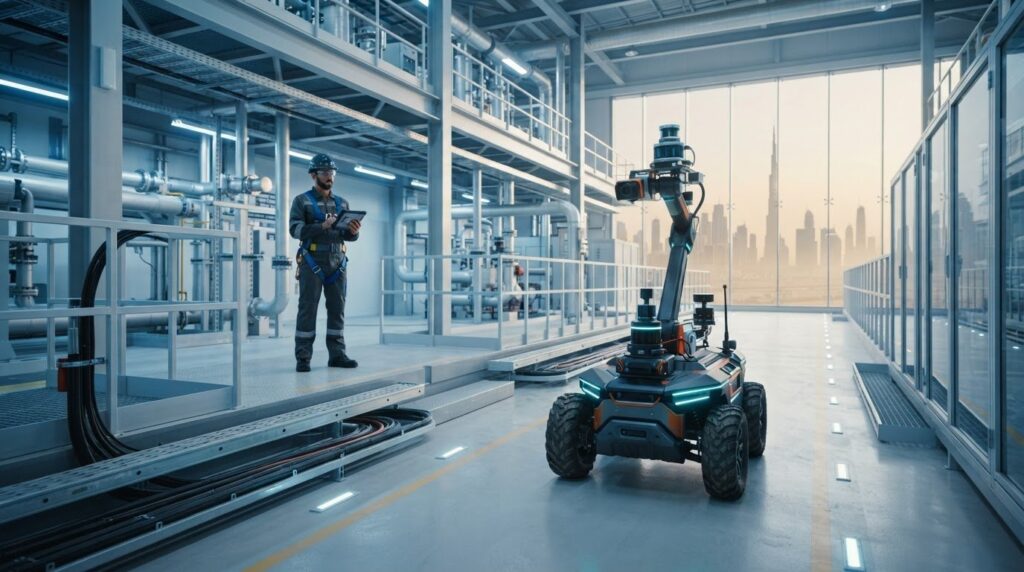
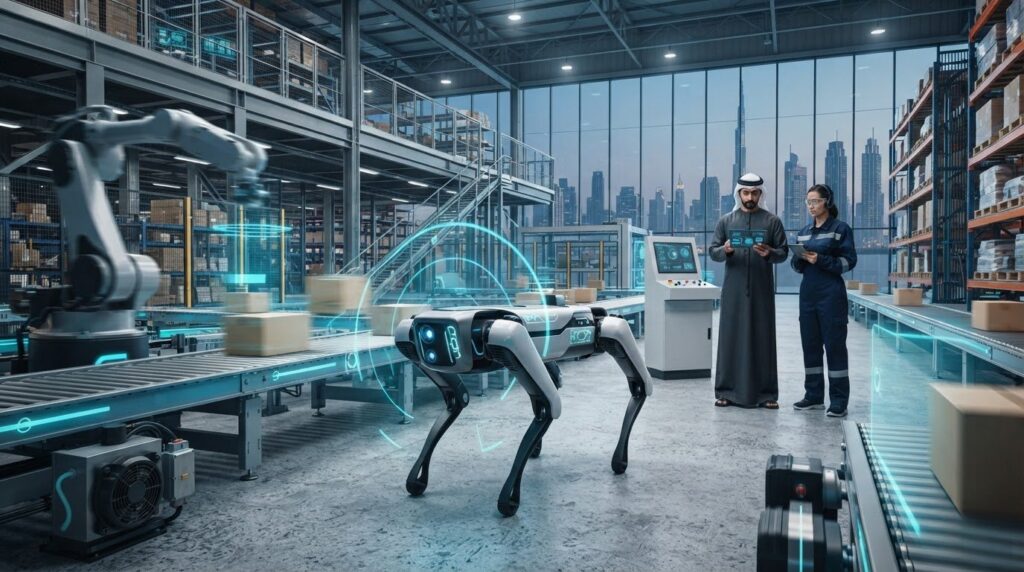
While the PLC handles the execution, the SCADA system provides the visionary oversight necessary for facility-wide optimization. Through advanced Human-Machine Interfaces (HMI), operators gain total visibility into inventory flow, identifying potential bottlenecks before they impact throughput. This level of intelligence is foundational for predictive maintenance; SCADA monitors vibration, heat, and cycle counts to alert technical teams of necessary adjustments before downtime occurs. There is also a growing synergy between the storage grid and collaborative robots on the production floor. By linking these systems, the ASRS can autonomously deliver components directly to robotic workstations, creating a closed-loop material flow that requires zero human intervention.
Interoperability remains the final frontier of warehouse modernization. A robust automated storage and retrieval system UAE must communicate fluently with existing Warehouse Management Systems (WMS) and Enterprise Resource Planning (ERP) platforms to maintain a “single source of truth” for inventory data. This connectivity ensures that every movement within the racks is immediately reflected in the business’s financial and procurement records. Organizations looking to bridge the gap between physical storage and digital strategy should consult with our experts for comprehensive ASRS integration to ensure long-term operational resilience.
Future-Proofing Your Facility: Strategic Implementation
- Phase 1: Comprehensive Facility Audit. A rigorous analysis of current throughput, inventory profiles, and physical constraints provides the data necessary for informed decision-making.
- Phase 2: Custom System Design. Engineering a bespoke architecture that accounts for specific payload requirements and future growth projections prevents premature system obsolescence.
- Phase 3: Phased Deployment. Executing the installation in controlled stages allows the facility to maintain active operations while the new infrastructure is integrated.
- Phase 4: Autonomous Management Transition. Providing intensive staff training ensures the workforce is equipped to oversee high-tech systems rather than performing manual tasks.
Selecting a Strategic Automation Partner
Choosing the right implementation partner is as critical as the technology itself. UAE enterprises require consultants who possess both global technological alliances and a deep understanding of regional market conditions. A reliable partner provides start-to-finish expertise, moving from conceptual engineering to long-term maintenance and optimization. It’s vital to evaluate a partner’s proficiency in integrating the storage grid with existing industrial control systems. This ensures that your automation layers communicate fluently, creating a unified data environment that supports real-time decision-making and operational transparency.
Scalability: Planning for 2030 and Beyond
Designing for the future requires a commitment to modularity and intelligent software. As the UAE continues its trajectory toward becoming a global logistics hub, your automated storage and retrieval system UAE must be capable of expanding alongside your business. Utilizing modular hardware allows for the incremental addition of aisles or shuttles as demand increases, while AI-driven slotting algorithms optimize retrieval paths in real-time. This forward-looking approach ensures your facility remains competitive in an economy that increasingly rewards speed and precision. To secure your position at the forefront of this industrial evolution, consult with EdNex Automation for a bespoke ASRS roadmap tailored to your specific commercial objectives.
Securing Industrial Viability Through Advanced Automation
Transitioning from manual dependency to autonomous storage is a strategic necessity for UAE enterprises navigating 95% occupancy rates and surging land costs. It’s clear that deploying a sophisticated automated storage and retrieval system UAE allows organizations to transform warehouses into high-density production engines capable of achieving 99.9% inventory accuracy. This evolution requires more than hardware; it demands the seamless integration of PLC and SCADA controls to ensure every movement is data-driven and safe. Success in this landscape doesn’t happen by accident. It requires a methodical approach to system architecture and implementation.
Leveraging our official alliances with global robotics leaders and specialized technical expertise, EdNex provides the intellectual framework needed for large-scale digital transformation. We offer start-to-finish industrial automation consultancy to ensure your facility is prepared for 2030 and beyond. Optimize your industrial logistics with EdNex ASRS solutions to reclaim your spatial efficiency and drive long-term profitability. Don’t let legacy infrastructure limit your growth in the Emirates’ evolving industrial economy.
Frequently Asked Questions
What is an automated storage and retrieval system (ASRS)?
An automated storage and retrieval system UAE consists of a sophisticated combination of equipment and controls that handle, store, and retrieve materials with high precision. These systems utilize computer-controlled cranes or shuttles to deposit and retrieve loads from defined storage locations. By automating the placement and removal of goods, facilities eliminate the variability of manual labor and maximize cubic space utilization. This technology serves as the physical foundation for a fully integrated, data-driven Industry 4.0 ecosystem.
How much space can I save by installing an ASRS in my UAE warehouse?
Implementing ASRS allows you to reclaim significant floor space by transitioning from horizontal selective racking to high-density vertical storage. By utilizing the full clear height of a facility, businesses can condense their storage footprint while increasing total SKU capacity. This density is achieved through narrower aisles and deeper storage lanes that are inaccessible to traditional forklifts. Such optimization is critical in the UAE’s industrial market, where land availability is increasingly constrained.
Can ASRS be integrated with my existing Warehouse Management System (WMS)?
Yes, modern ASRS architectures are designed for seamless interoperability with existing Warehouse Management Systems (WMS) and Enterprise Resource Planning (ERP) platforms. This connectivity ensures that every physical movement within the storage grid is reflected in your digital inventory records in real-time. By establishing a “single source of truth,” businesses can automate procurement and fulfillment cycles without manual data entry. Our integration expertise ensures that these systems communicate fluently through standardized industrial protocols.
What is the typical ROI for an ASRS implementation in the logistics sector?
The return on investment for an automated storage and retrieval system UAE is typically realized through a combination of labor optimization, reduced product damage, and eliminated real estate expansion costs. Beyond direct savings, the system provides indirect gains in order accuracy and customer satisfaction. While initial capital expenditure is higher than manual racking, the reduction in operational friction leads to a predictable fiscal recovery. Most high-volume facilities see full amortization within a few years of activation.
Is ASRS suitable for cold storage or pharmaceutical environments?
ASRS is exceptionally well-suited for cold storage and pharmaceutical environments where environmental control and regulatory compliance are paramount. Condensed storage grids reduce the total volume requiring refrigeration, directly lowering energy overheads. Automation ensures strict adherence to First-In, First-Out (FIFO) protocols and pharmaceutical safety standards set by the Ministry of Health and Prevention. These systems provide the sterile, high-precision handling required for sensitive medical supplies and temperature-controlled food logistics.
How does ASRS improve workplace safety for warehouse staff?
Automation significantly enhances workplace safety by removing human operators from high-risk environments, such as high-elevation aisles and areas with heavy forklift traffic. By delegating the handling of heavy payloads to robotic cranes and shuttles, facilities minimize the risk of musculoskeletal injuries and equipment collisions. The system operates within a controlled, fenced grid, ensuring that staff remain in ergonomic packing stations. This separation of human and machine creates a more predictable and secure industrial environment.
What maintenance is required for high-density automated storage systems?
Maintenance for ASRS focuses on proactive and predictive strategies rather than reactive repairs. Integrated SCADA systems monitor mechanical health in real-time, identifying wear in motors, sensors, and tracks before a failure occurs. Regular inspections ensure that safety protocols and alignment remain within precise technical tolerances. By utilizing data-driven diagnostics, technical teams can schedule maintenance during low-activity periods, effectively minimizing system downtime and extending the operational lifespan of the infrastructure.
How long does it take to implement a full-scale ASRS solution?
The timeline for a full-scale implementation typically spans several months, depending on the complexity of the system design and the level of software integration required. This includes phases for initial facility audits, engineering design, manufacturing, and on-site commissioning. We utilize a phased deployment strategy to ensure that installation has a minimal impact on your ongoing warehouse operations. Rigorous testing and staff training are conducted during the final weeks to ensure a seamless transition to autonomous management.