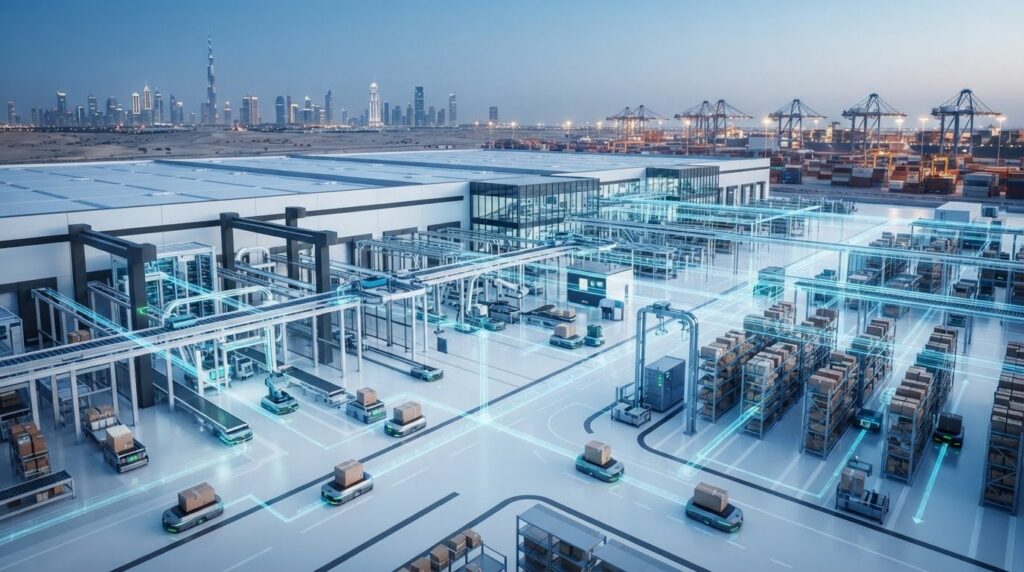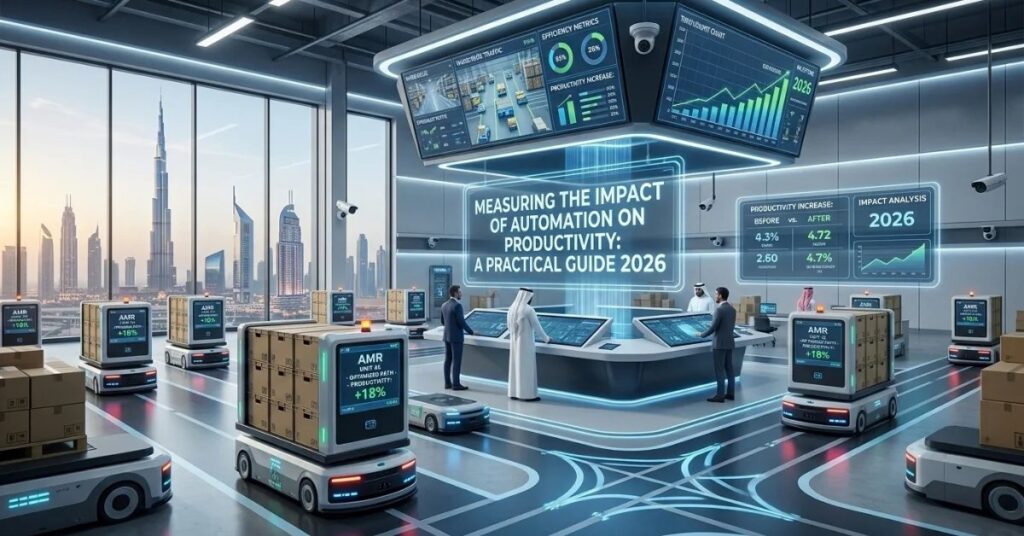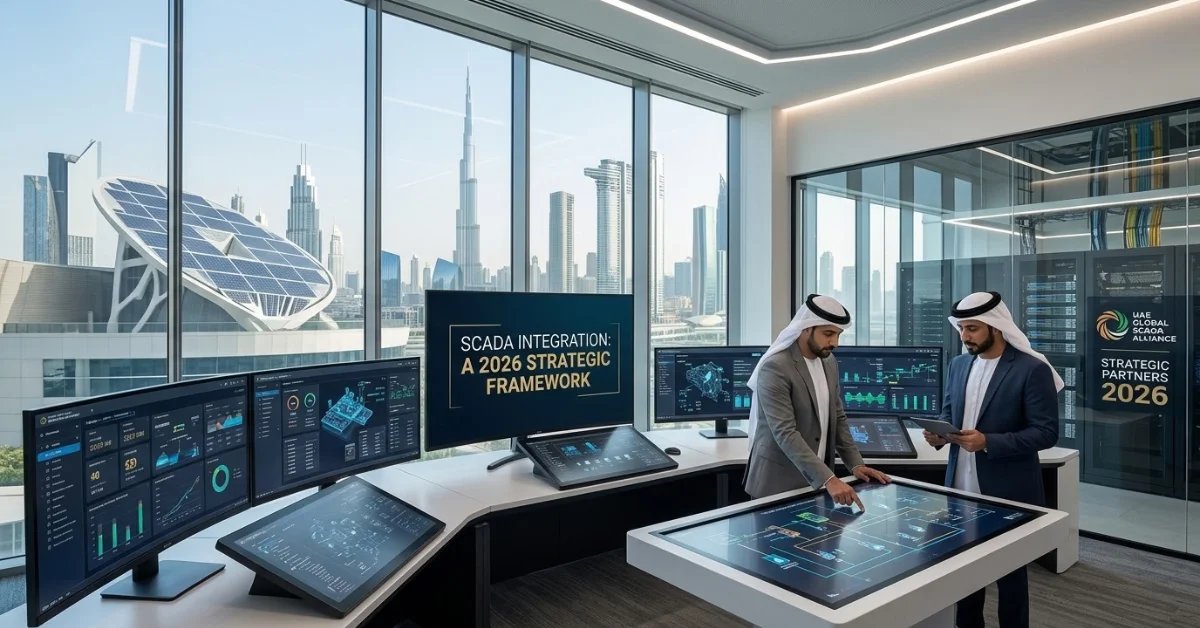
Harnessing the power of a unified digital nervous system is no longer optional for facilities aiming to lead in the Middle East’s evolving economy. As the UAE accelerates toward the Operation 300bn objective to reach د.إ 300 billion in industrial GDP, implementing robust industrial SCADA integration UAE has become the definitive benchmark for operational excellence. You’re likely grappling with the challenges of extracting actionable insights from legacy hardware while defending critical infrastructure against sophisticated cyber risks. It’s a difficult balance to maintain when new national regulations, such as the September 2026 Critical Information Infrastructure Protection policy, demand higher levels of oversight and security than ever before.
This strategic framework empowers you to master these technical complexities to drive measurable efficiency across your manufacturing landscape. You’ll gain the intellectual tools necessary to build a scalable, future-proof environment that supports both your current assets and new robotic technologies. We’ll examine the specific methodologies for creating a seamless data flow between PLCs and higher-level management systems, ensuring your infrastructure remains resilient, compliant, and ready for the demands of Industry 4.0.
Key Takeaways
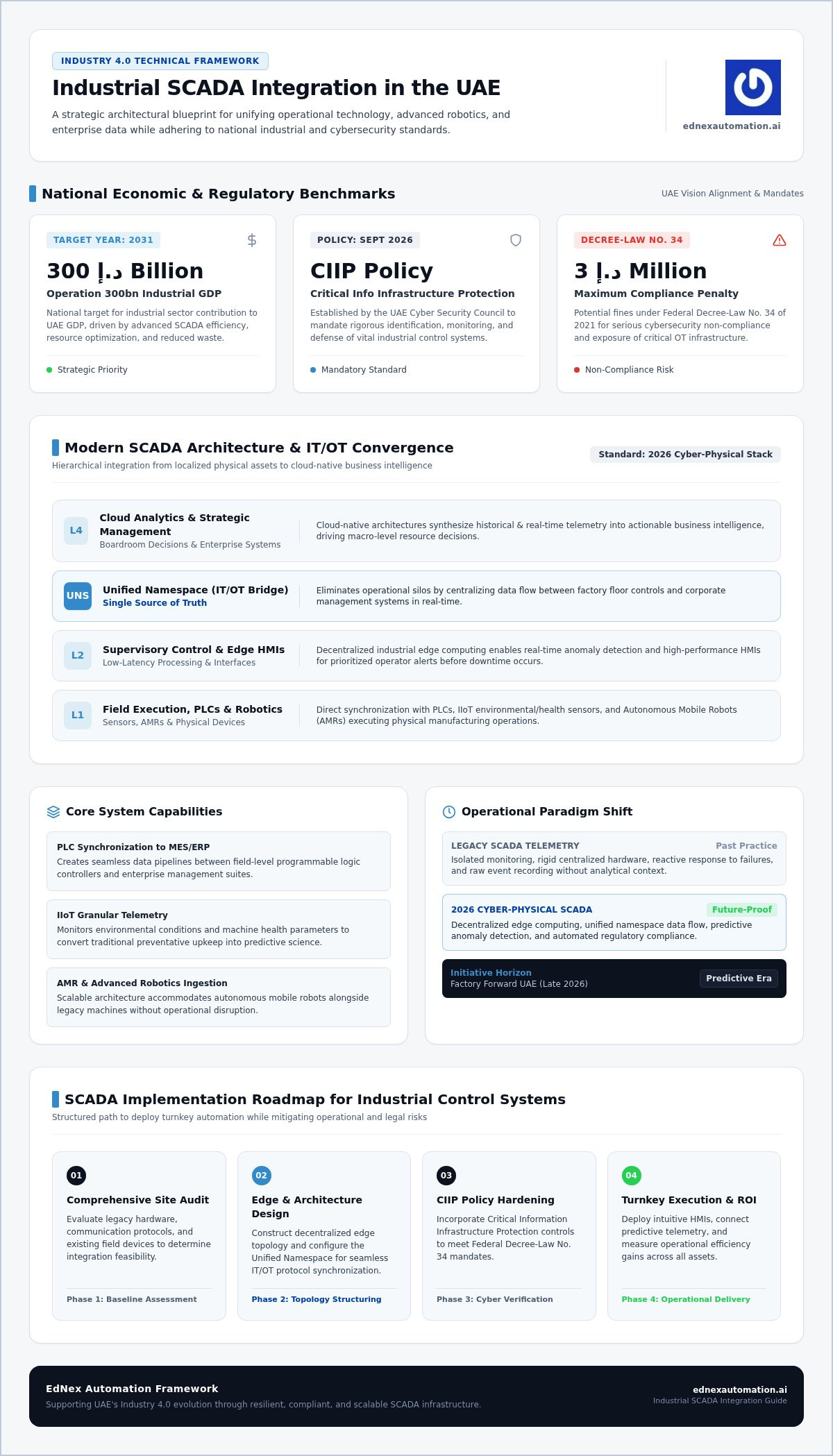
- Align your automation strategy with national initiatives like Operation 300bn to contribute to the UAE’s target of reaching د.إ 300 billion in industrial GDP by 2031.
- Leveraging industrial SCADA integration UAE allows for the seamless synchronization of PLCs with enterprise-level management systems, transforming fragmented data into a unified operational view.
- Transitioning toward decentralized, cloud-native architectures provides the necessary scalability to integrate IIoT sensors and advanced robotics like AMRs into your existing infrastructure.
- Implementing a robust cybersecurity framework based on the 2026 CIIP policy is essential for protecting critical infrastructure and ensuring long-term business viability.
- Mastering the implementation roadmap, beginning with comprehensive site audits, ensures that turnkey automation solutions deliver measurable ROI and operational efficiency.
The Role of Industrial SCADA Integration in UAE’s Industry 4.0 Transformation
Positioning the United Arab Emirates as a global manufacturing hub requires more than just modern machinery; it demands a sophisticated digital architecture that can synthesize vast amounts of operational data. Implementing industrial SCADA integration UAE serves as the critical bridge between physical assets on the factory floor and the high-level strategic decisions made in the boardroom. As national initiatives like Factory Forward UAE gain momentum in late 2026, the transition from isolated monitoring to predictive cyber-physical systems is becoming the standard for competitive enterprises. It’s an evolution that transforms raw data into a strategic asset, ensuring that local industries can compete on a global scale while maintaining peak operational efficiency.
Supervisory Control and Data Acquisition: The 2026 Definition
Modern Supervisory Control and Data Acquisition (SCADA) systems in 2026 function as the central intelligence for complex industrial environments. Unlike legacy telemetry systems that merely recorded historical events, contemporary frameworks utilize a hierarchical structure that connects low-level field devices directly to localized controllers and cloud-based analytics interfaces. This evolution allows for real-time visibility, enabling operators to identify anomalies before they result in costly downtime. By integrating these layers, businesses transform raw electrical signals into actionable business intelligence, providing a scalable foundation for future expansions into advanced robotics and autonomous systems.
Driving National Industrial Competitiveness
Aligning automation efforts with the UAE’s national industrial strategy is essential for any organization seeking long-term viability. Operation 300bn aims to increase the industrial sector’s contribution to the national GDP to د.إ 300 billion by 2031, a goal that relies heavily on the efficiency gains provided by advanced industrial SCADA integration UAE. Utilizing real-time data allows facilities to optimize resource consumption, reducing waste and supporting the nation’s sustainability targets. Standardizing communication protocols across diverse sectors ensures that the UAE’s industrial ecosystem remains cohesive and resilient against global market shifts, creating a unified front of technological excellence.
Navigating the complex regulatory environment in the UAE requires specific local expertise to ensure full compliance with the latest cybersecurity mandates. The UAE Cyber Security Council’s Critical Information Infrastructure Protection (CIIP) policy, established in September 2026, sets rigorous standards for identifying and protecting vital industrial assets. Partnering with a visionary integrator who understands Federal Decree-Law No. 34 of 2021 is vital for mitigating risks and avoiding fines that can reach د.إ 3 million for serious violations. This localized knowledge ensures that your technical evolution remains secure, legally sound, and perfectly aligned with the country’s ambitious economic vision.
Advanced Architectural Components of Modern SCADA Systems
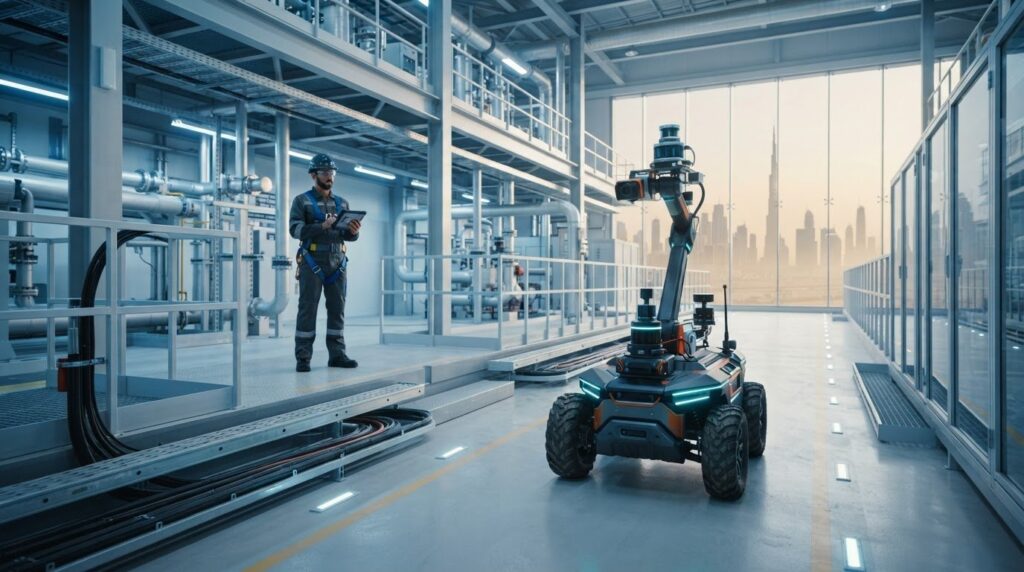
Evolving beyond rigid, centralized frameworks, modern industrial SCADA integration UAE now leverages decentralized and cloud-native architectures to provide unprecedented scalability for growing enterprises. By offloading heavy data processing to the industrial edge, facilities achieve the low-latency communication required for high-speed manufacturing environments. Integrating IIoT sensors directly into this fabric provides granular insights into environmental conditions and machine health, transforming preventative maintenance into a predictive science. High-performance Human-Machine Interfaces (HMIs) act as the vital visualization layer, allowing operators to interact with complex datasets through intuitive, responsive dashboards that prioritize critical alerts.
The Convergence of IT and OT
Bridging the gap between the factory floor and corporate offices requires a unified approach to data management that eliminates traditional silos. Implementing a Unified Namespace (UNS) creates a single source of truth for all operational technology (OT) and information technology (IT) systems. Utilizing lightweight protocols like MQTT and robust standards such as OPC UA ensures that data flows seamlessly across the enterprise without bottlenecking legacy hardware. This convergence allows leadership to view real-time production metrics alongside financial data, facilitating faster, data-driven decision-making that directly impacts the bottom line. As you evaluate these architectural shifts, exploring bespoke automation integration from EdNex Automation can help align your technical infrastructure with these advanced standards.
Cybersecurity for Industrial Control Systems
Protecting critical infrastructure from regional threats is a non-negotiable requirement for modern industrial networks. Adopting a Zero Trust architecture ensures that every device and user must be verified, significantly reducing the attack surface within the facility. Following the NIST Guide to Industrial Control Systems (ICS) Security provides a globally recognized framework for risk management, which complements UAE-specific standards like the national Electronic Security Center ICS Security Standard. These layers of defense are essential for maintaining uptime in an era where cyber disruption can result in losses exceeding 3 million AED in regulatory fines and operational damages. Ensuring your data remains within national borders while adhering to the 2026 CIIP policy provides the intellectual and technical security necessary for long-term business viability.
Strategic Integration: Connecting SCADA with PLCs, MES, and Robotics
Achieving a truly intelligent industrial ecosystem requires the precise orchestration of diverse hardware and software layers. Industrial SCADA integration UAE serves as the central hub where high-speed logic from the plant floor meets enterprise-level strategic planning. By synchronizing these components, facilities transform isolated pockets of automation into a cohesive, data-driven operation that maximizes throughput and minimizes waste. This integration doesn’t just improve visibility; it provides the essential foundation for real-time human-robot collaboration and fleet autonomy.
The Synergy of PLC and SCADA
Programmable Logic Controllers (PLCs) handle the immediate, millisecond-level execution of industrial tasks. Effective integration ensures that these controllers communicate seamlessly with the supervisory layer, allowing for sophisticated data logging and alarm management. When operators can visualize raw signals as actionable trends, they identify inefficiencies that would otherwise remain hidden. Optimizing these PLC and SCADA integration services is essential for reducing plant downtime and ensuring that every machine cycle contributes to overall business objectives. This connection allows for a granular level of control, where even the smallest variance in motor speed or temperature triggers an immediate, informed response.
Integrating Robotics into the Control Loop
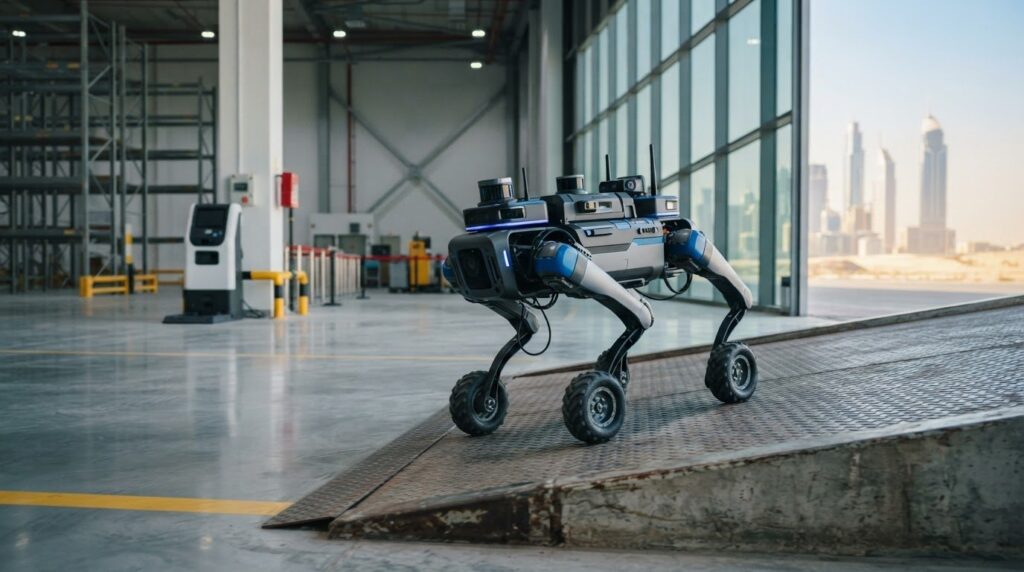
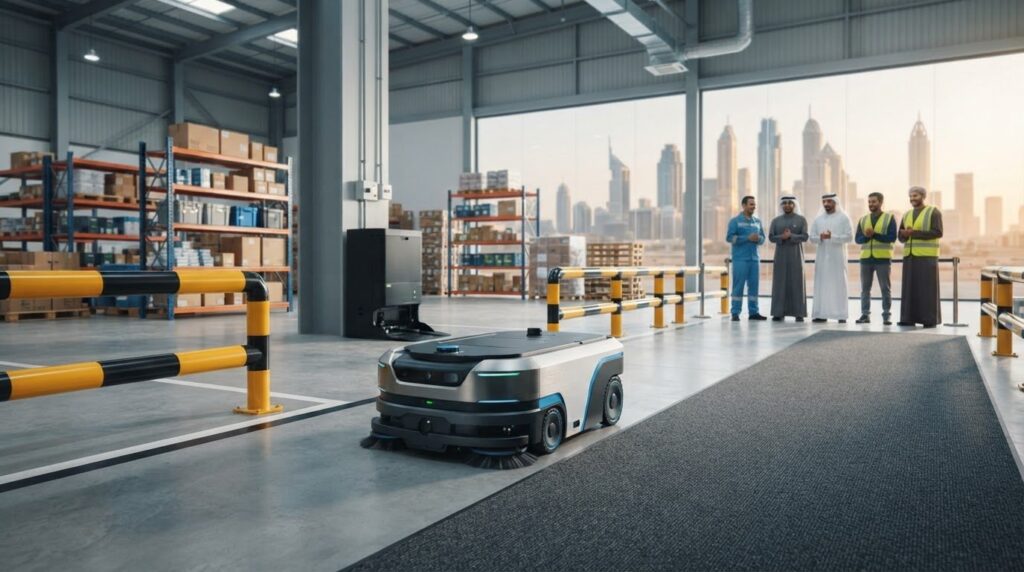
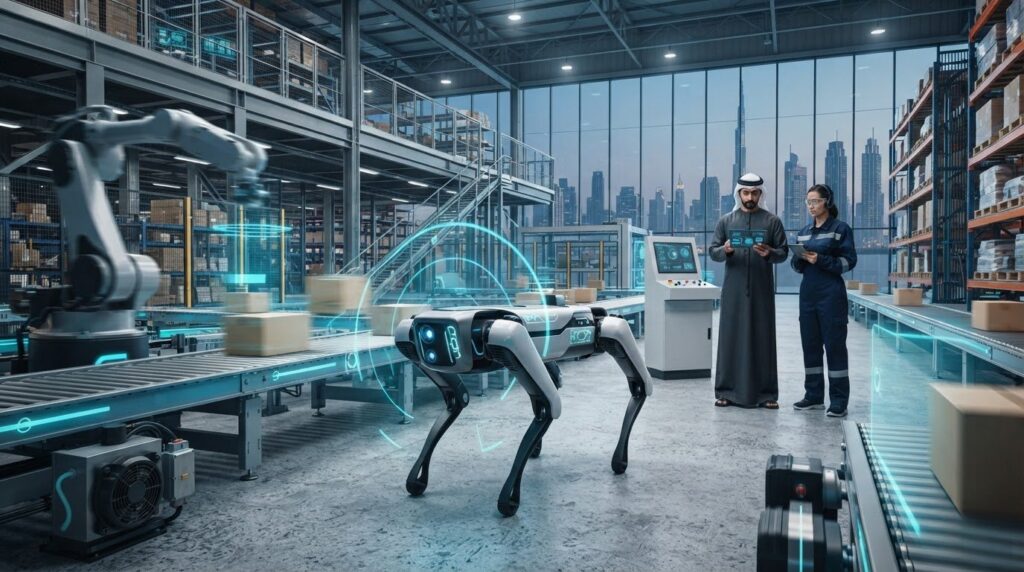
Managing modern industrial facilities in 2026 involves more than just fixed machinery. The rise of autonomous mobile robots (AMRs) necessitates a unified interface where fleet movements are coordinated alongside traditional assembly lines. SCADA systems provide this visualization, allowing for a comprehensive view of the facility floor. This integration supports several critical functions:
- Real-time trajectory tracking of AMRs to prevent bottlenecks and ensure fluid logistics.
- Safety monitoring for collaborative robots (Cobots) to ensure secure human-robot interaction in shared workspaces.
- Performance benchmarking that compares robotic output with legacy system metrics for unified reporting.
This holistic view ensures that new robotic assets don’t operate in a vacuum. Instead, they become an integrated part of the production flow, feeding data into Manufacturing Execution Systems (MES) to calculate accurate Return on Investment (ROI). Bridging these technologies requires a deep understanding of both mechanical logic and digital architecture. Facilities that successfully link their supervisory layers with execution systems gain a significant competitive advantage, enabling them to pivot production rapidly based on market demand. It’s a systematic approach that turns complex infrastructure into a streamlined, high-performance environment.
Navigating the Implementation Roadmap for Industrial Control Systems
Successfully deploying industrial SCADA integration UAE requires a methodical transition from conceptual design to operational reality. It’s not just about installing software; it’s about re-engineering the industrial workflow to ensure long-term business viability. We begin by defining clear Key Performance Indicators (KPIs) that align with national excellence standards, such as targeting a 12% reduction in maintenance costs or a 13% decrease in carbon emissions, similar to benchmarks set by major national water infrastructure projects. A structured roadmap ensures every Dirham invested translates into tangible performance gains without compromising existing production schedules.
Phase 1: Assessment and Architecture Design
Conducting a comprehensive site audit is the first step in uncovering fragmented data across legacy systems. We identify hardware compatibility issues within your current PLC network and map out a scalable network topology that accommodates future robotic assets like AMRs or Cobots. Selecting software vendors that align with national technical requirements, such as the standards established by the Cyber Security Council, ensures your infrastructure is built on a foundation of local compliance and global excellence. This phase eliminates data silos, creating a unified intellectual framework for your entire facility.
Phase 2: Execution and Continuous Optimization
Execution begins with pilot testing in a controlled environment to isolate variables and validate the control logic before full-scale deployment. Iterative refinement based on real-time production data allows us to tune the system for maximum efficiency, ensuring that the industrial SCADA integration UAE remains resilient against evolving operational demands. Establishing a rigorous maintenance schedule for both hardware and software updates is vital to prevent performance degradation. This phase transforms your facility into a systematic, intelligent organizer of resources, where every machine cycle is optimized for peak output.
Post-integration success depends on empowering your workforce through structured technical training and long-term support. Providing your team with the expertise to manage high-tech systems ensures your organization remains competitive in a rapidly evolving market. We offer comprehensive, start-to-finish expertise to guide you through every technical hurdle, from initial audit to final optimization. To begin your facility’s transformation into a leader of Industry 4.0, consult with our integration experts today.
Bespoke SCADA Solutions: The EdNex Automation Integration Framework
Deploying a robust industrial architecture demands an integration partner capable of bridging the gap between global technological breakthroughs and regional operational requirements. EdNex Automation delivers a visionary approach to turnkey industrial automation systems, designing bespoke frameworks that transform raw factory data into a distinct competitive advantage. By leveraging official global alliances, we bring world-class engineering solutions directly to the local market, ensuring your facility operates at the absolute cutting edge of efficiency. Our specialized division constructs custom SCADA dashboards tailored to your specific sectoral operational needs, allowing for the seamless execution of complex, multi-tiered processes. Part of this comprehensive control fabric includes integrating advanced automated storage and retrieval systems directly into the supervisory loop, maximizing warehouse throughput while optimizing factory floor logistics.
Why National Enterprises Trust EdNex Automation
National enterprises require more than simple equipment vendors; they need a grounded, reliable technical partner committed to long-term business viability and Industry 4.0 transformation. EdNex Automation provides comprehensive, end-to-end service from the initial legacy site audit through to final commissioning, programming, and live optimization. This start-to-finish expertise guarantees that your industrial SCADA integration UAE is executed safely, on time, and in full alignment with national industrial goals. Our localized technical division ensures rapid response times and unparalleled system reliability, keeping your critical infrastructure secure and operational under all conditions. We don’t just deliver tools; we provide the complete intellectual framework necessary for sustainable operational growth.
A Future-Proof Partnership
Choosing EdNex Automation means establishing a scalable relationship that evolves alongside your long-term manufacturing ambitions. As the regional landscape advances, our integration framework ensures your facility is fully prepared to adopt the next generation of autonomous assets, including humanoid robots, AMRs, and collaborative cobots. We provide the technical foundation necessary to scale operations seamlessly, utilizing intelligent automation and data-driven insights to protect your capital investments. This systematic approach brings order, safety, and peak efficiency to complex environments through controlled and deliberate innovation. Contact EdNex Automation today to schedule a strategic industrial control system consultation and secure your position at the forefront of the nation’s digital transition.
Securing Your Position in the UAE’s Industrial Future
Achieving operational excellence in 2026 requires a deliberate shift from fragmented legacy systems to a unified digital architecture. By implementing advanced industrial SCADA integration UAE, your facility transforms into an intelligent, responsive ecosystem capable of synchronizing complex robotics with real-time enterprise data. This strategic evolution ensures full compliance with national cybersecurity mandates while providing the scalability needed for long-term business viability. EdNex Automation stands as your authoritative technical partner, bridging the gap between global innovations and regional industrial needs through official global technology alliances and a comprehensive national support network.
Our Industry 4.0 certified integration experts provide the intellectual framework necessary to orchestrate everything from PLC logic to autonomous mobile robot fleets. You’ll gain a future-proof infrastructure that turns operational data into a high-impact strategic asset. Don’t let technical silos hinder your progress toward the nation’s ambitious industrial targets. Take the definitive step toward modernization and consult with EdNex for bespoke industrial SCADA integration to unlock your facility’s true potential. It’s time to build a smarter, safer, and more efficient industrial landscape together.
Frequently Asked Questions
What is the primary difference between PLC and SCADA integration?
PLCs act as the industrial nervous system, handling millisecond-level execution and logic for specific machinery on the floor. SCADA serves as the supervisory brain, aggregating data from multiple PLCs to provide a plant-wide operational view. Integration bridges these levels, allowing for centralized control, alarm management, and historical data logging. This synergy is essential for facilities pursuing comprehensive industrial SCADA integration UAE to ensure field-level logic aligns perfectly with high-level business intelligence and strategic growth.
How does SCADA integration improve cybersecurity in UAE industrial plants?
Modern integration frameworks incorporate centralized security protocols that protect critical infrastructure from unauthorized access. By implementing Zero Trust architectures and robust encryption, facilities align with the September 2026 Critical Information Infrastructure Protection (CIIP) policy. This structured approach helps organizations avoid regulatory fines that reach د.إ 3 million for serious violations. It creates a controlled environment where every data packet is verified, significantly reducing the attack surface across the entire industrial network and ensuring long-term viability.
Can modern SCADA systems integrate with legacy machinery?
Modern supervisory systems are designed to bridge the gap between legacy hardware and contemporary digital standards. Utilizing industrial gateways and IIoT sensors, integrators extract actionable data from older machinery that lacks native connectivity. Protocols like MQTT and OPC UA facilitate this communication, enabling a unified namespace for the entire facility. This process allows regional enterprises to modernize their operations without the immediate need for a complete, capital-intensive replacement of existing physical assets or specialized machinery.
What role does SCADA play in managing autonomous mobile robots (AMRs)?
SCADA acts as the central orchestration hub for fleets of autonomous mobile robots (AMRs) operating within a facility. It provides real-time visualization of robot trajectories, ensuring that autonomous movements don’t conflict with traditional assembly line operations. By integrating AMR data into the supervisory layer, operators monitor battery status, mission progress, and safety triggers from a single interface. This level of coordination is vital for maintaining fluid logistics and human-robot safety in high-traffic, automated manufacturing environments.
How long does a typical industrial SCADA integration project take?
The duration of a project depends on the complexity of the existing infrastructure and the scale of the deployment. A standard implementation typically follows a methodical roadmap involving site audits, architecture design, pilot testing, and final commissioning. While smaller upgrades might conclude within a few months, large-scale transformations often require three to nine months for full optimization. This structured, phased approach ensures that operational risks are mitigated and that the system is thoroughly tuned for peak performance.
What are the cost-saving benefits of MES and SCADA integration?
Linking supervisory layers with Manufacturing Execution Systems (MES) drives significant ROI through enhanced resource optimization. Facilities can achieve a 12% reduction in maintenance costs and a 13% decrease in carbon emissions by leveraging real-time data for predictive maintenance. This integration eliminates manual data entry errors and reduces plant downtime, ensuring that production targets are met with minimal waste. It provides the intellectual framework necessary to scale operations while maintaining strict control over operational expenditures and resource consumption.
Is cloud-based SCADA safe for critical industrial infrastructure?
Cloud-native architectures are highly secure when implemented alongside industrial edge computing and localized data residency measures. These systems utilize advanced encryption and multi-factor authentication to protect sensitive operational data from regional threats. By adhering to UAE federal cybersecurity laws, organizations ensure their cloud infrastructure remains resilient against external disruptions. This hybrid approach offers the scalability of the cloud while maintaining the low-latency response times and local control required for critical industrial processes and national infrastructure safety.
How does EdNex Automation support industrial digital transformation in the UAE?
EdNex Automation provides turnkey solutions that connect global technological breakthroughs with regional industrial needs. As a specialized division of the EdNex group, we offer end-to-end expertise in PLC and SCADA integration, advanced robotics, and Automated Storage and Retrieval Systems (ASRS). Our team of Industry 4.0 certified experts delivers the comprehensive support necessary for large-scale transformation. We act as a systematic organizer, bringing order and efficiency to complex environments through controlled, visionary innovation across the entire country.