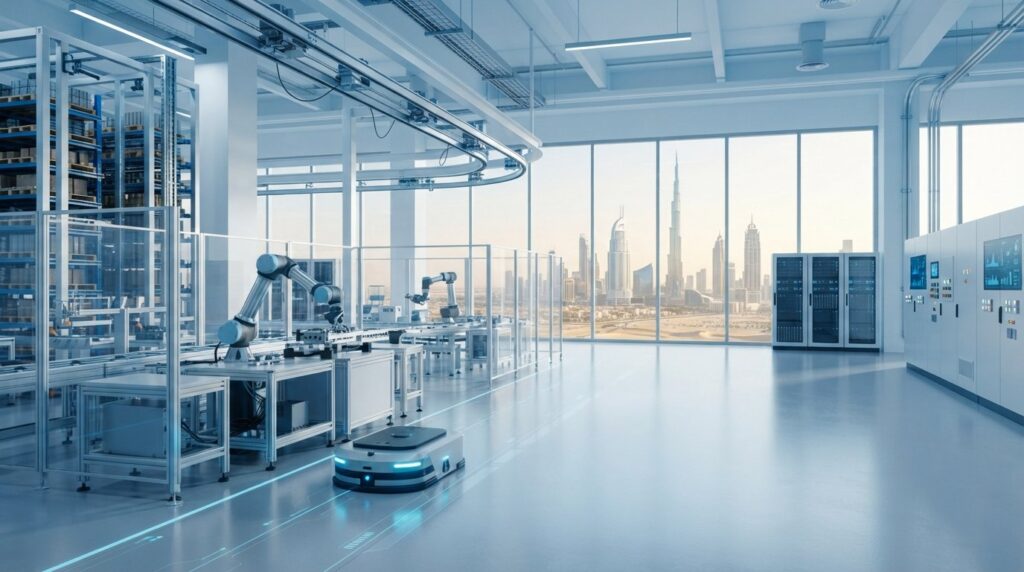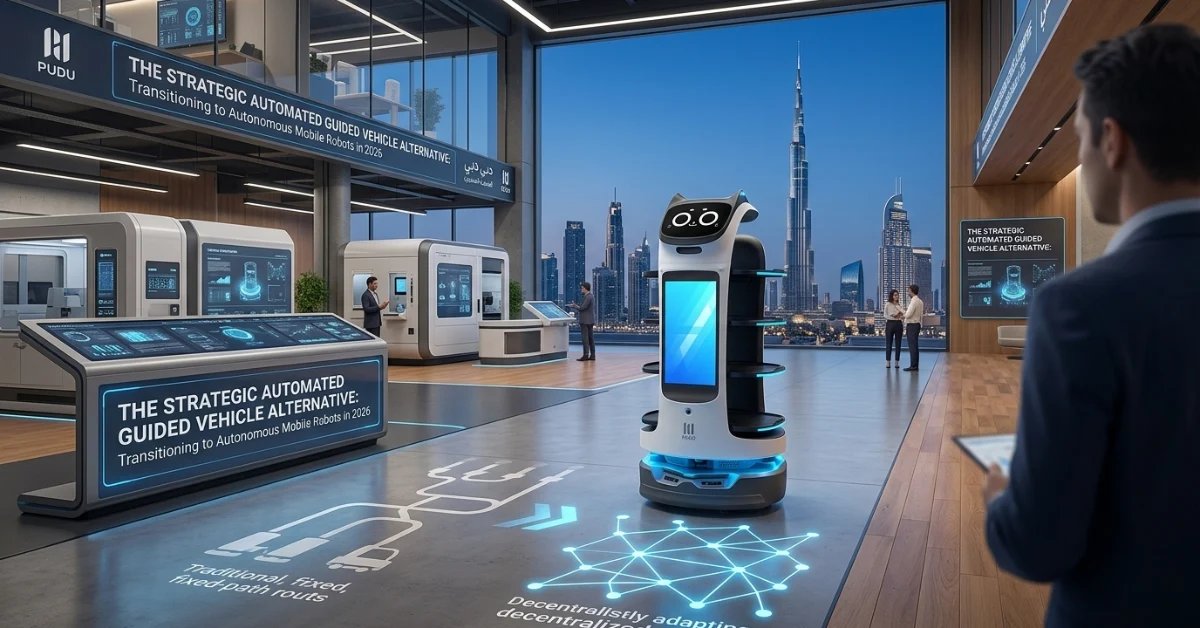
Maintaining rigid infrastructure for material handling has become a form of industrial debt that restricts your facility’s potential for growth. You’ve likely experienced the frustration of production downtime during path reconfigurations or the prohibitive costs of floor modifications for magnetic tape. Forward-thinking operations are now prioritizing a superior automated guided vehicle alternative to eliminate these bottlenecks and achieve genuine floor-space optimization. Leveraging advanced sensor suites and intelligent mapping, these systems provide a level of autonomy that traditional guided vehicles simply can’t match.
Transitioning to Autonomous Mobile Robots (AMRs) allows you to bypass infrastructure constraints, reduce your total cost of ownership, and comply with the latest ANSI/A3 R15.06-2025 safety standards. This article examines the strategic shift toward dynamic navigation, the financial advantages of the Robot-as-a-Service model, and the roadmap for scaling your automation without physical limitations. You’ll learn how to future-proof your industrial operations by adopting flexible, intelligent systems that adapt to your environment in real time.
Key Takeaways
- Identify why modern industrial leaders are pivoting to an automated guided vehicle alternative to eliminate the high costs and physical constraints of legacy magnetic tape systems.
- Understand the technological advantages of LiDAR and SLAM, which empower Autonomous Mobile Robots to navigate dynamic environments without any reliance on fixed infrastructure.
- Analyze the comparative performance metrics between AGVs and AMRs, specifically focusing on the drastic reduction in deployment timelines and long-term Total Cost of Ownership.
- Discover how transitioning to autonomous logistics enhances operational agility while significantly reducing the expenses associated with facility layout re-engineering.
- Explore the strategic integration of bespoke AMR solutions designed to align your regional industrial operations with the global standards of digital transformation.
Moving Beyond Fixed Paths: Why Industry is Seeking an AGV Alternative
Relying on pre-defined paths has become a significant liability for modern manufacturers aiming for high-throughput efficiency. As global production cycles shorten and customization demands rise, the search for a viable automated guided vehicle alternative has intensified among industry leaders who recognize that static infrastructure is a barrier to progress. Traditional Automated Guided Vehicle (AGV) systems, while once revolutionary, now represent a rigid solution in an era of fluid demand. These legacy systems require a level of environmental predictability that no longer exists in high-velocity 2026 industrial settings. By anchoring logistics to fixed magnetic tapes or embedded wires, enterprises inadvertently create infrastructure debt, which is the accumulation of hidden costs and operational delays associated with maintaining and modifying physical navigation markers.
Modernizing a facility requires a shift toward decentralized intelligence where each unit possesses the onboard processing power to make independent navigation decisions. This evolution moves away from the centralized “traffic control” models of the past, allowing for a more resilient material handling ecosystem. When a single point of failure or a minor floor obstruction can halt an entire fleet of AGVs, the business case for a more intelligent automated guided vehicle alternative becomes undeniable. Forward-thinking organizations are now viewing their floor space as a dynamic asset rather than a fixed grid.
The Rigidity of Traditional AGV Infrastructure
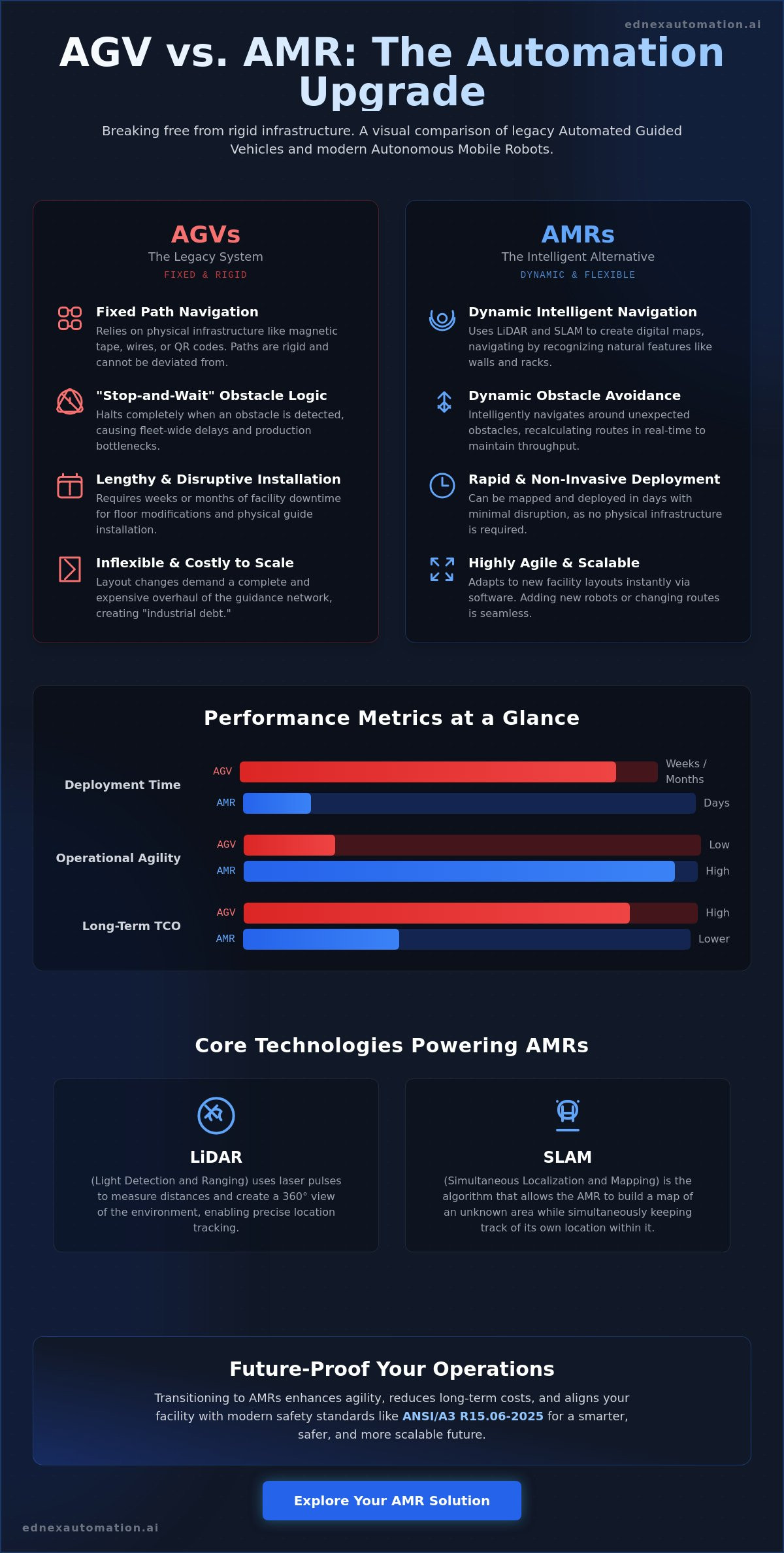
Implementing path modifications in a traditional AGV setup often requires weeks of facility downtime, involving the physical removal and re-application of magnetic strips or QR codes. These markers are increasingly viewed as obsolete in smart factories where layout changes occur quarterly rather than annually. Because these systems lack the ability to deviate from their programmed route, they stifle facility scalability. Expanding operations often necessitates a complete overhaul of the existing guidance network, creating a cycle of reinvestment that prevents seamless growth and limits the speed of production pivots.
Operational Bottlenecks and Safety Limitations
Safety protocols in legacy systems typically rely on “stop-and-wait” logic, which causes significant bottlenecks in high-traffic zones. When an AGV encounters an obstacle, it remains stationary until the path is cleared, leading to cascading delays across the assembly line. In contrast, autonomous alternatives utilize advanced sensor fusion to navigate around obstructions dynamically. Under the latest ANSI/A3 R15.06-2025 safety standards, the industry has reached a tipping point where the lack of obstacle-avoidance capabilities in AGVs makes them less cost-effective than intelligent mobile platforms. These rigid systems fail to maintain throughput in dynamic environments, eventually costing more in lost productivity than the initial hardware savings they might have offered.
Autonomous Mobile Robots (AMRs): The Intelligent Alternative to AGVs
Modern industrial facilities require a departure from the “follow-the-line” mentality of the past. As we move through 2026, the primary automated guided vehicle alternative has emerged in the form of Autonomous Mobile Robots (AMRs). These systems don’t rely on magnetic tape or wires; instead, they use a sophisticated stack of sensors and software to interpret their surroundings. This transition reflects a broader trend in the exploding AMR market, where the demand for flexibility outweighs the perceived simplicity of legacy guided systems. While an AGV is essentially a driverless train on a virtual track, an AMR is a self-driving vehicle capable of independent reasoning and natural feature navigation.
Deploying these robots involves a process of mapping the environment digitally, allowing the machine to recognize walls, pillars, and workstations as fixed landmarks. This infrastructure-free approach eliminates the need for physical markers, making the initial setup significantly faster than traditional installations. Because the intelligence resides on the robot rather than in the floor, your facility remains adaptable to sudden shifts in production strategy. Choosing a premier automated guided vehicle alternative ensures that your material handling system evolves alongside your business requirements.
LiDAR and SLAM: The Engines of Autonomy
At the heart of every AMR lies LiDAR technology, which uses laser pulses to create a high-resolution map of the environment. This hardware works in tandem with SLAM algorithms to ensure the robot knows its exact position relative to the facility layout. Simultaneous Localization and Mapping (SLAM) is the foundational technology for infrastructure-free robotics. By processing data from 3D vision sensors, these robots detect floor-level obstructions and hanging hazards that traditional sensors might miss. This real-time facility awareness ensures that the robot isn’t just following a path, but actively understanding the space it occupies. For a deeper technical breakdown of the sensory architecture and AI-driven logic powering these systems, explore our comprehensive guide on how do AMRs work to decode the full intelligence stack behind autonomous navigation.
Dynamic Path Planning and Obstacle Avoidance
Efficiency in a dynamic environment is defined by a robot’s ability to “navigate around” rather than “stop and wait.” When an AMR encounters a forklift or a pallet left in a corridor, its fleet management software calculates an alternative route instantly. This capability maximizes throughput by preventing the gridlock common in AGV-dependent operations. Intelligent fleet controllers manage these movements with a level of precision that legacy controllers cannot achieve, coordinating dozens of units to prevent congestion. For enterprises seeking comprehensive floor management, these robots can work alongside autonomous cleaning robots to maintain facility standards without human intervention. To see how these intelligent systems can be tailored to your specific facility needs, you can explore our range of bespoke AMR solutions.
Technical Comparison: AGV vs. AMR Performance Metrics
Quantifying the operational differences between legacy guidance and autonomous intelligence reveals why the transition to a superior automated guided vehicle alternative is now a strategic imperative. While traditional systems rely on external infrastructure for navigation, autonomous mobile robots utilize internal processing power to interpret their environment, leading to a fundamental shift in performance metrics. Over a five-year horizon, the Total Cost of Ownership (TCO) for autonomous systems often proves more favorable because they eliminate the recurring expenses associated with infrastructure upkeep and floor marker replacement. Verified industrial data indicates a typical payback period of 12 to 24 months for these deployments, a timeline that’s rarely achievable with systems requiring extensive facility modification.
Scaling a material handling operation highlights the starkest contrast in technical flexibility. Adding a single unit to an AMR fleet involves a simple software integration and a digital map update, whereas expanding a guided network necessitates physical construction and path re-validation. This difference transforms automation from a rigid capital expense into a scalable operational asset that grows in lockstep with facility requirements without incurring additional infrastructure debt.
Deployment Speed and Facility Impact
Deploying an AMR fleet typically occurs in days rather than the months required for traditional floor-based installations. While AGV implementation demands extensive floor preparation and the application of magnetic strips, AMRs utilize a “zero-downtime” strategy by mapping the facility while production continues. This process involves a manual drive-through where the robot’s sensors record the environment, creating a digital twin of the workspace. This speed allows enterprises to move robots between different facility zones as seasonal demand shifts, providing a level of agility that fixed-path systems can’t provide.
Operational Flexibility in Dynamic Environments
Managing congestion in high-traffic zones requires a level of fleet intelligence that legacy controllers lack. AMRs handle changing rack layouts and temporary floor storage by recalculating their routes in real time, ensuring that throughput remains consistent even when the facility floor is cluttered. This adaptability is particularly critical in collaborative robots UAE environments where humans and machines share the same workspace. By integrating decentralized decision-making, these systems prevent the gridlock common in guided networks, optimizing the flow of goods without requiring constant human intervention.
Evaluating the Strategic ROI of AMR Implementation
Achieving a sustainable return on investment requires looking beyond simple labor replacement to the broader value of operational agility. Implementing an intelligent automated guided vehicle alternative allows facilities to bypass the traditional costs of layout re-engineering, which often consume a significant portion of annual maintenance budgets. By eliminating the necessity for facility “churn,” enterprises can pivot production lines in response to market shifts without incurring the massive downtime associated with legacy systems. This adaptability directly influences order fulfillment speed, ensuring that high-velocity logistics operations maintain their competitive edge even as SKU complexity increases.
Mitigating the risks of labor shortages has become a priority for national-scale industrial sectors, particularly in regions where rapid economic growth outpaces the availability of specialized workers. With a typical payback period of 12 to 24 months, the financial justification for transitioning to autonomous systems is rooted in long-term viability. These robots provide a consistent level of throughput that is unaffected by shift changes or human fatigue, creating a predictable operational baseline for complex supply chains. Enterprises facing a 36% annual turnover rate in logistics roles can find a comprehensive roadmap in our detailed analysis of solutions for labor shortage in warehouse environments, which outlines how AMR integration secures stable, 24/7 throughput. To begin quantifying these gains for your own operations, you can start by exploring our range of autonomous mobile robots designed for high-performance industrial environments.
Eliminating Infrastructure Maintenance Costs
Removing magnetic tape and wire sensors from the facility floor results in immediate long-term savings by eliminating the labor-intensive upkeep of physical paths. Unlike legacy systems that require physical intervention for any route modification, autonomous platforms rely on digital mapping that can be updated in minutes. Continuous software updates ensure that an AMR fleet remains technologically relevant for years, effectively extending the asset’s lifecycle compared to static AGVs that require hardware overhauls for path changes. This software-first approach allows for the seamless introduction of new features, such as advanced congestion management, without requiring additional capital expenditure on hardware.
Labor Optimization and Safety ROI
Reallocating human talent to high-value, cognitive tasks while robots handle repetitive transit significantly improves overall facility morale and productivity. Modern autonomous systems utilize advanced sensor-based safety protocols that comply with the latest ANSI/A3 R15.06-2025 standards, drastically reducing the frequency of workplace accidents in high-traffic zones. These safety improvements translate to lower insurance premiums and reduced costs associated with equipment damage. There is also growing synergy between AMRs and humanoid robots for sale UAE, where the two platforms work in tandem to handle complex logistics tasks that were previously impossible to automate. This multi-layered robotics strategy ensures that your facility remains at the cutting edge of industrial safety and efficiency.
EdNex Automation: Leading the Transition to Autonomous Logistics
Leading the paradigm shift in regional industrial automation, EdNex Automation provides the strategic framework necessary for enterprises to abandon rigid legacy systems. By positioning ourselves as the premier partner for those seeking an intelligent automated guided vehicle alternative, we ensure that our clients don’t just purchase hardware but invest in a scalable, future-proof ecosystem. Our approach integrates global technological breakthroughs with a deep understanding of local industrial requirements, ensuring that every deployment is optimized for the specific economic and operational context of the region. We act as a systematic organizer, bringing order and efficiency to complex environments through controlled and deliberate innovation that aligns with the goals of Industry 4.0.
Securing long-term viability in a competitive market requires a material handling strategy that evolves alongside your business objectives. We provide the technical expertise required to navigate this transition, offering bespoke AMR integration that addresses the unique challenges of modern manufacturing and logistics. By bridging the gap between advanced robotics and practical facility needs, we empower organizations to achieve a lower total cost of ownership while maximizing their operational agility. Our commitment to comprehensive technical support ensures that your investment in a superior automated guided vehicle alternative remains a high-performing asset for years to come.
PLC and SCADA Integration for Seamless Autonomy
Achieving seamless autonomy requires more than just mobile robots; it demands a unified control architecture that links every component of the production floor. We specialize in PLC and SCADA Integration, connecting autonomous fleets directly to existing facility management systems to facilitate real-time data visualization and comprehensive fleet reporting. Utilizing advanced communication protocols, our engineers provide custom PLC programming to synchronize robot movements with Automated Storage and Retrieval Systems (ASRS) and existing conveyors. This high-level synchronization creates a harmonized material handling environment, allowing operators to monitor performance metrics through a centralized dashboard and respond to dynamic facility needs with precision.
Start-to-Finish Technical Consultancy
Navigating the complexities of a large-scale industrial transformation requires a methodical and reliable partner who understands the gravity of the undertaking. We provide start-to-finish technical consultancy, beginning with a rigorous initial site audit to identify optimization opportunities and concluding with full-scale autonomous deployment. By providing the intellectual framework for scalable automation, we empower organizations to transition away from infrastructure-heavy guided systems toward a more resilient, software-driven future. To secure your facility’s operational excellence and begin your journey toward digital transformation, consult with EdNex Automation for your AMR transition today.
Future-Proofing Industrial Operations Through Autonomous Intelligence
Transitioning to a superior automated guided vehicle alternative represents more than a simple technological upgrade; it’s a fundamental shift toward long-term operational resilience. By eliminating infrastructure debt and embracing the dynamic navigation of AMRs, enterprises achieve seamless scalability while maintaining strict compliance with the latest industrial safety standards. We’ve established how decentralized intelligence removes the inherent bottlenecks of legacy systems, allowing your facility to adapt to real-time production demands without the burden of physical floor markers.
Partnering with Industry 4.0 certified integration experts ensures that your autonomous transition is supported by comprehensive PLC and SCADA synchronization. Providing full-lifecycle technical support for national enterprises, EdNex Automation grounds global technological breakthroughs in regional engineering expertise to deliver measurable results. Scale your logistics with EdNex Automation’s bespoke AMR solutions to transform your material handling into a high-performance strategic asset. The evolution toward an autonomous future is an opportunity to redefine your competitive standing through controlled, deliberate innovation.
Frequently Asked Questions
What is the most effective automated guided vehicle alternative for existing warehouses?
Autonomous Mobile Robots (AMRs) represent the most effective automated guided vehicle alternative for existing facilities because they require zero floor modifications. These systems leverage intelligent mapping to navigate around obstacles, allowing them to function in dynamic brownfield environments where legacy guided vehicles often struggle. This flexibility ensures that your material handling strategy remains adaptable as your production requirements evolve over time.
How do AMRs navigate without magnetic tape or wires?
AMRs utilize a sophisticated sensor stack consisting of LiDAR and 3D vision sensors to perceive their surroundings in real time. By employing Simultaneous Localization and Mapping (SLAM) technology, the robot builds a digital twin of its environment and identifies its exact position relative to fixed landmarks. This infrastructure-free approach allows the robot to calculate the most efficient path and make autonomous decisions without relying on physical external markers. To understand the full technical depth behind these capabilities, our detailed resource on how do AMRs work provides a comprehensive breakdown of the navigation intelligence and safety systems involved.
Can an AMR system integrate with my existing Warehouse Management System (WMS)?
Modern autonomous fleets are designed for seamless integration with Warehouse Management Systems (WMS) and Enterprise Resource Planning (ERP) platforms through standardized APIs. Utilizing advanced PLC and SCADA integration, these robots receive task assignments and provide live status updates to a centralized dashboard. This connectivity ensures that your autonomous logistics operations remain perfectly synchronized with your broader industrial control architecture and inventory data.
What is the typical ROI period for replacing AGVs with AMRs?
Verified industrial data from 2026 indicates that the typical payback period for AMR deployments is between 12 and 24 months. This rapid return on investment is achieved by eliminating the high costs of infrastructure maintenance and reducing the downtime associated with facility layout changes. Many enterprises also leverage Robot-as-a-Service (RaaS) models to lower initial capital expenditure, further accelerating the timeline to positive cash flow.
Are autonomous mobile robots safe to work alongside human employees?
Autonomous mobile robots are specifically engineered for collaborative environments and comply with the latest ANSI/A3 R15.06-2025 safety standards. Unlike traditional guided vehicles that follow rigid paths, AMRs use 360-degree sensor coverage to detect personnel and navigate around them safely. This “navigate around” logic prevents the frequent stoppages and potential safety hazards common in high-traffic zones where humans and machines share the same floor space.
How long does it take to deploy an AMR fleet compared to an AGV system?
Deploying an AMR fleet typically takes only a few days to a few weeks, whereas traditional AGV installations often require several months of floor preparation. Because AMRs map the environment digitally, there’s no need for the physical installation of magnetic strips or embedded wires. This speed allows for a “zero-downtime” implementation, as the mapping process can occur during regular operating hours without disrupting your ongoing production cycles.
Can AMRs handle the same payload capacities as heavy-duty AGVs?
Modern AMRs are fully capable of matching the payload capacities of heavy-duty AGVs, with high-performance units designed to transport loads exceeding 1,500 kilograms. These robots utilize robust chassis architectures and high-torque drivetrains to manage standard pallets or custom industrial components with precision. This ensures that enterprises don’t have to sacrifice hauling power when selecting a more flexible automated guided vehicle alternative for their heavy-duty material handling needs.