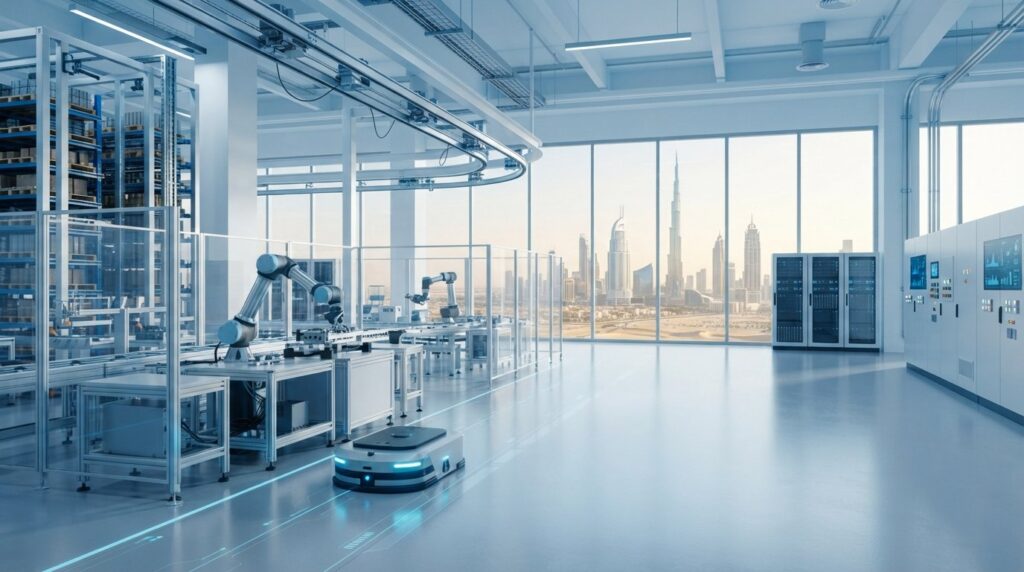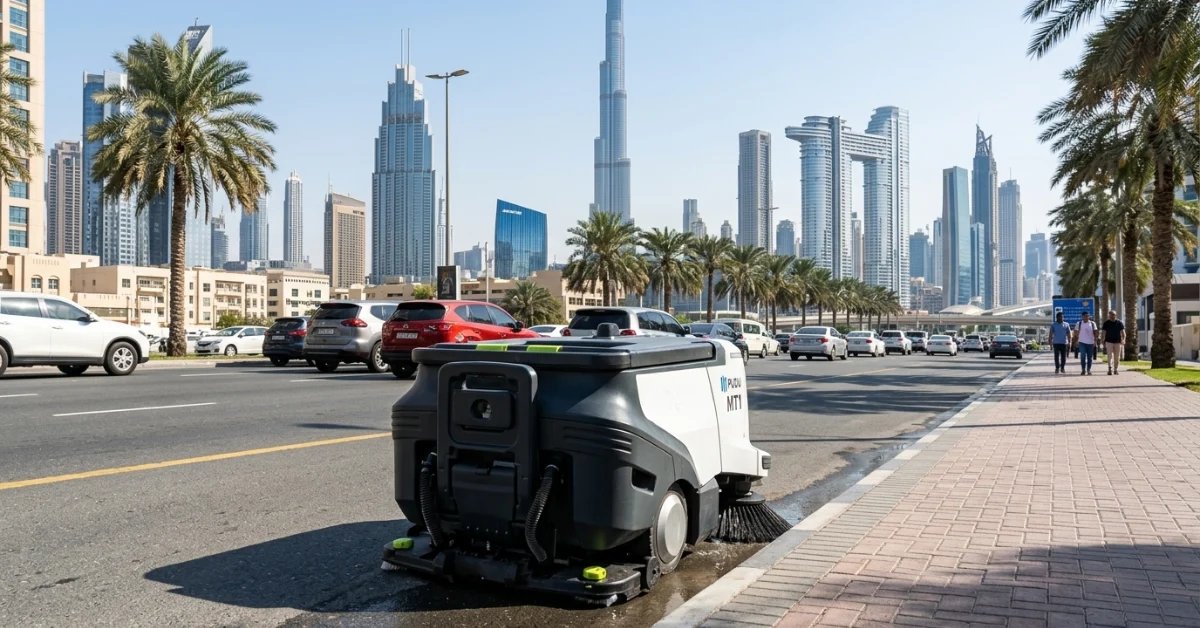
While traditional maintenance teams struggle against the abrasive reality of desert sand and extreme temperatures, a single autonomous unit now cleans over 120,000 square meters on one charge. Adopting a robotic street sweeper UAE strategy represents a fundamental shift from reactive manual labor to predictive, high-tech asset management. You likely recognize that relying on manual crews in vast industrial parks creates inconsistent results and escalating operational costs. This guide provides the authoritative framework necessary to implement autonomous outdoor hygiene while ensuring full compliance with the nation’s evolving regulatory landscape for autonomous technology.
EdNex Automation will demonstrate how these intelligent systems deliver verifiable hygiene data and integrate seamlessly with your existing SCADA or facility automation platforms. By examining the latest GCC-hardened engineering, we provide a roadmap for modernizing your operations to meet the nation’s ambitious autonomous transportation goals. This analysis covers everything from technical specifications to the practicalities of regional regulatory adherence.
Key Takeaways
- Transitioning to a robotic street sweeper UAE strategy enables facilities to replace inconsistent manual labor with data-driven autonomous fleets that align with national sustainability goals.
- Utilizing specialized thermal management systems ensures that your autonomous mobile robots maintain operational continuity even when ambient temperatures exceed 50°C.
- Evaluating square-meter-per-hour performance against battery discharge rates allows for the precise selection of robotic hardware that meets the demands of large-scale industrial sites.
- Integrating autonomous sweepers into existing SCADA and smart city hubs transforms standalone machines into connected IoT nodes that provide real-time hygiene analytics.
- Aligning advanced robotic capabilities with specific facility infrastructure through a comprehensive technical audit ensures it’s a viable long-term automation investment.
The Shift to Autonomous Outdoor Maintenance in the UAE
The UAE is currently undergoing a systemic transformation in how urban and industrial environments are preserved. Moving away from labor-intensive manual sweeping, the nation is adopting data-driven autonomous fleets to secure long-term operational resilience. This evolution isn’t merely about aesthetics; it’s a strategic alignment with national sustainability mandates. By deploying a robotic street sweeper UAE organizations can achieve precision automation that traditional methods simply can’t match. As the country pushes toward its goal of making 25% of all transportation trips autonomous by 2030, the maintenance sector acts as a critical proving ground for these high-tech systems. We saw this transition accelerate in October 2025, when a fleet of autonomous RoboSweepers was deployed on the Abu Dhabi Corniche, signaling a top-down push for smart city integration.
While historical street sweeping technology relied on human operators and mechanical brushes, modern AMRs utilize sensor fusion to maintain ISO standards across vast industrial parks. These systems ensure that hygiene is consistent, regardless of external environmental pressures or personnel availability. Maintaining these standards is vital for industrial zones aiming to attract global partners who demand verifiable operational excellence and consistent site quality.
Solving Labor Constraints in the National Industrial Sector
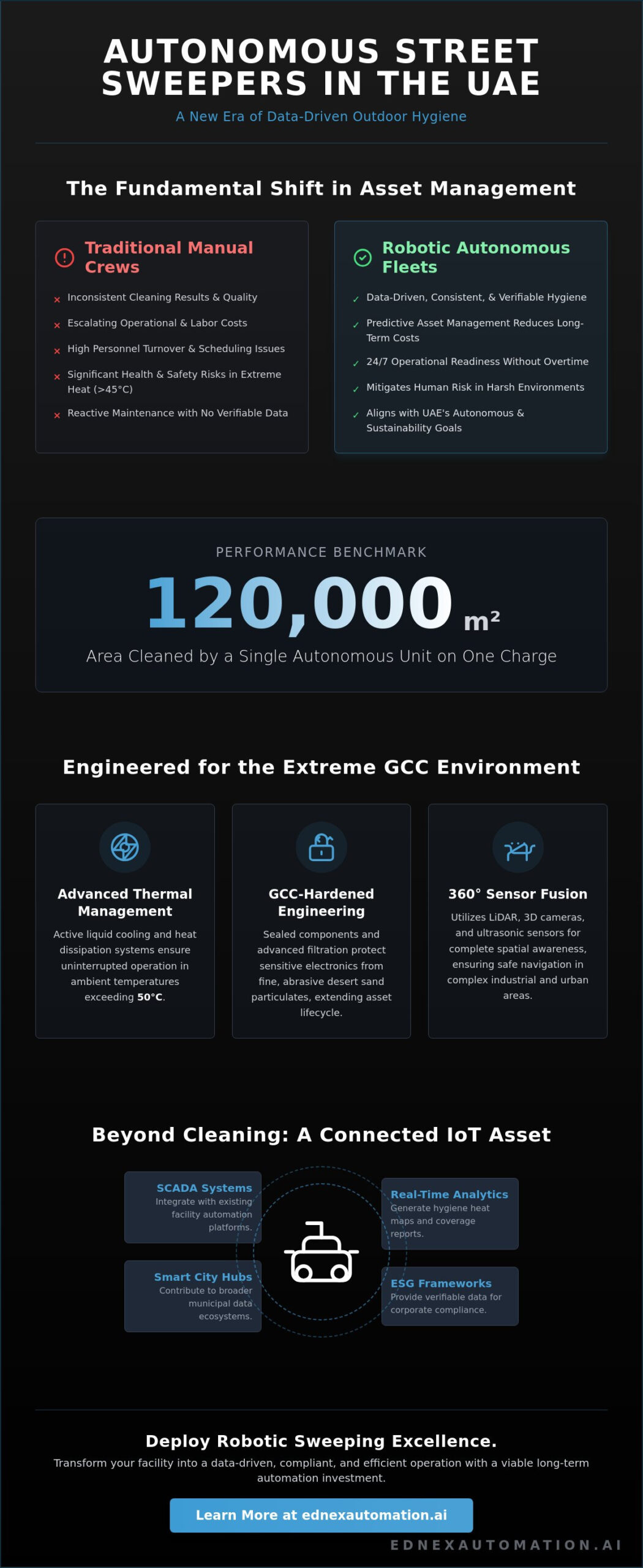
Addressing the chronic challenge of high personnel turnover is essential for maintaining large-scale infrastructure. Implementing autonomous mobile robots allows facility managers to reallocate human resources to high-value technical roles, effectively upskilling the local workforce. These machines provide 24/7 operational readiness without the logistical burden of complex shifting schedules or overtime costs. Perhaps most importantly, they mitigate the health and safety risks associated with manual labor during the UAE’s extreme summer months, where temperatures frequently exceed 45°C. By automating the most grueling outdoor tasks, companies protect their human capital while maintaining peak efficiency across vast national sites.
Hygiene as a Strategic Data Metric
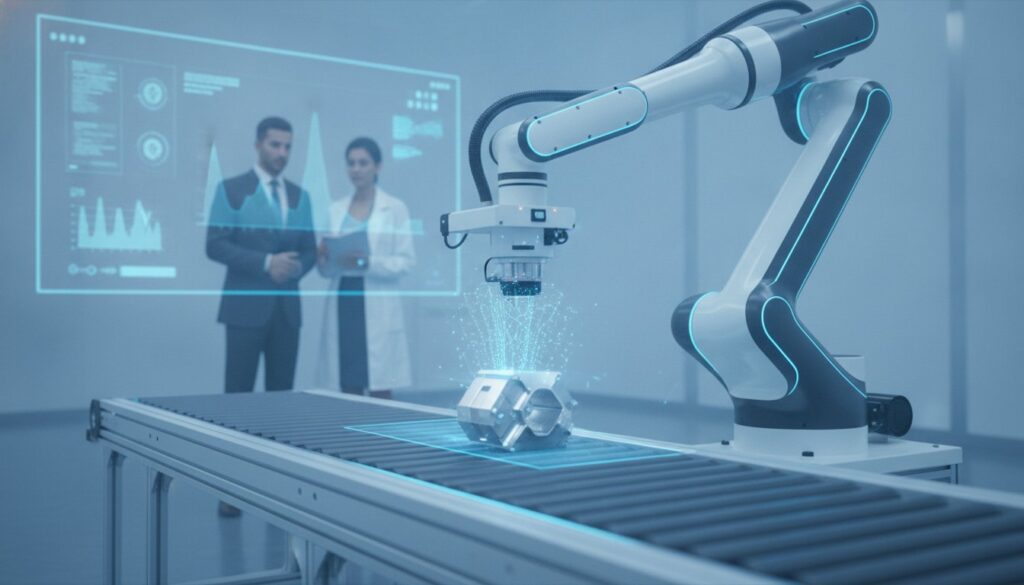
Transforming cleaning from a routine chore into a verifiable performance indicator is the ultimate benefit of robotic integration. Modern sweepers generate detailed heat maps that prove cleaning frequency and coverage with mathematical certainty. This level of transparency allows stakeholders to integrate hygiene reports directly into corporate ESG and compliance frameworks. Instead of guessing if a site is clean, managers access real-time dashboards that confirm every square meter of a facility has been serviced. This data-first approach ensures that industrial sites remain compliant with local regulations while providing the intellectual framework for future facility expansions and smart city connectivity.
Engineering for the GCC: How Robotic Street Sweepers Handle Dust and Heat
A robotic street sweeper is not merely a mobile vacuum; it’s a sophisticated autonomous mobile robot (AMR) engineered to execute high-capacity debris removal in complex outdoor settings. Integrating LiDAR, 3D cameras, and ultrasonic sensors ensures that these units maintain 360-degree spatial awareness. This level of Automated Street Cleaning technology is essential for navigating the high-density pedestrian and vehicular traffic common in UAE commercial hubs. By leveraging sensor fusion, a robotic street sweeper UAE model can safely operate alongside human activity while maintaining peak efficiency.
Maintaining operational continuity in the Middle East requires specialized thermal management architectures. Standard robotics often fail when ambient temperatures exceed 50°C, which leads to rapid battery degradation or CPU throttling. GCC-hardened units utilize active liquid cooling and advanced heat dissipation fins to protect sensitive electronics. This engineering ensures 24/7 reliability even during the peak of the UAE summer. Without these localized modifications, autonomous fleets would face significant downtime and shortened asset lifecycles.
Fine sand particulates pose a constant threat to internal propulsion and vacuum systems. Multi-stage filtration is non-negotiable for regional deployment. These systems capture microscopic dust before it reaches the core motor, extending the machine’s service life and reducing manual maintenance intervals. This technical rigor allows industrial sites to maintain high hygiene standards without the risk of equipment failure due to environmental ingress.
Navigation in Unstructured Outdoor Environments
Mapping vast, evolving industrial sites requires robust SLAM (Simultaneous Localization and Mapping) technology. In the context of an autonomous outdoor sweeper, SLAM is the computational framework that enables the machine to build a high-resolution map of an industrial site while simultaneously tracking its own coordinates within that space. This capability is vital for distinguishing between static infrastructure and dynamic obstacles like moving vehicles or personnel. If you’re looking to optimize your facility’s maintenance, explore how outdoor cleaning robots can be integrated into your infrastructure.
Durability and Material Science for the UAE
Coastal industrial zones in Dubai and Abu Dhabi present high-salinity air that accelerates metal fatigue. Utilizing corrosion-resistant chassis materials and UV-stabilized polymers prevents the structural degradation caused by intense solar radiation. These units are designed for total autonomy, featuring self-docking and charging capabilities that allow them to operate in remote sectors without human intervention. This durability ensures that the investment remains viable over a long-term operational horizon, providing a reliable intellectual framework for modern facility management.
Strategic Selection: Matching Robotic Sweeper Specs to UAE Industrial Needs
Selecting a robotic street sweeper UAE requires a technical audit of battery discharge rates against specific square-meter-per-hour requirements. It isn’t enough to compare brush widths; you must evaluate how a machine’s power management handles the resistance of outdoor debris over long shifts. High-capacity outdoor AMRs must sustain performance across vast paved areas without frequent mid-shift recharging, which can compromise the hygiene schedule of a busy facility. While compact sidewalk units are ideal for the pedestrian pathways of Dubai Marina, heavy-duty industrial road sweepers are required for the expansive logistics corridors of KIZAD or Jebel Ali. Leading research on autonomous robotic street sweeping highlights that high-fidelity telemetry is essential to ensure these machines operate at peak efficiency within their designated zones.
Reliability in the field depends on robust connectivity, usually through dedicated 5G or LTE networks, to facilitate real-time fleet telemetry and remote intervention. Managers should also prioritize units that feature autonomous refill and waste disposal cycles. These closed-loop systems allow the robot to return to a docking station, empty its hopper, and replenish water or cleaning chemicals without human oversight. This level of autonomy transforms a labor-intensive chore into a systematic, self-sustaining industrial process that runs in the background of your core operations.
Infrastructure Compatibility Assessment
Analyzing ground surfaces is the first step in any successful deployment. A robot optimized for smooth epoxy warehouse floors will struggle or fail on the rough industrial asphalt found in national manufacturing zones. This surface assessment is a core pillar of outdoor cleaning automation, as surface friction directly impacts battery longevity and brush wear. You must also determine the “cleaning window” for high-traffic logistics hubs. These are the specific hours when maintenance can occur without disrupting the movement of heavy vehicles or personnel, ensuring safety and operational flow are never compromised.
Total Cost of Ownership (TCO) in 2026
Calculating the return on investment involves looking beyond the sticker price to the long-term operational savings. You’ll find that labor savings, the reduction in consumable waste, and significant increases in uptime drive the value proposition. While the commercial floor cleaning robot price represents an initial capital expenditure, the integration of predictive maintenance alerts reduces long-term repair costs. These systems identify hardware fatigue before a failure occurs, preventing expensive emergency downtime and ensuring your autonomous fleet remains a viable, competitive asset for years to come.
Industry 4.0 Integration: Connecting Sweepers to SCADA and Smart City Hubs
Modern industrial facilities are moving beyond standalone automated tools toward fully connected robotic ecosystems. In this advanced framework, a robotic street sweeper UAE serves as a critical IoT node that communicates directly with centralized facility SCADA systems. Integrating these machines into your existing infrastructure allows for the real-time orchestration of outdoor cleaning paths alongside indoor ASRS movements and AMR traffic. This synchronization prevents operational bottlenecks; it ensures that your outdoor maintenance doesn’t interfere with high-velocity logistics or production cycles. By treating your cleaning fleet as a connected asset, you gain the ability to optimize paths based on live facility data rather than static schedules.
Securing these robotic fleets is paramount. Implementing robust data security protocols protects your operational telemetry from external threats; it ensures that your facility’s hygiene data remains confidential and tamper-proof. This high-level connectivity transforms a simple cleaning task into a sophisticated component of your plant’s digital twin. When your outdoor sweepers are fully integrated, they provide a continuous stream of environmental data that informs your broader facility management strategy.
The Synergy of PLC and Robotic Integration
Utilizing cleaning data to inform a plant’s wider predictive maintenance schedule represents the pinnacle of operational efficiency. By leveraging PLC and SCADA integration services, managers can view production line status and facility hygiene on a single, unified dashboard. This centralized monitoring enables a holistic view of site health; it allows for the automatic adjustment of cleaning frequencies based on production output or environmental sensor data. If you’re ready to bridge the gap between your production floor and facility maintenance, consult with our automation experts today to explore bespoke integration options.
Future-Proofing National Infrastructure
Adopting autonomous sweepers today prepares your organization for the next generation of humanoid service robots in the UAE. These outdoor units act as the foundational layer of a broader Smart City data collection framework, gathering environmental insights that inform urban planning and resource allocation. Integrating autonomous cleaning robots into your long-term strategy ensures your infrastructure remains compatible with future technological leaps. This forward-thinking approach positions your facility as a leader in the nation’s digital transformation, ensuring competitive viability as the UAE moves toward a fully automated future.
Deploying Robotic Sweeping Excellence with EdNex Automation
Leading the national industrial transformation requires more than just hardware; it demands a partner who provides the intellectual framework for systemic change. As a visionary technical partner, EdNex Automation bridges the gap between global technological breakthroughs and the specific economic needs of the Emirates. Implementing a robotic street sweeper UAE solution through our specialized team ensures that your autonomous fleet isn’t just an isolated tool but a core component of your operational excellence. Our commitment to official certifications and global technical standards guarantees that every deployment meets the rigorous safety requirements of the region’s industrial parks.
We offer comprehensive support that extends from the initial PLC and SCADA integration to long-term fleet optimization. This ensures that your investment continues to deliver peak performance as your facility scales. By focusing on technical reliability and engineering-minded solutions, we provide the stability needed for large-scale industrial transformation. Our goal is to act as a systematic organizer who brings order and efficiency to complex environments through controlled and deliberate innovation. Every bespoke technical audit we conduct is designed to align robotic capabilities with your specific facility infrastructure, ensuring a seamless transition to autonomous hygiene.
Our Consultative Integration Process
Analyzing existing workflows allows us to identify the most impactful automation touchpoints within your facility. We customize robot behavior to handle the unique challenges of the UAE’s outdoor environments, from abrasive sand ingress to high-velocity logistics traffic. This bespoke approach ensures that the integration of outdoor cleaning robots enhances rather than disrupts your core production cycles. By providing a clear roadmap for Industry 4.0 adoption, we help you navigate the complexities of modern automation with confidence and technical precision.
Partnering for Long-Term Business Viability
Ensuring your facility remains competitive in an increasingly automated global market is our primary objective. By partnering with EdNex, you secure a roadmap for long-term business viability that leverages the full power of Industry 4.0. Consult with EdNex Automation for your robotic street sweeper strategy to begin your transition toward a more efficient, data-driven future. Our national support team is available to conduct comprehensive technical audits and live demonstrations at your site, providing the hands-on expertise required for a successful and safe deployment across any industrial or urban landscape.
Securing Your Competitive Advantage in the Autonomous Era
Transitioning to an autonomous maintenance framework represents the definitive step in achieving a fully integrated, data-driven industrial site. By prioritizing GCC-hardened engineering and sophisticated sensor fusion, organizations can overcome the abrasive challenges of the regional climate while securing verifiable hygiene metrics. Implementing a robotic street sweeper UAE strategy ensures that your facility remains at the cutting edge of the nation’s digital transformation; it replaces legacy manual processes with precision automation that scales with your operational growth.
Achieving this level of excellence requires a partner who understands the technical gravity of large-scale industrial transformation. Offering expert PLC and SCADA system integration along with comprehensive national UAE technical support, we provide the intellectual framework necessary for long-term business viability. Acting as a visionary Industry 4.0 strategic partner, we ensure your transition to autonomous outdoor hygiene is both seamless and secure. Modernize Your Outdoor Maintenance with EdNex Automation to secure your position as an industry leader in the automated future.
Frequently Asked Questions
How does a robotic street sweeper handle fine sand and dust in the UAE?
Utilizing multi-stage filtration systems allows a robotic street sweeper UAE to capture fine sand particulates before they reach critical internal components. These systems are specifically engineered to maintain suction power and mechanical integrity in arid environments, protecting the motor from the abrasive ingress of desert dust. By trapping microscopic debris, the robot ensures that the surrounding air quality remains high while extending the service life of its internal propulsion systems.
Can these robots operate in extreme summer temperatures exceeding 50°C?
Operating in ambient temperatures exceeding 50°C is possible through advanced thermal management architectures and active liquid cooling systems. These engineering modifications prevent CPU throttling and battery degradation, ensuring that the autonomous fleet maintains operational continuity during the peak of the UAE summer. Without these localized cooling solutions, standard robotics would face significant downtime; however, GCC-hardened units are built to withstand the region’s most intense solar radiation and heat cycles.
What is the typical ROI for an autonomous street sweeper in a large facility?
Achieving a positive ROI involves calculating the significant reduction in manual labor reliance and the marked increase in operational uptime. By adopting a robotic street sweeper UAE strategy, facilities reduce the costs associated with high personnel turnover and consumable waste while gaining verifiable data that improves long-term asset management. Most organizations find that the initial capital expenditure is offset by the elimination of shifting schedules and the reduction in emergency maintenance costs.
Do I need to modify my existing infrastructure to deploy robotic sweepers?
Deploying autonomous sweepers typically requires minimal infrastructure changes, primarily focusing on the installation of self-charging docking stations and ensuring robust 5G or LTE network coverage. A technical audit of your facility’s ground surfaces ensures that the chosen hardware is compatible with existing asphalt or epoxy finishes without requiring costly resurfacing. These machines are designed to integrate into current environments, utilizing advanced mapping to navigate existing layouts with total precision and safety.
How do robotic sweepers avoid obstacles like parked cars or pedestrians?
Navigating safely around dynamic obstacles is achieved through sophisticated sensor fusion that integrates LiDAR, 3D cameras, and ultrasonic sensors for 360-degree spatial awareness. These systems distinguish between static infrastructure and moving objects like pedestrians or parked cars, allowing the robot to execute real-time path adjustments. This high-level intelligence ensures that the sweeper prioritizes safety in high-traffic commercial zones, stopping or rerouting instantly when a potential collision is detected by its onboard processors.
Is it possible to monitor the robot fleet from a central SCADA system?
Integrating your robotic fleet with a centralized SCADA system allows for the real-time monitoring of cleaning progress and machine health from a single dashboard. This connectivity transforms standalone sweepers into intelligent IoT nodes that provide actionable data for predictive maintenance and broader facility automation strategies. By linking these assets to your existing industrial control network, you gain total transparency into coverage maps, battery status, and hygiene performance metrics across your entire site.
What kind of maintenance is required for robotic outdoor sweepers?
Maintaining peak performance requires periodic sensor calibration, filter cleaning, and the replacement of consumable brushes based on usage data. Because these machines provide predictive maintenance alerts, technical teams can address hardware fatigue before a failure occurs, significantly reducing emergency downtime. Regular inspections of the cooling system and seals are also necessary to ensure that the machine remains protected against the environmental ingress of fine sand and extreme heat particulates.
How do the robots handle water and debris disposal autonomously?
Managing debris and water replenishment is handled autonomously through dedicated docking stations that facilitate self-emptying and refill cycles. Upon reaching a specific capacity threshold, the robot returns to the station to dispose of collected waste and replenish its water supply, allowing for continuous operation without human intervention. This closed-loop system ensures that the robot maintains its cleaning schedule, only requiring human assistance for the final removal of debris from the primary collection bin.