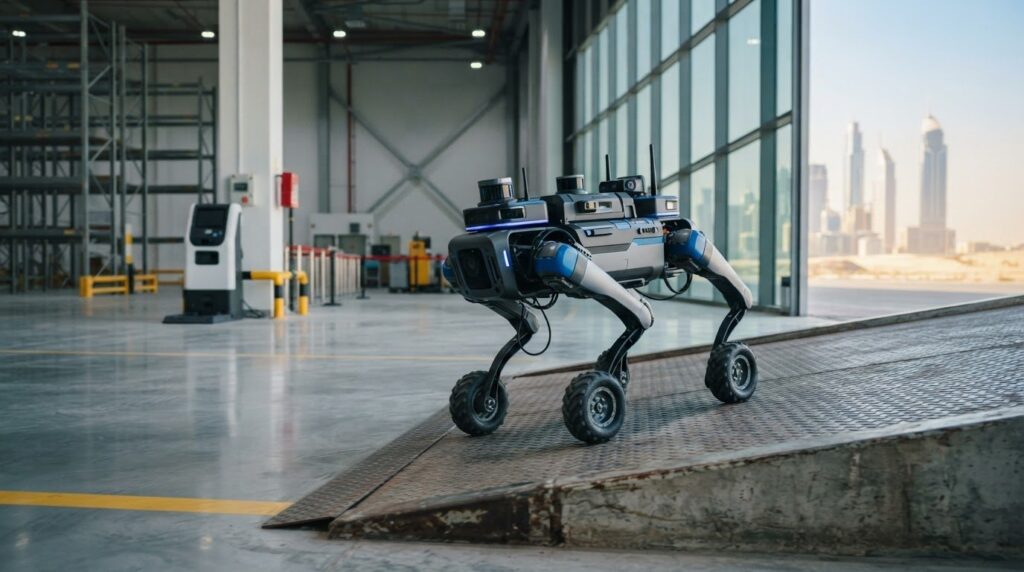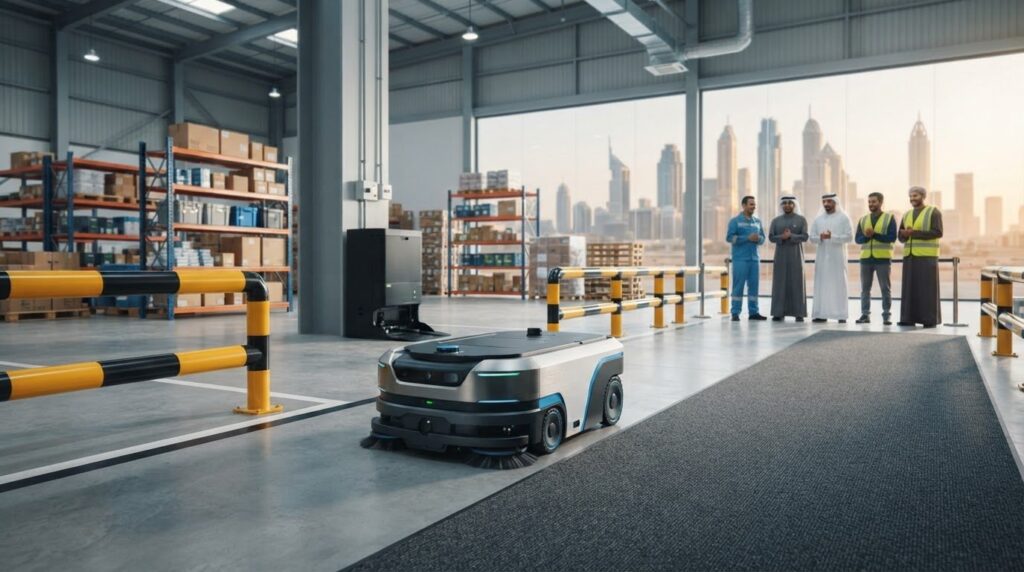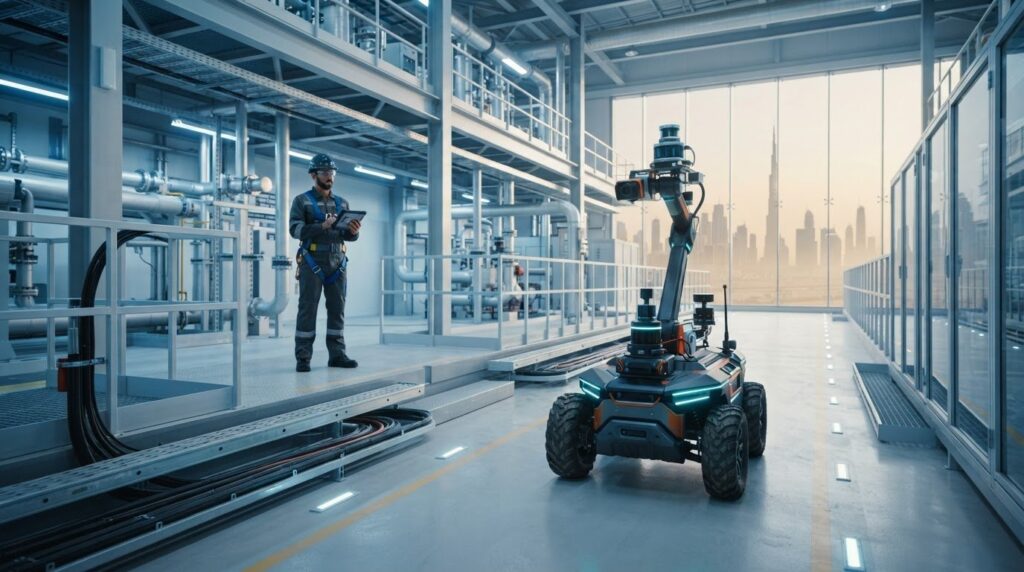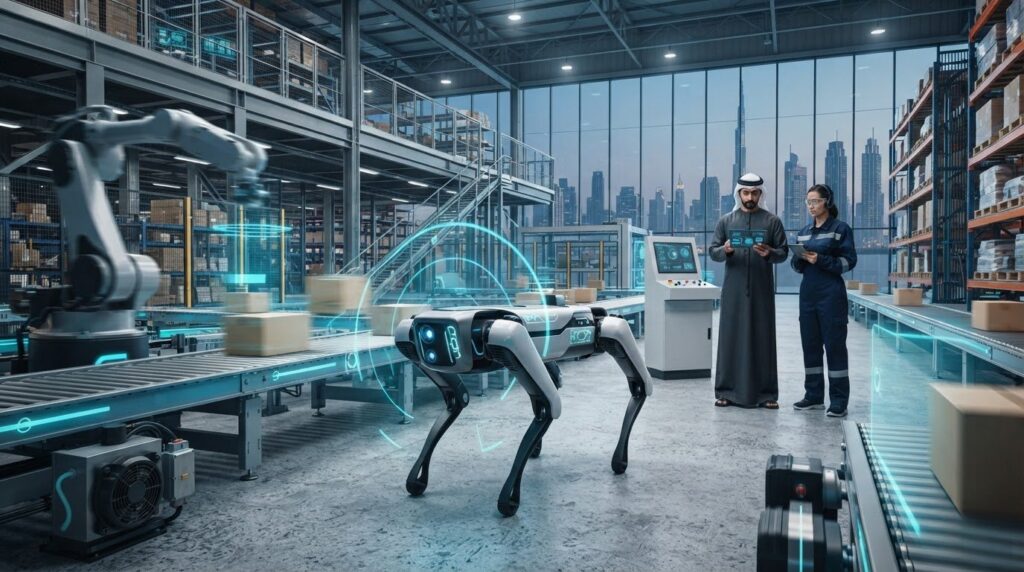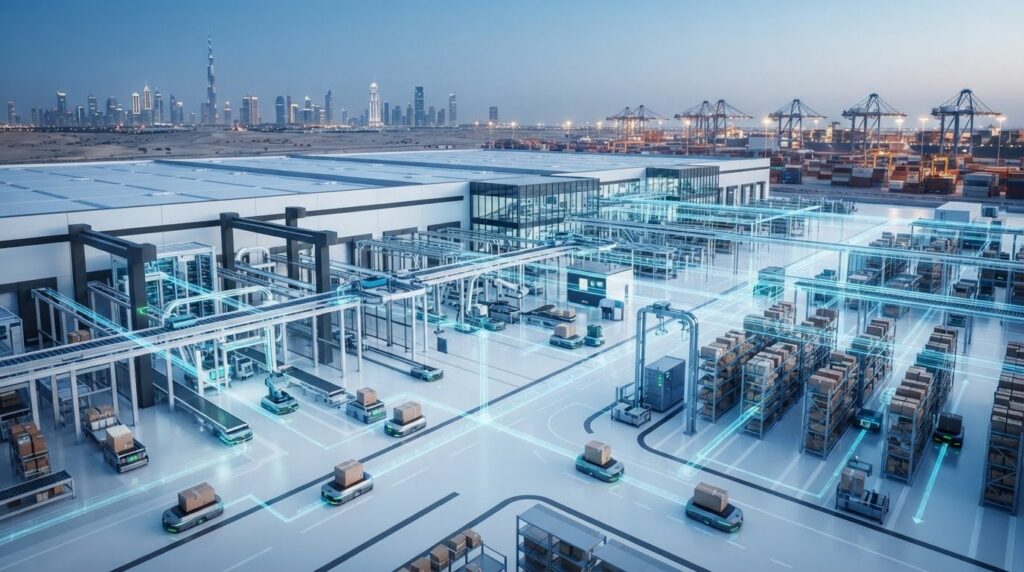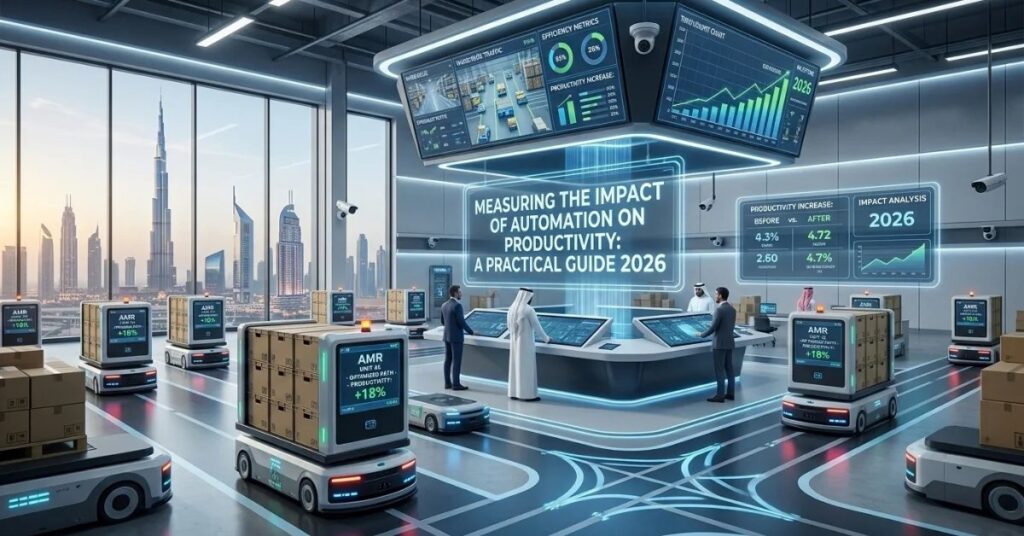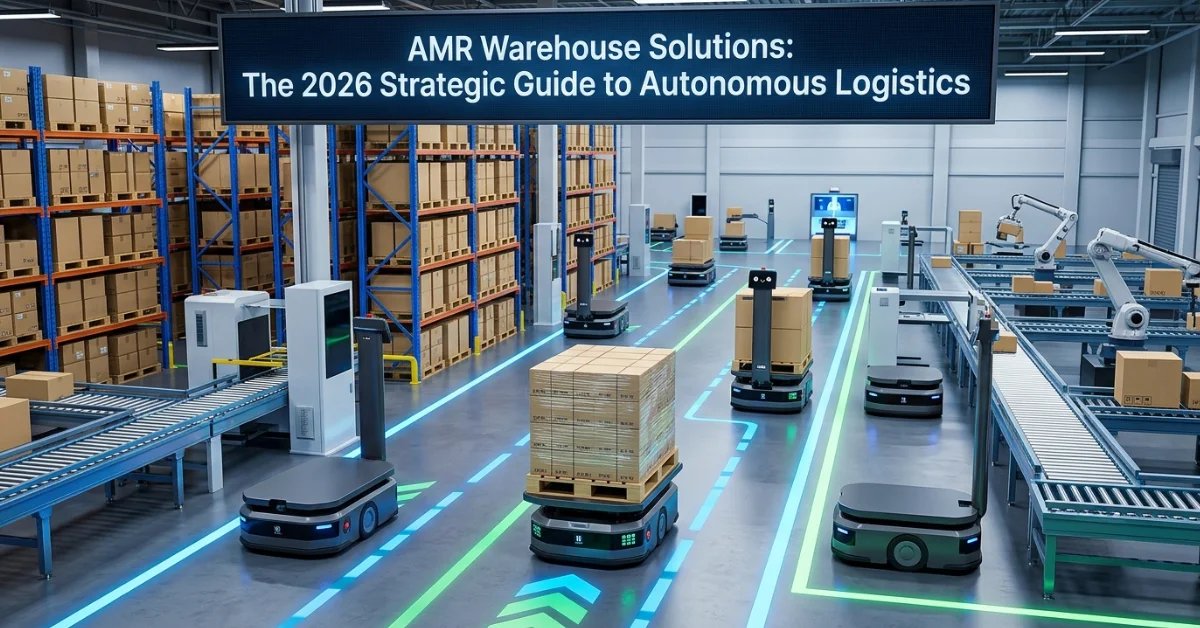
With the global market for autonomous mobile robots projected to reach approximately AED 152.4 billion by 2034, the transition to an amr warehouse model has evolved from a futuristic concept into a critical economic necessity. You’ve likely felt the mounting pressure of rising labor costs and the persistent friction of manual picking processes that fail to keep pace with modern demand. Operating within the UAE’s ambitious industrial landscape requires more than just incremental improvements; it demands a fundamental shift toward intelligent, self-navigating infrastructure. We recognize that the prospect of integrating sophisticated robotics with your legacy WMS or PLC systems presents a daunting technical hurdle that often stalls innovation.
This guide provides the intellectual framework you need to architect a high-ROI automation strategy tailored for the 2026 market. Leveraging the UAE’s new R&D tax incentive programme, which offers up to 50% credit for qualifying expenditures, we’ll demonstrate how to build a scalable, autonomous ecosystem. You’ll discover the methodology for achieving a significant reduction in order fulfillment time while ensuring a seamless data flow between your mobile assets and facility control systems. By examining the technical bridge between global hardware breakthroughs and regional industrial needs, we’ll outline the roadmap to a truly software-defined logistics operation.
Key Takeaways
- Analyze the fundamental shift from rigid, fixed automation to a dynamic amr warehouse environment that prioritizes operational flexibility and self-optimization.
- Gain technical insight into the hardware stack of LiDAR and SLAM technology to understand how autonomous units navigate complex industrial layouts safely.
- Evaluate the total cost of ownership and strategic performance gap between manual labor, legacy AGVs, and modern autonomous mobile robots.
- Identify the critical phases of a facility audit and the technical requirements for integrating robotic fleets with existing PLC and SCADA systems.
- Discover how to utilize the UAE’s 2026 R&D tax incentive programme to maximize the ROI of your long-term automation strategy.
The Evolution of the AMR Warehouse in the UAE
The concept of an amr warehouse represents a fundamental shift from static storage to a dynamic, software-defined environment. Instead of relying on rigid, pre-defined paths, these facilities leverage intelligent assets to optimize throughput in real-time. This evolution aligns perfectly with the UAE’s “Operation 300bn” initiative, which targets a significant increase in the industrial sector’s contribution to national GDP to AED 300 billion by 2031. By 2026, regional logistics leaders are moving beyond simple mechanization toward true autonomy. This transformation turns warehouses from cost centers into high-speed hubs capable of handling the complexities of modern e-commerce and global trade flows.
From Manual Handling to Autonomous Intelligence
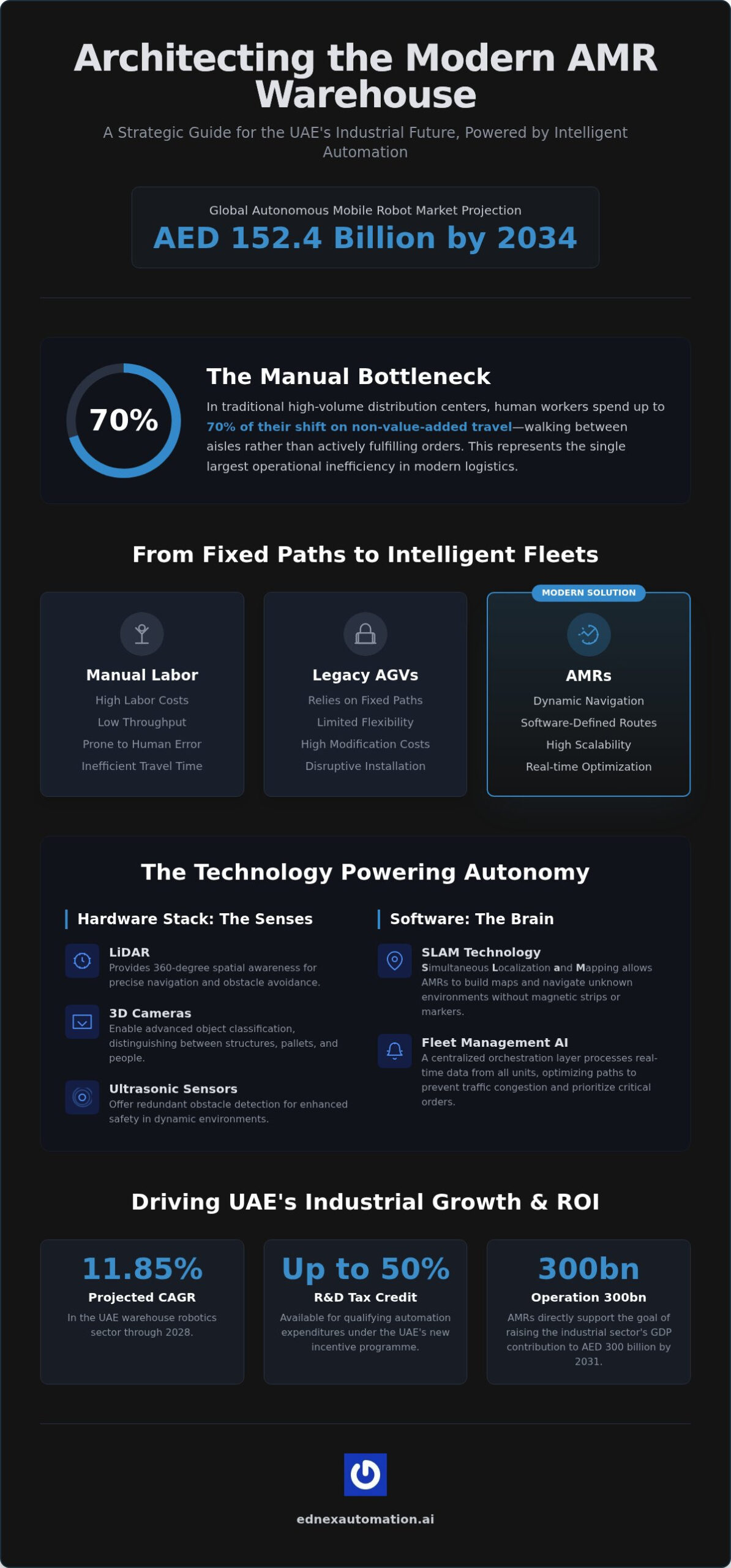
Manual picking and sorting often represent the largest operational bottleneck in high-volume UAE distribution centers. Human workers frequently spend up to 70% of their shift on non-value-added travel, walking between aisles rather than fulfilling orders. Integrating what are autonomous mobile robots (AMRs) allows facilities to decouple material movement from human labor. Unlike fixed conveyors that require permanent floor space and massive capital expenditure, robotic fleets offer fluid mobility. They adapt to changing floor layouts instantly. This flexibility is essential for businesses scaling their operations to meet the projected 11.85% CAGR in the local warehouse robotics sector through 2028.
AMRs as the Backbone of Industry 4.0
Real-time data visibility serves as the primary driver behind the modern amr warehouse. These systems do more than move pallets; they act as mobile data nodes that feed critical information into broader digital transformation frameworks. Utilizing autonomous mobile robots ensures that every inventory movement is tracked, timestamped, and analyzed for further optimization. In 2026, the strategic importance of these systems is underscored by the UAE’s R&D tax incentive programme. Companies investing in bespoke automation can now claim credits ranging from 15% to 50% on qualifying expenditures, depending on their R&D headcount. This financial tailwind makes the transition to intelligent, interconnected logistics a competitive necessity for long-term viability in the regional supply chain.
Technical Architecture: How Modern AMRs Navigate and Perceive
Establishing a high-performance amr warehouse requires a sophisticated fusion of sensory hardware and computational intelligence. Unlike legacy automation that relies on fixed infrastructure, modern units utilize a comprehensive hardware stack consisting of LiDAR for 360-degree spatial awareness, 3D cameras for object classification, and ultrasonic sensors for redundant obstacle detection. These components work in tandem to feed a continuous stream of environmental data into the robot’s onboard processing unit. This high-fidelity perception layer allows the machine to distinguish between a permanent structural pillar and a temporary obstruction, such as a misplaced pallet or a moving forklift.
Advanced Navigation and Fleet Orchestration
Managing a fleet of multiple units necessitates a centralized orchestration layer that prevents traffic congestion and operational bottlenecks. Advanced fleet management software processes real-time telemetry from every unit, calculating the most efficient paths based on current warehouse density and order priority. This system enables dynamic re-routing, where the AI-driven engine identifies floor changes and adapts trajectories instantly to maintain peak throughput. SLAM, or Simultaneous Localization and Mapping, is the computational process that allows a robot to construct a map of an unknown environment while simultaneously tracking its own location within that space. This technology eliminates the need for magnetic strips or floor-mounted markers, drastically reducing the time and cost associated with facility preparation.
Safety as a Strategic Asset for 24/7 Operations
Safety in the modern industrial environment has evolved from a reactive feature into a strategic asset that underpins uninterrupted 24/7 operations. Implementing advanced predictive safety algorithms allows robots to anticipate human movement patterns, adjusting their speed and trajectory before a potential conflict occurs. This proactive approach ensures rigorous compliance with international safety standards like ISO 3691-4, which serves as a benchmark for industrial deployments across the UAE. By minimizing emergency stops and mitigating the risk of workplace incidents, these intelligent systems directly lower facility insurance premiums and operational liability. For organizations seeking to implement these advanced technical frameworks, consulting with a specialized industrial integrator ensures that hardware selection and safety protocols align with specific regional facility requirements. This level of safety intelligence fosters a collaborative environment where human personnel and autonomous assets coexist with total confidence.
AMR vs. AGV vs. Manual: The Strategic Performance Gap
Selecting the appropriate logistics model requires a rigorous evaluation of the strategic performance gap between manual labor, legacy Automated Guided Vehicles (AGVs), and the modern amr warehouse. While manual handling remains highly flexible, it’s increasingly unsustainable due to escalating labor costs and the inherent risks of human error in high-volume environments. Conversely, traditional AGVs offer a step toward automation but often introduce new rigidities that hinder long-term agility. In 2026, the competitive advantage lies with systems that can scale modularly without demanding a complete facility redesign. Calculating the total cost of ownership (TCO) reveals that while manual labor has the lowest upfront cost, its long-term expense profile is volatile due to turnover and training. AMRs offer a predictable, depreciable asset that enhances facility value over time.
The Limitations of Automated Guided Vehicles (AGVs)
Relying on fixed navigation paths, AGVs utilize magnetic tape, wires, or QR codes that effectively lock a facility into a single, permanent workflow. This approach is becoming obsolete in agile warehouses where seasonal demand shifts and SKU proliferation require frequent layout adjustments. Beyond the initial purchase price, the hidden costs of AGV deployment include extensive facility modifications and the operational downtime required for installation. In dynamic, high-traffic environments, an AGV’s inability to deviate from its path causes frequent stoppages. An AMR perceives obstructions and calculates an alternative route instantly to maintain throughput, ensuring that your amr warehouse remains operational even during peak congestion.
Justifying the Investment: ROI Beyond Labor Savings
Quantifying the return on investment for autonomous systems extends far beyond simple labor displacement. A high-ROI strategy accounts for the dramatic reduction in picking errors and inventory damage, which directly impacts the bottom line by preserving asset value. Implementing 24/7 operations allows facilities to maximize revenue per square meter, ensuring that capital-intensive infrastructure is utilized to its full potential around the clock. Integrating these mobile assets with collaborative robots UAE creates an end-to-end automated workflow where picking, transport, and palletizing occur without manual intervention. This holistic approach ensures that every movement is optimized for speed and accuracy, providing a scalable foundation for regional industrial growth that outpaces traditional manual methodologies.
Implementation Roadmap: Integrating AMRs with Control Systems
Architecting a high-functioning amr warehouse requires a phased methodology that prioritizes technical cohesion over simple equipment procurement. Phase 1 begins with a comprehensive facility audit to identify specific workflow bottlenecks where manual intervention causes the most significant delays. Moving into Phase 2, the focus shifts to data integration, establishing a bidirectional communication link between the robotic fleet and your existing WMS, ERP, and PLC and SCADA integration services. This ensures that every mission is dispatched based on real-time inventory status and operational demand. Phase 3 involves pilot testing and fleet calibration within a designated zone to refine navigation parameters before a wider rollout. Finally, Phase 4 marks full-scale deployment, supported by intensive staff training to transition human operators into fleet supervisors.
Orchestrating the Integrated Warehouse
True industrial autonomy is achieved when mobile assets communicate seamlessly with stationary automation like automated storage and retrieval systems to create a touchless fulfillment cycle. Utilizing unified SCADA dashboards allows facility managers to monitor the entire ecosystem from a single interface, visualizing both mobile and fixed assets simultaneously. Maintaining this level of synchronization requires low-latency communication, typically delivered through robust industrial 5G or Wi-Fi 6 networks that ensure zero-packet loss during high-speed maneuvers. This technical bridge ensures that the amr warehouse functions as a single, intelligent organism rather than a collection of isolated tools.
Overcoming Common Integration Challenges
Managing interoperability between diverse robot vendors remains a critical hurdle for expanding fleets. Adopting standardized communication protocols allows for a heterogeneous environment where different specialized units can share the same floor without data silos or physical conflicts. Minimizing downtime during this transition involves a strategic “shadow-running” approach where autonomous systems are phased in alongside existing processes to ensure stability. Additionally, robust cybersecurity measures are essential to protect interconnected robotic networks from external vulnerabilities. For organizations ready to modernize their infrastructure, partnering with a certified industrial robotics integrator provides the technical expertise necessary to bridge the gap between global technology and regional operational requirements. This methodical approach ensures that your long-term investment remains secure and scalable.
Establishing a resilient amr warehouse requires more than the acquisition of mobile units; it demands a strategic partnership that provides the intellectual framework for long-term operational success. EdNex Automation acts as this technical bridge, ensuring that hardware deployments are backed by robust software optimization and persistent maintenance protocols. This partnership-led approach mitigates the risks associated with simple equipment procurement, such as rapid technological obsolescence or integration failure. By positioning your facility within a managed ecosystem, you ensure that your autonomous assets continue to deliver peak performance as regional demand fluctuates through the next decade. We focus on the systematic organization of your logistics environment, turning potential chaos into a controlled, high-efficiency operation.
Bespoke Solutions for UAE Industrial Leaders
Developing tailored AMR strategies requires a deep understanding of specific sector dynamics within the Logistics, Manufacturing, and Retail industries. We engineer every solution to address the unique operational challenges of the GCC region, navigating UAE-specific regulatory requirements and technical standards with precision. Our national coverage across the Emirates allows us to provide start-to-finish expertise, from initial concept to full-scale deployment. Leveraging official certifications and strategic alliances with global robotics leaders, we bring a level of legitimacy and technical depth that simple equipment vendors cannot match. This ensures that your automation project is backed by a grounded, authoritative partner capable of delivering complex, large-scale transformations that align with national Industry 4.0 goals.
Next Steps: From Strategy to Execution
Commencing your automation journey begins with a professional consultation to evaluate the technical readiness of your current facility. We conduct a granular analysis of your existing infrastructure, assessing floor quality, network latency, and the potential for PLC and SCADA integration. This facility audit identifies the specific workflow bottlenecks that will yield the highest ROI when automated. Engaging with EdNex Automation allows you to architect a future-proof facility that leverages the latest in amr warehouse technology while maintaining operational safety and efficiency. We provide the intellectual framework and technical support necessary to ensure your organization doesn’t just survive the next wave of industrial change but leads it through deliberate innovation and superior technical execution.
Architecting the Future of UAE Logistics
The transition toward a fully realized amr warehouse is no longer a peripheral upgrade; it’s the defining factor for industrial competitiveness in the 2026 landscape. We’ve analyzed how advanced SLAM navigation and seamless PLC and SCADA integration create a self-optimizing environment that outpaces traditional manual methodologies. By leveraging the UAE’s strategic R&D tax incentives and aligning with “Operation 300bn” goals, your organization can transform logistics from a cost center into a high-throughput engine of growth. As a specialized UAE Industry 4.0 integration expert and official regional technical partner, EdNex Automation provides the strategic orchestration required for complex ASRS and robotic deployments. We don’t just provide tools; we deliver the intellectual framework for start-to-finish industrial transformation. Consult with EdNex Automation to design your autonomous warehouse strategy and secure your position at the forefront of the regional supply chain. It’s time to move beyond simple mechanization and embrace the transformative power of true industrial autonomy.
Frequently Asked Questions
What is the primary difference between an AMR and an AGV in a warehouse?
The primary difference lies in navigation autonomy; AMRs use SLAM technology to navigate without fixed infrastructure, whereas AGVs require magnetic strips or floor-mounted wires. This allows an amr warehouse to adapt to layout changes instantly without costly floor modifications. While AGVs stop for obstacles and wait for manual intervention, AMRs calculate alternative routes in real-time. This flexibility ensures uninterrupted throughput in dynamic environments where human traffic and inventory shifts are frequent.
How much does it cost to implement an AMR system in a warehouse?
Implementation costs vary based on fleet scale, payload requirements, and the complexity of control system integration. While unit costs are a factor, the total investment is often offset by the UAE’s 2026 R&D tax incentive programme, which provides up to 50% credit for qualifying expenditures. Rather than a massive upfront capital outlay, many facilities adopt a modular approach. This allows for incremental scaling that aligns with operational growth and realized ROI.
Can AMRs integrate with my existing Warehouse Management System (WMS)?
Modern autonomous units integrate seamlessly with existing Warehouse Management Systems and ERPs through robust API layers and middleware. This connectivity ensures that the robotic fleet receives real-time mission updates based on live inventory demand. Utilizing specialized PLC and SCADA integration services allows for a unified dashboard. This technical bridge enables the amr warehouse to function as a synchronized component of your broader industrial automation ecosystem, ensuring fluid data movement across all levels.
Are AMRs safe to operate alongside human workers in a busy facility?
Autonomous mobile robots are designed with redundant safety systems specifically for collaborative environments where human personnel are present. Utilizing LiDAR and 3D depth cameras, these machines adhere to international safety standards such as ISO 3691-4 to prevent collisions. They don’t just stop; they proactively adjust speed and trajectory based on predictive movement patterns. This high level of safety intelligence reduces workplace liability and supports continuous 24/7 operations without compromising worker safety.
How long does a typical AMR warehouse implementation take?
A typical deployment timeline ranges from several weeks to a few months, depending on the facility’s technical readiness and fleet size. The process begins with a detailed facility audit and workflow analysis to identify optimal paths and bottlenecks. Following this, a pilot phase allows for sensor calibration and software fine-tuning in a controlled zone. Full-scale deployment is then executed systematically to ensure minimal disruption to ongoing warehouse activities and existing logistics workflows.
What kind of maintenance do autonomous mobile robots require?
Maintenance for autonomous fleets focuses on software optimization, sensor calibration, and routine mechanical inspections. Unlike manual forklifts, these robots require periodic firmware updates to enhance pathfinding algorithms and cybersecurity protocols. Maintaining clean sensors is critical for peak LiDAR performance, while battery health monitoring ensures maximum uptime. Professional integrators provide comprehensive support packages to manage these technical requirements, ensuring the long-term viability and performance of the robotic assets across their lifecycle.
Can AMRs be used in specialized environments like cold storage?
Specialized robotic models are engineered to operate in extreme environments, including cold storage facilities with temperatures as low as -30°C. These units feature sealed electronics and heated sensor housings to prevent condensation and hardware failure. Implementing such technology in temperature-controlled logistics hubs ensures that automation benefits reach every corner of the supply chain. This capability is vital for the UAE’s expanding food and pharmaceutical distribution sectors, where environmental consistency is critical.
How do AMRs help in solving labor shortages in the UAE logistics sector?
Automation addresses labor challenges by taking over repetitive, high-volume transport tasks that often suffer from high turnover rates. By deploying robots for non-value-added travel, UAE logistics leaders can reallocate their human workforce to more complex supervisory and technical roles. This shift supports the national “Operation 300bn” strategy by increasing industrial efficiency without relying on expanded manual labor pools. It creates a stable, 24/7 operational model that isn’t vulnerable to regional labor market fluctuations.