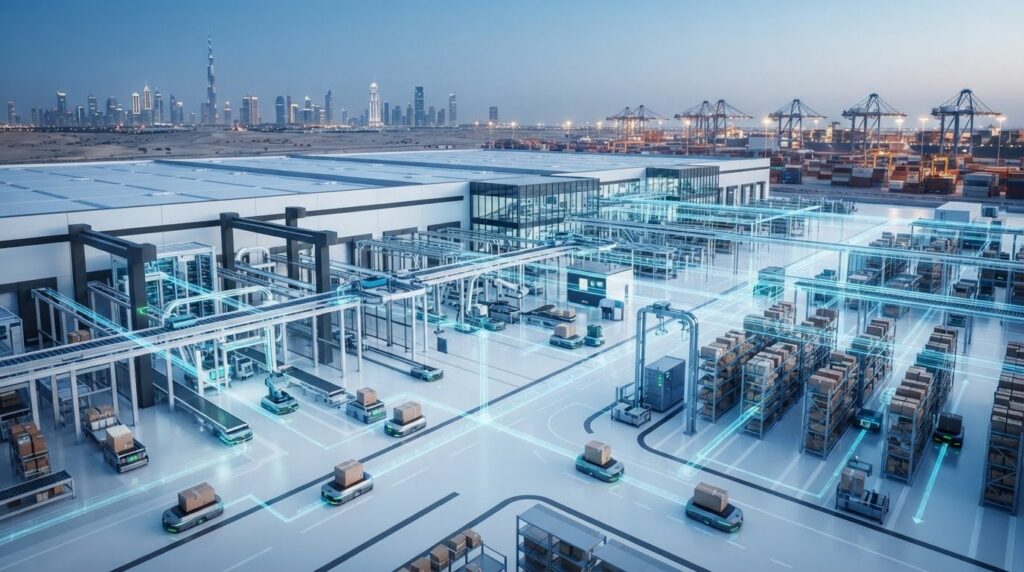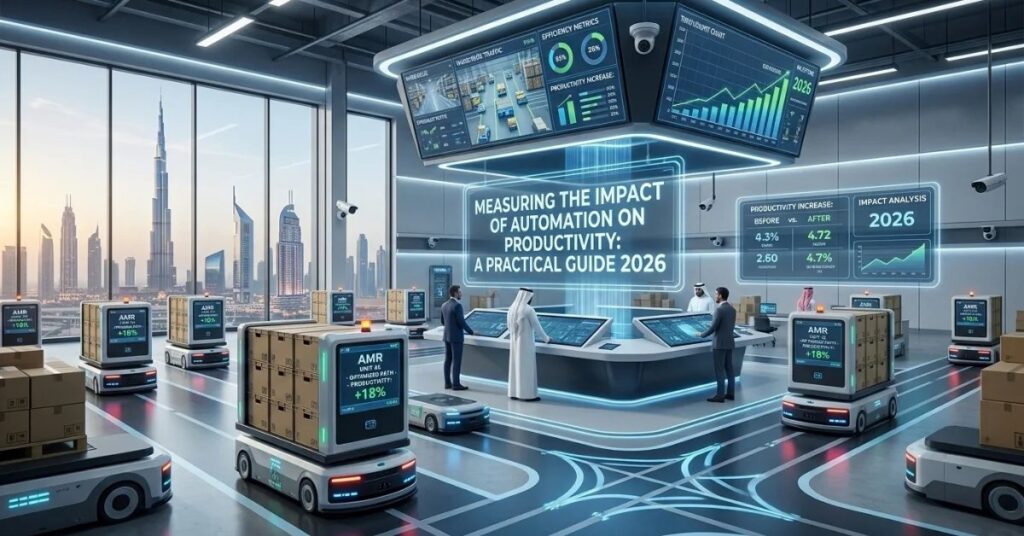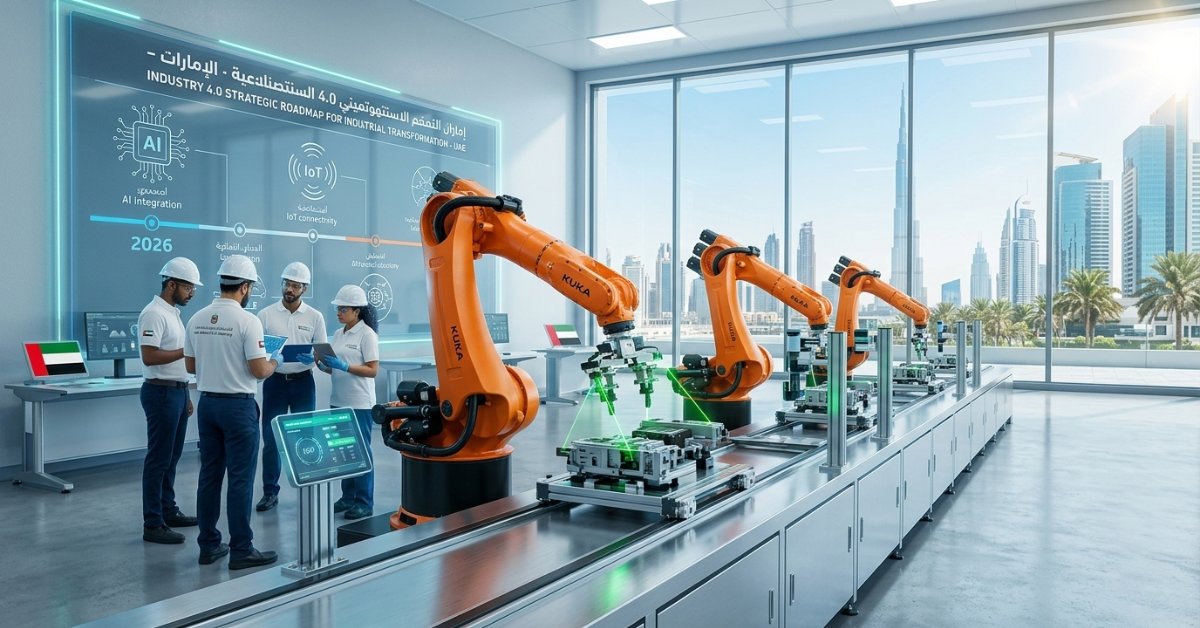
With UAE industrial exports surging to AED 262 billion in 2025, the mandate to reach a AED 300 billion GDP contribution by 2031 has shifted from a visionary goal to a rigorous technical directive. Successful Industry 4.0 implementation UAE requires more than just acquiring hardware; it demands a systematic fusion of legacy infrastructure with intelligent, autonomous systems. You likely recognize the friction involved in aligning existing SCADA frameworks with modern autonomous mobile robots, especially while navigating the strict compliance standards of the 2026 UAE AI Act.
This strategic roadmap masters the technical and architectural requirements for a full-scale industrial transformation, moving from government alignment to bespoke robotic integration. You’ll gain a clear path for digital evolution that reduces operational costs through automation and ensures strict compliance with national industrial strategies like the Technology Transformation Program. We’ll explore the deployment of collaborative robots and ASRS technologies, providing the intellectual framework needed to modernize your facility and secure long-term viability in an increasingly competitive global market.
Key Takeaways
- Align industrial operations with Ministry of Industry and Advanced Technology (MoIAT) mandates to leverage national incentive schemes and maintain regulatory standing under the 2026 UAE AI Act.
- Establish a robust technical foundation for Industry 4.0 implementation UAE by integrating high-level PLC and SCADA systems for autonomous data acquisition and precise industrial control.
- Optimize facility logistics and assembly through the strategic deployment of collaborative robots (cobots) and autonomous mobile robots (AMRs) designed for complex industrial environments.
- Utilize a systematic framework to conduct technical audits of legacy systems, ensuring a seamless transition to automated storage and retrieval systems (ASRS) with maximized ROI.
- Secure long-term business viability by engaging with certified system integrators who provide the intellectual framework and global alliances necessary for large-scale digital transformation.
Navigating the National Landscape: UAE Industry 4.0 in 2026
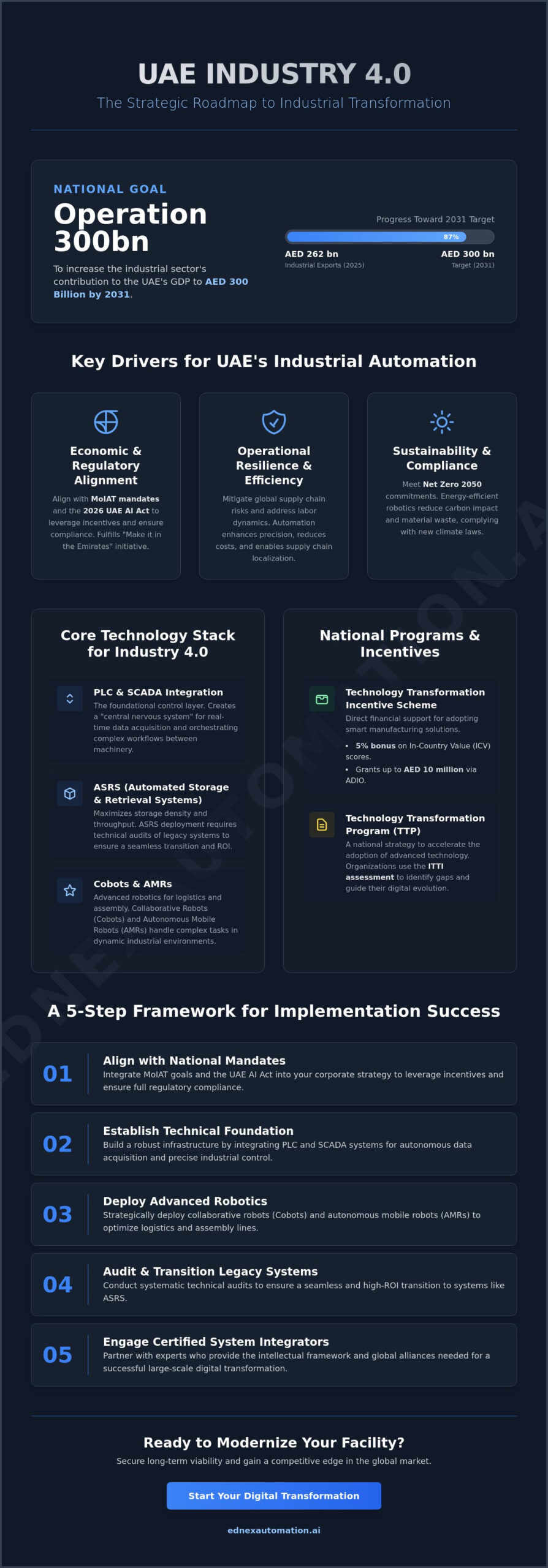
Defining the Fourth Industrial Revolution within the Emirates requires a departure from generic automation theories toward a focused application of cyber-physical systems. In the UAE, this transformation isn’t merely a technological upgrade; it’s a regulated national mandate. By integrating advanced robotics with intelligent data layers, Industry 4.0 implementation UAE is now the primary vehicle for achieving the goals of “Operation 300bn.” The Ministry of Industry and Advanced Technology (MoIAT) has established 2026 as a critical pivot point, requiring all major industrial entities to complete mandatory self-assessments under the UAE AI Act by September of this year. This regulatory environment ensures that the shift from manual labor to high-tech autonomy is both safe and systematically organized.
The 2026 milestones for the Technological Transformation Program (TTP) emphasize a transition where high-tech manufacturing leads industrial output. This shift isn’t optional for organizations seeking long-term viability. By utilizing the Industrial Technology Transformation Index (ITTI) assessments, organizations can identify specific gaps in their PLC and SCADA architectures, facilitating a transition from isolated machinery to fully integrated, intelligent ecosystems. Mastering Industry 4.0 implementation UAE requires aligning these technical upgrades with the specific risk tiers defined in the 2026 AI governance framework, ensuring that every automated process meets regional legal standards.
The Role of Operation 300bn in Industrial Growth
Aligning corporate strategy with the national roadmap allows manufacturers to tap into the Technology Transformation Incentive Scheme. This program offers tangible benefits, including a 5% bonus on In-Country Value (ICV) scores and grants up to AED 10 million for smart manufacturing acceleration through the Abu Dhabi Investment Office. Beyond government grants, maintaining operational liquidity is crucial; businesses can utilize monetse.work to receive instant payments on invoices, ensuring they have the capital needed to fuel these advancements. With industrial exports reaching AED 262 billion in 2025, companies that adopt these frameworks don’t just gain efficiency; they secure a prioritized standing within the regional economic ecosystem and improve their global competitiveness.
Key Drivers for Automation in the UAE Market
Addressing regional labor dynamics through autonomous solutions has become a necessity for operational resilience. Beyond labor costs, the UAE Climate Law (Federal Decree-Law No. 11 of 2024) mandates greenhouse gas reporting for facilities consuming over 50,000 MWh, driving a push for energy-efficient robotics. Deploying autonomous mobile robots and automated storage systems reduces material waste and carbon impact, ensuring compliance with the nation’s Net Zero 2050 commitment while optimizing operational overhead.
Operational resilience is no longer a luxury. The “Make it in the Emirates” initiative has highlighted that localization of supply chains is only possible through extreme efficiency. Automation provides the precision required to compete with global manufacturing hubs, allowing UAE-based firms to maintain high-quality output while mitigating the risks of global supply chain disruptions. By replacing fragmented, manual processes with integrated robotic solutions, facilities can achieve the scalability required to meet the nation’s 2031 industrial targets.
Establishing the Technical Infrastructure: PLC, SCADA, and ASRS
Integrating Programmable Logic Controllers (PLCs) with Supervisory Control and Data Acquisition (SCADA) systems transforms a traditional production line into a cognitive industrial environment. This architectural foundation is essential for any Industry 4.0 implementation UAE strategy aiming for high-level autonomy. While individual machines perform specific tasks, the integrated control layer acts as the central nervous system, orchestrating complex workflows and ensuring that real-time data flows seamlessly between the shop floor and management levels. This technical backbone provides the visibility required to monitor system health and optimize output without the need for constant manual oversight.
The Power of Integrated Control Systems
Utilizing PLC and SCADA integration services provides the necessary interoperability between diverse robotic hardware and legacy systems. This centralized monitoring allows operators to visualize industrial processes in real-time, facilitating immediate intervention and risk mitigation. By bridging the gap between operational technology (OT) and information technology (IT), facilities can translate raw machine data into actionable business intelligence, directly supporting the mandates of the UAE national industrial strategy. This convergence ensures that high-level decision-makers have access to granular performance metrics, from energy consumption to individual cycle times, enabling continuous optimization of the production lifecycle.
Optimizing Logistics with ASRS
Maximizing facility footprint is a critical requirement in the UAE’s high-value industrial zones. Implementing automated storage and retrieval systems (ASRS) allows for high-density vertical storage, effectively reclaiming up to 85% of wasted floor space. The UAE ASRS market is projected to reach $26.8 million by 2030, reflecting a compound annual growth rate of 6.2% as firms move toward total inventory visibility. These systems reduce retrieval times and eliminate human error, integrating directly with existing ERP frameworks to create a fully transparent supply chain. ASRS technology also serves as a critical buffer in the production process, managing material flow with an intelligence that manual warehousing simply cannot match.
Achieving this level of precision requires a systematic approach to system design and execution. Partnering with a technical leader like EdNex Automation ensures that your infrastructure is built on a foundation of reliability and global expertise. By prioritizing the integration of advanced control systems, industrial entities can reduce operational costs and ensure their facilities remain competitive in a rapidly evolving market. This methodical approach to infrastructure creates the scalability needed to incorporate even more advanced robotic solutions as operational requirements grow.
Deploying Advanced Robotics: From Cobots to Autonomous Mobile Robots
Leading the physical transformation of the shop floor, advanced robotics serve as the tangible execution layer for any comprehensive Industry 4.0 implementation UAE. Transitioning from fixed, rigid automation to flexible, intelligent systems allows facilities to adapt to fluctuating market demands with unprecedented speed. This evolution moves beyond simple repetitive motion, introducing machines capable of perceiving their environment and making real-time adjustments to ensure safety and precision. By deploying these autonomous agents, industrial leaders can bridge the gap between digital planning and physical execution, creating a truly responsive manufacturing ecosystem.
Collaborative vs. Autonomous Robotics
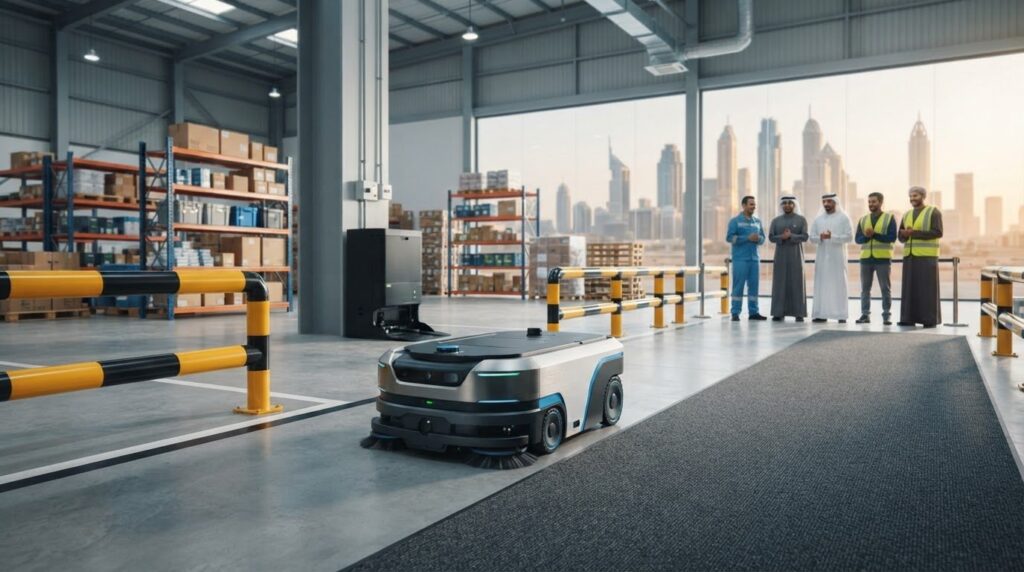
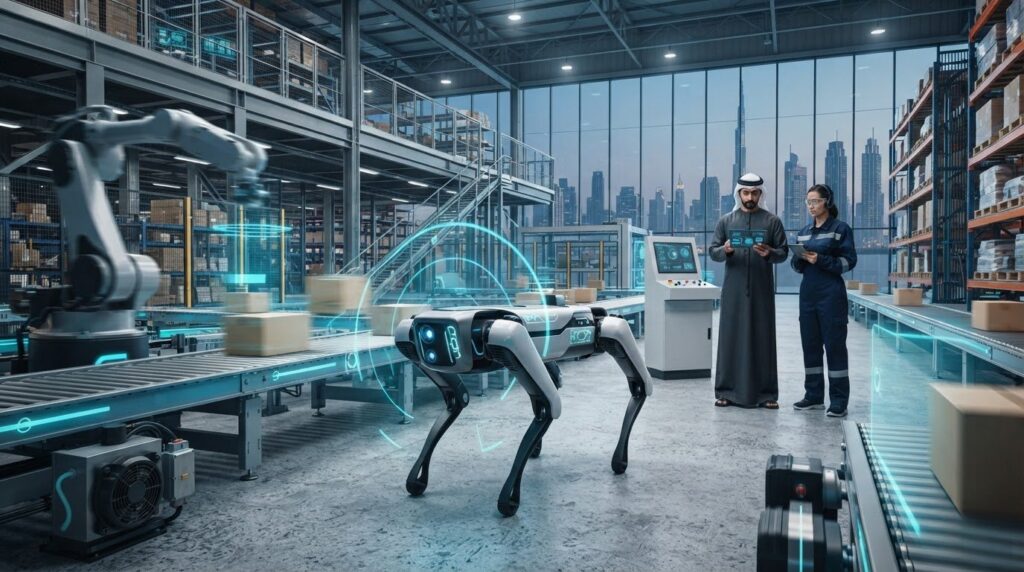
Identifying high-value use cases for collaborative robots (cobots) allows manufacturers to augment human capabilities in assembly lines without the need for extensive safety caging. These systems excel in tasks requiring delicate handling or human-robot synergy, such as intricate electronics assembly or complex quality inspection. Conversely, enhancing facility logistics with autonomous mobile robots (AMRs) eliminates the need for fixed conveyors or magnetic tracks, providing a dynamic material handling solution that navigates around obstacles autonomously. Integrating robotic surveillance further secures the perimeter, utilizing intelligent sensors to detect anomalies and mitigate security risks 24/7 without human intervention.
Specialized Service Robotics
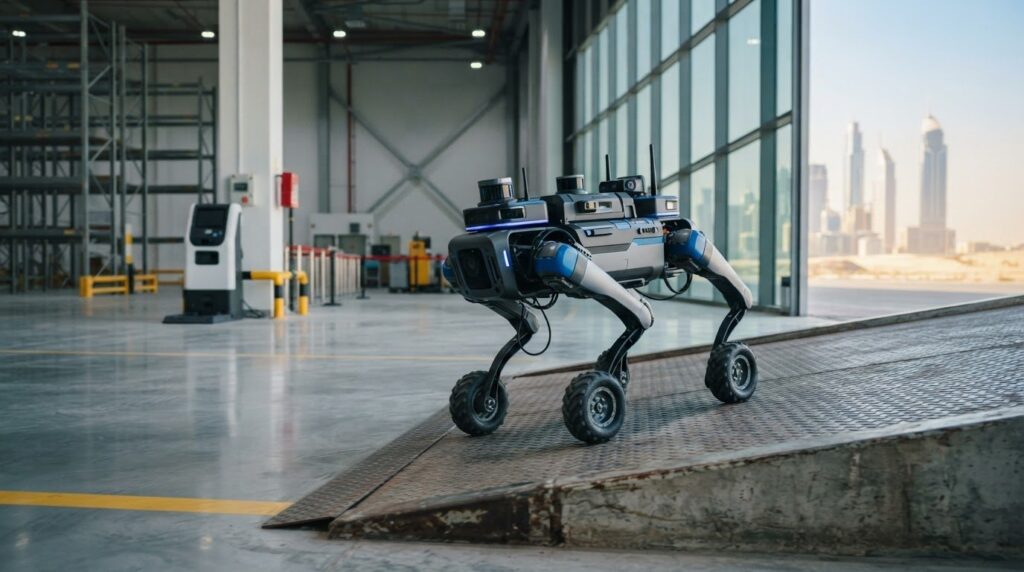
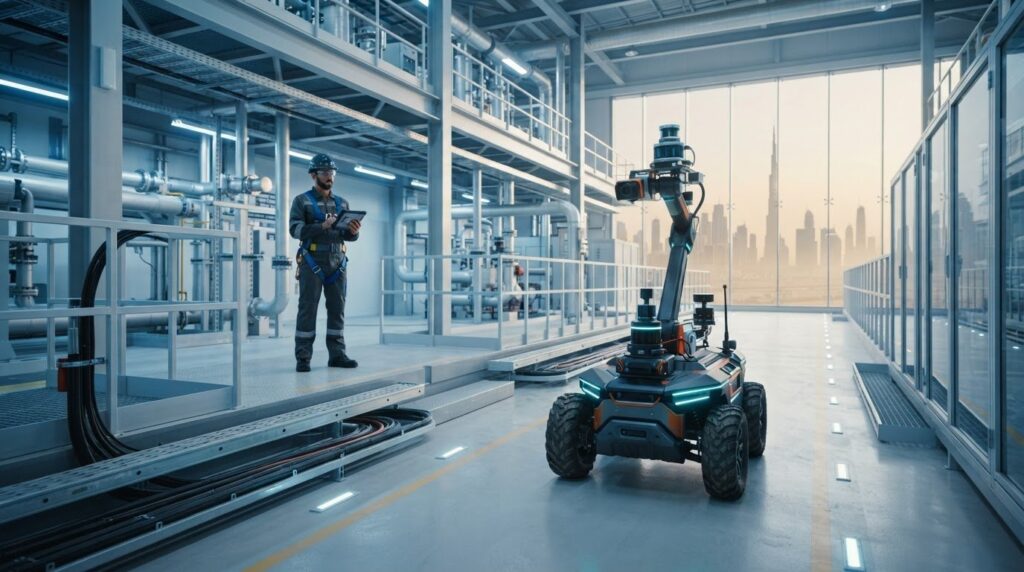
Maintaining industrial hygiene and safety standards now relies on autonomous cleaning robots, which provide consistent, documented sanitation in large-scale facilities. These units operate independently, utilizing advanced SLAM (Simultaneous Localization and Mapping) to optimize cleaning paths while reducing water and chemical waste. For high-risk industrial environments, utilizing inspection robots allows for the monitoring of hazardous zones or confined spaces without exposing personnel to danger. The emergence of humanoid robots for sale UAE offers a sophisticated solution for complex service environments where human-like interaction or versatile mobility is required. Additionally, delivery robots streamline internal logistics in hospitals and hotels, while autonomous outdoor cleaning units maintain the aesthetic and functional integrity of large-scale urban infrastructure.
Adopting this diverse robotic fleet requires an intellectual framework that prioritizes system integration over simple hardware acquisition. Every robotic unit must communicate with the central PLC and SCADA layers established in your infrastructure to ensure data transparency and operational harmony. This systematic approach ensures that Industry 4.0 implementation UAE remains a controlled and deliberate process, resulting in a safer, more efficient, and highly scalable industrial environment. By focusing on specialized robotics, companies don’t just automate; they evolve their entire operational model to meet the high-tech requirements of the 2026 industrial landscape.
A Framework for Successful Industry 4.0 Implementation
While government-led assessments like the Smart Industry Readiness Index (SIRI) identify operational readiness, they don’t offer the granular engineering blueprint required for physical execution. Successful Industry 4.0 implementation UAE demands a systematic transition from theoretical planning to technical deployment. This process begins with a rigorous technical audit of existing infrastructure to identify bottlenecks and integration risks that could impede progress. By prioritizing automation projects based on projected ROI and operational impact, organizations can ensure that their digital transformation remains financially sustainable and strategically aligned with the “Make it in the Emirates” initiative.
Phase 1: Assessment and Architecture Design
Evaluating legacy systems for compatibility with modern communication protocols is the first technical hurdle. Many facilities in the region operate on aging operational technology (OT) that requires bespoke middleware or gateway solutions to communicate with advanced robotic agents. Once compatibility is established, engineers must define a unified data architecture for SCADA and ASRS integration, creating a single source of truth for all industrial data. Selecting the appropriate robotic hardware during this phase is critical; it involves matching specific facility needs with the intelligence, payload, and reach capabilities of modern autonomous systems.
Phase 2: Deployment and Technical Integration
Executing the integration plan involves programming and commissioning PLC systems to act as the primary control layer for the smart factory. This phase requires precise calibration of AMRs and cobots to ensure safe operation in human-shared spaces, particularly as organizations must comply with the risk-based framework of the 2026 UAE AI Act. A phased rollout strategy is essential to minimize facility downtime, allowing for the systematic replacement of manual processes without halting entire production lines. Finally, training the workforce to operate alongside these advanced systems ensures that the human element remains a productive part of the automated environment.
Achieving this level of structural transformation requires an engineering-minded partner who understands the complexity of regional industrial needs. You can consult with our technical experts to design a bespoke integration plan that maximizes your facility’s operational efficiency and secures your position as an industry leader. By following a structured framework, your organization can move beyond simple automation toward a state of true industrial intelligence that supports long-term business viability.
Strategic Partnerships for Industrial Digital Transformation
Recognizing the gravity of large-scale industrial transformation, forward-thinking organizations must look beyond equipment vendors toward strategic technical partners who provide a comprehensive intellectual framework. Navigating the complexities of modern automation requires more than just capital investment; it demands a synergy between internal goals and external expertise. Working with certified system integrators provides the technical legitimacy necessary to manage high-level deployments while ensuring compliance with evolving regional regulations. These partnerships act as a bridge, connecting global technological breakthroughs with the specific economic and operational requirements of the Emirates. By leveraging these alliances, industrial entities can lead the market through a visionary approach that prioritizes long-term system viability over short-term acquisitions.
Securing a competitive edge in the 2026 landscape involves maintaining systems through continuous software and firmware updates. This proactive maintenance cycle mitigates the risk of technical obsolescence and ensures that Industry 4.0 implementation UAE remains a future-proof investment. Leading the market requires a systematic organizer who can bring order and efficiency to complex environments through controlled innovation. By establishing a hierarchical communication flow between robotic agents and centralized control layers, facilities can achieve a level of transparency that was previously impossible, allowing for data-driven decisions that impact the bottom line.
The EdNex Automation Advantage
Providing end-to-end expertise in robotic and industrial integration, EdNex Automation acts as a grounded, reliable technical partner for the region’s most ambitious projects. Our commitment to the UAE national industrial strategy and Operation 300bn drives us to deliver high-level solutions that are precisely tuned to the needs of the manufacturing, cleaning, and logistics sectors. We don’t just supply hardware; we provide the architectural foundation required for total autonomy. Whether you’re deploying collaborative robots for human-centric assembly or integrating inspection robots for high-risk zones, our bespoke solutions ensure that every clause of your operational requirement is met with engineering precision.
Next Steps for UAE Industrial Leaders
Initiating a facility-wide automation assessment is the first step toward reclaiming operational efficiency. This process involves calculating the potential ROI for robotic and ASRS implementation, allowing you to prioritize projects that offer the most significant impact on your operational resilience. By analyzing current cycle times and material handling costs, you can build a data-backed case for digital evolution that aligns with national mandates. Reliability is paramount, and your transition should be guided by experts who understand the nuances of the regional industrial lexicon. To secure your organization’s future, consult with EdNex Automation for your Industry 4.0 transition and begin the journey toward a more intelligent, autonomous, and profitable facility. Successful Industry 4.0 implementation UAE starts with a deliberate and systematic roadmap designed for long-term industrial success.
Securing Your Industrial Future in the 2026 Landscape
Achieving industrial excellence in the Emirates requires a deliberate shift from fragmented automation to a unified, intelligent ecosystem. By establishing a robust technical foundation through PLC and SCADA integration, organizations ensure that their infrastructure supports the high-level autonomy required for modern manufacturing. Aligning these technical efforts with the MoIAT national industrial strategy doesn’t just improve efficiency; it secures your organization’s standing in a rapidly evolving global market where data-driven precision is the primary currency.
Mastering Industry 4.0 implementation UAE demands a partner who understands the intersection of global technological breakthroughs and regional industrial needs. Leveraging our official partnerships with global robotics leaders and our deep expertise in ASRS and control systems, we provide the intellectual framework necessary for sustainable growth. Your transition toward a smarter facility is a necessary evolution for remaining competitive in the decades to come. Partner with EdNex Automation to lead your industrial digital transformation and secure your position at the forefront of the UAE’s industrial renaissance. The future of manufacturing is autonomous, and the time to build that foundation is now.
Frequently Asked Questions
What are the main goals of the UAE Industry 4.0 strategy?
The primary objective is to increase the manufacturing sector’s contribution to the national GDP to AED 300 billion by 2031 through the “Operation 300bn” initiative. This strategy seeks to enhance global competitiveness by shifting from labor-intensive processes to high-tech, autonomous production. By fostering innovation through the Technological Transformation Program, the UAE aims to establish itself as a global hub for the Fourth Industrial Revolution and sustainable manufacturing.
How does SCADA integration improve industrial efficiency in the UAE?
SCADA systems provide centralized monitoring and real-time data acquisition across complex industrial environments, allowing operators to visualize performance metrics instantly. By integrating these systems with existing hardware, facilities can identify operational bottlenecks and mitigate risks before they impact production. This transparency allows for optimized resource allocation and reduced energy consumption, ensuring that high-level industrial processes remain responsive to fluctuating market demands.
What is the difference between AGVs and Autonomous Mobile Robots?
Automated Guided Vehicles (AGVs) rely on fixed infrastructure like magnetic strips or wires to navigate pre-defined paths within a facility. In contrast, Autonomous Mobile Robots (AMRs) utilize intelligent SLAM technology to navigate dynamically around obstacles without requiring physical modifications to the floor. This flexibility makes AMRs superior for complex Industry 4.0 implementation UAE projects where warehouse layouts and production lines frequently evolve to meet new requirements.
Can Industry 4.0 technologies be integrated with legacy PLC systems?
Yes, modern Industry 4.0 protocols can be bridged with legacy PLC systems through bespoke middleware and intelligent gateway solutions. This integration allows older machinery to communicate with advanced robotic agents and centralized analytics platforms. By establishing these technical links, facilities can modernize their operations and achieve total data transparency without the massive capital expenditure of replacing entire production lines at once.
How does ASRS help in maximizing warehouse space in UAE facilities?
Automated Storage and Retrieval Systems (ASRS) maximize warehouse capacity by utilizing high-density vertical storage, often reclaiming up to 85% of previously wasted floor space. These systems eliminate the need for wide forklift aisles and manual picking zones, allowing for a significantly smaller physical footprint. In the high-value industrial zones of the UAE, this efficiency translates directly into lower operational overhead and increased inventory throughput.
Are there government incentives for Industry 4.0 implementation in the UAE?
The Ministry of Industry and Advanced Technology (MoIAT) offers several incentives, including a 5% bonus on In-Country Value (ICV) scores and grants of up to AED 10 million through the Abu Dhabi Investment Office. Organizations can also access Golden Visas for technical experts and free industrial assessments. These programs are designed to accelerate Industry 4.0 implementation UAE by reducing the financial and regulatory barriers for private enterprises.
What role do collaborative robots play in UAE manufacturing?
Collaborative robots, or cobots, are designed to work alongside human operators in shared workspaces without the need for traditional safety caging. They excel in high-precision assembly, quality inspection, and repetitive material handling tasks that require human-like dexterity. By augmenting human capabilities, cobots increase production speed and reduce human error while maintaining the rigorous safety standards required by the 2026 UAE AI Act.
How long does a typical Industry 4.0 implementation take for a factory?
A comprehensive industrial transformation typically follows a phased timeline ranging from six to eighteen months, depending on the complexity of the facility’s existing infrastructure. The initial audit and architecture design phases usually take eight to twelve weeks to ensure technical alignment. Subsequent deployment and integration are executed in stages to minimize facility downtime, ensuring that the transition to a fully autonomous environment is both systematic and controlled.